Loulu / Kilauea Pritchardia (Pritchardia beccariana)
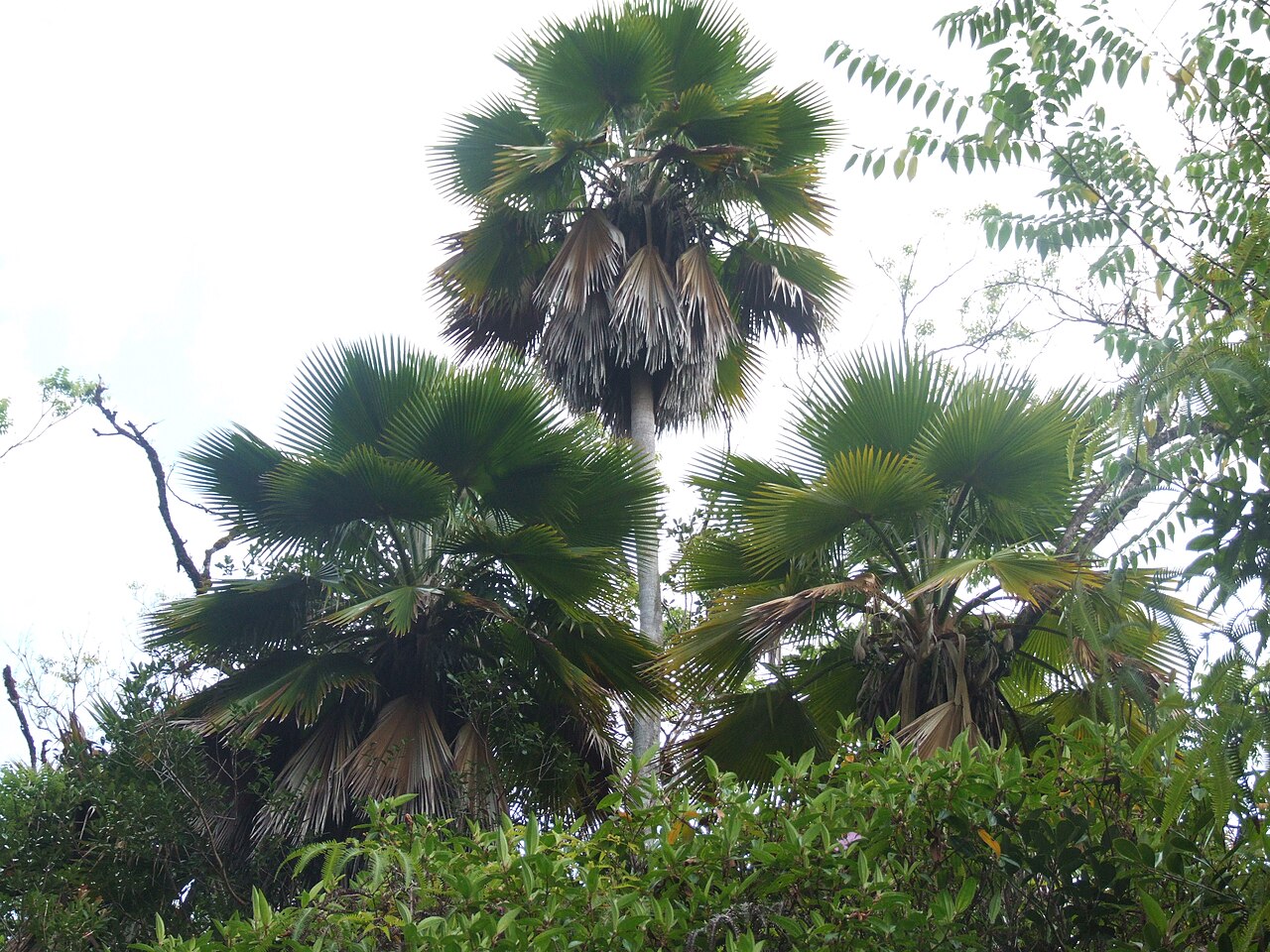
Pritchardia beccariana, known as Loulu or the Kilauea Pritchardia, is a tall fan palm found nowhere on Earth except the windward wet forests of Hawaiʻi Island. It is one of the largest of the native Hawaiian loulu palms, capable of pushing a smooth gray trunk up through the forest canopy to a height of 65 feet, where its huge, stiff, round leaves catch light far above the ferns and shrubs below.
Botanist Joseph Rock first collected this palm near Glenwood, close to Kīlauea, in December 1914, and named it the following year in honor of Italian botanist Odoardo Beccari. Rock considered it one of the most distinct Pritchardia species he had seen in the islands, with leaves that reminded him more of the Fijian fan palm Pritchardia pacifica than of any other Hawaiian loulu.
Today Loulu survives mainly in upland wet forest on the windward slopes of Hawaiʻi Island, having been eliminated from the lowlands where it once likely grew down to near sea level. For Big Island gardeners with the rainfall and elevation to match, it remains one of the most dramatic native palms available, and every planted specimen helps take pressure off a wild population that botanists rank as critically imperiled.
Identification
Loulu is a solitary, single-trunked fan palm that can reach 65 feet tall, though cultivated specimens are usually considerably shorter. The trunk is smooth and grayish, only 8 to 10 inches in diameter even on the tallest trees, giving the palm a slender, columnar look that belies its height.
Leaves
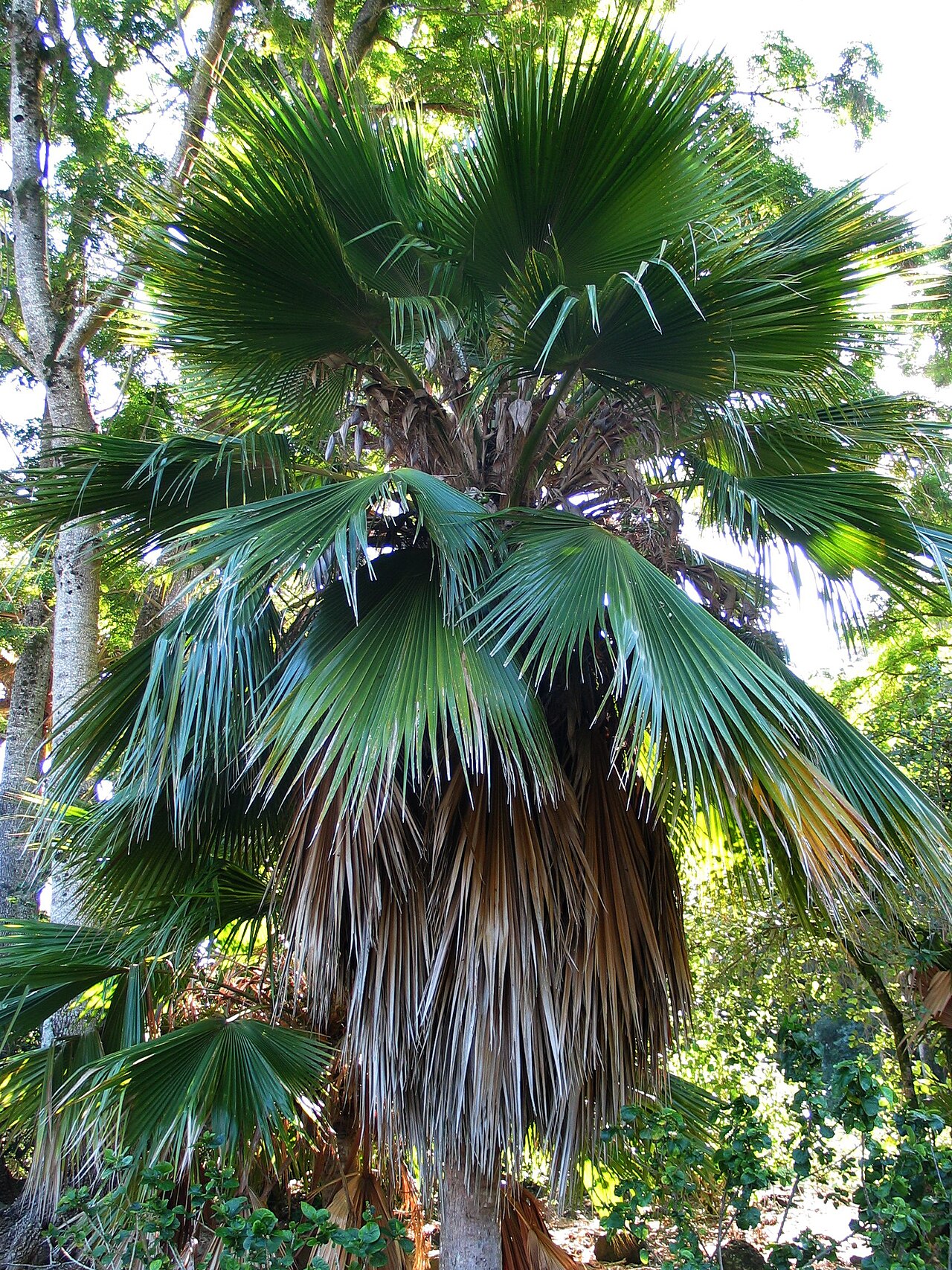
The crown carries 25 to 30 leaves, each one roughly 6 feet wide and 6 feet long, held on stout petioles of about the same length. The petiole bases are lightly covered along both edges with medium tan fiber. The leaf blades are large, flat, and rounded, cut only 1/5 to 1/4 of the way to the base into many stiff, pointed segments, so the fan stays mostly intact rather than splitting into separate drooping leaflets the way some other loulu species do. The undersides carry scattered fuzz rather than a dense felt.
Flowers
Loulu flowers in branched inflorescences made up of 2 to 4 panicles that are shorter than, or about equal to, the leaf petioles in length. The panicles branch up to three times and are covered in a scruffy, slightly fuzzy indumentum while in flower, becoming smooth (glabrous) once the fruit sets. The small cream flowers are not individually showy, but a palm in full bloom carries dozens of these branching clusters at once.
Fruit
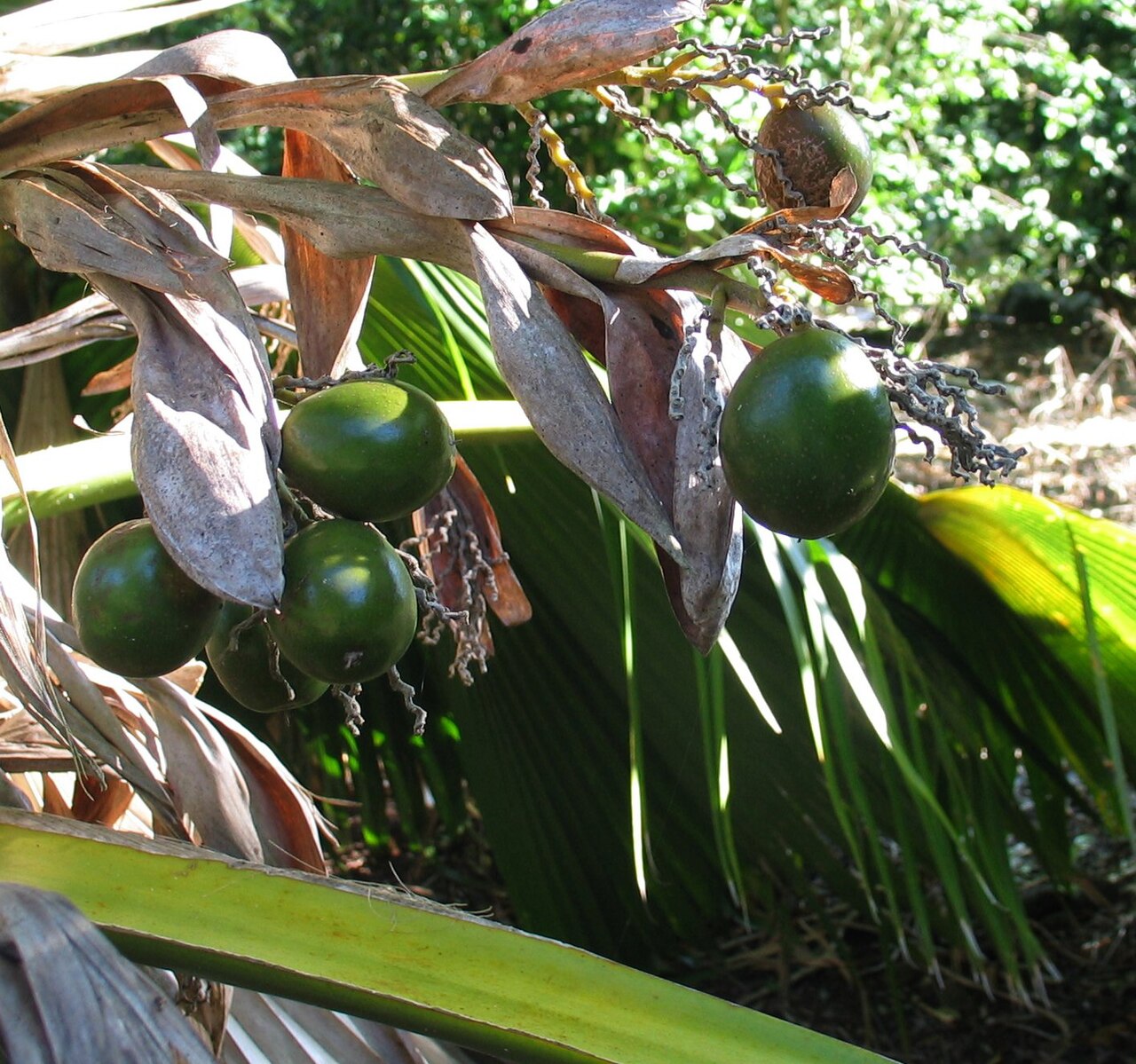
The fruit is large for a Hawaiian palm: an oval to nearly spherical drupe about 1.5 inches long and 1.25 to 1.5 inches wide, green while developing and ripening to glossy black. Each fruit holds a single large seed, and a mature tree can drop a heavy crop in a good year, a trait that made loulu fruit historically useful as emergency food in some Hawaiian accounts.
Quick Facts
| Scientific Name | Pritchardia beccariana |
| Family | Arecaceae (Palm) |
| Plant Type | Solitary Fan Palm |
| Mature Height | Up to 65 ft (trunk only 8–10 in. diameter) |
| Mature Spread | Leaves to 6 ft wide, crown 15–20 ft across |
| Growth Rate | Slow to moderate |
| Sun Exposure | Full sun to part shade |
| Water Needs | High; wants consistently wet conditions |
| Soil Type | Rich, well-drained volcanic soils |
| Fruit | Black oval drupe, about 1.5 in. long |
| Conservation Status | Critically Imperiled (NatureServe); endemic single-island range |
| USDA Hardiness Zones | 11–12 |
Native Range
Loulu is endemic to the island of Hawaiʻi, where it is restricted to wet, windward forest on the eastern side of the island near Hilo and Kīlauea, including the area where Rock first discovered it at Glenwood. It is not native to Oʻahu, Maui, Kauaʻi, or any other Hawaiian island, and it does not occur naturally anywhere in the continental United States.
The species grows at elevations of roughly 1,000 to 4,200 feet, in forest that receives more than 100 inches of rain a year. Botanists believe it once grew at much lower elevations, potentially down to near sea level, but lowland rainforest on the windward Hilo coast has been almost entirely cleared for agriculture and development, leaving the surviving wild population confined to upland forest. Loulu is additionally threatened by invasive weeds that crowd out seedlings and by rats and feral pigs, which eat the fruit and dig up young plants before they can establish.
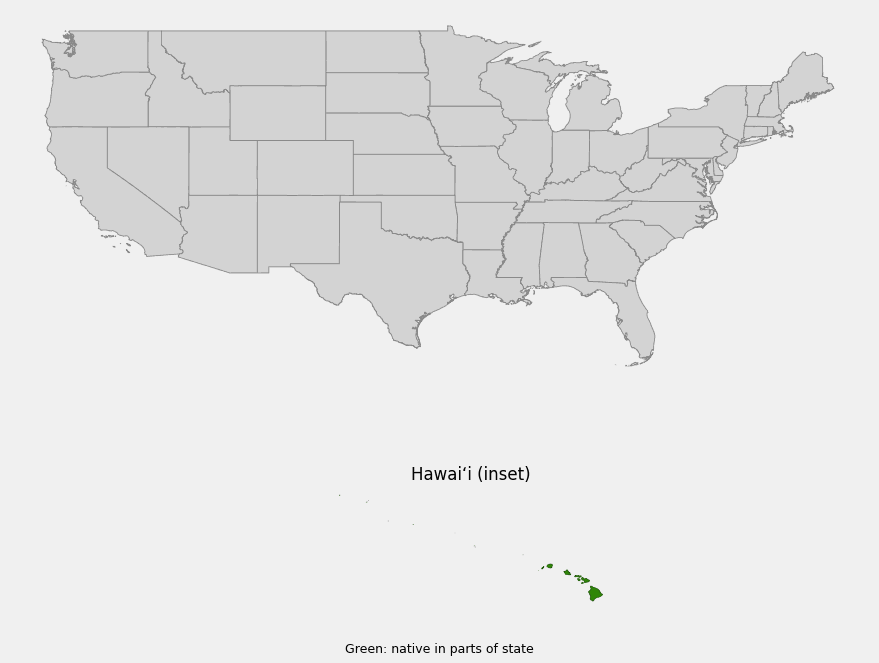
📋 Regional plant lists featuring Loulu: Hawaii
Growing & Care Guide
Loulu is best suited to wet, windward gardens on Hawaiʻi Island or similarly rainy tropical sites, where it can reward patient growers with one of the most imposing native palm silhouettes in the islands. It is slow to establish but long-lived once it takes hold.
Light
Young plants tolerate and often prefer filtered light or part shade under an open canopy, matching their natural position as forest emergents that reach full sun only once they clear the surrounding trees. Established palms handle full sun well.
Soil & Water
Give it rich, well-drained volcanic soil and consistent moisture; this is a true wet-forest species that does not tolerate drought, especially while young. Mulching around the root zone helps retain the humidity that seedlings need to get established.
Planting Tips
Choose a site that mimics windward wet forest: high rainfall, good drainage, and protection from strong, drying wind while the palm is small. Because seedling recruitment in the wild is badly hampered by rats and pigs eating fruit and young plants, growing loulu in cultivation — especially from seed of known wild provenance where available through conservation nurseries — is a meaningful way to support the species.
Pruning & Maintenance
Remove dead or browned fronds as they accumulate beneath the crown; otherwise this palm needs very little maintenance once established. Watch young plants for slug and snail damage, and protect them from rodents if fruiting trees are nearby.
Landscape Uses
- Specimen or canopy tree for large wet-climate gardens, where its height and fan crown make a strong focal point
- Conservation and restoration plantings in windward wet forest on Hawaiʻi Island
- Native palm collections alongside other endemic Pritchardia species
- Windbreak or screen once established, given its height and dense crown
Wildlife & Ecological Value
Loulu’s large black fruit are an important wild food source where the palm still grows, historically eaten by native forest birds and, before their extinction or decline on the island, likely dispersed in part by larger native fruit-eating birds. Today introduced rats and pigs consume most of the fruit crop before it can germinate, which is one of the main reasons wild seedling recruitment has collapsed even where adult palms persist.
Ecosystem Role
As an emergent canopy palm in windward wet forest, Loulu adds structural diversity to a plant community dominated by ʻōhiʻa lehua and koa, creating habitat niches used by forest birds and invertebrates at a different height and form than the surrounding broadleaf canopy. Its loss from large parts of its former lowland range has simplified the structure of Hawaiʻi Island’s remaining wet forest.
Cultural & Historical Uses
Loulu palms as a group held real practical value for Native Hawaiians. The broad, tough fan leaves were woven into thatching for shelters and fans, and plaited into baskets and mats, while the trunks were sometimes used as house posts. The large seed kernel inside the fruit could be eaten, and the fruit pulp served as emergency food in times of scarcity, a use recorded for several loulu species including this one.
Because it reaches such imposing heights in wild wet forest, Pritchardia beccariana is one of the more striking examples of the loulu palms botanist Joseph Rock documented across the islands in the early 20th century, part of a broader Hawaiian flora he spent decades cataloging. Today it stands alongside other rare Hawaiʻi Island endemics discussed in our guide to Hawaiʻi’s rarest native flowering trees, and in broader surveys of the islands’ native canopy tree species.
Frequently Asked Questions
How tall does Loulu actually get?
In wild wet forest, mature trees can reach about 65 feet, with a surprisingly slender trunk only 8 to 10 inches across. Cultivated specimens, especially outside ideal wet-forest conditions, are usually considerably shorter.
Is Loulu the same as other Hawaiian “loulu” palms?
No. “Loulu” is a general Hawaiian name applied to all native Pritchardia species, of which there are around 19, each endemic to one or a few islands. Pritchardia beccariana, sometimes distinguished as the Kilauea pritchardia, is found only on Hawaiʻi Island and differs in leaf shape and size from sibling species such as Loulu Lelo (Pritchardia hillebrandii).
Can I grow Loulu outside of Hawaiʻi Island?
Only in climates that closely match its wet, warm native habitat, with consistently high rainfall and no frost. It is not suited to dry or cool climates and will struggle without ample, consistent moisture, especially while young.
Why are wild Loulu populations declining even though mature trees are long-lived?
The adult palms themselves are relatively tough, but introduced rats and feral pigs eat most of the fruit and destroy seedlings before they can establish, so very few young palms are replacing the aging wild population. This is why the species is ranked critically imperiled despite scattered mature trees still standing in protected forest.
Does Loulu produce edible fruit?
The fruit pulp and large seed kernel were used historically as emergency food by Native Hawaiians, but this is not a modern landscape food crop, and wild fruit should be left for forest wildlife and natural regeneration rather than harvested, given how rare the species has become.

Looking for a nursery that carries Loulu?
Browse our native plant nursery directory: Hawaii