Loulu Lelo (Pritchardia hillebrandii)
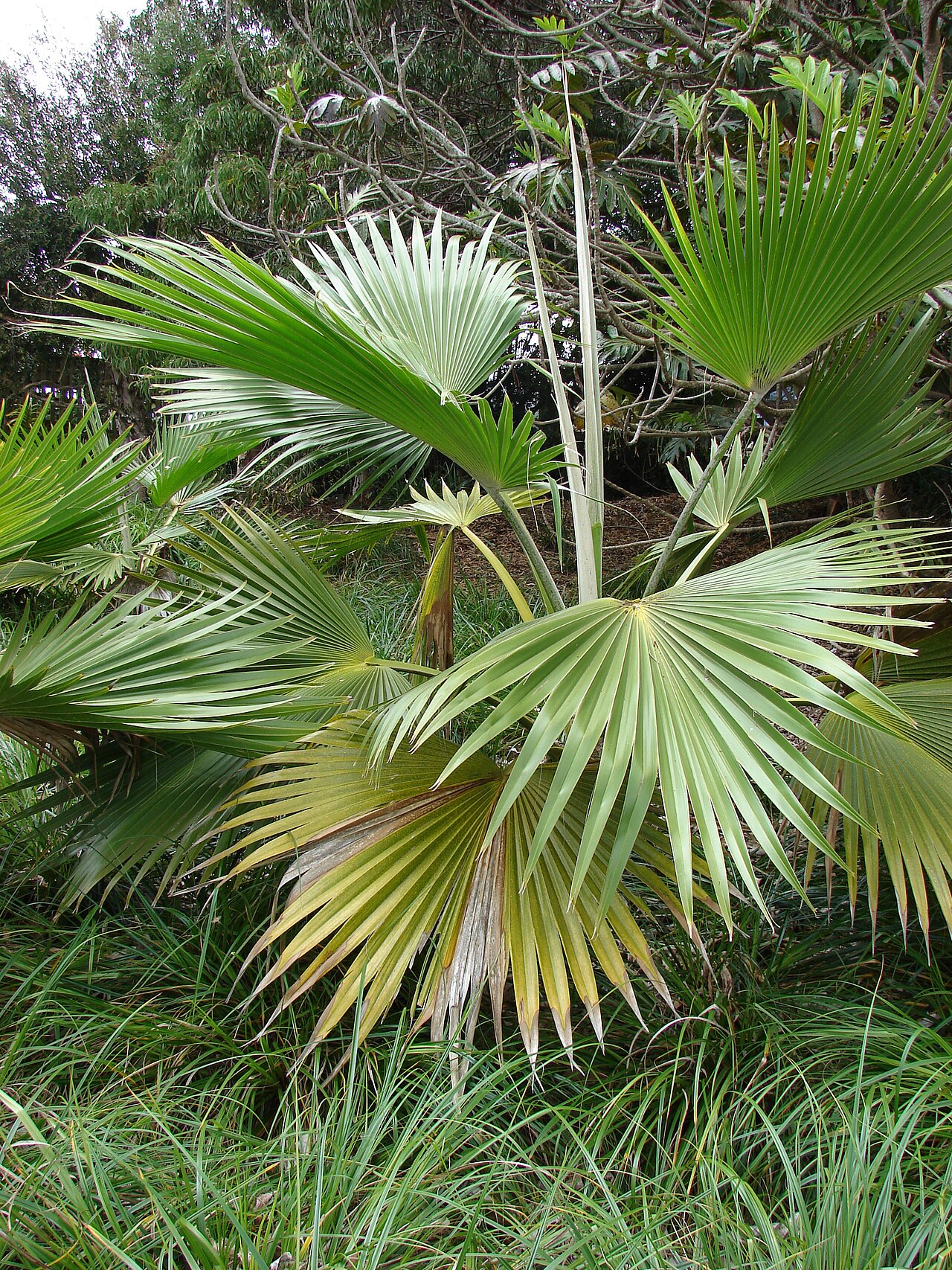
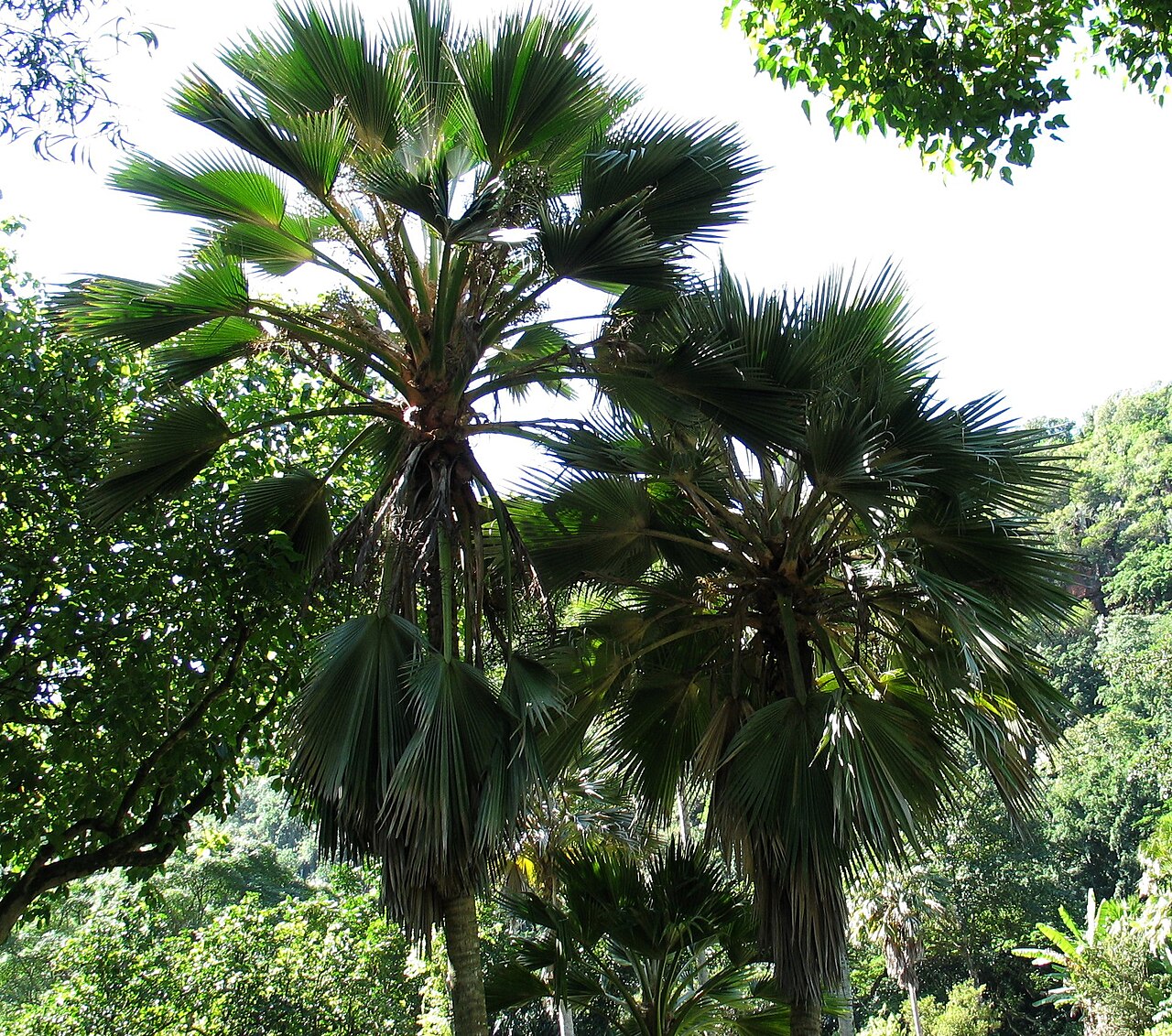
Loulu lelo (Pritchardia hillebrandii) is a Hawaiian fan palm with broad, pleated leaves and a strong connection to the north coast of Molokaʻi. Its foliage can range from emerald green to grayish or bluish green, giving the crown a different character from the feather-leaved palms common in tropical landscaping. A single palm can be a focal point, while a carefully spaced group creates a small grove with a distinctly Hawaiian identity.
This species is endemic to Hawaiʻi, with a much narrower natural range than the word “Hawaiian” alone suggests. The University of Hawaiʻi account associates its surviving wild populations especially with Huelo and Mōkapu, offshore islets near Molokaʻi. Palms cultivated on Oʻahu, Maui, or Midway do not extend that native range; they demonstrate how widely the species has been grown.
Loulu is the general Hawaiian name for native Pritchardia palms, not a species-level identification. When choosing this palm, obtain a complete label and ask about provenance. A palm sold simply as “loulu” may belong to another species with different size, habitat, and conservation considerations.
Quick Facts
| Scientific Name | Pritchardia hillebrandii |
| Family | Arecaceae |
| Plant Type | Native palm |
| Mature Height | Often about 20–25 ft in gardens; larger dimensions reported |
| Mature Spread | About 4–7 ft in the cited nursery account; allow frond clearance |
| Growth Rate | Slow |
| Sun Exposure | Full sun to partial sun |
| Water Needs | Average to dry after establishment, with good drainage |
| Soil Type | Well-drained soil matched to native habitat and nursery provenance |
| Soil pH | Assess local soil and nursery performance before amending |
| Bloom Time | Variable with source and conditions; observe local seasonality |
| Flower Color | Pale white to yellow flowers |
| Fall Color | Evergreen; seasonal new growth may contrast with older foliage |
| Fruit | Rounded fruits green when young, darkening with maturity |
| Deer Resistant | Not a browse-proof planting; protect young trees where needed |
| USDA Hardiness Zones | Use Hawaiian island, elevation, and exposure guidance for site selection |
Recognizing Loulu Lelo
The fan-shaped leaves are divided into radiating segments and have a folded, costapalmate form. Their changing angles catch light across the crown, while the relatively coarse texture makes a strong contrast with finer native groundcovers or shrubs. The University of Hawaiʻi profile notes a waxy gray-green appearance beneath the leaves and often woolly petioles.
Color varies among plants and cultivated selections. Names such as ‘Dwarf Blue’ and ‘Blue Moon’ appear in horticultural accounts, but a blue cast alone is not enough to establish a cultivar or species. If a particular form is important to the design, ask for documented stock rather than choosing solely from the color of a young leaf under nursery shade.
Flowers, Fruit, and Scale
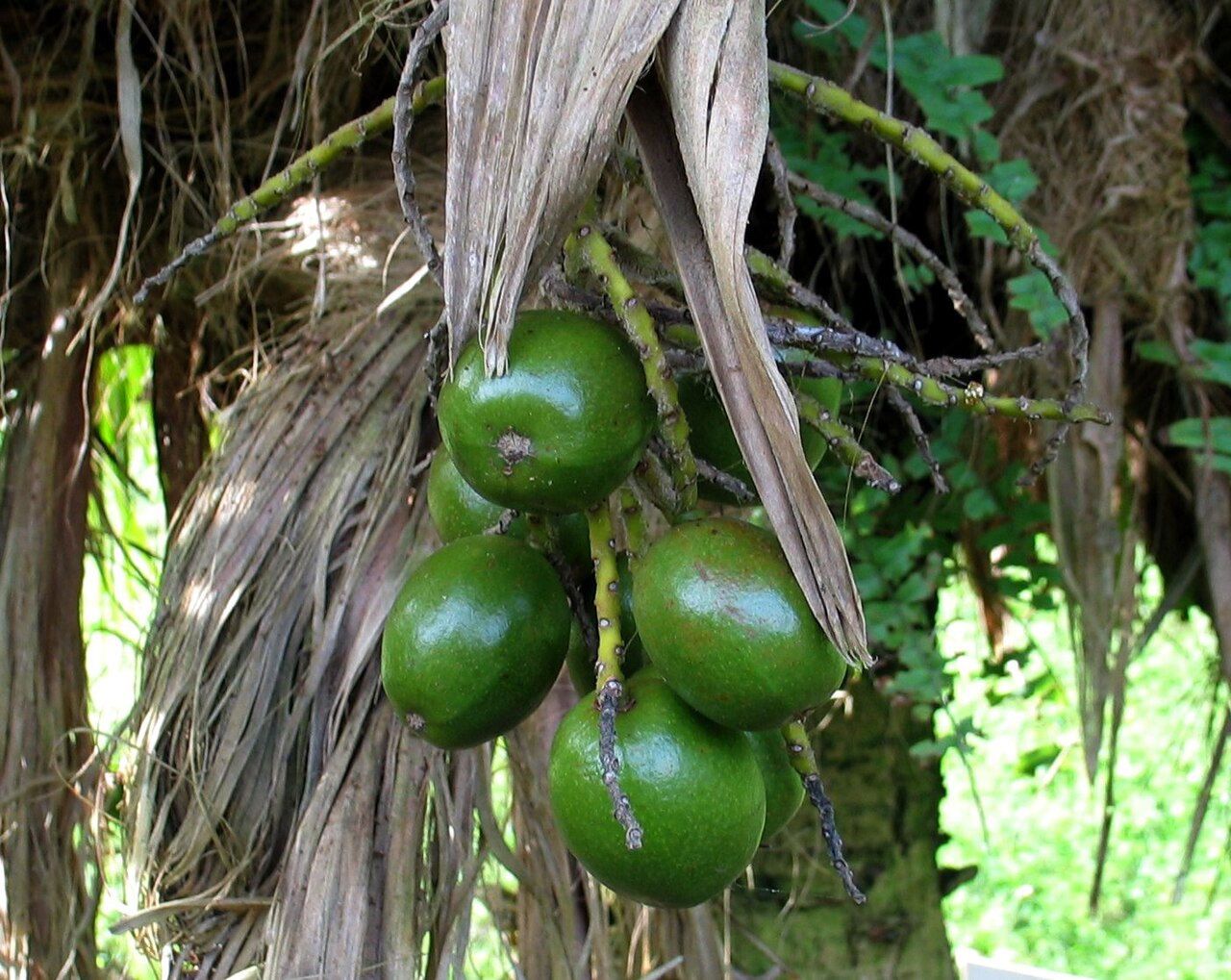
The flowers are small, pale white to yellowish, and occur sporadically. Fruits develop on branching stalks that can be conspicuous beneath or among the leaves. Green immature fruits should not be mistaken for their mature color. The crown, leaf surfaces, and fruiting structures together offer more useful identification evidence than a distant silhouette alone.
Published size descriptions vary. The University of Hawaiʻi profile includes a medium-tree category while its landscape discussion describes many cultivated plants reaching about twenty feet. The regional list’s 20–25-foot range is therefore a practical garden estimate, not a biological maximum. Ask how the nursery’s source plants have grown and leave room for the palm to mature.
Native Range and Conservation Context
Loulu lelo belongs naturally to the Molokaʻi coastal region, particularly its offshore islets. The University of Hawaiʻi account describes loss from parts of the north-coast mainland and survival on Huelo and Mōkapu, with introduced rats and goats important in the historical account. Its quoted population numbers come from particular published observations and should not be treated as a current census.
The islet setting helps explain the species’ usefulness in low-elevation landscapes and its tolerance of wind and some salt spray. It also explains why a garden specimen should not be confused with a restored wild population. Conservation depends on habitat, recruitment, appropriate genetic material, and control of threats, not simply on the number of palms planted ornamentally elsewhere.
Native Range
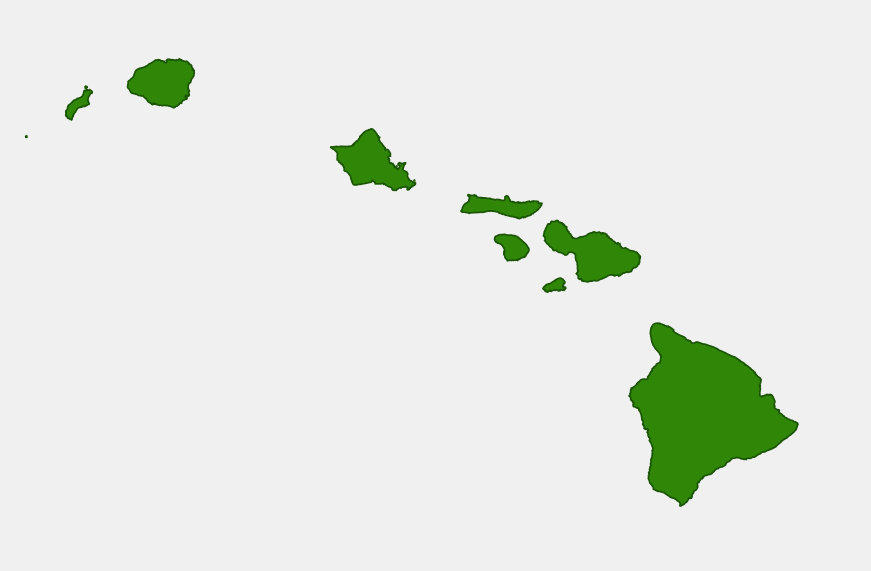
| U.S. States | Hawaii |
| Hawaiian Islands | Molokaʻi, especially offshore Huelo and Mōkapu islets |
| Mexico / Canadian Provinces | Not included in the verified native range used here |
| Ecoregion | Hawaiian tropical forest and woodland |
| Elevation Range | Coastal lowland habitat; match source and garden conditions |
| Habitat | Coastal cliffs and offshore islet palm stands |
| Common Associates | Site-appropriate native forest canopy and understory |
USDA PLANTS profile (PRHI). Species identity verified; this link is not a guarantee of county-level distribution data.
The map shows Hawaiʻi at the state scale. It does not imply that Pritchardia hillebrandii is native to every Hawaiian island. The cultivated photographs on this page illustrate identification and garden form; their locations are not evidence of wild distribution. For restoration, follow local project guidance and use material selected for the actual conservation objective.
Choosing a Landscape Role
A Specimen or a Small Grove
A single loulu lelo works well where its entire crown can be seen. Avoid crowding it against a building or beneath a larger tree that will obscure the fan leaves. A group can be effective where there is enough room for each crown and for maintenance access. The University of Hawaiʻi profile notes close plantings in some gardens but recommends much wider spacing when the aim is to showcase individual palms.
Spacing should reflect the intended view and the mature fronds, not only the trunk diameter. A narrow trunk does not mean the palm occupies a narrow space. Keep leaves away from access routes and allow room to remove dead material without squeezing between structures or damaging neighboring plants.
Low-Elevation Sites and Exposure
The published guidance describes the species as well suited to low-elevation landscaping, with full sun generally preferred and partial shade potentially useful at higher elevations. Evaluate the actual exposure: reflected heat, wind channels, nearby irrigation, and soil drainage can alter performance even within the same neighborhood.
Salt-spray tolerance is useful near the coast, but it is not a reason to irrigate with salt water or ignore soil conditions. A sheltered garden with good drainage differs from an exposed shoreline repeatedly affected by severe weather. Match expectations to the site and ask local growers about performance under comparable conditions.
Soil and Planting
Good drainage is central to the University of Hawaiʻi growing guidance. The listed soil settings include sand, cinder, and coral-derived material, but a named soil ingredient does not guarantee a suitable root zone. Compaction, buried construction debris, and concentrated runoff can make an otherwise plausible location unsuitable.
Install the palm at its appropriate original soil level and keep the stem base visible. Prepare the planting location before removing the container, handle the root ball carefully, and avoid leaving roots exposed to drying wind. Water after planting to settle the surrounding soil, then check that the palm remains upright and has not settled too deeply.
Mulch can reduce weed competition and moderate moisture around a young palm, but keep it away from the trunk. Maintain access to the root zone for checking soil conditions. A dense ring of vigorous plants installed immediately around a new palm can make both watering and early problem detection more difficult.
Water During Establishment
Although established loulu lelo can tolerate dry conditions, a newly planted specimen has a limited root system. Check the nursery root ball as well as adjacent soil, because they may hold water differently. Apply irrigation according to actual moisture and weather, and allow excess water to drain.
As the palm establishes, broaden the area receiving water rather than repeatedly wetting only the stem base. Gradually adapt the routine to the plant’s growth and the site’s rainfall. Drought tolerance does not mean that a recently planted palm can be ignored through an unusually dry or windy period.
When a palm declines, do not assume that more water is always the answer. Inspect drainage, planting depth, and the condition of the root zone. Persistent wetness can create a different but equally serious problem from drought. Observations made below the soil surface are more useful than judging solely from a dry-looking mulch layer.
Nutrition and Leaf Color
The University of Hawaiʻi account emphasizes balanced palm nutrition, including potassium and magnesium. Deficiencies can affect frond color and are particularly relevant to container-grown plants. Yellowing should prompt assessment, not an automatic series of unrelated amendments. Soil conditions, root health, and watering can also influence the appearance of the leaves.
Use a palm-appropriate product and local advice when feeding is warranted, following the label and considering existing soil nutrients. A temporary color change after an amendment does not necessarily solve the underlying problem. Keep a record of applications and inspect new growth over time rather than expecting an old damaged frond to become perfect immediately.
Slow growth is part of the species’ published horticultural description. It should not be treated as proof that a palm needs repeated extra fertilizer. Appropriate light, drainage, and establishment care provide a better foundation than trying to force rapid growth in a naturally deliberate plant.
Pruning and Pest Awareness
Dead leaves and spent reproductive stalks may be removed for a tidier landscape appearance. Preserve healthy green fronds unless there is a clear reason to remove them. A palm’s crown is its working foliage, and excessive removal diminishes both its appearance and its ability to support growth.
Watch for the problems listed in the species profile, including leaf rollers, red spider mites, and sugarcane borers. Inspect symptoms closely and obtain an identification before choosing treatment. Different causes of damaged foliage require different responses, and unnecessary broad treatment can affect other organisms in a native planting.
Rats consume the fruits and can interfere with seed recruitment. In a conservation setting, that issue belongs within a coordinated management plan rather than an improvised garden response. For a home specimen, observing fruit development and losses can still help explain why seedlings do not appear even when an adult palm flowers.
Culture, Names, and Responsible Sourcing
Loulu leaves have a documented place in Hawaiian uses such as thatching and plaiting, and the name loulu is associated with an umbrella or protection from sun and rain. Hāwane and wāhane can refer to the fruit and sometimes to the palm itself. These broader loulu traditions should not all be assigned uniquely to Pritchardia hillebrandii when the historical account concerns several species.
The botanical epithet honors William Hillebrand, whose former property became part of the history of Foster Botanical Garden. This connects the palm’s name with Hawaiian botanical study and cultivation, but the species’ natural identity remains grounded in Molokaʻi’s coastal landscape.
Buy nursery-propagated plants with reliable identification. Wild collection is not needed to obtain an attractive landscape palm and can undermine the very populations that make the species special. If the goal is conservation rather than ornament, coordinate with the people responsible for the habitat and provenance requirements.
Common Questions
Is any fan palm a native loulu? No. Many introduced fan palms are grown in Hawaiʻi. Confirm the genus and species rather than identifying a palm from leaf shape alone.
Is this species native to Maui or Oʻahu because it is photographed there? Cultivation does not establish native range. This page’s species is associated naturally with Molokaʻi and its offshore islets.
How fast will it provide shade? It is described as slow growing. Choose it for long-term structure and foliage, not as an immediate replacement for a broad, fast-growing shade tree.
Can blue foliage identify a special cultivar? Not by itself. Color varies with form and conditions. Ask for documentation if a named selection matters.
A Hawaiian Palm With a Particular Home
Loulu lelo is most meaningful when grown with an understanding of its narrow native origin. Give it sunlight, drainage, establishment water, and room for its pleated crown. A well-placed specimen can bring lasting beauty to a garden while making the distinction between a Hawaiian native palm in cultivation and its irreplaceable wild habitat clear.
Sources & Further Reading
Botanical range, identification, and cultural information are based on these sources. Garden-management advice should be adapted to local soil, exposure, and nursery provenance.
Find Native Plants Near You
Look for correctly identified, nursery-propagated plants with documented Hawaiian provenance. Visit our Hawaii native plant nursery directory and ask about stock suited to your island, elevation, and rainfall. Compare other trees in our Hawaii native plant list.