American Bladdernut (Staphylea trifolia)
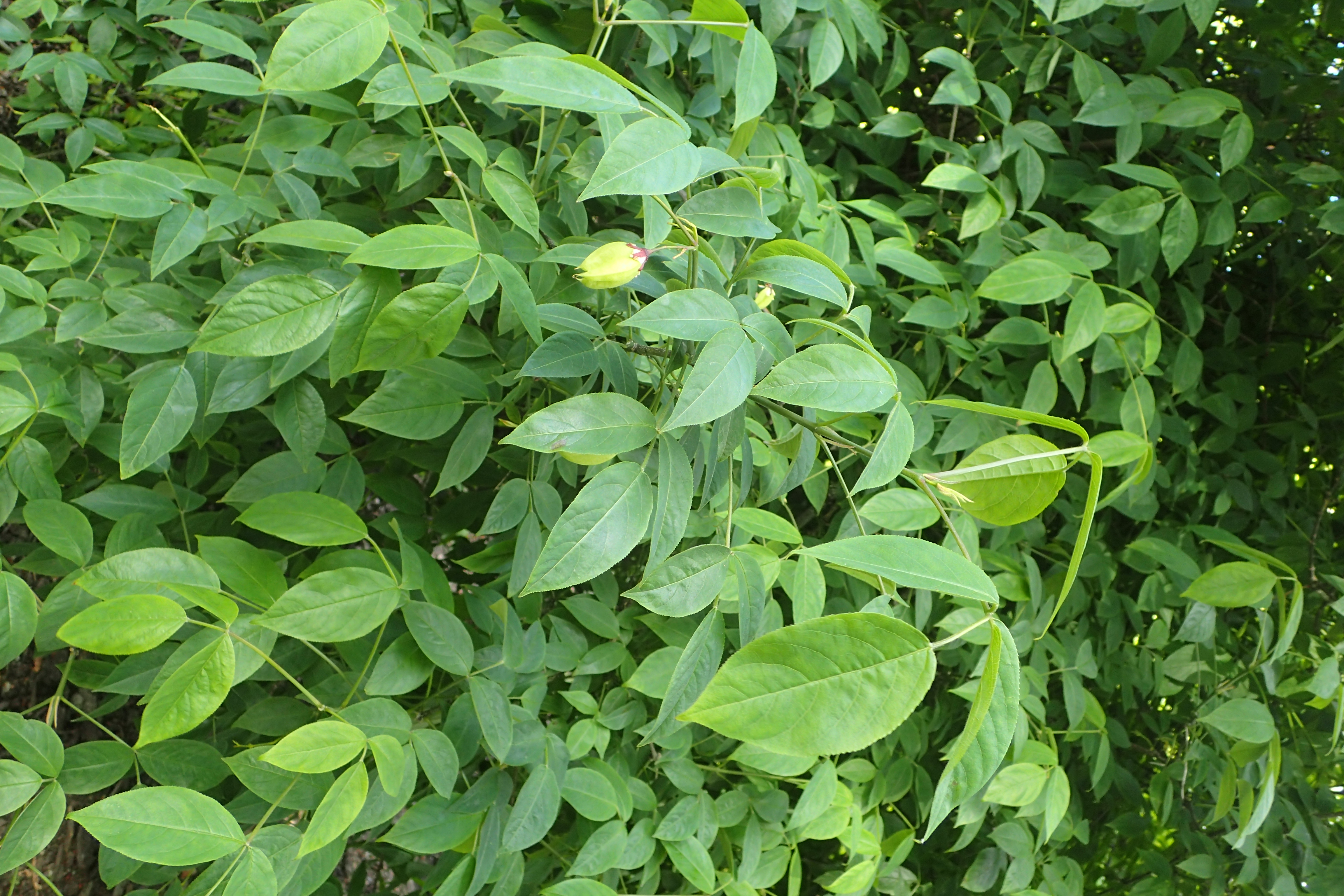
Staphylea trifolia, commonly known as American Bladdernut, is a distinctive native deciduous shrub or small tree of the eastern United States, treasured for its unique papery inflated seed pods, elegant drooping flower clusters, and its ability to thrive in moist, shaded understory conditions. A member of the Staphyleaceae family, this charming native plant brings four-season interest to the landscape — cascading white flowers in May, ornamental bladder-like fruits through summer and fall, and attractive trifoliate leaves that turn soft yellow in autumn.
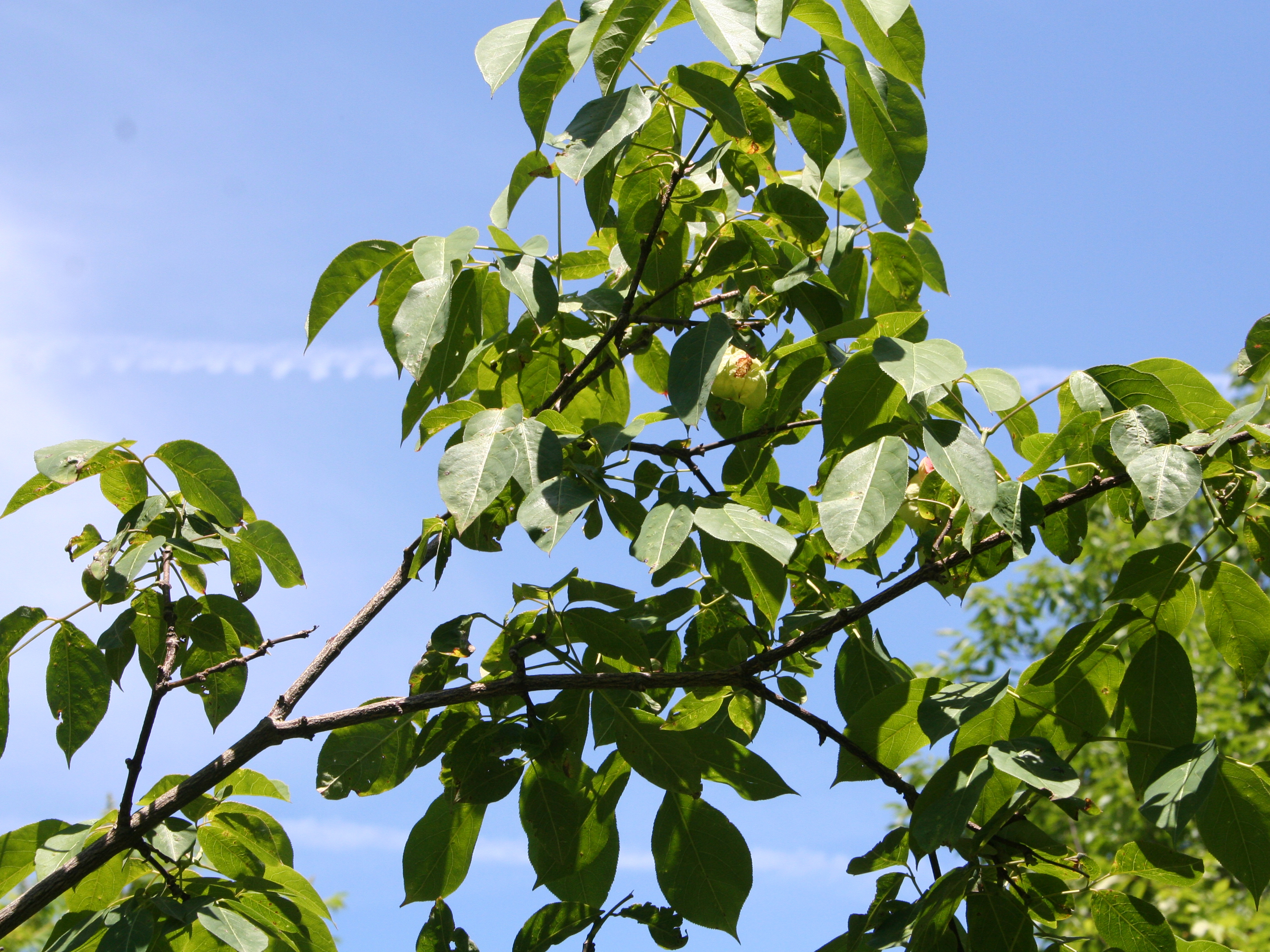
American Bladdernut typically grows 8 to 14 feet tall, developing into a multi-stemmed, arching shrub with smooth, greenish-gray striped bark when young, maturing to gray-brown. It is most at home along stream banks, in moist woodland margins, and in shaded ravines throughout its range. Despite being relatively uncommon in cultivation, bladdernut is gaining recognition among native plant enthusiasts and restoration ecologists for its adaptability, ecological value, and ornamental qualities that set it apart from common landscape shrubs.
The inflated, papery, three-lobed seed capsules — each containing hard, round seeds that rattle when ripe — give the plant its evocative common name and make it immediately identifiable in late summer and autumn. These distinctive pods persist on the branches through winter, adding texture and interest long after the leaves have fallen. Wildlife, including wild turkeys and ruffed grouse, consume the seeds, while the dense thicket growth provides valuable cover for many bird species.
Identification
American Bladdernut is a medium-sized native shrub with several distinctive characteristics that make it relatively easy to identify in all seasons. Its combination of trifoliate leaves, drooping flower clusters, and unique inflated seed pods is unmistakable among eastern North American shrubs.
Bark & Stems
Young stems are smooth and greenish with distinctive longitudinal white striping that gives them an almost ornamental appearance. As branches age, the bark becomes grayish-brown and somewhat rougher. The shrub typically develops multiple arching stems from the base, creating a rounded, spreading form. Twigs are slender and slightly zigzagged, green to tan in color, and smooth to the touch.
Leaves
The leaves are opposite, pinnately trifoliate (divided into three leaflets), and 3 to 8 inches long overall. Each of the three elliptical to ovate leaflets is 1½ to 3 inches long, with finely serrated margins and a pointed tip. The upper surface is bright green and smooth; the lower surface is paler and hairy along the veins. The leaf arrangement distinguishes bladdernut from most other native shrubs — the opposite, trifoliate leaves with toothed margins are quite distinctive. Fall color is a clear, soft yellow, creating a pleasant display in the woodland garden.
Flowers
The flowers are perhaps the plant’s most elegant feature — they appear in May, hanging in graceful, pendulous racemes 2 to 4 inches long from the tips of branches. Each individual flower is about ½ inch long, bell-shaped, with five white to greenish-white petals and five sepals of similar size. The overall effect is of delicate, nodding clusters of small white bells draped across the shrub. The flowers have a light, pleasant fragrance and attract native bees and other pollinators.
Fruit
The fruit is the plant’s most distinctive feature — a large, inflated, papery, three-lobed capsule (bladder) 1½ to 2 inches long and nearly as wide, light green turning pale tan as it matures. The capsule contains one to four hard, round, yellowish-brown seeds about ¼ inch in diameter that rattle audibly when the capsule is shaken. The fruits ripen in August-September and persist on the plant through winter, making them a valuable identifier even when leaves are absent.
Quick Facts
| Scientific Name | Staphylea trifolia |
| Family | Staphyleaceae (Bladdernut) |
| Plant Type | Deciduous Shrub / Small Tree |
| Mature Height | 8–14 ft |
| Sun Exposure | Part Shade to Full Shade |
| Water Needs | Moderate to High |
| Bloom Time | April – May |
| Flower Color | Greenish-white |
| Fruit | Inflated papery bladder capsule |
| Fall Color | Yellow |
| USDA Hardiness Zones | 4–8 |
Native Range
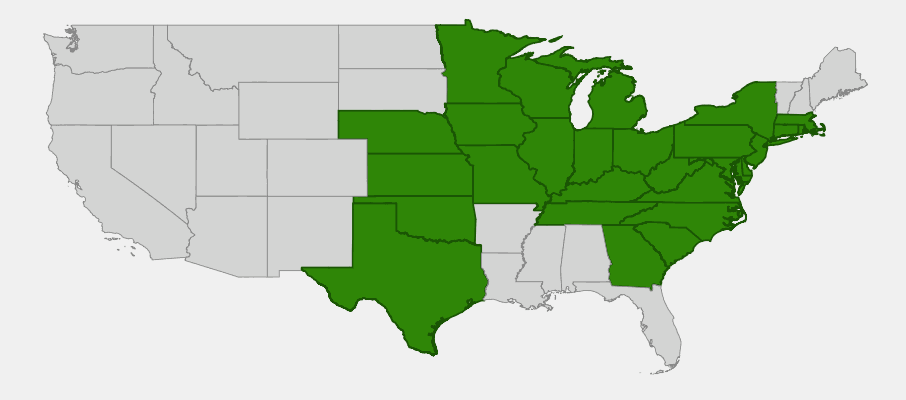
American Bladdernut is native to the eastern and central United States, with its range extending from New England and southern Canada westward through the Great Lakes region to Nebraska and Kansas, and southward to Georgia, Alabama, and Arkansas. The species reaches its greatest abundance in the Ohio River Valley region, the Appalachian foothills, and the moist valley forests of Kentucky, Tennessee, and neighboring states.
In its natural habitat, bladdernut is strongly associated with moist, rich soils along stream banks, flood plains, ravines, and shaded valley floors. It is typically found in the understory of mixed deciduous forests alongside species such as Sugar Maple, American Elm, Pawpaw, Spicebush, and various viburnums. The plant’s preference for moisture-retentive, nutrient-rich soils near water features distinguishes it from most other native shrubs.
Although seldom forming dense stands, American Bladdernut is a regular component of moist woodland edge habitats throughout its range. It tends to grow in scattered clumps along stream corridors and ravine slopes, where its suckering growth habit gradually expands into small colonies over time.
📋 Regional plant lists featuring American Bladdernut: Kentucky & Tennessee
Growing & Care Guide
American Bladdernut is an easy-care native shrub that asks for little beyond a moist site with shade or dappled light. Once established, it spreads gradually through root suckers to form a pleasing, naturalistic colony — exactly the kind of low-maintenance, wildlife-friendly landscape element that makes native plants so rewarding to grow.
Light
Bladdernut performs best in part shade to full shade, making it an excellent choice for the challenging north-facing or heavily shaded areas of the garden where few other flowering shrubs will thrive. It tolerates dappled sunlight under a high canopy very well. In full sun, it will grow but requires consistently moist soil and may show leaf scorch during heat waves. For Kentucky and Tennessee gardens, the part shade of a high deciduous canopy is ideal.
Soil & Water
This shrub demands moist, fertile soil and does not tolerate drought. It thrives in the rich, humus-rich soils found naturally along stream banks and in bottomland forests. Well-drained loam, clay-loam, or even somewhat heavy soils are fine, provided moisture is consistent. Bladdernut is not suited to dry, sandy soils. Mulching generously with leaf litter or shredded bark helps maintain the cool, moist root zone it prefers.
Planting Tips
Plant in fall or early spring, giving each plant 6–10 feet of space to spread naturally. Bladdernut transplants well from container stock. Place near water features, on the shaded side of rain gardens, or along woodland paths where the nodding spring flowers and rattling fall bladders can be appreciated at close range. The plant spreads by root suckers, forming a gradual colony — allow this natural expansion in naturalistic settings, or remove suckers as needed to contain spread.
Pruning & Maintenance
American Bladdernut requires minimal pruning. Remove dead or crossing stems in late winter. If the shrub becomes overgrown or too dense, it can be rejuvenated by cutting one-third of the oldest stems to the ground each year over three years. Avoid heavy fertilization — excess nitrogen produces lush foliage at the expense of flowers. The plant is generally pest- and disease-free in appropriate growing conditions.
Landscape Uses
- Shaded shrub borders — one of the few flowering natives that thrives in deep shade
- Rain garden edges — loves the moist margins of bioretention areas
- Riparian buffers — excellent for stream bank stabilization and wildlife corridors
- Woodland understory — naturalizes beautifully beneath tall deciduous trees
- Wildlife gardens — seeds eaten by grouse, turkey, and songbirds
- Four-season interest — spring flowers, summer bladders, autumn seed rattle, winter structure
Wildlife & Ecological Value
American Bladdernut makes meaningful contributions to woodland wildlife communities, particularly in the understory habitats where it is most at home.
For Birds
The seeds inside the persistent papery bladders are eaten by Wild Turkeys, Ruffed Grouse, and various woodland songbirds. The dense, multi-stemmed growth habit provides excellent cover and nesting sites for understory-nesting birds including thrushes, warblers, and White-throated Sparrows. The spring flowers attract insects that insectivorous birds depend on during the breeding season.
For Mammals
White-tailed deer occasionally browse the tender young shoots and foliage, though the plant’s ability to resprout vigorously from roots makes it resilient to deer browsing. Small mammals including chipmunks and white-footed mice collect and cache the nutritious seeds. The thicket-forming growth habit provides cover for cottontail rabbits and other small mammals.
For Pollinators
The drooping, nectar-rich spring flowers attract native bees, bumblebees, and other early-season pollinators at a critical time when flowering plants in the moist understory are relatively scarce. The floral structure, with its pendant bell shape, is particularly well-suited to bumblebees that can “buzz pollinate” the flowers. Native mining bees and sweat bees also visit the blossoms.
Ecosystem Role
Bladdernut plays a useful structural role in moist woodland ecosystems, filling the mid-shrub layer and providing canopy cover for the forest floor. Its suckering growth habit stabilizes stream banks and moist slopes, reducing erosion. The leaf litter decomposes readily, contributing to the rich humus layer characteristic of healthy bottomland soils. As a native species, it supports the native insect communities that broader wildlife food webs depend on.
Cultural & Historical Uses
American Bladdernut has a modest but interesting place in the ethnobotany of eastern North America. Several Indigenous nations, including the Iroquois (Haudenosaunee), Cherokee, and Ojibwe, found uses for the plant in both food and medicine. The seeds were roasted and eaten like nuts by some groups, and the young spring shoots were used as food in a manner similar to asparagus. The Iroquois reportedly used a bark infusion as a tonic and stimulant, and the plant appeared in traditional treatments for skin conditions.
European settlers primarily used the plant for ornamental purposes, recognizing the unusual beauty of the inflated bladder fruits — which were sometimes used in dried floral arrangements and wreaths. The hard, round seeds were also occasionally used as beads or game pieces by frontier communities. The wood, while small in size, is hard and fine-grained; historically it was used for small turned objects, tool handles, and similar small woodworking projects in areas where the shrub was common.
In the modern era, American Bladdernut is gaining appreciation as a native ornamental in ecological landscape design. Nurseries specializing in native plants increasingly carry it, and it appears in rain gardens, woodland restoration projects, and wildlife habitat plantings throughout its range. Its four-season ornamental interest — unique among native shrubs — and its genuine shade-tolerance make it a valuable and underused addition to the native plant palette for Kentucky, Tennessee, and the broader eastern United States.
Frequently Asked Questions
Are the seeds of American Bladdernut edible?
The roasted seeds are edible and have been eaten by Indigenous peoples. The seeds have a mild, nut-like flavor. Raw seeds contain small amounts of potentially irritating compounds, so light roasting is recommended before eating. They are not commonly eaten today but are not toxic.
How fast does American Bladdernut grow?
Bladdernut has a moderate growth rate, typically adding 1–2 feet per year in good conditions. It spreads gradually by root suckers to form a colony over time. In ideal moist, partially shaded conditions, it establishes quickly and fills in a 10-foot-wide clump within 5–8 years.
Will American Bladdernut spread aggressively?
It spreads by root suckers but is not aggressive. In a woodland garden setting, the spread is typically welcome. If you want to contain it, simply remove suckers as they appear in spring before they establish. It does not self-seed prolifically.
What are good companion plants for American Bladdernut?
For Kentucky and Tennessee gardens, excellent companions include Pawpaw (Asimina triloba), Spicebush (Lindera benzoin), Wild Hydrangea (Hydrangea arborescens), Sweetshrub (Calycanthus floridus), and native ferns such as Ostrich Fern and Cinnamon Fern. All thrive in similar moist, shaded conditions.
Why is my American Bladdernut not flowering?
Bladdernut typically needs 3–5 years after planting before it flowers reliably. Additionally, excessively deep shade can reduce flowering. A site with dappled light or morning sun with afternoon shade will produce the best flower display. Make sure the plant is not drought-stressed during bud set in late summer of the previous year.