
‘Anapanapa (Colubrina asiatica)
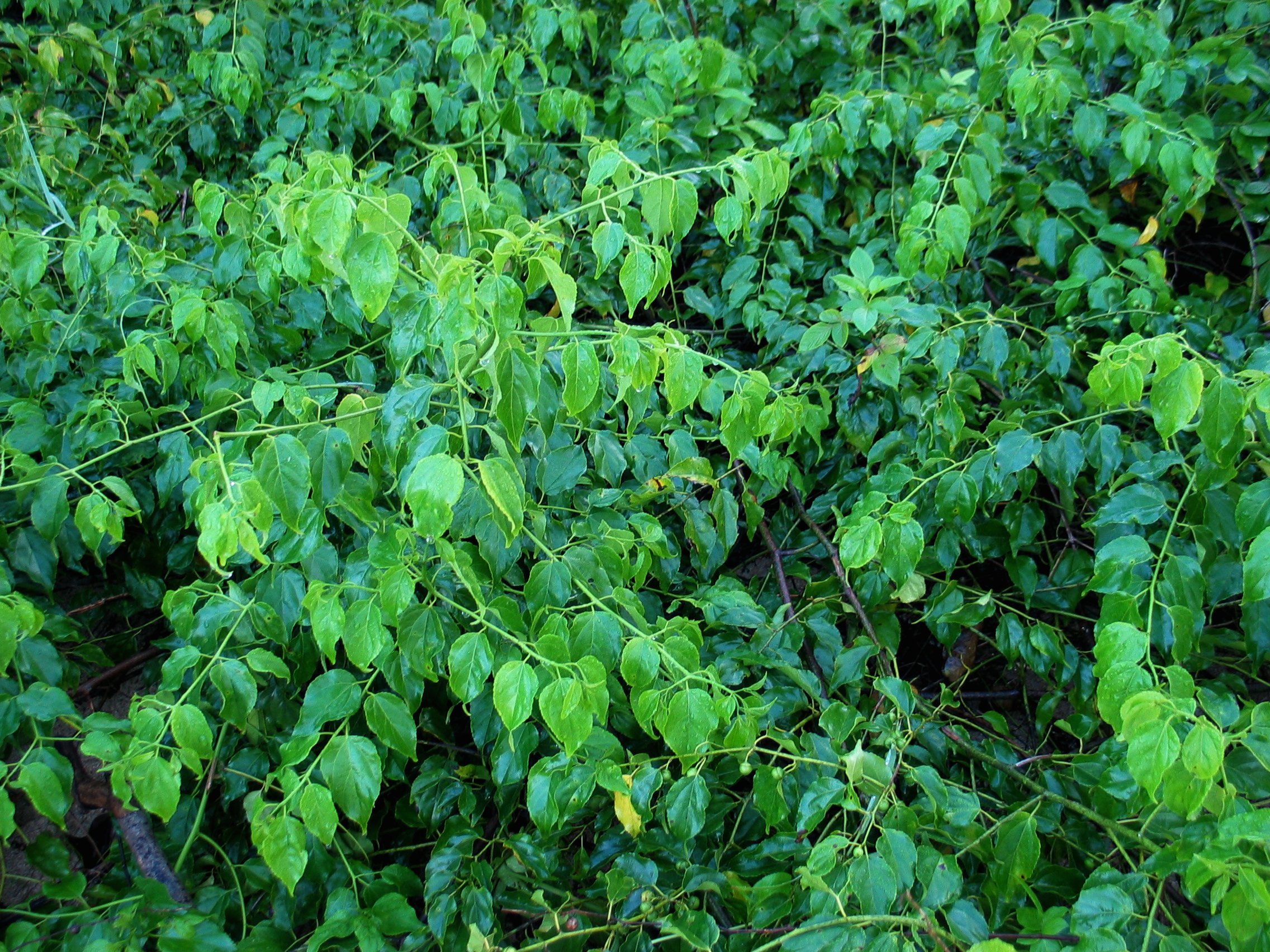
Colubrina asiatica, known in Hawaiian as ‘Anapanapa (also spelled Ānapanapa), is a sprawling coastal shrub or liana native to the Hawaiian Islands and the broader Indo-Pacific region. This member of the Rhamnaceae (buckthorn) family is one of Hawaii’s most wind- and salt-tolerant native woody plants, thriving in the exposed, harsh conditions of low-elevation coastal zones where few native plants can survive. The name ‘Anapanapa is evocative in Hawaiian — it can refer to something that glistens or shines, a nod to the glossy, reflective quality of the plant’s smooth leaves in coastal sunlight.
In its native Hawaiian habitat, ‘Anapanapa grows as an opportunistic colonizer of coastal cliffs, sandy beaches, rocky shores, and lava substrates near sea level. Its stems can sprawl horizontally along the ground or scramble upward through other vegetation in a vine-like manner, sometimes reaching 10 feet in height or sprawling over much larger areas. This flexible growth strategy allows ‘Anapanapa to occupy coastal niches that upright shrubs and trees cannot. The plant is particularly valued in native coastal restoration because of its proven ability to tolerate salt spray, wind, and the poor, fast-draining soils typical of Hawaiian shorelines.
Although Colubrina asiatica has a wide Indo-Pacific distribution and is sometimes considered weedy in parts of Florida and the Caribbean — where it was introduced — the Hawaiian populations are regarded as indigenous and represent an important component of native coastal ecosystems. In Hawaii, ‘Anapanapa provides critical habitat structure and food resources in coastal plant communities that are among the most threatened on Earth, having lost over 90% of their original extent to development, invasive species, and shoreline erosion. Its use in restoration plantings along Hawaiian coastlines has grown significantly in recent decades as practitioners recognize its resilience and ecological importance.
Identification
‘Anapanapa is a multi-stemmed, sprawling to climbing shrub that grows 3 to 10 feet tall or spreads horizontally over considerably larger areas. Stems are slender, smooth, and greenish-brown when young, becoming woodier and gray-brown with age. The plant’s flexible, scrambling habit sets it apart from most other Hawaiian coastal shrubs — it will climb over rocks, dune vegetation, and other plants with ease.
Leaves
The leaves of ‘Anapanapa are one of its most distinctive features. They are simple, alternate, and broadly ovate (egg-shaped), 1.5 to 3 inches (4–8 cm) long, with a slightly pointed tip and a rounded to heart-shaped base. The margins are finely toothed with small, rounded teeth. The upper surface is dark green and noticeably glossy, giving the plant its glistening quality in sunlight. The underside is paler and matte. Leaves are arranged alternately along the stems and have a somewhat leathery texture that helps resist desiccation in the coastal environment. Three prominent veins arise from near the base of each leaf, a characteristic shared with other members of the Rhamnaceae family.
Flowers & Fruit
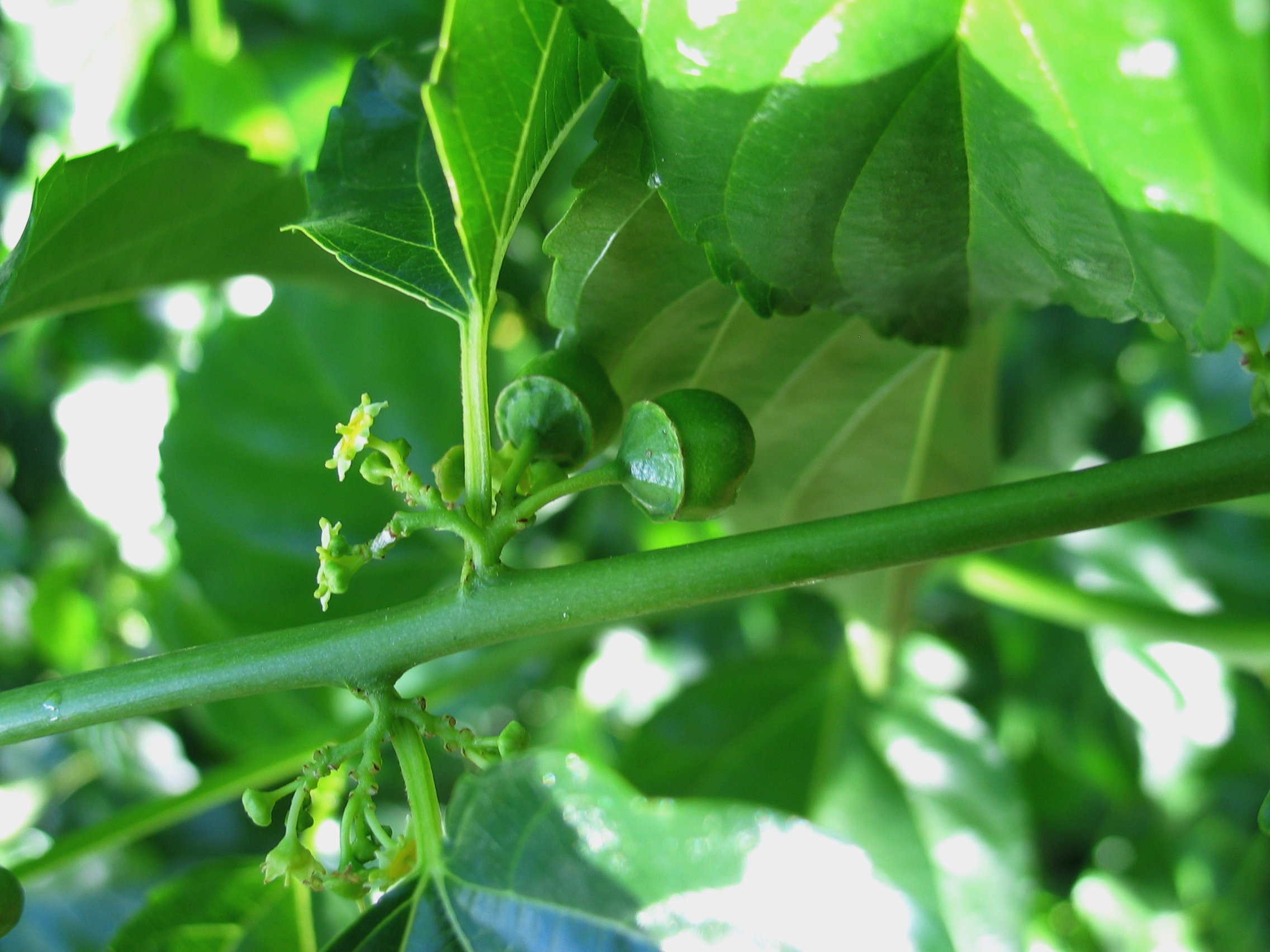
The flowers of ‘Anapanapa are small and inconspicuous — greenish-yellow, about ¼ inch in diameter — produced in small axillary clusters in the leaf axils. Despite their modest size, the flowers are a reliable nectar source for native Hawaiian insects, including endemic bees. Flowering occurs throughout much of the year in Hawaii, with peak production in warmer months. The fruit is a round, three-lobed drupe about ¼ to ½ inch (6–12 mm) in diameter, initially green and turning dark purple-black at maturity. Each fruit contains three hard seeds. The fruits are buoyant and saltwater-tolerant, which has allowed the species to disperse across the Pacific Ocean from island to island — an extraordinary natural dispersal mechanism that accounts for its wide Indo-Pacific range.
Quick Facts
| Scientific Name | Colubrina asiatica |
| Family | Rhamnaceae (Buckthorn) |
| Plant Type | Evergreen Shrub / Liana (vine-like) |
| Mature Height | 3–10 ft (sprawling or climbing) |
| Sun Exposure | Full Sun to Part Shade |
| Water Needs | Low to Moderate |
| Bloom Time | Year-round (peak in warm months) |
| Flower Color | Greenish-yellow |
| USDA Hardiness Zones | 10–12 |
Native Range
‘Anapanapa has one of the widest natural distributions of any plant in this guide — its range spans the tropical Indo-Pacific from East Africa and the coasts of South and Southeast Asia, through the Philippines, Micronesia, Polynesia, and Melanesia, to the Hawaiian Islands. In the United States, it is native to Hawaii, where it is considered indigenous — having arrived via natural ocean dispersal of its buoyant, salt-tolerant fruits long before human contact. In Hawaii, it occurs on all the main islands, typically at low elevations close to the coast.
Within Hawaii, ‘Anapanapa is found from sea level to about 500 feet (150 m) elevation, primarily in coastal strand communities, beach vegetation zones, rocky coastal cliffs, and the margins of lowland dry and mesic forests. It is most common on the leeward (dry) sides of islands but can also be found in more exposed windward coastal settings. The plant is closely associated with other native coastal species such as Naupaka kahakai (Scaevola taccada), beach morning glory (Ipomoea pes-caprae), and various native grasses and sedges that form Hawaii’s highly threatened coastal strand ecosystem.
Outside of Hawaii and its Indo-Pacific native range, Colubrina asiatica has been introduced to parts of Florida, the Caribbean, and the Pacific Coast of Mexico, where it has naturalized and is considered invasive. This context is important — when sourcing plants for Hawaiian restoration, always obtain material with documented Hawaiian provenance to preserve local genetic diversity and avoid contributing to invasive spread elsewhere.
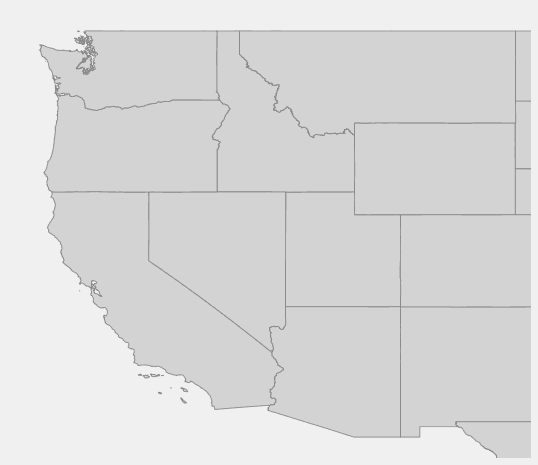
📋 Regional plant lists featuring ‘Anapanapa: Hawaii
Growing & Care Guide
‘Anapanapa is an excellent choice for Hawaiian coastal gardens and restoration projects, offering exceptional resilience in one of the harshest plant growing environments — the sun-baked, wind-scoured, salt-sprayed coastline. Once established, it requires very little care and provides excellent ground cover, erosion control, and wildlife value in coastal settings.
Light
‘Anapanapa thrives in full sun, which is the condition it experiences on exposed Hawaiian coastlines. It tolerates part shade and can grow adequately in areas that receive 4 to 6 hours of direct sunlight daily, but plants in full sun develop the most vigorous growth and the most compact, wind-resistant form. Avoid deep shade, which causes the stems to become etiolated (stretched and weak) and reduces fruit production.
Soil & Water
This is where ‘Anapanapa truly excels — it grows in some of the most challenging soils available, including pure sand, crushed coral, rocky lava, and thin, fast-draining coastal soils with minimal organic matter. It does not tolerate waterlogged or poorly drained soils. Once established (typically after 6–12 months), ‘Anapanapa is highly drought-tolerant and rarely needs supplemental irrigation except during extended dry spells. Its salt tolerance is exceptional — it can be planted right at the edge of the spray zone of the ocean. In garden settings away from the coast, provide well-drained soil and water only when the soil surface is completely dry.
Planting Tips
Plant ‘Anapanapa in spring or fall when temperatures are moderate and establishment stress is reduced. Container-grown plants from Hawaiian native plant nurseries are the best source. Space plants 6 to 10 feet apart for a naturalistic coastal hedge or erosion-control planting. Mulch lightly around the base (not touching the stem) to help retain soil moisture during establishment. Avoid heavily amended soils — this plant prefers lean, low-nutrient conditions. Staking is generally not needed due to the plant’s naturally sprawling or trailing habit.
Pruning & Maintenance
‘Anapanapa requires minimal maintenance once established. Light pruning in late winter or early spring can be done to shape the plant and remove any winter-damaged growth, but heavy pruning is not necessary and may stress the plant. The sprawling, vine-like habit is part of its natural character and should be accommodated in the landscape rather than fought against. This plant is pest- and disease-resistant in its native Hawaiian coastal environment.
Landscape Uses
‘Anapanapa is particularly well-suited for the following uses:
- Coastal erosion control — its sprawling root system stabilizes sandy and rocky shoreline soils
- Salt-spray buffer planting along driveways, walls, and structures near the ocean
- Native coastal habitat restoration in partnership with Naupaka kahakai and other coastal strand species
- Ground cover on rocky lava fields and coastal bluffs
- Wildlife habitat — fruit-producing cover for native birds and invertebrates
- Xeriscape gardens in low-rainfall Hawaiian coastal communities
Wildlife & Ecological Value
‘Anapanapa plays an important ecological role in Hawaiian coastal plant communities, providing food, shelter, and structural habitat in ecosystems that have been severely degraded by development and invasive species.
For Birds
The small, dark fruits of ‘Anapanapa are consumed by a variety of native and migratory birds that use Hawaiian coastal habitats. Native Hawaiian forest birds occasionally visit coastal areas during winter, and introduced fruit-eating birds also consume the berries and aid in seed dispersal. The dense, low-growing stems provide nesting and roosting cover for ground-nesting coastal birds, including the endangered Hawaiian petrel and Newell’s shearwater in areas close to their nesting grounds.
For Pollinators
The small greenish-yellow flowers of ‘Anapanapa, while inconspicuous to human eyes, produce nectar that attracts native Hawaiian insects including endemic bees (Hylaeus species — the yellow-faced bees, many of which are federally listed as threatened or endangered). Supporting ‘Anapanapa plantings directly benefits these rare pollinators, which depend on native flowering plants in degraded coastal habitats.
For Mammals
In its broader Indo-Pacific range, the fruits are consumed by bats and other mammals. In Hawaii, introduced mammals such as rats and mongooses may consume the fruits, though this represents an incidental and not ecologically important interaction. The primary wildlife value in Hawaii is for native birds and invertebrates.
Ecosystem Role
‘Anapanapa is a pioneer species in coastal Hawaiian plant communities — one of the first native plants to colonize bare lava, coastal debris fields, and disturbed shorelines. Its ability to establish on minimal substrate makes it a critical nurse plant that creates microhabitats favorable for other native coastal species to establish. As the plant grows and spreads, it builds organic matter into otherwise sterile coastal soils, gradually creating the conditions needed for a more diverse native coastal plant community to develop.
Cultural & Historical Uses
In traditional Hawaiian culture, ‘Anapanapa had practical and medicinal applications that reflect the deep botanical knowledge of Native Hawaiians. The plant’s flexible, tough stems were used in basket weaving and mat making, and the wood of older, more established plants was occasionally used for small implements and tools. Coastal Hawaiian communities would have been intimately familiar with ‘Anapanapa as a prominent member of the coastal plant communities near their settlements.
Medicinally, various parts of the plant were used in traditional Hawaiian medicine (lā’au lapa’au). The leaves were reportedly used in preparations to treat skin conditions, and the plant was incorporated into broader herbal formulas. In other parts of its Indo-Pacific range — particularly in Southeast Asia and the Pacific Islands — Colubrina asiatica has a long history of medicinal use. The bark and leaves contain alkaloids and tannins that have antimicrobial and anti-inflammatory properties, and traditional healers across the Pacific have used it to treat fevers, skin infections, and joint pain. Modern phytochemical research has confirmed the presence of bioactive compounds including colubrinol, colubrinin, and various flavonoids that may account for these traditional uses.
The fruit of ‘Anapanapa has been used across the Pacific as a soap substitute, as the saponins in the fruit and seeds produce a lather when crushed in water. This practical use — cleaning hands, hair, and fabrics with the crushed fruit — was common throughout the Pacific Islands and reflects the plant’s importance as a multi-use resource in traditional coastal communities. Today, ‘Anapanapa is primarily valued as a restoration plant and a living connection to Hawaii’s coastal plant heritage, increasingly rare as coastal development and invasive species continue to threaten Hawaiian shoreline ecosystems.
Frequently Asked Questions
Is ‘Anapanapa invasive?
In Hawaii, ‘Anapanapa (Colubrina asiatica) is considered indigenous and is an appropriate native plant for Hawaiian gardens and restoration. However, the same species has been introduced to Florida and parts of the Caribbean, where it is listed as invasive and is not recommended for planting. Always consider your location — in Hawaii, it is a valuable native plant; outside Hawaii, check local invasive plant lists before planting.
How do I get ‘Anapanapa to grow as a shrub versus a vine?
‘Anapanapa’s growth form depends largely on its growing conditions. In open, sunny coastal areas without support structures, it tends to sprawl horizontally as a low ground cover. Give it a fence, wall, or trellis and it will climb. Pruning back the longer, trailing stems regularly can encourage a more compact, shrubby form. Providing more shade also encourages more vertical, climbing growth as the plant reaches for light.
Can ‘Anapanapa grow in containers?
Yes, ‘Anapanapa can be grown in large containers with excellent drainage. Use a well-draining mix such as cactus/succulent potting soil or a blend of regular potting mix and coarse perlite. Container plants will need more frequent watering than in-ground plants but still require excellent drainage to prevent root rot. Container growing is a good option for coastal balconies and lanais where ground planting is not possible.
What is the best way to propagate ‘Anapanapa?
‘Anapanapa can be propagated from seeds or stem cuttings. Seeds should be planted fresh (seed viability declines with storage) and lightly scarified or soaked in water for 24 hours before planting. Semi-hardwood cuttings (4–6 inches long) taken in summer root readily in a well-draining propagation medium with bottom heat. Cuttings are generally the faster method for producing plants ready for restoration planting.
How salt-tolerant is ‘Anapanapa?
Very salt-tolerant. It is one of the most salt-resistant native Hawaiian plants and can be planted in areas exposed to direct ocean spray. This makes it invaluable for coastal restoration and landscaping near the shoreline where few other native plants can survive. Its natural habitat includes beach dune margins and rocky coastal cliffs exposed to regular salt spray.

Looking for a nursery that carries ‘Anapanapa?
Browse our native plant nursery directory: Hawaii