Beach Evening Primrose (Camissoniopsis cheiranthifolia)
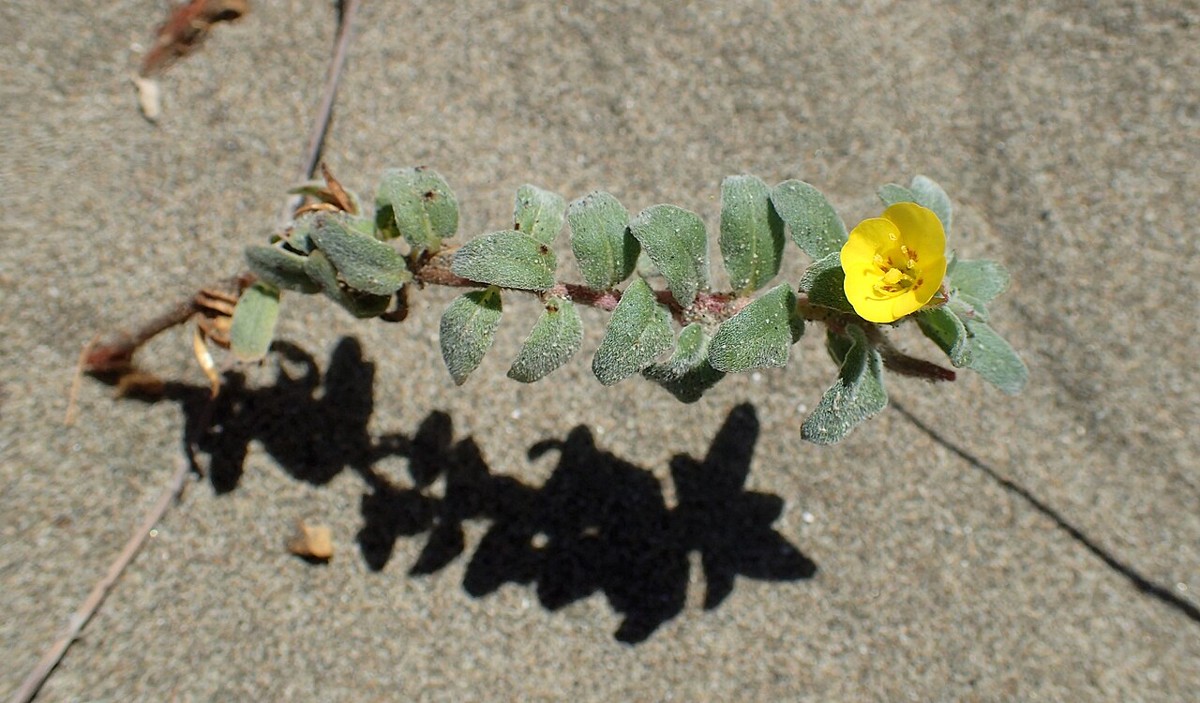
Camissoniopsis cheiranthifolia, commonly known as beach evening primrose or beach suncup, is a low, sprawling native wildflower found almost exclusively on the coastal dunes and sandy beaches of California and southern Oregon. A member of the Onagraceae (evening primrose family), it forms loose mats of trailing, silvery-haired stems studded with cheerful, bright yellow, four-petaled flowers that open in the morning and gradually fade to orange or reddish tones by evening.
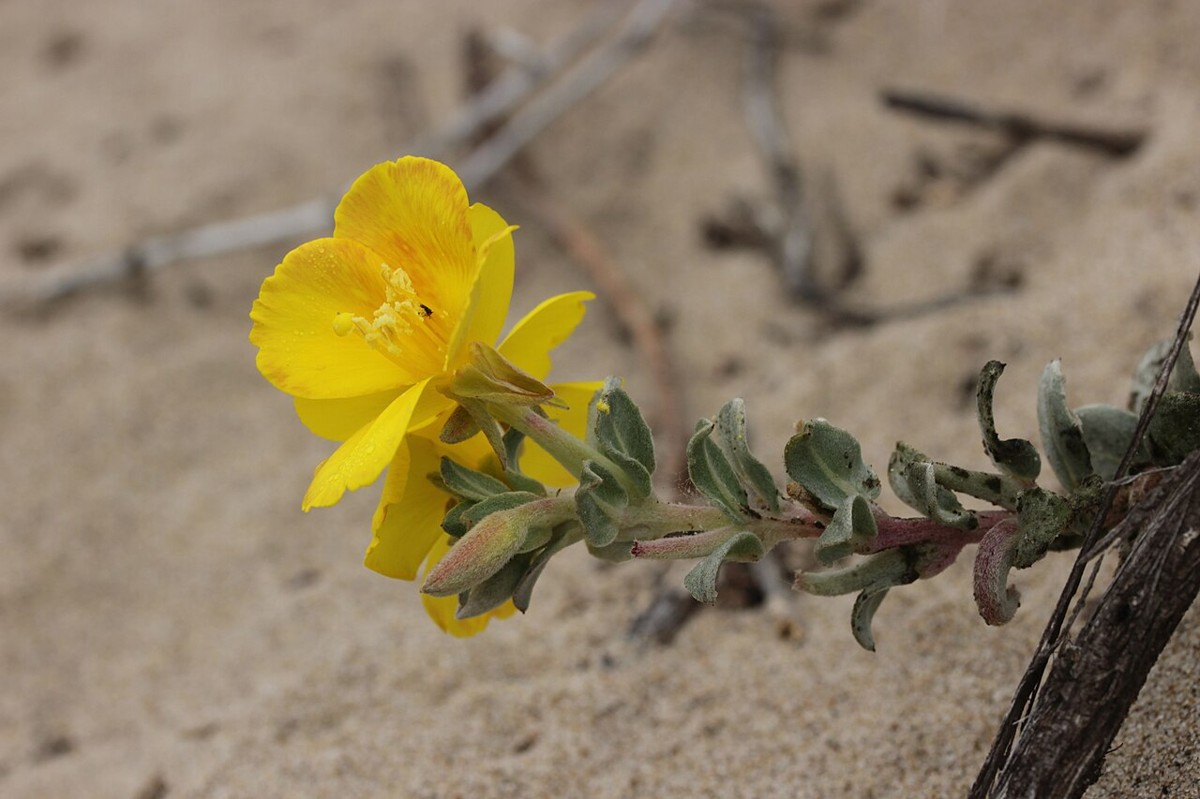
Despite its common name, beach evening primrose is not strictly nocturnal like many of its relatives — its flowers open with the morning sun and remain visible through the day, closing and aging to a warm orange-red by late afternoon, which gives a single plant a shifting palette of color across the hours. Its dense covering of fine, silvery hairs and low, ground-hugging habit are well-suited adaptations to the intense sun, salt spray, and shifting sand of the beach and foredune environment it calls home.
Beach evening primrose is one of the most important native plants for stabilizing coastal dunes within its range, and it makes an excellent, low-maintenance groundcover for a coastal garden, where its drought tolerance, salt tolerance, and long bloom season are valued by gardeners working close to the Pacific shoreline.
Identification
Beach evening primrose is a low, mat-forming perennial with trailing stems that radiate outward from a central crown, typically only a few inches tall but spreading 1 to 3 feet or more across the sand. The entire plant has a soft, silvery-gray cast from its dense covering of fine hairs.
Leaves
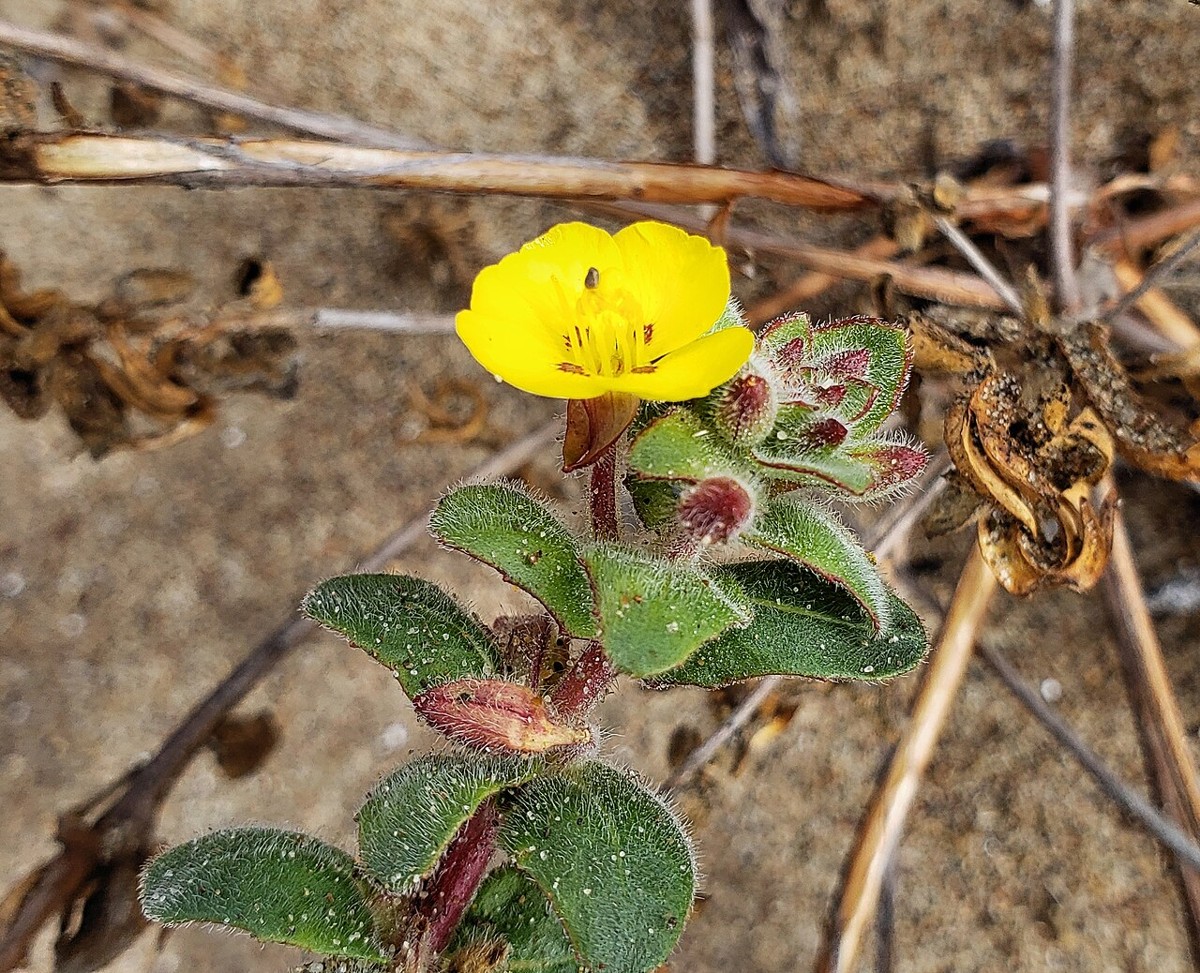
The leaves are oval to lance-shaped, ½ to 1½ inches long, arranged alternately along the trailing stems, and covered in fine silvery hairs that help reflect intense sun and reduce water loss in the exposed, salty beach environment. The silvery foliage is one of the plant’s most distinctive and attractive features, giving it a soft, coastal look even when not in bloom.
Flowers
The flowers are bright, clear yellow, four-petaled, and roughly ¾ to 1¼ inches across, borne singly at the ends of the trailing stems among the upper leaves. They typically open in the morning and remain visible through the day, gradually fading to orange or reddish tones as they age — so a single sprawling plant can show fresh yellow blooms alongside older, rust-colored ones at the same time. Bloom season is long, often running from late winter through summer, with peak flowering in spring.
Fruit & Seeds
After flowering, each bloom develops into a slender, curved seed capsule that dries and splits open to release small seeds near the base of the parent plant. The capsules are inconspicuous among the trailing foliage and are rarely a feature gardeners notice.
Quick Facts
| Scientific Name | Camissoniopsis cheiranthifolia (syn. Camissonia cheiranthifolia) |
| Family | Onagraceae (Evening Primrose) |
| Plant Type | Herbaceous Perennial Groundcover |
| Mature Height | 3–6 in (8–15 cm) |
| Mature Spread | 1–3 ft (30–90 cm) |
| Growth Rate | Moderate |
| Sun Exposure | Full Sun |
| Water Needs | Low |
| Soil Type | Sandy, fast-draining; tolerates salt spray |
| Soil pH | 6.5–8.0 (neutral to alkaline) |
| Bloom Time | February – August |
| Flower Color | Bright yellow, aging to orange-red |
| Fall Color | None notable |
| Fruit | Small curved seed capsules |
| Deer Resistant | Yes |
| USDA Hardiness Zones | 8–10 |
Native Range
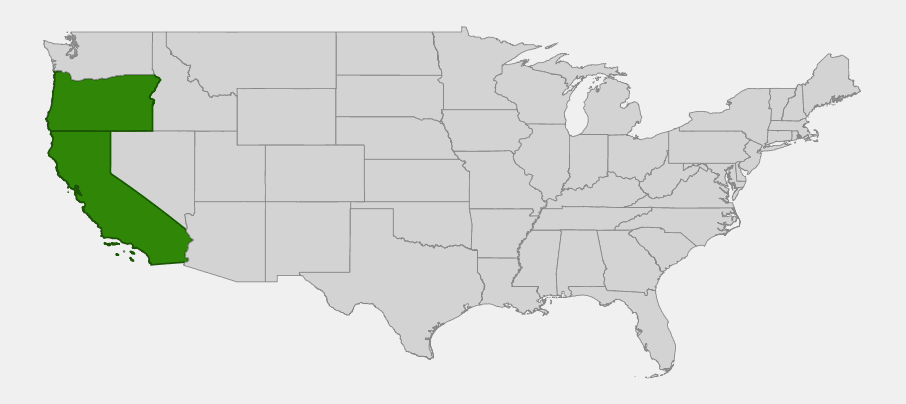
Beach evening primrose is native to the immediate coastline of California and southern Oregon, with its range continuing south into Baja California, Mexico. It is a true coastal strand species, essentially restricted to a narrow band along the Pacific shoreline rather than occurring inland.
Within this coastal strip, it grows on open, active sand dunes, stabilized dune backsides, sandy beach bluffs, and other sandy coastal habitats directly exposed to salt spray and wind, typically within a mile or two of the ocean and from sea level to only modest elevation. It is considered one of the characteristic plants of California’s coastal strand plant community.
Beach evening primrose’s deep taproot and low, mat-forming habit anchor it against shifting sand and strong onshore winds, while its silvery, hairy foliage helps the plant cope with intense reflected sun, salt exposure, and the droughty, fast-draining conditions typical of beach and dune sand.
📋 Regional plant lists featuring Beach Evening Primrose: California & Nevada · Western Oregon & Western Washington
Growing & Care Guide
Beach evening primrose is a tough, rewarding groundcover for coastal gardeners within its native range, bringing months of cheerful yellow flowers to the kind of sandy, salt-exposed sites where few other plants thrive.
Light
Plant in full sun. This species is adapted to the fully exposed conditions of open dunes and beaches and flowers poorly, with sparse, stretched growth, in shaded garden spots.
Soil & Water
Give it sandy, fast-draining soil that mimics its native beach and dune habitat; it is naturally salt-tolerant and well suited to gardens directly exposed to ocean spray and wind. Established plants are genuinely drought-tolerant and need little to no supplemental water along the cool, foggy California and Oregon coast, though occasional deep watering can help during unusually dry or hot spells.
Planting Tips
Set out container plants in fall or early spring to allow roots to establish before the heat of summer. Choose the sandiest, most open and exposed site available — a dune garden, coastal bluff planting, or sandy slope all work well — and avoid heavy, rich, or regularly irrigated garden soil, which does not suit this species. Space plants 2 to 3 feet apart to allow for their spreading, mat-forming habit.
Pruning & Maintenance
Little pruning is needed. Trim back tired or overly sprawling stems in late summer or fall if a tidier appearance is desired, though this is optional. Beach evening primrose is naturally low-maintenance once established and rarely needs fertilizer or soil amendment, both of which can work against its preference for lean, sandy conditions.
Propagation
Propagate from seed sown in fall, or by rooting stem cuttings taken from healthy trailing stems in spring or summer; cuttings often root readily where stem nodes contact moist sand. Division of established mats is possible but can be slow to recover, since the plant’s deep taproot resents heavy disturbance.
Landscape Uses
Beach evening primrose fits naturally into several coastal garden settings:
- Dune and coastal strand restoration plantings where it is a keystone stabilizing species
- Beachfront and bluff gardens exposed to salt spray and wind
- Sandy groundcover for low-water coastal landscaping
- Erosion control on loose, sandy slopes near the shoreline
- Pollinator gardens along the immediate coast, where few other long-blooming natives tolerate the exposure
Wildlife & Ecological Value
As one of the few long-blooming, flower-rich plants adapted to open coastal dunes, beach evening primrose plays an outsized role in supporting pollinators and stabilizing a fragile, specialized ecosystem.
For Pollinators
The bright yellow flowers attract a range of native bees, syrphid flies, and other daytime pollinators that are active along the immediate coast, where floral resources on open sand can otherwise be sparse. Its long bloom season, often stretching from late winter into summer, makes it an unusually reliable nectar source in a demanding habitat.
For Birds
Beach evening primrose is not a major direct food source for birds, though the insects it attracts provide foraging opportunities for shorebirds and other species working the dune and beach edge, and its low, dense mats offer some ground-level cover in an otherwise open, exposed landscape.
For Mammals
Small coastal mammals may use the plant’s low cover for shelter among the dunes, though it is not a significant food source for larger mammals. Its deep taproot and spreading growth help anchor loose sand, indirectly supporting the broader dune community that many coastal species depend on.
Ecosystem Role
Beach evening primrose is considered a keystone species of California’s coastal strand and dune plant community, where its deep roots and mat-forming stems help stabilize shifting sand against wind and wave action. Along with a handful of other dune specialists, it plays a critical role in maintaining the integrity of foredune systems that protect inland coastal habitats from erosion and storm surge.
Cultural & Historical Uses
Beach evening primrose does not carry an extensive documented history of traditional food or medicinal use by Indigenous peoples of the California and Oregon coast, consistent with many small, low-growing dune specialists; specific, well-documented traditional uses for this species are limited in the available literature.
The genus name Camissoniopsis, created when botanists split this and related species away from the broader genus Camissonia, reflects ongoing refinement in the taxonomy of the evening primrose family; the species is still frequently listed under its older name, Camissonia cheiranthifolia, in older references and some agency databases, including the USDA PLANTS database. The species name cheiranthifolia means “wallflower-leaved,” a reference to the resemblance of its foliage to that of wallflowers (Erysimum species).
In recent decades, beach evening primrose has become an important focus of coastal dune restoration efforts throughout California, where native dune vegetation has been displaced in many areas by invasive European beachgrass and iceplant; replanting with beach evening primrose and other native dune specialists is a standard technique in restoring degraded foredune habitat.
Frequently Asked Questions
Is beach evening primrose the same as the inland evening primrose species?
No. While it belongs to the same evening primrose family (Onagraceae), beach evening primrose is a distinct, highly specialized coastal strand species restricted to beaches and dunes, unlike desert or inland evening primroses adapted to very different conditions. It should not be confused with species such as California evening primrose or dune evening primrose, which occupy inland desert habitats.
Do the flowers really change color during the day?
Yes. Flowers typically open bright yellow in the morning and gradually fade to orange or reddish tones as they age through the day, so a single plant in bloom often shows a mix of fresh yellow and older, rust-colored flowers at once. This is a normal part of the species’ natural flowering cycle, not a sign of stress.
Can I grow beach evening primrose away from the immediate coast?
It can be grown somewhat inland in a garden that mimics sandy, well-drained, low-water conditions, but it is best suited and most valuable ecologically when planted within or very near its native coastal strand range, where it supports local dune ecology and pollinators.
Is this plant salt-tolerant?
Yes, strongly so. Beach evening primrose is adapted to direct salt spray and sandy, saline-influenced soils as part of its native beach and dune habitat, making it one of the more salt-tolerant native groundcovers available for California and Oregon coastal gardens.
Does beach evening primrose help prevent beach erosion?
Yes. Along with a handful of other native dune plants, its deep taproot and spreading stems help stabilize loose sand against wind and wave action, making it a valuable species in coastal dune restoration projects aimed at rebuilding natural erosion protection.

Looking for a nursery that carries Beach Evening Primrose?
Browse our native plant nursery directory: California · Oregon