Bigelow Nolina (Nolina bigelovii)
Nolina bigelovii, commonly known as Bigelow Nolina or Bigelow Beargrass, is a striking desert succulent native to the Sonoran and Mojave Desert regions of the southwestern United States. Though it closely resembles a large ornamental grass or a yucca, this remarkable plant belongs to the family Asparagaceae (subfamily Nolinoideae) and is ecologically adapted to the harsh conditions of rocky desert slopes and canyon walls where few other plants survive. Its name honors Dr. John Milton Bigelow, a 19th-century botanist and physician who participated in early surveys of the American Southwest.
The plant forms an impressive architectural focal point in the desert landscape: a stout, fibrous trunk rising 3 to 6 feet from the ground, crowned with a massive rosette of long, narrow, finely-toothed leaves that can measure 2 to 4 feet in length. When in bloom, a tall flower stalk emerges from the center of the rosette bearing dense clusters of tiny creamy-white flowers, attracting a variety of desert pollinators. The seeds and fruits provide food for birds, small mammals, and insects, while the dense leaf bases offer shelter for lizards and other small desert wildlife.
Bigelow Nolina is an outstanding choice for low-water, low-maintenance desert landscaping. It requires virtually no supplemental irrigation once established, thrives in full sun, and demands only well-drained soils — making it an ideal candidate for xeriscape gardens, desert restoration projects, and naturalistic plantings throughout Arizona, California’s desert regions, Nevada, and Utah. Its bold, sculptural form provides year-round visual interest, and it is remarkably long-lived, with individual plants potentially surviving for many decades.
Identification
Bigelow Nolina is immediately recognizable as a large, grass-leaved plant growing atop a stout woody trunk. Mature specimens typically stand 5 to 10 feet tall, with the trunk comprising 3 to 6 feet of that height and the arching leaf rosette adding the remainder. The overall form is distinctive even at a distance, resembling an outsized ornamental grass perched atop a palm-like base.
Trunk and Base
The trunk is woody, fibrous, and typically unbranched, though older plants may occasionally fork near the top. The surface is rough and covered with the persistent, dried bases of old leaves that give it a shaggy, armor-like texture. The trunk grows slowly over many years, and large specimens represent considerable age — often 50 to 100 years or more. The base may expand at the ground into a spreading root crown.
Leaves
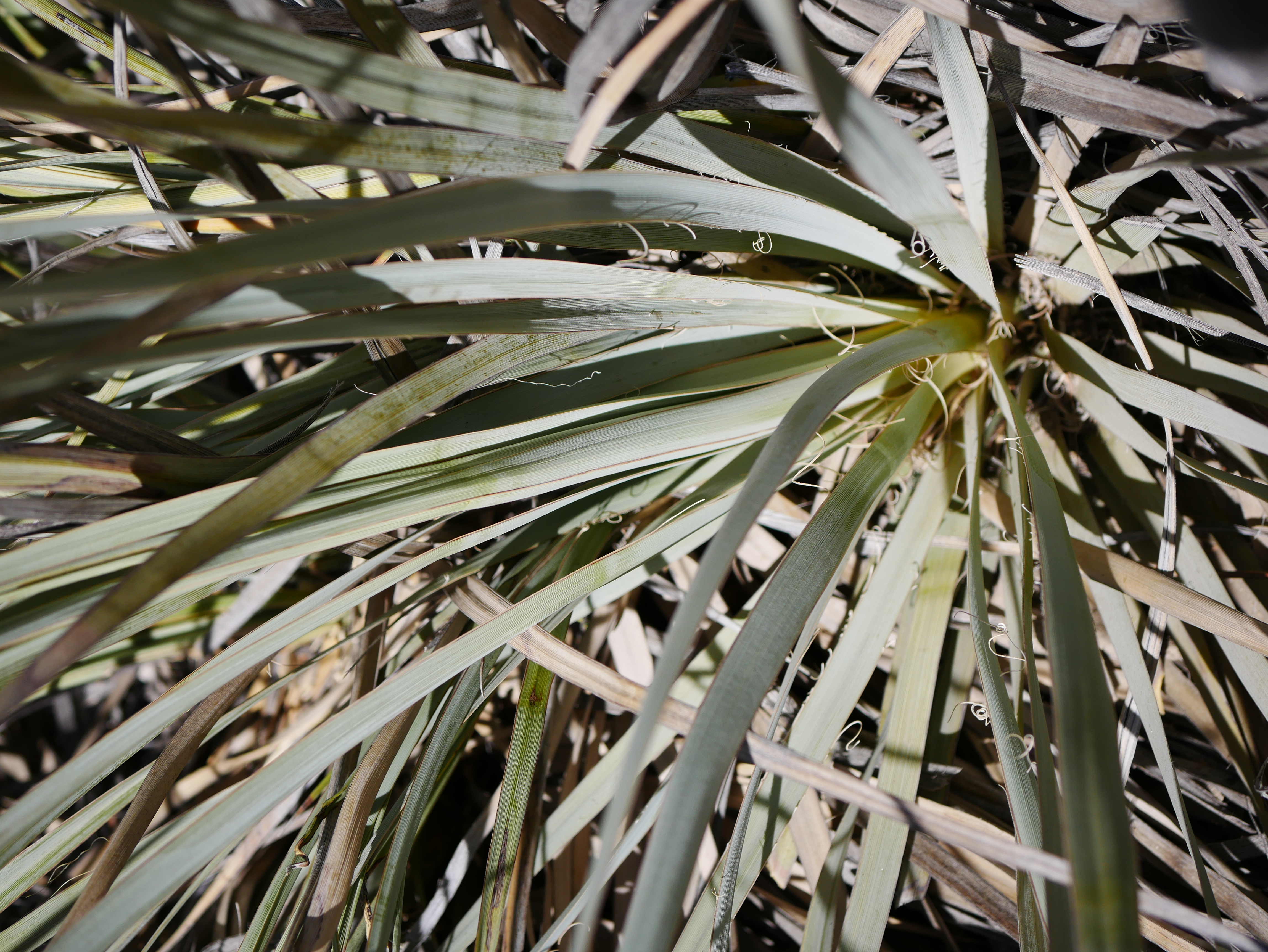
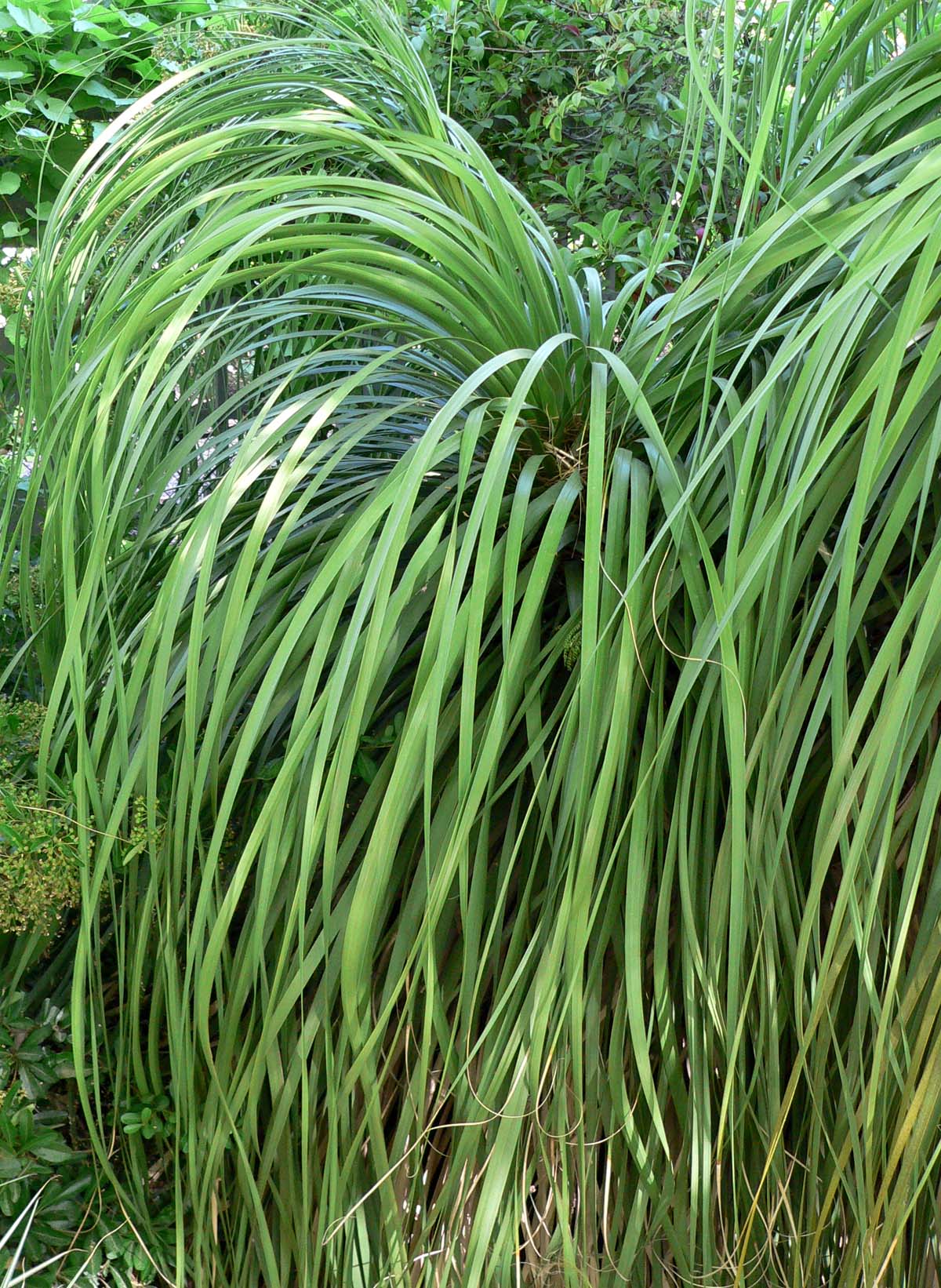
The leaves are the plant’s most visually striking feature. Each leaf is long, narrow, flat to slightly concave, and can reach 2 to 4 feet in length and less than half an inch in width. They are yellowish-green to grayish-green in color, slightly rough in texture, and the margins are finely saw-toothed (serrated) — enough to cause minor scratches if handled carelessly. Unlike yucca leaves, which end in a sharp terminal spine, Nolina leaves end in a fibrous, fraying tip. The leaves form a dense, fountain-like rosette that droops gracefully outward.
Flowers & Fruit
Bigelow Nolina blooms in spring, typically April to May. The flower stalk emerges from the center of the leaf rosette and can reach 5 to 10 feet tall, bearing dense, branching panicles of hundreds of small, creamy-white to pale yellow flowers. Individual flowers are tiny but collectively form an impressive plume. The plant is dioecious — male and female flowers occur on separate plants. After pollination, female plants produce small, papery, three-lobed capsule fruits that dry to a light straw color and persist on the stalk for months. Seeds are small and rounded.
Quick Facts
| Scientific Name | Nolina bigelovii |
| Family | Asparagaceae (Nolinoideae) |
| Plant Type | Evergreen Succulent Shrub / Beargrass |
| Mature Height | 8 ft |
| Sun Exposure | Full Sun |
| Water Needs | Low (Drought Tolerant) |
| Soil | Well-drained; rocky, sandy, or gravelly |
| Bloom Time | April – May |
| Flower Color | Creamy white |
| USDA Hardiness Zones | 9–11 |
Native Range
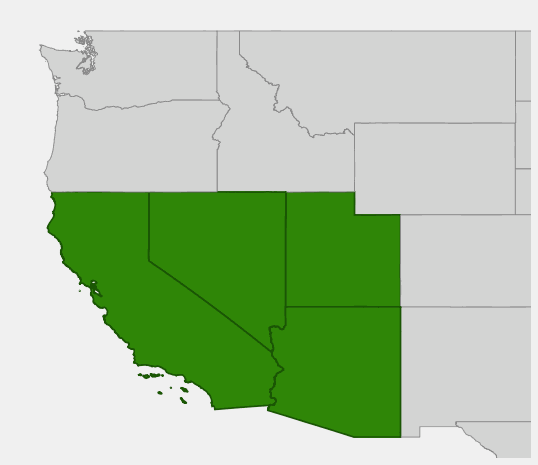
Bigelow Nolina is endemic to the desert Southwest of the United States, with its native range centered on the Sonoran and Mojave Deserts. It occurs primarily in Arizona, the eastern Mojave Desert of California, southern Nevada, and the extreme southwestern corner of Utah. Within this range, it is most abundant on rocky hillsides, canyon walls, and dry desert slopes from low desert elevations up to about 4,500 feet.
In Arizona, Bigelow Nolina is particularly common on the rocky slopes of the Sonoran Desert in Maricopa, Yuma, La Paz, and Mohave counties. In California, it occurs in the eastern desert regions of San Bernardino and Riverside counties, often growing alongside Joshua Trees (Yucca brevifolia), Saguaro (Carnegiea gigantea), and various species of prickly pear and cholla cactus. The species shows a preference for rocky substrates — granitic boulderfields, limestone outcrops, and volcanic slopes — where its well-drained soil requirement is naturally met.
This plant is well-adapted to the extreme heat, intense solar radiation, and prolonged drought characteristic of its native range. It has evolved mechanisms to store water in its thick-walled leaves and woody trunk, allowing it to survive months without rainfall. Its deep root system helps anchor it on steep rocky slopes while accessing subsurface moisture during dry periods.
📋 Regional plant lists featuring Bigelow Nolina: Arizona
Growing & Care Guide
Bigelow Nolina is one of the easiest desert natives to grow once you understand its one non-negotiable requirement: excellent drainage. This plant will not tolerate wet or waterlogged soil under any circumstances. Given proper drainage and full sun, it is virtually indestructible, thriving with little to no supplemental care.
Light
Full sun is essential. Bigelow Nolina evolved under the intense solar radiation of the Sonoran and Mojave Deserts, and it needs at least 6 to 8 hours of direct sun daily to thrive. In partial shade, growth is poor and the plant may become etiolated and weak. Plant it in the sunniest spot available in your garden — south or west-facing exposures are ideal.
Soil & Water
The single most important requirement is well-drained soil. Nolina bigelovii grows naturally on rocky hillsides and canyon slopes where water drains away rapidly after rain. In garden settings, it must be planted in sandy, gravelly, or rocky soil — or amended with coarse sand and gravel to improve drainage. Planting in a raised bed or on a slope helps prevent root rot. Once established (after 1–2 years), this plant requires virtually no supplemental irrigation and can survive entirely on natural rainfall in low-desert climates. In hotter, drier locations, occasional deep watering during the hottest summer months is beneficial but not essential.
Planting Tips
Plant in fall or early spring when temperatures are moderate. Dig a hole no deeper than the root ball and two to three times as wide, backfilling with native soil or a sandy mix. Do not amend with organic matter or water-retentive materials. Water thoroughly at planting, then gradually reduce watering over the following months as the plant establishes. Mulching with gravel or decomposed granite around the base (not touching the trunk) helps moderate soil temperature while improving drainage.
Pruning & Maintenance
Bigelow Nolina requires virtually no pruning. The older, dried leaves on the trunk’s surface are a natural and attractive feature — do not strip them away, as they protect the trunk. If flower stalks become unsightly after seed set, they can be cut off at the base, but this is purely cosmetic. The plant is naturally resistant to pests and diseases. Avoid overwatering at all costs — this is the single most common cause of failure with this species.
Landscape Uses
Bigelow Nolina is a bold architectural plant ideal for:
- Desert xeriscapes and low-water demonstration gardens
- Rock gardens and dry slope plantings
- Wildlife gardens — provides food and shelter for desert fauna
- Focal specimens in entryways, courtyards, and streetscapes
- Naturalistic restoration of disturbed desert habitat
- Fire-resistant landscaping in wildfire-prone areas
Considerations
The leaf margins are finely toothed and can cause minor skin abrasions — plant away from pedestrian pathways or areas where children play. The plant grows slowly but ultimately becomes a large, dominant landscape specimen, so allow adequate space (at least 6 to 8 feet in all directions). Cold hardiness is limited — Bigelow Nolina is suitable only for USDA zones 9 through 11 or in very sheltered microclimates in zone 8.
Wildlife & Ecological Value
Despite its harsh desert environment, Bigelow Nolina supports a diverse array of wildlife and plays important ecological roles in the Sonoran and Mojave Desert ecosystems.
For Birds
The dense rosette of leaves provides excellent nesting sites and thermal cover for small desert birds, including Cactus Wrens, Curve-billed Thrashers, and Verdins. The creamy flower plumes attract insects that in turn serve as food for flycatchers, warblers, and other insectivorous birds. The dry fruit capsules and seeds are consumed by sparrows, finches, and quail, particularly during winter when other food sources are scarce.
For Mammals
Various small mammals including desert woodrats (packrats) use Nolina leaves as nesting material, and the base of the plant often shelters the entrances to packrat middens — elaborate structures that can persist for thousands of years in dry desert environments. Mule Deer and Desert Bighorn Sheep occasionally browse the leaves, especially during drought when other vegetation is unavailable. Rabbits and ground squirrels may consume fallen seeds.
For Pollinators
The spring flower stalks are ecologically significant for desert pollinators. The flowers attract various native bee species, flies, and beetles. In its native range, Bigelow Nolina blooms during the critical spring period when many desert pollinators are establishing their colonies, and the large flower plumes offer abundant nectar and pollen resources. Yucca moths (Tegeticula species) may visit and are important for related species.
Ecosystem Role
Like other desert succulents, Bigelow Nolina plays a structural role in the desert ecosystem — providing physical habitat complexity (nesting sites, thermal cover, and shade at the base) that benefits numerous species. The persistent dried leaf bases on the trunk create microhabitats for insects, spiders, and small lizards. The plant is well-adapted to desert fire cycles and can resprout from its root crown after fire events.
Cultural & Historical Uses
Indigenous peoples of the Sonoran and Mojave Desert regions made extensive use of Bigelow Nolina and related beargrass species. The long, fibrous leaves were harvested for weaving — used to create baskets, mats, and rope. The Cahuilla, Mojave, and other southwestern tribes were skilled basket weavers who prized nolina leaves for their length, flexibility, and durability. Baskets made from beargrass were used for food storage, water carrying (when sealed with pine pitch), and ceremonial purposes.
The flower stalks were eaten in spring before they fully opened — roasted or boiled, they provided a starchy, slightly sweet food source during the lean spring months. The heart of the plant (the growing point at the top of the trunk) was also consumed after roasting, similar to the preparation of agave hearts. The seeds were ground into a coarse meal and used as a food supplement. Leaves and stems were sometimes used medicinally — infusions were applied topically for skin conditions and minor wounds.
In modern landscape design, Bigelow Nolina has gained recognition as an excellent ornamental plant for sustainable desert gardening. Its bold, sculptural form works well in contemporary xeriscape designs that celebrate the aesthetic of the native desert. Conservation-minded landscapers increasingly favor it over non-native ornamental grasses and succulents, recognizing its superior ecological value and its role in supporting native desert wildlife communities.
Frequently Asked Questions
Is Bigelow Nolina the same as yucca?
No, though they look similar. Bigelow Nolina belongs to the genus Nolina in the family Asparagaceae, while yuccas belong to the genus Yucca in the same family. The key differences are the leaves — Nolina leaves have finely toothed margins and a fraying, fibrous tip rather than a sharp terminal spine — and the fruit, which in Nolina is a papery three-lobed capsule rather than a fleshy pod.
How fast does Bigelow Nolina grow?
Very slowly. Nolina bigelovii is one of the slower-growing desert plants. Trunk height increases by only a few inches per year under ideal conditions. This slow growth is one reason mature specimens are ecologically valuable — they represent decades or even a century of uninterrupted growth. In garden settings, plan for the plant to take 10 to 20 years to reach its full ornamental impact.
Can Bigelow Nolina grow in clay soil?
No. Clay soil retains too much moisture and will cause root rot. If your garden has clay soil, you must either build a raised bed filled with sandy, gravelly mix or select a different plant. There is no soil amendment that will make clay soil acceptable for this species. Well-drained soil is its one essential, non-negotiable requirement.
Does Bigelow Nolina bloom every year?
Not necessarily. Like many desert succulents, Nolina bigelovii may bloom only once every few years, particularly in cultivation where conditions differ from its native habitat. Flowering is most likely in mature plants after warm, relatively wet winters. The flowering stalks are impressive when they do appear and worth the wait.
Is it deer resistant?
Moderately. While deer will occasionally browse on the leaves during drought stress, the finely toothed leaf margins are somewhat deterrent, and Bigelow Nolina is generally not a preferred deer browse in areas where other vegetation is available. In high-deer-pressure areas, some protection may be needed for young plants.

Looking for a nursery that carries Bigelow Nolina?
Browse our native plant nursery directory: Arizona