Desert Agave (Agave deserti)
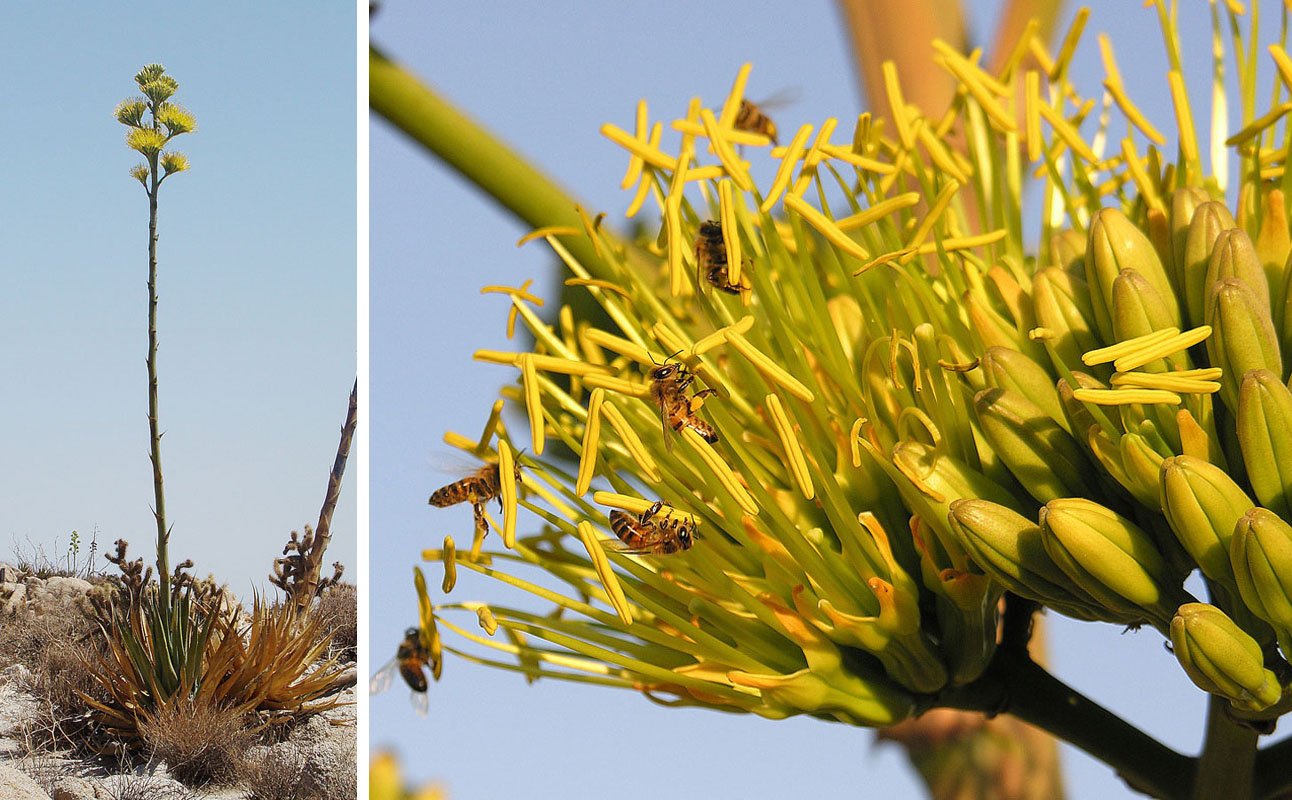
Agave deserti, the Desert Agave, is a quintessential native succulent of the Sonoran Desert and Colorado Desert, found growing from the rocky bajadas and sandy flats of southwestern Arizona through the low desert mountains of southeastern California. This compact agave forms a low, ground-hugging rosette of thick, blue-gray to grayish-green leaves armed with stout marginal spines and a sharp terminal point — a masterpiece of desert adaptation that balances structural defense with ecological generosity. The plant flowers just once in its lifetime, producing a spectacular yellow-flowered stalk up to 15 feet tall before dying, but not before generating numerous offsets (pups) that carry on the colony.
Desert Agave is a deeply significant plant ecologically and culturally. In the wild, it forms dense colonies on rocky hillsides and gravelly bajadas, often growing in association with Creosote Bush (Larrea tridentata), Brittlebush (Encelia farinosa), and Desert Ironwood (Olneya tesota). The flowering stalk is a critical resource for nectar-feeding bats — particularly the Lesser Long-nosed Bat (Leptonycteris yerbabuenae), a threatened species that pollinates the agave and migrates annually through the Sonoran Desert following the blooming sequence of columnar cacti and agaves. Desert Agave is thus a keystone species in the ecological network of the Sonoran Desert.
As a landscape plant, Desert Agave offers exceptional durability, architectural beauty, and minimal maintenance. It requires no supplemental water once established, tolerates extreme heat and full sun, and produces colonies that naturally spread over time into dramatic, multi-rosette displays. Its small size compared to other agaves makes it suitable for residential gardens, parking strips, and community landscapes where a smaller footprint is preferred. The bold rosette form and blue-gray color provide year-round visual interest while supporting native wildlife.
Identification
Desert Agave forms a compact, symmetrical rosette typically 1 to 2 feet tall and 1.5 to 3 feet wide at maturity, though it often forms dense colonies 6 to 10 feet in diameter through vegetative reproduction. The individual rosette is tight and formal-looking, with leaves radiating outward from the central growing point in an organized, slightly spiraling pattern.
Leaves
The leaves are thick, fleshy, and succulent — 8 to 20 inches long and 1 to 3 inches wide at the base, tapering to a rigid, sharp terminal spine that can be 1 to 2 inches long and strong enough to penetrate skin and clothing. Leaf color ranges from pale gray-green to distinctly blue-gray or glaucous. The margins are armed with sharp, recurved teeth spaced about 0.5 to 1 inch apart. The surface has a smooth, waxy cuticle that reduces water loss. When viewed in cross-section, the leaves are slightly concave on the upper surface — a design that channels rainwater toward the center of the rosette and down toward the root crown.
Flowers & Fruit
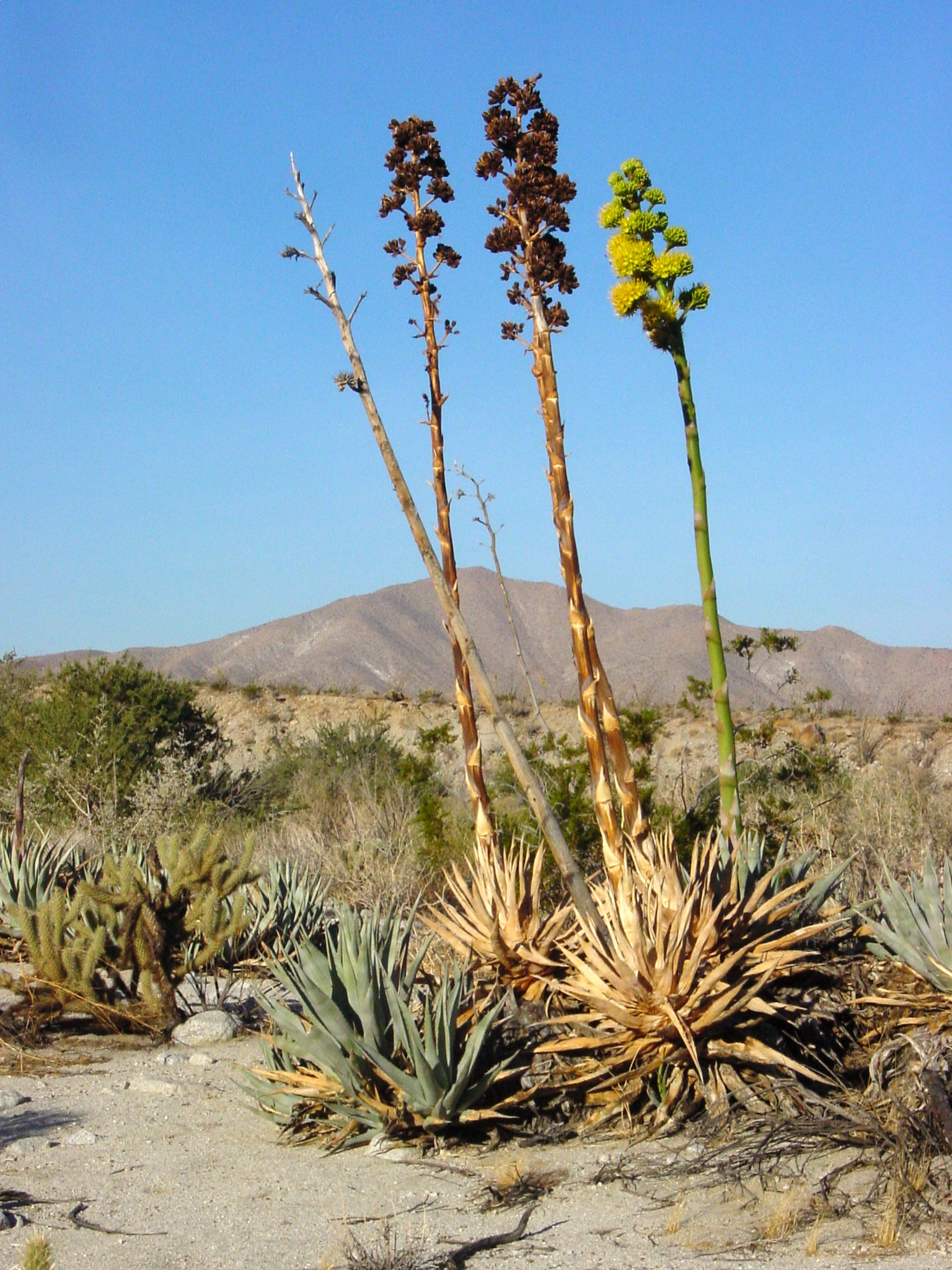
Desert Agave blooms just once per rosette, typically after 10 to 25 years of growth. The flowering event is dramatic: a massive flowering stalk (inflorescence) shoots up from the center of the rosette, growing several inches per day and ultimately reaching 10 to 15 feet in height. The stalk branches in the upper third into numerous lateral branches, each bearing clusters of large, bright yellow, tubular flowers — sometimes hundreds per plant. Blooming occurs in spring and early summer (April–June). After seed set, the mother rosette dies, but the surrounding offsets (vegetative pups) live on. The fruit is a dry, three-celled capsule containing flat, black seeds.
Quick Facts
| Scientific Name | Agave deserti |
| Family | Asparagaceae (Agavoideae) |
| Plant Type | Evergreen Succulent / Monocarpic Rosette |
| Mature Height | 1.5 ft (rosette); flower stalk 10–15 ft |
| Colony Width | Forms colonies to 10 ft diameter |
| Sun Exposure | Full Sun |
| Water Needs | Low (Drought Tolerant) |
| Bloom Time | April – June (once per rosette) |
| Flower Color | Yellow |
| USDA Hardiness Zones | 9–11 |
Native Range
Desert Agave is native to the Sonoran Desert and Colorado Desert of the American Southwest, with its range centered in southwestern Arizona and the adjacent desert regions of southeastern California. In Arizona, it occurs primarily in Yuma, Maricopa, and Pima counties — the hot, low-elevation desert zone below about 3,500 feet. In California, it is found in Riverside and San Diego counties in the Anza-Borrego Desert, the Coachella Valley region, and the western edges of the Colorado Desert.
Within its range, Desert Agave is most common on rocky desert slopes, bajadas (alluvial fans at the base of mountains), gravelly flats, and the lower slopes of desert mountain ranges. It is a characteristic plant of the Lower Colorado River Valley and Arizona Upland subdivisions of the Sonoran Desert. It often grows in association with Saguaro (Carnegiea gigantea), Desert Ironwood (Olneya tesota), Foothill Palo Verde (Parkinsonia microphylla), and Ocotillo (Fouquieria splendens). In California’s Anza-Borrego Desert, it grows with California Barrel Cactus (Ferocactus cylindraceus) and Brittlebush (Encelia farinosa).
Desert Agave’s range overlaps with that of the Lesser Long-nosed Bat (Leptonycteris yerbabuenae), which migrates northward from Mexico each spring following the blooming of saguaros and agaves — a “nectar corridor” that is critically dependent on the survival of these native plants. Loss of agave habitat through development, livestock grazing, and invasive grasses is considered a significant threat to this bat population.
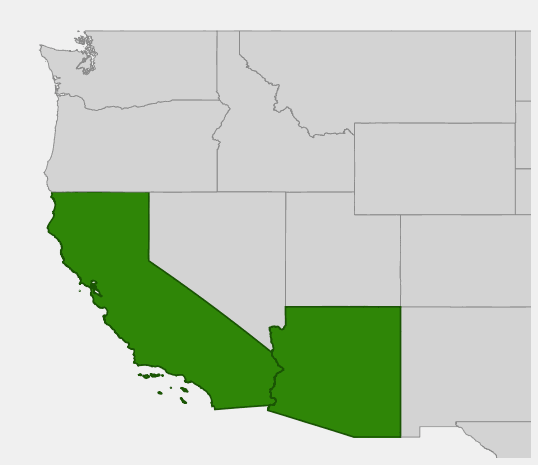
📋 Regional plant lists featuring Desert Agave: Arizona
Growing & Care Guide
Desert Agave is among the most drought-tolerant plants available for low-desert landscaping — it evolved in one of the driest, hottest environments on earth and needs almost nothing from the gardener once established. The key to success is placing it in exactly the right conditions: full sun and fast-draining soil.
Light
Full sun is mandatory. Desert Agave requires at least 8 hours of direct sun per day and performs best with all-day exposure. It handles reflected heat from walls, paving, and rock surfaces extremely well — conditions that would stress most plants. In partial shade, the rosette becomes loose and elongated, and the plant is more susceptible to disease. Site it where it will receive maximum light intensity.
Soil & Water
Like all agaves, Agave deserti demands excellent drainage. It will rot and die in heavy clay or any soil that stays wet for extended periods. Sandy loam, gravelly desert soil, or rocky slopes are ideal. In garden settings, amend heavy soils with coarse sand and decomposed granite, or plant in raised beds. Once established (2–3 years), Desert Agave requires no supplemental watering in low-desert climates. During the establishment period, water deeply every 2–3 weeks in summer, monthly in winter. After establishment, natural rainfall is typically sufficient in Arizona.
Planting Tips
Wear thick leather gloves and eye protection when handling — the terminal spines are extremely sharp. Plant at the same depth as the nursery container. Avoid planting near walkways or areas where people brush past. Space individual rosettes at least 3 to 4 feet apart, but keep in mind that the plant will produce offsets (pups) that gradually create a colony. If you want a single specimen rather than a colony, remove pups as they emerge. Fall planting is preferred in hot climates.
Pruning & Maintenance
Maintenance is minimal. Remove dead outer leaves if desired, using heavy pruners — always wear protective gear. When a rosette blooms and dies, the dead rosette can be cut off at the base to improve aesthetics, but the surrounding offsets will continue growing. If pups are not removed, the colony will gradually expand. Desert Agave is virtually pest- and disease-free when given proper drainage and full sun.
Landscape Uses
Desert Agave works beautifully in:
- Low-water xeriscape plantings throughout the low Sonoran Desert zone
- Rock gardens and boulder plantings
- Wildlife-friendly gardens supporting bats, birds, and pollinators
- Slope stabilization on dry, rocky hillsides
- Container gardens in frost-free climates (use a large container with drainage holes)
- Mixed succulent borders combined with cacti, yuccas, and drought-tolerant shrubs
Wildlife & Ecological Value
Desert Agave occupies a pivotal ecological position in the Sonoran Desert food web. Its contribution to wildlife is outsized relative to its modest physical size.
For Bats
The most critical wildlife relationship Desert Agave has is with the Lesser Long-nosed Bat (Leptonycteris yerbabuenae), a federally threatened species that pollinates it. These bats migrate north from Mexico each spring following the “nectar corridor” of blooming saguaros and agaves. On warm spring evenings, the bats hover at the flowers, probing for nectar with their long tongues, and transfer pollen from flower to flower — providing the cross-pollination essential for seed set. No bats, no seeds. This mutualistic relationship makes Desert Agave conservation directly linked to bat conservation.
For Birds
Hummingbirds — particularly the Costa’s Hummingbird and Black-chinned Hummingbird — are daytime visitors to the flowers. The dense rosette provides nesting cover for Cactus Wrens and other desert birds, and the spent flower stalks are used as perches and lookout points by hawks and flycatchers. Woodpeckers occasionally excavate nest cavities in large, dead agave stalks.
For Mammals
Mule Deer, Javelinas (Collared Peccaries), and other desert mammals browse the tender flowering stalks in spring. Javelinas are particularly fond of the agave heart (the growing meristem at the center of the rosette) and can destroy plants by digging out and consuming it. Coyotes, ground squirrels, and other small mammals eat the seeds.
Ecosystem Role
Desert Agave anchors soil on rocky slopes and contributes organic matter to nutrient-poor desert soils as it decomposes. The flowering stalk, even after dying, provides structural habitat for years — insects, spiders, and small lizards colonize the dry woody stalk. The dead stalk falls and becomes part of the desert floor debris that shelters soil organisms and seeds moisture.
Cultural & Historical Uses
Few plants have been more comprehensively utilized by Indigenous peoples than the agave. For the O’odham (Tohono O’odham and Akimel O’odham) of the Sonoran Desert, and for the Cahuilla of California, Agave deserti and related agave species were among the most important food plants in the desert ecosystem. The flowering stalk, harvested just before the flowers open when it is at its sweetest and most tender, was pit-roasted for 24 to 48 hours — a labor-intensive process that converted the starchy, bitter heart and base of the stalk into a sweet, fibrous, high-calorie food. The roasted agave could be eaten fresh, dried for later use, or pressed into cakes for long-term storage.
The leaves were used for fiber — stripped, pounded, and woven into rope, nets, baskets, mats, sandals, and clothing. The needle-like terminal spine, still attached to a length of leaf fiber, served as a ready-made needle and thread for sewing. Agave fiber was also used as stuffing for pillows and mattresses. The sap from the cut stalk was fermented into pulque, an alcoholic beverage used in ceremony and daily life throughout Mesoamerica and into the borderland regions of North America. Various preparations of the plant were used medicinally for wound healing, digestive ailments, and as a general tonic.
In modern times, Desert Agave is grown ornamentally and is recognized as an important conservation plant. It is included in native plant restoration projects throughout the Sonoran Desert, where its ecological role — particularly in supporting the threatened Lesser Long-nosed Bat — makes it a priority species for wildlife-friendly landscaping. Gardeners throughout Arizona and southern California are increasingly choosing Desert Agave as a low-maintenance alternative to non-native ornamental succulents, recognizing both its beauty and its ecological significance.
Frequently Asked Questions
Does Desert Agave die after flowering?
Yes — like all agaves, Agave deserti is monocarpic, meaning each individual rosette blooms once and then dies. However, the plant produces numerous offsets (pups) around its base before and during the blooming process, so the colony lives on. The flowering event, which may not occur for 10 to 25 years, is spectacular — a stalk up to 15 feet tall covered in yellow flowers that attract bats, hummingbirds, and insects.
How far apart should I plant Desert Agave?
Space individual plants at least 3 to 4 feet apart to allow room for offsets. Because it forms colonies over time, a single plant may eventually spread to 8 to 10 feet in diameter. If you want a tighter, controlled planting, remove pups annually. If you want a naturalistic colony, space them 6 to 8 feet apart and allow them to spread freely.
Is Desert Agave safe near children and pets?
Exercise caution. The terminal spines are extremely sharp and can cause serious puncture wounds. Plant Desert Agave away from play areas, pet runs, and foot traffic. If you have young children or pets, consider planting it behind a low fence or in a border set back from walkways. The sap may also cause mild skin irritation in sensitive individuals.
How long does it take Desert Agave to bloom?
Typically 10 to 25 years in nature, though well-watered garden specimens sometimes bloom in 8 to 12 years. The exact timing depends on growing conditions — adequate sunlight, warmth, and occasional moisture during the growing season seem to accelerate flowering. Once a rosette has begun forming the central flower stalk, the process from emergence to full bloom takes about 3 to 4 months.
What is the difference between Desert Agave and Century Plant?
The name “Century Plant” is commonly applied to several large agave species, most often Agave americana, which is a much larger plant (up to 6 feet tall and 10 feet wide) native to Mexico but widely naturalized. Agave deserti is smaller, native to the US Sonoran Desert, and has gray-blue leaves. Both are monocarpic (bloom once then die) and both support bats and hummingbirds, but the Desert Agave is the species native to Arizona and the correct choice for ecological restoration there.

Looking for a nursery that carries Desert Agave?
Browse our native plant nursery directory: Arizona