
Black Cherry (Prunus serotina)
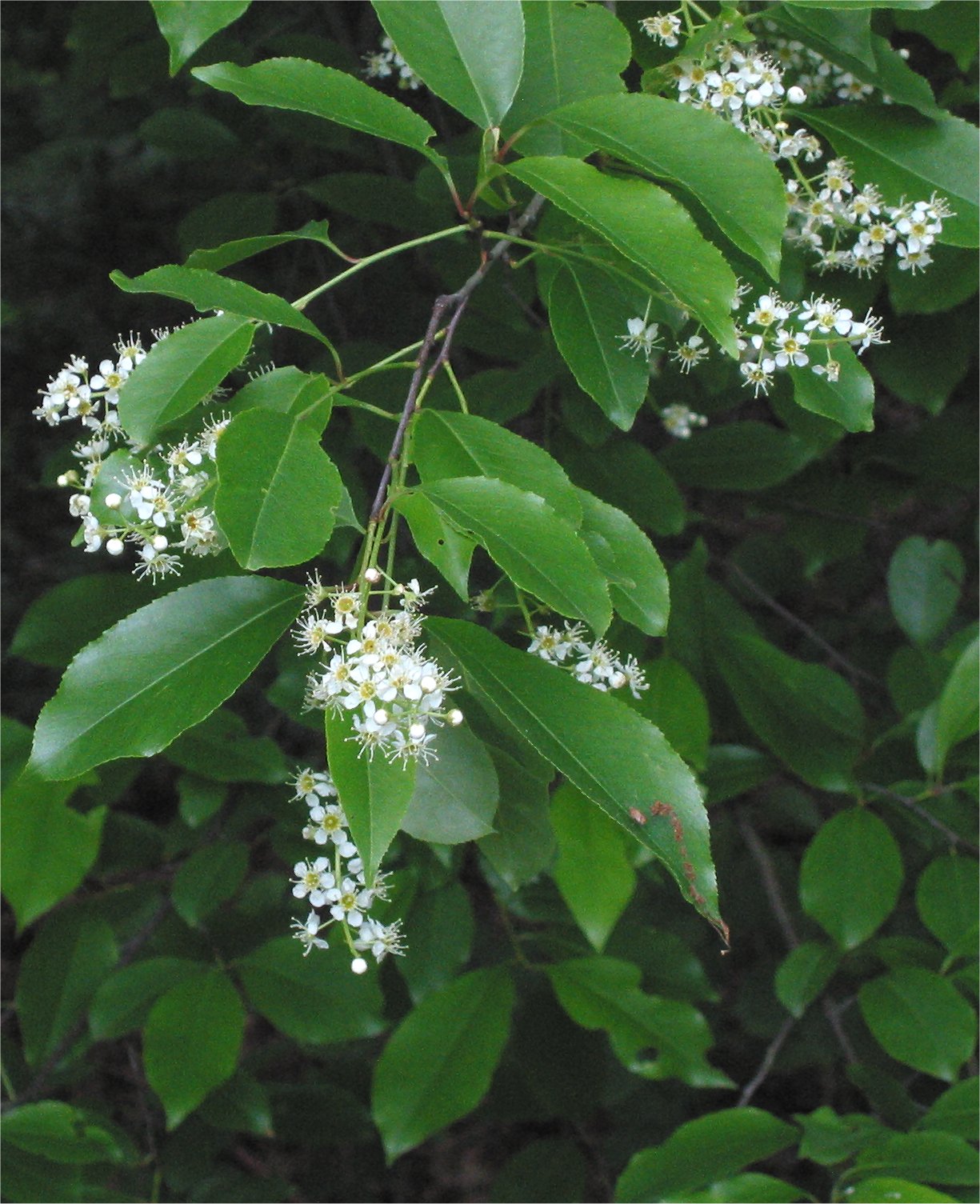
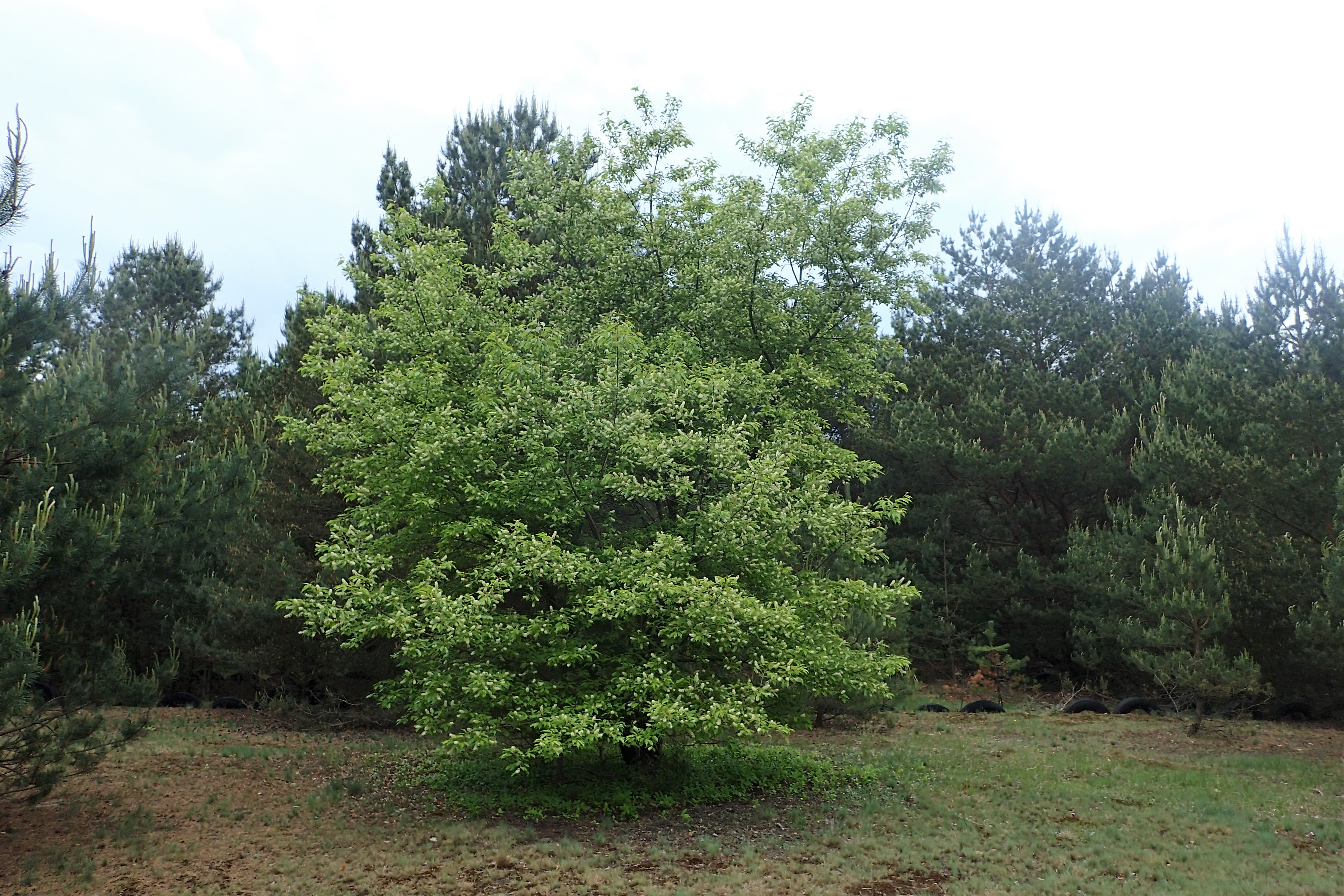
Prunus serotina, commonly known as Black Cherry, Wild Black Cherry, or Rum Cherry, is one of North America’s most ecologically and economically important native trees. This member of the Rosaceae (rose) family stands as the largest cherry species in North America, capable of reaching impressive heights of 50–80 feet in optimal conditions. Black Cherry earned its common name from the dark purple-black fruit that ripens in late summer, providing critical food for dozens of bird species and small mammals throughout its extensive range.
Growing naturally across eastern North America from southern Canada to northern Florida and west to the Great Plains, Black Cherry thrives in diverse habitats from rich bottomlands to dry upland slopes. Its distinctive dark, scaly bark develops characteristic “potato chip”-like plates on mature trunks, while the glossy green leaves with finely serrated edges turn brilliant yellow to orange-red in autumn. The fragrant white flowers, borne in drooping clusters (racemes) in late spring, create one of the most spectacular wildflower displays in eastern forests.
Beyond its ecological value as a keystone species supporting wildlife, Black Cherry has been prized for centuries for its beautiful, fine-grained wood used in furniture making and cabinetry. The tree’s adaptability to various soil conditions and its relatively fast growth make it an excellent choice for reforestation, wildlife habitat enhancement, and large-scale native landscaping projects throughout its range.
Identification
Black Cherry is easily recognized by its combination of distinctive features: aromatic white flower clusters in spring, finely serrated leaves, and characteristic dark bark that develops a scaly, “burnt potato chip” appearance on mature trees. Young trees have smooth, reddish-brown bark with prominent horizontal lenticels, while saplings and young branches emit a distinctive almond-like scent when crushed.
Bark
The bark is perhaps Black Cherry’s most distinctive feature, changing dramatically with age. Young trees display smooth, glossy, reddish-brown to gray bark marked with prominent horizontal lenticels (breathing pores) that create distinctive banded patterns. As the tree matures, the bark becomes dark gray to nearly black, developing the characteristic scaly, plated appearance that resembles burnt potato chips. These irregular plates curl outward at the edges, creating the tree’s signature texture. The inner bark, when scraped, has a distinctive almond or bitter cherry scent due to compounds that contain cyanide.
Leaves
Black Cherry leaves are simple, alternate, and oval to lance-shaped, measuring 2–5 inches (5–13 cm) long and 1–2 inches (2.5–5 cm) wide. The most distinctive feature is the finely serrated margin with small, sharp teeth that curve slightly inward. The upper leaf surface is dark green and glossy, while the underside is paler and may have rusty-colored hairs along the midrib. Leaves taper to a long, slender point and have 1–2 small reddish glands near the base of the blade where it meets the petiole. In autumn, the foliage turns brilliant yellow, orange, and red before dropping.
Flowers & Fruit
Black Cherry produces some of the most beautiful flowers of any native tree. In late spring (May–June), the tree bears numerous drooping clusters (racemes) of small white flowers, each 4–6 inches (10–15 cm) long. Individual flowers are about ¼ inch (6 mm) across with five white petals and prominent stamens that create a delicate, lacy appearance. The flowers are highly fragrant and attract numerous pollinators.
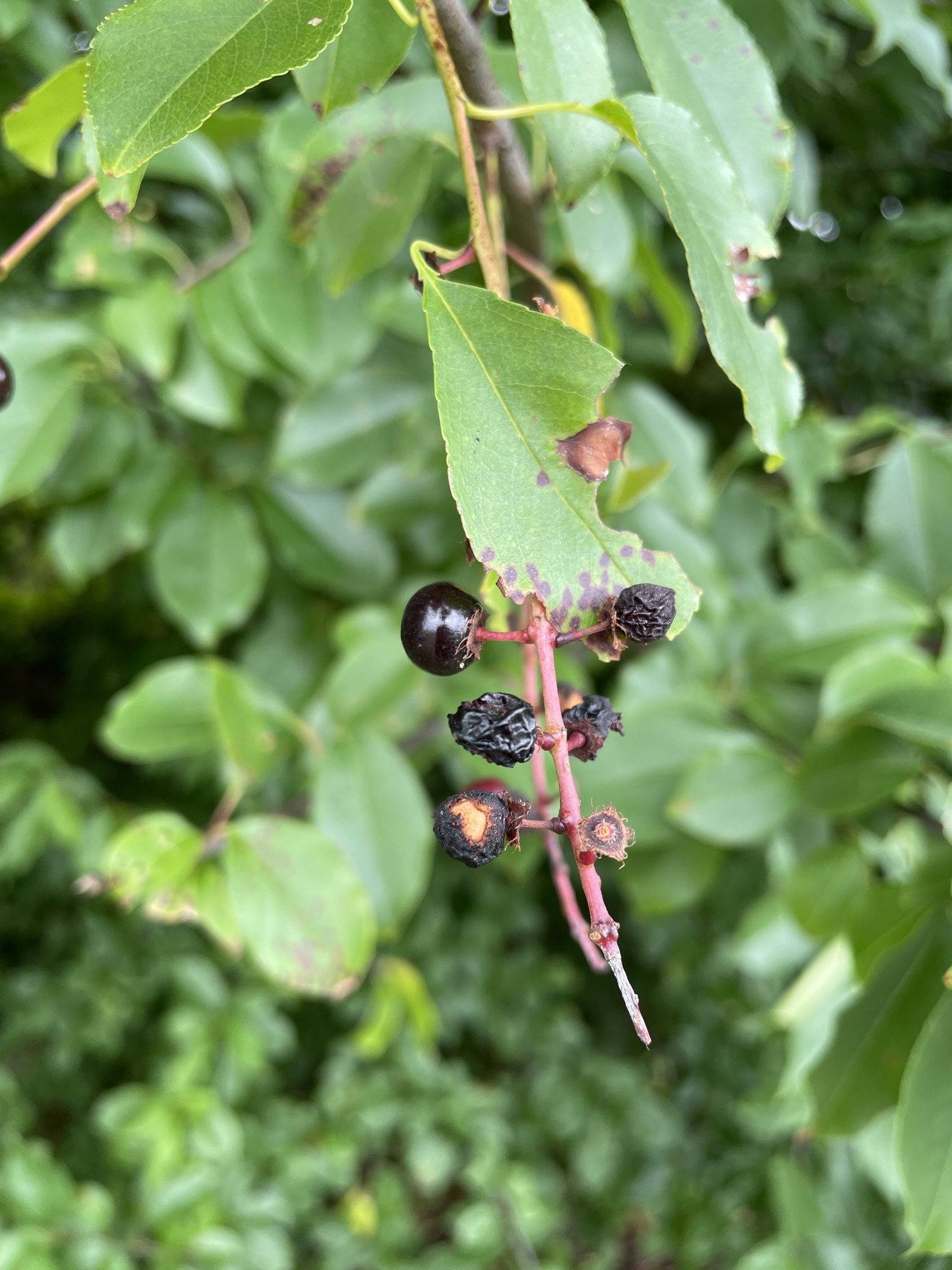
The fruit is a small drupe, about ⅓ inch (8–10 mm) in diameter, that progresses from green to red and finally to dark purple-black when ripe in late summer. Despite the species’ common name, the “cherries” are quite small and somewhat astringent, though edible and historically important for wildlife and human food. Each fruit contains a single hard seed. The fruit is borne in drooping clusters and is eagerly consumed by over 40 species of birds and numerous mammals.
Quick Facts
| Scientific Name | Prunus serotina |
| Family | Rosaceae (Rose) |
| Plant Type | Deciduous Tree |
| Mature Height | 50–80 ft |
| Sun Exposure | Full Sun to Part Shade |
| Water Needs | Low (Drought Tolerant) |
| Bloom Time | May – June |
| Flower Color | White |
| USDA Hardiness Zones | 3–9 |
Native Range
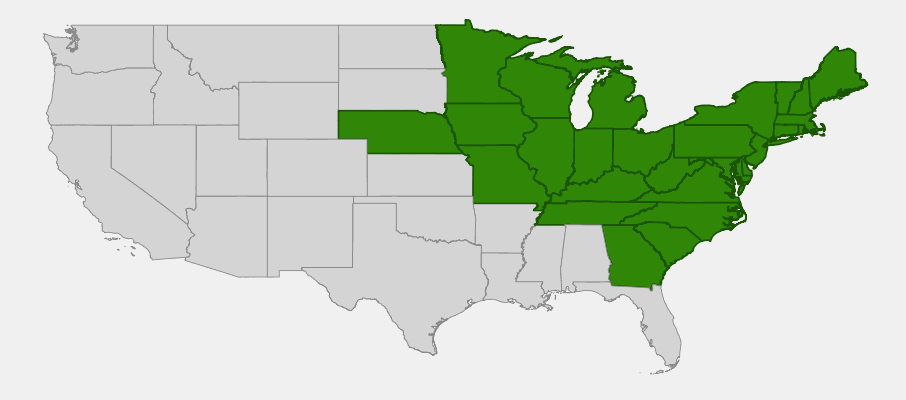
Black Cherry boasts one of the most extensive native ranges of any North American tree, stretching from southeastern Canada south to northern Florida and west through the Great Plains to eastern Texas, North Dakota, and New Mexico. This remarkable distribution reflects the species’ exceptional adaptability to diverse climates and growing conditions. The tree is found naturally in every eastern U.S. state and extends west into portions of the Great Plains where adequate moisture exists.
Within this vast range, Black Cherry occupies an equally diverse array of habitats. It thrives in rich, moist bottomlands and cove forests where it can reach its maximum size, but also colonizes dry upland slopes, clearings, and disturbed sites. The species is particularly common in second-growth forests and often appears as one of the first trees to establish in abandoned fields and clearcuts. This pioneer tendency, combined with its longevity (trees can live over 200 years), makes Black Cherry an important component of forest succession throughout its range.
Black Cherry’s ecological adaptability is remarkable — it grows from sea level to elevations of 5,000 feet in the southern Appalachians. The tree tolerates a wide range of soil types, from sandy loams to heavy clays, and pH levels from moderately acidic to nearly neutral. This flexibility has allowed Black Cherry to maintain stable populations across its range, though climate change and habitat fragmentation pose emerging challenges for some regional populations.
📋 Regional plant lists featuring Black Cherry: North Carolina & South Carolina
Growing & Care Guide
Black Cherry is one of the more adaptable native trees for cultivation, combining relatively rapid growth with exceptional wildlife value and beautiful seasonal interest. While it can become quite large, making it suitable primarily for larger landscapes, its tolerance for various growing conditions makes it an excellent choice for reforestation, wildlife habitat creation, and naturalistic plantings.
Light
Black Cherry performs best in full sun to partial shade, with full sun producing the most robust growth and heaviest flowering. The tree is moderately shade-tolerant when young but requires increasing light as it matures to maintain vigor and fruit production. In shaded conditions, the tree tends to grow taller and more slender as it reaches for light, while full-sun specimens develop broader, more spreading crowns.
Soil & Water
This adaptable tree tolerates a wide range of soil conditions but performs best in well-drained, fertile soils with a pH between 6.0 and 7.5. Black Cherry is remarkably drought-tolerant once established, making it suitable for xeriscaping and low-water landscapes. However, consistent moisture during the establishment period (first 2–3 years) promotes healthy root development and faster growth. The tree tolerates both sandy and clay soils but may struggle in consistently waterlogged conditions.
Planting Tips
Plant Black Cherry in spring or fall when temperatures are moderate. Choose a location with adequate space — mature trees can spread 30–40 feet wide. Container-grown trees transplant easily, but bare-root specimens should be planted in early spring before bud break. Space trees at least 30–40 feet apart in woodland settings, or use closer spacing (15–20 feet) if creating a grove that will naturally thin over time.
Pruning & Maintenance
Black Cherry requires minimal pruning beyond removing dead, damaged, or crossing branches. If training a single-trunk specimen, remove lower branches gradually over several years to achieve the desired canopy height. Avoid heavy pruning, as the tree may respond with excessive sucker growth. The species is generally pest- and disease-resistant, though tent caterpillars occasionally establish web nests in the branches. These are typically more unsightly than harmful and can be removed manually if desired.
Landscape Uses
Black Cherry’s versatility makes it valuable in numerous landscape applications:
- Woodland gardens and naturalistic landscapes where space allows
- Wildlife habitat creation — few native trees support more species
- Reforestation and ecological restoration projects
- Large-scale privacy screens and windbreaks
- Specimen trees in parks and large residential properties
- Erosion control on slopes and banks
- Succession plantings in abandoned fields and disturbed sites
Wildlife & Ecological Value
Black Cherry stands as one of North America’s most important wildlife trees, supporting an extraordinary diversity of species throughout its range. Ecologists consider it a “keystone species” — one whose presence significantly influences the entire ecosystem around it.
For Birds
Over 40 species of birds consume Black Cherry fruit, including American Robins, Cedar Waxwings, Northern Flickers, Rose-breasted Grosbeaks, Scarlet Tanagers, and numerous warbler species. The tree’s dense branching structure provides excellent nesting sites for songbirds, while the abundant spring flowers attract insects that feed nestlings during the critical breeding season. Game birds such as Wild Turkey and Ruffed Grouse also rely heavily on the fruit for autumn and winter nutrition.
For Mammals
Black Cherry fruit feeds a diverse array of mammals, from small rodents like chipmunks and squirrels to larger species including Black Bears, White-tailed Deer, and various bat species. Deer also browse the foliage and young twigs, while beavers occasionally use Black Cherry in dam construction. The tree’s extensive root system and dense canopy provide shelter and thermal cover for numerous mammal species.
For Pollinators
The prolific spring bloom makes Black Cherry extremely valuable for pollinators. Native bees, including bumble bees, mason bees, and various solitary bee species, visit the flowers extensively. Honeybees also collect nectar and pollen, and Black Cherry honey is prized for its delicate flavor. The flowers attract beneficial insects including various flies, beetles, and butterflies that contribute to forest pollination networks.
Ecosystem Role
Beyond its direct wildlife value, Black Cherry plays crucial ecological roles. As a pioneer species, it helps establish forest cover on disturbed sites, creating conditions that allow other forest trees to establish. The tree’s leaf litter decomposes relatively quickly, enriching soil and supporting diverse soil communities. Black Cherry also serves as a host plant for several moth and butterfly species, including the Eastern Tiger Swallowtail and various sphinx moth species.
Cultural & Historical Uses
Black Cherry holds a distinguished place in both Native American traditions and colonial American history. Indigenous peoples throughout its range utilized virtually every part of the tree for food, medicine, and materials. The Iroquois, Cherokee, and other eastern tribes prepared the fruit into winter food stores, often drying the cherries or incorporating them into pemmican — a concentrated, portable food combining dried meat, fat, and berries.
The inner bark served important medicinal purposes, used to treat coughs, colds, and respiratory ailments. This traditional knowledge proved accurate — Black Cherry bark contains compounds that act as natural expectorants and cough suppressants, leading to its inclusion in commercial cough medicines well into the 20th century. The distinctive almond-scented bark was also used to flavor traditional medicines and foods.
European colonists quickly recognized Black Cherry’s exceptional wood quality. The heartwood ranges from light reddish-brown to rich, dark brown, with a fine, straight grain that takes an exceptional finish. Colonial furniture makers prized it for fine cabinetry and furniture, and it became known as “American mahogany” for its rich color and working properties. Today, Black Cherry remains one of the most valuable hardwood species, used for high-end furniture, cabinetry, musical instruments, and decorative veneer.
The fruit found commercial uses as well — it was commonly used to flavor rum and other spirits, giving rise to the name “rum cherry.” Cherry bounce, a traditional alcoholic beverage made by steeping the fruit in spirits, was popular in colonial America. The tree also provided practical materials: the strong, flexible wood was used for tool handles, and the bark’s tannins were utilized in leather processing.
Frequently Asked Questions
Are Black Cherry fruits safe to eat?
The ripe fruit is safe and edible, though quite small and somewhat astringent compared to cultivated cherries. However, avoid consuming leaves, bark, or seeds, which contain cyanogenic compounds that can be toxic. The fruit is best left for wildlife, which depends on it for crucial nutrition.
Is Black Cherry messy? Will it stain driveways or patios?
Yes, Black Cherry can be messy when the small fruits drop in late summer. The dark purple-black cherries can stain concrete, vehicles, and outdoor furniture. For this reason, avoid planting the tree directly over driveways, walkways, or outdoor seating areas. The mess period is typically brief (2–3 weeks) but worth considering in site selection.
How fast does Black Cherry grow?
Black Cherry is considered a moderately fast-growing tree, typically adding 1–2 feet of height per year under good conditions. Young trees may grow faster (up to 3 feet annually) in optimal sites with full sun and adequate moisture. Growth slows as the tree matures, but specimens can live over 200 years.
Can Black Cherry be grown from seed?
Yes, but the seeds require cold stratification (winter chilling) to germinate. Collect ripe fruit in late summer, remove the pulp, and plant seeds immediately, or store them in slightly moist sand in the refrigerator for 3–4 months before spring planting. Seedlings are variable and may take 10–15 years to begin significant fruit production.
Does Black Cherry have any pest problems?
Black Cherry is generally pest-resistant, but Eastern Tent Caterpillars occasionally build silken nests in the branches in spring. While unsightly, these are rarely harmful to mature trees. The tree may also occasionally attract aphids or scale insects, but serious infestations are uncommon in healthy specimens.

Looking for a nursery that carries Black Cherry?
Browse our native plant nursery directory: North Carolina · South Carolina