Black-eyed Susan (Rudbeckia hirta)
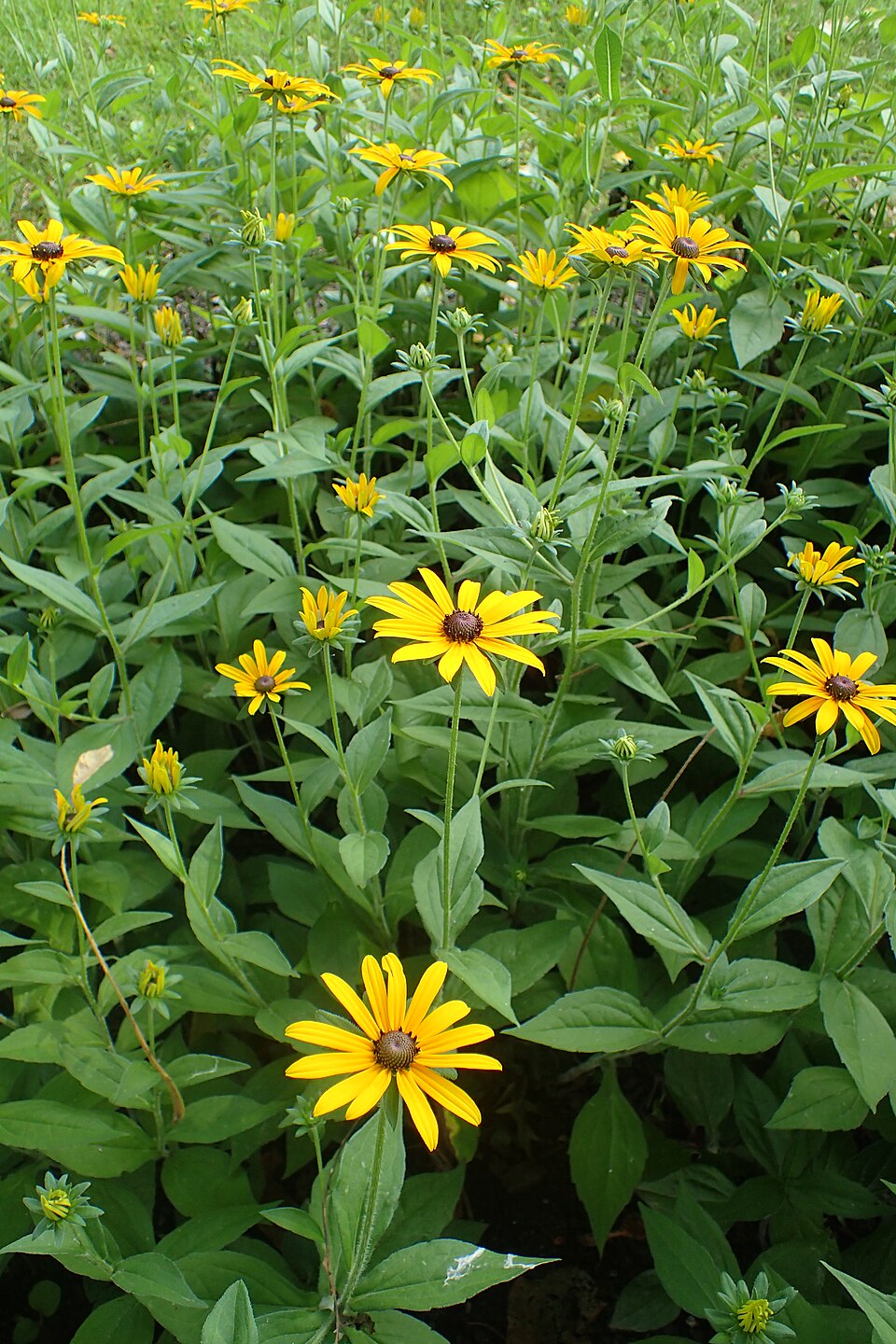
Rudbeckia hirta, universally beloved as Black-eyed Susan, stands as one of North America’s most recognizable and cherished wildflowers. This vibrant member of the Asteraceae (sunflower) family has earned its place as a symbol of American prairies and meadows, with its cheerful golden-yellow blooms and distinctive dark chocolate-brown centers brightening landscapes from June through August. The common name “Black-eyed Susan” comes from an old English ballad about a woman named Black-eyed Susan, though some suggest it references the flower’s dark central cone that resembles a large dark eye surrounded by bright yellow “lashes.”
Native to eastern and central North America, Black-eyed Susan has demonstrated remarkable adaptability and pioneering spirit, naturally expanding its range westward and readily establishing itself in disturbed soils, roadsides, fields, and gardens. Growing 1 to 2 feet tall, this short-lived perennial (often behaving as an annual or biennial) forms clumps of hairy, lance-shaped leaves topped by abundant daisy-like flowers that attract a stunning diversity of pollinators. Each flower head can contain 8 to 21 bright yellow ray petals surrounding hundreds of tiny dark brown disc flowers — creating a landing pad that’s both beautiful to humans and irresistible to butterflies, bees, and beneficial insects.
What makes Black-eyed Susan particularly remarkable is its combination of rugged durability and refined beauty. This is a plant that thrives in poor soils, tolerates drought, handles full sun exposure, and continues blooming prolifically even when neglected — yet produces flowers so perfect and cheerful that they’ve become a staple in cottage gardens, wildflower meadows, and formal perennial borders alike. For gardeners seeking a native plant that delivers maximum impact with minimal care, while supporting local ecosystems and providing long-lasting cut flowers, Black-eyed Susan is an unparalleled choice.
Identification
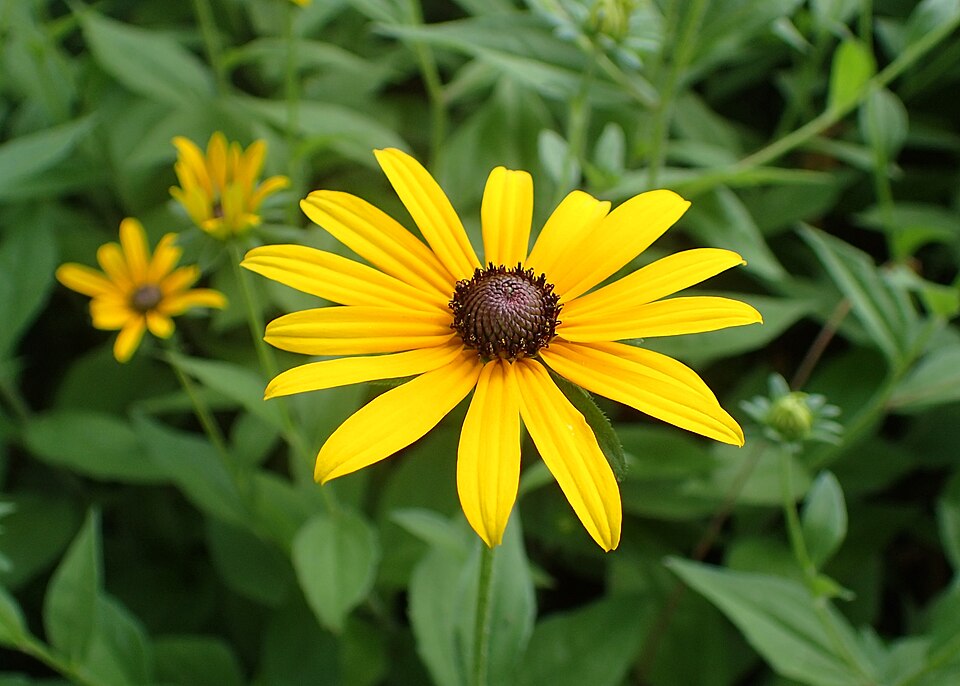
Black-eyed Susan typically grows as a clump-forming herb reaching 1 to 3 feet tall, though most plants stay within the 1 to 2 feet range in typical garden conditions. The plant develops from a small basal rosette in its first year, then sends up flowering stems in subsequent years. The overall form is upright and somewhat branching, with multiple flower heads per plant creating an abundant display throughout the blooming season.
Stems
The stems are sturdy, erect, and notably hairy (hirsute), giving the entire plant a somewhat rough, bristly texture. The stems are typically unbranched in the lower portion, becoming branched near the top where the flower heads are borne. The hairs serve as protection against both herbivory and excessive moisture loss, contributing to the plant’s remarkable drought tolerance. Stems can become somewhat woody at the base in established perennial plants.
Leaves
The leaves are alternate, lance-shaped to oval, and covered with coarse hairs that give them a rough, sandpapery texture. Basal leaves are 2 to 7 inches long, typically broader and more spatulate than the stem leaves, which become progressively smaller and narrower up the stem. All leaves are entire (lacking teeth or lobes) with prominent parallel veining. The leaves often have a grayish-green color due to the dense pubescence (hairiness), which helps reflect sunlight and conserve moisture.
Flowers
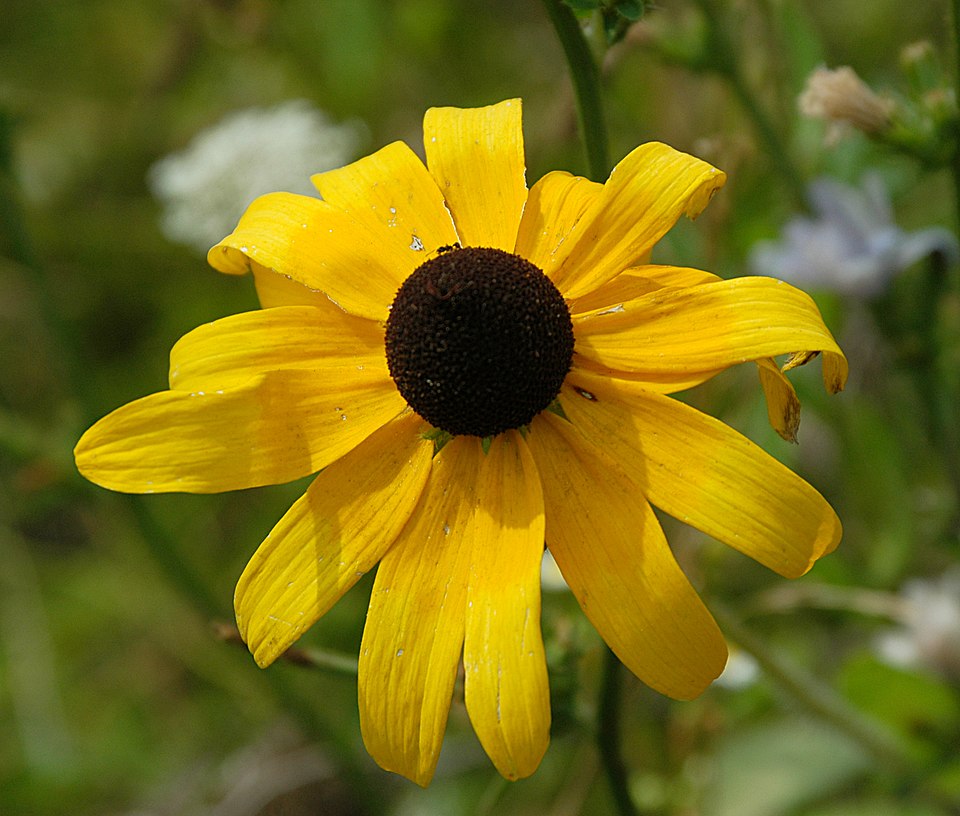
The flowers are the plant’s crowning glory — classic composite flower heads 2 to 3 inches across, consisting of 8 to 21 bright golden-yellow ray petals surrounding a prominent dark brown to nearly black central cone (disc). Each ray petal is notched at the tip and measures about 1 inch long. The central cone is actually composed of hundreds of tiny individual disc flowers packed tightly together, each capable of producing a seed. The flowers are borne singly at the ends of branches, creating a long-blooming display from June through August.
Seeds
The seeds are small, dark, four-angled achenes that develop in the central cone after flowering. Each flower head can produce hundreds of seeds, which are dispersed by wind, water, and animals. The seeds are an important food source for birds, particularly goldfinches and other seed-eating species. Seeds readily germinate in disturbed soil, contributing to the plant’s reputation as an excellent colonizer of open ground.
Quick Facts
| Scientific Name | Rudbeckia hirta |
| Family | Asteraceae (Sunflower) |
| Plant Type | Short-lived Perennial (often annual/biennial) |
| Mature Height | 1–2 ft |
| Sun Exposure | Full Sun to Part Shade |
| Water Needs | High to Low |
| Bloom Time | June – August |
| Flower Color | Bright yellow with dark brown center |
| USDA Hardiness Zones | 3–9 |
Native Range
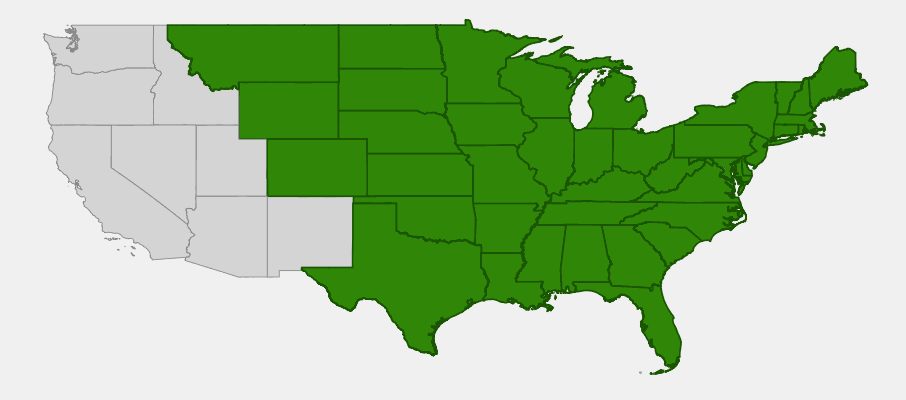
Black-eyed Susan boasts one of the most impressive native ranges of any North American wildflower, stretching from the Maritime Provinces of Canada south to Florida, and from the Atlantic coast west to the Rocky Mountains. This enormous distribution encompasses most of the eastern and central United States, including virtually every state east of the Continental Divide and many states beyond it. The species is particularly abundant in the Great Plains, where it forms spectacular displays in native prairies and recovered grasslands.
Originally, Black-eyed Susan was primarily a plant of prairies, plains, and natural forest openings in the eastern half of the continent. However, human activities have dramatically expanded its effective range — road construction, agriculture, and habitat disturbance have created millions of acres of suitable habitat, allowing Black-eyed Susan to colonize areas where it was historically rare or absent. Today, it can be found naturalized along roadsides, in abandoned fields, and in disturbed areas throughout much of North America, often far beyond its original native range.
Ecologically, Black-eyed Susan serves as a pioneer species, often among the first plants to establish in disturbed ground. Its abundant seed production, tolerance of poor soils, and ability to thrive in full sun make it exceptionally effective at colonizing and stabilizing disturbed sites. In native prairie ecosystems, it plays an important role in the successional process, providing habitat structure and pollinator resources while helping prepare sites for later colonization by longer-lived prairie species.
📋 Regional plant lists featuring Black-eyed Susan: North Dakota, South Dakota & Western Minnesota
Growing & Care Guide
Black-eyed Susan is among the most forgiving and rewarding native wildflowers to grow, requiring minimal care while providing maximum visual impact. Its adaptability to various conditions and vigorous self-seeding habit make it an excellent choice for both beginning and experienced gardeners.
Light
Black-eyed Susan performs best in full sun, where it produces the most flowers and develops the strongest stems. However, it tolerates partial shade reasonably well, though flowering may be somewhat reduced and stems may stretch taller. In areas with intense afternoon sun, some light shade during the hottest part of the day can actually benefit the plants and extend the flowering period.
Soil & Water
One of Black-eyed Susan’s greatest strengths is its tolerance of poor soils and variable moisture conditions. It thrives in everything from sandy, well-drained soils to heavy clay, and can handle both drought and occasional flooding. The ideal soil is well-drained and moderately fertile, but the plant often performs better in somewhat poor soils than in rich, heavily amended ones. pH tolerance is broad, from slightly acidic to moderately alkaline (6.0-8.0). Once established, plants are extremely drought tolerant and rarely need supplemental watering.
Planting Tips
Black-eyed Susan can be grown from seed or transplants. Seeds can be direct-sown in fall or early spring — they need light to germinate, so barely cover them with soil. Fall seeding often produces the best results, as seeds benefit from cold stratification over winter. Plant transplants in spring after the last frost. Space plants 12-18 inches apart if planting in groups, though individual plants will self-seed and fill in gaps naturally.
Pruning & Maintenance
Black-eyed Susan requires very little maintenance. Deadheading spent flowers will encourage continued blooming and prevent excessive self-seeding if desired, though many gardeners prefer to leave seed heads for birds and natural reseeding. Plants can be cut back to 6 inches in late fall or left standing for winter interest and wildlife value. In spring, new growth emerges from the base, and old stems can be removed at that time.
Landscape Uses
The versatility of Black-eyed Susan makes it valuable in numerous garden settings:
- Wildflower meadows — excellent for naturalized prairie and meadow plantings
- Perennial borders — provides bright color and informal charm
- Cottage gardens — classic informal garden flower
- Cut flower gardens — long-lasting in bouquets
- Roadside plantings — extremely effective for erosion control and beautification
- Children’s gardens — easy to grow and attractively showy
- Pollinator gardens — exceptional for supporting native bees and butterflies
- Rain gardens — tolerates both wet and dry conditions
Wildlife & Ecological Value
Black-eyed Susan is a powerhouse of ecological value, supporting an remarkable diversity of wildlife species throughout its growing season and beyond. As a native member of the sunflower family, it provides both nectar and pollen resources that many specialized native insects have co-evolved to utilize.
For Birds
The seeds of Black-eyed Susan are eagerly consumed by numerous bird species, with American Goldfinches being particularly fond of them. Other regular visitors include House Finches, Purple Finches, Pine Siskins, and various sparrow species. The seed heads remain attractive to birds well into winter, providing crucial food during the challenging cold months. Many gardeners specifically leave Black-eyed Susan seed heads standing through winter to support overwintering birds.
For Mammals
Small mammals including mice, voles, and chipmunks collect and cache Black-eyed Susan seeds for winter food supplies. Rabbits occasionally browse the foliage, particularly young plants, though the hairy leaves make them less palatable than many other options. The dense clumps formed by established plants provide cover for small ground-dwelling mammals and amphibians.
For Pollinators
Black-eyed Susan is absolutely exceptional for supporting pollinators. The flowers attract over 40 species of butterflies, including Monarchs, Painted Ladies, Skippers, and various Fritillaries. Native bees are frequent visitors, including bumblebees, leafcutter bees, and sweat bees. The large, flat flower heads provide excellent landing platforms, while the abundant pollen and nectar support both adult pollinators and their developing larvae. The long blooming period — often 8-10 weeks — provides consistent resources throughout the critical summer months.
Ecosystem Role
As a pioneer species, Black-eyed Susan plays a crucial role in ecological succession and habitat restoration. Its ability to establish quickly on disturbed sites helps stabilize soil and create conditions suitable for other native plants to establish. The plant’s prolific self-seeding helps maintain populations and colonize new suitable habitat. In prairie ecosystems, Black-eyed Susan serves as both a pollinator magnet and a nurse plant, creating favorable microclimates for more sensitive prairie species to establish.
Cultural & Historical Uses
Black-eyed Susan holds a treasured place in American cultural and botanical history, serving both practical and symbolic roles for centuries. Many Indigenous nations of the Great Plains and Eastern Woodlands utilized various parts of the plant for medicinal purposes. The Cherokee used root preparations as treatments for colds and snakebites, while the Ojibwe employed the plant in treatments for childhood ailments. The Potawatomi used Black-eyed Susan root as an ingredient in traditional love medicines, reflecting the flower’s association with matters of the heart.
The bright, cheerful flowers also served practical purposes beyond medicine. Various tribes used the golden petals to create natural dyes for textiles and ceremonial items, producing vibrant yellow and orange colors that were highly prized. The seeds, while small, were occasionally gathered and used as food, either eaten fresh or ground into meal, though they were not a major food source compared to other native plants.
In European-American culture, Black-eyed Susan quickly became beloved as both a garden flower and a symbol of American prairies and frontier spirit. The flower’s association with the old English ballad “Black-Eyed Susan” — a sailor’s lament for his beloved — gave it romantic connotations that persisted throughout the 19th and early 20th centuries. During the westward expansion, pioneers and settlers often wrote fondly of the spectacular displays of Black-eyed Susans they encountered in prairie landscapes, and the flower became a symbol of the American heartland.
Today, Black-eyed Susan serves as the state flower of Maryland, where it blooms abundantly in fields and meadows throughout the summer months. The famous Preakness Stakes horse race, held annually in Baltimore, is often called “The Black-Eyed Susan,” and the winning horse receives a blanket made from Black-eyed Susans (though yellow Viking chrysanthemums are often substituted, as the Preakness is held in May before Black-eyed Susans naturally bloom). The flower has also become an important symbol in wildflower conservation and prairie restoration efforts, representing the beauty and ecological value of America’s native plant heritage.
Frequently Asked Questions
Is Black-eyed Susan an annual or perennial?
Black-eyed Susan is technically a short-lived perennial, but it often behaves as an annual or biennial depending on growing conditions. In its first year, it typically forms a basal rosette of leaves, then flowers in the second year. However, it self-seeds prolifically, so established populations appear perennial even if individual plants are short-lived. In favorable conditions, some plants may persist for several years.
How aggressive is Black-eyed Susan’s self-seeding?
Black-eyed Susan self-seeds readily but is not typically considered invasive or problematic in most garden settings. The seedlings are easily pulled if unwanted, and the plant generally stays within reasonable bounds. In wildflower meadows and naturalized areas, the self-seeding is usually welcome as it maintains the population and fills in gaps naturally.
Can Black-eyed Susan grow in clay soil?
Yes, Black-eyed Susan is remarkably tolerant of heavy clay soils, as long as they don’t stay waterlogged for extended periods. The plant’s deep taproot helps it access moisture and nutrients even in compacted soils. In fact, it often performs better in somewhat poor, clay soils than in rich, heavily amended garden soils.
When should I plant Black-eyed Susan seeds?
Seeds can be planted in either fall or early spring. Fall planting often gives the best results because seeds benefit from natural cold stratification over winter, leading to better germination rates. If spring planting, sow seeds as soon as soil can be worked. Seeds need light to germinate, so barely cover them with soil or simply press them into the soil surface.
Do Black-eyed Susans need fertilizer?
Black-eyed Susan typically performs better without fertilizer than with it. Rich, heavily fertilized soils often produce tall, weak stems and fewer flowers. These plants evolved in naturally lean prairie soils and maintain their best form and flowering when grown in moderately fertile to poor soils. Compost can be beneficial, but avoid high-nitrogen fertilizers.

Looking for a nursery that carries Black-eyed Susan?
Browse our native plant nursery directory: North Dakota · South Dakota · Minnesota