
White Prairie Clover (Dalea candida)
Dalea candida (syn. Petalostemum candidum), commonly known as White Prairie Clover, is a graceful native perennial legume that epitomizes the delicate beauty and ecological resilience of North America’s grasslands. This member of the Fabaceae (legume) family creates stunning visual contrast in prairie landscapes with its distinctive cylindrical spikes of tiny white flowers rising above finely divided, compound leaves on slender stems.
Growing 1 to 2 feet tall from deep taproots that can extend 15 feet or more into the prairie soil, White Prairie Clover demonstrates the remarkable adaptations that allow plants to thrive in the challenging conditions of native grasslands. The species blooms from July through August, creating dense white flower spikes that serve as beacons for pollinators during the height of summer when many other prairie plants are between flowering periods.
As a nitrogen-fixing legume, White Prairie Clover plays a crucial ecological role beyond its ornamental value, improving soil fertility for surrounding grasses and wildflowers while providing essential nectar resources for butterflies, native bees, and other pollinators. The combination of its delicate appearance, ecological function, and remarkable drought tolerance has made this species a cornerstone of prairie restoration efforts and a beloved choice for sustainable, wildlife-friendly landscaping across the Great Plains and upper Midwest.
Identification
White Prairie Clover is easily distinguished by its distinctive flower structure and finely divided foliage. The plant typically grows 1 to 2 feet tall, occasionally reaching 3 feet in optimal conditions, with a narrow, upright growth habit that creates vertical accents in prairie plantings.
Stems & Growth Form
The stems are slender, erect, and typically unbranched below the flower spikes, giving the plant an elegant, vertical appearance. Stems are smooth or nearly smooth, green to slightly purplish, and rise from a deep, woody taproot system. The plant maintains a narrow profile, rarely spreading more than 8-12 inches across, making it excellent for naturalistic plantings where space is limited.
Leaves
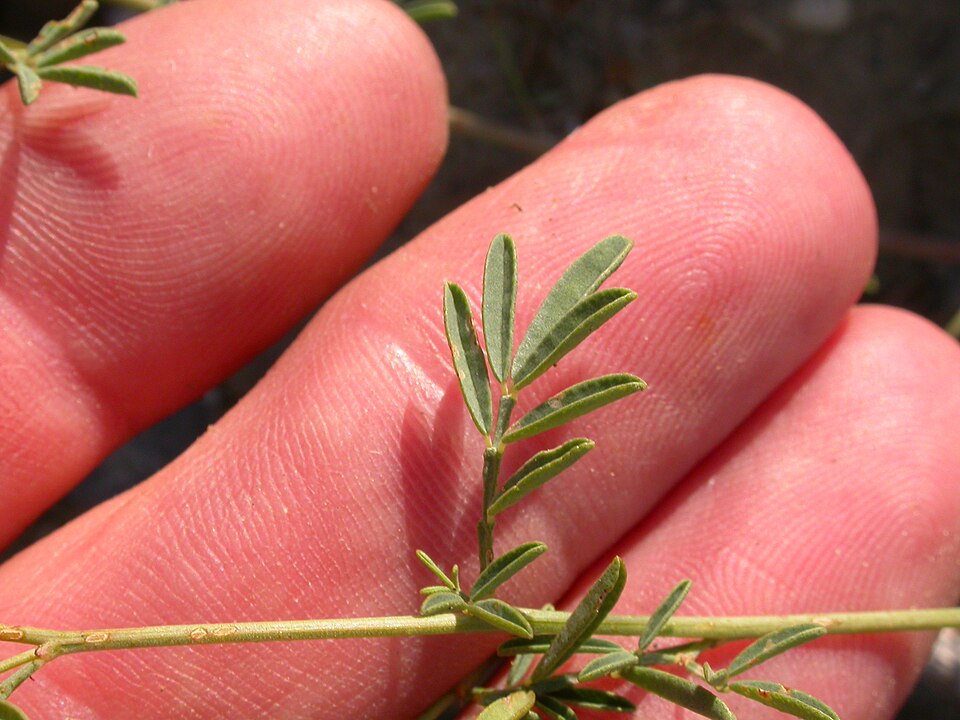
The leaves are alternate and pinnately compound, divided into 3 to 9 (usually 5-7) narrow, linear leaflets that are ¼ to ¾ inch long and only 1-2 mm wide. These tiny leaflets give the foliage a delicate, almost feathery appearance that contrasts beautifully with the sturdy flower spikes. The leaflets are entire (smooth-edged), glandular-dotted when examined closely, and arranged along a central leaf axis (rachis). The overall effect is of fine-textured, blue-green foliage that provides an elegant backdrop for the white flowers.
Flowers
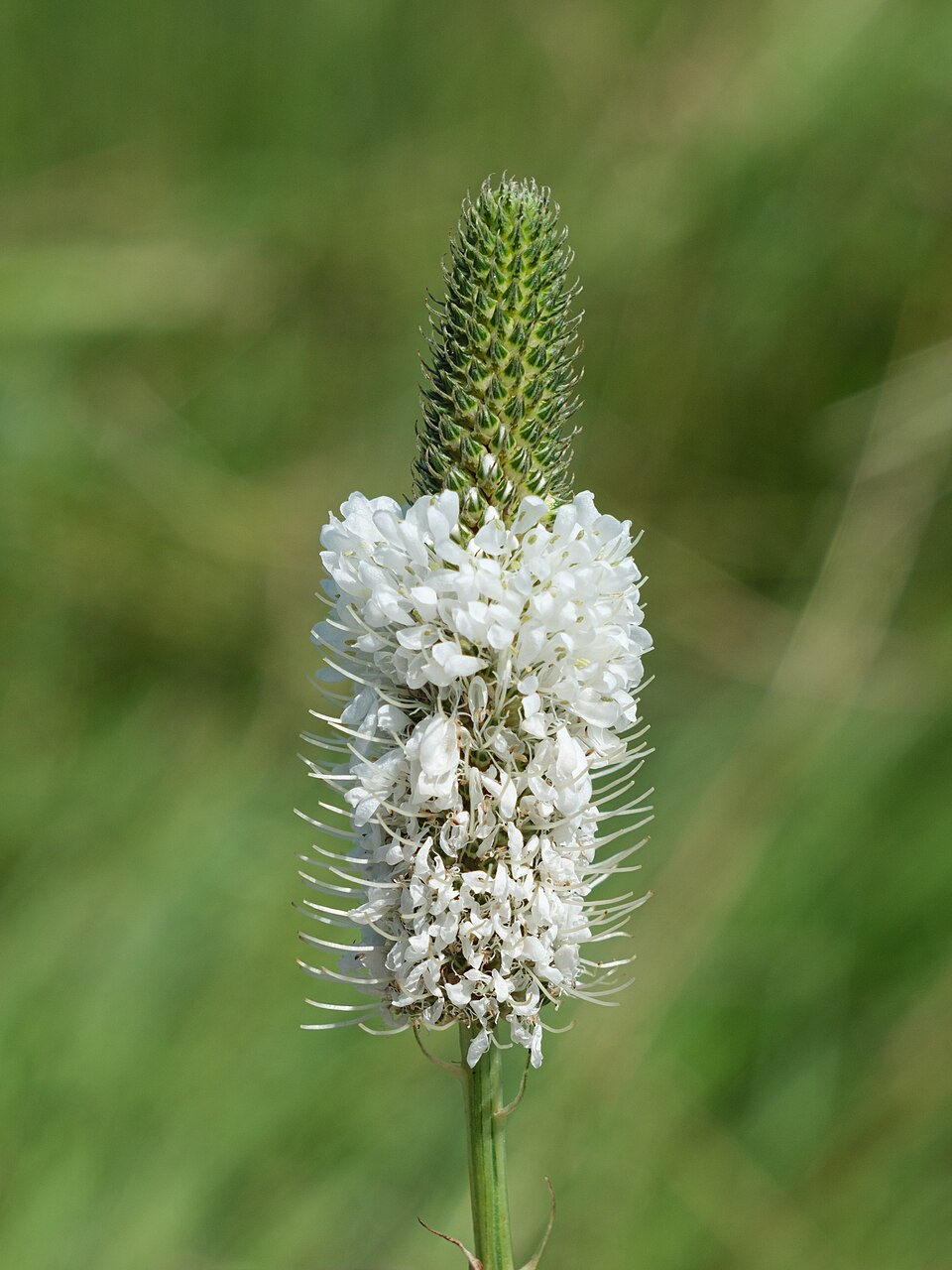
The flowers are the plant’s most distinctive feature — dense, cylindrical spikes 1 to 4 inches long and about ½ inch wide, packed with tiny white flowers. Each individual flower is only about ⅛ inch long with a typical legume structure, but they are so densely packed that the spike appears as a solid white cylinder. The flowers have 5 white petals and prominent stamens that extend slightly beyond the petals, giving the spike a slightly fuzzy appearance. Blooming typically begins at the base of the spike and progresses upward over several weeks, extending the flowering period.
Fruit & Seeds
The fruit is a small, one-seeded pod (legume) about ⅛ inch long, enclosed within the persistent sepals. The pods are smooth, brown when mature, and contain a single small, hard seed. Seeds are typically dispersed locally, falling near the parent plant, though they may be carried further by water or animals.
Quick Facts
| Scientific Name | Dalea candida (syn. Petalostemum candidum) |
| Family | Fabaceae (Legume/Pea) |
| Plant Type | Perennial Herb |
| Mature Height | 1–2 ft |
| Sun Exposure | Full Sun |
| Water Needs | Moderate |
| Bloom Time | July – August |
| Flower Color | Pure White |
| USDA Hardiness Zones | 3–9 |
Native Range
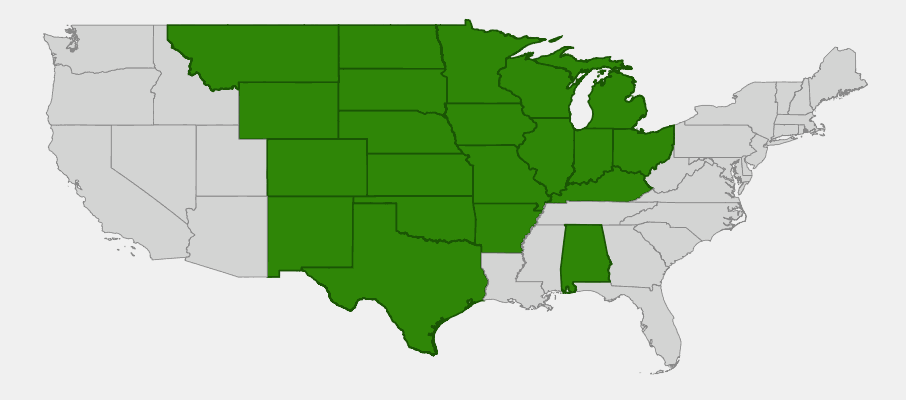
White Prairie Clover is native to the Great Plains and upper Midwest regions of North America, with its range extending from southern Canada south through the central United States to Texas and New Mexico. The species is most abundant in the tallgrass and mixed-grass prairie regions, where it serves as an important component of native grassland ecosystems.
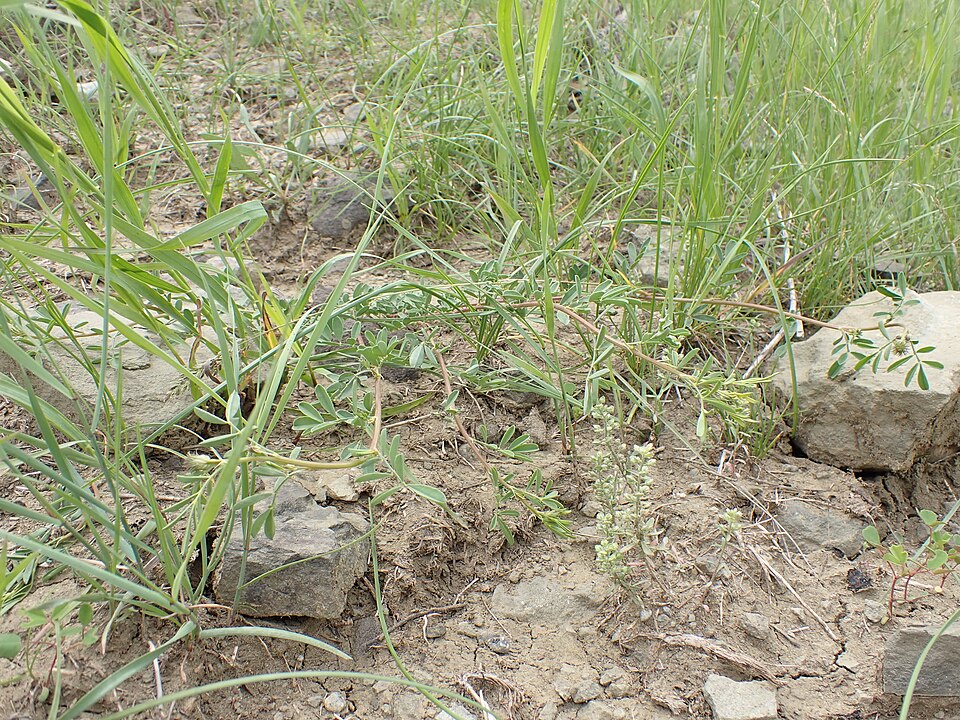
The species thrives in the continental climate of the Great Plains, where it has evolved to withstand the extreme temperature variations, periodic droughts, and strong winds characteristic of these grasslands. In its native habitat, White Prairie Clover typically grows on well-drained upland prairies, prairie slopes, and open areas with full sun exposure. It is often found growing alongside other classic prairie species such as Big Bluestem, Little Bluestem, Purple Coneflower, and its close relative, Purple Prairie Clover (Dalea purpurea).
Historically, White Prairie Clover was much more widespread and abundant before the extensive conversion of native grasslands to agriculture. While the species has experienced population declines due to habitat loss, it remains relatively common in remaining prairie fragments and has proven to be an excellent species for prairie restoration efforts. The plant’s deep taproot and drought tolerance allow it to establish successfully in restored prairies and adapt to various soil conditions across its range.
📋 Regional plant lists featuring White Prairie Clover: North Dakota, South Dakota & Western Minnesota
Growing & Care Guide
White Prairie Clover is an excellent choice for gardeners seeking low-maintenance native plants that provide both beauty and ecological benefits. Once established, this hardy perennial requires minimal care and provides years of reliable summer blooms.
Light
White Prairie Clover requires full sun for optimal growth and flowering, needing at least 6-8 hours of direct sunlight daily. In shadier conditions, plants will become tall and weak, produce fewer flowers, and may require staking. The species has evolved in open prairie conditions and performs best when given similar exposure in cultivation. Full sun also helps promote the compact, sturdy growth form that makes this plant so attractive in garden settings.
Soil & Water
This prairie native thrives in well-drained soils of average to below-average fertility. It performs well in sandy, loamy, or even clay soils, provided they drain well — waterlogged conditions can be fatal. As a legume that fixes its own nitrogen, White Prairie Clover actually prefers lean soils and can be harmed by excessive fertilization, which promotes weak, overly lush growth. The plant tolerates alkaline soils well and is adapted to the often calcareous soils of prairie regions. Once established, it is extremely drought tolerant due to its deep taproot, though occasional deep watering during extended dry periods will promote better flowering.
Planting Tips
Start from seed in fall or early spring, or plant nursery-grown specimens in spring after the last frost. Seeds benefit from cold stratification and may have variable germination. Some sources recommend light scarification to improve germination rates. Direct seeding in fall allows natural winter stratification. Space plants 12-18 inches apart in garden settings, or scatter seeds more densely in prairie-style plantings. The deep taproot develops quickly, making transplanting difficult after the first year.
Pruning & Maintenance
White Prairie Clover requires minimal maintenance once established. Deadhead spent flower spikes to encourage continued blooming and prevent excessive self-seeding if desired, though the seeds provide valuable wildlife food. Cut plants back to 3-4 inches in late fall or early spring. The plant typically doesn’t require staking when grown in appropriate full-sun conditions with lean soil. May self-seed lightly, with seedlings appearing near the parent plant.
Landscape Uses
White Prairie Clover’s delicate texture and pure white flowers make it valuable in many garden applications:
- Prairie and meadow gardens — essential for authentic grassland plantings
- Butterfly and pollinator gardens — provides crucial mid-summer nectar
- Rock gardens — excellent for well-drained, sunny locations
- Native plant borders — creates beautiful contrast with coarser-textured plants
- Xeriscaping — extremely drought tolerant once established
- Restoration plantings — improves soil through nitrogen fixation
- Cut flower gardens — unique white spikes are excellent in arrangements
Wildlife & Ecological Value
White Prairie Clover provides exceptional wildlife value throughout the growing season, serving as both a crucial pollinator resource and an important component of grassland ecosystems that support diverse wildlife communities.
For Birds
The small seeds are consumed by various grassland bird species, including American Goldfinches, which are particularly fond of the protein-rich seeds. Other seed-eating birds such as various sparrows, finches, and buntings also utilize the seeds as a food source. Greater Prairie-Chickens and other ground-dwelling birds consume both seeds and foliage. The plant’s low-growing, clumping habit provides some ground-level cover and nesting material in prairie environments, particularly valuable for ground-nesting species in grassland habitats.
For Mammals
White-tailed Deer and Elk browse the nutritious foliage, particularly the young growth in spring and early summer. The nitrogen-rich leaves are especially valuable as browse during the growing season when protein demands are highest for reproduction and growth. Small mammals such as rabbits and ground squirrels consume both the leaves and seeds. The plant’s deep root system also supports numerous soil-dwelling invertebrates that form the base of prairie food webs.
For Pollinators
White Prairie Clover is absolutely essential for prairie pollinators, particularly during the mid-summer bloom period when it provides abundant nectar resources. The dense flower spikes are particularly attractive to butterflies, including skippers, sulphurs, and various small butterflies that appreciate the easily accessible nectar. Native bees are frequent visitors, with numerous species of sweat bees, leafcutter bees, and long-horned bees depending on the flowers. The extended blooming period of individual spikes (flowers open from bottom to top over several weeks) provides consistent resources throughout the summer months.
Ecosystem Role
As a nitrogen-fixing legume, White Prairie Clover plays a crucial role in prairie ecosystem health by improving soil fertility for surrounding grasses and wildflowers. The symbiotic bacteria in its root nodules convert atmospheric nitrogen into forms available to other plants, essentially fertilizing the prairie community. The deep taproot (which can extend 15 feet or more into the soil) helps break up compacted soil layers, improves water infiltration, and brings nutrients from deep soil layers to the surface through leaf drop. This soil improvement function makes White Prairie Clover particularly valuable in restoration projects and degraded soils.
Cultural & Historical Uses
White Prairie Clover holds significant cultural importance among Indigenous peoples of the Great Plains, who have utilized various parts of the plant for both medicinal and ceremonial purposes for centuries. The Lakota, Dakota, and other Plains tribes traditionally used the plant as a medicinal herb, with root preparations employed to treat digestive ailments and as a general tonic. The distinctive white flowers also held ceremonial significance, sometimes incorporated into religious rituals and seasonal celebrations that honored the prairie’s abundance.
The Ojibwe and other Woodland tribes used White Prairie Clover leaves to make tea, both for its pleasant taste and for its perceived health benefits. The entire plant was sometimes dried and stored for winter use, providing both nutrition and medicine during the harsh prairie winters. The plant’s reliable blooming period also made it a natural calendar marker, helping prairie peoples track the seasonal progression and timing of other important activities such as gathering and hunting.
European settlers and later homesteaders quickly recognized the value of White Prairie Clover as livestock forage. The high protein content and palatability of the leaves made it a valuable component of native hay meadows, and early ranchers often used the presence of prairie clovers as an indicator of good grazing land. However, intensive grazing and subsequent conversion of native grasslands to agriculture significantly reduced wild populations throughout the species’ range during the late 19th and early 20th centuries.
In modern times, White Prairie Clover has become an important symbol of prairie conservation efforts and sustainable agriculture. The species is widely used in prairie restoration projects, not only for its ecological benefits but also as a visible reminder of the continent’s grassland heritage. Research into the plant’s nitrogen-fixing capabilities has also contributed to sustainable farming practices and interest in cover cropping with native legumes. Conservation organizations often feature White Prairie Clover in educational programs as an example of how native plants can provide both beauty and essential ecosystem services in landscapes managed for sustainability.
Frequently Asked Questions
What’s the difference between White Prairie Clover and Purple Prairie Clover?
While closely related species in the same genus (Dalea), they differ primarily in flower color — White Prairie Clover has pure white flower spikes while Purple Prairie Clover has rose-purple spikes. White Prairie Clover is typically shorter (1-2 feet) compared to Purple Prairie Clover (1-3 feet). Both have similar growing requirements and ecological functions, and they often grow together in native prairies. The flowering periods overlap, creating beautiful color combinations in natural settings.
Why do I see both scientific names Dalea candida and Petalostemum candidum?
This reflects changes in botanical classification over time. The plant was originally named Petalostemum candidum and was long known by that name in older field guides and botanical references. Modern genetic and morphological studies have reclassified the species as Dalea candida, which is now the accepted scientific name. However, you may still encounter the older name Petalostemum candidum in some references, where it’s listed as a synonym.
How deep do the roots really go?
White Prairie Clover develops one of the deepest root systems of any prairie wildflower, with taproots commonly extending 8-15 feet deep, and exceptional specimens reaching even deeper. This remarkable root depth allows the plant to access water and nutrients unavailable to shallow-rooted species, contributing to its extraordinary drought tolerance. The deep roots also help break up hardpan soil layers and improve water infiltration across the prairie landscape.
Can I grow White Prairie Clover from seed?
Yes, but patience is key. Seeds have hard coats and benefit from cold stratification (30-90 days in moist sand in the refrigerator) or natural winter exposure. Some gardeners lightly scarify seeds before planting to improve germination. Germination can be sporadic, and seedlings grow slowly the first year as they focus energy on developing their deep taproot. Plants typically don’t flower until their second or third year, but once established, they’re extremely long-lived and reliable.
Does White Prairie Clover spread or stay in clumps?
White Prairie Clover typically stays in tight clumps and doesn’t spread aggressively. It may self-seed lightly around the parent plant, but it doesn’t produce runners or rhizomes like some prairie plants. This makes it well-behaved in garden settings while still providing the option to allow natural expansion through seed if desired. The clumping habit also makes it easy to incorporate into planned garden designs without worrying about it taking over.

Looking for a nursery that carries White Prairie Clover?
Browse our native plant nursery directory: North Dakota · South Dakota · Minnesota