Blanket Flower (Gaillardia aristata)
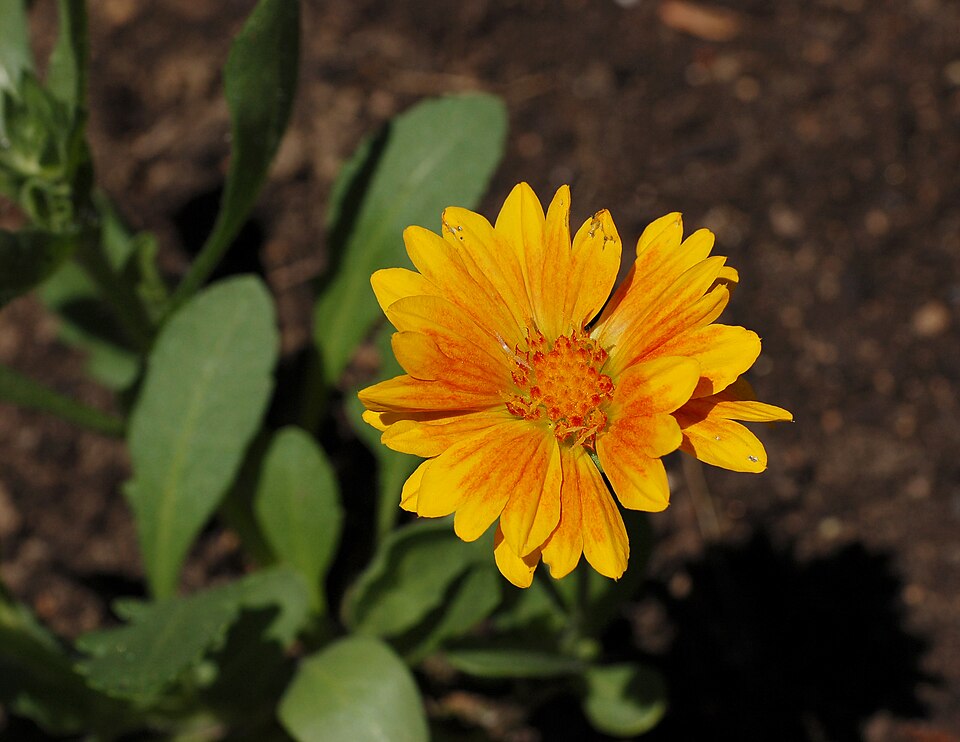
Gaillardia aristata, commonly known as Blanket Flower or Great Plains Blanket Flower, is one of the most striking and resilient wildflowers native to the northern Great Plains and Rocky Mountain region. Its bold, daisy-like blooms — radiating bands of deep red, burnt orange, and bright yellow — have inspired the plant’s common name, evoking the vivid geometric patterns of Native American blankets and woven textiles. This cheerful perennial is a beloved staple of prairie gardens, dry meadows, and roadside plantings from the grasslands of Montana and Wyoming to the mountain foothills of Colorado and Idaho.
Unlike many showier flowers that require coddling, Blanket Flower thrives in adversity. It flourishes in the poorest, driest soils that would stress most garden plants, asking for little more than full sun and good drainage. Once established, it laughs at drought, shrugs off heat, and reblooms reliably from early summer through frost — making it one of the longest-blooming native perennials in the entire Northern Rockies flora. Its nectar-rich flowers are magnets for native bees, butterflies, and other pollinators, while its seeds feed goldfinches and sparrows through the fall and winter months.
Gaillardia aristata is the wild progenitor of the cultivated blanket flower hybrids sold in garden centers across North America. The wild species is a robust, long-lived perennial reaching 2 to 3 feet tall, with a taproot system that anchors it firmly in loose, sandy, or gravelly soils. Whether planted in a formal garden border, scattered through a native meadow mix, or used to stabilize and beautify a disturbed roadside bank, Blanket Flower delivers color, wildlife value, and ecological function in equal measure. The entire plant is covered with soft, grayish hairs that give it a slightly rough texture and help reduce water loss in dry conditions.
Identification
Blanket Flower is an herbaceous perennial growing from a woody taproot, forming loose clumps 18 to 36 inches tall and equally wide. The stems are erect, branching in the upper portions, and covered with soft gray-green hairs. The overall habit is open and somewhat sprawling as the plant matures and blooms prolifically through the season. Every part of the plant has a slightly rough, hairy texture and emits a faintly medicinal, resinous scent when brushed or crushed.
Leaves
The leaves are alternate, lance-shaped to spatula-shaped, and range from 2 to 6 inches long. They are covered with soft, grayish hairs on both surfaces, giving them a soft feel. The lower leaves are larger and often pinnately lobed or coarsely toothed, while the upper leaves are smaller and may be entire. The gray-green color of the foliage provides a beautiful contrast to the vivid flower heads. All leaves are sessile or nearly so, clasping slightly at the base on the upper stem. The leaf margins vary from wavy-toothed to shallowly pinnate, adding to the textured appearance of the foliage.
Flowers
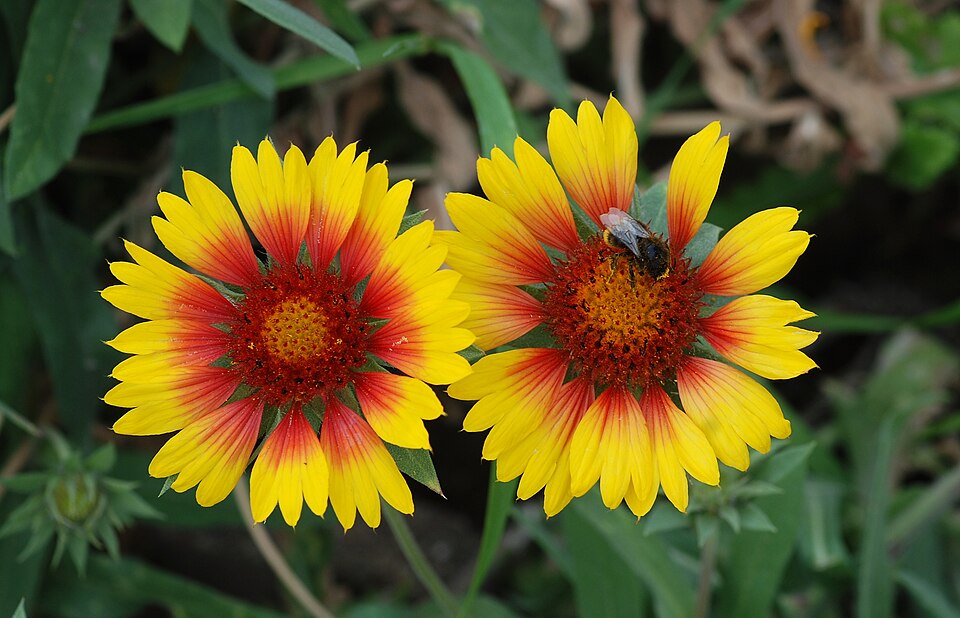
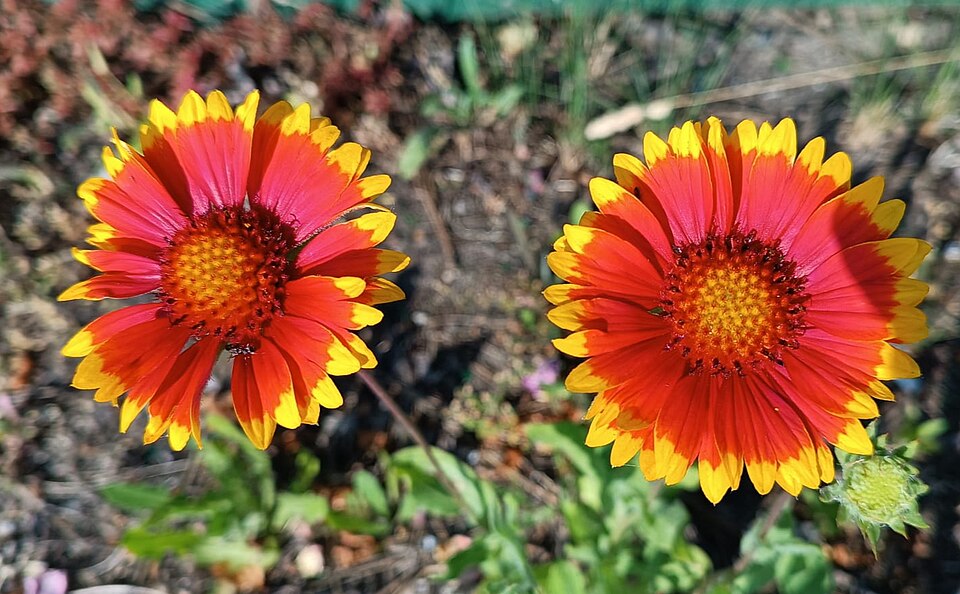
The flower heads are the unmistakable feature of Blanket Flower — solitary, 2 to 4 inches across, and borne on long, branching stems. Each head is composed of 12 to 18 ray florets surrounding a prominent, domed central disk. The ray florets are sterile and three-lobed at the tip, creating the characteristic “toothed” petal appearance. Classic color forms show petals that are deep red or purplish-maroon at the base, transitioning to brilliant orange, then tipped with bright yellow — though the exact color pattern varies considerably from plant to plant. The central disk is reddish-purple to dark brown, composed of hundreds of tiny tubular florets that open progressively outward from the center. Blooming begins in June and continues through September or even October in mild years, making Blanket Flower one of the most reliably long-blooming native perennials of the region.
Seeds & Roots
As the disk florets mature, they produce small, hairy achenes (dry fruits) topped with a pappus of silvery, papery scales — the “parachutes” that assist wind dispersal. The seed heads persist into winter, creating attractive dried seedpods that feed finches and sparrows. Below ground, Blanket Flower develops a deep taproot and a spreading lateral root system that makes it extremely drought-resistant once established. The taproot can penetrate 18 or more inches into the soil, accessing moisture unavailable to shallower-rooted plants.
Quick Facts
| Scientific Name | Gaillardia aristata |
| Family | Asteraceae (Daisy / Composite) |
| Plant Type | Herbaceous Perennial Wildflower |
| Mature Height | 3 ft |
| Sun Exposure | Full Sun |
| Water Needs | Low (Drought Tolerant) |
| Bloom Time | June – September (sometimes October) |
| Flower Color | Red, orange, and yellow (tricolored ray petals) |
| USDA Hardiness Zones | 3–10 |
Native Range
Gaillardia aristata is native to the northern Great Plains and Rocky Mountain region of North America, with its core range centered in Montana, Wyoming, Colorado, Idaho, and the Dakotas. It extends north into the prairie provinces of Canada (Alberta, Saskatchewan, British Columbia) and south through the mountain grasslands to New Mexico. The species is highly adaptable, occurring across a remarkable range of elevations from the shortgrass prairies of the eastern plains to subalpine meadows above 8,000 feet in the Rockies. It is one of the most widely distributed and abundant native wildflowers in the region.
Within its native range, Blanket Flower is a characteristic species of dry, open habitats — native prairies, dry meadows, mountain meadows, open hillsides, roadsides, and disturbed areas with good drainage. It is most abundant in loose, rocky, or sandy soils where competition from dense sod-forming grasses is reduced. In Wyoming and Montana, it is a common and conspicuous component of the native flora from the valley floors to the lower mountain slopes. It also occurs as a weed of roadsides and disturbed areas well beyond its natural range due to its use in wildflower seed mixes.
Blanket Flower’s tolerance of poor, dry soils and its long blooming season have made it a highly successful colonizer of disturbed habitats — roadsides, abandoned fields, overgrazed rangeland, and reclaimed mining sites. It is frequently used in reclamation plantings across the Great Plains and Rocky Mountain West, both for its erosion-control value and for the splash of color it brings to otherwise barren slopes. In natural prairie communities, it is most common in the upland, well-drained positions between wetland swales and the dense mixed-grass prairie matrix.
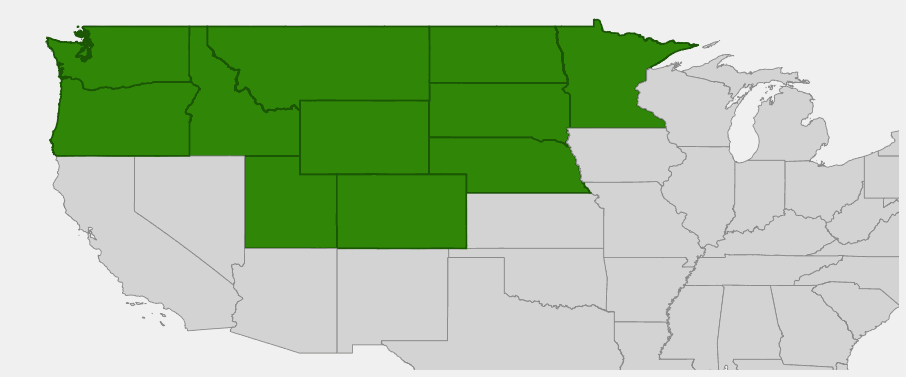
📋 Regional plant lists featuring Blanket Flower: Montana & Wyoming
Growing & Care Guide
Blanket Flower is one of the easiest native wildflowers to grow, and one of the most rewarding. Its combination of drought tolerance, long bloom season, and exuberant color makes it indispensable in any native plant garden or low-maintenance landscape in the northern Rockies and Great Plains. The key to success with Blanket Flower is giving it well-drained soil and full sun — provide those two things and it will largely take care of itself throughout the growing season.
Light
Blanket Flower demands full sun — at least 6 to 8 hours of direct sunlight daily. In partial shade, plants become leggy, produce fewer flowers, and are more susceptible to fungal diseases. Plant it in the sunniest, most exposed spot in your garden. South or west-facing slopes are ideal. Unlike many drought-tolerant plants, Blanket Flower actually tolerates reflected heat from rocks, pavement, and walls, making it excellent for hot, sunny spots where other plants struggle. It is not suitable for shaded garden areas or the north side of buildings.
Soil & Water
This is a plant that truly prefers lean, well-drained soil. Heavy clay or constantly moist soils are its enemies — in such conditions, the crown rots and the plant declines rapidly. Sandy, rocky, or gravelly soil is ideal. If your soil is heavy clay, amend it generously with coarse sand and grit, or build a raised bed. Once established — which typically takes one full growing season — Blanket Flower is remarkably drought-tolerant and rarely needs supplemental irrigation in the northern Rockies. During the first season, water weekly during dry spells to encourage deep root establishment. After that, occasional deep watering during extreme drought is all that’s needed. Avoid overwatering at all costs.
Planting Tips
Plant Blanket Flower from seed or container stock in spring after the last frost, or in early fall at least 6 weeks before the first hard freeze. Direct seeding is highly effective — simply scatter seeds on bare, dry soil and press them gently into the surface. Don’t cover deeply; seeds need light to germinate. Germination typically occurs in 2 to 3 weeks with soil temperatures above 65°F. For container plants, remove any excess soil from the roots before planting to ensure good drainage, and plant at the same depth it was growing in the pot. Space plants 18 to 24 inches apart to allow air circulation, which reduces fungal issues. Blanket Flower self-seeds prolifically in suitable conditions, so allow some spent flower heads to mature if you want natural spread.
Pruning & Maintenance
Deadheading spent blooms extends the flowering season by encouraging the plant to produce new buds rather than setting seed. However, leaving some seed heads in place in late summer provides winter food for birds and allows the plant to self-sow. In late fall or early spring, cut the dead stems back to 2 to 4 inches above ground level to tidy the planting and stimulate fresh growth. Division every 3 to 4 years in early spring helps rejuvenate older clumps that may become woody at the center. Blanket Flower is generally free from serious pest and disease problems when grown in appropriate conditions with good air circulation and drainage.
Landscape Uses
Blanket Flower is a versatile plant for many garden contexts:
- Prairie & meadow gardens — combines beautifully with grasses like Blue Grama and Buffalograss
- Xeric/drought-tolerant plantings — thrives where little or no irrigation is available
- Border fronts and edges — compact form and long bloom season make it ideal for foreground planting
- Erosion control on slopes — deep taproot stabilizes loose, dry soils
- Pollinator gardens — extended bloom season supports native bees, butterflies, and beneficial insects
- Roadside plantings & reclamation — one of the most reliable species for disturbed site revegetation
Wildlife & Ecological Value
Blanket Flower is an ecological powerhouse for its size, providing critical nectar, pollen, and seed resources across the long summer months when many other prairie wildflowers have finished blooming. Its extended flowering period — from June through frost — fills a critical window in the prairie pollinator calendar.
For Pollinators
The long blooming season of Blanket Flower makes it one of the most valuable pollinator plants in the northern Great Plains and Rocky Mountain region. The open, flat flower heads are easily accessible to a wide range of pollinators, including bumble bees (Bombus spp.), mining bees (Andrena spp.), sweat bees (Halictus spp.), and specialist bees in the genus Pseudopanurgus and Perdita that appear to forage exclusively or preferentially on Gaillardia. Swallowtail butterflies, fritillaries, painted ladies, and sulphurs visit regularly for nectar. The flowers also attract beneficial insects including hover flies, soldier beetles, and native wasps, creating a lively, ecologically rich community around established plants through the summer and fall months.
For Birds
As the flowers fade in late summer and fall, the spiky seed heads become a food source for small seed-eating birds. American Goldfinches are particularly fond of Blanket Flower seeds, clinging to the upright dried heads to extract the achenes. House Finches, Pine Siskins, and various sparrows also visit the seed heads. The dried stems and seed heads provide perching sites and structural complexity to the garden environment through fall and winter, extending the wildlife value of this remarkable plant well beyond the blooming season.
Ecosystem Role
As a native prairie forb, Blanket Flower plays an important role in maintaining healthy native plant community structure. Its deep taproot breaks up compacted soils and improves water infiltration. As a pioneer species on disturbed or degraded soils, it helps stabilize bare ground and create conditions favorable for the establishment of other native species. In natural prairie communities, Blanket Flower contributes to plant diversity and the structural heterogeneity that supports diverse invertebrate and vertebrate communities. It also provides important early-season pollen and nectar before many other summer wildflowers have opened.
Cultural & Historical Uses
Several Indigenous nations of the Great Plains and Rocky Mountain region used Gaillardia aristata for medicinal and ceremonial purposes. The Blackfoot people (Blackfeet Nation) used preparations of the plant to treat skin conditions, including a poultice made from crushed leaves applied to sores, rashes, and skin irritations. A decoction of the roots was used by some nations as a treatment for fevers and gastrointestinal complaints. The bright flowers also held ceremonial significance in some cultures, and the plant was occasionally used as a natural dye for fibers, producing a range of yellow and orange hues that were prized for decorating clothing and ceremonial objects.
European settlers who moved into the Great Plains in the 19th century quickly recognized Blanket Flower’s ornamental value. By the 1880s, it was appearing in American garden catalogs, and by the early 20th century it had been extensively hybridized with the annual Gaillardia pulchella to create the hybrid Gaillardia × grandiflora — the colorful annual and perennial blanket flowers sold in garden centers today. The wild species, Gaillardia aristata, remains superior for native plant gardens in terms of winter hardiness, longevity, and ecological value. The cultivated varieties, while showy, typically lack the deep taproot and drought resilience of the wild form.
In the early 20th century, Blanket Flower gained prominence as a native wildflower during the Prairie School of landscape design, championed by Jens Jensen and Wilhelm Miller, who promoted native Midwestern plants in designed landscapes. Today, it is a staple of the sustainable landscaping movement, xeriscaping, and native plant restoration throughout the western United States and Canada. It is one of the most commonly specified native wildflowers in highway beautification and roadside revegetation projects in Montana, Wyoming, and Colorado, and its seeds are widely available from native plant seed companies throughout the West.
Frequently Asked Questions
How long does Blanket Flower live?
Gaillardia aristata is a true perennial but can be somewhat short-lived under garden conditions, typically living 3 to 5 years before declining. However, it self-seeds readily, so a well-established colony will renew itself over time. Dividing plants every 3 to 4 years and allowing some self-seeding ensures a continuous display year after year.
Will Blanket Flower spread and take over my garden?
Blanket Flower can self-seed in suitable conditions, but it is not considered invasive. It tends to spread slowly and fills gaps rather than crowding out established neighbors. Deadheading spent flowers before seeds ripen will limit self-seeding if you want to control its spread in more formal garden settings.
Why does my Blanket Flower look leggy and produce few flowers?
Insufficient sun is the most common cause. Blanket Flower requires at least 6 to 8 hours of full sun daily. In shady sites, the plant will produce long, weak stems and few blooms. Poor drainage leading to root rot can also cause the plant to decline rapidly — always ensure excellent drainage, especially in heavy clay soils.
Is Blanket Flower deer resistant?
Blanket Flower is moderately deer resistant. The rough, hairy foliage is less palatable to deer than many other plants, and the strong smell of the flowers and foliage (somewhat medicinal, resinous) tends to deter deer. However, hungry deer will eat almost anything, so in areas with high deer pressure, some protection may be needed for young plants in the first season.
Can I grow Blanket Flower from seed?
Yes, and it’s one of the easiest wildflowers to grow from seed. Sow directly in a sunny, well-drained spot in fall (for natural stratification and spring germination) or in spring after the last frost. Press seeds gently onto the soil surface — they need light to germinate. Germination occurs in 10 to 20 days at 65–75°F. Plants started from seed typically bloom in their first season if started early enough, making them one of the most rewarding native wildflowers for beginner gardeners.