Blue Flag Iris (Iris shrevei)
Iris shrevei, commonly known as Blue Flag Iris or Southern Blue Flag, is a stunning native perennial wildflower that brings dramatic, orchid-like blooms to wetland edges, rain gardens, and moist prairie settings across the central and eastern United States. A member of the Iridaceae (iris) family, this graceful plant is sometimes treated as a variety of Iris virginica (I. virginica var. shrevei), though many botanists recognize it as a distinct species based on its more northern and central distribution, slightly smaller stature, and ecological preferences.
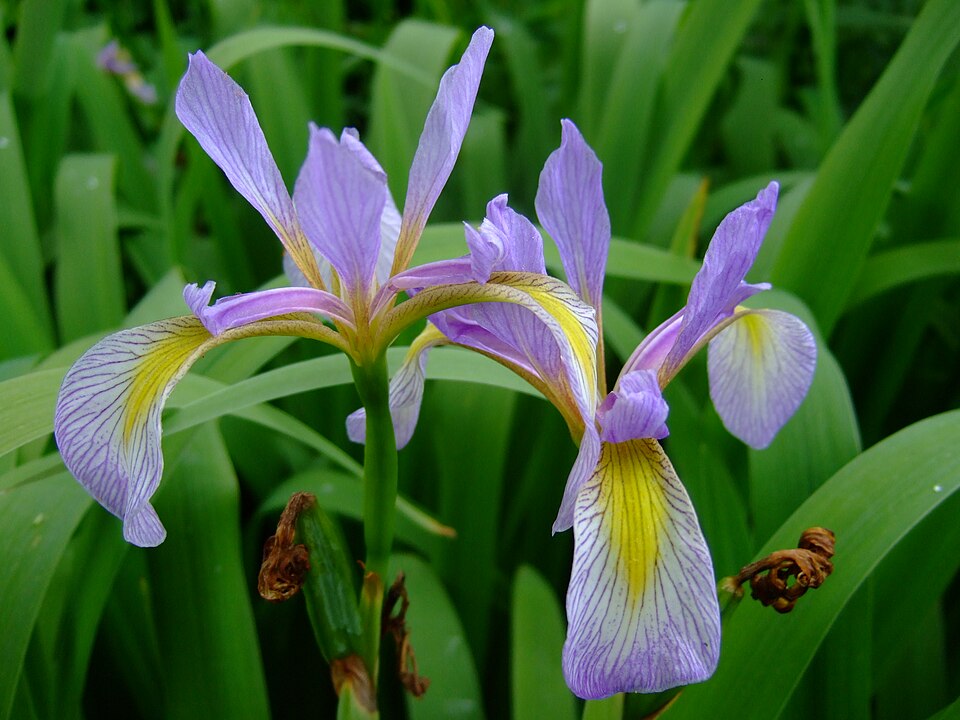
The flowers are unmistakable: broad, arching violet-blue petals adorned with bold yellow-and-white signal patches guide pollinators — chiefly bumblebees — deep into the bloom. The three large drooping petals (falls) display the characteristic iris pattern, while three smaller upright petals (standards) add height and elegance. Blooming in June and July across Nebraska and Kansas, Blue Flag Iris provides a brilliant show at a time when many native wetland wildflowers are just getting started.
Beyond its visual appeal, Blue Flag Iris plays an important ecological role in riparian and wetland habitats. Its dense rhizomatous root systems stabilize streambanks, filter runoff, and create habitat structure for amphibians, invertebrates, and small mammals. For gardeners working with wet or seasonally flooded areas, few native plants rival its combination of beauty, ecological value, and adaptability to fluctuating water levels.
Identification
Blue Flag Iris is an upright, clump-forming perennial herbaceous plant growing 1 to 3 feet (30–90 cm) tall from a stout, creeping rhizome. The plant spreads slowly over time by both rhizome extension and seed dispersal, forming attractive colonies in suitable wet habitats. Its overall growth habit resembles a fan of sword-like leaves, characteristic of the iris family.
Leaves
The leaves are flat, sword-shaped, and bright green, arising from the base in a compressed fan arrangement. Each leaf blade is 1 to 3 feet long and about ½ to 1 inch wide, with a distinct midrib and parallel venation. Leaves are erect to slightly arching, remaining attractive throughout the growing season even after bloom. They turn yellow and die back to the ground in late fall, with new growth emerging from the rhizome in early spring.
Flowers & Fruit
The flowers are the showstopper — 2 to 3 inches across, with the classic iris architecture of three large “fall” petals and three smaller upright “standard” petals. The falls are violet-blue to blue-purple, each featuring a bold yellow or white central patch streaked with deep violet veining, creating a landing platform that guides pollinators to the nectar. The standards are narrower and more upright, in a similar shade of blue-violet. Flowers are lightly fragrant and appear from late May through July, with peak bloom typically in June in Nebraska and Kansas.
After pollination, the plant produces a three-chambered, oblong seed capsule 1 to 2 inches long, turning brown in late summer and splitting open to release flat, reddish-brown seeds that are dispersed by water. The seeds float and are carried downstream, enabling natural colonization of new wetland sites.
Rhizomes & Roots
The rhizomes are thick, fleshy, and horizontally spreading, anchoring the plant firmly in moist soils. They contain irisin, a mildly toxic compound that makes all parts of the plant potentially irritating to skin and toxic if ingested. The extensive root system is highly effective at binding wet soils and absorbing excess nutrients from runoff.
Quick Facts
| Scientific Name | Iris shrevei (syn. Iris virginica var. shrevei) |
| Family | Iridaceae (Iris Family) |
| Plant Type | Herbaceous Perennial Wildflower |
| Mature Height | 1–3 ft |
| Sun Exposure | Full Sun to Part Shade |
| Water Needs | Moderate to High |
| Bloom Time | June – July |
| Flower Color | Deep blue-violet with yellow and white markings |
| Soil Type | Moist to wet; tolerates clay and silt |
| Deer Resistant | Yes (mildly toxic foliage deters browsing) |
| USDA Hardiness Zones | 4–9 |
Native Range
Blue Flag Iris is native to the central and eastern United States, growing naturally from Nebraska and Kansas east through the Midwest and into much of the Southeast and mid-Atlantic regions. Its range extends from Texas and Louisiana in the south to Minnesota, Wisconsin, and Michigan in the north, and east to the Atlantic coast states from Virginia to Georgia. This broad distribution reflects the plant’s adaptability to a wide range of wetland and riparian habitats.
In Nebraska and Kansas, Blue Flag Iris is found along the margins of streams, rivers, ponds, and prairie marshes, often growing in dense colonies where conditions are consistently moist. It thrives in the shallow water and fluctuating water table of prairie riparian corridors, where it serves as an important structural element of the native plant community. In the eastern portions of its range, it is a characteristic species of coastal plain wetlands, river bottomlands, and freshwater marshes.
The species favors the transitional zone between open water and upland — the “wet edge” of wetland habitats — where it receives full to partial sun. Its presence in a landscape is often a reliable indicator of seasonally or permanently wet soils. Across its range, Blue Flag Iris grows alongside other native wetland species including cattails, sedges, cardinal flower, and native willows.
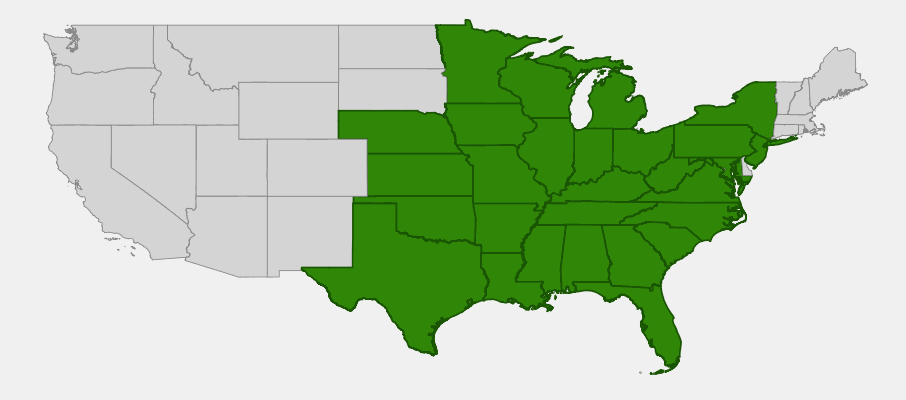
📋 Regional plant lists featuring Blue Flag Iris: Nebraska & Kansas
Growing & Care Guide
Blue Flag Iris is one of the easiest and most rewarding native wetland wildflowers to grow. Given the right conditions — consistently moist to wet soil and adequate sun — it establishes readily and spreads into attractive colonies over time with virtually no maintenance.
Light
Blue Flag Iris performs best in full sun to part shade. In full sun with adequate moisture, plants bloom most profusely and maintain a compact, upright form. In part shade (3–6 hours of direct sun), plants still bloom well but may grow slightly taller and more open. Deep shade is not suitable — plants in heavy shade will produce foliage but few flowers.
Soil & Water
This is a plant that genuinely loves wet feet. Blue Flag Iris thrives in consistently moist to wet soils — it will grow in shallow standing water up to about 4 inches deep, making it ideal for pond margins, rain garden overflow zones, and constructed wetlands. It tolerates clay and heavy soils exceptionally well, which makes it one of the top choices for wet, heavy-soil problem areas in the native landscape. Well-drained soils are not suitable unless irrigation is available to maintain consistent moisture.
Planting Tips
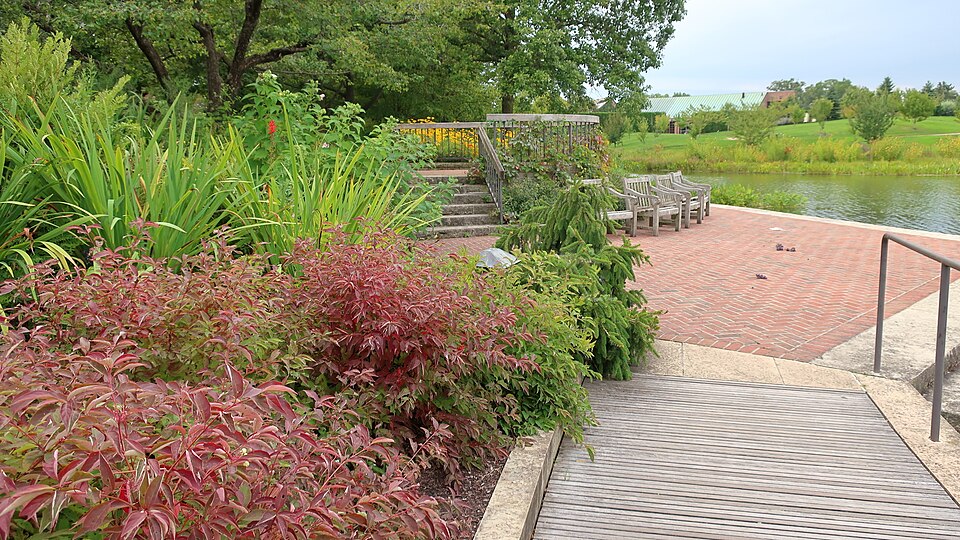
Plant Blue Flag Iris in spring or fall, spacing plants 18 to 24 inches apart to allow room for rhizome expansion. Container-grown plants establish quickly; bare-root divisions can also be planted in early spring or after bloom. When planting along a pond margin, position plants at the water’s edge or in 1–4 inches of standing water. In rain gardens, place Blue Flag Iris in the lowest zones where water collects longest after rain events.
Pruning & Maintenance
Blue Flag Iris requires minimal maintenance. Remove spent flower stalks after bloom if desired, or leave them for seed capsule interest. Cut foliage back to the ground in late fall or early spring before new growth begins. Every 3–5 years, consider dividing congested clumps in late summer after bloom — this reinvigorates the planting and provides divisions for expanding your garden or sharing with others. Iris yellow spot virus and iris borer can occasionally affect plants, but these pests rarely cause serious problems in well-sited, vigorous native plantings.
Landscape Uses
Blue Flag Iris is exceptionally versatile in wet-site landscaping:
- Pond and water garden margins — thrives in shallow water along edges
- Rain garden low zones — handles flooding and draws down standing water
- Streambank stabilization — dense rhizomes bind wet soils effectively
- Prairie wetland restoration — a signature species of wet prairie margins
- Stormwater management — absorbs nutrients and filters runoff
- Bog gardens and constructed wetlands — thrives in perpetually wet conditions
- Wildlife gardens — excellent pollinator and wildlife habitat plant
Toxicity Note
All parts of Blue Flag Iris are mildly toxic if ingested — the rhizomes contain irisin and other glycosides that can cause nausea, vomiting, and digestive upset in humans and pets. The plant’s sap may also cause skin irritation in sensitive individuals. Despite its toxicity, it is not considered highly dangerous, and the bitter taste deters casual ingestion. Wear gloves when dividing rhizomes if you have sensitive skin.
Wildlife & Ecological Value
Blue Flag Iris is a valuable component of wetland plant communities, supporting diverse wildlife through its flowers, seeds, and structural habitat.
For Pollinators
The large, showy flowers of Blue Flag Iris are primarily pollinated by bumblebees (Bombus spp.), which are among the few insects with the size and strength to force their way into the blooms and access the nectar. The distinctive yellow and white markings on the fall petals function as nectar guides, directing bees to the reward. Hummingbirds occasionally visit the flowers as well. The plant blooms in June–July, providing a critical nectar source for bees during the early summer period.
For Birds
The seed capsules persist into fall and provide food for waterfowl and shorebirds. The dense stands of foliage provide excellent cover and nesting habitat for marsh-nesting birds including Red-winged Blackbirds and Common Yellowthroats. The structural complexity of dense iris colonies also provides foraging habitat for herons, egrets, and kingfishers hunting the adjacent water.
For Mammals
While the plant’s mild toxicity discourages most mammalian herbivores, muskrats (Ondatra zibethicus) are known to eat Blue Flag Iris rhizomes and are considered one of its natural dispersal agents — carrying rhizome fragments to new locations as they build their lodges. Beavers occasionally use the plants in lodge construction, inadvertently transplanting them.
Ecosystem Role
Blue Flag Iris plays an essential structural role in wet-edge plant communities. Its dense rhizome mats bind shoreline soils and reduce erosion during flood events. The standing stalks and leaves create a matrix of vegetated habitat at the water’s edge, which is critical for many invertebrates, amphibians, and small reptiles. Decomposing iris litter contributes organic matter to wetland soils, supporting the decomposer communities that cycle nutrients through the ecosystem.
Cultural & Historical Uses
Blue Flag Iris and its close relatives held significant cultural importance for many Indigenous nations across eastern and central North America. The Cherokee prepared a skin salve from the root to treat sores and inflammation, while the Seminole and other southeastern peoples used the rhizome in medicinal preparations for liver ailments and as a cathartic. The Meskwaki used iris roots as a component in love medicines and ceremonial preparations. Several Great Plains nations recognized the plant’s presence as an indicator of water and used it as a navigation landmark.
The distinctive iris flower has been a symbol of royalty, faith, and purity across many cultures worldwide — the French fleur-de-lis, one of the most recognized symbols in Western heraldry, is almost certainly derived from an iris flower. In North American Indigenous art and beadwork, iris designs appear frequently in both spiritual and decorative contexts. The roots were also widely used as a fixative for dyes, particularly to help natural plant pigments adhere to fibers.
In early American folk medicine, Blue Flag root was employed as a purgative and to treat “torpid liver” — mirroring its use in European herbal traditions for similar iris species. The root was included in the U.S. Pharmacopoeia as a medicinal substance through the early 20th century. Today, while not used medicinally in mainstream practice, Blue Flag Iris is treasured in ecological restoration and native landscaping for its beauty, wetland stabilization value, and support of native pollinators.
Frequently Asked Questions
Can Blue Flag Iris grow in a regular garden bed without wet soil?
Blue Flag Iris really needs consistently moist soil to thrive. It can survive in average garden soil if watered regularly, but it performs best — and blooms most prolifically — in reliably wet to moist conditions. It’s not a plant for dry sites or well-drained upland beds. Rain gardens, pond edges, and wet meadows are its ideal home.
Is Blue Flag Iris the same as Yellow Flag Iris?
No — Yellow Flag Iris (Iris pseudacorus) is a European invasive species that looks somewhat similar in habit but has bright yellow flowers and is considered highly invasive in North American wetlands. Blue Flag Iris (Iris shrevei) is native and ecologically beneficial. Always plant the native species and avoid introducing Yellow Flag to your landscape.
How do I divide Blue Flag Iris?
Divide in late summer (August–September) after bloom, or in early spring before growth begins. Dig up a clump, use a sharp spade or knife to cut the rhizome into sections each with several fans of leaves and good roots, and replant promptly at the same depth, keeping the rhizome at or near the soil surface. Water well and keep moist until established.
Is Blue Flag Iris safe for pets?
The plant is mildly toxic to dogs and cats if ingested — especially the rhizomes, which contain irisin. Symptoms include drooling, vomiting, and lethargy. While rarely fatal, it’s best to keep pets away from the plants, especially recently planted or divided rhizomes which may be more accessible.
Does Blue Flag Iris spread aggressively?
Blue Flag Iris spreads at a moderate pace by rhizome extension, forming larger clumps over time. It is not considered invasive — it spreads slowly and stays within its planting zone. Dividing every few years can control its spread and keep clumps vigorous and blooming well.