
Composting Tips for South Dakota Gardeners: Efficient Practices for Local Soil and Climate
Last updated: August 28, 2026
Composting in South Dakota takes a bit of extra attention because of the state’s climate and soil quirks. If you tweak your composting techniques to fit local conditions, you’ll end up with nutrient-rich soil that actually makes a difference for your plants.
- SD’s harsh winters slow but don’t stop composting — your pile just needs to be reactivated in spring
- Aim for a 3:1 ratio of browns to greens by volume (carbon-rich to nitrogen-rich materials)
- SD’s dry climate means you may need to add water regularly to keep the pile moist as a wrung-out sponge
- Insulating your pile with straw bales helps it stay active during SD’s cold winters
- Finished compost improves SD’s often heavy clay or sandy prairie soils dramatically
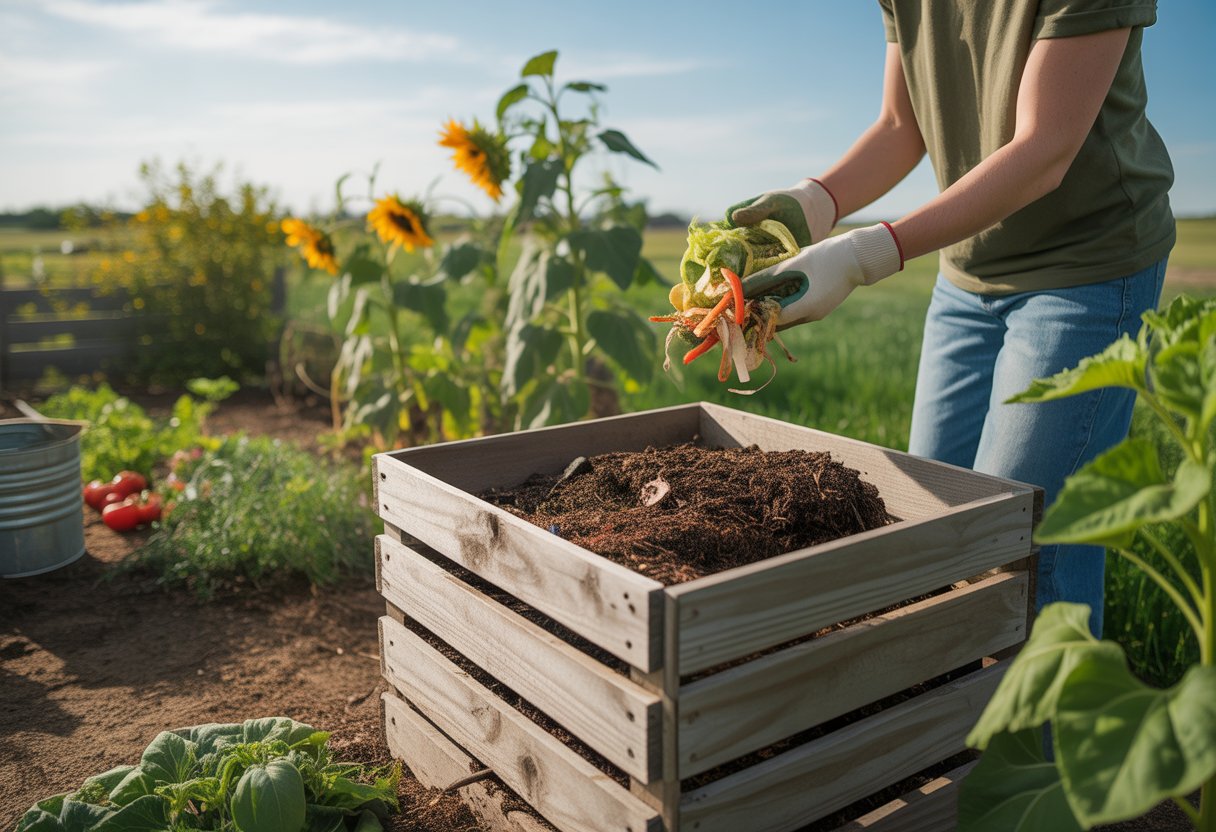
The key to successful composting in South Dakota is balancing green and brown materials while managing moisture through seasonal changes. This approach keeps decomposition going, even when winter gets brutal or summer dries everything out.
Figuring out how to build and maintain compost piles that can handle those temperature swings means you’ll have organic matter for your garden all year. Honestly, local tips make composting less of a hassle and more productive.
Essential Composting Practices for South Dakota Gardeners
If you want your compost to break down well in South Dakota, you’ve got to pick the right approach, take care of the pile, and use good ingredients. All of this affects how fast things decompose and how good your compost ends up.
Selecting the Right Composting Method
Think about your yard and the weather when choosing a composting method. South Dakota winters can really slow things down, so hot composting in bins or tumblers helps keep the pile active and warm. That way, stuff breaks down faster, and weed seeds or bad microbes don’t stand a chance.
If you’re short on space, vermicomposting (using worms) is a solid option. You can do it indoors or in tight spots, but you’ll need to keep an eye on moisture and temperature.
Outdoor piles or trenches don’t cost much, but you’ll spend more time turning them to keep things moving. Your choice really comes down to how much waste you have and how much time you want to spend on upkeep.
Building and Maintaining a Healthy Compost Pile
A good compost pile mixes carbon-heavy “browns” like dry leaves, straw, or shredded paper with nitrogen-rich “greens” like grass clippings, kitchen scraps, or green leaves.
Keep the pile moist—think wrung-out sponge, not soggy mess. Too dry, and nothing happens; too wet, and you get smells and pests.
Turn the pile every week or two to get air in there. Oxygen keeps the microbes happy and speeds everything up. When winter hits, throw on extra straw or cover with a tarp to hold in some heat.
Key Ingredients for Effective Composting
What you put in really matters. Skip meat, dairy, and oily foods—they just attract trouble. Lawn clippings, garden waste, fruit and veggie scraps, coffee grounds, and eggshells are all fair game.
Chop or shred things before adding them. The more surface area, the faster they break down. Aim for about two parts carbon to one part nitrogen for the best results.
If you want to give your pile a boost, toss in a little finished compost or manure. That brings in helpful microbes and more nutrients.
Optimizing Nutrient Content and Managing Materials
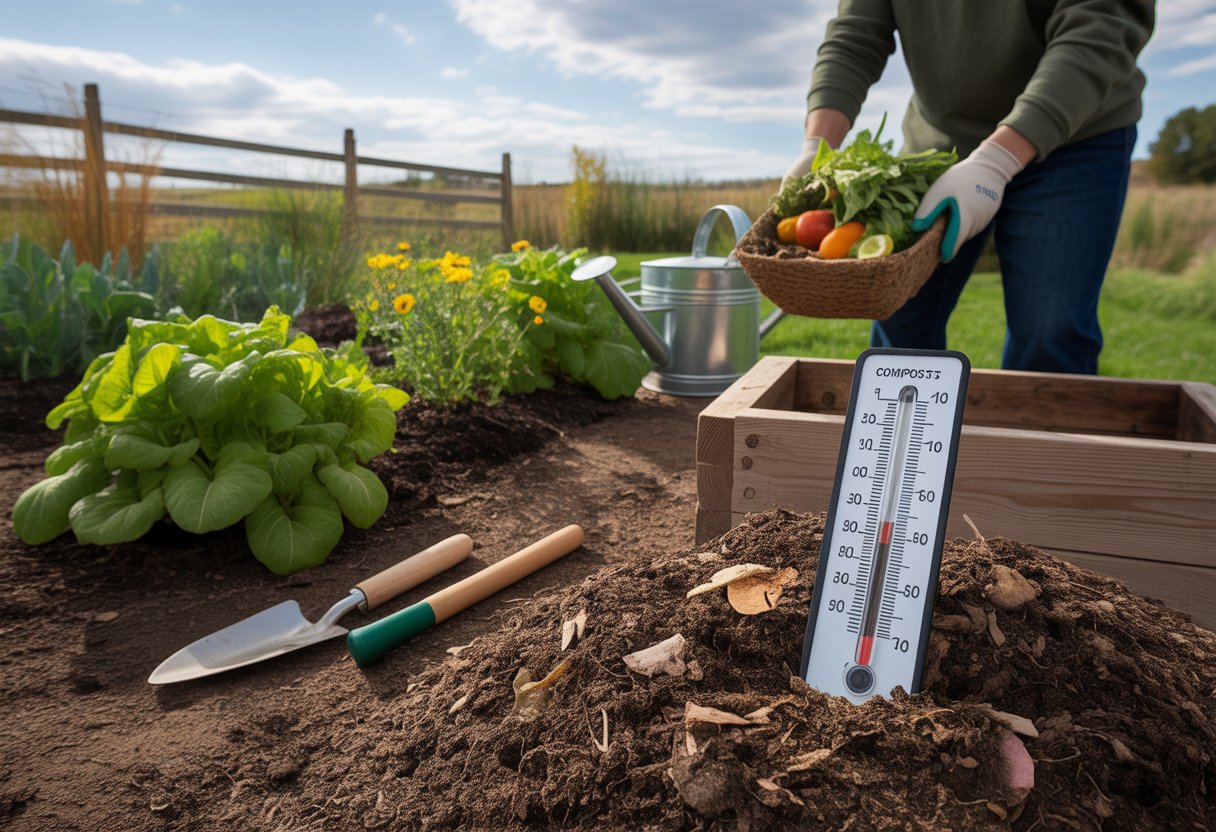
Getting compost right means balancing nutrients and being careful with what you add. Watch out for pH swings and avoid stuff that could bring in chemicals. Mixing food scraps, grass clippings, and leaves is usually enough to make compost that’ll help South Dakota soils.
Achieving Balanced Nitrogen, Phosphorus, and Potassium Levels
Aim for a carbon to nitrogen ratio around 30:1 by weight. Grass clippings and food scraps bring the nitrogen; dry leaves pile on the carbon.
Phosphorus and potassium change depending on what you add. If your soil test says you’re low on phosphorus, bone meal or rock phosphate can help. Wood ash or banana peels add potassium, but don’t go overboard—they can make the pile too alkaline. Rotating materials keeps things in balance.
Managing pH for South Dakota Soils
Soils here are usually neutral or a bit alkaline. The sweet spot for compost pH is between 6.0 and 7.5, where microbes work best.
If things get too acidic, sprinkle in some agricultural lime. Too alkaline? Pine needles or peat moss can nudge the pH down. Test the pile every few weeks to keep it in the right range and avoid nutrient hiccups.
Dealing With Herbicide Residues and Clopyralid
Clopyralid is a stubborn herbicide that can sneak into compost through treated grass clippings or yard waste. It sticks around and can hurt sensitive plants.
Don’t use clippings from treated lawns. If you’re not sure, just use veggie scraps or leaves instead. Hot composting at 130°F for a few days helps, but clopyralid is tough—longer or specialized treatment might be needed. Testing your compost or sticking with herbicide-free inputs is safer.
Integrating Food Scraps, Grass Clippings, and Leaves
Food scraps bring nitrogen and moisture, but chop them up and bury them to keep smells down. Again, skip meat, dairy, and greasy stuff.
Grass clippings break down fast and add nitrogen, but you’ve got to mix them with dry leaves so they don’t get slimy. Leaves give you carbon and help air move through the pile, but they’re slow to break down unless you shred them.
Here’s one way to balance it:
| Material | Role | Tips |
|---|---|---|
| Food Scraps | Nitrogen, moisture | Chop small, avoid meat |
| Grass Clippings | Nitrogen-rich | Mix with leaves to prevent compaction |
| Leaves | Carbon source | Shred for faster breakdown |
Mixing these well gives you compost with the right texture and nutrients for South Dakota gardens.
Troubleshooting and Preventing Common Composting Issues
Keeping your compost pile healthy means dealing with pests, managing materials, and rolling with local soil challenges. A few straightforward tricks can keep critters out, make sure you’re using safe stuff, and help your pile break down faster.
Controlling Rats and Ants in the Compost
Rats show up when you toss in smelly food scraps and don’t cover them. Skip meat, dairy, and oily foods. Cover new scraps with dry leaves or shredded newspaper every time.
Ants love dry piles. Keep the compost moist but not soggy, and turn it often to mess up their tunnels. If rats are a problem, try a sealed bin or put wire mesh underneath to block them from digging in.
Quick reminders:
- Skip pest-attracting scraps
- Cover each addition with dry material
- Keep moisture at 40–60%
- Turn the pile often
- Use wire mesh or barriers if needed
That should keep most pests at bay and help the pile break down as it should.
Composting Animal Manure and Sawdust Safely
Animal manure adds nitrogen, but you have to compost it for at least six months and get the pile hot—130°F to 150°F—to kill any nasty bacteria.
Sawdust is loaded with carbon and can slow things down if you use too much. Mix it with manure or green waste to balance it out.
Don’t use fresh manure—it can have weed seeds or parasites. And skip sawdust from treated or painted wood.
Stay safe by:
- Composting manure hot and long enough
- Mixing sawdust with nitrogen sources
- Watching moisture and turning regularly
- Avoiding treated wood sawdust
Overcoming Slow Decomposition in Clay Soil
Clay soil holds water and packs tight, which can make composting drag. Mix in coarse stuff like straw or wood chips to let air in and help water drain.
Turn the pile often to keep it loose. If it’s still slow, try raising the pile on pallets or gravel to help water drain out. Covering with a tarp that lets air in keeps rain off without suffocating the pile.
Here’s a handy breakdown:
| Issue | Solution |
|---|---|
| Poor aeration | Add coarse materials, turn regularly |
| Excess moisture | Adjust moisture, elevate pile |
| Water retention | Use breathable covers |
These tweaks usually get things moving again in heavy clay areas.
Using Compost Effectively in Your South Dakota Garden
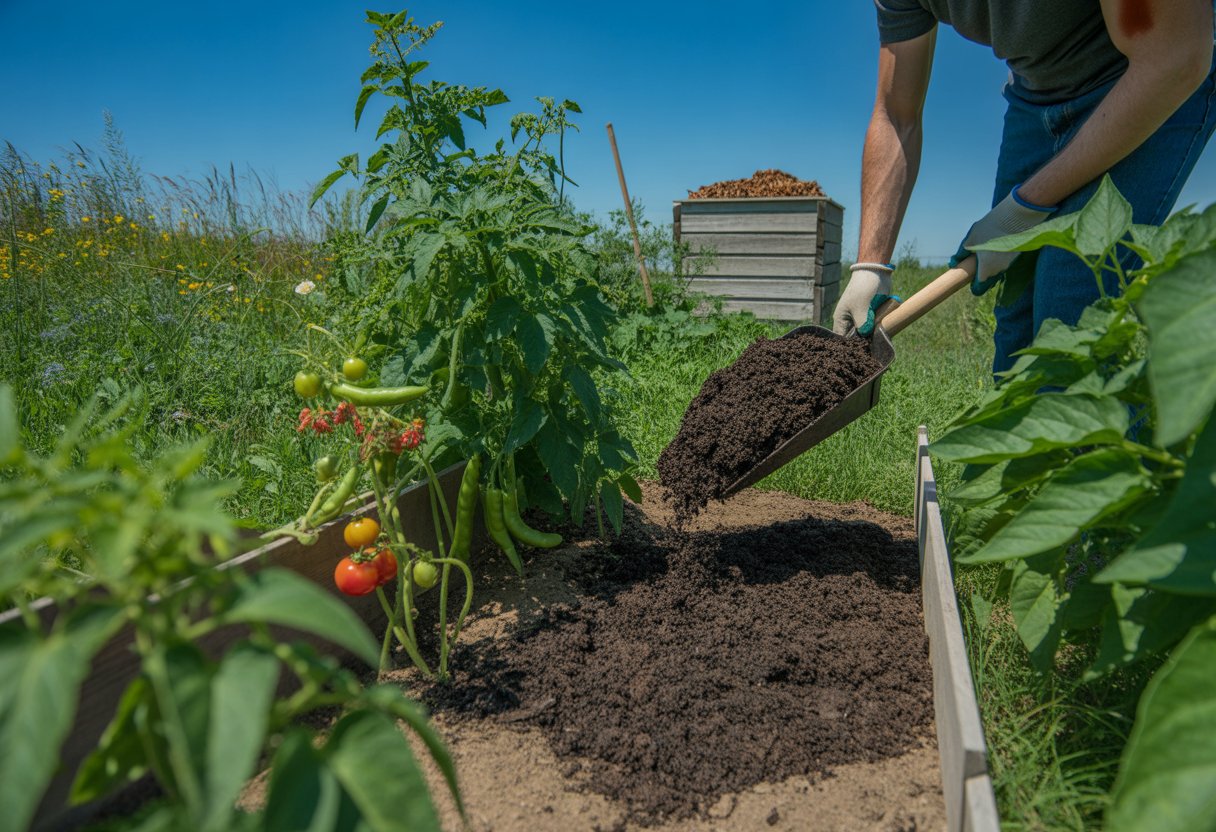
If you know how to use compost right, you’ll see better soil and healthier plants. Compost works as a soil amendment and mulch, locking in moisture and nutrients.
Applying Finished Compost as Black Gold
Finished compost—some folks call it black gold—packs a punch for plant growth. Spread a layer about 1 to 2 inches thick over your beds before planting or during the season.
Mix compost into the top 6 to 8 inches of soil to boost air and water retention. This helps especially if your soil’s heavy clay or super sandy, which is pretty common around here.
Don’t go overboard with thick layers; that can suffocate roots. Just add compost every year or two to keep your soil thriving and your plants happy.
Techniques for Mulching and Soil Enrichment
Compost works great as mulch. It helps control weeds and holds onto moisture, which honestly matters a lot with South Dakota’s unpredictable rainfall.
Spread a 2- to 3-inch layer of compost mulch around your plants. This helps stop evaporation and shields roots from wild temperature swings.
Keep compost a few inches away from plant stems—otherwise, you might run into rot. If you mix compost mulch with straw or wood chips, you’ll probably get a nice balance of moisture and nutrients.
For soil enrichment, try mixing compost with your garden soil before you plant anything. It gives seedlings a fertile spot to start and boosts microbial activity.
You can top-dress with compost during the growing season to add nutrients, and you don’t have to mess with the roots much.
Frequently Asked Questions
Does composting work in South Dakota’s cold winters?
Yes, though it slows significantly below 40°F and nearly stops in frozen conditions. The key is to build a large pile (at least 3x3x3 feet) before winter, add a layer of finished compost or activator, and cover with insulating material like straw bales. The center of a large pile can remain active even during SD winters. In spring, turn the pile to reactivate it and processing resumes quickly.
What can I compost in South Dakota?
Great compost materials for SD gardens include: grass clippings and leaves (abundant in fall), kitchen vegetable scraps, coffee grounds, cardboard and newspaper, plant trimmings, and manure from chickens, rabbits, or horses (excellent nitrogen source). Avoid meat, dairy, cooked foods, and pet waste — these attract pests and create odors.
How long does it take to make finished compost in South Dakota?
In warm SD summers with regular turning, a properly managed hot compost pile can produce finished compost in 6–12 weeks. Cold composting (passive, no turning) takes 6–12 months. The most practical approach for SD gardeners is to start a pile in fall from leaf and yard waste, then finish it with spring turning — ready for use by planting season.
 Looking for a nursery that carries native plants in South Dakota?
Browse our native plant nursery directory: South Dakota
I’m in zone 3 and wasn’t sure this would apply to me but it does. Thanks!
Growing up my grandma always had a beautiful garden. Trying to do the same at our place now.
Thank you for the kind words! Wishing you a great growing season. -Plant Native Team