
Blue-Leaved Huckleberry (Vaccinium deliciosum)
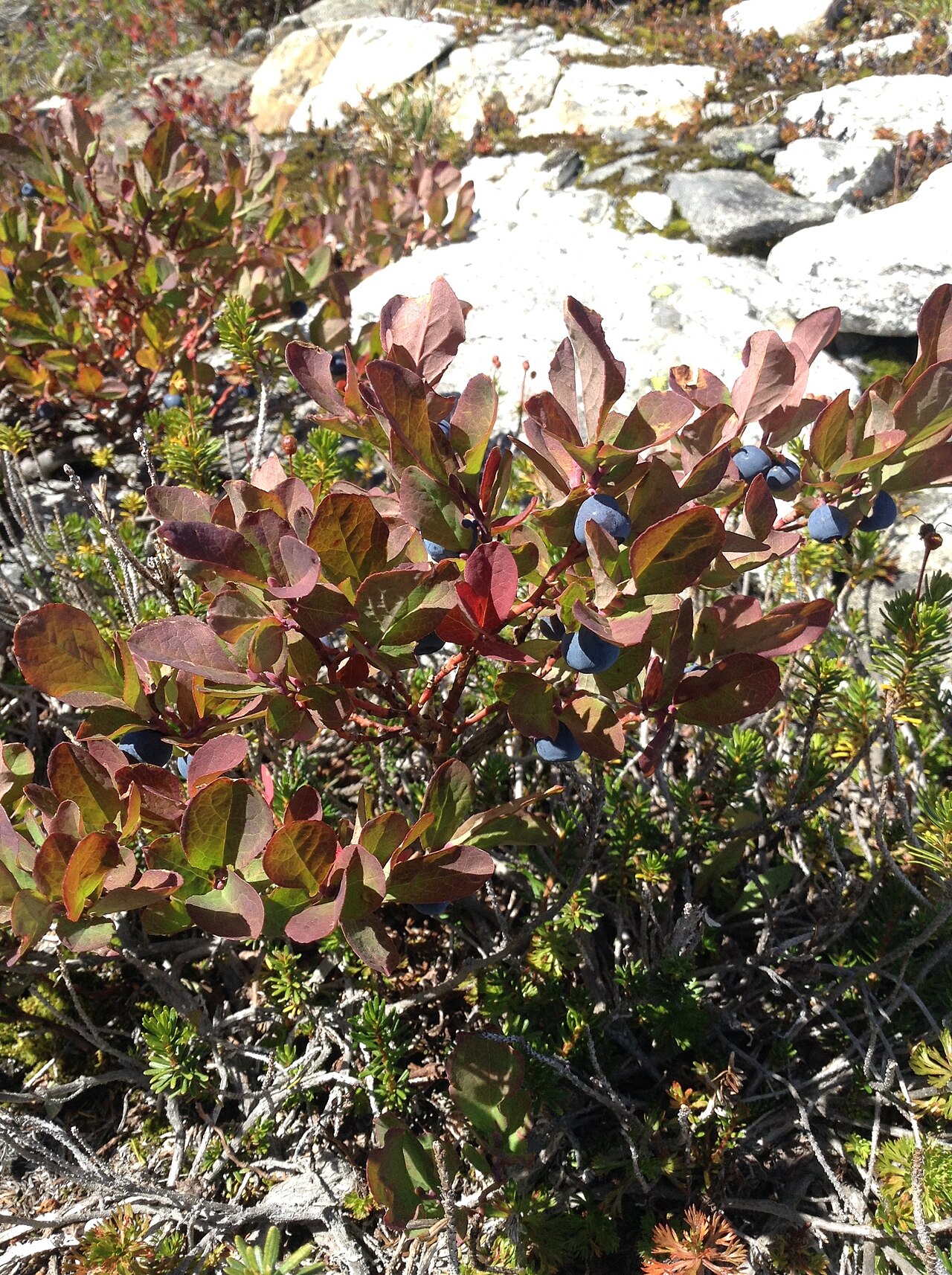
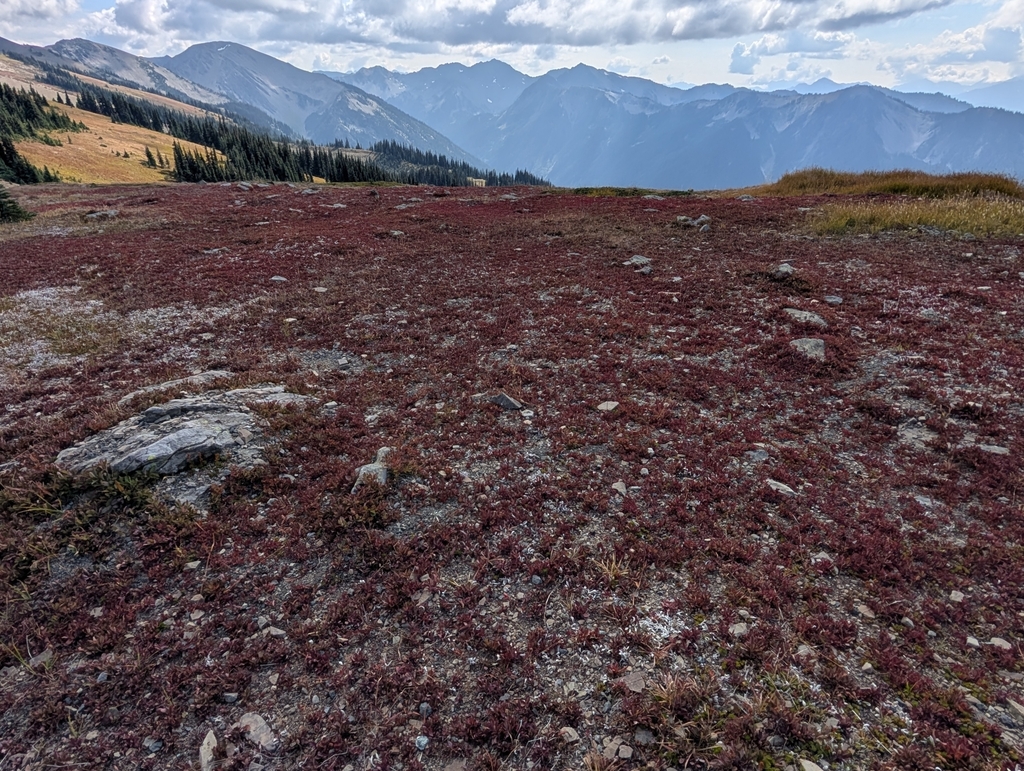
Vaccinium deliciosum, known as Blue-Leaved Huckleberry, Cascade huckleberry, Cascade bilberry or Cascade blueberry, is a low, mat-forming wild blueberry of the subalpine meadows of the Pacific Northwest. It rarely grows more than a foot tall, but on open slopes in the Cascades and Olympic Mountains it can carpet acres of ground. In late summer it produces sweet, juicy blue berries, and in fall it turns whole mountainsides scarlet.
As the species name suggests, its fruit is considered among the best-tasting of all western huckleberries. It belongs to the heath family (Ericaceae), and despite the name “huckleberry” it is a true blueberry, with many small seeds and a powdery blue bloom on the fruit. USDA PLANTS calls it Cascade bilberry, while hikers and berry pickers usually say Cascade huckleberry or blue-leaved huckleberry, for its smooth, blue-green leaves.
This guide explains how to identify blue-leaved huckleberry, where to find it in the mountains, and what it takes to grow it in a garden, which is possible but challenging outside cool, moist, high-elevation climates.
Identification
Several huckleberries and blueberries share the subalpine zone of the Pacific Northwest. Blue-leaved huckleberry is the low one, usually under a foot tall, with smooth, pale blue-green leaves and single pink flowers.
Stems & Habit
It is a low, deciduous shrub 4 to 16 inches tall (occasionally to about 2 feet), spreading by underground rhizomes to form dense mats or patches. The twigs are smooth, greenish to reddish-brown and somewhat angled.
Leaves
Leaves are alternate, oval to broadly egg-shaped with the widest part above the middle, about ¾ to 2 inches long. They are thin, hairless and distinctly blue-green to gray-green, especially underneath, with a faint whitish bloom. The edges are finely toothed, mostly in the upper half. In fall they turn brilliant red to purple, often coloring entire slopes.
Flowers
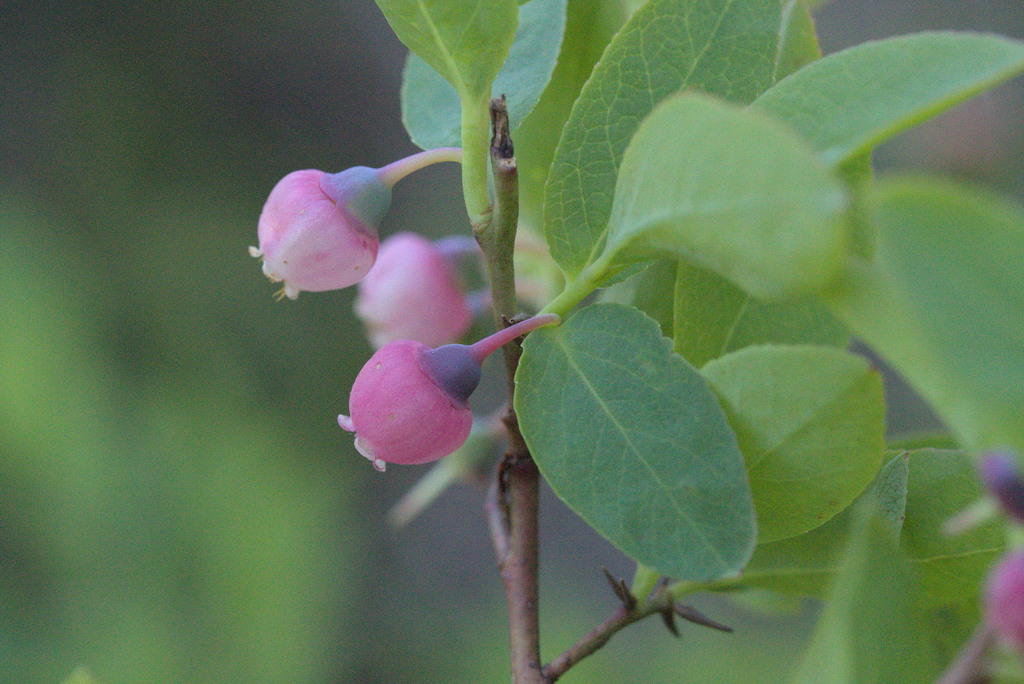
Flowers appear in June and July, soon after snowmelt, borne singly in the leaf axils on short stalks. Each is a pinkish, nearly round urn about ¼ inch long, hanging downward, and often appears with or slightly before the new leaves.
Fruit
The berries ripen from late July to September depending on elevation. They are round, about ¼ to ⅜ inch across, dark blue to nearly black, usually with a heavy pale blue bloom. They are sweet and highly prized for eating fresh, in pies and in jam.
Quick Facts
| Scientific Name | Vaccinium deliciosum |
| Family | Ericaceae (heath family) |
| Plant Type | Low deciduous shrub; mat-forming |
| Mature Height | 4–16 in (occasionally to 2 ft) |
| Mature Spread | 2–3 ft or more; spreads by rhizomes |
| Growth Rate | Slow |
| Sun Exposure | Full sun to part shade |
| Water Needs | Medium; moist, well-drained soil |
| Soil Type | Acidic, organic-rich, gravelly or loamy soil |
| Soil pH | About 4.5–5.5 |
| Bloom Time | June–July |
| Flower Color | Pink |
| Fall Color | Brilliant red to purple |
| Fruit | Sweet blue berries with a pale bloom, late July–September |
| Deer Resistant | No; browsed by deer, elk and mountain goats |
| USDA Hardiness Zones | 4–7 |
Native Range
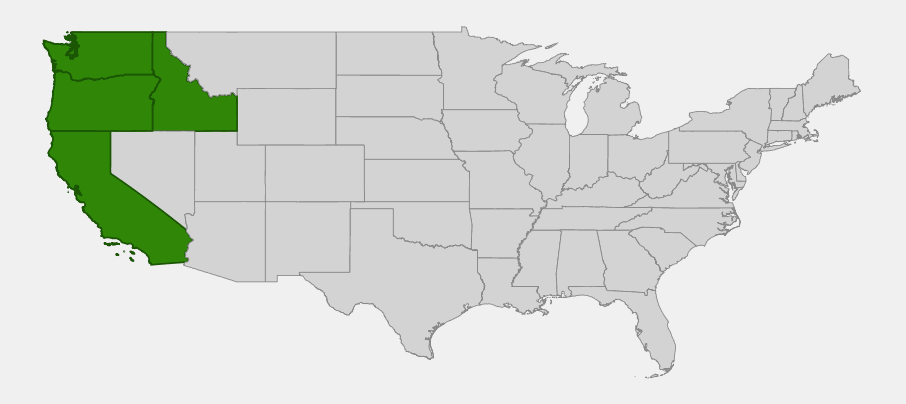
Blue-leaved huckleberry is a Pacific Northwest mountain plant. It grows in the Cascade Range of Washington and Oregon, the Olympic Mountains, and the Coast Mountains and Cascades of southern British Columbia. USDA PLANTS lists it in Washington, Oregon, Idaho and California; the Idaho and California records are outlying and few.
It is most abundant in the subalpine and lower alpine zones, roughly 3,500 to 7,000 feet, in meadows, heather and huckleberry heaths, avalanche paths, rocky slopes and the open edges of subalpine fir and mountain hemlock forest. It favors places where deep winter snow melts out by midsummer.
Classic places to see it include Mount Rainier, the North Cascades, Hurricane Ridge in Olympic National Park, and the Mount Baker area. In some areas, large historic berry fields of this species and related huckleberries were maintained by Native American peoples using fire.
📋 Regional plant lists featuring Blue-Leaved Huckleberry: Western Oregon & Western Washington · California & Nevada
Growing & Care Guide
Blue-leaved huckleberry is a beautiful plant for a rock garden or naturalized slope in cool, moist climates, but it is challenging in hot or lowland gardens. It is occasionally offered by native plant nurseries in the Pacific Northwest; never dig plants from the wild, where they also help hold fragile subalpine soils.
Light
In the mountains it grows in full sun, but at lower elevations it does best with morning sun and afternoon shade, which keeps its roots and leaves cool.
Soil & Water
Plant it in acidic, humus-rich, well-drained soil that stays evenly moist. A mix of coarse sand or grit, composted bark and peat suits it well. Water regularly during dry summers; it does not tolerate drought, heavy clay or alkaline soil.
Planting Tips
Plant small container-grown plants in fall or early spring. Mulch with conifer needles or bark to keep roots cool. It pairs naturally with heathers, low ferns and alpine perennials in a rock garden.
Pruning & Maintenance
No regular pruning is needed. Remove dead stems in early spring. Fertilize sparingly, if at all, with an acid-forming product. Expect slow growth and modest fruit production in lowland gardens.
Propagation
Propagate from rhizome divisions or from seed cleaned from ripe berries and cold-stratified for about three months. Seedlings grow slowly and may take several years to fruit.
Landscape Uses
- Rock and alpine gardens: a low, fine-textured shrub with outstanding red fall color
- Edible landscaping in cool climates: small but delicious berries
- Naturalized slopes: spreads to form a soil-holding groundcover
- Subalpine restoration: for revegetating disturbed trails and campsites, using local plants
Wildlife & Ecological Value
In the subalpine meadows of the Northwest, blue-leaved huckleberry is a key food plant for wildlife in the short mountain summer.
For Pollinators
Bumblebees are the most important pollinators. Queens emerging from hibernation visit the flowers soon after snowmelt, and the hanging, urn-shaped flowers suit their habit of buzzing pollen loose. Caterpillars of several moths and butterflies feed on the foliage.
For Birds
Sooty grouse, ptarmigan, thrushes, American robins and other birds eat the berries in late summer and fall.
For Mammals
Black bears feed heavily on the berries before hibernation, as do chipmunks, marmots and other small mammals. Deer, elk and mountain goats browse the stems and leaves.
Ecosystem Role
By spreading through underground rhizomes, it forms dense mats that hold thin mountain soils on steep slopes. It resprouts after fire and is part of the mosaic of heath and meadow that follows disturbances such as avalanches and burns.
Cultural & Historical Uses
For Indigenous peoples of the Cascades and Olympics, including Coast Salish groups, the Yakama and others, late-summer trips to the high-country berry fields were an important seasonal tradition. Huckleberries and blueberries were eaten fresh and dried for winter, and berry patches were cared for, in part with periodic fire, to keep them productive.
The species was named by Charles Vancouver Piper, a botanist raised in Washington who wrote the first comprehensive flora of the state. He chose the name deliciosum for its fine-flavored fruit.
Today huckleberry picking remains a beloved late-summer activity in the Cascades, and on some national forest lands certain berry fields are reserved for tribal use under long-standing agreements. Pickers should follow local rules, pick only by hand and leave plenty for wildlife.
Frequently Asked Questions
Is Cascade huckleberry the same as blue-leaved huckleberry?
Yes. Both names, along with Cascade bilberry and Cascade blueberry, refer to Vaccinium deliciosum, a low subalpine shrub of the Pacific Northwest with blue-green leaves and sweet blue berries.
Are blue-leaved huckleberries edible?
Yes, and they are among the best-tasting wild berries in the Northwest. They ripen from late July to September and are eaten fresh or used in pies and jam.
Where can I find Cascade huckleberries?
In subalpine meadows and open forests of the Cascades and Olympic Mountains, typically between about 3,500 and 7,000 feet, for example around Mount Rainier, the North Cascades and Hurricane Ridge.
How is it different from thinleaf huckleberry?
Thinleaf huckleberry (Vaccinium membranaceum) is a taller shrub, usually 2 to 5 feet, with thinner, greener, pointed leaves and darker berries without much bloom. See our thinleaf huckleberry guide.
Can I grow blue-leaved huckleberry in my garden?
It is possible in cool, moist climates with acidic, well-drained soil, especially in a shaded rock garden, but it is slow-growing and difficult in hot or lowland gardens.

Looking for a nursery that carries Blue-Leaved Huckleberry?
Browse our native plant nursery directory: California · Idaho · Oregon · Washington

