Blue Spruce (Picea pungens)
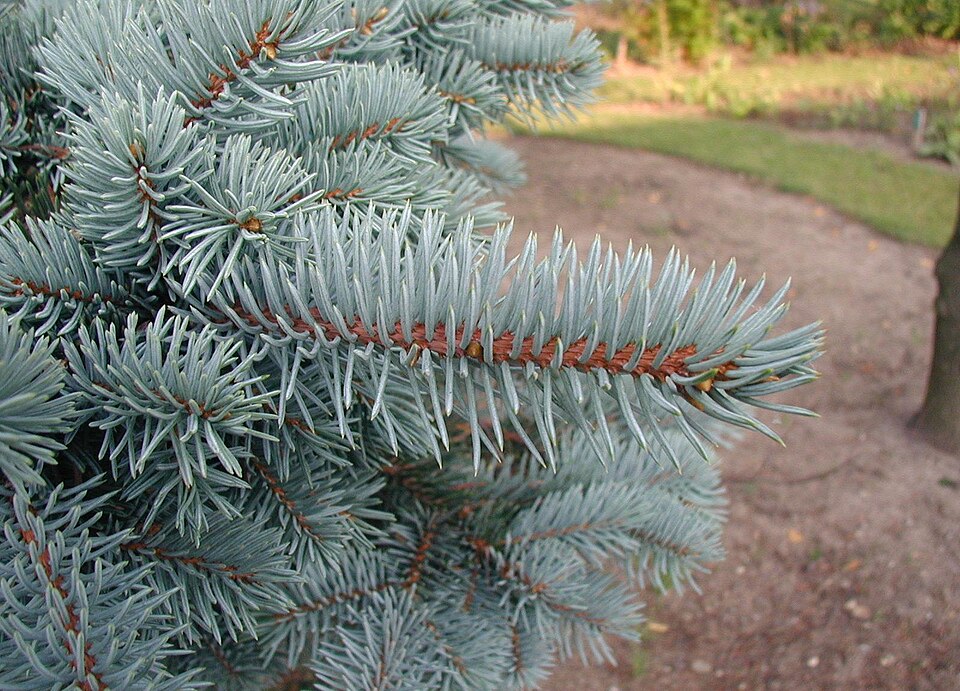
Picea pungens, the Blue Spruce or Colorado Blue Spruce, is one of the most recognizable conifers in North America and the state tree of both Colorado and Utah. Native to the Rocky Mountains from Wyoming south through Colorado, Utah, Arizona, and New Mexico, it grows naturally along mountain stream corridors and on moist mountain slopes at elevations of 6,000 to 11,000 feet. Its extraordinary steel-blue to silver-blue needles — unlike anything else in the forest — make it instantly identifiable, and this striking coloration has made it one of the most widely planted ornamental trees in North American horticulture for more than a century.
In its native habitat, Blue Spruce is a riparian and montane species, growing along streams, in canyon bottoms, and on north-facing slopes where moisture accumulates and cold air drainage creates favorable growing conditions. It forms associations with Engelmann Spruce, White Fir, Blue Douglas-fir, Narrowleaf Cottonwood, Water Birch, and Willows in the moist riparian zones of the Southern Rockies. The species is characteristically found where cold air drainage and adequate soil moisture create conditions favorable to dense conifer growth — a microclimate very different from the sun-baked slopes where Ponderosa Pine dominates.
For native plant gardens in Colorado, Utah, Wyoming, and surrounding states, Blue Spruce is an outstanding choice providing exceptional winter interest, year-round evergreen structure, and high wildlife value. Its dense branching creates superb shelter for birds, and its seeds feed numerous species of small birds and mammals throughout the winter months. Planting the native species rather than a horticultural cultivar ensures the best ecological value and genetic diversity appropriate to local conditions.
Identification
Blue Spruce is a large conifer reaching 70 to 115 feet at maturity in ideal conditions, though most landscape specimens top out at 50–70 feet. Young trees have a distinctly pyramidal form with a strong, straight central leader and regularly whorled horizontal branches descending to the ground; older trees develop a more open, irregular silhouette as lower branches are shaded out. The species is easily distinguished from other spruces by its distinctive needle color and exceptionally sharp, stiff needles.
Needles
The needles are the defining feature: stiff, sharp-pointed, 1 to 1.2 inches long, and arranged spirally around the twig. The needle color ranges from green through blue-green to brilliant steel-blue or silver-blue, depending on the density of the waxy powder (glaucescence) coating each needle. The densest, most silvery-blue color is found on current-season growth; older needles tend toward greener tones. The needles are four-sided in cross-section (a diagnostic feature for spruces) and produce a sharp prick when grabbed — the species name pungens means “sharp” or “stinging.” When crushed, they release a pungent, resinous odor distinct from other local conifers.
Cones
The cones are cylindrical, 2.5 to 4.5 inches long, with thin, flexible scales with slightly ragged or irregular edges — a useful identification character distinguishing Blue Spruce from Engelmann Spruce, which has shorter cones with smooth scale edges. The cones hang downward (pendant) from the upper branches, ripening from green through purple-brown in their first year. The winged seeds are dispersed by wind in late summer and early autumn. Cone production begins when trees are about 20 years old and occurs in abundance every 2–5 years on mature trees.
Bark
Young bark is gray-brown and smooth, becoming deeply furrowed and scaly with age. The furrows run vertically, giving older trees a rugged, textured appearance typical of mature Rocky Mountain conifers. Inner bark is reddish, and the resinous wood has a characteristic spruce odor. The bark’s gray tone and rough texture contrast attractively with the blue-silver needles throughout the year.
Quick Facts
| Scientific Name | Picea pungens |
| Family | Pinaceae (Pine) |
| Plant Type | Evergreen Conifer (Tree) |
| Mature Height | 70 ft (up to 115 ft in ideal conditions) |
| Sun Exposure | Part Shade |
| Water Needs | Moderate (Periodic Wet) |
| Bloom Time | April – May (pollen cones) |
| Flower Color | Red-purple (male pollen cones) |
| USDA Hardiness Zones | 2–7 |
Native Range
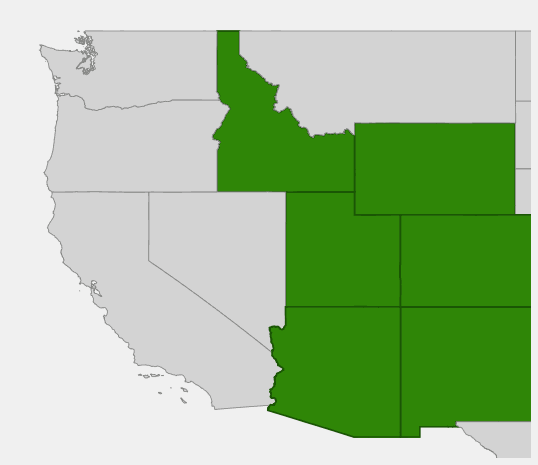
Blue Spruce is native to the central and southern Rocky Mountain region, with its primary distribution in Colorado and Utah, extending north into Wyoming, south into New Mexico and Arizona, and into limited populations in Idaho. It is closely associated with the montane and subalpine zones of these states, where annual precipitation is higher and temperatures are cooler than in surrounding valleys and lower foothills. The species reaches its highest density and largest stature along perennial mountain streams in narrow canyon corridors.
In Colorado — the state where Blue Spruce is most abundant and celebrated — it occurs from roughly 6,000 to 10,500 feet elevation, growing along the margins of streams that are fed by reliable snowmelt. It is particularly characteristic of the western slope of the Colorado Rockies, where streams create the moist, cool riparian habitats it prefers. In Utah, it is similarly associated with canyons and north-facing slopes of the Wasatch Range and Uinta Mountains. In both states, it grows in mixed-conifer forests alongside Engelmann Spruce, Douglas-fir, Subalpine Fir, and Quaking Aspen at the appropriate elevations.
Despite its very wide use as an ornamental tree throughout North America and Europe, Blue Spruce’s native range is actually quite limited — centered on the Southern Rockies. Planting it outside its native range provides little ecological benefit and can contribute to escaped cultivation issues, while planting it within its native range creates genuine habitat value and supports local insect communities, birds, and mammals that have co-evolved with this species over thousands of years.
📋 Regional plant lists featuring Blue Spruce: Intermountain West
Growing & Care Guide
Blue Spruce is a resilient tree that grows well across a wide range of conditions within its native region. It is valued for its distinctive blue foliage, pyramidal form, and exceptional cold hardiness, making it a premier native conifer for mountain and high-desert landscapes.
Light
In its natural riparian habitat, Blue Spruce often grows in partially shaded canyon bottoms and north-facing slopes where direct sun is limited for parts of the day. In the landscape it performs well in partial shade to full sun, though the most intensely blue foliage is typically produced in full sun. Young trees benefit from protection from intense afternoon sun in hot, exposed locations until they are established and able to handle the full range of conditions.
Soil & Water
Blue Spruce prefers moist, well-drained, slightly acidic soils. In its native range, it grows in the alluvial soils of mountain stream corridors — deep, rich, and consistently moist from snowmelt throughout the growing season. In the landscape, it appreciates regular deep irrigation especially during the first 2–3 years of establishment; once established, it is more drought-tolerant than commonly assumed, but performs best with adequate seasonal moisture. Avoid waterlogged soils, which promote Cytospora canker and Phytophthora root rot. Mulch with 2–3 inches of wood chips to retain soil moisture and moderate soil temperature extremes.
Planting Tips
Plant in fall or early spring from container stock or balled-and-burlapped specimens. Dig a wide, shallow hole — not a deep hole — and set the root flare at or slightly above grade to ensure proper drainage. Blue Spruce is a large tree requiring at least 15–20 feet of clearance from structures, utility lines, and other trees at maturity. Avoid planting in lawn areas where routine irrigation keeps the root zone constantly wet; this promotes disease. Staking is rarely necessary if planting from container stock.
Pruning & Maintenance
Blue Spruce rarely requires pruning. Remove dead branches as they appear. The natural pyramidal form should be preserved — do not top or heavily shear Blue Spruce, as this destroys the form and creates wounds that become entry points for Cytospora canker, the most common disease of stressed trees. Cytospora causes branch dieback from the bottom up. Prevention through proper siting, adequate spacing, and appropriate soil conditions is the best and only effective management. Needle cast diseases can cause premature needle drop in wet springs; fungicide application in early spring can prevent severe outbreaks.
Landscape Uses
- Specimen tree — outstanding blue foliage makes it a dramatic focal point in any landscape
- Screening and windbreak — dense evergreen canopy provides year-round privacy and wind protection
- Wildlife habitat tree — dense branches provide nesting and winter cover for numerous bird species
- Riparian restoration along mountain streams in its native Southern Rocky Mountain range
- Mixed conifer plantings with Ponderosa Pine, Quaking Aspen, and other native montane species
- Anchor tree for large native plant compositions requiring year-round vertical structure
Wildlife & Ecological Value
Blue Spruce is an excellent wildlife tree, providing food, shelter, and nesting habitat for a diverse community of native species throughout the year. Its year-round evergreen canopy is particularly valuable during the cold Rocky Mountain winters.
For Birds
The dense, year-round canopy of Blue Spruce provides superb nesting and roosting cover. Dozens of bird species nest in Blue Spruce, including American Robin, Cedar Waxwing, Steller’s Jay, and various raptors including Cooper’s Hawk. In winter, the thick, protective branches serve as essential thermal cover for small birds — a critical resource in cold Rocky Mountain winters. The winged seeds are eaten by Red Crossbills, Clark’s Nutcrackers, Pine Siskins, and several species of chickadees and nuthatches that extract them from the pendant cones with specialized bills. Large cone crops attract significant concentrations of crossbills in good mast years.
For Mammals
Red squirrels and Abert’s Squirrels harvest and cache spruce cones extensively, often stripping entire branches and creating middens of cone scales beneath trees. Porcupines eat the inner bark and twigs of Blue Spruce in winter, sometimes causing significant girdling damage to individual trees. Snowshoe Hares browse lower branches in winter, and deer and elk occasionally browse foliage and young shoots when other food is scarce. The dense canopy structure also provides cover and denning habitat for foxes, raccoons, and other medium-sized mammals.
For Pollinators
Like all conifers, Blue Spruce is wind-pollinated and produces no nectar-bearing flowers. However, the complex bark architecture of older trees provides nesting sites and overwintering habitat for cavity-nesting insects, and the abundant caterpillar community that feeds on spruce needles supports the food chains of insectivorous birds and other predators. Some specialist moth species lay eggs on spruce and require it as a larval host plant.
Ecosystem Role
In riparian zones and mountain stream corridors, Blue Spruce plays an important stabilizing role. Its roots bind streambank soils, reducing erosion. Its dense canopy shades streams, moderating summer water temperatures that are critical for cold-water fish species like native cutthroat trout and brown trout. Old-growth Blue Spruce stands along Rocky Mountain streams are among the most ecologically complex and biologically diverse habitats in the interior West.
Cultural & Historical Uses
Indigenous peoples across the Southern Rocky Mountain region — including the Ute, Navajo, Hopi, and various Pueblo peoples — used Blue Spruce extensively in ceremony, medicine, and practical applications. The aromatic resin was chewed as gum and used as a sealant, adhesive, and wound dressing. The inner bark was scraped and eaten in spring as a food supplement. Spruce needles were brewed into a vitamin C-rich tea that provided essential nutrition during long winters when fresh plant foods were unavailable.
The roots of Blue Spruce and other spruces were a critical weaving material for many western peoples. Thin roots, split and dried, were woven into baskets of extraordinary fineness and flexibility — used for carrying water, gathering seeds, and food preparation. Spruce root baskets from the Rocky Mountain region are represented in museum collections worldwide and represent a sophisticated craft tradition developed over centuries of intimate working with the materials of the high mountain environment. The specific qualities of spruce root — strength, flexibility, and water resistance — made it irreplaceable for certain applications.
In Pueblo and Navajo ceremony, Blue Spruce holds sacred significance. Spruce boughs are used in kachina dances and other ceremonial contexts at the Rio Grande Pueblos, where spruce is associated with rain, clouds, fertility, and the life-giving moisture that desert communities have always depended upon. The tree’s ability to grow where reliable mountain water is available made it a powerful symbol of water and abundance in the spiritual traditions of desert-dwelling peoples. Today, Pueblo communities continue to harvest spruce boughs from their traditional areas for ceremonial use, maintaining a connection to these landscapes that spans hundreds of generations.
Frequently Asked Questions
How long does Blue Spruce take to grow to full size?
Blue Spruce grows at a moderate rate — about 12–18 inches per year in good conditions. Reaching its full height of 70+ feet takes 50–100 years or more. For most landscape purposes, a 20–30-year-old tree at 30–40 feet is already an impressive and fully functional wildlife habitat specimen worth having in a native garden.
Why are the lower branches on my Blue Spruce dying?
Branch dieback from the bottom up is typically Cytospora canker, a common fungal disease of stressed Blue Spruces. It is most common on trees that are overwatered, planted in poorly drained soil, or stressed by heat and prolonged drought. There is no cure, but proper planting conditions and avoiding overhead irrigation can slow progression. Severely affected trees may eventually need replacement.
Is the cultivar ‘Glauca’ the same as the native Blue Spruce?
Picea pungens ‘Glauca’ is a horticultural cultivar selected for consistent intense blue color. While the same species, cultivars are propagated vegetatively and lack the genetic diversity of seed-grown plants. For ecological restoration, use seed-grown plants from local or regional seed sources whenever possible for the greatest genetic benefit to local wildlife and ecosystems.
Can Blue Spruce grow in the Eastern United States?
It can survive outside its native range but provides limited ecological benefit to eastern ecosystems. The many specialist insects, birds, and mammals adapted to Blue Spruce are western species. Eastern native alternatives like Eastern White Spruce or Red Spruce are better ecological choices for gardens east of the Rocky Mountains.
How much space does Blue Spruce need?
The native species needs at least 15–20 feet of clear space in all directions at maturity and should not be planted beneath power lines or within 20 feet of structures. Plan for a tree that will eventually reach 50–70 feet tall and 20–30 feet wide at the base. Dwarf cultivars are available for smaller spaces but are not the ecological equivalent of the native species.