
Bluejoint Grass (Calamagrostis canadensis)
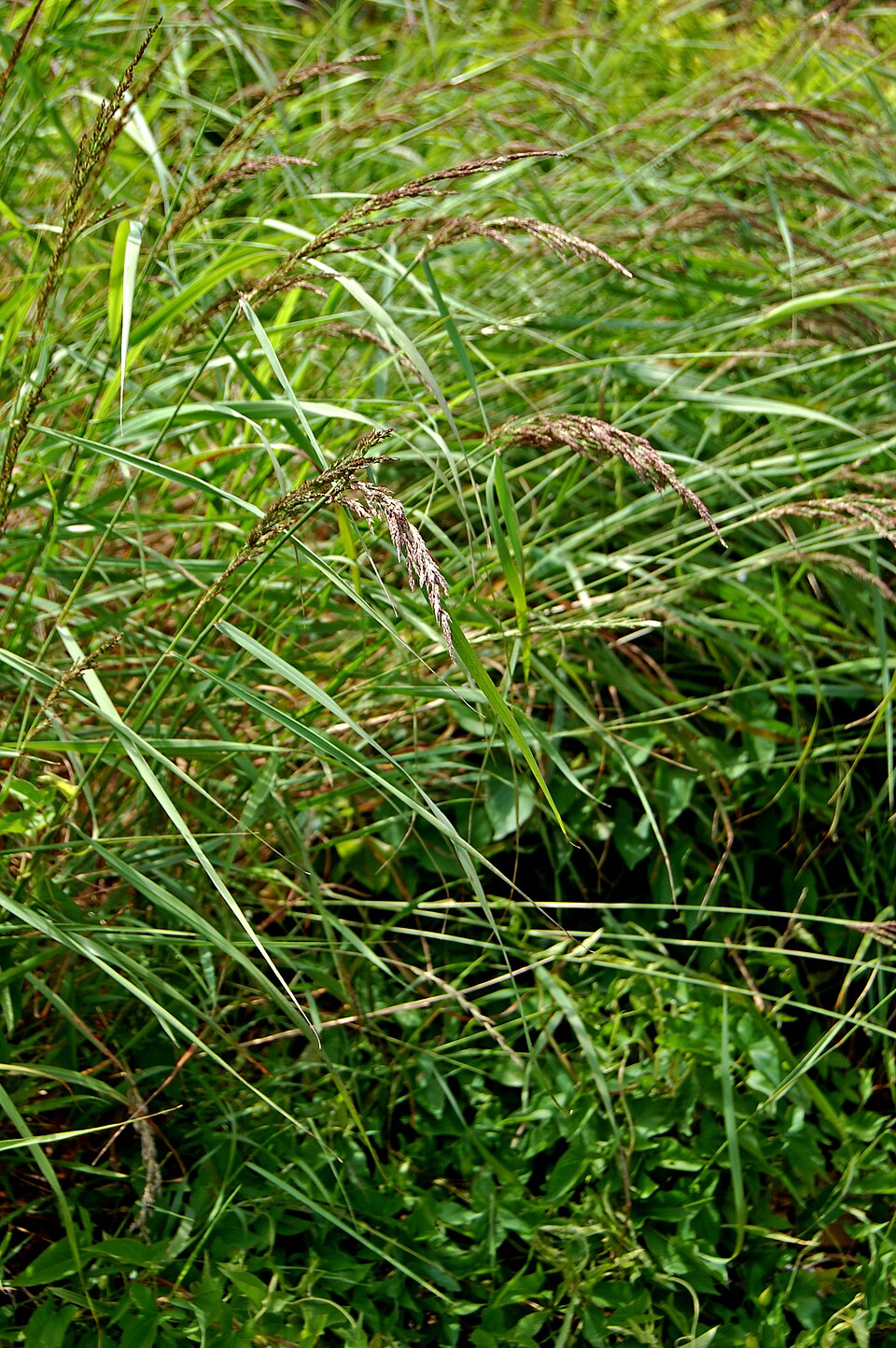
Calamagrostis canadensis, commonly known as Bluejoint Grass or Canada Bluejoint, is a tall, robust perennial grass that forms distinctive tussocks in wetlands and moist areas across northern North America. This member of the Poaceae (grass) family gets its common name from the distinctive bluish cast at the base of its leaf sheaths and the prominent “joint” where the leaf blade meets the stem. The species is one of the most ecologically important cool-season grasses in northern wetlands, serving as both a dominant species and a key foundation plant for entire ecosystems.
Growing naturally in marshes, wet meadows, and along streams and lakeshores, Bluejoint Grass typically reaches 3 to 5 feet in height, forming large, dense clumps that can persist for decades. Its tussock-forming growth habit creates distinctive mounds that provide structure and stability in wetland communities. The species is particularly noted for its light-colored seeds that give the inflorescence a distinctive pale, silvery appearance when mature, making it easily recognizable among other wetland grasses.
As one of the most widespread native grasses in northern wetlands, Bluejoint Grass plays a crucial role in ecosystem function, providing excellent erosion control, wildlife habitat, and forage value. Its dense root system helps stabilize saturated soils, while its persistent tussocks create microhabitat diversity that supports a wide range of wildlife species. For restoration practitioners and gardeners interested in naturalistic plantings, this adaptable grass offers exceptional value in wet areas where few other plants thrive.
Identification
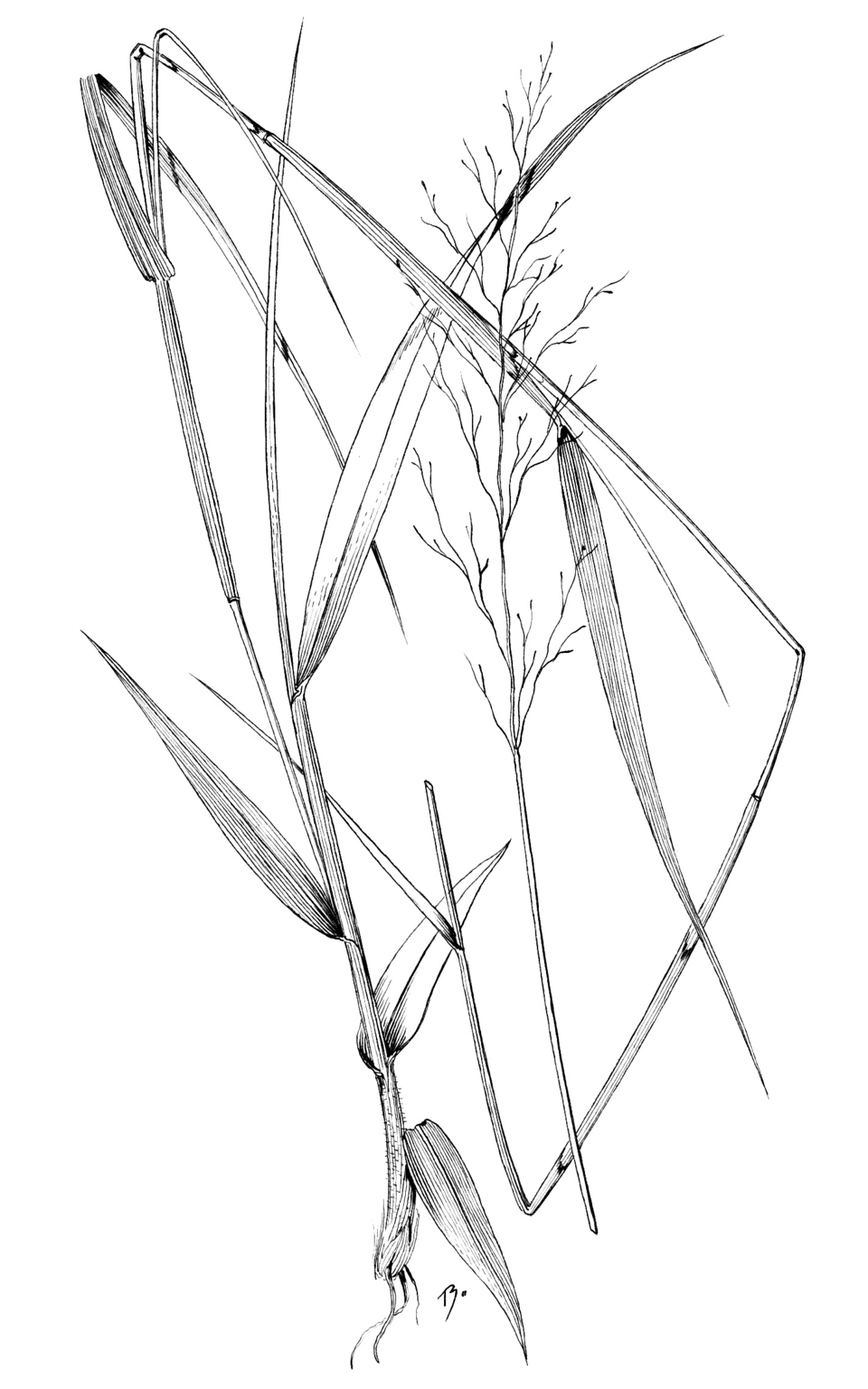
Bluejoint Grass is a tall, coarse perennial grass that typically grows 3 to 5 feet (1–1.5 m) tall, occasionally reaching up to 6 feet in optimal conditions. The plant forms large, dense tussocks or clumps from short, stout rhizomes, creating distinctive mounded growth forms that can be several feet across. The culms (flowering stems) are erect, robust, and typically unbranched.
Leaves
The leaves are flat, linear, and 6 to 12 mm wide, with a distinctive blue-green to gray-green color that helps distinguish this species from other wetland grasses. The leaf blades can grow 12 to 24 inches long and have rough (scabrous) surfaces and margins. The leaf sheaths are typically smooth and often have a distinctive bluish cast at the base, which gives the grass part of its common name. The ligule is membranous and 3–6 mm long, appearing relatively prominent compared to many other grasses.
Inflorescence
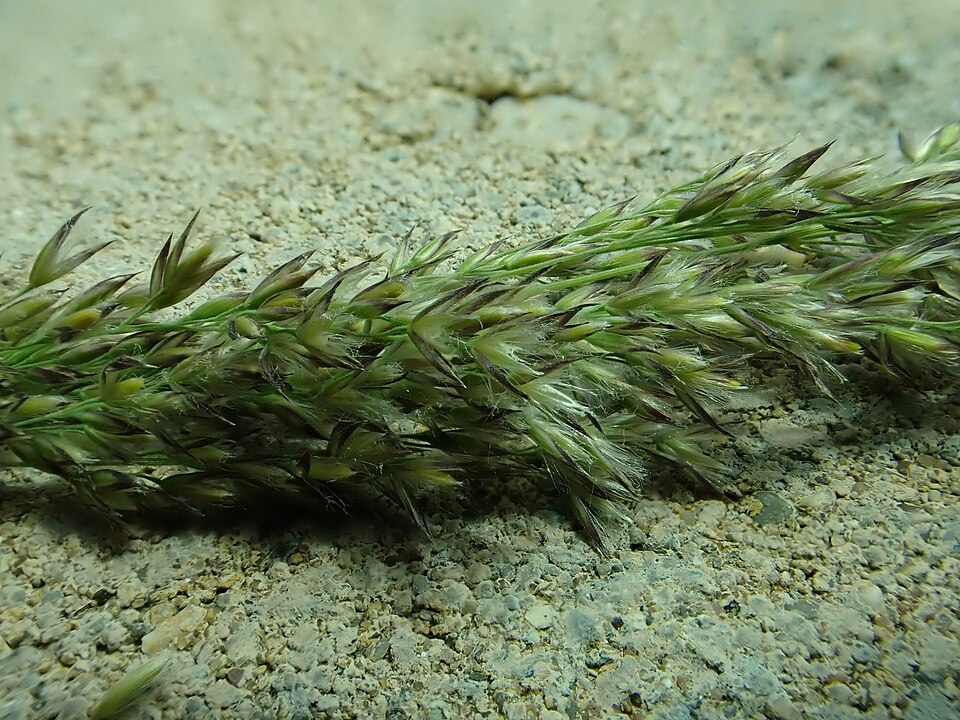
The inflorescence is a large, open panicle that measures 6 to 12 inches long and 2 to 6 inches wide. When young, the panicle appears compact and somewhat purplish, but it opens and becomes more spreading as it matures. The most distinctive feature is the light-colored, almost silvery appearance of the mature seed heads, created by the prominent callus hairs (basal hairs) on each floret. These hairs are white to pale yellow and quite conspicuous, giving the entire inflorescence its characteristic light, airy appearance.
The individual spikelets are small, typically 3–5 mm long, and contain a single floret. The glumes (outer bracts) are nearly equal in length and have a distinctive papery texture. The lemma (inner bract) is shorter than the glumes and may have a small awn or be awnless, depending on the population.
Seeds
The seeds are small, narrow, and light-colored, surrounded by the prominent white callus hairs that aid in wind dispersal. The seeds typically ripen in late summer and are readily distributed by wind, contributing to the species’ ability to colonize suitable habitats across its broad range.
Quick Facts
| Scientific Name | Calamagrostis canadensis |
| Family | Poaceae (Grass) |
| Plant Type | Perennial Cool-Season Grass |
| Mature Height | 3–5 ft |
| Sun Exposure | Full Sun |
| Water Needs | High |
| Bloom Time | July – August |
| Flower Color | Purplish to light silvery-brown |
| USDA Hardiness Zones | 2–7 |
Native Range
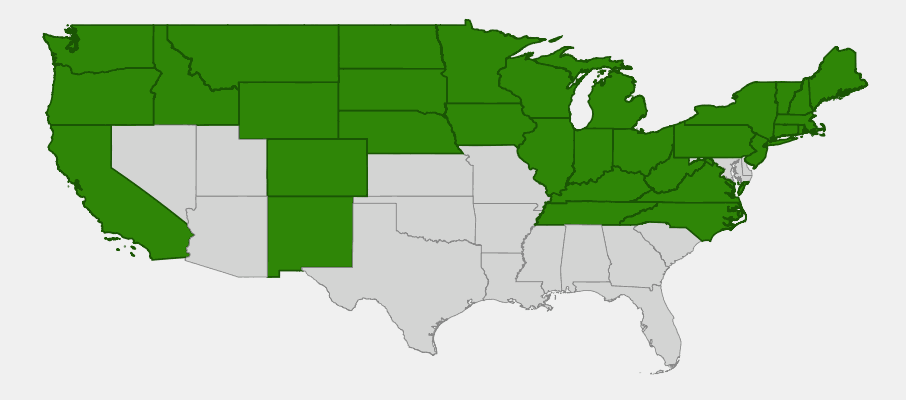
Bluejoint Grass has an extensive native range across northern North America, occurring from Alaska and northern Canada south through much of the northern United States. The species is particularly abundant in the boreal regions of Canada and Alaska, where it often forms the dominant grass species in wet meadows and marshy areas. In the continental United States, it ranges across the northern tier of states from Washington to Maine, with scattered populations extending south in suitable mountain habitats.
The species is especially common in the Great Lakes region, where it occupies a wide variety of wetland types including sedge meadows, wet prairies, and the margins of lakes and streams. In the western portions of its range, Bluejoint Grass is typically found in mountain valleys, riparian areas, and high-elevation wet meadows. The species shows remarkable adaptability to different moisture regimes, from seasonally flooded areas to permanently saturated soils.
Bluejoint Grass extends its range into the Rocky Mountains and Sierra Nevada, where it occurs in mountain meadows and along streams at elevations up to 10,000 feet. In these montane environments, it often grows alongside sedges, rushes, and other moisture-loving plants, forming productive grassland communities that are important for both wildlife and livestock grazing.
📋 Regional plant lists featuring Bluejoint Grass: North Dakota, South Dakota & Western Minnesota
Growing & Care Guide
Bluejoint Grass is an excellent choice for restoration projects, naturalistic landscapes, and areas where a tall, robust native grass is needed for erosion control or wildlife habitat. Its tussock-forming growth habit and tolerance for wet conditions make it particularly valuable in challenging sites where few other grasses will thrive.
Light
This grass performs best in full sun conditions, where it develops its most robust growth and characteristic tussock form. While it can tolerate some light shade, particularly in consistently wet areas, full sun exposure produces the densest growth and most abundant seed production. In its native habitats, Bluejoint Grass often grows in open wetlands with little overhead canopy cover.
Soil & Water
Bluejoint Grass requires consistently moist to wet soil conditions and is intolerant of prolonged drought. It thrives in soils that are saturated for much of the growing season, including areas with seasonal flooding up to 12 inches deep. The species tolerates a wide range of soil types, from heavy clays to sandy loams, and can handle both acidic and neutral soil conditions (pH 5.0–7.5). It performs particularly well in organic-rich, mucky soils typical of wetland environments.
The grass is adapted to fluctuating water levels and can survive periods of complete inundation as well as brief periods of surface drying, though prolonged dry conditions will cause stress and reduced vigor. For best results, maintain consistently moist soil throughout the growing season.
Planting Tips
Plant Bluejoint Grass in spring or early fall when soil moisture is naturally high. The species can be established from seed or transplanted plugs, though seed establishment may be slow and requires consistent moisture. Space plants 2–3 feet apart to allow for the development of mature tussocks. In restoration projects, seeding rates of 4–6 pounds per acre are typically recommended when used in mixes with other wetland species.
Maintenance
This low-maintenance grass requires minimal care once established in appropriate conditions. The previous year’s growth can be burned or cut back in late winter or early spring before new growth emerges. In natural settings, leaving the dried stems standing through winter provides valuable wildlife habitat and helps trap snow and debris. The tussocks will gradually expand over time, creating the distinctive hummocky texture characteristic of Bluejoint Grass communities.
Landscape Uses
Bluejoint Grass excels in multiple landscape applications:
- Wetland restoration — key species for restoring degraded marshes and wet prairies
- Erosion control — excellent for stabilizing saturated soils and stream banks
- Wildlife habitat — provides nesting sites and food for numerous species
- Stormwater management — valuable in constructed wetlands and bioretention areas
- Naturalistic gardens — adds dramatic texture and seasonal interest to wet areas
- Pond and lake margins — creates natural-looking transitions from water to land
Wildlife & Ecological Value
Bluejoint Grass is one of the most ecologically valuable native grasses in northern wetlands, providing critical habitat structure, food resources, and ecosystem services that support a diverse array of wildlife species.
For Birds
The seeds of Bluejoint Grass are consumed by numerous waterfowl species including various ducks, geese, and swans, particularly during fall migration. Songbirds such as Red-winged Blackbirds, Bobolinks, and various sparrow species use the dense tussocks for nesting sites, while the persistent winter structure provides important cover during harsh weather. Rails, bitterns, and other secretive marsh birds rely on Bluejoint Grass communities for both nesting habitat and protection from predators. The grass also supports numerous insects that serve as food for insectivorous birds during the breeding season.
For Mammals
The robust tussocks of Bluejoint Grass provide important thermal cover and denning sites for small mammals such as voles, shrews, and jumping mice. Larger mammals including deer, elk, and moose browse the young shoots in spring and early summer, though the coarse mature foliage is less palatable. Muskrats and beavers sometimes use Bluejoint Grass in lodge construction, while the stable tussocks create elevated microsites that small mammals use during flood periods.
For Pollinators
While Bluejoint Grass is wind-pollinated and doesn’t directly serve pollinators, the diverse plant communities it helps create and maintain support numerous flowering plants that do attract bees, butterflies, and other pollinators. The structural diversity provided by Bluejoint tussocks creates microhabitat niches that support a wide variety of beneficial insects.
Ecosystem Role
As a foundational species in many northern wetlands, Bluejoint Grass plays crucial roles in ecosystem function. Its extensive root system helps prevent erosion and stabilize saturated soils, while the dense above-ground growth slows water flow and promotes sediment deposition. The tussock growth form creates important microhabitat diversity, with elevated dry microsites interspersed among wetter hollows, supporting different plant and animal communities within the same wetland. The grass also contributes significantly to carbon sequestration in wetland soils and helps filter nutrients and pollutants from surface water.
Cultural & Historical Uses
Bluejoint Grass has a long history of interaction with human communities throughout its range, particularly among Indigenous peoples of northern North America. Various Native American tribes utilized the grass for both practical and cultural purposes. The long, strong leaves were sometimes used in basketry and mat-making, though the coarse texture made it less desirable than some other grasses for fine work. The seeds were occasionally harvested as a supplemental food source, though their small size meant they were typically not a primary food resource.
Some Indigenous groups used Bluejoint Grass in traditional medicine, applying various parts of the plant to treat ailments, though specific uses varied among different cultural groups. The grass also had ceremonial significance in some traditions, representing persistence and strength due to its ability to thrive in challenging wetland environments.
European settlers quickly recognized the value of Bluejoint Grass for forage, particularly in areas where few other plants could survive the wet conditions. The grass provided important hay and pasture in northern regions where agriculture was challenging. However, its coarse texture and declining palatability as it matured meant it was generally considered inferior to introduced hay grasses, leading to the conversion of many natural Bluejoint meadows to other uses.
In modern times, Bluejoint Grass has gained recognition as a cornerstone species for ecological restoration efforts. Its ability to establish in degraded wetlands, provide erosion control, and support diverse wildlife communities has made it a go-to choice for restoration practitioners working throughout the northern United States and Canada. The species has been used extensively in mine reclamation projects, particularly in northern regions where few other plants can establish successfully.
Contemporary research has also highlighted the importance of Bluejoint Grass in carbon sequestration and climate change mitigation. Wetland communities dominated by this species store significant amounts of carbon in their soils, making their conservation and restoration important tools in addressing global climate change.
Frequently Asked Questions
How can I tell Bluejoint Grass apart from Reed Canary Grass?
Bluejoint Grass has light-colored, silvery seed heads due to prominent callus hairs, while Reed Canary Grass has denser, more compact panicles without the light coloration. Bluejoint also forms distinct tussocks, whereas Reed Canary Grass spreads by aggressive rhizomes. The bluish cast at the base of Bluejoint’s leaf sheaths is another distinguishing feature.
Is Bluejoint Grass invasive or aggressive?
No, Bluejoint Grass is a well-behaved native that forms clumps and spreads slowly. Unlike invasive grasses such as Reed Canary Grass, it doesn’t form monocultures or aggressively exclude other species. It’s an important component of diverse wetland communities.
Can I plant Bluejoint Grass in my rain garden?
Yes, if your rain garden stays consistently moist. Bluejoint Grass needs wet conditions year-round and won’t survive in rain gardens that dry out completely between storms. It’s better suited to permanently wet areas or constructed wetlands with reliable water sources.
When should I harvest Bluejoint Grass seeds?
Seeds typically ripen in late summer to early fall, usually August through September depending on location. The seeds are ready when the panicles have a light, silvery appearance and individual seeds can be easily shaken from the seed head. Collect on dry days and clean thoroughly before storage.
Will Bluejoint Grass grow in brackish or salt water?
Bluejoint Grass is primarily a freshwater species and has limited tolerance for saltwater or brackish conditions. It’s better suited to inland wetlands, lake shores, and stream margins rather than coastal marshes where salt-tolerant grasses would be more appropriate.

Looking for a nursery that carries Bluejoint Grass?
Browse our native plant nursery directory: North Dakota · South Dakota · Minnesota