
Switchgrass (Panicum virgatum)
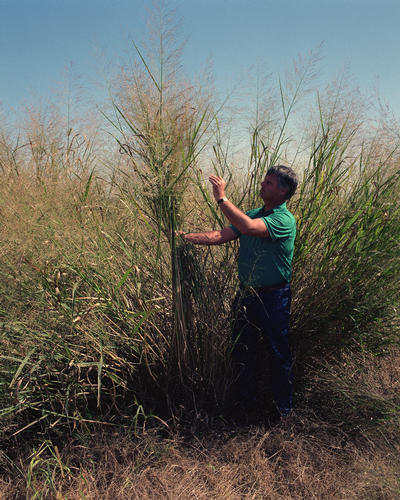
Panicum virgatum, commonly known as Switchgrass, is perhaps the most iconic and ecologically significant prairie grass of North America. This robust large bunchgrass serves as a cornerstone species of the Great Plains, forming the backbone of tallgrass prairie ecosystems from Canada to Mexico. With its distinctive upright growth habit, airy seed panicles, and remarkable adaptability to diverse growing conditions, Switchgrass has earned recognition not only as a premier native ornamental grass but also as a crucial component of conservation efforts, biofuel research, and sustainable agriculture across the continent.
Growing 3 to 5 feet tall in typical conditions — and occasionally reaching 8 feet in optimal sites — this warm-season perennial grass forms substantial clumps through short rhizomes, creating the dense, persistent sod that once covered millions of acres of North American prairie. The narrow, blue-green leaves emerge in late spring and develop into impressive architectural specimens by midsummer, topped with delicate, cloud-like seed heads that dance in the slightest breeze. In autumn, the entire plant transforms into shades of gold, orange, and burgundy, providing spectacular fall color that persists well into winter.
Native across an enormous range extending from the Atlantic Coast to the Rocky Mountains and from southern Canada to northern Mexico, Switchgrass demonstrates remarkable genetic diversity and local adaptation. This variability has made it invaluable for prairie restoration, erosion control, and wildlife habitat enhancement across diverse climatic zones. The species’ deep root system — extending 6 to 10 feet underground — makes it exceptionally drought-tolerant while also providing crucial ecosystem services including carbon sequestration, soil stabilization, and water filtration.
Identification
Switchgrass is a robust warm-season perennial grass that typically grows 3 to 5 feet tall, though it can reach 8 feet in optimal conditions. The plant forms substantial clumps through short rhizomes, creating the classic “bunch” growth pattern characteristic of prairie grasses. The species exhibits considerable variation in size, color, and growth habits across its vast range, with northern ecotypes generally being shorter and more cold-hardy than their southern counterparts.
Culms & Leaves
The stems (culms) are sturdy, upright, and typically unbranched, with a distinctive flattened or slightly compressed appearance near the base. The leaves are long and narrow, 8 to 24 inches in length and ¼ to ½ inch wide, with a prominent white midrib. Leaf color ranges from blue-green to deep green during the growing season, often taking on purplish tints in fall before turning golden-yellow and eventually tan. The leaf sheaths are smooth and often overlap, creating a clean, architectural appearance.
Inflorescence
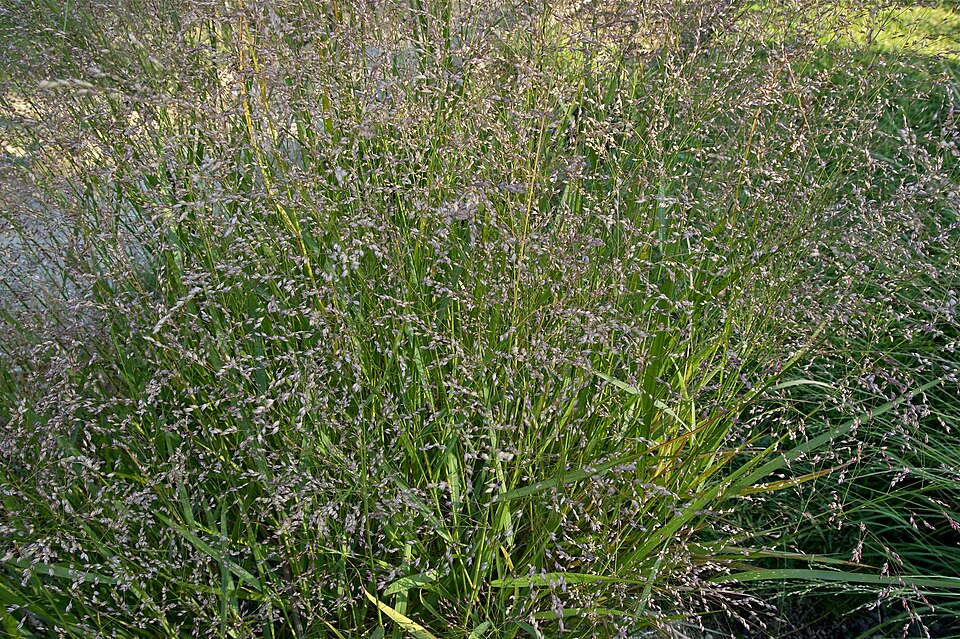
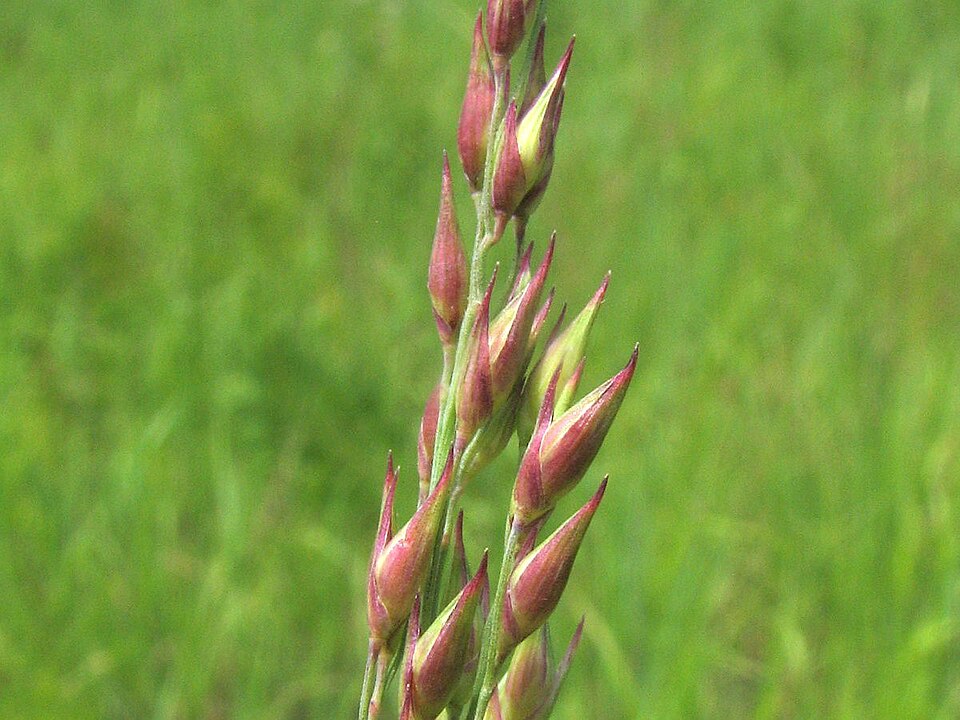
The flower heads (panicles) are the plant’s most distinctive feature — large, open, and airy, ranging from 6 to 20 inches long and 4 to 8 inches wide. They emerge as tight, purplish clusters in midsummer before opening into delicate, cloud-like structures that appear to float above the foliage. The panicle branches are fine and spreading, creating an almost ethereal appearance. Individual spikelets are small, about ⅛ inch long, and contain 1 to 2 seeds.
Seeds
The seeds are small, brown, and oval-shaped, about 1/16 inch long. They mature from late summer through fall and are an important food source for numerous bird species. The seeds have no prominent bristles or awns, distinguishing them from many other prairie grasses. Seed production can be prolific under good conditions, with mature clumps producing thousands of seeds annually.
Root System
Switchgrass develops one of the most extensive root systems of any prairie plant, with roots commonly extending 6 to 10 feet deep and occasionally reaching 15 feet or more. This massive underground network, which can represent 80% of the plant’s total biomass, enables the grass to access deep groundwater and survive extended drought periods while also storing substantial amounts of carbon.
Quick Facts
| Scientific Name | Panicum virgatum |
| Family | Poaceae (Grass) |
| Plant Type | Warm-Season Perennial Grass |
| Mature Height | 3–5 ft |
| Sun Exposure | Full Sun to Part Shade |
| Water Needs | Moderate |
| Bloom Time | July – September |
| Flower Color | Purplish to tan |
| USDA Hardiness Zones | 3–9 |
Native Range
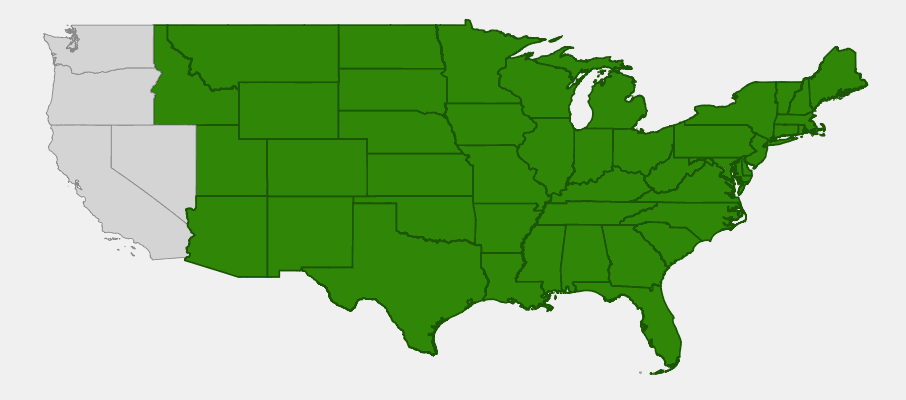
Switchgrass possesses one of the most extensive native ranges of any North American plant, naturally occurring from southern Canada to central Mexico and from the Atlantic Coast to the Rocky Mountains. This enormous distribution — spanning virtually the entire continental United States except for the far West Coast, extreme Southwest deserts, and northern New England — reflects the species’ remarkable adaptability to diverse climatic and soil conditions.
Within this vast range, Switchgrass reaches its greatest abundance in the Great Plains, where it serves as a dominant component of tallgrass and mixed-grass prairie communities. The species occurs in all of the Great Plains states, from North Dakota and Minnesota south through Texas, and extends eastward into the prairie-forest transition zones of the upper Midwest and Ohio River Valley. In the eastern portions of its range, Switchgrass typically occurs in openings, edges, and disturbed areas rather than as a dominant grassland species.
The species demonstrates remarkable genetic diversity across its range, with distinct ecotypes adapted to local conditions. Northern populations tend to be shorter, more cold-hardy, and earlier-flowering than southern ecotypes. This variation has important implications for restoration projects and commercial cultivation, as using locally-adapted seed sources generally produces better establishment and long-term success.
📋 Regional plant lists featuring Switchgrass: North Dakota, South Dakota & Western Minnesota
Growing & Care Guide
Switchgrass is among the most adaptable and low-maintenance native plants available to gardeners and land managers. Once established, this robust grass thrives with minimal input, making it ideal for sustainable landscapes, prairie restorations, and areas where low-maintenance plantings are desired.
Light
Switchgrass performs best in full sun, where it develops its most robust growth, best flowering, and strongest fall color. While it can tolerate partial shade, particularly morning shade, plants grown in shadier conditions tend to be taller, more open in habit, and less likely to flower heavily. For the best ornamental performance and wildlife value, provide at least 6 hours of direct sunlight daily.
Soil & Water
One of Switchgrass’s greatest assets is its tolerance of diverse soil conditions. It grows well in everything from sandy soils to heavy clays, from slightly acidic to moderately alkaline conditions (pH 5.5–8.0). The species is notably drought-tolerant once established, thanks to its extensive root system, but also tolerates periodic flooding and seasonal wetness. Average to poor soils are actually preferable, as overly rich conditions can lead to soft, floppy growth.
Planting Tips
Switchgrass can be established from seed or container plants. For large areas, direct seeding in spring (after soil temperature reaches 60°F) or late fall is most economical. Seeds require light for germination, so rake lightly or broadcast on the soil surface. For garden use, container plants provide more predictable results and allow for precise placement. Space plants 2 to 3 feet apart for individual specimens, or 18 inches apart for mass plantings.
Pruning & Maintenance
Minimal maintenance is required. Cut plants back to 4-6 inches in late winter or early spring before new growth begins. Many gardeners prefer to leave the attractive seed heads standing through winter for wildlife habitat and visual interest. Switchgrass rarely requires fertilization and may actually benefit from the stress of poor soils, which keeps growth compact and prevents lodging.
Landscape Uses
Switchgrass excels in numerous landscape applications:
- Prairie and meadow gardens — keystone species for authentic grassland plantings
- Ornamental grass gardens — excellent specimen or mass planting
- Wildlife habitat — provides food, nesting sites, and cover
- Erosion control — deep roots and dense growth stabilize slopes
- Rain gardens and bioretention — tolerates both wet and dry conditions
- Privacy screens and hedges — dense growth creates effective barriers
- Biofuel production — high biomass yields for renewable energy
- Restoration projects — crucial for prairie and grassland restoration
Wildlife & Ecological Value
Switchgrass ranks among the most valuable native plants for wildlife, providing essential habitat, food, and nesting resources across multiple seasons and for diverse species groups.
For Birds
Over 50 bird species are known to consume Switchgrass seeds, including Northern Cardinals, American Goldfinches, various sparrows, juncos, and numerous other songbirds. The dense growth provides excellent nesting sites for ground-nesting species like Bobolinks, Dickcissels, and Red-winged Blackbirds in grassland habitats. The persistent winter structure offers crucial shelter and protection, while the large seed heads continue to provide food throughout the winter months when other resources are scarce.
For Mammals
Small mammals including mice, voles, and various rodents consume the seeds and use the dense clumps for shelter and nesting. Larger mammals like deer and elk browse the foliage, though mature plants are somewhat tough and less preferred than younger growth. The extensive root system creates channels and organic matter that support diverse soil fauna including earthworms, beneficial insects, and microbial communities.
For Pollinators
While Switchgrass is wind-pollinated and doesn’t attract pollinators with its flowers, the diverse insect community it supports provides food for many beneficial species. The dense foliage harbors numerous insects throughout the growing season, including many species that serve as important food sources for birds feeding young. The winter structure provides overwintering habitat for beneficial insects including predatory beetles and parasitoid wasps.
Ecosystem Role
As a dominant prairie species, Switchgrass plays crucial ecosystem roles including carbon sequestration (its extensive root system stores substantial carbon underground), soil building and stabilization, water filtration, and creation of microhabitats for countless other species. The deep roots improve soil structure and water infiltration while the dense growth moderates soil temperature and moisture. In fire-adapted ecosystems, Switchgrass provides fine fuel that carries prescribed burns while regenerating vigorously from its extensive root system.
Cultural & Historical Uses
Switchgrass holds profound cultural and historical significance for the Indigenous peoples of the Great Plains, who developed sophisticated understanding of prairie ecosystems over thousands of years. Many tribes, including the Lakota, Dakota, Omaha, and Ponca, recognized Switchgrass as a key indicator species for healthy prairie and utilized various parts of the plant in their daily lives. The dense clumps were often used as building material for temporary shelters, providing insulation and wind protection.
The seeds, while small, were occasionally collected and used as food during times of scarcity, typically ground into meal or added to stews and soups. More commonly, the grass was valued for its role in supporting the vast bison herds that formed the foundation of Plains Indian economies and cultures. The seasonal patterns of Switchgrass growth provided important phenological markers for timing hunting, gathering, and ceremonial activities.
European settlers quickly recognized Switchgrass’s value for livestock forage, though its coarse texture made it less desirable than some other prairie grasses. The species played an important role in early ranching operations before most prairies were converted to agriculture. Historical accounts describe prairies dominated by Switchgrass and other tall grasses stretching to the horizon — a landscape that covered over 170 million acres before European settlement.
In modern times, Switchgrass has gained international attention as a potential biofuel crop due to its high biomass production, adaptability to marginal lands, and ability to grow with minimal inputs. Research programs across North America are developing improved varieties for ethanol and other biofuel applications, potentially offering farmers sustainable alternatives to annual crops on environmentally sensitive lands. The species has also become a flagship plant for prairie restoration efforts, with millions of acres of former farmland being restored to grassland using Switchgrass-based seed mixes.
Frequently Asked Questions
When should I plant Switchgrass seed?
Plant Switchgrass seed in late spring (May-June) when soil temperature reaches 60°F consistently, or in late fall before the ground freezes. Spring planting generally gives better results in most areas. Seeds need warm soil and adequate moisture for good germination.
How long does it take Switchgrass to establish?
Switchgrass is relatively slow to establish, typically taking 2-3 years to reach full size and flowering potential. First-year plants may only reach 12-18 inches tall as they focus energy on developing their extensive root system. Be patient — mature stands are worth the wait!
Will Switchgrass spread and take over my garden?
Switchgrass forms clumps that expand slowly through short rhizomes, typically increasing by 6-12 inches in diameter each year. It’s not aggressively spreading like some grasses and can be easily controlled by dividing clumps or cutting around the edges with a sharp spade.
Why didn’t my Switchgrass flower this year?
Young plants (under 2 years) rarely flower heavily. Insufficient sunlight, overly rich soil, or excessive watering can also reduce flowering. Switchgrass flowers best in full sun with moderate moisture and average to poor soils.
Can I burn my Switchgrass planting?
Prescribed burning is an excellent management tool for Switchgrass, mimicking natural prairie fire cycles. Burns should be conducted in early spring before new growth begins, following all local regulations and safety procedures. If burning isn’t possible, cutting works nearly as well for maintaining plant health.

Looking for a nursery that carries Switchgrass?
Browse our native plant nursery directory: North Dakota · South Dakota · Minnesota