
Heath Aster (Symphyotrichum ericoides)
Symphyotrichum ericoides (formerly Aster ericoides), commonly known as Heath Aster, White Oldfield Aster, or Many-flowered Aster, is a distinctive late-blooming native perennial that transforms autumn landscapes with its profusion of tiny white flowers. This member of the Asteraceae (sunflower) family creates one of the most spectacular fall displays in the prairie, covering entire hillsides and roadsides with clouds of small, star-like blooms that can number in the thousands on a single plant.
The common name “Heath Aster” reflects the plant’s resemblance to European heath when in full bloom — the dense masses of tiny flowers create a similar effect to the bell-shaped blooms of true heaths. This native perennial typically grows 1 to 3 feet tall but can reach 5 feet in ideal conditions, forming broad, bushy clumps that spread through underground rhizomes. The plant’s most remarkable feature is its incredible flower production — a single mature plant can produce over 1,000 individual flower heads, creating a spectacular display that serves as a critical late-season resource for migrating butterflies and other pollinators.
Native to the Great Plains and extending east to the Atlantic Coast, Heath Aster is one of the last wildflowers to bloom each year, often continuing to flower well into October and even November in mild years. This extended bloom period, combined with its drought tolerance and adaptability to poor soils, makes it an invaluable component of prairie restorations, wildlife plantings, and low-maintenance landscapes where late-season color and pollinator support are priorities.
Identification
Heath Aster is easily recognized in fall by its distinctive cloud-like masses of tiny white flowers, though the plant can be more challenging to identify when not in bloom. It typically forms dense, rounded clumps 1 to 3 feet tall and equally wide, with a somewhat shrub-like appearance due to its many branching stems.
Leaves
The leaves vary significantly depending on their position on the plant and the growing conditions. Basal and lower stem leaves are typically linear to lance-shaped, 1 to 4 inches long and ⅛ to ½ inch wide, with smooth margins. These lower leaves often drop off by flowering time. The upper stem and branch leaves become progressively smaller and more numerous, eventually becoming tiny, almost scale-like bracts near the flower clusters. All leaves are alternate, entire (smooth-margined), and somewhat thick and rigid in texture. The small size and density of the upper leaves gives the plant its characteristic fine-textured appearance.
Flowers
The flowers are the plant’s crowning glory — countless tiny flower heads, each only ⅛ to ¼ inch across, arranged in dense, spreading panicles that can cover the entire upper portion of the plant. Each flower head typically contains 8 to 20 narrow white ray petals surrounding a small yellow center of disc flowers. Individual flowers are small, but the sheer number creates an impressive mass display. The flowers typically open from the bottom of the inflorescence upward, extending the bloom period over several weeks from late August through October.
Stems & Growth Form
Heath Aster has a distinctly bushy, much-branched growth habit. The stems are slender, somewhat woody at the base, and branch extensively in the upper portion to support the massive flower display. The plant often takes on an almost shrub-like appearance, particularly in dry conditions where the branching becomes especially dense and twiggy.
Quick Facts
| Scientific Name | Symphyotrichum ericoides (syn. Aster ericoides) |
| Family | Asteraceae (Sunflower) |
| Plant Type | Herbaceous Perennial |
| Mature Height | 1–3 ft |
| Sun Exposure | Full Sun |
| Water Needs | Low to Moderate |
| Bloom Time | August – November |
| Flower Color | White with yellow centers |
| USDA Hardiness Zones | 3–9 |
Native Range
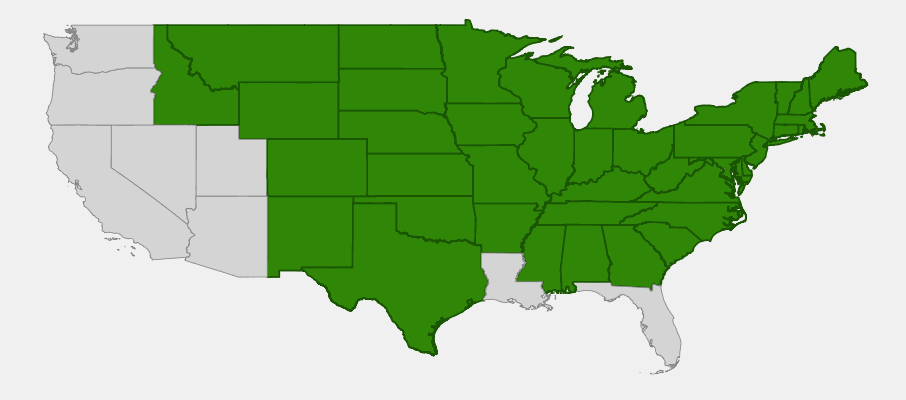
Heath Aster has one of the most extensive native ranges of any North American aster, occurring naturally from southern Canada to northern Mexico and from the Rocky Mountains to the Atlantic Coast. This remarkable distribution reflects the plant’s exceptional adaptability to diverse climate conditions and soil types. The species is particularly abundant across the Great Plains, where it’s a characteristic component of shortgrass and mixed-grass prairie ecosystems.
In the Great Plains, Heath Aster occurs from the prairie provinces of Canada south through Texas, thriving in the semi-arid conditions that characterize much of this region. It extends eastward through the Midwest to the Great Lakes region and continues to the Atlantic coastal states, though it becomes less common in the more humid eastern environments. The species also occurs throughout much of the western United States, where it inhabits grasslands, sagebrush steppes, and open woodlands at elevations from near sea level to over 7,000 feet.
The plant’s broad ecological tolerance allows it to occupy diverse habitats within its range, from dry upland prairies and rocky hillsides to disturbed sites like roadsides, abandoned fields, and areas recovering from disturbance. This adaptability has made Heath Aster one of the most successful native plants in terms of range expansion and colonization of new habitats, particularly in areas where other vegetation has been removed or disturbed.
📋 Regional plant lists featuring Heath Aster: North Dakota, South Dakota & Western Minnesota
Growing & Care Guide
Heath Aster is one of the most adaptable and low-maintenance native perennials, thriving in conditions that would challenge many other garden plants. Its exceptional drought tolerance, ability to grow in poor soils, and spectacular fall display make it an excellent choice for sustainable landscapes, prairie gardens, and areas where a reliable, long-blooming perennial is needed.
Light
Heath Aster performs best in full sun, where it develops its most compact, floriferous form. The plant requires at least 6 hours of direct sunlight daily for optimal flowering. In partial shade, it will grow but tends to become taller, more open, and less densely flowered. The intense sunlight typical of prairie environments helps promote the dense branching and massive flower production that makes this species so spectacular in fall.
Soil & Water
This species is remarkably adaptable to various soil conditions, thriving in everything from sandy to clay soils, and tolerating both alkaline and slightly acidic conditions. Heath Aster actually performs better in lean, well-drained soils than in rich, fertile conditions, which can cause the plants to become too tall and require staking. The plant is exceptionally drought tolerant once established, making it ideal for xeriscaping and low-water gardens. While it can handle occasional deep watering, avoid consistently moist conditions, which may lead to root rot or reduced flowering.
Planting Tips
Plant Heath Aster in spring or fall, spacing plants 2-3 feet apart to allow for their natural spreading habit. The species establishes easily from nursery stock and will often begin flowering in its first year. If starting from seed, scatter in fall or early spring; seeds require light for germination, so barely cover or simply press into the soil surface. The plant may self-seed in favorable conditions, providing new plants in subsequent years.
Pruning & Maintenance
Heath Aster requires minimal maintenance and actually benefits from benign neglect. If plants become too tall or start to flop, they can be cut back by one-third in early summer to promote more compact growth, though this may delay flowering slightly. For winter interest and wildlife value, leave the spent flowers and stems standing through winter — the seed heads provide food for birds, and the dried stems offer shelter for beneficial insects. Cut back in early spring before new growth begins. Division is rarely necessary, but clumps can be divided in early spring if desired.
Landscape Uses
Heath Aster’s adaptability and spectacular fall display make it valuable in numerous landscape applications:
- Prairie and wildflower gardens — essential for authentic Great Plains plantings
- Xeriscaping and drought-tolerant landscapes — thrives with minimal water once established
- Pollinator gardens — critical late-season nectar source for migrating butterflies
- Naturalized areas and meadows — excellent for low-maintenance, large-scale plantings
- Erosion control — spreads to form colonies that help stabilize slopes
- Wildlife habitat — seeds feed numerous bird species through winter
- Fall interest gardens — provides spectacular color when most other plants are dormant
Wildlife & Ecological Value
Heath Aster is one of the most ecologically valuable late-season native plants, providing crucial resources when most other flowers have finished blooming. Its massive flower production and extended bloom period make it a keystone species for fall ecosystems, supporting everything from migrating Monarch butterflies to seed-eating birds preparing for winter.
For Birds
The abundant seeds produced by Heath Aster are important food for numerous bird species throughout fall and winter. American Goldfinches are particularly fond of the seeds, often seen feeding directly on the flower heads along with Pine Siskins, House Finches, and various sparrow species. The persistent seed heads continue to provide food well into winter, when other seed sources may be covered by snow or depleted. The dense, branching structure also provides nesting habitat for small birds and shelter for ground-dwelling species.
For Mammals
Small mammals including mice, voles, and ground squirrels collect Heath Aster seeds both from standing plants and from the ground after natural dispersal. The rhizomatous colonies provide cover for small mammals, while the extensive root systems create habitat for various soil-dwelling species. In some regions, prairie dogs and ground squirrels eat the foliage and flowers.
For Pollinators
Heath Aster is absolutely critical for late-season pollinators, providing nectar and pollen when few other flowers are available. The plant supports over 90 species of native bees and is particularly important for migrating Monarch butterflies, which depend on late-blooming asters for energy during their journey south. Other frequent visitors include various native bees, beneficial wasps, syrphid flies, and numerous butterfly species. The massive number of small flowers provides abundant, easily accessible resources during the critical fall period when many pollinators are preparing for winter or migration.
Ecosystem Role
Heath Aster plays multiple important roles in prairie and grassland ecosystems. As one of the last plants to flower each year, it extends the growing season and provides resources during a period when they would otherwise be scarce. The plant’s ability to colonize disturbed sites makes it valuable for natural succession and ecosystem recovery. Its deep taproot helps improve soil structure and brings nutrients from deep soil layers to the surface through leaf decomposition.
Cultural & Historical Uses
Heath Aster has a rich history of use among Indigenous peoples across its extensive range, valued both for its medicinal properties and as an indicator of ecological conditions. Various Plains and Eastern Woodland tribes used different parts of the plant for treating ailments ranging from respiratory conditions to digestive issues. The Lakota and other Plains tribes used Heath Aster as part of smoking mixtures and in ceremony, while some Eastern tribes employed it in treatments for fevers and as a wash for skin conditions.
The plant’s abundance and wide distribution made it a familiar sight to early European explorers and settlers crossing the Great Plains. Many historical accounts describe the spectacular fall displays created by Heath Aster across vast areas of prairie, with some writers comparing the white-flowered landscapes to snow-covered fields. The species became an important indicator plant for settlers and ranchers — its presence typically signaled areas with well-drained soils and good grazing potential.
During the westward expansion period, Heath Aster was often among the first plants to colonize disturbed areas around settlements, mining sites, and along newly constructed roads and railways. This ability to quickly establish on disturbed ground made it both a nuisance in some agricultural areas and a valuable soil stabilizer in others. Ranchers came to appreciate the plant as an indicator of range health and as late-season forage for wildlife and occasionally livestock.
In modern times, Heath Aster has gained recognition as an essential component of prairie restoration projects and sustainable landscaping. Its exceptional drought tolerance and spectacular fall display have made it increasingly popular in xeriscaping and native plant gardening. The species has also become important in pollinator conservation efforts, with many conservation organizations promoting its use in late-season pollinator habitat projects. Research has highlighted its critical role in supporting migrating Monarch butterflies and other late-season pollinators that depend on fall-blooming native plants.
Frequently Asked Questions
Will Heath Aster spread too aggressively in my garden?
Heath Aster does spread through underground rhizomes and can form colonies over time, but it’s generally not considered aggressively invasive in most garden settings. The spread is gradual and can be managed by removing unwanted shoots or by planting in areas where spreading is desirable. In very favorable conditions with rich soil and ample moisture, spreading may be more rapid.
Why do my Heath Aster plants fall over or get too tall?
This usually indicates too much fertility, moisture, or insufficient sunlight. Heath Aster performs best in lean, well-drained soils in full sun. Rich soils can cause plants to grow too tall and become floppy. You can cut plants back by one-third in early summer to promote more compact growth, though this may delay flowering slightly.
How can I tell Heath Aster from other white-flowered asters?
The combination of tiny flowers (⅛ to ¼ inch), dense branching habit, and very small upper leaves makes Heath Aster quite distinctive. The sheer number of flowers — often over 1,000 per plant — creates a cloud-like effect that’s different from other asters. The plant also tends to have a more shrub-like, bushy appearance than most other asters.
When should I cut back Heath Aster plants?
For maximum wildlife benefit, leave plants standing through winter to provide seeds for birds and shelter for beneficial insects. Cut back in late winter or early spring before new growth begins. If you want to prevent self-seeding, you can cut back after flowering, but this eliminates the wildlife food value.
Is Heath Aster good for pollinators?
Absolutely! Heath Aster is one of the most important late-season pollinator plants, supporting over 90 species of native bees and providing critical nectar for migrating Monarch butterflies. Its extended bloom period from late August through October (and sometimes November) makes it invaluable when few other flowers are available.

Looking for a nursery that carries Heath Aster?
Browse our native plant nursery directory: North Dakota · South Dakota · Minnesota