Big Bluestem (Andropogon gerardii)
Andropogon gerardii, commonly known as Big Bluestem, is one of the most iconic and ecologically important prairie grasses in North America. This tall, robust perennial bunchgrass stands as a true symbol of the Great Plains, where it once dominated millions of acres of tallgrass prairie from southern Canada to northern Texas. A member of the Poaceae (grass) family, Big Bluestem earned its name from the distinctive blue-purple coloration that appears on its stems and leaf sheaths, particularly during the growing season.
Growing in dense clumps that can reach heights of 4 to 7 feet, Big Bluestem is characterized by its sturdy, upright growth habit and striking seed heads that resemble a turkey’s foot — earning it the alternate common name “turkeyfoot grass.” The three-parted seed heads spread outward from the stem tips, creating a distinctive and recognizable silhouette across the prairie landscape. This warm-season grass begins its active growth in late spring when soil temperatures warm, producing its most vigorous growth during the heat of summer.
Beyond its visual impact, Big Bluestem plays a crucial ecological role as both a dominant prairie species and a foundation for entire grassland ecosystems. Its deep root system, which can extend 6 to 8 feet underground, helps stabilize soil, store carbon, and create habitat for countless prairie animals. From providing nesting sites for grassland birds to supporting pollinator communities through its late-summer blooms, Big Bluestem exemplifies the interconnected nature of healthy prairie ecosystems and remains a cornerstone species for prairie restoration projects throughout the Midwest.
Identification
Big Bluestem is a large, robust bunchgrass that forms distinct clumps rather than spreading by runners like some other prairie grasses. The species is easily recognizable by its impressive size, distinctive coloration, and characteristic seed head structure that sets it apart from other tallgrass prairie species.
Stems & Leaves
The stems (culms) of Big Bluestem are sturdy and upright, growing 4 to 7 feet tall, occasionally reaching 8 feet in optimal conditions. One of the most distinctive features is the blue-purple coloration that develops on the stems and leaf sheaths, particularly prominent during the growing season and most noticeable near the nodes (joints). The stems are typically unbranched until the flowering portion develops at the top.
Leaves are long and narrow, typically 8 to 24 inches in length and ¼ to ½ inch wide, with a prominent midrib running down the center. The leaf blades emerge from sheaths that clasp the stem, and young leaves often have a folded appearance before unfurling. The foliage color ranges from blue-green during the growing season to golden-brown or bronze in fall and winter, creating striking seasonal color changes across the prairie landscape.
Flowers & Seeds
The most distinctive feature of Big Bluestem is its seed head, which typically consists of three finger-like branches (racemes) that spread outward from the stem tip, resembling a turkey’s foot. Occasionally, a fourth or fifth branch may be present. Each branch is 2 to 4 inches long and bears numerous small spikelets arranged in pairs along its length.
The flowering period occurs from late summer to early fall (August through October), when the grass produces its characteristic purplish seed heads. The spikelets are initially purplish or reddish, fading to brown as they mature. Each spikelet contains a single seed with a twisted, bent awn (bristle-like appendage) that helps with seed dispersal by wind.
Root System
Perhaps most impressive, though invisible, is Big Bluestem’s extensive root system. The roots can extend 6 to 8 feet deep into the soil, with some reaching depths of 12 feet or more. This deep root system, combined with dense fibrous roots in the upper soil layers, allows Big Bluestem to access water and nutrients unavailable to shallow-rooted plants, helping it survive drought conditions that would stress other species.
Quick Facts
| Scientific Name | Andropogon gerardii |
| Family | Poaceae (Grass) |
| Plant Type | Perennial Bunchgrass |
| Mature Height | 4–7 ft |
| Sun Exposure | Full Sun to Part Shade |
| Water Needs | Low to Moderate |
| Bloom Time | August – October |
| Flower Color | Purplish-red, fading to brown |
| USDA Hardiness Zones | 3–9 |
Native Range
Big Bluestem is native to the Great Plains region of North America, where it historically dominated vast expanses of tallgrass prairie. Its natural range extends from southern Manitoba and Saskatchewan in Canada, south through the central United States to northern Texas and northeastern New Mexico. The species reaches its eastern limits in parts of Ohio, Indiana, and Illinois, and extends westward into Montana, Wyoming, Colorado, and New Mexico.
Within this extensive range, Big Bluestem was the dominant grass species across millions of acres of tallgrass prairie, often comprising 60-80% of the plant biomass in healthy prairie ecosystems. It typically grows in association with other tall prairie grasses like Switchgrass (Panicum virgatum), Indiangrass (Sorghastrum nutans), and Little Bluestem (Schizachyrium scoparium), along with numerous prairie forbs including Purple Coneflower, Wild Bergamot, and Prairie Blazingstar.
Unfortunately, less than 1% of the original tallgrass prairie remains today, making Big Bluestem much less common than it once was. Most surviving populations are found in remnant prairies, preserves, and increasingly in restoration projects throughout the Midwest. The species shows remarkable adaptability and can thrive in a variety of soil types and moisture conditions within its native range, from wet prairies to drier upland sites.
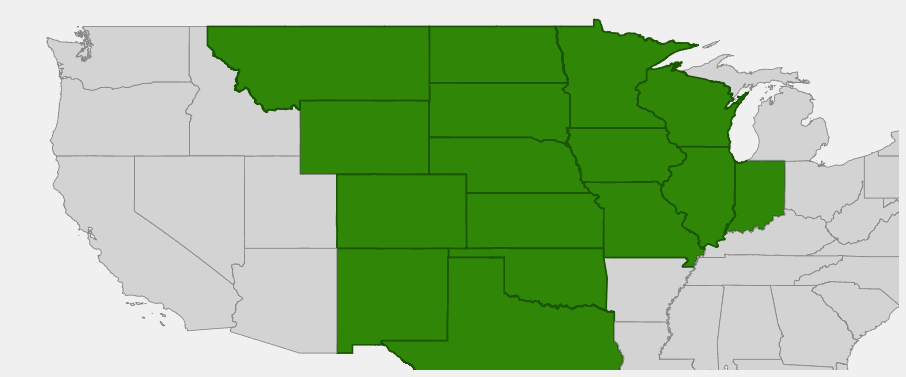
📋 Regional plant lists featuring Big Bluestem: North Dakota, South Dakota & Western Minnesota
Growing & Care Guide
Big Bluestem is an excellent choice for prairie gardens, naturalized landscapes, and restoration projects. As a warm-season grass, it has specific growing requirements and timing that differ from cool-season species, but once established, it is remarkably drought-tolerant and low-maintenance.
Light
Big Bluestem performs best in full sun, where it develops its most vigorous growth and characteristic blue-purple stem coloration. It can tolerate partial shade but may become less dense and show reduced flowering in shadier conditions. For optimal results in landscaping or restoration, provide at least 6 hours of direct sunlight per day.
Soil & Water
This adaptable grass thrives in a wide range of soil types, from clay to sandy loam, and tolerates both wet and dry conditions once established. Big Bluestem prefers well-drained soils but can handle temporary flooding in spring. The species is notably drought-tolerant due to its deep root system, making it ideal for low-water landscaping. Soil pH can range from slightly acidic to slightly alkaline (6.0-8.0) without problems.
Planting Tips
Big Bluestem can be established from seed or transplants. For seeding, plant in late spring (May-June) when soil temperatures reach 65-70°F, as this warm-season grass needs heat to germinate properly. Sow seeds at ¼ to ½ inch deep at a rate of 6-8 pounds per acre for pure stands, or 1-2 pounds per acre in prairie mixes. Transplants should be planted in spring after the last frost date.
Establishment & Maintenance
The first year focuses on root development, with limited above-ground growth. Water regularly during the establishment period, but avoid overwatering as this can encourage weed competition. Big Bluestem is slow to establish but becomes very robust once the root system develops. After the second year, supplemental watering is rarely needed except in severe drought.
Landscape Uses
Big Bluestem’s impressive height and striking appearance make it valuable in many landscape settings:
- Prairie restoration — cornerstone species for tallgrass prairie plantings
- Natural screens — creates seasonal privacy barriers
- Erosion control — deep roots stabilize slopes and prevent soil loss
- Wildlife habitat — provides cover and food for numerous species
- Ornamental accent — dramatic texture and seasonal color in native gardens
- Bioswales — tolerates wet conditions in rain gardens and drainage areas
Wildlife & Ecological Value
Big Bluestem serves as a foundation species in prairie ecosystems, supporting an intricate web of wildlife relationships that have evolved over thousands of years.
For Birds
Grassland birds depend heavily on Big Bluestem for both nesting habitat and food. Species like Bobolinks, Sedge Wrens, and Henslow’s Sparrows construct their nests within or beneath the protective canopy of Big Bluestem clumps. The seed heads provide food for numerous seed-eating birds including Red-winged Blackbirds, various sparrows, and finches throughout fall and winter. The tall, dense growth also offers thermal cover and protection from predators for ground-nesting species.
For Mammals
Many prairie mammals utilize Big Bluestem for food and shelter. White-tailed Deer browse the tender shoots in spring and early summer, while the mature grass provides winter cover. Small mammals like voles and shrews find protection within the dense root crowns and use the grass for nesting material. The extensive underground root system creates habitat for numerous soil-dwelling creatures and helps support the complex prairie food web.
For Pollinators
While Big Bluestem is wind-pollinated and doesn’t produce showy flowers, it supports pollinator communities indirectly by creating habitat structure for the diverse forbs that bloom throughout the prairie growing season. The grass clumps provide shelter and overwintering sites for beneficial insects, and the varied microhabitats created by its growth pattern support a diverse community of prairie invertebrates.
Ecosystem Role
Big Bluestem’s ecological importance extends far beyond its direct wildlife relationships. Its deep root system stores significant amounts of carbon in soil — prairies containing Big Bluestem can store more carbon per acre than forests. The extensive root network also helps prevent soil erosion, improves water infiltration, and creates channels that benefit other prairie plants. As a dominant species, Big Bluestem helps define the structure and function of entire tallgrass prairie ecosystems.
Cultural & Historical Uses
Big Bluestem has played a vital role in North American history and culture, from its significance to Indigenous peoples to its impact on European settlement patterns and agricultural development.
Native American tribes across the Great Plains utilized Big Bluestem in numerous ways. The Prairie Potawatomi and other tribes harvested the seeds for food, grinding them into flour or meal. The long, strong stems were used for basketry and thatching, while the dense root mats were sometimes cut and used as building material for earth lodges. The grass also provided forage for the vast herds of bison that shaped prairie ecosystems, and Indigenous peoples used controlled burning to maintain the grasslands and encourage new growth.
For European settlers moving westward, the presence of Big Bluestem and other tallgrass prairie species served as an indicator of fertile soil suitable for agriculture. The phrase “prairie soil so rich that grass grows as tall as a horse’s back” often referred to areas dominated by Big Bluestem. Ironically, this led to the conversion of most tallgrass prairie to cropland — the very fertility that supported Big Bluestem made these areas prime targets for the plow.
In the livestock industry, Big Bluestem was recognized as premium forage grass. Its high protein content and palatability made it excellent feed for cattle, and vast areas of prairie were used for grazing. However, overgrazing and the suppression of natural fire cycles led to the degradation of many Big Bluestem prairies. Today, the species is increasingly recognized for its potential in sustainable grazing systems and carbon sequestration efforts, with some ranchers working to restore native grasslands as both economically and environmentally beneficial land use.
Frequently Asked Questions
Why is it called “Big Bluestem” if it’s not blue?
The name comes from the distinctive blue-purple coloration that appears on the stems and leaf sheaths during the growing season, particularly near the nodes (joints). This coloration is most prominent in summer and can vary depending on growing conditions and genetics.
How long does it take Big Bluestem to establish from seed?
Big Bluestem is notoriously slow to establish, often taking 2-3 years to reach full size and vigor. The first year is spent developing the extensive root system, with limited above-ground growth. Patience is key — but once established, plants can live for decades.
Can Big Bluestem be grown outside its native range?
While Big Bluestem can survive in areas outside its native range, it performs best and has the greatest ecological value within its natural distribution. It may struggle in areas with very high humidity, poor drainage, or insufficient winter chill hours.
When should I cut back Big Bluestem?
Cut Big Bluestem back in early spring (March-April) before new growth begins. The standing dead grass provides winter wildlife habitat and should be left until spring. Cut to 6-8 inches above ground level to allow for new growth.
Is Big Bluestem invasive or aggressive?
No, Big Bluestem is a well-behaved bunchgrass that doesn’t spread aggressively by runners like some grasses. It forms discrete clumps and may slowly expand over time, but it won’t take over a garden or crowd out other plants inappropriately.

Looking for a nursery that carries Big Bluestem?
Browse our native plant nursery directory: North Dakota · South Dakota · Minnesota