Bracken Fern (Pteridium aquilinum)
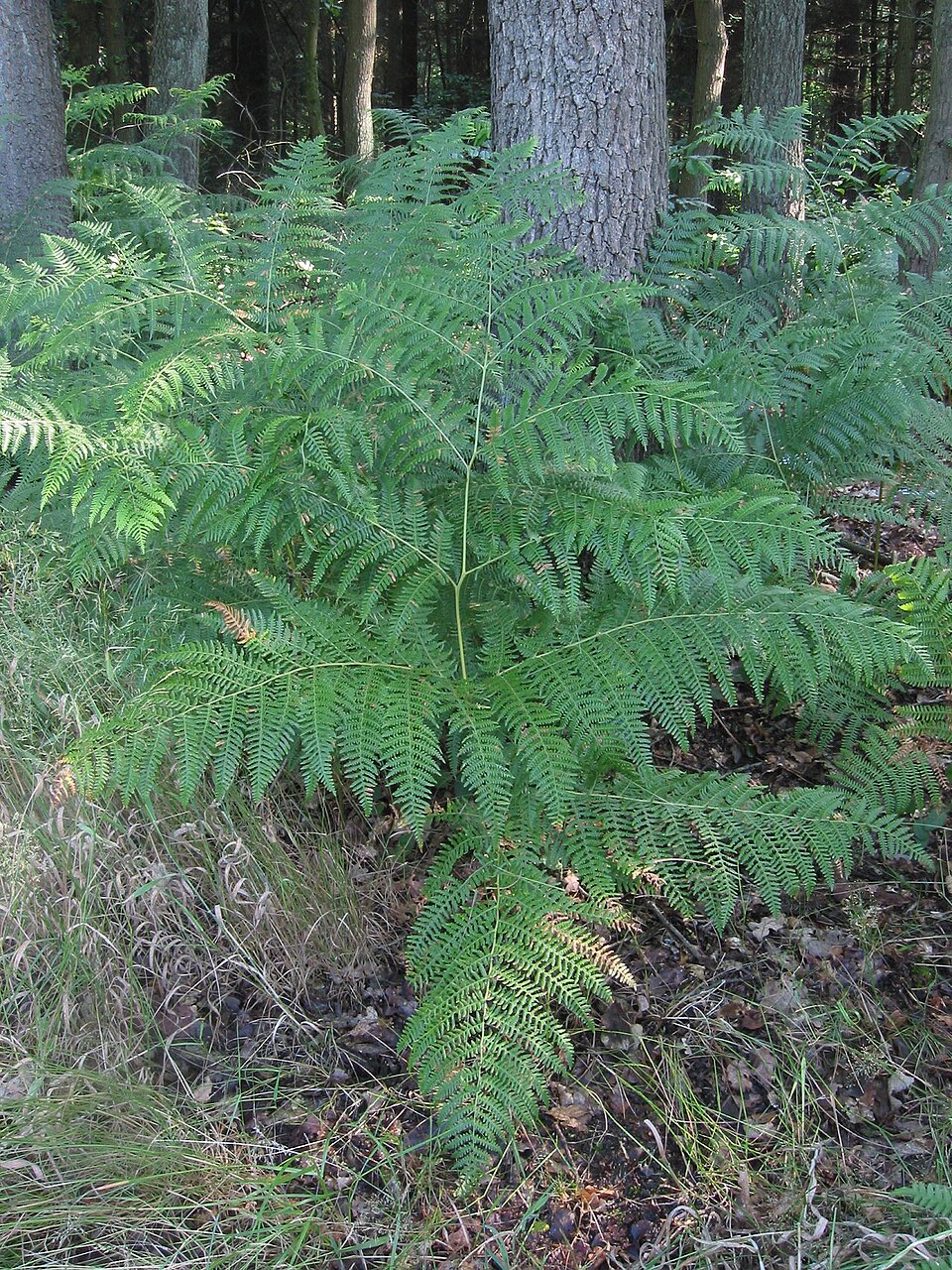
Pteridium aquilinum, commonly known as Bracken Fern, Eagle Fern, or Brake Fern, is one of the most widespread and recognizable ferns in North America and indeed the world. Unlike most ferns that grow in dense, circular clumps, Bracken Fern produces distinctively triangular, branching fronds that emerge individually from deep underground rhizomes — a trait that sets it visually apart from virtually every other fern. This remarkable plant is a member of the family Dennstaedtiaceae, and its genus name Pteridium comes from the Greek word for fern, while aquilinum refers to the eagle-like spread of its fronds.
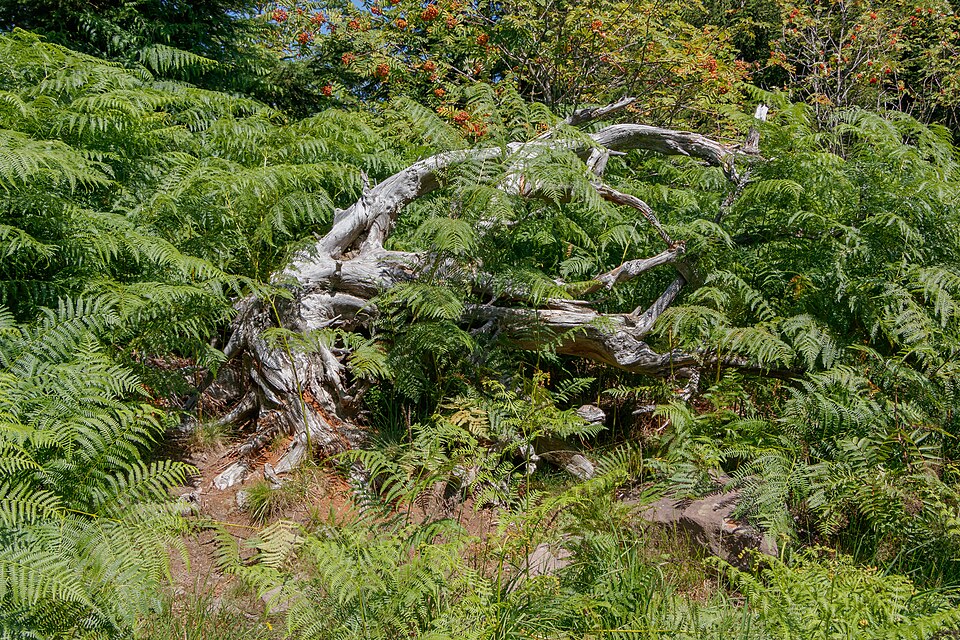
Bracken Fern is one of the most cosmopolitan plants on Earth, found on every continent except Antarctica. In the eastern United States, it thrives in open woodlands, forest edges, old fields, and disturbed areas, forming dense colonies through its aggressive rhizome system. The rhizomes can extend 20 feet or more through the soil, allowing colonies to expand steadily year after year. Though considered aggressive in disturbed habitats, Bracken plays important ecological roles in early successional communities and provides cover and foraging habitat for numerous wildlife species.
In the Delaware, New Jersey, and New York region, Bracken Fern is commonly encountered on dry to moist sandy soils in open woodlands, pine barrens, and forest edges. Its attractive, arching triangular fronds — each consisting of three major branches — create a distinctive silhouette that gardeners appreciate for its bold texture in naturalized or woodland garden settings. Though it can spread vigorously, its deep rhizomes and robust growth make it a valuable erosion-control plant on sandy banks and slopes.
Identification
Bracken Fern is unmistakable among eastern ferns due to its unique, branching, triangular frond structure. Rather than growing in a vase-like clump, each frond emerges singly from a long underground rhizome, producing an airy, open colony. Mature plants typically reach 2 to 7 feet in height, with fronds held nearly horizontally on erect, straw-colored to greenish stalks (stipes).
Fronds
The fronds are the most distinctive feature of Bracken Fern. Each frond is divided into three main sections (pinnae) arising from a central rachis — creating the characteristic triangular outline that gives the plant its eagle-wing appearance. The pinnae are further divided into numerous pinnules and ultimate lobes. The upper surface is dark green and hairless; the underside is pale green with a row of spore cases (sori) running along the margins, protected by the curled leaf edge (a false indusium). In autumn, the fronds turn a warm golden-brown before dying back to the ground.
Stems & Rhizomes
The stipe (stalk) is straw-yellow to greenish, smooth or slightly hairy at the base, and quite rigid. One of the traditional ways to identify Bracken is to cut the stipe cross-sectionally near the base — the arrangement of vascular tissue resembles an eagle in flight or, in some traditions, the initials “JC” (for Jesus Christ), earning it the name “Eagle Fern” in many cultures. The deep, cord-like black rhizomes can extend several feet underground, explaining why Bracken colonizes large areas and is nearly impossible to eradicate once established.
Spores
Bracken produces spores (not flowers or seeds) from late summer into fall. The sori run in a continuous line along the margins of fertile pinnules, covered by the reflexed (rolled-under) leaf margin. Spores are wind-dispersed and are among the smallest reproductive structures in the plant kingdom. Bracken is a homosporous fern, producing only one type of spore that develops into a small independent gametophyte in the soil.
Quick Facts
| Scientific Name | Pteridium aquilinum |
| Family | Dennstaedtiaceae (Bracken Fern) |
| Plant Type | Deciduous Fern (colony-forming) |
| Mature Height | 2–7 ft |
| Sun Exposure | Part Shade to Full Sun |
| Water Needs | Moderate to High |
| Bloom Time | Non-flowering (reproduces by spores) |
| Spore Season | Late summer to fall |
| Fall Color | Golden-brown |
| USDA Hardiness Zones | 3–10 |
Native Range
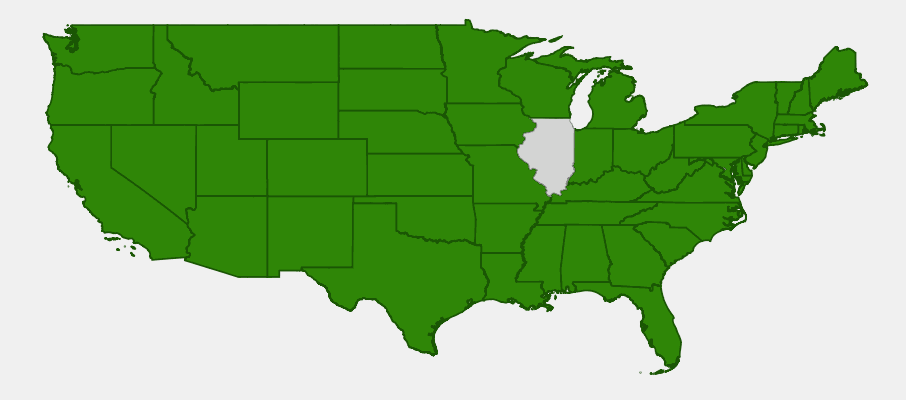
Bracken Fern is one of the most cosmopolitan plants in the world, found on every continent except Antarctica and in virtually every climate zone from tropical to boreal. In North America, it is native throughout most of the continent, from Alaska and northern Canada south through the United States into Mexico. In the eastern United States, it ranges from Maine south to Florida and west to the Great Plains, growing wherever suitable habitat exists.
In the tri-state region of Delaware, New Jersey, and New York, Bracken Fern is abundant in the Pine Barrens of New Jersey, on sandy, well-drained upland soils throughout the region, and along the edges of oak woodlands, secondary forests, and disturbed areas. It is particularly common in areas that have been cleared, burned, or otherwise disturbed, where it quickly colonizes via its deep, spreading rhizome system. Bracken thrives in the acidic, sandy soils characteristic of the New Jersey Pine Barrens and the Long Island pine barrens.
Globally, Bracken Fern occupies an extraordinary ecological niche as one of the dominant plants in post-fire and post-disturbance successional communities across diverse biomes. Its deep rhizomes survive fire, allowing rapid recolonization of burned areas. This resilience has made it one of the most successful and widespread plants on Earth, estimated to cover approximately 1% of the world’s land surface.
📋 Regional plant lists featuring Bracken Fern: Delaware, New Jersey & New York
Growing & Care Guide
Bracken Fern is an extremely adaptable and low-maintenance native fern that thrives in a wide range of conditions. Its deep rhizome system and vigorous spreading habit make it ideal for naturalizing large areas, slope stabilization, and wildlife habitat gardens, though careful placement is important to prevent it from overwhelming smaller plants.
Light
Bracken Fern is highly adaptable in its light requirements, growing well from part shade to full sun. In its native pine barrens habitat, it grows in the dappled light beneath an open pine canopy. In open fields and roadsides, it thrives in full sun. In heavier shade, growth becomes more sparse and fronds shorter; the best vigor is achieved in partial to full sun with adequate moisture. Unlike most ferns, Bracken can tolerate considerable drought once established, particularly in sandy soils.
Soil & Water
Bracken Fern prefers sandy, well-drained, acidic soils with a pH of 4.5 to 6.5 — the kind of nutrient-poor, acidic substrate found in the New Jersey Pine Barrens and similar landscapes. It actually performs better in poor soils than rich ones, where competing vegetation can overwhelm it. While it tolerates a range of moisture levels from moderately dry to moist, it does best with consistent moisture, especially during the growing season. Established colonies are notably drought-tolerant due to deep rhizomes.
Planting Tips
Bracken Fern is best established from divisions of rhizome sections in early spring or fall. Container-grown specimens are also available from native plant nurseries. Plant in well-drained, acidic soil and water consistently through the first growing season. Allow adequate space for colony expansion — individual fronds spread via underground rhizomes, and a colony can expand 12–24 inches per year in ideal conditions. Use Bracken Fern in large naturalistic areas, woodland edges, or as a groundcover on slopes where spreading is acceptable.
Pruning & Maintenance
Bracken Fern requires minimal maintenance. Dead fronds can be cut back in late fall or early spring before new growth emerges, or simply left in place to provide winter cover and soil organic matter. To control spread, edge colonies in spring before new fronds emerge. Do not use herbicides near other desirable plants, as Bracken’s deep rhizomes require repeated treatments to suppress. Note: repeated mowing (4–5 times per season) over several years will eventually exhaust the rhizomes and reduce colony size.
Landscape Uses
Bracken Fern is best suited for naturalistic landscapes where its spreading habit is an asset:
- Pine barren restoration and dry woodland groundcover
- Erosion control on slopes and banks with sandy soil
- Wildlife habitat gardens providing cover for ground-nesting birds and small mammals
- Naturalized areas where large-scale ground coverage is desired
- Fire-resistant buffers around woodland edges
Wildlife & Ecological Value
Despite its reputation as an aggressive colonizer, Bracken Fern provides significant ecological benefits, particularly for wildlife in early successional habitats and open woodland communities.
For Birds
Dense stands of Bracken Fern provide important nesting habitat and cover for ground-nesting birds such as Ruffed Grouse, Wild Turkey, Bobwhite Quail, and various sparrows. The arching fronds create sheltered microsites that protect nests and chicks from predators and weather. During migration, numerous warbler species forage in Bracken colonies for the insects that shelter among the fronds. The plant is also used as a roosting and thermal cover site by many woodland birds during cold months.
For Mammals
Bracken Fern colonies serve as important refugia for small mammals including White-footed Mice, Meadow Voles, Eastern Cottontails, and Short-tailed Shrews. White-tailed Deer occasionally browse the young, unfurling fronds (fiddleheads) in spring. Black Bears have been documented consuming young Bracken fiddleheads as an early-season food source. The dense mat of dead fronds provides overwintering habitat for numerous invertebrates that mammals depend on for food.
For Pollinators
As a non-flowering fern, Bracken does not directly provide nectar or pollen. However, the moist microhabitats created within Bracken colonies support diverse communities of insects, including butterflies, moths, and other invertebrates that take shelter, lay eggs, or overwinter among the fronds. Several moth species are specialist feeders on Bracken Fern in their larval stage.
Ecosystem Role
Bracken Fern plays a critical role in post-disturbance and post-fire succession. Its deep rhizomes survive fire and allow rapid recolonization, stabilizing soil and reducing erosion immediately after disturbance. The dense colony creates a distinct microclimate with higher humidity and lower light levels at ground level, facilitating the establishment of woody shrubs and tree seedlings over time. As a pioneer species, Bracken effectively “nurses” more shade-tolerant species through early succession, ultimately contributing to its own replacement by forest.
Cultural & Historical Uses
Bracken Fern has one of the richest ethnobotanical histories of any North American fern. Indigenous peoples across the continent used virtually every part of the plant. The young fiddleheads (croziers) were eaten in spring — boiled, steamed, or roasted — though they must be thoroughly cooked as raw Bracken contains thiaminase and ptaquiloside, compounds that are toxic when consumed in quantity over time. Various Native American tribes, including the Cherokee, Iroquois, and many Pacific Northwest peoples, had traditional preparations that neutralized these compounds through prolonged cooking, drying, or fermentation.
The rhizomes were among the most valuable food sources in the Pacific Northwest, where they were pounded into flour for bread and cakes. Coast Salish peoples consumed roasted rhizomes as a staple food, and the plant was traded among tribes for this purpose. In Europe and Asia, Bracken rhizome starch was historically used as a famine food and for brewing beer. The dried fronds were used as animal bedding, mulch, thatching material, and fuel across cultures worldwide.
Medicinally, various cultures used Bracken preparations for treating intestinal worms, rheumatism, and skin conditions, though modern science has confirmed significant health risks from regular consumption of any part of the plant. Today, Bracken’s main ecological value is recognized in its role as a pioneer species and habitat provider, and it is appreciated in naturalistic landscapes for its bold texture and wildlife value. The young fiddleheads are occasionally harvested as a spring vegetable in some cultures, but cooking thoroughly is essential to reduce toxicity.
Frequently Asked Questions
Is Bracken Fern invasive?
Bracken Fern is native throughout North America and is not classified as invasive in the continental United States. However, it can be aggressively spreading in garden settings. It is best planted in naturalized areas where its expansive colonies are welcome. In disturbed habitats, it plays an important ecological role as a pioneer species.
Can you eat Bracken Fern fiddleheads?
Young fiddleheads have been eaten by many cultures, but they contain thiaminase (which depletes vitamin B1) and ptaquiloside (a carcinogen) that are only partially inactivated by cooking. Regular consumption is not recommended. If eating Bracken fiddleheads, always cook thoroughly and consume in moderation only.
Why does Bracken Fern look different from other ferns?
Bracken’s most distinctive feature is its branching, triangular frond structure — each frond divides into three main sections, creating a “three-pointed” shape unlike the typical vase-like cluster of most ferns. Also unique is that fronds emerge singly from spreading rhizomes rather than from a central crown, creating open, spreading colonies rather than tight clumps.
How do I control Bracken Fern in my garden?
The most effective organic control is repeated cutting of fronds throughout the growing season (5–6 times per season for 2–3 years), which exhausts the energy reserves in the rhizomes. Cutting just once actually stimulates regrowth. For large infestations, solarization (covering with black plastic during the growing season) can reduce vigor. Complete eradication is difficult due to the deep rhizomes.
Does Bracken Fern have any value for butterflies or bees?
As a non-flowering plant, Bracken does not provide nectar or pollen. However, several moth and butterfly species use it as a larval host plant, and the moist, sheltered microhabitat within Bracken colonies supports diverse insect communities that benefit birds and other wildlife. It contributes to overall biodiversity in the landscape rather than directly feeding pollinators.

Looking for a nursery that carries Bracken Fern?
Browse our native plant nursery directory: Delaware · New Jersey