Brown-eyed Susan (Rudbeckia triloba)
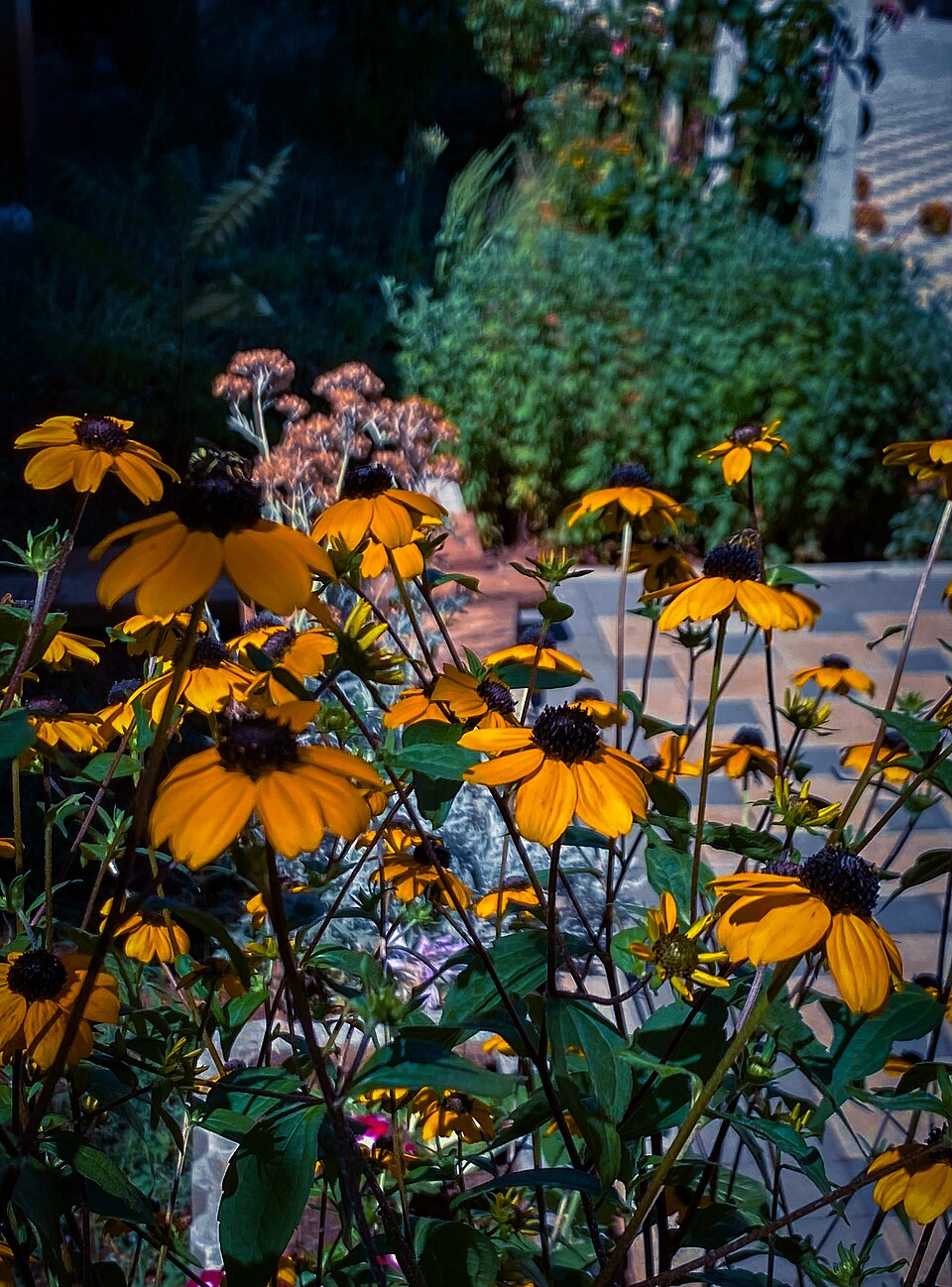
Rudbeckia triloba, commonly known as Brown-eyed Susan or Three-lobed Coneflower, is one of the most prolific and cheerful wildflowers native to eastern and central North America. A member of the Asteraceae (daisy) family, this biennial to short-lived perennial produces an extraordinary quantity of small, daisy-like flowers — each with bright golden-yellow ray petals surrounding a deep chocolate-brown to near-black central disc — blooming from midsummer well into fall. The sheer abundance of its blossoms, often numbering in the hundreds on a single mature plant, makes it one of the most visually striking native wildflowers in the late-season landscape.
Growing typically 2 to 3 feet tall and equally wide, Brown-eyed Susan forms an airy, branching plant with deeply lobed lower leaves (the source of its botanical name, triloba, meaning “three-lobed”) and smaller, mostly unlobed upper leaves. Unlike its larger-flowered cousin Common Black-eyed Susan (Rudbeckia hirta), the individual flowers of R. triloba are notably smaller — only about an inch across — but what they lack in individual size they more than compensate for with sheer numbers. From July through October, the plant becomes a haze of golden yellow that attracts an impressive diversity of pollinators and seed-eating birds.
Though technically a biennial or short-lived perennial, Brown-eyed Susan readily self-seeds, making it effectively permanent in the garden once established. It thrives in disturbed areas, prairie edges, open woodland margins, roadsides, and meadow gardens, and is an excellent choice for gardeners seeking a low-maintenance, high-impact native wildflower for late-season color in Indiana, Ohio, and across the eastern United States.
Identification
Brown-eyed Susan is a branching, bushy plant standing 2 to 4 feet tall at maturity, with a characteristically airy, multi-branched silhouette that becomes completely covered in flowers by late summer. The plant has a rough, bristly texture throughout — stems, leaves, and petioles all bear stiff hairs, giving the plant a slightly scratchy feel when handled.
Leaves
The leaves are variable and one of the key identification features. Basal and lower stem leaves are typically long-petioled and deeply 3-lobed (or sometimes pinnately divided), giving the plant its Latin epithet triloba. These lower leaves are broadly ovate to heart-shaped in overall outline, with coarsely toothed margins, and can reach 4–6 inches in length. As the stem ascends, leaves progressively become smaller, simpler, and less deeply lobed — middle leaves may have one or two lobes, while upper leaves near the flowers are often simple, lance-ovate, and sessile (lacking a petiole). All leaves are rough and bristly on both surfaces, dark green above and paler beneath.
Flowers & Fruit
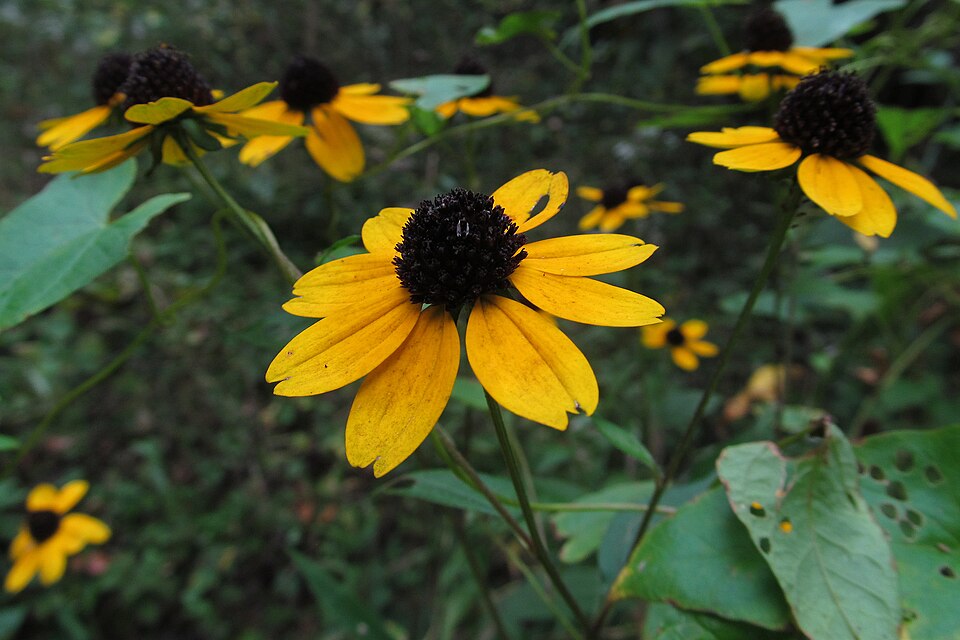
The flowers are the main spectacle — composite flower heads about ¾ to 1¼ inches (2–3 cm) in diameter, each with 8–12 deep golden-yellow ray florets surrounding a raised, rounded, chocolate-brown to near-black central disc. The disc is notably darker than that of Rudbeckia hirta, giving rise to the common name “Brown-eyed Susan.” The disc florets bloom progressively from the outside inward, extending the attractive period of each head. Flower heads are borne on slender, wiry peduncles arising from the leaf axils and branch tips, typically held well above the foliage. Bloom period runs from mid-July through October, with peak flowering in August and September.
Following fertilization, each disc floret produces a small, hard, four-angled achene (seed) about 2–3 mm long. The seed heads persist through winter, turning from brown to nearly black as they dry, and provide an important food source for small birds, particularly goldfinches. The plant readily self-sows in favorable conditions, ensuring perpetuation of the colony year after year.
Stems & Root System
The stems are erect, stout at the base, and highly branched in the upper portions. They are covered in rough, spreading hairs. The root system is fibrous, not taproot-based, which makes transplanting container-grown plants straightforward. The plant produces a basal rosette of leaves in its first year (if biennial), then flowers, sets seed, and dies in the second year — though perennial individuals can persist for several years under favorable conditions.
Quick Facts
| Scientific Name | Rudbeckia triloba |
| Family | Asteraceae (Daisy / Composite) |
| Plant Type | Native biennial to short-lived perennial wildflower |
| Mature Height | 2–3 ft |
| Sun Exposure | Full Sun to Part Shade |
| Water Needs | Moderate |
| Bloom Time | July – October |
| Flower Color | Deep golden-yellow rays with dark brown disc |
| Soil Type | Adaptable; tolerates clay, loam, or sandy soils |
| Deer Resistant | Moderately (rough texture deters casual browsing) |
| USDA Hardiness Zones | 4–9 |
Native Range
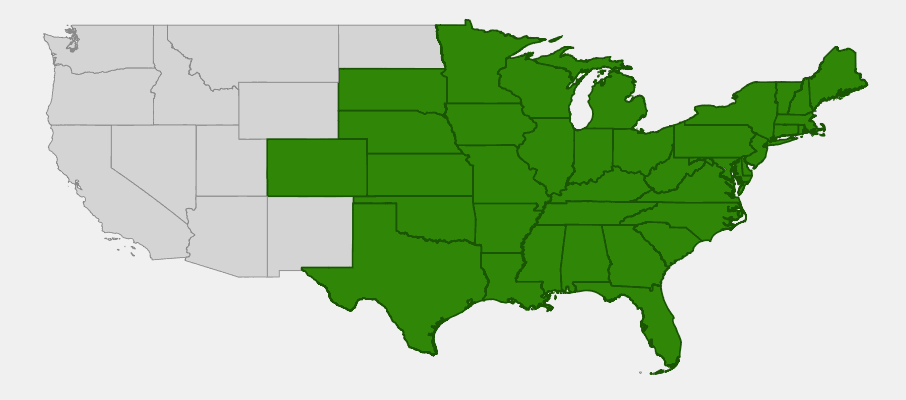
Brown-eyed Susan is native to a broad swath of eastern and central North America, ranging from the Atlantic seaboard west through the Midwest and Great Plains, and south into the Gulf Coast states. Its core range is centered in the Midwest and mid-Atlantic states, including all of Indiana and Ohio, where it is a characteristic component of prairies, open woodlands, and disturbed areas. The species is most common in the Central Lowland physiographic province but extends into the Appalachian highlands and coastal plain regions.
In Indiana and Ohio, Brown-eyed Susan is found in a variety of natural and semi-natural habitats, including prairie remnants, open roadsides, meadow restorations, stream corridors, and open woodland margins. It is particularly common along woodland edges where the shade of the canopy begins to give way to more open ground — an edge habitat that provides both the partial shade it tolerates and the disturbance regime it favors. It is often associated with other native composites including Black-eyed Susan (Rudbeckia hirta), Purple Coneflower (Echinacea purpurea), Wild Bergamot (Monarda fistulosa), and various native asters.
The species shows a strong affinity for disturbed habitats — roadsides, abandoned fields, and woodland clearings — which is ecologically linked to its status as a biennial/short-lived perennial that depends on open, disturbed soil for seed germination. This makes it both a pioneer species in disturbed ground and an excellent candidate for meadow seed mixes where periodic disturbance or mowing keeps the habitat suitable.
📋 Regional plant lists featuring Brown-eyed Susan: Indiana & Ohio
Growing & Care Guide
Brown-eyed Susan is one of the easiest native wildflowers to establish and maintain. Given its preference for disturbed habitats in the wild, it adapts readily to typical garden conditions, and once established it perpetuates itself through self-seeding with minimal intervention required.
Light
Brown-eyed Susan thrives in full sun (6 or more hours per day) where it produces the most abundant flowering and the most compact, upright plant form. It also grows well in part shade (3–6 hours of direct sun), though plants in shadier conditions tend to be taller, looser in habit, and somewhat less floriferous. In deep shade the plant struggles; aim for at least 4 hours of direct sunlight for reliable blooming.
Soil & Water
One of this plant’s great strengths is its soil adaptability. It grows in a wide range of soil types from sandy to clay, and in both acidic and neutral pH conditions. It prefers moderately moist, well-drained soil but will tolerate dry conditions once established. Overly rich, fertile soil will produce lush foliage but reduced flowering and floppy stems; lean to average garden soil is actually preferable. Avoid waterlogged or persistently wet soils, which promote root disease.
Planting Tips
Brown-eyed Susan can be started from seed or transplanted from container plants. Direct seeding in fall (after the first frost) or in early spring on disturbed, bare soil gives the best germination. Seeds need light to germinate — press them into the soil surface without covering. Transplant container plants in spring after the last frost or in early fall. Space plants 18–24 inches apart in the garden to allow for their somewhat wide-spreading mature form. Once plants flower and set seed in their second year, allow the seed heads to remain until the seeds are fully mature (late fall or winter) to encourage self-seeding and perpetuation of the colony.
Pruning & Maintenance
Brown-eyed Susan requires very little maintenance. In gardens where a tidier appearance is desired, tall plants can be cut back by one-third in late June (the “Chelsea chop”) to reduce ultimate height and delay flowering slightly, which can extend the bloom period into fall. Deadheading (removing spent flowers) prolongs blooming but will prevent self-seeding, so leave at least some seed heads intact. Leave the dried stalks standing through winter — they provide food for finches and habitat structure for beneficial insects. Cut back to the ground in early spring before new growth emerges.
Landscape Uses
Brown-eyed Susan is exceptionally versatile in the landscape:
- Meadow and prairie gardens — an essential component of any native wildflower meadow seed mix
- Woodland edge plantings — thrives in the transition zone between sun and shade
- Cottage gardens — provides late-season color when many other plants have finished
- Rain gardens and bioswales — adaptable to periodically moist conditions
- Pollinator gardens — one of the premier late-season nectar and pollen sources
- Cut flower gardens — long-lasting in fresh arrangements
- Naturalized areas and roadsides — excellent for low-maintenance revegetation
Wildlife & Ecological Value
Brown-eyed Susan is a keystone late-season plant for wildlife in the eastern and central United States, providing food for a remarkable diversity of insects and birds at a time when many other native wildflowers have finished blooming.
For Birds
The persistent, seed-laden dried flower heads are a valuable food source for seed-eating birds well into winter. American Goldfinch, House Finch, and other finches are particularly attracted to the seeds, often perching directly on the flower heads to extract them. The seeds are also eaten by various sparrows, chickadees, and Dark-eyed Juncos. Leaving the standing dried stalks through winter maximizes this benefit.
For Pollinators
Brown-eyed Susan is an outstanding pollinator plant — among the most valuable native composites for late-season pollinators. Its flowers produce abundant nectar and pollen that attract a wide range of native bees including bumble bees (Bombus spp.), sweat bees (Halictidae), small carpenter bees, and many specialist native bee species. Butterflies — particularly swallowtails, fritillaries, skippers, and sulphurs — visit the flowers heavily from late July through October. It is also an important late-season nectar source for Monarch butterflies (Danaus plexippus) as they begin their southward migration, helping fuel their long journey.
For Other Insects
The foliage and stems host specialized insects including Rudbeckia leaf-mining insects, gall midges, and the larvae of several native moth species. The hollow stems of cut plants provide nesting sites for small cavity-nesting native bees. The rough, hairy foliage somewhat deters generalist insect herbivores while supporting specialist native insects that have evolved alongside this plant over thousands of years.
Ecosystem Role
Brown-eyed Susan plays an important role in the succession ecology of disturbed habitats. As a pioneer species that thrives in open, disturbed ground, it helps stabilize soil, suppress weeds, and provide the nectar, pollen, and seed resources that sustain pollinator and bird populations during the late growing season — a time of year when food resources in the landscape are diminishing. Its long bloom period (July–October) makes it particularly valuable as a “bridge” plant connecting the peak-season bloom of summer natives with the autumn asters and goldenrods.
Cultural & Historical Uses
Brown-eyed Susan was used by several Indigenous peoples of eastern and central North America as both a medicinal and a practical plant. The Cherokee used a root tea made from Rudbeckia species to treat worms and colds, and also applied a poultice of the roots to swellings and sores. The Ojibwe used related Rudbeckia species to treat colds and as a wash for snakebite. While specific ethnobotanical records for R. triloba are less extensive than for some other Rudbeckia species, it was certainly known and used by Indigenous communities throughout its range.
In the 19th and early 20th centuries, herbalists and early American physicians used Rudbeckia species as a mild immunostimulant, similar to the closely related Echinacea — both belong to the same tribal grouping within the Asteraceae. Rudbeckia root preparations were sometimes used to stimulate the immune system and promote wound healing. The widespread popularity of Echinacea as an herbal supplement in modern times reflects this traditional knowledge of the related Rudbeckia genus.
In the modern era, Brown-eyed Susan has become an increasingly popular plant in native landscaping, ecological restoration, and pollinator garden design. It is widely included in native wildflower seed mixes for meadow restoration projects throughout its range, and is increasingly available at native plant nurseries. Its combination of easy culture, prolific flowering, late-season interest, and exceptional value for pollinators and birds makes it one of the most recommended native wildflowers for Indiana and Ohio gardens.
Frequently Asked Questions
Is Brown-eyed Susan the same as Black-eyed Susan?
No, though they are closely related. Both are Rudbeckia species in the Asteraceae family, but Brown-eyed Susan (R. triloba) produces much smaller, more numerous flowers with a very dark brown-black center disc, while Black-eyed Susan (R. hirta) has larger, fewer flowers with a dark but less intensely colored center. R. triloba also has deeply lobed lower leaves, while R. hirta leaves are unlobed.
Is Brown-eyed Susan a perennial or annual?
It is technically a biennial to short-lived perennial — it typically grows as a rosette in year one, then flowers and sets seed in year two. However, it freely self-sows and can behave as a perennial in the garden because new plants replace old ones each year. Once established in suitable conditions, it maintains itself indefinitely without replanting.
Will Brown-eyed Susan spread and become invasive?
It will self-seed freely, which some gardeners find excessive in formal settings. However, it is a native plant and its spread is beneficial for local ecology. Unwanted seedlings are easy to remove when small. In a naturalistic meadow or wildflower garden, its tendency to spread is a desirable feature that ensures the colony persists year after year.
Does Brown-eyed Susan attract Monarch butterflies?
Yes — it is one of the best native plants for fueling migrating Monarchs in late summer and fall, providing nectar when they need to build up fat reserves for migration. While Common Milkweed is the essential caterpillar host plant, Brown-eyed Susan is a key nectar source for adult Monarchs during migration.
How do I prevent Brown-eyed Susan from getting floppy?
Grow it in full sun and lean to average soil (not rich/fertilized soil). You can also pinch back stems by 4–6 inches in early June to encourage bushier, sturdier growth. Avoid planting in windy, exposed locations without support.