Bush-muhly (Muhlenbergia porteri)
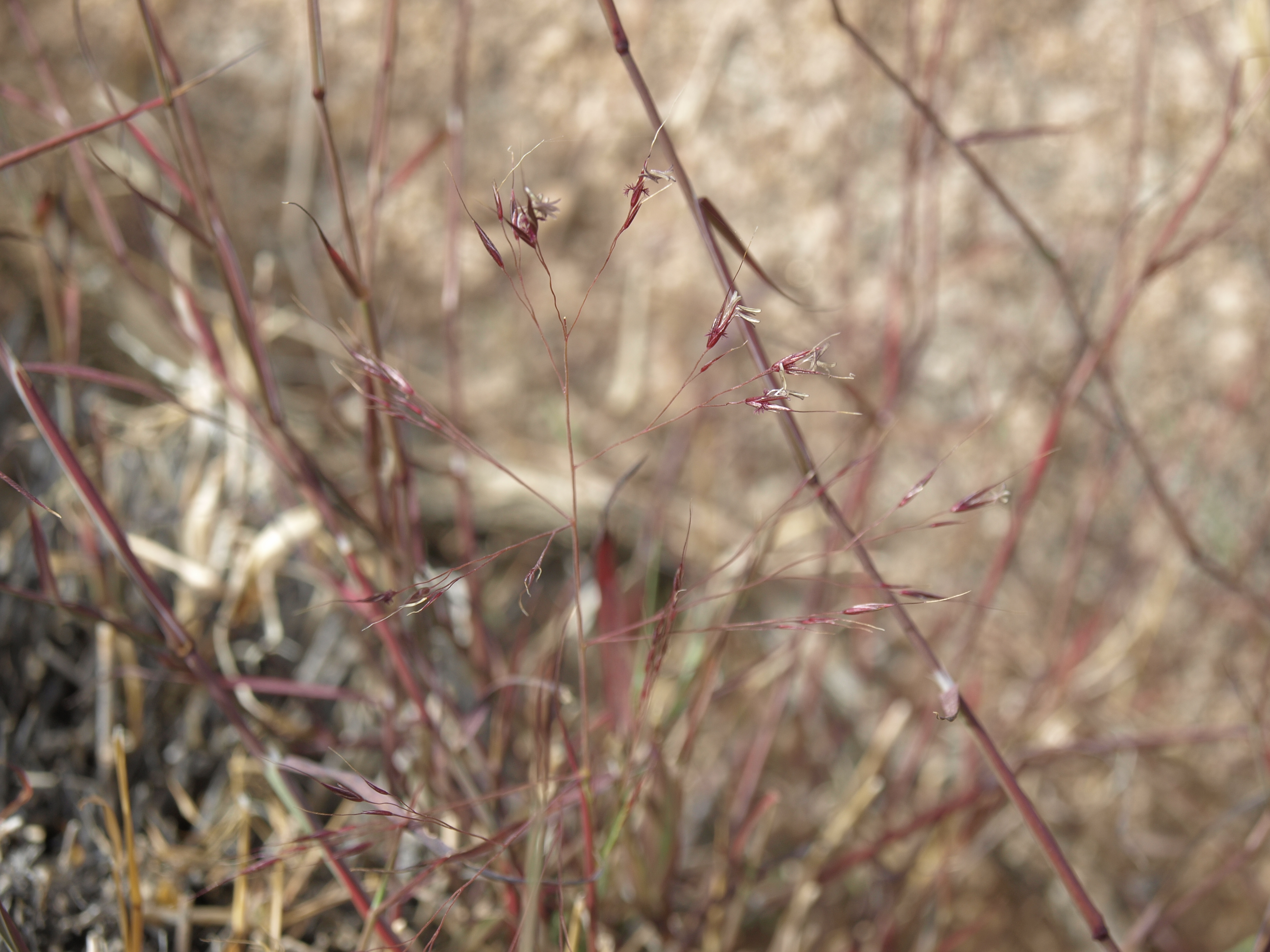
Muhlenbergia porteri, commonly known as Bush-muhly or Porter’s Muhly, is a distinctive perennial bunchgrass native to the desert Southwest of the United States and adjacent Mexico. Unlike many desert grasses that grow in open expanses, Bush-muhly has a fascinating ecological strategy: it grows within or beneath the protective canopy of desert shrubs — particularly those with thorns — where it benefits from the shade, increased soil moisture, and protection from grazing that the shrubs provide. This association gives the plant its common name and makes it one of the most characteristic warm-season grasses of the Sonoran and Chihuahuan Desert grassland ecotone.
Reaching up to 3 feet tall, Bush-muhly produces an open, airy mass of very thin stems and narrow leaves topped by delicate purplish panicles that shimmer and catch the light throughout fall. The foliage and seed heads create a soft, billowing texture that contrasts beautifully with the coarser structure of desert shrubs. The plant’s high forage value and adaptability to a variety of desert soils — from sandy washes to rocky slopes — make it an invaluable component of healthy Southwestern desert ecosystems.
Bush-muhly has particular ecological significance because it is highly palatable to desert tortoises, a state and federally listed species of conservation concern. Its warm-season growth habit, which coincides with the monsoon rains when tortoises are most active, and its nutritional quality make it a preferred food source. This connection has made Bush-muhly increasingly important in conservation planting for tortoise habitat restoration projects throughout the Sonoran Desert of Arizona.
Identification
Bush-muhly grows as a loosely structured, open bunchgrass with very slender, wiry stems that lean and sprawl in a characteristic fashion, often supported by nearby shrubs. Its growth form is less densely tufted than many other muhlys, instead forming a more open, fountain-like clump of arching stems that can reach 2–3 feet across when mature.
Leaves
The leaves are very narrow and flat to inrolled, typically 1–3 mm wide and 3–6 inches long, with fine hairs along the margins and leaf sheaths. The leaf surface has a somewhat rough texture. Leaves emerge pale green and age to a warm tan-buff color as they mature through the season. Unlike many grasses, Bush-muhly does not form a dense base of basal leaves — its foliage is distributed along the sprawling stems.
Flowers & Seed Heads
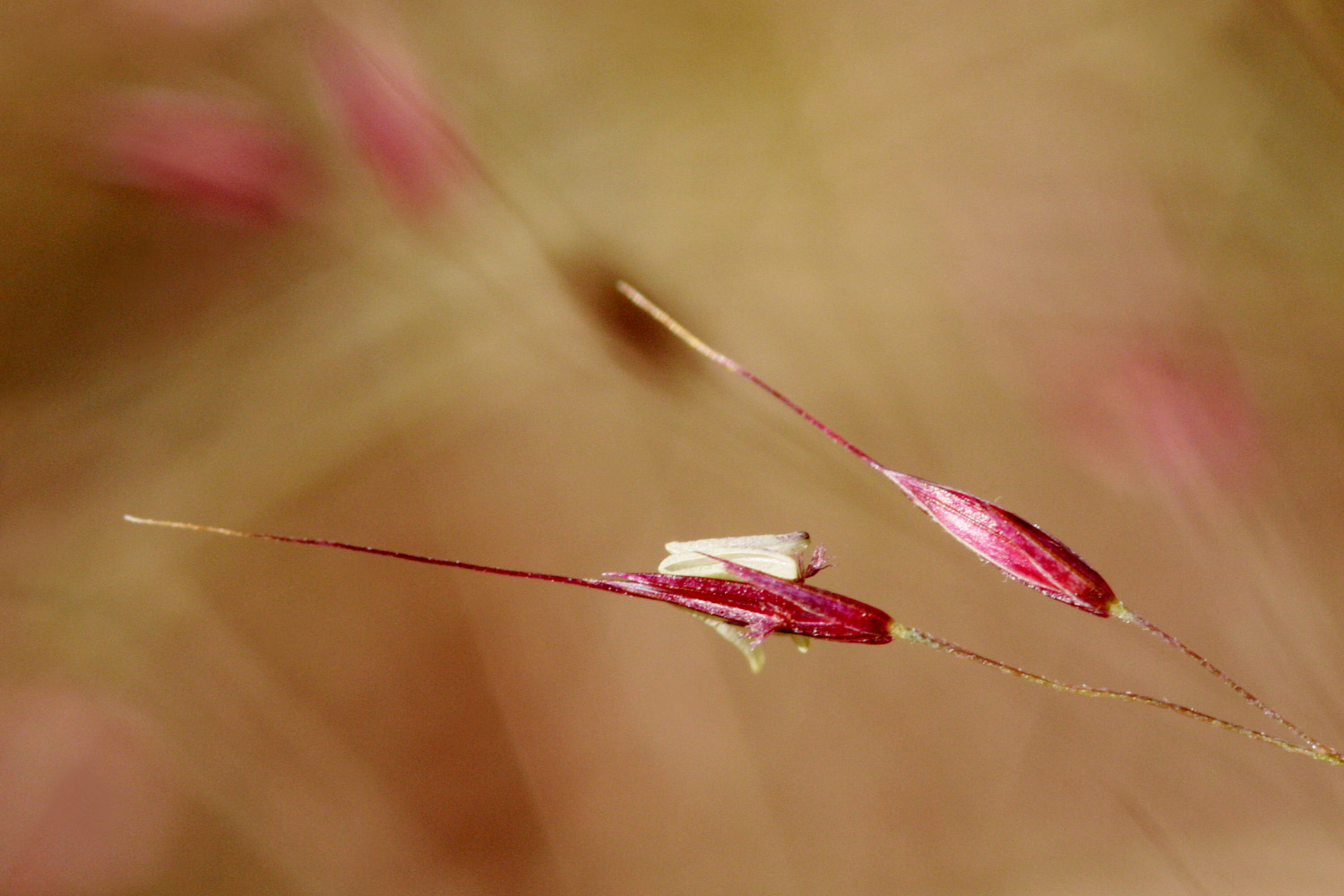
The flowering panicles are the showpiece of Bush-muhly. They are open and lacy, with very fine branches that spread widely, creating a cloud-like effect. Individual florets are small with purple to purplish-pink anthers that give the plant its characteristic purplish hue during the flowering period from August through October. The seed heads dry to a warm golden color and persist through winter, catching the light and providing texture in the landscape. Seeds are tiny and equipped with short awns that assist wind dispersal.
Growth Habit
A key identification feature is Bush-muhly’s tendency to grow within the shelter of thorny or protective shrubs — native prickly pear cactus (Opuntia spp.), catclaw acacia (Senegalia greggii), crucifixion thorn (Canotia holacantha), and others. Finding this grass tucked inside the protection of a desert shrub is a reliable identification clue. The plant is warm-season and most visible and attractive from midsummer through fall during and after monsoon season.
Quick Facts
| Scientific Name | Muhlenbergia porteri |
| Family | Poaceae (Grass) |
| Plant Type | Perennial Warm-Season Bunchgrass |
| Mature Height | 3 ft |
| Sun Exposure | Full Sun |
| Water Needs | Low (Drought Tolerant) |
| Bloom Time | August – October |
| Flower Color | Purplish |
| USDA Hardiness Zones | 7–11 |
Native Range
Bush-muhly is native to the desert Southwest of North America, ranging from southern California east through Arizona, Nevada, Utah, and Colorado into New Mexico and Texas, and south into northern and central Mexico. It reaches its greatest abundance and most consistent occurrence in Arizona and New Mexico at elevations from about 2,000 to 5,500 feet, where desert grassland and desert scrub habitats meet. In California, it occurs in the Mojave Desert and the lower desert ranges of the south.
The species is strongly associated with the Sonoran and Chihuahuan Desert ecoregions, where it inhabits rocky slopes, gravelly desert plains, and sandy washes. It is particularly common in transitional communities between desertscrub and desert grassland, and is often found growing along washes and canyon bottoms where slightly deeper soils retain more moisture. Elevation range varies by longitude: in Arizona, it is most common between 2,500 and 5,000 feet; in New Mexico and Texas, it extends slightly higher into the upper desert and lower desert grassland zones.
Within its range, Bush-muhly frequently grows in association with saguaro cactus (Carnegiea gigantea), ocotillo (Fouquieria splendens), prickly pear (Opuntia spp.), catclaw acacia (Senegalia greggii), and various native desert shrubs. Its tolerance of disturbed soils also allows it to establish on roadsides, overgrazed areas, and degraded desert grasslands where it contributes to ecological recovery.
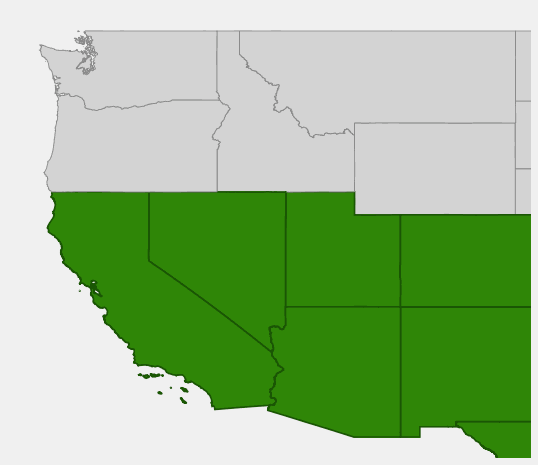
📋 Regional plant lists featuring Bush-muhly: Arizona
Growing & Care Guide
Bush-muhly is an excellent low-maintenance grass for desert and xeriscape gardens, especially in the lower Sonoran Desert zone. Its unique shrub-sheltering habit can be replicated or embraced in garden settings, making it a fascinating and ecologically authentic addition to native plant landscapes.
Light
Bush-muhly prefers full sun but naturally grows in the partial shade of desert shrubs in the wild. In the garden, it performs well in full sun locations with excellent drainage. In hotter, low-desert sites, afternoon shade reduces heat stress and helps maintain the plant’s vigor through the hottest months of summer before monsoon rains arrive.
Soil & Water
This grass is adapted to rocky, sandy, and gravelly desert soils with excellent drainage. It does not tolerate clay or prolonged soil saturation. Once established, it relies primarily on natural rainfall — supplemental irrigation is rarely needed except during establishment and during extended dry spells before the monsoon season. Over-watering is a common mistake: Bush-muhly in wetter-than-natural conditions becomes rank and floppy and may decline from root diseases.
Planting Tips
Plant in fall for best establishment, taking advantage of cooler temperatures and (in many areas) winter rains. Set plants adjacent to existing desert shrubs if available — the grass will naturally grow up through the shrub canopy and benefit from the shelter. Space plants 2–3 feet apart in open settings, or simply plant one or two within the protective canopy of a larger native shrub. The grass spreads modestly from seed and will self-sow in favorable locations.
Pruning & Maintenance
Bush-muhly is virtually maintenance-free. Cut back dead stems in late winter to remove old growth and encourage fresh new growth from the base. The grass naturally dies back in winter in most of its range and re-emerges with monsoon season warmth. Leave seed heads standing through fall and winter for wildlife value and winter texture. Avoid heavy fertilization, which produces rank, flop-prone growth.
Landscape Uses
- Desert wildlife gardens — outstanding forage for tortoises, birds, and small mammals
- Naturalistic desert landscapes — pairs beautifully with saguaro, ocotillo, and native desert shrubs
- Erosion control on desert slopes and wash edges
- Ornamental grass — the purplish seed heads add seasonal color and movement to xeriscape gardens
- Habitat restoration — used in tortoise habitat enhancement projects throughout the Sonoran Desert
Wildlife & Ecological Value
Bush-muhly provides exceptional ecological value in desert ecosystems, offering food and shelter for a diverse array of desert wildlife including some species of significant conservation concern.
For Birds
The fine seed heads of Bush-muhly are consumed by sparrows, buntings, doves, and quail. The dense, low-growing clumps also provide cover for ground-nesting birds and protection from predators for small species foraging at ground level. In mixed desert scrub communities, the presence of this grass significantly increases habitat heterogeneity and supports higher bird diversity.
For Mammals
Bush-muhly is rated as having high forage value for livestock and wildlife. Mule deer browse the fresh growth, and pronghorn graze it on desert grassland margins. Its significance for desert tortoises (Gopherus agassizii) is particularly noteworthy — the grass provides nutrition and cover during the monsoon months when tortoises are most active. Conservation efforts specifically targeting tortoise habitat restoration often include Bush-muhly as a key planting component.
For Pollinators
While wind-pollinated like most grasses, Bush-muhly’s structural complexity provides shelter for ground-nesting bees and beneficial insects. The microhabitat created by Bush-muhly clumps within shrub canopies supports diverse invertebrate communities that form the base of desert food webs.
Ecosystem Role
Bush-muhly plays a stabilizing role in desert ecosystems by binding loose sandy and gravelly soils, reducing wind erosion, and contributing organic matter as leaves and stems decompose. Its warm-season growth habit — active during summer monsoon rains when cool-season plants are dormant — ensures that live plant cover is available during the hottest, most erosion-prone period of the year. The plant’s association with desert shrubs creates a vegetation structure that promotes animal movement corridors and refuge areas within the desert matrix.
Cultural & Historical Uses
Bush-muhly and related muhly grasses have been used by desert Indigenous peoples of the Southwest for thousands of years. The Tohono O’odham and other desert tribes harvested the seeds of various desert grasses, including muhlys, as a food source, grinding them into flour for porridges and flatbreads. While individual species were rarely distinguished in traditional taxonomic terms, muhly grasses as a group were recognized as nutritious and reliable food plants during lean seasons.
The grass also served utilitarian purposes: fine grass stems were used in weaving and as bedding material, and the clumps provided kindling and fuel. In ranching history, Bush-muhly grasslands in the desert Southwest were prized forage areas for cattle, sheep, and horses. Early ranch managers understood that maintaining healthy stands of native desert grasses — including Bush-muhly — was essential for sustainable livestock operations in the harsh desert environment, and overgrazing that destroyed these grasslands was recognized as economically damaging even in the 19th century.
Today, Bush-muhly is gaining recognition as a critical component of desert tortoise conservation programs. The Arizona Game and Fish Department, Bureau of Land Management, and various conservation organizations have incorporated Bush-muhly propagation and planting into tortoise recovery efforts. Nurseries specializing in Sonoran Desert plants increasingly offer Bush-muhly to support both conservation and garden use, and the grass is featured prominently in xeriscape demonstration gardens throughout the region.
Frequently Asked Questions
Why is Bush-muhly called “Bush” muhly?
The name comes from the plant’s distinctive ecological habit of growing within or beneath desert shrubs. In the wild, it frequently grows inside the protective canopy of thorny shrubs like prickly pear, catclaw acacia, and crucifixion thorn, which protect it from grazing and provide partial shade. This makes it look like the grass is growing “in the bush.”
Is Bush-muhly good for tortoises?
Yes — Bush-muhly is one of the most important grass species for desert tortoise habitat. It provides nutritious warm-season forage during the monsoon months when tortoises are most active and feeding. Conservation planting projects aimed at improving tortoise habitat regularly include Bush-muhly as a primary component.
Does Bush-muhly need water in the desert?
Once established, Bush-muhly survives on natural rainfall in most desert locations. It may need supplemental irrigation during a prolonged pre-monsoon dry period in the first year after planting. After establishment, natural precipitation is generally sufficient. Avoid over-watering — more is not better for this desert-adapted grass.
When does Bush-muhly bloom?
Bush-muhly is a warm-season grass that flowers from August through October, coinciding with and following the summer monsoon season. The purplish panicles appear after the summer rains begin and persist through the fall and winter as golden seed heads that provide wildlife food and winter garden interest.
Can Bush-muhly grow in full sun in Arizona’s low desert?
Yes, Bush-muhly handles full sun well throughout its range, including the low desert. It is most vigorous in full sun with good drainage. In the hottest parts of the Sonoran Desert (Phoenix and below), some afternoon shade during June and early July (the pre-monsoon “foresummer”) helps maintain the plant’s health through the most stressful time of year.

Looking for a nursery that carries Bush-muhly?
Browse our native plant nursery directory: Arizona