Arizona Fescue (Festuca arizonica)
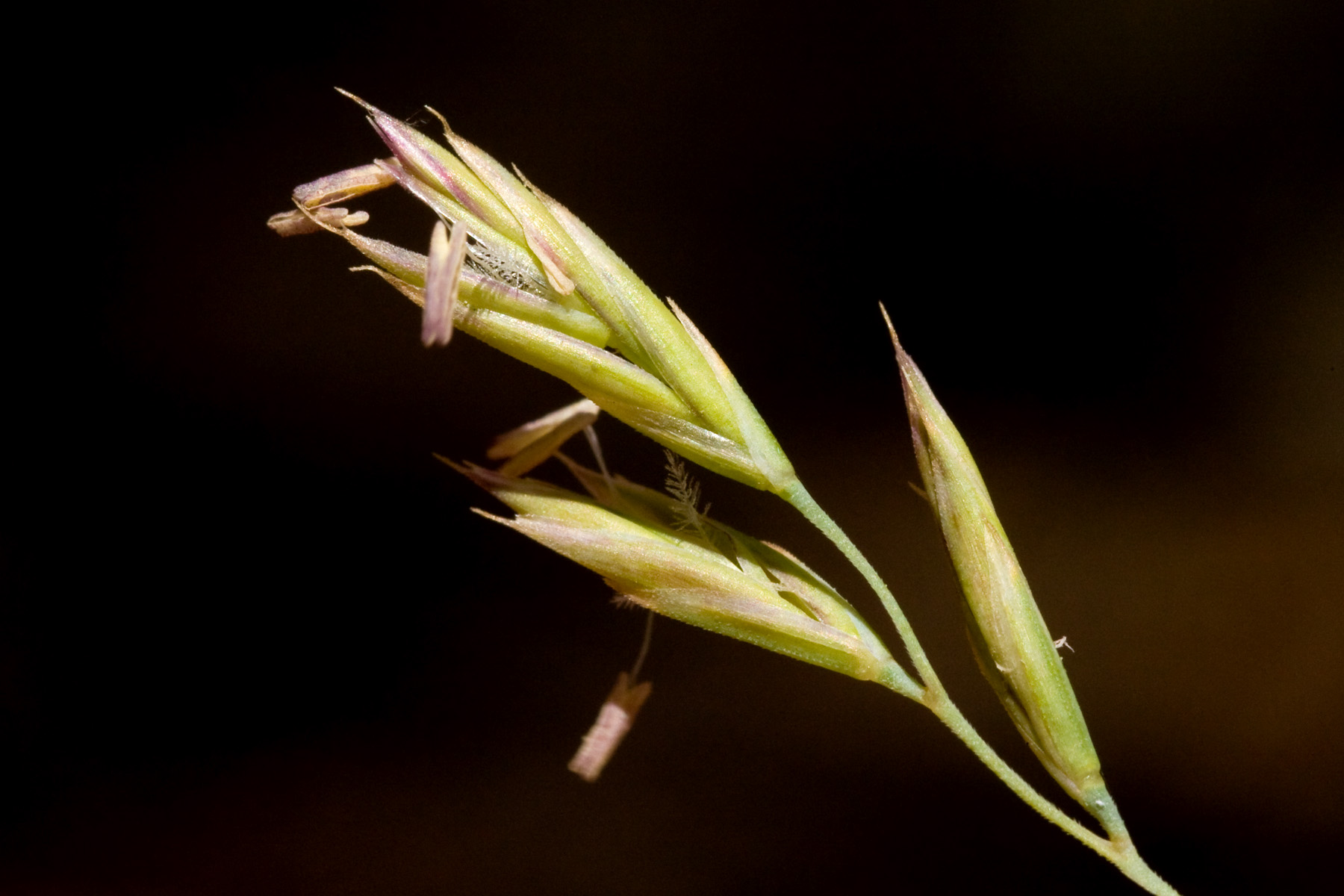
Festuca arizonica, commonly known as Arizona Fescue, is a cool-season, perennial bunchgrass native to the high-elevation meadows and open woodlands of the American Southwest and northern Mexico. Distinguished by its fine, almost hair-like blades that form dense, elegant tufts 2 to 4 feet tall, Arizona Fescue is one of the most graceful grasses of the Rocky Mountain sky island ecosystems. Its silver-green foliage catches the light beautifully at dawn and dusk, and its airy seed heads dance in the mountain breezes throughout summer and early fall.
This grass belongs to the large and ecologically important Poaceae family and has long been recognized as a keystone species in the grassland and woodland communities it inhabits. At elevations ranging from 6,000 to 10,000 feet, Arizona Fescue frequently grows alongside Ponderosa Pine (Pinus ponderosa), Gambel Oak (Quercus gambelii), and other native bunchgrasses like Blue Grama (Bouteloua gracilis). The combination of fine texture, significant forage value, and adaptability to thin, rocky soils makes it an outstanding choice for restoration planting throughout its native range.
Beyond its aesthetic appeal, Arizona Fescue is highly prized for its exceptional forage value — it is considered one of the most nutritious native grasses in the Southwest, providing critical sustenance for deer, elk, pronghorn, and livestock throughout the growing season. Its dense root systems also provide excellent erosion control on slopes and streambanks, and the clumping growth form creates structural diversity in grassland habitats that benefits small mammals, ground-nesting birds, and numerous insects.
Identification
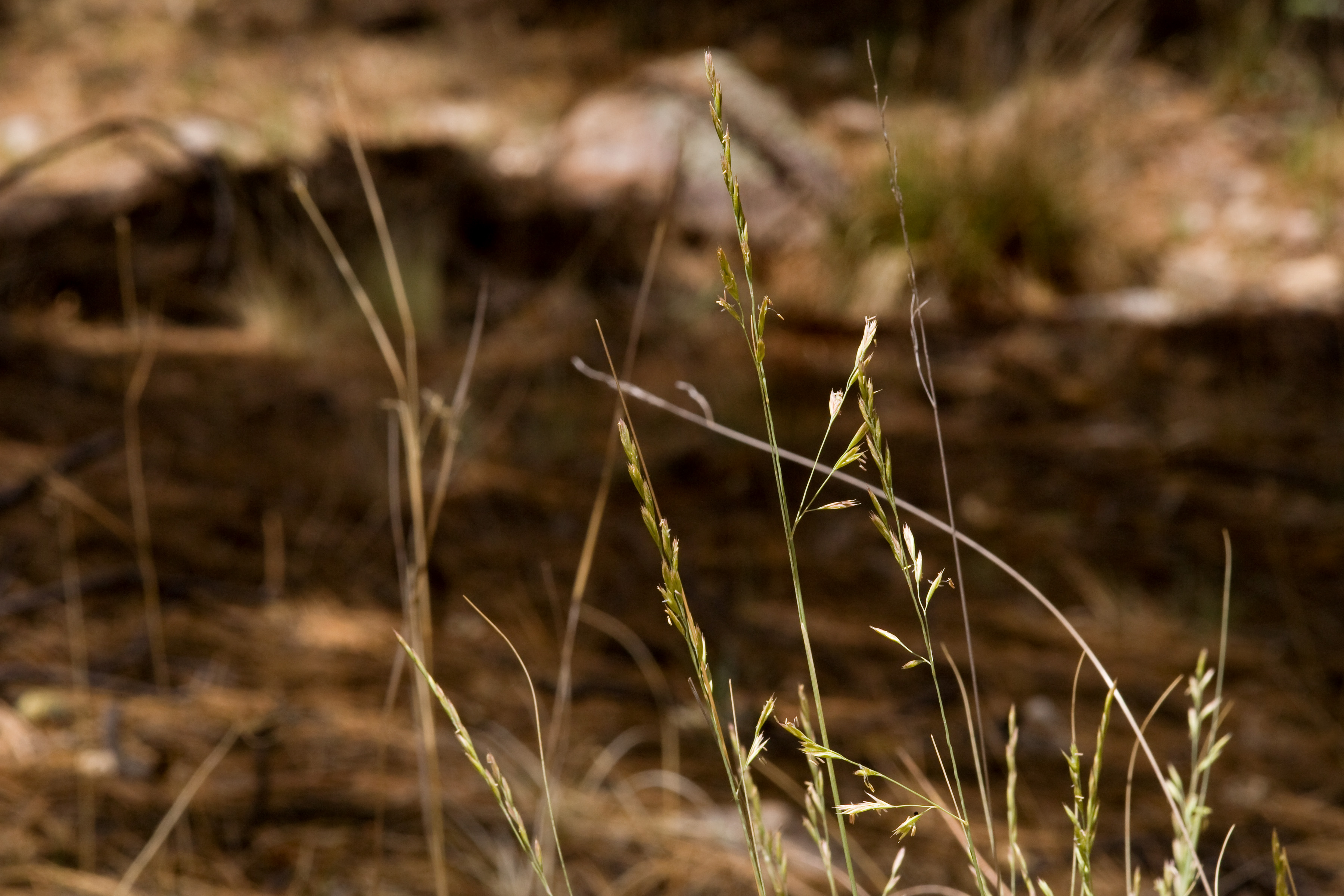
Arizona Fescue is unmistakable among Southwestern grasses for its very fine, almost thread-like leaf blades and dense tufted growth form. It forms compact, rounded clumps that expand slowly outward from the center, creating a distinctive mounded shape. The overall appearance is soft and feathery, with foliage that remains attractive through multiple seasons.
Leaves
The leaf blades are the defining feature of Arizona Fescue — they are extremely narrow, typically less than 1 mm wide, rolled or folded lengthwise, and stiff enough to maintain their upright posture even as the clump matures. The color is typically blue-green to silver-green, with a waxy coating that helps the plant retain moisture during dry mountain summers. Blades can reach 12 to 24 inches long, giving established clumps a graceful, arching appearance.
Flowers & Seed Heads
Arizona Fescue produces open panicles (branching seed heads) in late spring through early summer that rise above the foliage to heights of 2 to 4 feet. The panicles are narrow and somewhat drooping, bearing small spikelets with short, bristle-like awns. After fertilization, the seed heads turn golden-tan and persist through winter, providing both visual interest and seed resources for wildlife. The flowering period is brief — typically May through July depending on elevation — but the seed heads remain ornamentally attractive for months.
Root System
Like all true fescues, Arizona Fescue develops a dense, fibrous root system that penetrates deeply into rocky and thin mountain soils. This root architecture is critical for its drought tolerance and erosion control capabilities. Established clumps become remarkably anchored to the soil and are highly resistant to disturbance, making this species valuable for slope stabilization on difficult sites.
Quick Facts
| Scientific Name | Festuca arizonica |
| Family | Poaceae (Grass) |
| Plant Type | Perennial Bunchgrass |
| Mature Height | 2–4 ft |
| Sun Exposure | Full Sun to Part Shade |
| Water Needs | Low (Drought Tolerant) |
| Bloom Time | May – July |
| Flower Color | Golden-tan (seed heads) |
| USDA Hardiness Zones | 4–9 |
Native Range
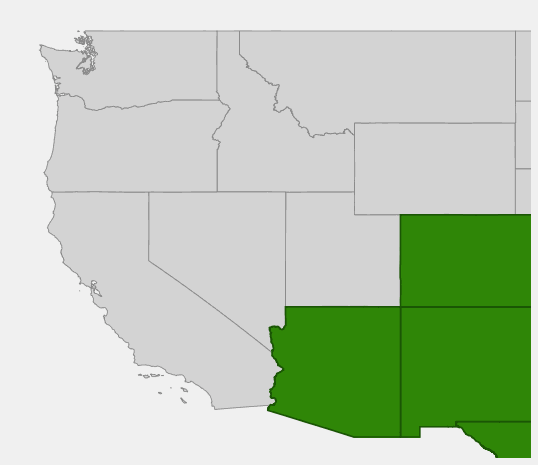
Arizona Fescue is native to the high-elevation mountains and plateaus of the American Southwest and adjacent northern Mexico. Its core range spans the mountain ranges of Arizona and New Mexico — the “sky islands” and the Rocky Mountain front ranges — as well as the higher elevations of southern Colorado and the trans-Pecos region of west Texas. The species is particularly abundant in the ponderosa pine-grassland transition zone, typically occurring at elevations between 6,000 and 10,000 feet (1,830–3,050 m).
In Arizona, Arizona Fescue is found throughout the White Mountains, the Mogollon Rim country, and in the sky island ranges of the southeast (Santa Catalina, Chiricahua, Pinaleño mountains). In New Mexico, it occurs across the Jemez, Sandia, Mogollon, and Black Range mountain systems. The species reaches its northeastern limit in southern Colorado along the high mesas and foothills of the Southern Rockies. It is considered a characteristic species of the Madrean pine-oak woodland biome where that biome transitions to higher-elevation grassland.
Within its range, Arizona Fescue serves as a dominant grass in open meadows, parklands within ponderosa pine forests, and on rocky slopes where deeper soils accumulate. It frequently co-dominates with Blue Grama (Bouteloua gracilis), Mountain Muhly (Muhlenbergia montana), and Sideoats Grama (Bouteloua curtipendula) in native grassland communities that support high biodiversity.
📋 Regional plant lists featuring Arizona Fescue: Arizona
Growing & Care Guide
Arizona Fescue is an excellent choice for high-elevation gardens, naturalistic landscapes, and restoration projects throughout the mountain Southwest. It is a relatively undemanding plant once established, asking mainly for good drainage, adequate light, and the opportunity to dry out between watering events.
Light
Arizona Fescue thrives in full sun to part shade. In the wild, it grows in open mountain meadows under full sun as well as beneath the open canopy of ponderosa pine forests, where it receives dappled light. In garden settings, it performs best with at least 4–6 hours of direct sun daily. In hotter, lower-elevation sites at the edge of its range, afternoon shade helps prevent summer heat stress and leaf scorch.
Soil & Water
This grass is adapted to thin, rocky, and well-drained mountain soils — the kind found naturally at high elevations. It performs best in soils with good drainage and does not tolerate standing water or heavy clay. Once established, Arizona Fescue is genuinely drought tolerant, relying on natural precipitation and snowmelt in its native habitat. In gardens, supplemental irrigation during the driest summer months (especially the period before monsoon rains arrive) helps maintain vigor. Avoid over-watering — consistently moist soil promotes crown rot and weakens the plant.
Planting Tips
Plant Arizona Fescue in fall or early spring for best establishment. Space clumps 18–24 inches apart to allow room for mature spread. Containerized plants transplant easily, while seed sowing in fall allows natural cold stratification for spring germination. This species is not reliably available at most nurseries, but specialized native plant sources in the Southwest can usually provide it. Avoid planting at elevations below about 5,000 feet where summer heat and humidity can cause decline.
Pruning & Maintenance
Arizona Fescue is a cool-season grass that is most active in spring and fall, going semi-dormant during the hottest part of summer and again in winter. In late winter or very early spring, clumps can be cut back to about 4–6 inches to remove old, dead foliage and encourage fresh new growth. Alternatively, simply comb out dead blades by hand to preserve the clump structure. Established plants should be divided every 5–7 years as the center begins to die out — this maintains vigor and allows propagation.
Landscape Uses
Arizona Fescue is versatile in high-elevation and mountain garden settings:
- Meadow gardens — a beautiful anchor grass for naturalistic high-elevation plantings
- Erosion control — dense roots stabilize slopes and rocky banks effectively
- Under-planting beneath ponderosa pine and Gambel oak to create naturalistic woodland scenes
- Specimen grass — the fine texture and elegant form stand out as a focal point in native plant gardens
- Wildlife gardens — high forage value for deer, elk, and livestock; seed heads feed birds
- Restoration planting — a keystone grass for restoring degraded mountain meadows
Wildlife & Ecological Value
Arizona Fescue is one of the highest-value native grasses in the Southwest for both wildlife and livestock. Its nutritional quality, structural importance, and seed production make it an irreplaceable component of healthy mountain ecosystems.
For Birds
The persistent seed heads of Arizona Fescue provide food for sparrows, finches, juncos, and other seed-eating birds through fall and winter. The dense clump structure also offers nesting habitat and escape cover for ground-nesting and low-nesting bird species, including Vesper Sparrows and Dark-eyed Juncos, which are common associates in mountain grassland communities.
For Mammals
Arizona Fescue is rated as having high forage value for deer, elk, pronghorn, bighorn sheep, and livestock. The fine, nutritious blades are eagerly grazed in spring and early summer when protein content is at its peak. Even the dried winter stems retain sufficient nutrition to sustain large ungulates through lean seasons. Small mammals including deer mice and voles nest within the protective cover of dense fescue clumps, and their tunneling activity aerates the soil and creates microhabitats for invertebrates.
For Pollinators
Like most grasses, Arizona Fescue is wind-pollinated and does not provide nectar, but the dense clump structure offers shelter for ground-nesting native bees and other beneficial insects. The structural complexity created by mixed bunchgrass communities, including Arizona Fescue, supports high invertebrate diversity.
Ecosystem Role
In mountain grasslands and ponderosa pine woodlands, Arizona Fescue plays several critical ecosystem roles. Its dense root systems prevent soil erosion on slopes and maintain soil structure. The accumulated leaf litter from old clumps creates organic matter that enriches thin mountain soils. As a cool-season grass, it fills a temporal niche — growing vigorously in spring and fall when warm-season grasses are dormant — that increases the overall productivity and resilience of mixed grassland communities. After fire or disturbance, established Arizona Fescue clumps typically resprout vigorously from the root crown, providing rapid revegetation and erosion control.
Cultural & Historical Uses
Arizona Fescue has been an important resource for Southwestern Indigenous peoples for thousands of years. Various Pueblo and Apache groups utilized the grass for basket-weaving, with the fine, flexible blades providing material for intricate woven goods. Seeds, though small, were collected and ground into flour as a component of traditional foods during lean seasons. The grass also held symbolic importance in some ceremonies as a representative of mountain grassland environments.
In the ranching history of the Southwest, Arizona Fescue grasslands were highly prized grazing grounds. Early settlers recognized the grass’s exceptional nutritional quality and its persistence under moderate grazing pressure. Ranchers who understood the importance of maintaining healthy fescue stands managed their herds carefully to prevent overgrazing — knowledge passed down through generations of Southwestern ranching families. Many of the most productive historic ranches in the White Mountains and Mogollon Rim areas were located specifically to take advantage of rich Arizona Fescue grasslands.
Today, Arizona Fescue is increasingly recognized for its value in restoration ecology. Land managers working to restore degraded mountain grasslands in Arizona and New Mexico use it as a primary seeding component. The USDA Natural Resources Conservation Service (NRCS) maintains seed production plots and promotes Arizona Fescue for native range restoration throughout the Southwest. Its adaptation to local climate extremes — late spring frosts, summer monsoons, intense UV radiation at high elevations — makes it far superior to non-native grass species for long-term site rehabilitation.
Frequently Asked Questions
What elevation is Arizona Fescue best suited for?
Arizona Fescue performs best between 6,000 and 10,000 feet elevation. Below 5,500 feet, summer heat and humidity typically cause decline, especially in areas without monsoon moisture. Above 10,000 feet, it gives way to alpine species adapted to the more extreme conditions.
Is Arizona Fescue the same as Blue Fescue?
No — Blue Fescue (Festuca glauca) is a European species widely sold as a landscape ornamental. Arizona Fescue is a distinct native species from the American Southwest, generally larger and better adapted to local mountain conditions. For native gardens in Arizona, always choose Festuca arizonica over ornamental fescues.
How do I divide Arizona Fescue?
Divide clumps in early spring just as new growth begins. Dig up the entire clump, then use a sharp spade or pruning saw to split it into sections, each containing several healthy shoots and attached roots. Replant immediately at the same soil depth and water thoroughly. Divide every 5–7 years to prevent the center from dying out.
Does Arizona Fescue tolerate fire?
Yes — like most native bunchgrasses, Arizona Fescue is well-adapted to periodic fire. The growing point (crown) sits at or just below ground level and is typically protected from fire. Plants usually resprout vigorously within weeks after a surface fire passes. Fire can actually stimulate new growth and help maintain the health of older clumps.
Where can I buy Arizona Fescue plants or seeds?
Arizona Fescue is available from specialized native plant nurseries in Arizona and New Mexico, as well as from NRCS Plant Materials Centers in the region. Check our Arizona native plant nursery directory for sources near you.

Looking for a nursery that carries Arizona Fescue?
Browse our native plant nursery directory: Arizona