Desert Spoon (Dasylirion wheeleri)
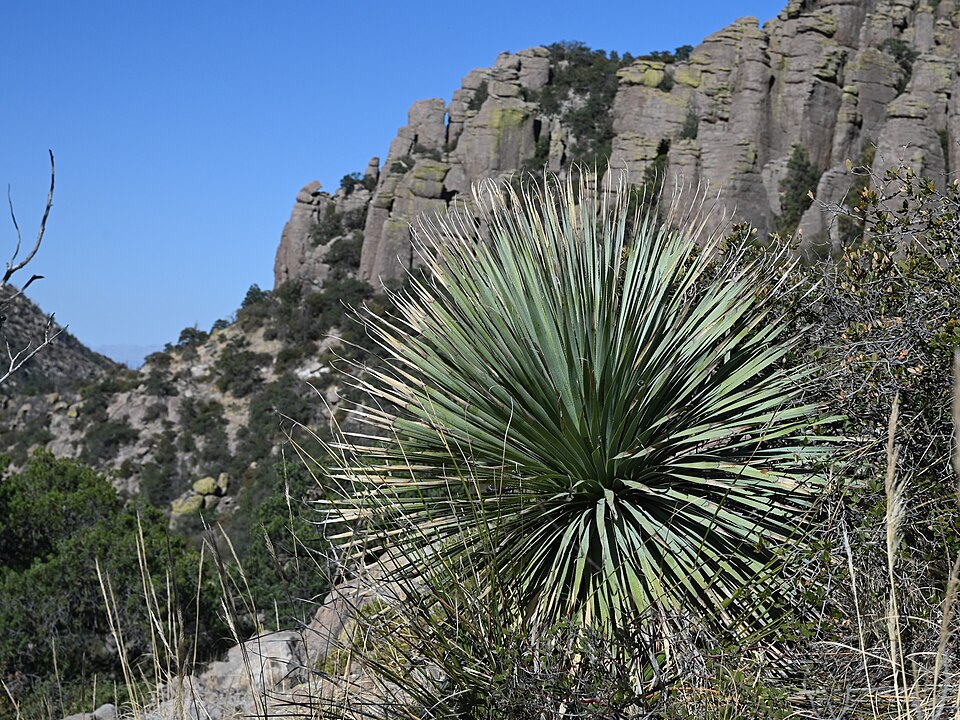
Dasylirion wheeleri, commonly known as Desert Spoon, Sotol, or Wheeler’s Desert Spoon, is one of the most architecturally striking native plants of the American Southwest and northern Mexico. This evergreen succulent rosette — a member of the Asparagaceae family — forms dramatic spherical to fountain-shaped mounds of narrow, blue-green to gray-green leaves, each armed with sharp, forward-pointing teeth along the margins and ending in a distinctive, dried spoon-shaped base when the leaf is pulled free. It is from this characteristic base — the rounded, spoon-like detachment scar — that the plant gets its common name.
Desert Spoon is native to the Chihuahuan Desert and adjacent Sky Island mountain ranges of Arizona, New Mexico, and Texas, where it is particularly abundant on rocky slopes and dry grasslands between 3,000 and 6,500 feet elevation. It is one of the defining plants of the desert grassland zone — that transitional belt between the true desert below and the oak-juniper woodland above — where it creates striking structural elements among the sea of desert grasses. The plant is technically dioecious: individual plants are either male or female, and only female plants produce the large, showy flower stalks that rise 10 to 15 feet above the rosette.
Beyond its ornamental value, Desert Spoon has deep cultural significance for Indigenous peoples and Mexican communities throughout its range. The heart (piña) of the plant was roasted and fermented to produce sotol — a traditional distilled beverage similar to mezcal that has been produced in the Chihuahuan Desert region for centuries. Today, sotol remains an important artisanal spirit and a source of regional identity in Chihuahua, Durango, and Coahuila, Mexico. In Arizona and New Mexico, Desert Spoon is increasingly valued as a xeriscape specimen plant, wildlife habitat element, and landscape accent requiring almost no care once established.
Identification
Desert Spoon forms a large, rounded rosette 3 to 5 feet tall and equally wide, composed of 100 or more long, narrow leaves radiating symmetrically from a central point. Old plants develop a short, stout trunk over many decades. The overall appearance is boldly architectural — a dense, spiky sphere that commands attention in any landscape. The leaf color is notably cool: blue-green to gray-green with a silvery cast, especially attractive in low-angle light.
Leaves
The leaves are the plant’s defining feature: narrow (about ½ inch wide), 2 to 3 feet long, stiff, and armed with small, forward-pointing teeth along both margins. The leaf tip ends abruptly, sometimes with a fine terminal fiber rather than a hard spine. When a leaf is pulled free from the plant, the base detaches with a characteristic rounded, spoon-like scar — the feature that gives the plant its common name. The leaf bases accumulate as a fibrous “skirt” around the base of old plants, which provides important shelter for reptiles and small mammals.
Flowers & Fruit
Desert Spoon is dioecious: plants are either male or female. The spectacular flowering stalks rise 10 to 15 feet above the rosette, typically in late spring to early summer (May–July). The stalk bears thousands of tiny creamy-white to pinkish flowers densely arranged in a large, cylindrical spike. Female plants produce masses of small, papery, three-winged fruits that remain on the dead stalk through fall, rattling in the wind and providing texture. Unlike many agaves, Desert Spoon does NOT die after blooming — it flowers repeatedly over its very long lifespan, which may exceed 50 years.
Quick Facts
| Scientific Name | Dasylirion wheeleri |
| Family | Asparagaceae |
| Plant Type | Evergreen Succulent Rosette |
| Mature Height | 4 ft (rosette; flowering stalk to 15 ft) |
| Sun Exposure | Full Sun to Part Shade |
| Water Needs | Low (Drought Tolerant) |
| Bloom Time | May – July |
| Flower Color | Creamy white to pinkish |
| USDA Hardiness Zones | 7–11 |
Native Range
Desert Spoon is native to the Chihuahuan Desert and its transitional zones in southeastern Arizona, southern New Mexico, and the Trans-Pecos region of western Texas, extending south into Chihuahua, Sonora, Coahuila, and Durango in Mexico. It is particularly abundant and characteristic of the desert grassland zone — the semi-arid grassland belt at 3,000–6,500 feet elevation that lies between the true desert below and the oak woodland above.
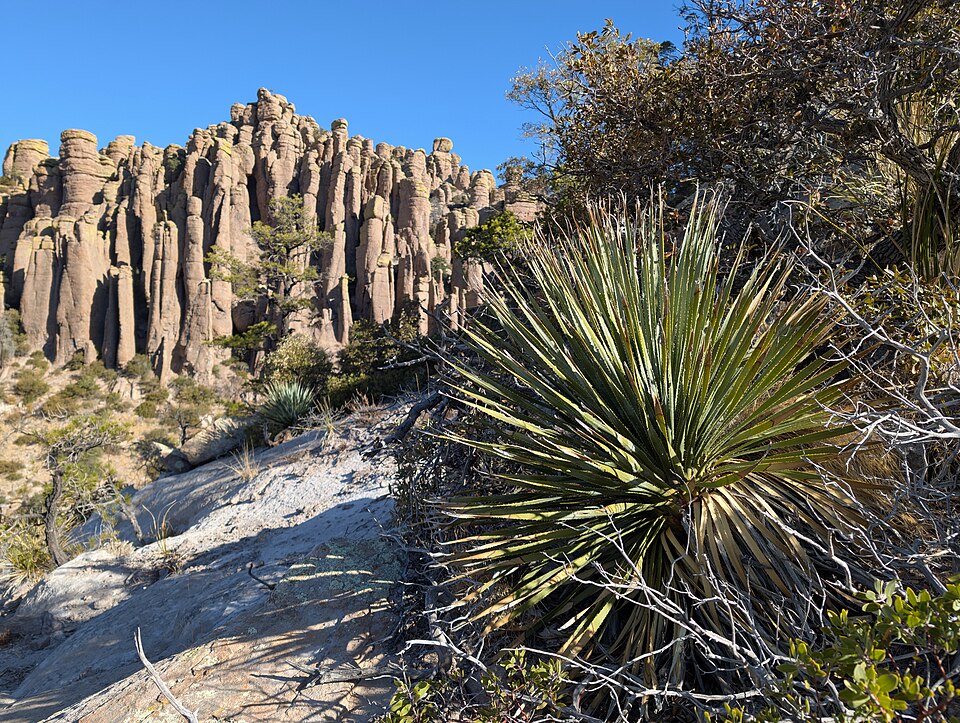
Within its range, Desert Spoon is a dominant plant on rocky slopes, desert grasslands, and the lower slopes of the Sky Island mountain ranges. It is especially common on limestone substrates, where its deep root system anchors it firmly on steep, rocky terrain. Large populations can create striking visual landscapes — hillsides dotted with dozens of glowing blue-green spheres, each a mature Desert Spoon that may be 20, 30, or even 50 years old.
In Arizona, Desert Spoon is a characteristic plant of the southeastern “Sky Island” region — the isolated mountain ranges including the Huachucas, Chiricahuas, Rincons, and Santa Ritas that rise as biological islands from the surrounding desert. Here, Desert Spoon occupies the mid-elevation scrub and grassland zones, where it provides important structural habitat complexity in otherwise open terrain.
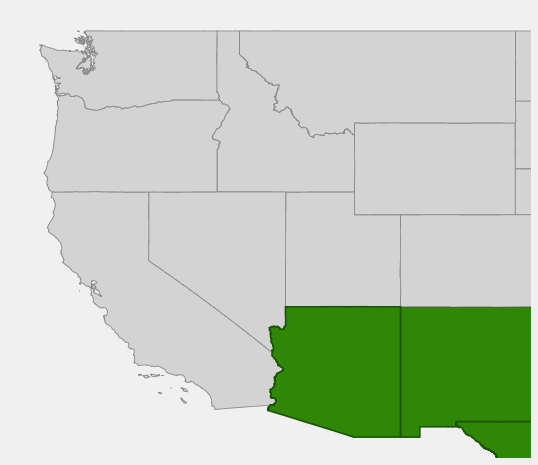
📋 Regional plant lists featuring Desert Spoon: Arizona
Growing & Care Guide
Desert Spoon is an excellent low-maintenance xeriscape plant once established. Its slow growth rate — typically less than 6 inches per year — is offset by its exceptional longevity, dramatic architectural form, and near-zero maintenance requirements. The key to success is choosing the right location with good drainage and adequate sun.
Light
Desert Spoon performs best in full sun to partial shade. It tolerates a wider range of light conditions than many desert succulents, thriving in anything from 8 hours of full sun to 4 hours of dappled shade. In deeper shade, the plant retains its form but grows even more slowly and may not produce as many leaves per season. Full sun produces the most compact, densely leafed rosettes.
Soil & Water
Well-drained soil is essential. Desert Spoon is highly intolerant of standing water or soggy soil, which quickly causes root and crown rot. It thrives in the rocky, sandy, or gravelly desert soils of its native range — often in alkaline substrates. Amend heavy clay soils with generous amounts of coarse gravel and grit before planting. Once established (2–3 years after planting), Desert Spoon is extremely drought tolerant and typically needs no supplemental irrigation in Arizona and New Mexico. During establishment, water every 2–3 weeks in summer, reducing in winter.
Planting Tips
Plant in spring or fall when temperatures are moderate. Desert Spoon grows slowly and benefits from a generous planting hole — at least twice the width of the root ball — to allow the roots to spread into loosened soil. Do not bury the crown deeper than it was growing in the container. Mulch with gravel or decomposed granite (not organic mulch) to prevent crown moisture accumulation. Handle carefully — the leaf margins are serrated and the dense foliage is difficult to work around without protective clothing.
Pruning & Maintenance
Desert Spoon is essentially maintenance-free. The dead flower stalks can be cut off at the base after the seeds have fallen (fall-winter), but this is purely aesthetic — the dried stalk provides excellent wildlife perching and insect habitat if left in place. Old dead leaves at the base of the rosette can be removed if desired, revealing the attractive fibrous skirt; otherwise they accumulate naturally and provide ground-level shelter. Do not attempt to remove the fibrous skirt aggressively, as the accumulated leaf bases protect the plant’s crown.
Landscape Uses
- Bold accent specimen — focal point in xeriscape and desert gardens
- Rock gardens — exceptionally well-suited to boulder and rocky slope plantings
- Desert grassland restoration — authentic component of Chihuahuan Desert grassland ecosystems
- Contemporary and modern landscapes — the architectural form pairs well with minimalist design
- Wildlife gardens — flowering stalks attract pollinators; leaf bases provide lizard shelter
- Slope stabilization — deep roots anchor well on dry, rocky slopes
Wildlife & Ecological Value
Desert Spoon supports a diverse community of desert wildlife through multiple seasons, offering food, shelter, and habitat structure in the open desert grassland environments it dominates.
For Birds
The tall flowering stalks serve as perches and singing posts for Black-throated Sparrows, Cassin’s Sparrows, and various flycatchers. Ladder-backed Woodpeckers and Gila Woodpeckers may excavate cavities in old, woody flower stalks. The seeds are consumed by various finches, doves, and sparrows. The dense rosette itself can harbor nesting Cactus Wrens and other shrub-nesting birds.
For Mammals
Javelinas (Collared Peccaries) are known to consume the growing heart (piña) of Desert Spoon, and Mule Deer browse the leaves during droughts when more palatable forage is scarce. The accumulated fibrous leaf bases around mature plants provide shelter for Ringtail Cats, Spotted Ground Squirrels, various mice, and a wealth of lizard species including several whiptail lizard species.
For Pollinators
The large flower spikes of Desert Spoon support a diverse pollinator community. Native bees of many species visit the thousands of small flowers. Hummingbirds — particularly Black-chinned and Broad-tailed Hummingbirds — visit the flowers for nectar. Hawk moths visit at dusk and dawn. The long blooming period of the spike (2–4 weeks per plant) extends the pollinator benefit across much of early summer.
Ecosystem Role
In desert grasslands, Desert Spoon provides irreplaceable structural complexity — its rosettes create microsites of higher humidity, accumulated organic matter, and protected ground-level habitat in an otherwise open, windswept landscape. The fibrous leaf bases and accumulated debris beneath old plants create rich invertebrate habitat, supporting the food chains that sustain insectivorous birds and reptiles. As a slow-growing, long-lived plant, each established Desert Spoon represents decades of accumulated ecological investment in its community.
Cultural & Historical Uses
Desert Spoon has one of the richest cultural histories of any southwestern plant. The plant’s heart — the dense, starchy central core (piña) — was a crucial food source for many Indigenous peoples of the Chihuahuan Desert region. Apache, Tohono O’odham, and other groups roasted the hearts in large earth ovens for 1–3 days, a process that converts the starchy carbohydrates into fermentable sugars. The resulting food — sweet, caramel-like, and highly caloric — was eaten directly or dried for storage and trade. Fermentation of the roasted heart produces a mildly alcoholic beverage that precedes the modern commercial sotol spirit by thousands of years.
Sotol, the distilled spirit made from Desert Spoon, has been produced commercially in Mexico (primarily Chihuahua, Durango, and Coahuila) for hundreds of years. Like mezcal and tequila (which use agaves), sotol involves harvesting the entire plant, roasting the heart, fermenting the sugars, and distilling the fermented liquid. One plant typically produces about 1–2 liters of spirit after distillation. Sotol has Denominación de Origen protection in Mexico — similar to champagne’s geographic designation — ensuring that commercial sotol can only be produced in specific Mexican states from Dasylirion species.
Beyond food and spirits, Desert Spoon provided important fiber materials for desert peoples. The leaves were split and woven into baskets, mats, sandals, and cordage. The flowering stalks were used for construction — lightweight but strong, they served as roofing material in traditional structures and as the frames of wicker-type furniture. The dried, papery fruits were used as rattles in ceremonial contexts. Today, Desert Spoon remains culturally significant in Mexican and Indigenous communities throughout its range, and its leaves are harvested commercially for dried flower arrangements and decorative use in the United States.
Frequently Asked Questions
Does Desert Spoon die after it blooms?
No — unlike many agave species, Desert Spoon does NOT die after flowering. It blooms repeatedly throughout its long life (which can exceed 50 years) and continues to grow vigorously after each bloom cycle. This makes it a far more dependable long-term landscape plant than monocarpic agaves.
How long does Desert Spoon take to mature?
Desert Spoon is very slow-growing — a 3-inch container seedling may take 5–7 years to form a full-sized 3-foot rosette. In landscape settings, it’s far better to purchase larger container stock (1–5 gallon plants) for more immediate effect. Patience is rewarded: mature plants decades old are truly spectacular landscape specimens.
Is Desert Spoon the same as sotol?
Yes — “sotol” is both the common name for the plant (especially in Mexico) and the name of the alcoholic spirit made from it. The distilled beverage sotol is made from several Dasylirion species, with D. wheeleri being one of the most commonly used. It has Denominación de Origen protection in Mexico.
How do I tell male and female Desert Spoon plants apart?
You cannot reliably distinguish the sexes until the plants bloom. Male plants produce narrower, less conspicuous flower spikes; female plants produce larger spikes with more substantial fruits that persist through fall and winter. In landscape settings, the sex of the plant is irrelevant unless you specifically want seeds for propagation.
Is Desert Spoon toxic to dogs or other pets?
Desert Spoon is not known to be toxic when ingested, but the serrated leaf margins and accumulated fibrous bases can cause physical injury to curious pets and children. The main concern is the physical hazard of the sharp leaf teeth. Plant Desert Spoon away from areas where pets and children play frequently.

Looking for a nursery that carries Desert Spoon?
Browse our native plant nursery directory: Arizona