Bushy Spikemoss (Selaginella bigelovii)
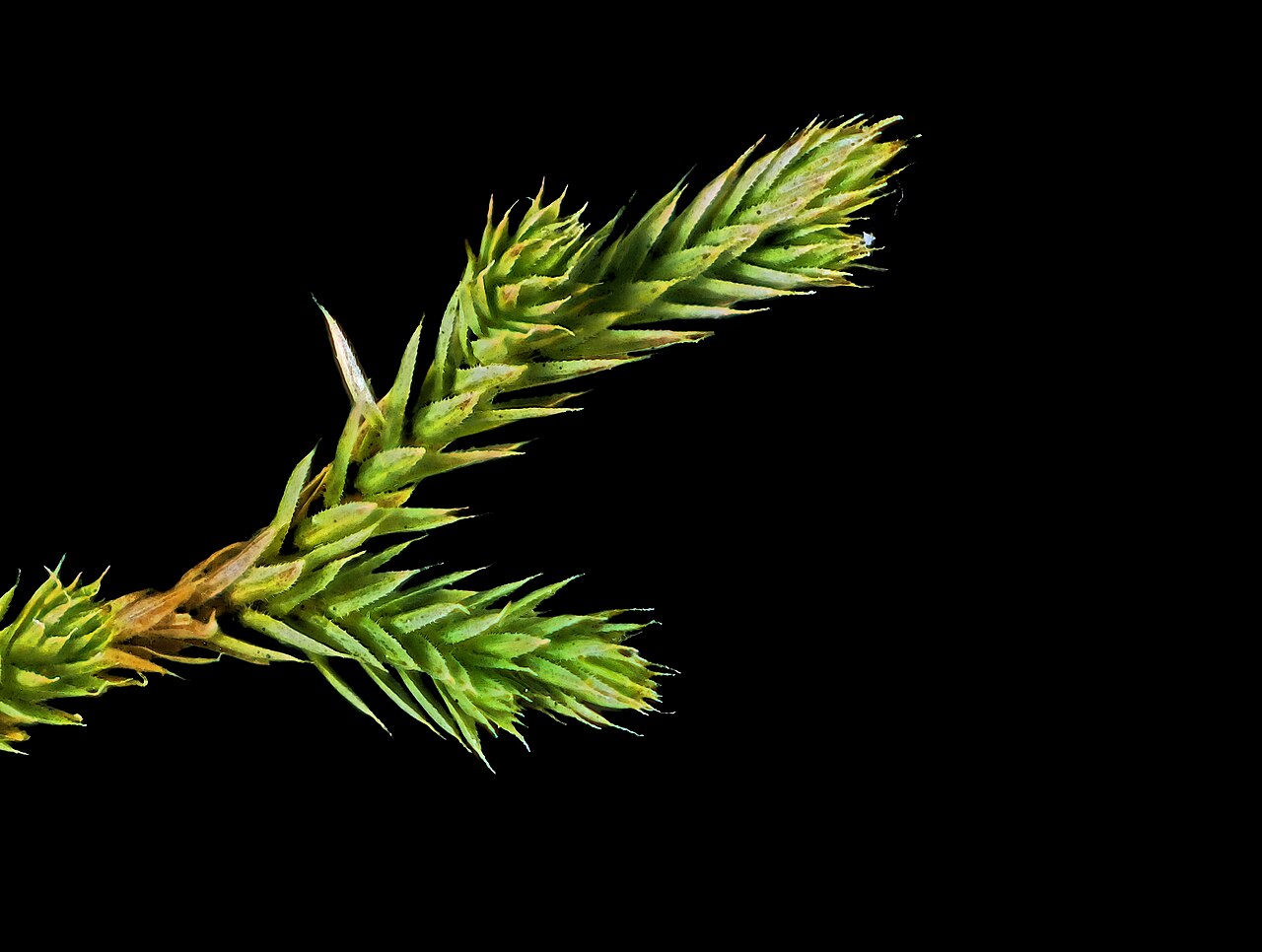
Selaginella bigelovii, known as bushy spikemoss or Bigelow’s spikemoss, is a small, ancient lycophyte native to California and Baja California, prized by rock gardeners and native plant enthusiasts for one remarkable trait: it is a true “resurrection plant.” Through the hot, dry California summer, bushy spikemoss curls tight, turns brown, and appears completely dead — only to green up and spring back to life within hours of the first autumn or winter rain.
Despite its mosslike common name, bushy spikemoss is not a true moss but a spikemoss, a member of the ancient lycophyte lineage that predates flowering plants by hundreds of millions of years. It forms low, bushy clumps of wiry, branching stems covered in tiny, overlapping scale-like leaves, typically growing directly from cracks in rock outcrops or thin, rocky soil where almost nothing else can establish.
Found from the California coast to the mountains and into the desert margins, bushy spikemoss is an excellent, low-maintenance choice for rock gardens, dry stone walls, and naturalistic plantings that mimic its native rocky habitat — rewarding gardeners with its dramatic seasonal transformation from crisp brown dormancy to vivid green revival.
Identification
Bushy spikemoss forms spreading to erect clumps of wiry stems up to about 8 inches (20 cm) long, with a few short lateral branches giving the plant its “bushy” common name. The overall growth form is low and somewhat sprawling, often draping over rock surfaces or forming small mounds in rocky crevices.
Stems & Leaves
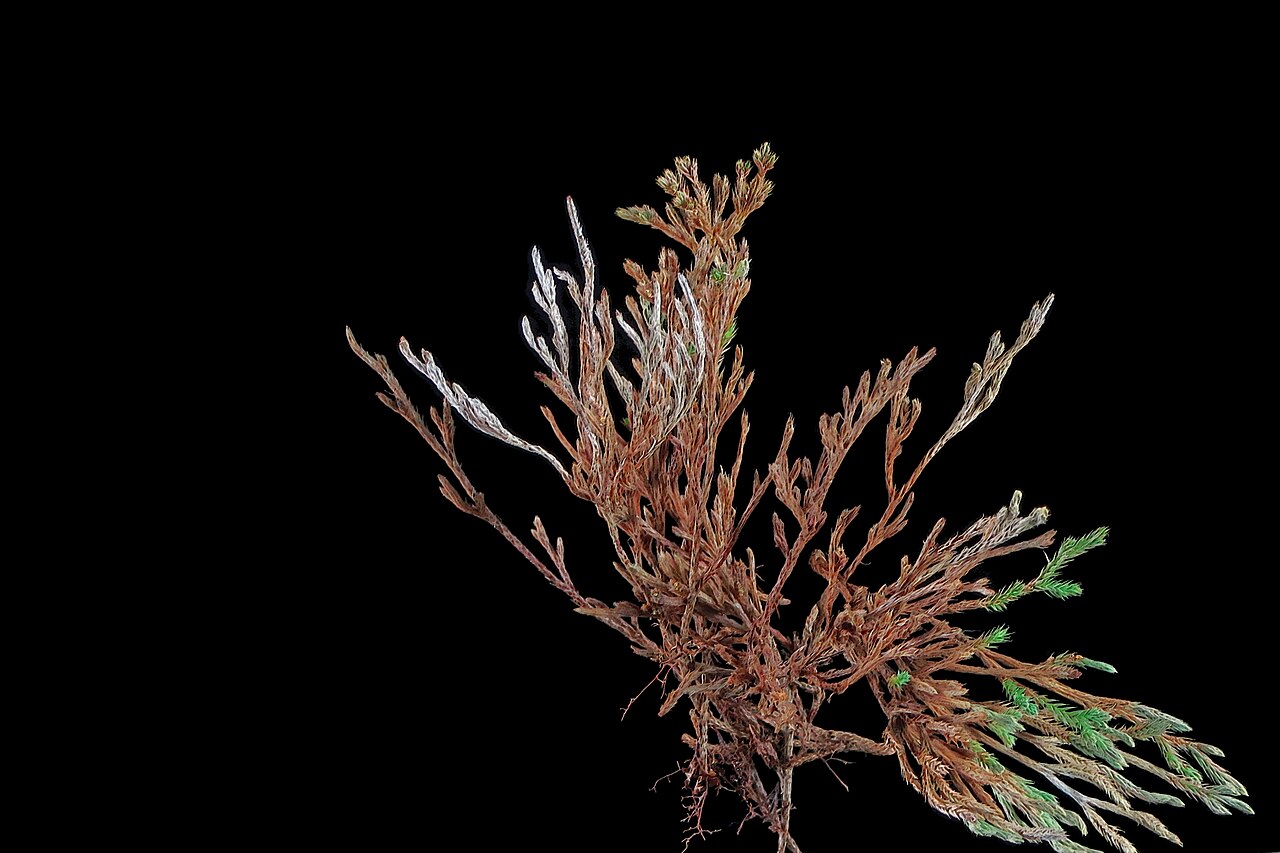
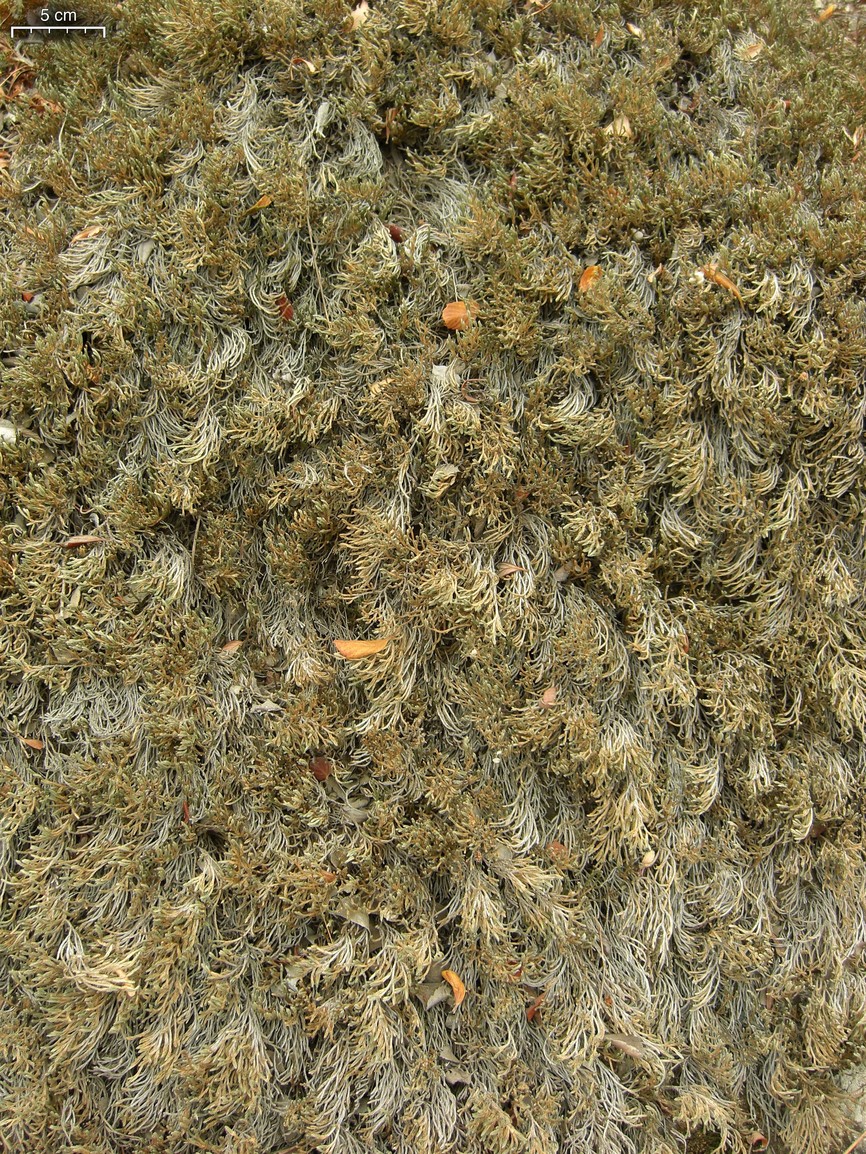
The stems are slender and tough, clothed in small, linear to lance-shaped leaves up to about 4 mm long, including the tiny rigid bristle at each leaf tip. The leaves are either pressed flat against the stem or angle slightly outward, overlapping like fine scales. Foliage is bright to deep green when hydrated, drying to tan or reddish-brown and curling inward during summer drought — a defining identification feature that distinguishes the dormant and active states of the same plant.
Reproductive Structures
Like all spikemosses, Selaginella bigelovii does not flower. Instead it produces small, yellow-orange strobili (cone-like spore-bearing structures) at the base of the leaves on upper stem segments. These structures release spores rather than seeds, a reproductive strategy inherited from its ancient lycophyte ancestry, which predates both flowering plants and conifers.
Growth Habit
Bushy spikemoss typically grows directly from rock crevices, thin rocky soil, or gravelly slopes, often appearing as a dense, low mat or cushion draped over stone. Its drought-dormancy response is dramatic: hydrated plants are lush and green, while drought-stressed plants curl into a dense, brown, seemingly lifeless tangle that rehydrates and greens up again within hours of rain.
Quick Facts
| Scientific Name | Selaginella bigelovii |
| Family | Selaginellaceae (Spikemoss) |
| Plant Type | Perennial lycophyte (spikemoss) |
| Mature Height | Up to 8 in (20 cm), low-spreading |
| Mature Spread | 1–2 ft clumps over time |
| Growth Rate | Slow |
| Sun Exposure | Full Sun to Part Shade |
| Water Needs | Very Low (drought-dormant) |
| Soil Type | Rocky, thin, well-drained; rock crevices |
| Soil pH | 6.0–7.5 (slightly acidic to neutral) |
| Bloom Time | Does not flower; spores year-round |
| Flower Color | N/A (spore-bearing strobili, yellow-orange) |
| Fall Color | Tan to reddish-brown when dormant |
| Fruit | None; reproduces by spores |
| Deer Resistant | Yes |
| USDA Hardiness Zones | 8–10 |
Native Range
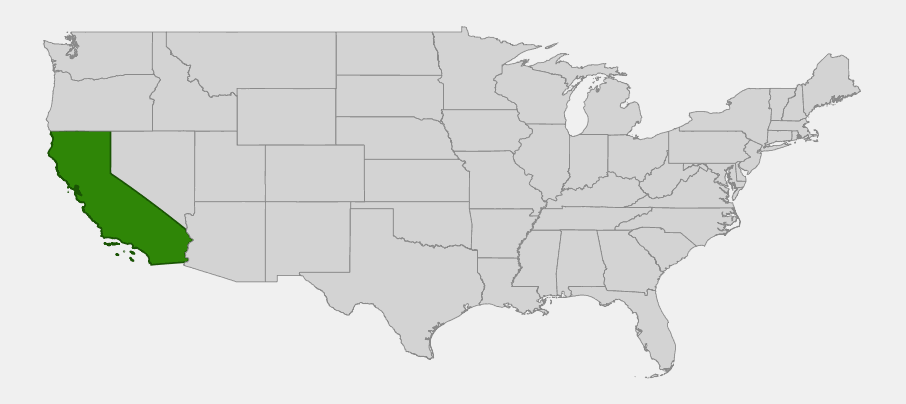
Bushy spikemoss is native to California, where it occurs widely across the state from the coast to the mountains and into desert margins, and continues south into Baja California, Mexico. It is one of the most broadly distributed native spikemosses in California, tolerating a surprising range of climates as long as its core requirement — rocky, well-drained substrate — is met.
Within its range, bushy spikemoss grows in rocky places across many habitat types: coastal bluffs and chaparral, oak woodland rock outcrops, foothill and montane granite and rock gardens, and the rocky margins of desert scrub. It is typically found growing directly from crevices in rock, on thin rocky soil over bedrock, or among boulders, rarely in deep garden loam.
Bushy spikemoss is not documented as native outside California and Baja California; gardeners elsewhere in the Southwest or West should look to regionally native spikemoss species adapted to their local conditions.
📋 Regional plant lists featuring Bushy Spikemoss: California & Nevada
Growing & Care Guide
Bushy spikemoss is a low-maintenance plant once its basic requirement is met: sharp drainage. It is not a candidate for standard garden beds or regular irrigation, thriving instead in rock gardens and crevice plantings that replicate its native rocky habitat.
Light
Bushy spikemoss tolerates full sun to part shade across its range, often performing best with some afternoon shade in hotter inland gardens and taking full coastal sun without issue.
Soil & Water
Sharp drainage is essential — this plant is adapted to growing directly in rock crevices and thin, rocky soil, and will rot in heavy, moisture-retentive garden soil. It needs no irrigation once established; its signature drought response is to curl, brown, and go fully dormant in dry weather, then green up again within hours of rain or irrigation. Gardeners unfamiliar with this trait may mistake a dormant plant for a dead one — patience through the dry season is rewarded by a dramatic revival.
Planting Tips
Plant in fall or winter, timed with the rainy season, directly into rock crevices, dry-laid stone walls, or extremely well-drained rock garden soil mixed generously with gravel or decomposed granite. Avoid amending with rich organic matter, which holds too much moisture for this rock-dwelling species.
Pruning & Maintenance
No pruning is needed. Bushy spikemoss requires no fertilizer and has no significant pest or disease problems in appropriate rocky, well-drained sites.
Landscape Uses
Bushy spikemoss fills a specialized but valuable niche in California native gardens:
- Rock gardens and crevice plantings
- Dry stone walls and retaining walls
- Naturalistic chaparral and foothill woodland gardens
- Green roof and rock-mulch plantings in appropriate dry climates
- Educational and demonstration gardens showcasing drought-dormancy adaptations
Wildlife & Ecological Value
Bushy spikemoss plays a quiet but meaningful ecological role on the rocky outcrops and thin soils where it grows, functioning more as a habitat stabilizer than a direct wildlife food source.
For Invertebrates
The dense, low mats of bushy spikemoss provide shelter and microhabitat for small invertebrates on exposed rock surfaces, moderating temperature and moisture extremes in an otherwise harsh environment.
For Birds & Small Wildlife
While not a primary food source, the structure bushy spikemoss provides on rock outcrops contributes to the broader habitat mosaic used by small reptiles and ground-foraging birds moving through chaparral and foothill rock habitat.
Ecosystem Role
As one of the few plants able to establish directly in rock crevices and on thin soil over bedrock, bushy spikemoss plays an important pioneering role, helping to trap wind-blown soil particles and organic debris that gradually build the thin soils needed by other rock-garden plant species. Its drought-dormancy strategy — an ancient adaptation shared with other resurrection plants — allows it to persist through California’s long dry summers in habitats too harsh for most vascular plants.
Cultural & Historical Uses
Bushy spikemoss, like most spikemosses, has not been documented as a significant food, medicine, or fiber source among California’s Indigenous peoples, who focused ethnobotanical attention on more productive food and medicinal plants in the chaparral and oak woodland communities where it grows. Its primary historical significance lies in botanical and evolutionary interest: as a lycophyte, it belongs to one of the oldest lineages of vascular plants on Earth, with relatives that formed vast forests hundreds of millions of years ago, long before flowering plants evolved.
In more recent decades, bushy spikemoss and other resurrection plants have drawn scientific attention for their extreme desiccation tolerance, a trait of interest to researchers studying drought resistance in agriculture and the broader physiology of plant water stress. For California native plant gardeners, its appeal has grown alongside the rise of rock gardening and xeriscape design, where its dramatic seasonal transformation offers an engaging, low-water talking point.
Frequently Asked Questions
Is bushy spikemoss dead when it turns brown in summer?
No — this is normal drought dormancy, not death. Bushy spikemoss curls and browns in response to dry conditions and will green up again within hours to days of rain or irrigation, earning it the nickname “resurrection plant.”
Does bushy spikemoss flower?
No. As a spikemoss (a lycophyte, not a flowering plant), it reproduces by spores released from small cone-like strobili rather than by flowers and seeds.
What soil does bushy spikemoss need?
Sharp drainage is essential. It is adapted to growing in rock crevices and thin, rocky soil over bedrock, and will not tolerate heavy, moisture-retentive garden soil.
Is bushy spikemoss the same as true moss?
No. Despite the common name, it is a spikemoss (genus Selaginella), a vascular lycophyte unrelated to true mosses, which are non-vascular bryophytes.
Can bushy spikemoss grow outside California?
It is native only to California and Baja California. Gardeners elsewhere should look for a spikemoss species native to their own region.

Looking for a nursery that carries Bushy Spikemoss?
Browse our native plant nursery directory: California