Burrograss (Scleropogon brevifolius)
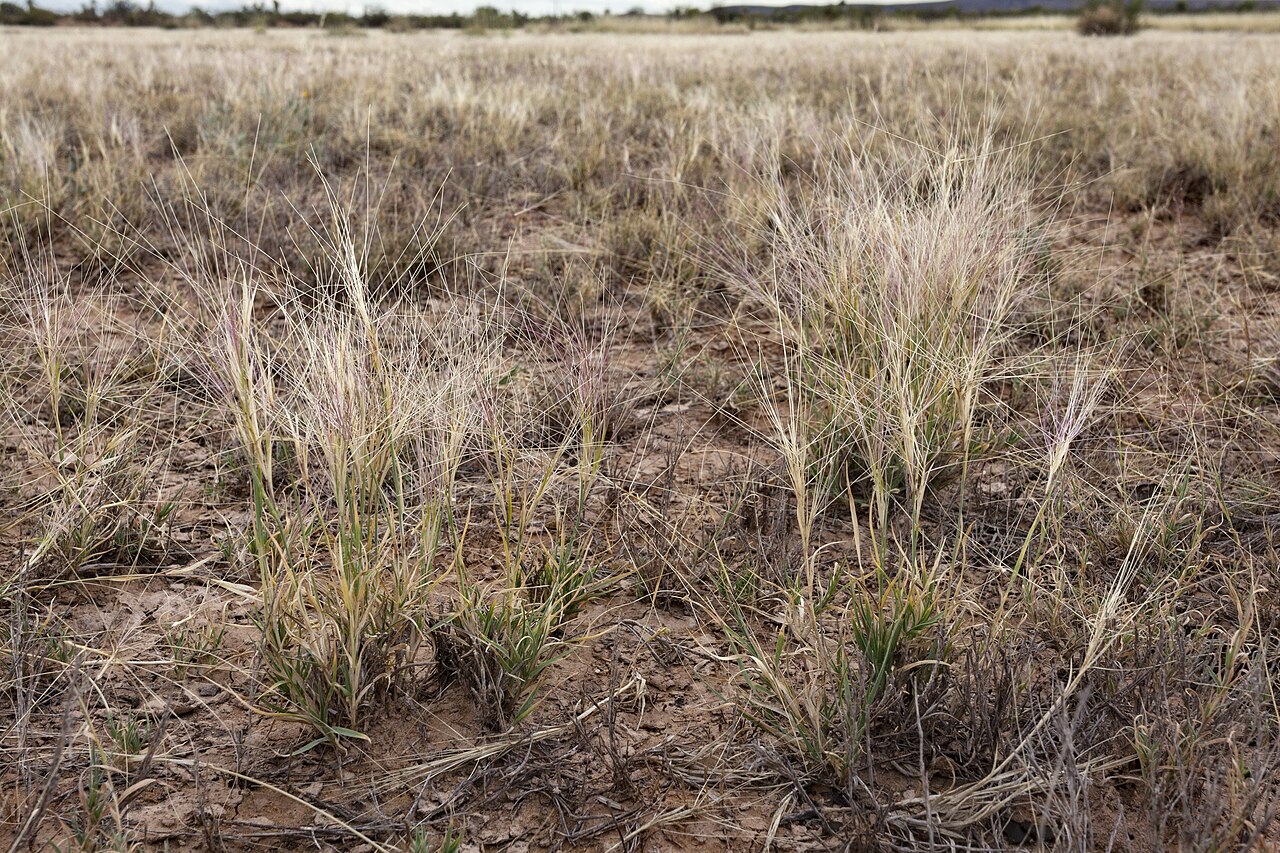
Scleropogon brevifolius, commonly called burrograss, is a low, wiry, mat-forming perennial grass of the arid grasslands and desert flats of the American Southwest. It is the only species in its genus, a true oddity among North American grasses: most plants are functionally unisexual, with separate male and female colonies spreading by tough, scaly stolons across bare, rocky, or gravelly ground where few other grasses can get a foothold. The name “burrograss” comes not from a resemblance to burrs but from its long association with burro and cattle grazing on the sparse rangelands of the Southwest, where it persists as one of the toughest, most drought-resistant native grasses in the region.
Burrograss rarely exceeds a foot in height and often hugs the ground in dense, low tufts only a few inches tall, with wiry, curling leaf blades and short, stiff flowering stalks that carry sharp-pointed, burr-like seed clusters. It thrives in exactly the kind of punishing conditions — thin, rocky, alkaline, or heavily grazed soils — that defeat more conventional turf and pasture grasses, making it an important soil stabilizer on the driest rangelands of Arizona, New Mexico, and Texas.
For native plant gardeners in the low desert and high desert Southwest, burrograss is not a showy accent but a quiet workhorse: a tough, low-growing groundcover for the hottest, driest, most neglected corners of the landscape, where it holds soil, needs essentially no irrigation once established, and asks nothing in return.
Identification
Burrograss is a low perennial grass, typically 2 to 12 inches (5–30 cm) tall, spreading by wiry above-ground stolons that root at the nodes and form loose to dense mats. The plant has a sprawling, matted growth habit rather than an upright bunchgrass form, and established colonies can cover considerable ground through vegetative spread alone.
Stems & Growth Habit
The stolons are slender, tough, and often reddish-brown, creeping along the soil surface and rooting at the nodes to form new tufts. This stoloniferous habit, unusual among dryland bunchgrasses, lets burrograss knit together a low mat that resists wind and water erosion on bare, disturbed, or heavily trafficked ground.
Leaves
Leaves are short, narrow, and wiry, usually 1 to 3 inches (2.5–7.5 cm) long, often curling or rolling inward in dry conditions — a classic drought adaptation that reduces water loss. The foliage is blue-green to gray-green, turning straw-colored and persisting through the dry season.
Flowers & Seedheads
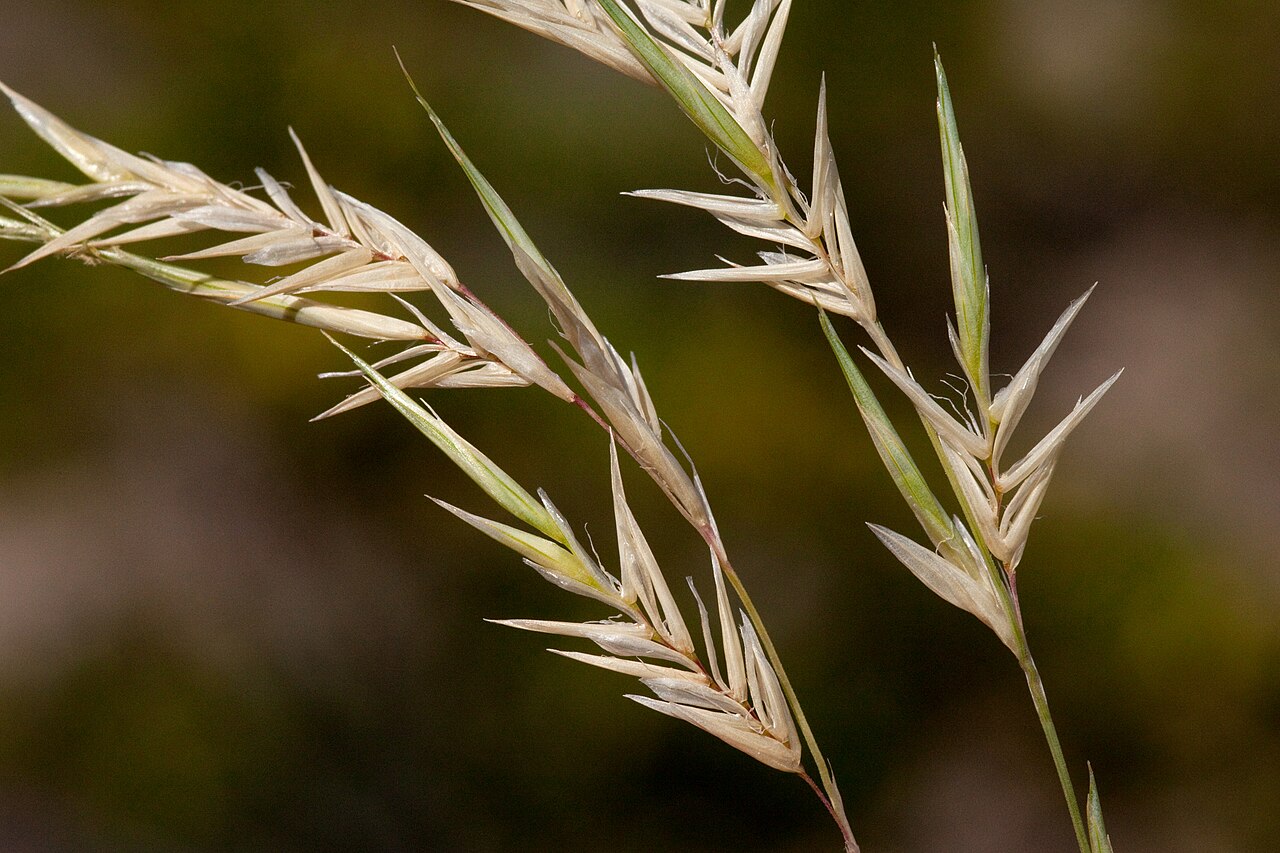
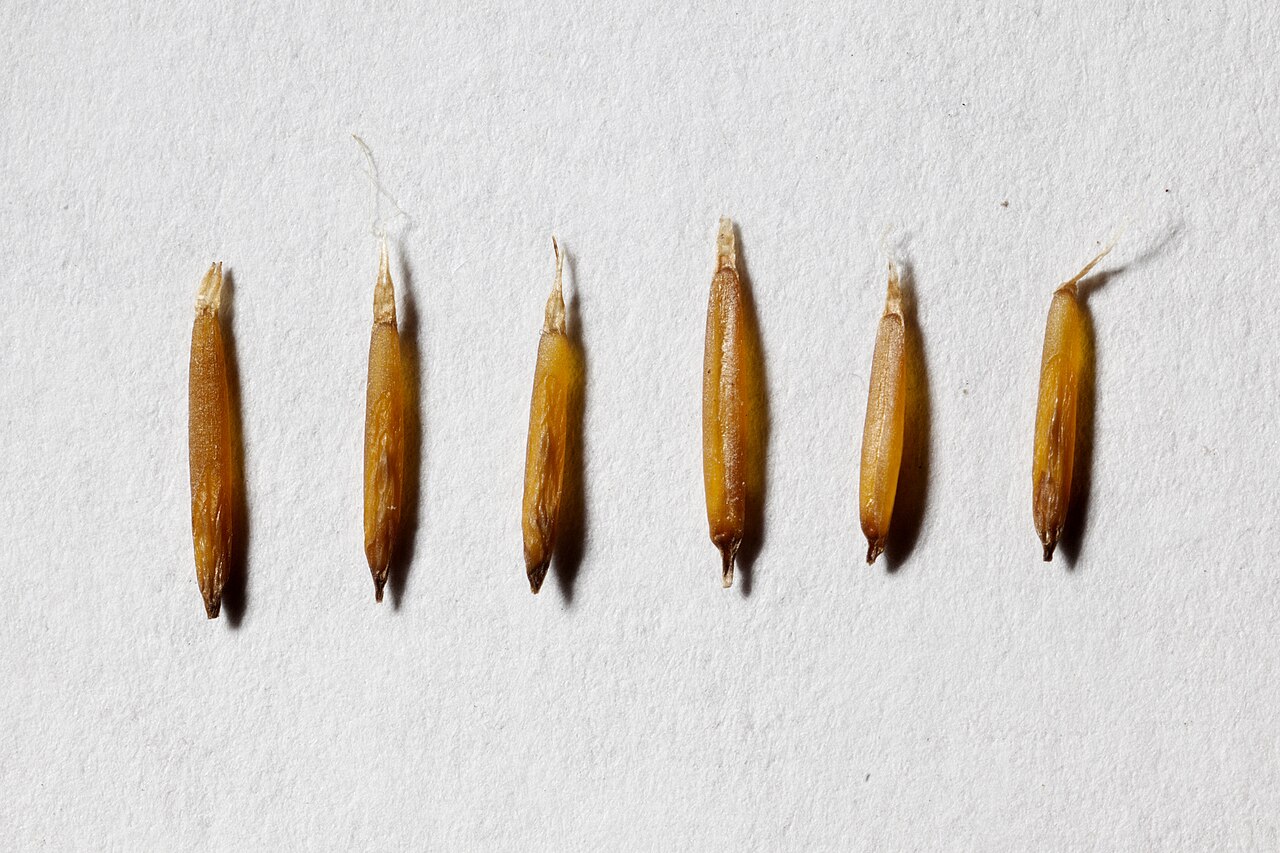
Burrograss is functionally dioecious: individual plants or colonies tend to be either male or female, an unusual trait among grasses. Male plants produce small, inconspicuous flowering spikes, while female plants produce short, dense, burr-like seed clusters with stiff, sharp awns that can catch in fur, socks, and animal hooves — the trait most likely behind the common name. Flowering occurs primarily in late summer and fall, timed to summer monsoon moisture.
Roots
Burrograss has an extensive, fibrous root system supplemented by rooting stolons, giving it exceptional tenacity on eroding slopes, overgrazed rangeland, and disturbed roadside soils where few other grasses can establish.
Quick Facts
| Scientific Name | Scleropogon brevifolius |
| Family | Poaceae (Grass) |
| Plant Type | Perennial, stoloniferous, mat-forming grass |
| Mature Height | 2–12 in (5–30 cm) |
| Mature Spread | Indefinite; spreads by rooting stolons |
| Growth Rate | Slow to moderate |
| Sun Exposure | Full Sun |
| Water Needs | Very Low |
| Soil Type | Dry, rocky, gravelly, or caliche; tolerates poor and alkaline soils |
| Soil pH | 6.5–8.5 (neutral to alkaline) |
| Bloom Time | Late summer – fall |
| Flower Color | Tan to straw (inconspicuous) |
| Fall Color | Straw-tan |
| Fruit | Burr-like seed clusters with stiff awns |
| Deer Resistant | Yes |
| USDA Hardiness Zones | 7–10 |
Native Range
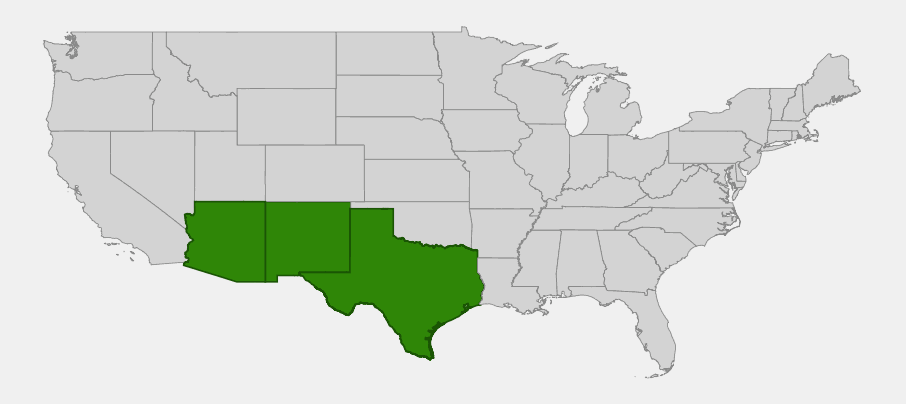
Burrograss is native to the arid and semi-arid grasslands of the southwestern United States, from southern Arizona and New Mexico across southern and western Texas, with a disjunct native population far to the south in Chile and Argentina. Within its U.S. range it is a characteristic grass of desert grassland and shortgrass prairie transition zones, typically below about 6,000 feet elevation.
It grows on dry mesas, rocky flats, desert washes, and disturbed or heavily grazed rangeland, often in association with other tough, drought-adapted grasses such as black grama and tobosa grass. Its ability to colonize bare, compacted, or alkaline ground by stolons rather than relying solely on seed makes it an important early stabilizer on overgrazed and eroded sites across the Chihuahuan and Sonoran desert grasslands.
Burrograss is not native east of central Texas or outside the hot, dry grasslands of the Southwest; gardeners in wetter or colder climates should not expect it to perform as a lawn or groundcover substitute, since its drought tolerance depends on the low humidity and mild winters of its native desert grassland range.
📋 Regional plant lists featuring Burrograss: South and West Texas · Arizona & New Mexico
Growing & Care Guide
Burrograss is about as low-maintenance as a native grass gets, provided it is planted in conditions that mimic its harsh natural habitat: full sun, lean soil, and minimal supplemental water. It is a poor choice for rich garden beds or regularly irrigated lawns, where lusher grasses will simply outcompete it, but it excels in the toughest, driest spots in a Southwest landscape.
Light
Burrograss requires full sun. It will not persist in shade or even partial shade, where it quickly thins out and disappears.
Soil & Water
This grass is built for poor, rocky, caliche, and alkaline soils with excellent drainage. It needs no soil amendment and in fact performs best without one. Established plants need essentially no supplemental irrigation beyond natural rainfall; occasional deep watering during extended drought will keep it greener, but it is not required for survival. Overwatering or rich, moisture-retentive soil will shorten its life and favor weedy competitors instead.
Planting Tips
Plant from container stock or seed in spring after the last frost, taking advantage of summer monsoon rains to help establish new plantings. Space plugs or plants 12 to 18 inches apart to allow the stoloniferous growth habit to fill in naturally over a season or two. Avoid heavy mulch, which holds moisture against the crown in a way this desert species does not tolerate well.
Pruning & Maintenance
Burrograss needs no regular mowing or pruning. A single cutback in late winter to remove old, dry growth can tidy its appearance before spring regrowth, but it is entirely optional. It has no significant pest or disease problems in its native range.
Landscape Uses
Burrograss fills a narrow but valuable niche in Southwest native landscaping:
- Erosion control on dry slopes, washes, and disturbed rangeland
- Low-water groundcover for the hottest, driest parts of a xeriscape
- Desert grassland restoration plantings
- Between stepping stones or in gravel gardens where foot traffic is light
- Rangeland and roadside revegetation on alkaline or caliche soils
Wildlife & Ecological Value
Though it rarely draws attention for showy flowers, burrograss plays a quiet but important supporting role in desert grassland ecosystems across its range.
For Mammals
Burrograss provides modest forage for pronghorn, mule deer, and livestock on southwestern rangelands, particularly in spring when young growth is most palatable. Its dense mats also offer ground-level cover for small mammals navigating open desert grassland.
For Birds
Ground-nesting and ground-foraging birds of open desert grassland, including horned larks and various sparrows, use burrograss mats for cover and forage among the seed clusters.
For Pollinators
As a wind-pollinated grass, burrograss offers little direct nectar or pollen value to pollinators, but its low, dense growth habit helps stabilize soil and support the broader grassland plant community that pollinator-dependent wildflowers rely on.
Ecosystem Role
Burrograss is one of the most important soil-stabilizing grasses on degraded and overgrazed desert rangeland. Its stoloniferous growth habit lets it recolonize bare, compacted ground faster than many bunchgrasses, making it a pioneer species in the recovery of disturbed desert grassland after fire, drought, or heavy grazing pressure.
Cultural & Historical Uses
Burrograss has long been recognized by ranchers and range scientists across the Southwest as an indicator of desert grassland condition — its persistence on a site often signals heavily grazed or degraded range, since it tolerates grazing pressure that eliminates more palatable grasses. Historically, it was considered a low-value forage species by cattlemen precisely because its presence in abundance often meant better forage grasses had already been grazed out.
Indigenous peoples of the Southwest and northern Mexico lived among desert grasslands where burrograss was a common, if unremarkable, component of the vegetation; it was not singled out for food, medicine, or fiber use the way more productive native grasses and shrubs were, but it was part of the broader grassland ecosystem that supported game animals and livestock alike.
Today, burrograss is increasingly valued by range managers and native landscapers not for direct utility but for its unmatched toughness: in restoration work on the most degraded, driest sites in the Southwest, where almost nothing else will reliably establish, burrograss remains one of the few native grasses that can be counted on to take hold.
Frequently Asked Questions
Is burrograss a good lawn substitute?
Not for a conventional lawn look — it grows low and sparse rather than forming a dense turf, and it goes dormant and tan through much of the year. It is better suited to a xeriscape groundcover role than a traditional lawn replacement.
Why is it called burrograss if it doesn’t produce true burrs?
The name refers to the stiff, sharp-awned seed clusters on female plants, which can catch in fur and socks much like true burrs, as well as its long association with burro and livestock grazing on Southwest rangeland.
Does burrograss need irrigation once established?
No. Established plants rely on natural rainfall and are adapted to long dry periods; regular irrigation can actually shorten the plant’s life by favoring root rot and weedy competition.
Will burrograss spread aggressively in my garden?
It spreads by rooting stolons but slowly, and only where conditions (full sun, lean dry soil) favor it. In typical irrigated garden beds it is usually outcompeted rather than invasive.
Is burrograss native to my area if I live outside Arizona, New Mexico, or Texas?
No. Its U.S. native range is limited to these three southwestern states; gardeners elsewhere should look for a regionally native grass instead.

Looking for a nursery that carries Burrograss?
Browse our native plant nursery directory: Arizona · New Mexico · Texas