California Nutmeg (Torreya californica)
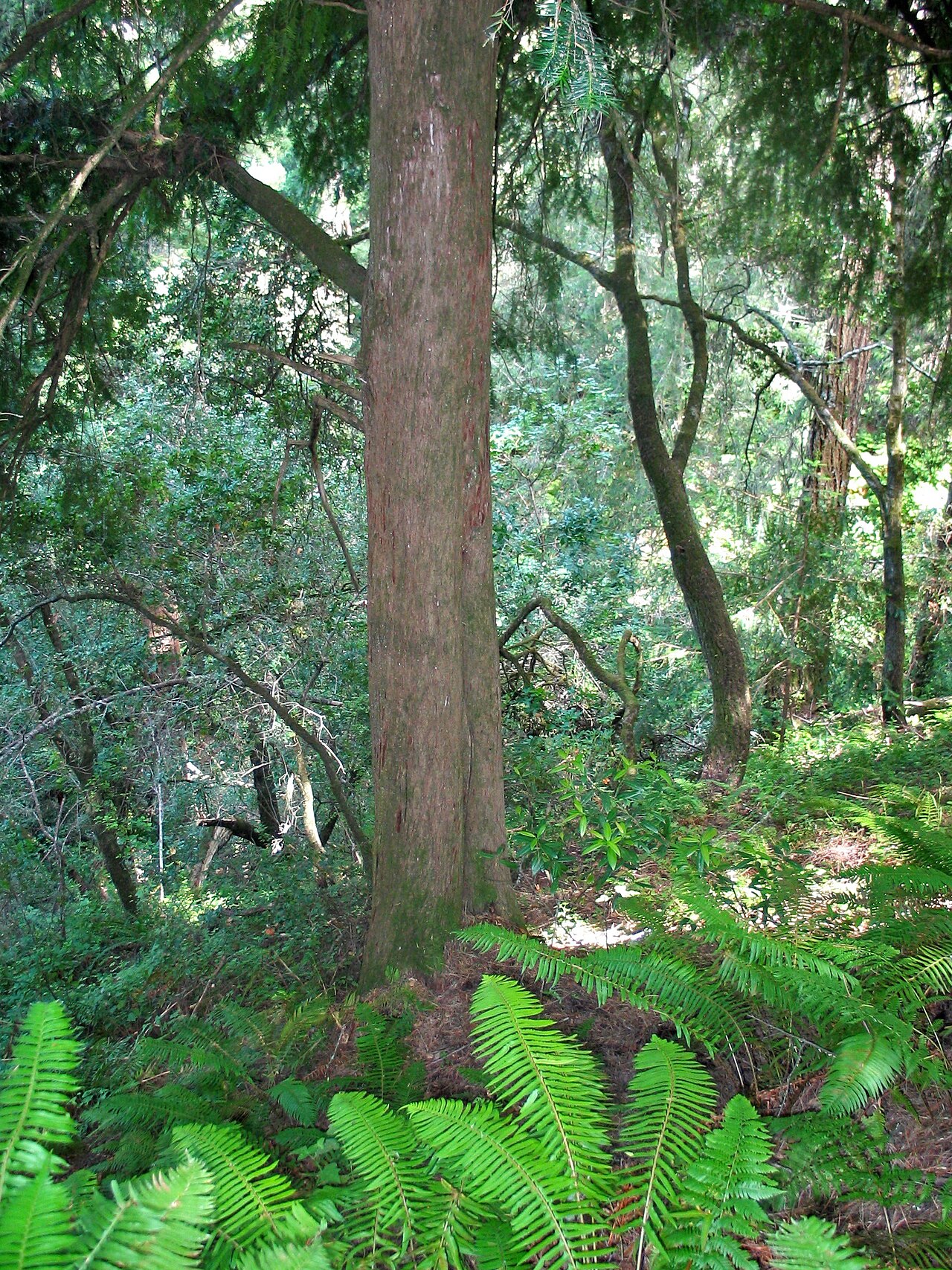
Torreya californica, commonly called California nutmeg or California torreya, is a slow-growing, shade-loving conifer found only in California. It belongs to the yew family (Taxaceae) rather than the pine family, and despite its common name it has no real relationship to the tropical nutmeg spice tree (Myristica fragrans) — the resemblance is only in the look of the fleshy seed, which has a plum-like husk around a hard, aromatic kernel reminiscent of a nutmeg.
California nutmeg grows as an understory and sub-canopy tree in cool, shaded canyons and stream bottoms, most often beneath redwoods, Douglas-fir, tanoak, and canyon live oak. Its stiff, glossy, needle-sharp leaves and strong resinous smell when crushed make it easy to tell apart from true firs and yews once you know to look for them. It is dioecious, meaning individual trees are either male or female, and only female trees bear the distinctive seeds.
Because it tolerates deep shade, grows slowly, and rarely needs attention once established, California nutmeg is a good choice for a California native woodland garden with room for a long-lived conifer. It is not common in the nursery trade and is best suited to larger, shaded properties rather than small residential beds, since even “young” trees take decades to reach a modest size.
Identification
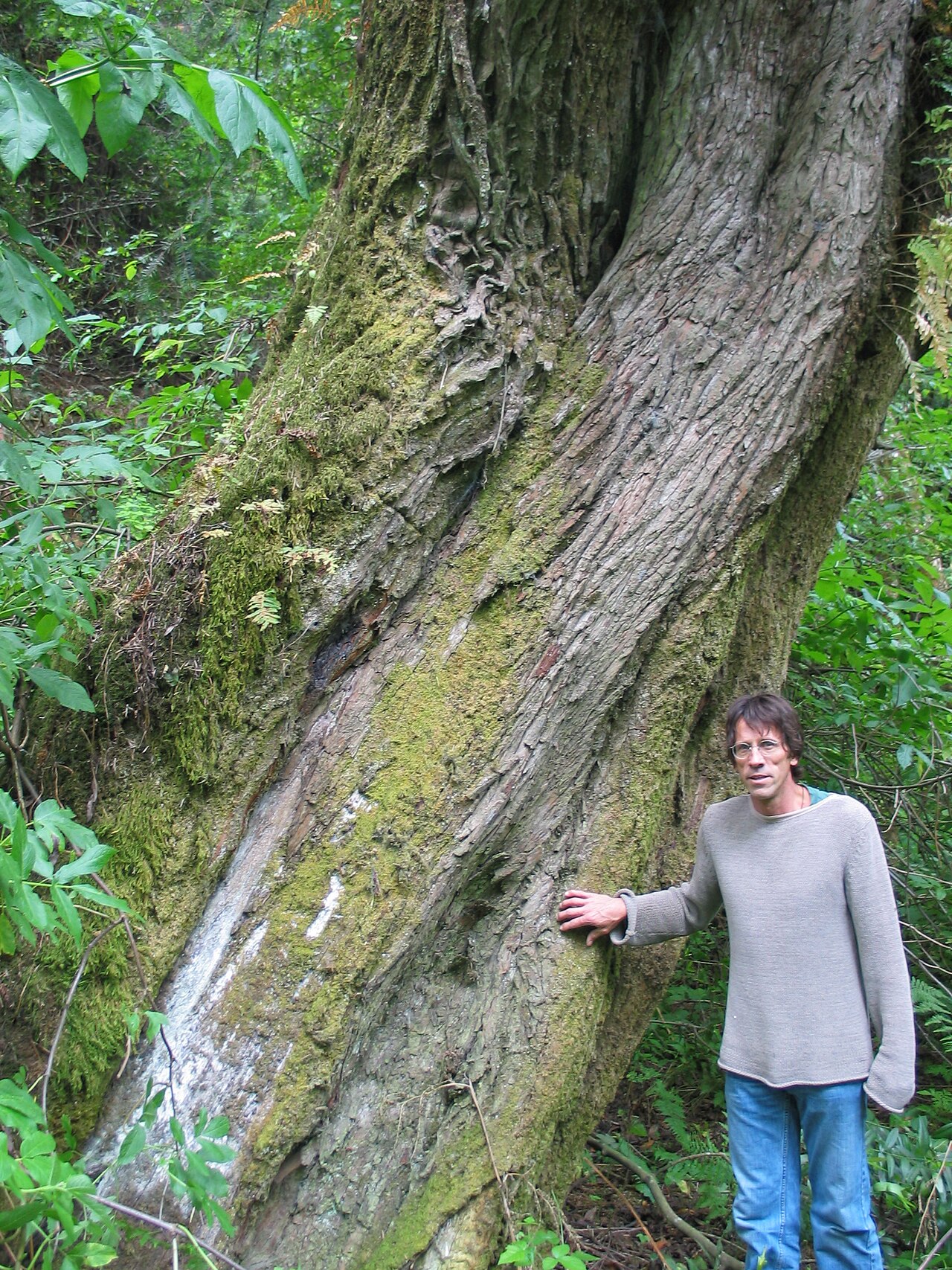
California nutmeg is a single-trunked evergreen conifer that typically reaches 30 to 70 feet tall in the wild, occasionally taller in sheltered coastal canyons, with a narrow to broadly pyramidal crown of horizontal to slightly drooping branches. Trees growing in deep shade tend to be more open and spindly, while those with more light form a denser, fuller crown. Growth is slow throughout the species’ life.
Bark & Stems
Young bark is smooth and gray-brown; with age it becomes furrowed into long, irregular ridges and develops a shaggy, fibrous texture, especially near the base of old trunks. Branches are arranged in roughly whorled tiers, giving older trees a layered silhouette. Branchlets are stiff and often droop slightly at the tips.
Leaves
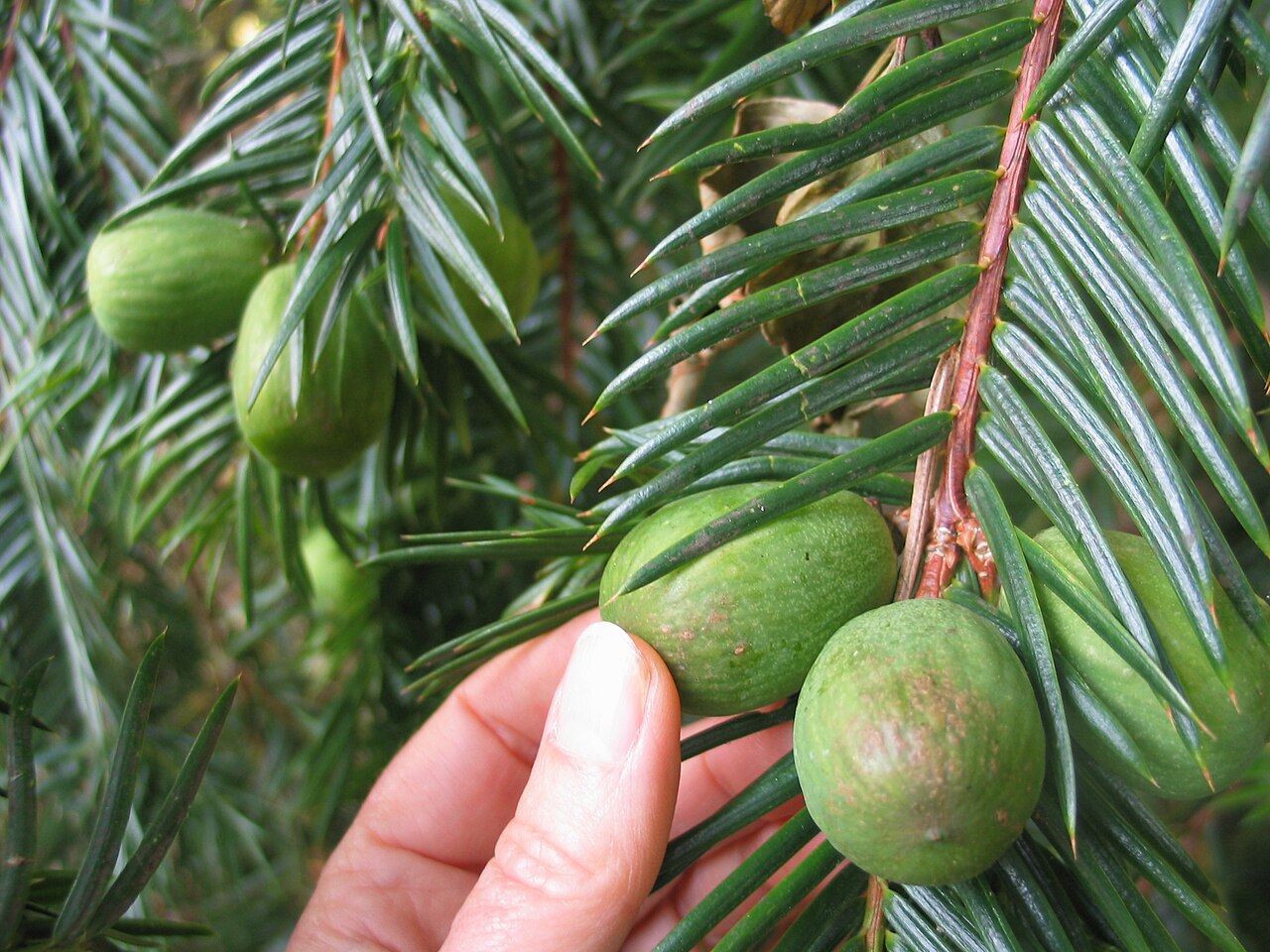
The needle-like leaves are linear, flattened, 1 to 1½ inches long, and end in a genuinely sharp, rigid point — handling the foliage carelessly will prick your fingers, which is one of the most reliable field marks separating California nutmeg from the soft-tipped needles of true firs and yews. The upper surface is glossy dark green; the underside shows two pale whitish-green stomatal bands running the length of the needle. When crushed, the foliage releases a strong, pungent, resinous odor that some compare to crushed tomato leaves.
Flowers & Fruit
California nutmeg is dioecious. Male trees produce small, oval, yellowish pollen cones in the leaf axils that shed pollen in late winter to early spring. Female trees bear inconspicuous ovules that, once pollinated, take about two growing seasons to mature into the tree’s namesake “seed” — technically a fleshy-coated seed rather than a true fruit or cone. Each one is oval, 1 to 1½ inches long, green streaked with purple when ripe, and encloses a single hard, oily, aromatic kernel. Seeds ripen and drop in autumn of their second year.
Quick Facts
| Scientific Name | Torreya californica |
| Family | Taxaceae (Yew) |
| Plant Type | Evergreen conifer tree |
| Mature Height | 30–70 ft (taller in sheltered canyons) |
| Mature Spread | 15–30 ft |
| Growth Rate | Slow |
| Sun Exposure | Part Shade to Full Shade |
| Water Needs | Average to moist; poor in hot, dry sites |
| Soil Type | Moist, well-drained loam; tolerates rocky canyon soils |
| Soil pH | Slightly acidic to neutral |
| Bloom Time | Late winter – early spring (pollen cones) |
| Flower Color | Yellowish (male pollen cones only) |
| Fall Color | None (evergreen) |
| Fruit | Plum-like fleshy seed, ~1–1½ in, green streaked purple, ripens over 2 years |
| Deer Resistant | Yes (stiff, needle-sharp foliage discourages browsing) |
| USDA Hardiness Zones | 7–9 |
Native Range
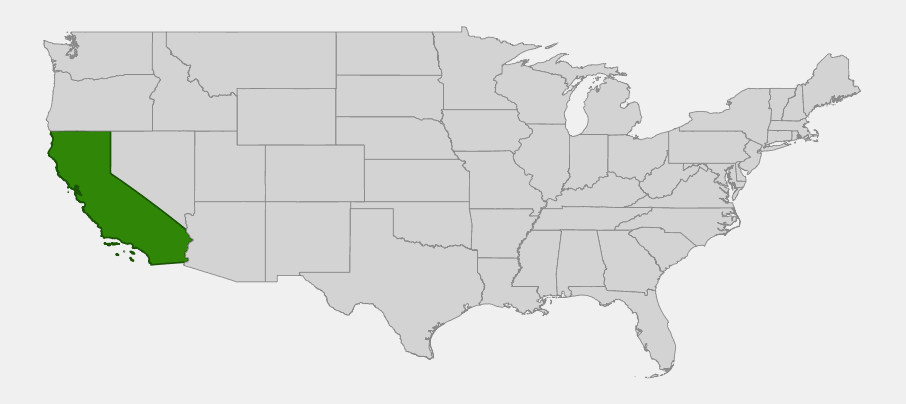
California nutmeg is endemic to California — it grows wild nowhere else on Earth. Its range splits into two disjunct areas: the Coast Ranges, from southwestern Trinity County south to Monterey County, and the Cascade–Sierra Nevada foothills, from Shasta County south to Tulare County. Within these areas it is scattered rather than continuous, following the cool, shaded canyons and stream drainages it needs.
Typical habitat is the shaded understory of mixed evergreen and coniferous forest: redwood and Douglas-fir forest in the Coast Ranges, and mixed conifer or canyon live oak forest in the Sierra foothills. It favors north-facing slopes, stream terraces, and steep canyon walls where soils stay cooler and moister than the surrounding hillsides, from near sea level along the coast to roughly 6,500 feet in the Sierra Nevada.
The species is not listed as threatened or endangered, but it has never been an abundant tree even within its historical range, and old, large specimens were cut for their fine-grained, rot-resistant wood in the 19th and early 20th centuries. Most of the oldest surviving trees today are protected within state parks and preserves along the coast and in the Sierra foothills.
📋 Regional plant lists featuring California Nutmeg: California & Nevada
Growing & Care Guide
California nutmeg is not a fast or flashy garden tree, but for a shaded canyon or woodland garden with room to let a conifer mature over decades, it is a distinctive, low-maintenance choice that few neighbors will have.
Light
Give it part shade to full shade, especially while young. Seedlings and young trees in the wild establish almost exclusively under an existing canopy; direct, hot sun scorches the foliage and stresses the root system. Older, well-established trees can tolerate more light, particularly in cooler coastal gardens, but a shaded canyon-like setting remains the best match for how this species actually grows.
Soil & Water
Plant in moist, well-drained soil with some organic matter, similar to a forest floor. California nutmeg does not thrive in heavy clay that stays waterlogged, nor in fast-draining, dry sandy soil. Water regularly through the first several years to mimic the steady moisture of a shaded canyon bottom; established trees tolerate California’s dry summers reasonably well but look and grow best with occasional deep watering during long dry spells.
Planting Tips
Choose a shaded site protected from hot afternoon sun and drying wind — a north-facing slope, a canyon bottom, or the north side of a building or larger tree canopy. Because growth is slow, start with the largest container stock you can reasonably afford and site it where it has room to eventually reach 30 feet or more. Mulch well to keep roots cool and moist.
Pruning & Maintenance
Little pruning is needed beyond removing dead or damaged branches. Wear gloves when working near the foliage, since the needle tips are genuinely sharp. The species has few serious pest or disease problems in cultivation and does not need regular fertilizing once established in reasonable soil.
Propagation
California nutmeg is grown from seed, which should be cleaned of its fleshy coating and sown or cold-stratified soon after it falls in autumn; germination can be slow and irregular, sometimes taking well over a year. Because the species is dioecious, seed-grown plants will not show their sex until they begin producing cones after many years, so gardeners wanting seed production need more than one tree and some patience.
Landscape Uses
- Shaded woodland gardens where a long-lived native conifer is wanted
- Canyon and streamside restoration plantings in its historical range
- Understory specimen beneath existing oaks, redwoods, or Douglas-fir
- Wildlife gardens — seeds are cached and eaten by native squirrels
- Deer-prone gardens, since the sharp foliage discourages browsing
Wildlife & Ecological Value
California nutmeg plays a quiet but steady role in the shaded forests where it grows, mostly through its seeds and its year-round cover.
For Pollinators
As a wind-pollinated conifer, California nutmeg offers little direct nectar or pollen value to bees and butterflies, though its dense evergreen foliage adds structural shelter to the shaded forest understory many pollinator-supporting plants depend on.
For Birds
Dense, year-round foliage provides cover and nesting structure for forest songbirds in the shaded canyons where the species grows, while its scattered, sub-canopy position adds vertical structure to otherwise single-layered conifer stands.
For Mammals
Douglas squirrels and other native rodents are the main consumers and dispersers of the oily seeds, caching them in the ground in numbers that exceed what they recover — the unclaimed, buried seeds are how the species regenerates and spreads locally. Deer generally avoid browsing the sharp, resinous foliage, which is part of why the species can persist in areas with heavy deer pressure.
Ecosystem Role
By tolerating deep shade that most conifers cannot, California nutmeg fills a sub-canopy niche in redwood, Douglas-fir, and mixed evergreen forests, adding structural diversity beneath the dominant canopy trees. Its slow growth and long lifespan mean that mature specimens represent decades, sometimes centuries, of undisturbed canyon forest.
Cultural & Historical Uses
Indigenous peoples of California, including groups in the Coast Ranges and Sierra Nevada foothills, valued California nutmeg wood for its strength, fine grain, and resistance to decay, using it historically to make bows — the wood’s density and springiness made it well suited to the purpose, and the tree is still sometimes called the “California nutmeg” or “stinking cedar” in older accounts, references to its pungent foliage odor.
In the mid-to-late 1800s, the fine, close-grained wood also attracted commercial interest for fence posts, tool handles, and other uses requiring a durable, rot-resistant timber, which led to cutting of some of the largest old-growth trees along the coast. Because the species grows so slowly and was never abundant to begin with, heavily logged groves took generations to show any recovery.
The common name “nutmeg” comes purely from the look of the ripe seed — an oval, fleshy-husked kernel that resembles the true nutmeg spice of the unrelated tropical tree Myristica fragrans. The seed kernel has a strong, resinous, bitter flavor and is not used as a culinary spice or food; early accounts describe settlers experimenting with roasting the seeds, but the practice never became established and the seeds are best left for wildlife.
Frequently Asked Questions
Is California nutmeg related to the nutmeg spice?
No. The name comes only from the resemblance of the fleshy seed to a true nutmeg. California nutmeg (Torreya californica) is a conifer in the yew family, unrelated to the tropical nutmeg tree (Myristica fragrans), which is a flowering tree from a completely different plant family.
Can you eat California nutmeg seeds?
They are not used as food. The oily kernel has a strong, bitter, resinous taste, and the species has no established culinary or medicinal use. Leave the seeds for native squirrels, which rely on them as a food source and help the tree regenerate by caching and forgetting some of them.
Why are the needles so sharp?
Each needle ends in a genuinely rigid, sharp point, unlike the soft-tipped needles of true firs. This is one of the most reliable ways to identify California nutmeg in the field, and it is also thought to discourage browsing by deer and other animals.
How fast does California nutmeg grow?
Slowly, throughout its life. Even well-sited, well-watered trees take many years to reach a modest size, and the oldest surviving wild trees — often found in protected canyons and parks — may be centuries old.
Will California nutmeg grow outside California?
It is only native to California, found nowhere else in the wild. Gardeners elsewhere on the West Coast with a cool, shaded, consistently moist microclimate can sometimes grow it, but it is best suited, and most ecologically valuable, within or near its native Coast Range and Sierra Nevada foothill range.

Looking for a nursery that carries California Nutmeg?
Browse our native plant nursery directory: California