
Capá Blanco (Petitia domingensis)
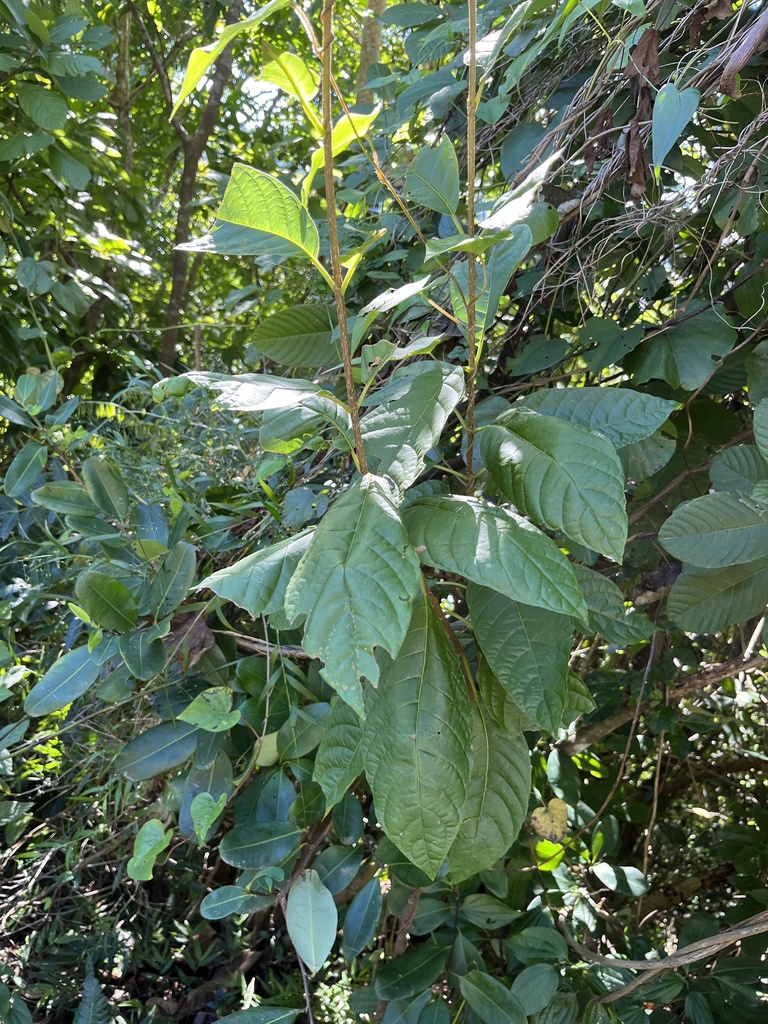
Petitia domingensis, called capá blanco in Puerto Rico and listed by USDA PLANTS as bastard stopper, is one of the island’s best native timber trees and one of its most underused landscape trees. It is a medium-sized evergreen with an open, spreading crown, large leathery leaves, sprays of tiny fragrant white flowers, and small dark fruits that birds take. USDA Forest Service and Jamaican floras place it at 13 to 65 feet tall, with trunks a foot or more thick on good sites.
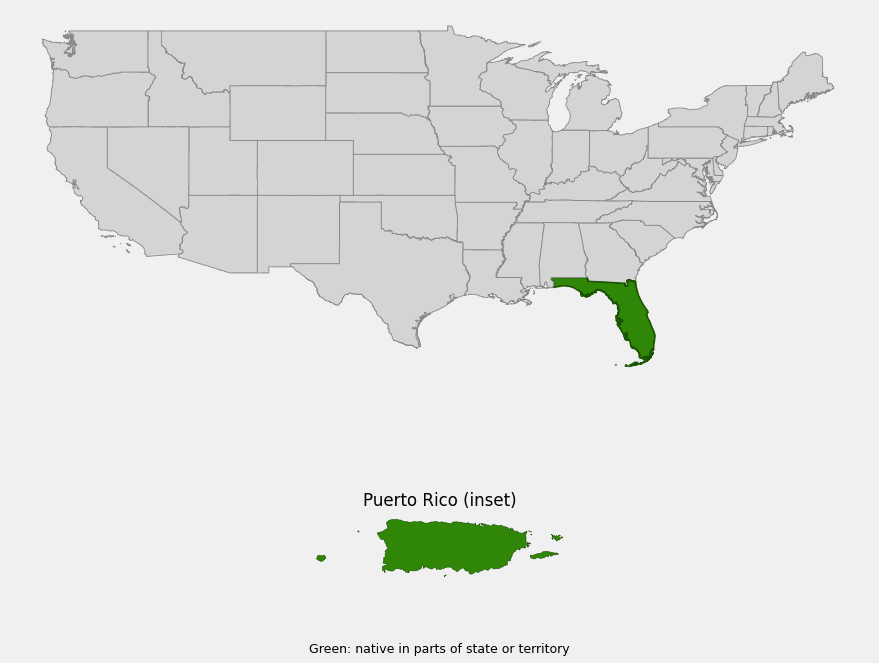
The tree belongs to the mint family (Lamiaceae) in modern classification; most older Caribbean references, including the USDA Forest Service species accounts, place it in the vervain family (Verbenaceae), and you will see both in print. USDA PLANTS lists it as native in Puerto Rico, the U.S. Virgin Islands and Florida, although Florida botanists disagree about that last one — see the range section below.
Capá blanco is a tree for Puerto Rican gardeners who want a tough, drought-tolerant native shade tree that flowers and fruits more or less all year, and for anyone restoring dry limestone forest, karst hillsides or abandoned pasture. Its timber, hard and beautifully figured, has been compared to black walnut.
Identification
Capá blanco is easiest to recognize by its combination of opposite or three-whorled leaves on stiff, pale twigs, heavily impressed leaf veins, and airy sprays of very small white flowers followed by pea-sized drupes. It is often confused with capá prieto (Cordia alliodora), a different tree with alternate leaves and papery white flowers.
Form & Bark
A small to medium evergreen tree, usually 20 to 50 feet tall in Puerto Rico and occasionally to 65 feet, with an open, spreading, rather irregular crown and a bole that can exceed 12 inches in diameter. The trunk is often slightly fluted or buttressed at the base on older trees. Bark is gray to grayish-brown, thin, and lightly fissured or flaky, frequently coated with lichens and mosses in humid forest.
Leaves
Leaves are simple, opposite or in whorls of three, elliptic to oblong, mostly 3 to 8 inches long, with a pointed tip and smooth margins. The upper surface is deep green with the veins conspicuously impressed, giving the leaf a quilted look; the underside is paler and finely brown-hairy (tomentose), a useful field character. Leaf stalks and young twigs are pale yellow-green and noticeably stout.
Flowers
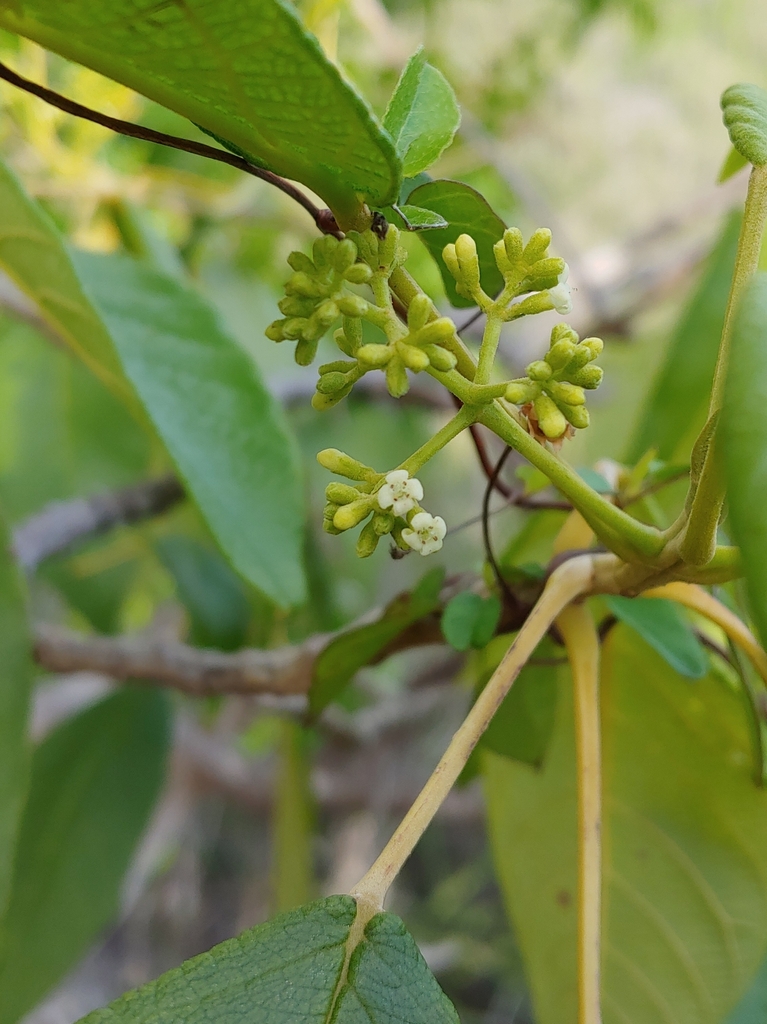
The flowers are tiny, white to greenish-white, fragrant, and carried in many-flowered branched clusters (panicles) at the ends of the twigs and in the upper leaf axils. Each flower has a short tubular corolla with four spreading lobes. Trees flower over long periods, and in both Puerto Rico and Jamaica flowering and fruiting have been recorded year-round, with heavier flushes in spring.
Fruit & Seeds
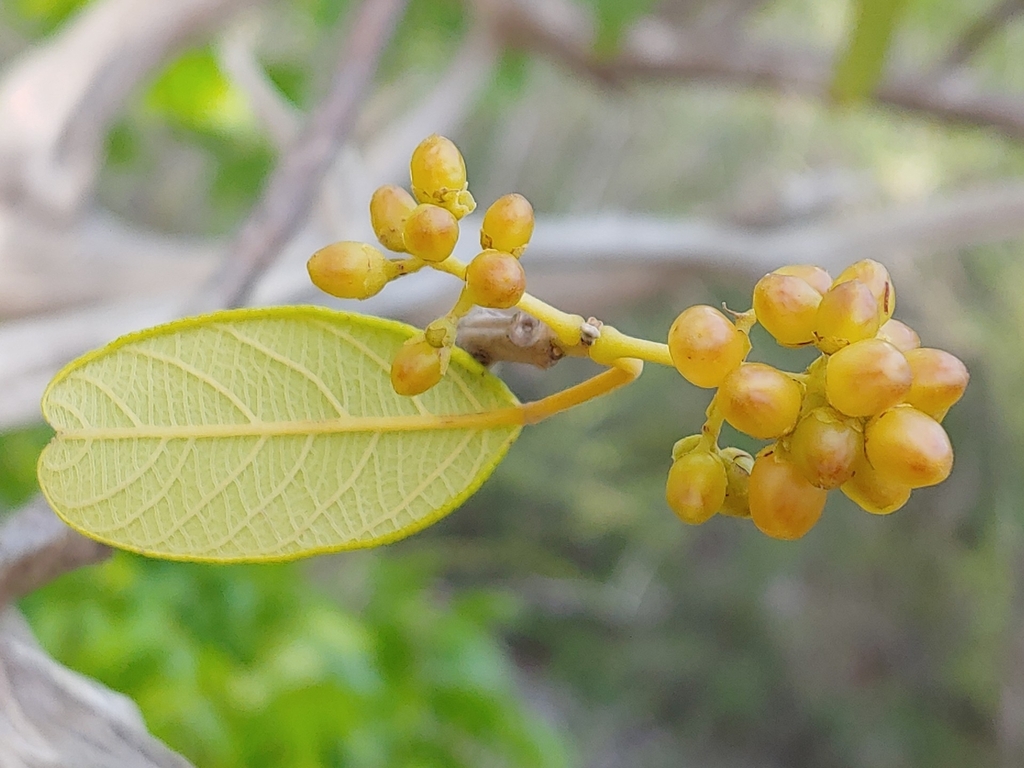
The fruit is a small rounded to egg-shaped drupe about ¼ inch across that ripens from green through yellow and orange to nearly black, with thin flesh over a hard stone. Clusters of them hang along the twig ends and are taken by birds, which disperse the seed. A single tree can carry open flowers, green fruit and ripe fruit at the same time.
Wood
The wood is the reason the tree has a reputation. The heartwood is light to medium brown, frequently variegated with darker, waxy-looking stripes, and is described in USDA Forest Service publications as resembling black walnut in color and appearance. It is very hard, heavy, tough, strong, moderately durable in ground contact and moderately resistant to dry-wood termites.
Quick Facts
| Scientific Name | Petitia domingensis Jacq. |
| Family | Lamiaceae (mint family); placed in Verbenaceae in older references |
| Plant Type | Evergreen tree |
| Mature Height | 20–50 ft, occasionally to 65 ft |
| Mature Spread | 20–35 ft; open, spreading crown |
| Growth Rate | Moderate |
| Sun Exposure | Full sun to light shade |
| Water Needs | Low to moderate once established; drought tolerant |
| Soil Type | Well-drained soils, especially limestone and rocky ground |
| Soil pH | Adaptable; thrives on alkaline limestone soils |
| Bloom Time | Essentially year-round, heaviest in spring |
| Flower Color | White to greenish-white |
| Fall Color | None; evergreen |
| Fruit | Rounded drupe about ¼ in, green to yellow-orange, ripening nearly black |
| Deer Resistant | Not applicable in Puerto Rico; no native deer on the island |
| USDA Hardiness Zones | 10–13; frost-sensitive |
| Other Common Names | Capá blanco (Puerto Rico); bastard stopper (USDA PLANTS); capá de sabana, fiddlewood, roble guayo |
Native Range
USDA PLANTS lists Petitia domingensis as native in Puerto Rico, the U.S. Virgin Islands and Florida. Its wider West Indian range covers Cuba, Hispaniola, Jamaica, the Bahamas, the Cayman Islands and the Lesser Antilles, with scattered records on the continental tropics. In Puerto Rico it is widespread on dry and moist limestone, from the northern karst belt and the hills behind the north coast to the dry southwestern forests of Susúa, Guánica and Maricao, generally below about 2,300 feet (700 m).
Where the sources disagree. The Atlas of Florida Plants treats Florida populations of this species as not native, recording it from only one county, while USDA PLANTS treats it as native there. Because Florida’s own flora project does not accept it as part of the state’s native flora, this page is not included in PlantNative’s Florida regional lists, and Florida gardeners should not treat capá blanco as a Florida native plant. The map above shades Florida because USDA PLANTS is the mapping source.
In Puerto Rico the picture is clear and uncontroversial: capá blanco is native, it belongs to the island’s limestone and secondary forests, and it comes back readily in thickets, woodland openings and old pastures. It was trialled in small plantations on the island as a timber crop, which is one reason mature trees still turn up in unexpected places.
📋 Regional plant lists featuring Capá Blanco: Puerto Rico
Growing & Care Guide
This is an easy tree in the right climate: it wants sun, sharp drainage and heat, and it asks for almost nothing after the first year. It is particularly well suited to the shallow, rocky, alkaline soils where many ornamental trees struggle.
Light
Plant in full sun for the densest crown and heaviest flowering. Capá blanco regenerates in woodland openings and will grow in light shade, but a shaded tree becomes thin and leggy. In the open it develops the broad, irregular crown that makes it useful as a shade tree.
Soil & Water
Give it well-drained ground. The species is at home on limestone and on thin, rocky, alkaline soils, and it also grows on deeper clays as long as water does not stand. Water a new tree through its first dry season; after that it is genuinely drought tolerant and needs no irrigation in most of the island. It will not tolerate waterlogged soil or salt spray on an exposed shore.
Planting Tips
Plant at the start of the rainy season so roots establish before the dry months. Allow 25 to 30 feet from buildings and from other trees; the crown spreads irregularly and benefits from room. Mulch to the drip line, keeping mulch off the trunk, and protect the thin bark from string trimmers, which damage it easily. Young trees in pasture restoration do best with a simple cage against livestock.
Pruning & Maintenance
Prune only in the first few years, to establish one straight leader and well-spaced scaffold limbs; the natural crown is somewhat irregular and does not need correcting beyond that. Remove dead or storm-damaged wood after hurricane season. The tree drops a light leaf litter and small fruits; birds clean up most of the fruit crop. No regular feeding is needed on reasonable soils.
Propagation
Grow from seed. Collect fruit when it has turned dark, clean the pulp from the stones, and sow fresh in a well-drained mix; seed does not store well. Germination is uneven and can take several weeks. Seedlings transplant readily from containers while young, before the taproot circles. Wildlings are often found under fruiting trees and can be potted up in the rainy season.
Landscape Uses
- Shade and street trees: a moderate-sized native with a spreading crown for parks, parking islands and wide verges
- Dry limestone restoration: one of the natural components of karst and dry-forest regeneration
- Pasture and finca plantings: a drought-tough shade tree that also yields valuable timber
- Bird gardens: reliable year-round fruit for native and migratory birds
- Timber and craft plantings: a fine, hard, figured wood historically used for furniture, turning and farm implements
Wildlife & Ecological Value
Because capá blanco flowers and fruits over such a long season, it feeds insects and birds at times of year when little else is producing. That makes it disproportionately valuable in dry forest, where food supply is the limiting factor for much of the year.
For Pollinators
The small, fragrant, nectar-rich flowers are worked heavily by bees; reference sources list bees as the tree’s pollinators. Wasps, flies, small beetles and butterflies also visit. A flowering tree in a dry-forest clearing can be audible from several yards away.
For Birds
The drupes are a staple fruit for Puerto Rican birds, including thrushes, tanagers, pigeons and doves, and the tree’s long fruiting season means it is often feeding birds outside the main fruit flush of the island’s forests. Dense twiggy crowns also provide nest sites.
For Mammals
Fruit-eating bats take the ripe drupes and help disperse the seed; bats are the only native land mammals in Puerto Rico. Introduced mammals also eat fallen fruit, but bats and birds do the useful dispersal work.
Ecosystem Role
Capá blanco is a reliable colonist of disturbed limestone ground: it appears in secondary thickets, old pastures and roadside woodland, where it helps rebuild canopy on sites too dry and rocky for many species. Its bird-dispersed seed moves readily into abandoned farmland, making it an important part of natural forest recovery across the karst country.
Cultural & Historical Uses
Capá blanco has been valued in Puerto Rico and the Dominican Republic primarily for its timber. USDA Forest Service publications on Puerto Rican woods describe the heartwood as light to medium brown, often variegated with darker waxy stripes, and comparable to black walnut in its finished appearance. It is very hard, heavy, tough and strong, takes a high polish, glues well and accepts nails and screws without splitting.
That combination made the wood a standard choice for furniture, cabinetwork, turnery, interior paneling, tool handles and novelty items, and the heavier, knottier material went into posts, poles, piling, carts and general construction. In the Caribbean it was used for the rollers of coffee-hulling mills, a job that demands a hard, tough timber. The Forest Service trialled the species in small plantations in Puerto Rico in the twentieth century because the wood was good enough to justify growing deliberately.
Botanically the tree has moved around. Nikolaus von Jacquin described Petitia domingensis from Hispaniola in the eighteenth century, and the species has accumulated synonyms such as Citharexylum melanocardium and Premna reticulata. It was long treated as a member of the vervain family (Verbenaceae) — which is how USDA Forest Service species accounts still title it — but molecular work moved Petitia and its relatives into the mint family, Lamiaceae. The English name “bastard stopper” used by USDA PLANTS reflects an old Caribbean habit of applying “stopper” to many unrelated small-fruited trees, and has nothing to do with the true stoppers (Eugenia).
Frequently Asked Questions
Is capá blanco native to Puerto Rico?
Yes. USDA PLANTS lists Petitia domingensis as native in Puerto Rico and the U.S. Virgin Islands, and it is widespread in the island’s limestone and secondary forests, especially in the northern karst and the southwestern dry forests.
Is capá blanco native to Florida?
The sources disagree. USDA PLANTS lists it as native in Florida, but the Atlas of Florida Plants treats the state’s population as not native and records it from a single county. For that reason PlantNative does not include it in Florida regional lists, and Florida gardeners should not plant it as a Florida native.
Is it in the verbena family or the mint family?
Both names are correct in context. Older Caribbean references, including USDA Forest Service species accounts, place Petitia in Verbenaceae. Current classification puts it in Lamiaceae, the mint family, along with other former verbena-family trees.
How fast does it grow and how big does it get?
Growth is moderate rather than fast. Expect 20 to 50 feet in cultivation, occasionally to about 65 feet on good forest sites, with a trunk that can exceed a foot in diameter and an open, spreading crown roughly 20 to 35 feet wide.
Will it grow in dry, rocky limestone soil?
Yes, and that is where it excels. Capá blanco is a natural component of dry limestone forest and karst hillsides, tolerates alkaline, shallow, rocky ground, and is drought tolerant once established. It will not tolerate standing water.

Looking for a nursery that carries Capá Blanco?
Our nursery directory does not yet include Puerto Rico. Browse the native plant nursery directory by state: Alabama–Arkansas · California · Colorado–Hawaii · Idaho–Kansas · Kentucky–Montana · Nebraska–Oklahoma · Oregon · Pennsylvania–Virginia · Washington · West Virginia–Wyoming