Capitate Phacelia (Phacelia capitata)
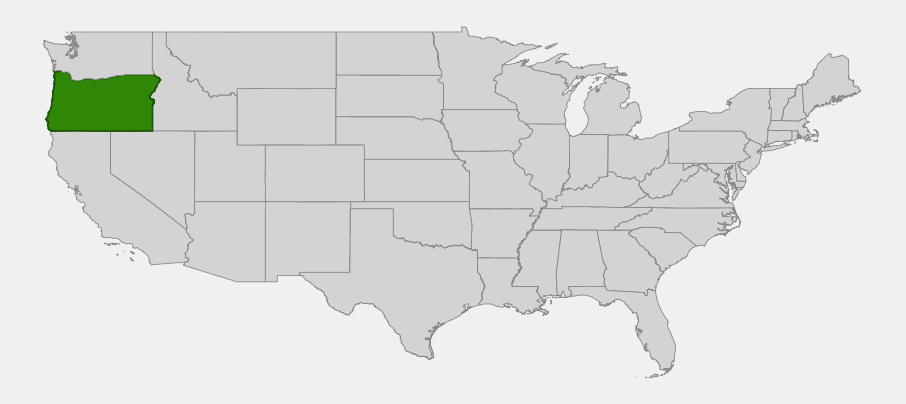
No photograph available: We could not find a photo of Capitate Phacelia on Wikimedia Commons under an allowed open license (CC BY, CC BY-SA, CC0, or public domain). Rather than use an unlicensed or non-commercial-only image, we’re publishing this page with the range map only. If you have a properly licensed photo of this species, please let us know.
Phacelia capitata, known as Capitate Phacelia or Clustered Phacelia, is a small native wildflower known only from a handful of counties in southwestern Oregon. It belongs to the waterleaf group within the borage family (historically placed in Hydrophyllaceae, now folded into Boraginaceae), a family that also includes the much more widely cultivated Lacy Phacelia (Phacelia tanacetifolia). Unlike its popular cover-crop relative, Capitate Phacelia is a true regional specialty — a low, clump-forming perennial of rocky slopes and open woodland in the Klamath Mountain country around Douglas, Coos, and Jackson counties.
The species name and both common names refer to its flower heads, which bunch tightly into dense, rounded (“capitate”) clusters rather than the loose, one-sided curling sprays typical of many other phacelias. Because it is a narrow-range Oregon native rather than a widely available nursery plant, this page is meant primarily to help identify it in the wild and to flag the two things that matter most if you do encounter it: its restricted range, and the skin irritation its glandular hairs can cause.
Identification
Capitate Phacelia is a low-growing perennial, typically forming a loose clump a few inches to roughly 10 inches tall, with stems and foliage covered in fine, glandular hairs that give the whole plant a slightly sticky, textured feel.
Leaves & Stems
Leaves are narrow to lance-shaped, often somewhat grayish-green from their covering of fine hairs, arranged along slender stems that arise from a woody-based perennial rootstock. The glandular hairs that cover the foliage and stems are the main reason this plant, like several of its phacelia relatives, carries a caution label for sensitive skin.
Flowers
The defining feature is in the name: flowers are small, bell- to funnel-shaped, and packed into dense, rounded, head-like clusters at the stem tips, rather than the one-sided, uncurling “fiddlehead” flower spikes typical of many other Phacelia species. Flower color in this species runs toward pale lavender to whitish tones. Bloom time follows snowmelt in its mountain habitat, generally in late spring to summer depending on elevation and season.
⚠️ Skin irritation warning: Like many phacelias, Capitate Phacelia is covered in fine glandular hairs that can cause contact dermatitis in sensitive people, similar to the well-documented skin reactions caused by Lacy Phacelia (Phacelia tanacetifolia) and Phacelia crop fields. Wear gloves and long sleeves when handling or examining the plant closely, and wash exposed skin afterward if you’ve been in contact with it.
Quick Facts
| Scientific Name | Phacelia capitata |
| Family | Boraginaceae (historically Hydrophyllaceae) |
| Plant Type | Perennial wildflower |
| Mature Height | 4–10 in |
| Growth Habit | Low, loose clumps |
| Sun Exposure | Full sun to part shade |
| Water Needs | Low to moderate; site-dependent |
| Soil Type | Rocky, well-drained mountain soils |
| Bloom Time | Late spring – summer |
| Flower Color | Pale lavender to whitish |
| Conservation Note | Narrow-range southwestern Oregon endemic; not commercially available |
Native Range
Capitate Phacelia is known only from southwestern Oregon, documented from Douglas, Coos, and Jackson counties in the Klamath Mountains and adjacent Coast Range foothills. It has not been confirmed as a naturally occurring population anywhere else, making it one of the more narrowly distributed wildflowers in the Pacific Northwest. Given this restricted range and the limited number of documented occurrences, treat any wild population as uncommon and avoid collecting or disturbing plants or seed.
Habitat consists of rocky slopes, open woodland, and mountain terrain typical of the geologically complex Klamath-Siskiyou region, an area famous among botanists for its concentration of narrow plant endemics tied to unusual soils and isolated mountain ranges.
📋 Regional plant lists featuring Capitate Phacelia: Western Oregon & Western Washington
Growing & Care Guide
Capitate Phacelia is not a commercially cultivated plant, and because of its narrow native range it is not a species we recommend seeking out for garden planting. This section is offered for context on what it needs in the wild rather than as cultivation advice, and anyone wanting Phacelia flowers for a pollinator garden should look to a widely available relative such as Lacy Phacelia (Phacelia tanacetifolia) instead.
Site Conditions in the Wild
In its native habitat, this species grows on rocky, well-drained mountain soils in open woodland and on slopes, in a climate of wet winters and dry summers typical of southwestern Oregon’s Mediterranean-influenced mountain zone. It tolerates both sun and partial shade depending on elevation and surrounding canopy.
Conservation Considerations
Because confirmed populations are limited to a small number of counties, the most useful “care” for this species is leaving wild populations undisturbed: avoid collecting plants, seed, or cuttings, stay on trails in areas where it is known to occur, and report sightings to regional botanical or conservation programs if you’re involved in native plant survey work. If you want to support Klamath-Siskiyou plant diversity directly in a garden setting, consider other regionally native species that are available through nurseries rather than attempting to source this one.
Wildlife & Ecological Value
Like other phacelias, the clustered flowers of this species likely provide nectar and pollen for native bees and other small pollinating insects active in its mountain habitat during the late spring and summer bloom window, though detailed pollinator studies specific to this narrow-range species are limited. Its presence contributes to the broader diversity of the Klamath-Siskiyou bioregion, a globally recognized center of plant endemism shaped by the area’s complex geology, isolated mountain ranges, and unusual soils.
A Note on Rarity & Identification
Capitate Phacelia is easy to overlook or misidentify, since several other phacelias and borage-family wildflowers share the region’s rocky slopes. The tightly clustered, head-like flower arrangement is the most reliable field clue distinguishing it from phacelias with the more typical one-sided, curling flower spike. Because documented occurrences are concentrated in just a few southwestern Oregon counties, any observation worth confirming should be checked against current botanical references or reported through a recognized plant-survey program rather than assumed from a casual photo match. No food, medicinal, or other traditional use is documented for this species.
Similar Species in the Region
Southwestern Oregon’s Klamath-Siskiyou country hosts several native phacelias and other borage-family wildflowers that can be confused with Capitate Phacelia at a glance, especially before flowering. A few points help separate them in the field:
- Lacy Phacelia (Phacelia tanacetifolia) — the familiar cover-crop and pollinator-strip species. It has deeply cut, fern-like leaves and coils its flowers into the classic one-sided “fiddlehead” spike (a scorpioid cyme), rather than the tight rounded head of Capitate Phacelia. It is also far more widespread and commonly grown from seed, while Capitate Phacelia is neither widespread nor available in commerce.
- Other regional Phacelia species — several other phacelias occur in the broader Klamath-Siskiyou and Pacific Northwest mountain country, most of them sharing the same glandular-hairy, uncurling spike arrangement. The dense, head-like flower cluster of Capitate Phacelia, held at the stem tips rather than along an unwinding spike, is the most reliable way to separate it from these relatives without a technical key.
- Non-Phacelia waterleaf relatives — other Boraginaceae (historically Hydrophyllaceae) genera in the same rocky, open habitats can show superficially similar foliage. Checking the flower arrangement — clustered heads versus spikes or loose cymes — is a faster field clue than leaf shape alone.
Because several of these look-alikes overlap in range and habitat, and because Capitate Phacelia itself is uncommon, a confident identification in the field should rely on the flower-cluster shape described above rather than leaf shape or plant size alone, and any record worth documenting is best confirmed against a current regional flora or reported to a state botanical program.
Frequently Asked Questions
Is Capitate Phacelia rare?
Yes. It is known only from a small number of counties in southwestern Oregon’s Klamath Mountains and Coast Range, making it one of the more narrowly distributed native wildflowers in the region. Treat any wild population you encounter as uncommon and avoid disturbing it.
Can I buy Capitate Phacelia for my garden?
No, it is not commercially available as a nursery plant, which fits its status as a narrow regional endemic rather than a widely cultivated species. Gardeners wanting phacelia flowers for pollinators should look at the widely available Lacy Phacelia (Phacelia tanacetifolia) instead.
Is Capitate Phacelia the same as Lacy Phacelia?
No, they are different species in the same genus. Lacy Phacelia (Phacelia tanacetifolia) is a widely grown cover crop and pollinator plant with lacy, fern-like leaves and curling flower spikes; Capitate Phacelia has a far more restricted range and distinctive tight, rounded flower clusters.
Does Capitate Phacelia cause skin irritation?
It can. Like several other phacelias, its foliage and stems are covered in fine glandular hairs that may cause contact dermatitis in sensitive individuals, so handle it with gloves if you need to examine it closely.
Where is Capitate Phacelia found?
It has been documented in Douglas, Coos, and Jackson counties in southwestern Oregon’s Klamath Mountains and adjacent Coast Range foothills, and is not confirmed to occur naturally anywhere else.

Looking for a nursery that carries native Oregon wildflowers?
Browse our native plant nursery directory: Oregon