Texas Rock Rose (Pavonia lasiopetala)
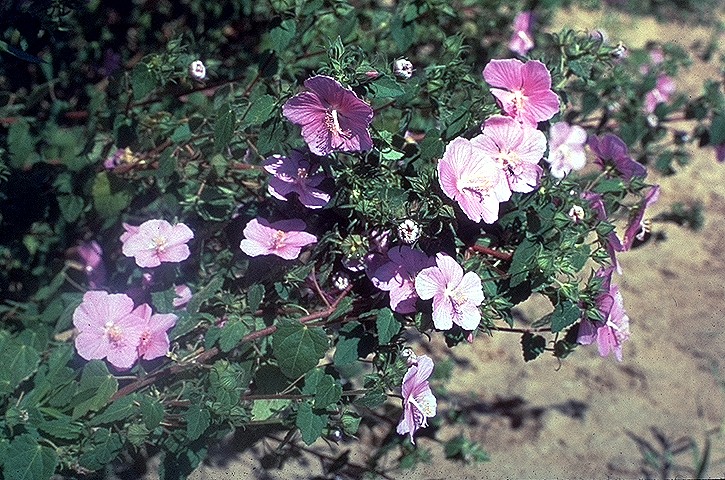
Pavonia lasiopetala, known as Texas Rock Rose or Texas Swampmallow, is a small, tough, long-blooming native shrub found only in the Texas Hill Country and nearby parts of south-central Texas. A member of the mallow family (Malvaceae), it produces hibiscus-like, rose-pink flowers in a steady show from spring through fall, each bloom opening fresh in the morning and fading by afternoon — a trait that keeps the shrub looking perpetually fresh without any deadheading.
Despite the “rock rose” name, this plant has no relation to the Mediterranean rockroses (Cistus); the name instead reflects its preference for the thin, rocky, limestone soils of its native Edwards Plateau range. It is one of the most widely planted Texas natives for exactly this reason: it thrives where many other ornamentals struggle, asking for almost nothing once established while blooming for months.
Texas Rock Rose forms a loose, rounded mound of soft, gray-green, velvety leaves and wiry stems, reseeding modestly where it’s happy but rarely becoming a nuisance. It is a mainstay of Hill Country gardens, xeriscapes, and pollinator plantings, valued as much for its toughness as for its months-long floral display.
Identification
Texas Rock Rose is a woody-based perennial subshrub typically growing 2 to 3 feet tall and 3 to 4 feet wide, with a loosely branched, somewhat sprawling habit. In colder winters within its range, top growth can die back to the woody base and resprout in spring.
Leaves & Stems
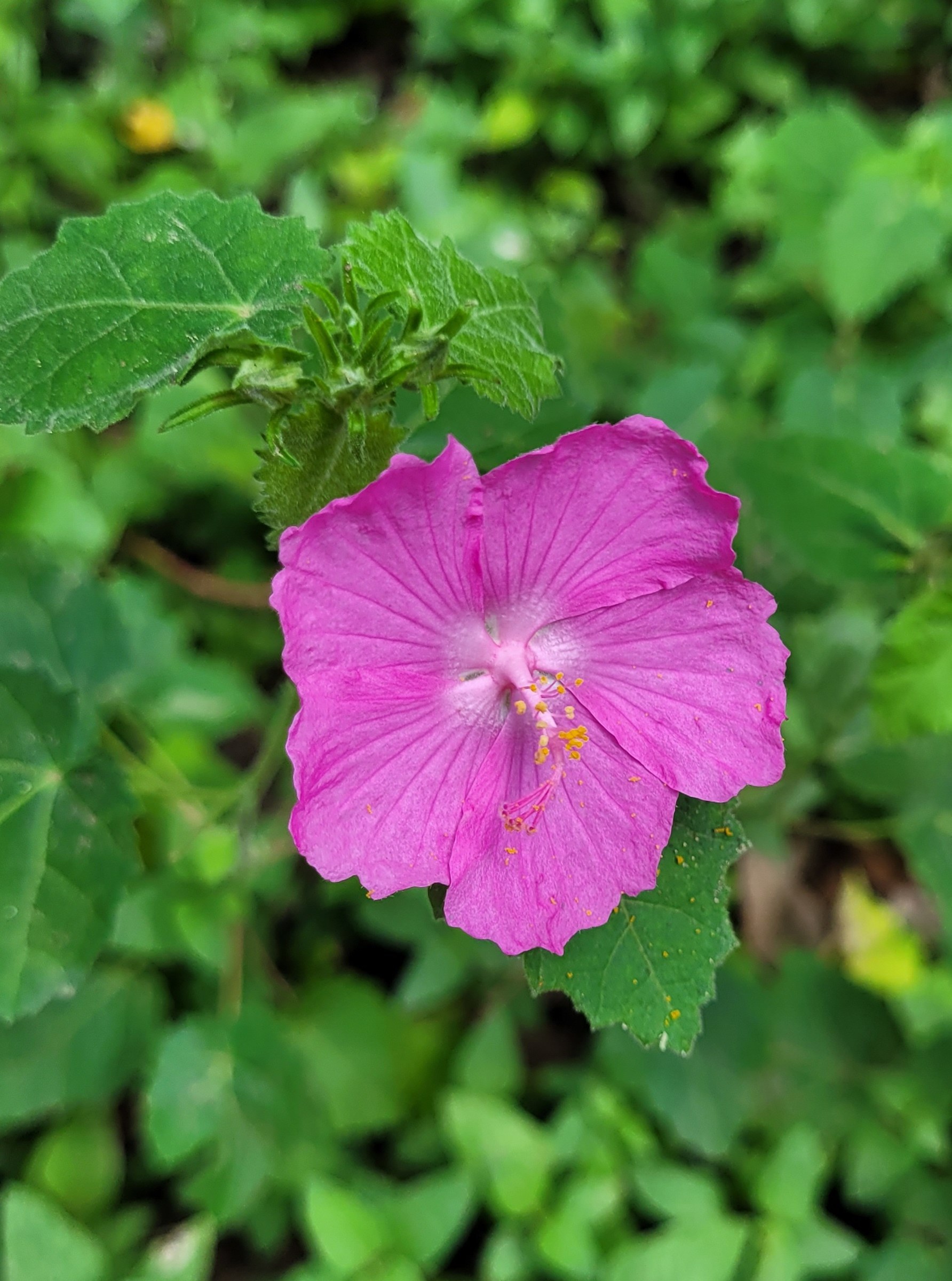
Leaves are gray-green, roughly heart- to triangular-shaped with toothed margins, 1 to 3 inches long, and covered in soft, velvety hairs that give the whole plant a slightly fuzzy, silvery cast. Stems are slender and wiry, often reddish, and branch repeatedly to form the shrub’s loose, rounded shape.
Flowers
The flowers are the main event: five-petaled, rose-pink to light purple-pink blooms about 1.5 to 2 inches across, with a prominent central column of fused stamens typical of the mallow family — the same floral structure seen in hibiscus and cotton. Each flower opens in early morning and closes or drops by late afternoon, but established plants produce a continuous supply of new blooms from spring through the first hard frost, so the shrub always appears to be flowering even though any individual bloom lasts only a day.
Fruit & Seed
Flowers are followed by small, dry, five-parted seed capsules (schizocarps) that split to release several seeds each. Plants reseed readily in loose, well-drained soil, which helps naturalize small colonies in favorable rock-garden or xeriscape settings without becoming aggressive.
Quick Facts
| Scientific Name | Pavonia lasiopetala |
| Family | Malvaceae (Mallow) |
| Plant Type | Woody-based perennial subshrub |
| Mature Size | 2–3 ft tall, 3–4 ft wide |
| Growth Rate | Fast |
| Sun Exposure | Full sun to part shade |
| Water Needs | Low once established; drought tolerant |
| Soil Type | Rocky, thin, well-drained; limestone-based preferred |
| Soil pH | Neutral to alkaline |
| Bloom Time | Spring through first frost |
| Flower Color | Rose-pink to light purple-pink |
| Deer Resistant | Mostly yes (occasional light browsing) |
| USDA Hardiness Zones | 8–10 |
Native Range
Texas Rock Rose is native to south-central Texas, centered on the Edwards Plateau (the Texas Hill Country) and extending into parts of South Texas, with its range continuing south into adjacent northeastern Mexico. It is a true Texas endemic within the United States — it does not occur natively anywhere else in the country, and widespread use as a landscape plant well outside the Hill Country should not be mistaken for natural range.
In the wild, it grows on thin, rocky, well-drained limestone soils on slopes, canyon edges, and open brushy areas — exactly the conditions found across the Edwards Plateau’s characteristic karst terrain. This origin explains its strong drought and heat tolerance and its dislike of heavy, poorly drained clay soils held wet for long periods.
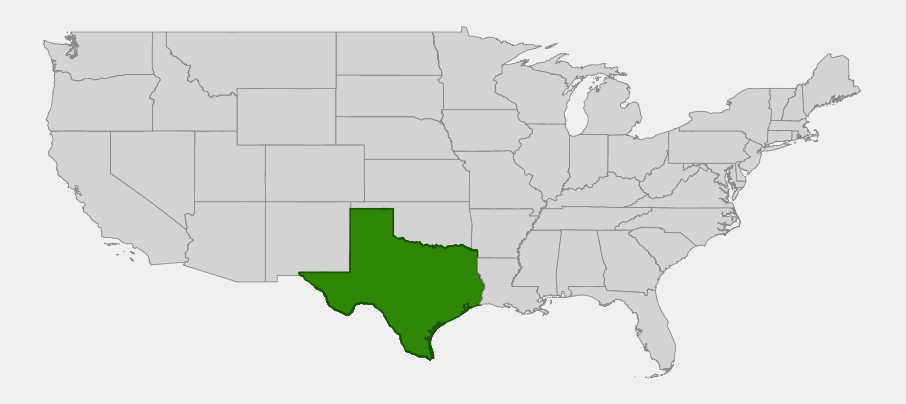
📋 This narrow Texas endemic falls outside the areas covered by Plant Native’s current regional plant lists, which do not yet include a dedicated south-central Texas list; check back as our regional coverage expands.
Growing & Care Guide
Texas Rock Rose is prized by Hill Country gardeners precisely because it asks for so little. Give it sun and drainage and it rewards you with months of bloom.
Light
Best flowering occurs in full sun, though the plant tolerates and even appreciates afternoon shade in the hottest parts of its range, where it stays a bit more compact and the foliage holds up better through peak summer heat.
Soil & Water
Rocky, thin, fast-draining soil is ideal — this plant is built for limestone caliche and decomposed granite, not rich garden loam or heavy clay. Once established, usually within the first growing season, it needs little to no supplemental water and handles extended Texas drought with ease. Overly rich or consistently wet soil leads to lanky, floppy growth and shortens the plant’s life.
Planting Tips
Plant in spring after the last frost, spacing plants 2 to 3 feet apart to allow for their mounding spread. Raised beds, rock gardens, and slopes with sharp drainage suit it especially well. It transplants easily from containers and establishes quickly in its first warm season.
Pruning & Maintenance
Cut back by about a third to a half in late winter or early spring to encourage dense, compact new growth and remove any winter dieback. Plants can also be sheared lightly mid-season if they start to sprawl. In hard winters at the colder edge of its range, expect dieback to the base, followed by vigorous resprouting once temperatures warm.
Landscape Uses
- Xeriscapes and rock gardens on thin, well-drained soil
- Pollinator gardens for a long, reliable nectar season
- Low hedges or informal borders in Hill Country-style landscapes
- Slope and bank plantings where drainage is sharp
- Container plantings on patios and in raised beds
Wildlife & Ecological Value
For Pollinators
Texas Rock Rose is an excellent nectar source for a wide range of pollinators, especially native bees and butterflies, which visit the flowers steadily through the plant’s long bloom season. Because a fresh crop of blooms opens every morning from spring to fall, it provides unusually consistent forage during months when many other natives have finished flowering.
For Birds & Other Wildlife
Hummingbirds visit the flowers opportunistically, and the dense, twiggy growth offers cover for small birds and insects. Deer generally leave it alone, making it a dependable choice in areas with heavy deer pressure where many flowering natives get browsed to the ground.
Ecosystem Role
As a component of Edwards Plateau brush and savanna communities, Texas Rock Rose helps anchor thin, erosion-prone limestone soils and contributes to the diverse understory that supports the Hill Country’s pollinator populations through the long Texas growing season.
A Note on Naming
Texas Rock Rose is also sold under the names Texas Swampmallow and Rose Mallow, and occasionally mislabeled as a type of true rockrose (genus Cistus) due to the common name alone — the two are unrelated, with Texas Rock Rose belonging to the mallow family alongside hibiscus and cotton rather than the rockrose family. No traditional food or medicinal uses are documented for this species; its value is horticultural and ecological rather than culinary.
Frequently Asked Questions
Why do Texas Rock Rose flowers only last one day?
This is a normal trait of the species — each flower opens in the morning and closes or drops by afternoon. The shrub compensates by producing a continuous supply of new flowers from spring through fall, so it always looks like it’s in bloom even though no single flower lasts long.
Is Texas Rock Rose actually a rose?
No. Despite the common name, it belongs to the mallow family (Malvaceae), the same family as hibiscus and cotton, not the rose family. The “rose” in the name refers to the flower’s rose-pink color and its loose, shrubby habit, and “rock” to its preference for thin, rocky soils.
Where does Texas Rock Rose grow natively?
It is native only to south-central Texas, mainly the Edwards Plateau (Hill Country) and parts of South Texas, with its range extending into northeastern Mexico. It is not native anywhere else in the United States, even though it is widely sold and planted well beyond that range.
How much water does Texas Rock Rose need?
Very little once established. It is a drought-adapted plant of thin limestone soils and generally does better with occasional deep watering during extreme heat than with frequent irrigation, which can cause weak, floppy growth.
Does Texas Rock Rose attract pollinators?
Yes, it’s a reliable favorite of native bees and butterflies thanks to its long bloom season, and hummingbirds visit it as well. It’s a strong choice for a pollinator garden that needs steady summer-to-fall nectar.

Looking for a nursery that carries Texas Rock Rose?
Browse our native plant nursery directory: Texas and nearby states