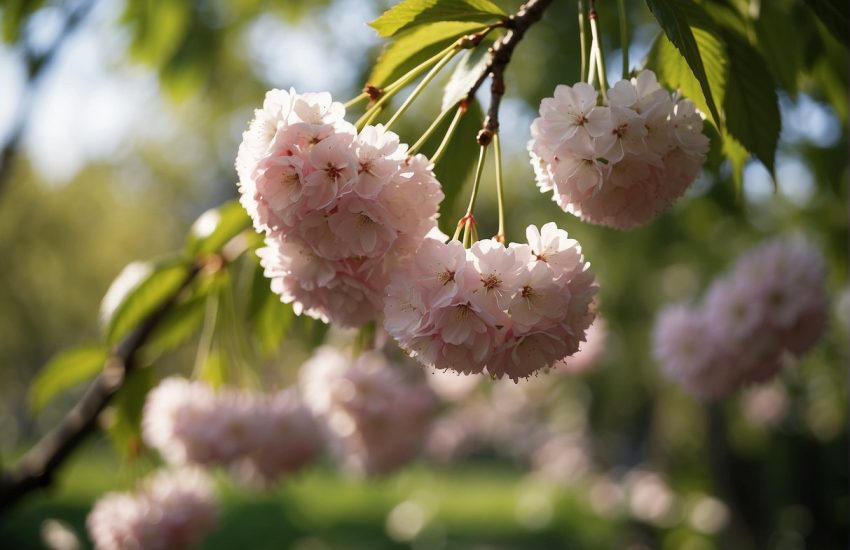
Wild Quinine (Parthenium integrifolium)
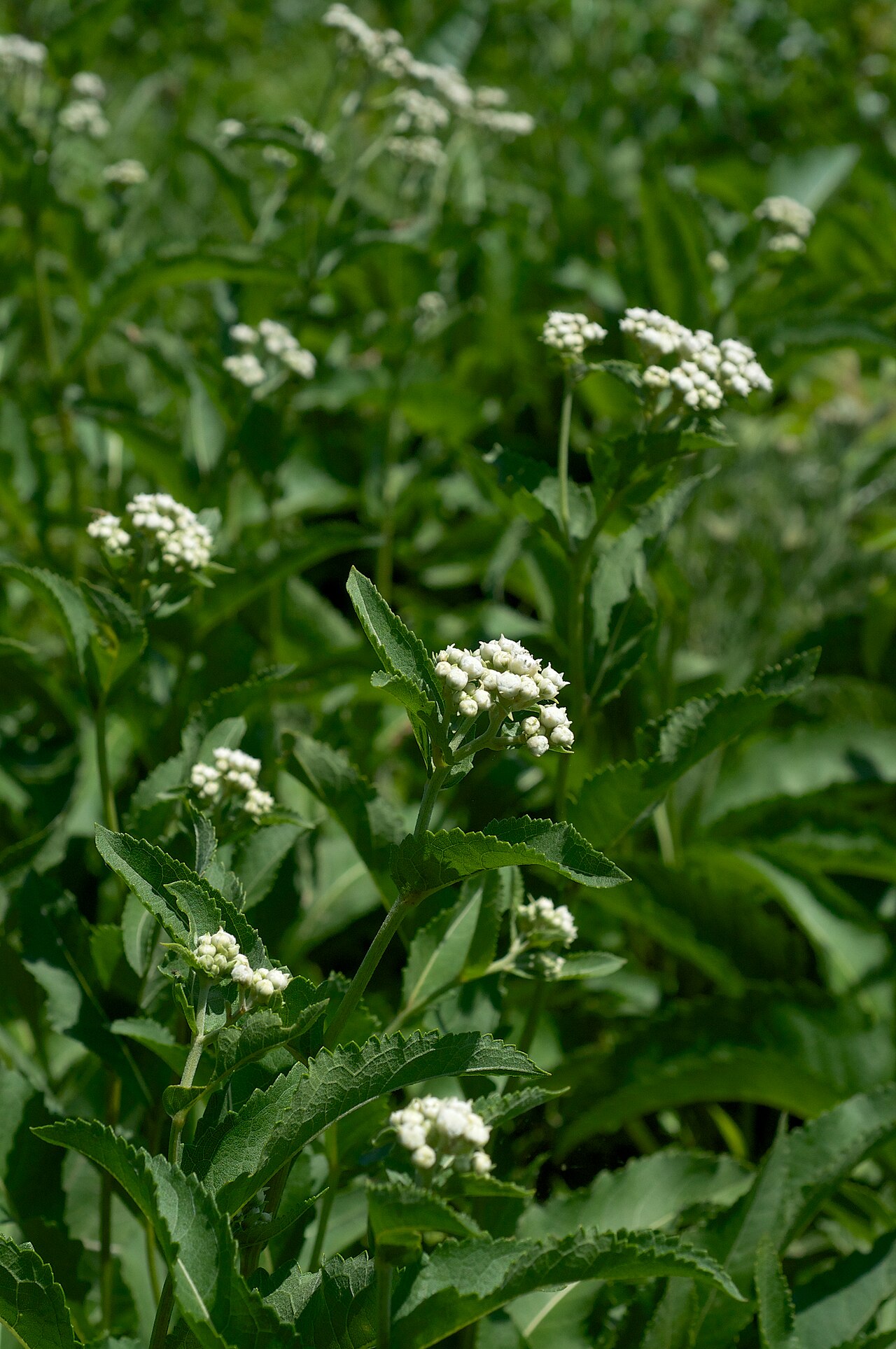
Parthenium integrifolium, known as Wild Quinine, American Feverfew, or Eastern Feverfew, is a sturdy, upright perennial wildflower of eastern and midwestern tallgrass prairies, open woodlands, and roadsides. A member of the aster family (Asteraceae), it is easy to overlook when not in bloom — a coarse clump of broad, toothed, somewhat rough leaves — but from early summer onward it sends up branching stems topped with flattened clusters of small, flat-topped white flower heads that stand out clearly against the green of a summer prairie or meadow.
The common name “Wild Quinine” comes from a once-important piece of American medical history rather than any real chemical similarity to true quinine, which comes from the tropical Cinchona tree. During the quinine shortages that accompanied the Civil War, Wild Quinine was investigated and used as a substitute fever remedy, a use that stuck in the plant’s common name even though its medicinal value never matched that of true quinine. Indigenous peoples of the eastern woodlands and prairies, including the Catawba and other groups, had already been using the plant medicinally for generations before that, for wound care, burns, and other remedies passed down through oral tradition.
For today’s native plant gardener, Wild Quinine is valued less for any medicinal claim and more as a dependable, long-blooming, pollinator-friendly prairie perennial. It holds its white flower clusters for weeks in summer, tolerates heat and drought once established, and stands up well in a mixed prairie planting or naturalistic border without flopping or requiring staking — a genuinely low-maintenance native for much of the eastern half of the country.
Identification
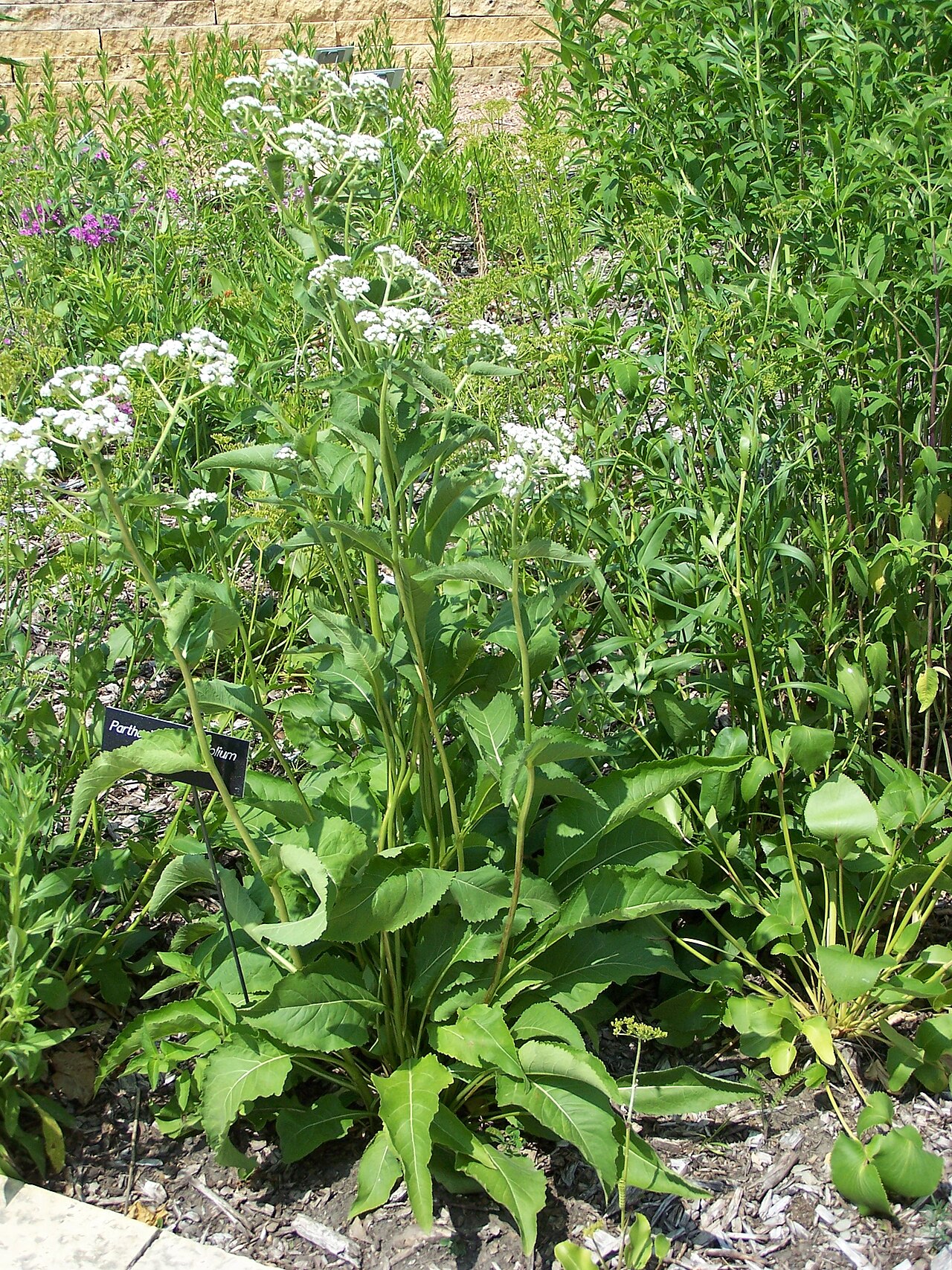
Wild Quinine is an upright, clump-forming herbaceous perennial typically reaching 2 to 4 feet (0.6–1.2 m) tall, occasionally up to about 3.3 feet (1 m) in the most favorable conditions, with a coarse, somewhat rough-textured overall appearance. The stems are stout, ridged, and branch toward the top where the flower clusters form, and the whole plant has a slightly resinous feel typical of the genus.
Leaves
The basal leaves are large, oval to broadly lance-shaped, 4 to 8 inches long, with coarsely toothed or lobed margins and a rough, somewhat sandpapery upper surface due to short glandular hairs. Stem leaves are smaller and narrower higher up the plant, becoming more lance-shaped and sparsely toothed near the flower clusters. The foliage is a dull, medium green, giving the plant a coarse, substantial look even before it flowers.
Flowers & Fruit
From roughly June through September, Wild Quinine produces flat-topped, branching clusters (corymbs) of small flower heads, each about ¼ to ⅓ inch across, with a center of numerous tiny whitish disc florets surrounded by just 5 to 6 short, inconspicuous white ray florets. Individually the flowers are modest, but the dense clusters create a showy, long-lasting white display that is often compared to a coarser, prairie version of yarrow or Queen Anne’s lace. The flowers carry a mild, pleasant, faintly medicinal scent. After bloom, each flower head produces small, dry, single-seeded fruits (achenes) that disperse locally as the dried flower heads break apart over winter.
Quick Facts
| Scientific Name | Parthenium integrifolium |
| Family | Asteraceae (Aster/Sunflower) |
| Plant Type | Herbaceous Perennial Wildflower |
| Mature Height | 2–4 ft (0.6–1.2 m) |
| Mature Spread | 1.5–2.5 ft (45–75 cm) |
| Growth Rate | Moderate |
| Sun Exposure | Full Sun to Light Shade |
| Water Needs | Low to Moderate |
| Soil Type | Dry to average, well-drained; tolerates poor, rocky, or clay soils |
| Soil pH | 6.0–7.5 (slightly acidic to neutral) |
| Bloom Time | June – September |
| Flower Color | White |
| Fall Color | Foliage browns and dies back; no notable fall color |
| Fruit | Small dry achene |
| Deer Resistant | Yes (rough, resinous foliage is rarely browsed) |
| USDA Hardiness Zones | 4–8 |
Native Range
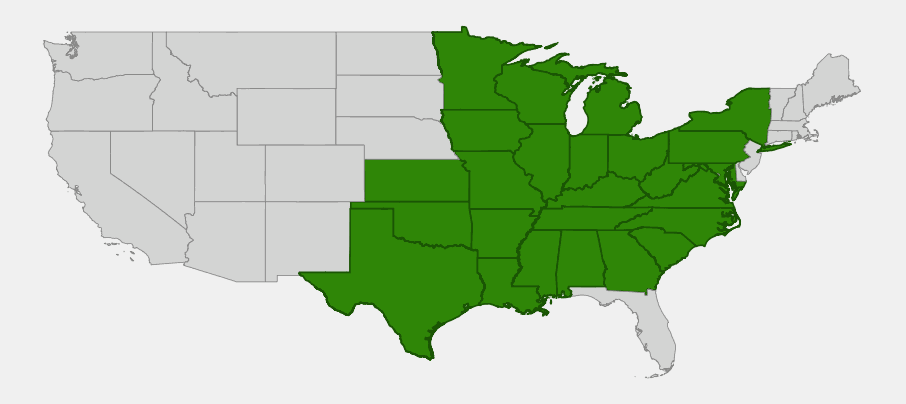
Wild Quinine is native across a broad swath of the eastern and midwestern United States, from Texas, Oklahoma, Kansas, and Missouri in the west, east through the Ohio Valley and Appalachians, and on through the mid-Atlantic. Populations in New England are introduced, not native. Confirmed native states include Alabama, Arkansas, Georgia, Iowa, Illinois, Indiana, Kansas, Kentucky, Louisiana, Maryland, Michigan, Minnesota, Missouri, Mississippi, North Carolina, New York, Ohio, Oklahoma, Pennsylvania, South Carolina, Tennessee, Texas, Virginia, Wisconsin, and West Virginia. It is most common and abundant through the central and southern parts of this range — the Ozarks, the mid-South, and the tallgrass prairie states — and becomes increasingly rare and scattered toward its northern edge in Wisconsin, Minnesota, Michigan, and parts of the Northeast, where many populations are small, disjunct outliers.
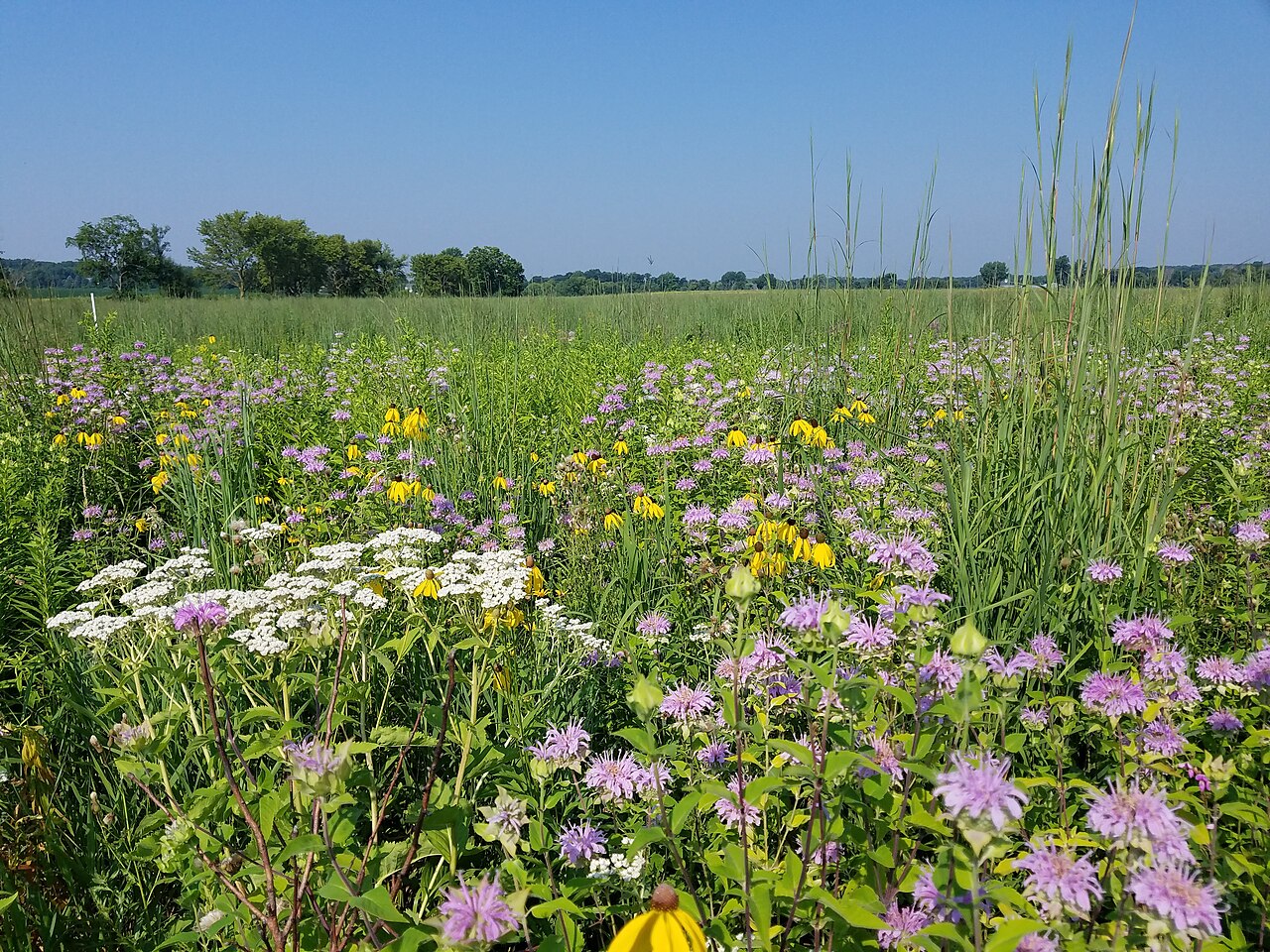
In the wild, Wild Quinine is a classic prairie and open-woodland species, typically found in tallgrass and mixed-grass prairie remnants, dry to mesic open woods, glades, limestone barrens, and along roadsides and railroad right-of-ways that mimic the open, periodically disturbed or burned conditions it favors. It commonly grows alongside other prairie perennials such as Wild Bergamot (Monarda fistulosa), Black-eyed Susan (Rudbeckia hirta), and Big Bluestem (Andropogon gerardii), and it responds well to the periodic fire that historically maintained these open habitats.
Outside of its native range — for example in parts of the Northeast or far West where it is sometimes planted in gardens — Wild Quinine should be treated as an introduced ornamental rather than a locally native wildflower, and gardeners there should check regional sources before including it in a native plant restoration.
📋 Regional plant lists featuring Wild Quinine: Georgia, Alabama & Mississippi · Arkansas, Louisiana, Eastern Oklahoma & Eastern Texas · Kentucky & Tennessee · Ohio & Indiana · Illinois, Iowa & Missouri · Michigan, Wisconsin & Eastern Minnesota · Nebraska, Kansas & Eastern Colorado · North Carolina & South Carolina · Maryland, Virginia & West Virginia · New York, Pennsylvania & Northern New Jersey
Growing & Care Guide
Wild Quinine is one of the easier tallgrass prairie natives to establish in a garden setting, forgiving of average soil and inconsistent rainfall once its roots are in.
Light
Full sun produces the sturdiest stems and the best flower display, though Wild Quinine tolerates light shade, particularly at the edges of open woodland. In heavier shade, expect taller, floppier growth and fewer flowers.
Soil & Water
This species is adaptable to dry, average, or even heavier clay soils as long as drainage is reasonable, and it is naturally drought-tolerant once its deep roots are established — a legacy of its prairie origins. Regular moisture during the first growing season helps it establish, after which supplemental watering is rarely necessary outside of extended drought.
Planting Tips
Plant container stock in spring or fall, spacing plants about 18 to 24 inches apart to allow the clumps to fill out without crowding. Wild Quinine combines well with grasses and other prairie perennials in a naturalistic planting, where its white flower clusters provide good textural contrast against taller grasses and brightly colored companions.
Pruning & Maintenance
Little maintenance is needed. Cutting back spent flower stalks in late fall or leaving them through winter for seed and habitat value are both reasonable options; cut the whole plant back to the ground in late winter before new growth emerges. Established clumps are long-lived and rarely need dividing.
Propagation
Wild Quinine is most commonly propagated from seed, which benefits from a period of cold, moist stratification over winter to improve germination, mimicking natural conditions on the prairie. Established clumps can also be divided in early spring.
Landscape Uses
Wild Quinine’s sturdy, upright form and long bloom period make it useful in several garden settings:
- Prairie and meadow restorations as a reliable, long-blooming white-flowered component
- Pollinator gardens paired with other prairie natives for season-long bloom
- Dry, low-maintenance borders where drought tolerance is a priority
- Naturalistic plantings combined with native grasses for structural contrast
- Cut flower gardens — the flat-topped white clusters hold up well in arrangements
Wildlife & Ecological Value
Despite its modest individual flowers, Wild Quinine is a genuinely useful plant for prairie wildlife, offering both forage and structural habitat across the growing season.
For Pollinators
The long summer bloom period draws a wide range of small native bees, wasps, beetles, and flies to the abundant, easy-to-access disc florets, making Wild Quinine a dependable mid-summer nectar and pollen source in a prairie or pollinator garden.
For Birds
Seed-eating songbirds feed on the small achenes through fall and into winter if seed heads are left standing, and the coarse foliage and sturdy stems provide some cover for ground-feeding birds in a prairie planting.
For Mammals
The rough, resinous foliage is not a preferred browse for deer and rabbits, which makes Wild Quinine a relatively dependable choice in gardens with heavy deer pressure.
Ecosystem Role
As a long-lived, deep-rooted prairie perennial, Wild Quinine contributes to soil structure and stability in restored prairies and helps fill the structural niche of a mid-height forb among taller grasses, supporting the overall diversity that makes tallgrass prairie plantings resilient and attractive to a wide range of insects and birds.
Cultural & Historical Uses
Wild Quinine’s common name reflects its history as a Civil War–era substitute fever remedy, used when supplies of true quinine from tropical Cinchona bark became scarce; it was never an equivalent treatment, and that historical use has no bearing on modern medicine. Indigenous peoples of the eastern woodlands and prairies, including the Catawba, used the plant medicinally well before European contact, applying preparations of the plant to wounds and burns as part of a broader tradition of plant-based remedies — historical uses that are documented in ethnobotanical records rather than practices recommended today.
Beyond its historical medicinal associations, Wild Quinine has long been noted by botanists for its distinctive flat-topped white flower clusters, which made it a recognizable, often-collected plant in 19th- and early 20th-century botanical surveys of eastern prairies and open woods. Its resilience in disturbed, periodically burned, or mowed habitats also made it a familiar roadside and railway-corridor plant across much of its range.
Gardeners and herbalists should be aware that, like a number of its relatives in the genus Parthenium, Wild Quinine’s foliage can cause skin irritation or contact dermatitis in sensitive individuals, particularly with repeated handling of the leaves and stems. Anyone cutting or dividing the plant, especially in quantity, may want to wear gloves as a simple precaution.
Frequently Asked Questions
Does Wild Quinine actually contain quinine?
No. The common name comes from its historical use as a Civil War–era substitute fever remedy when true quinine (from the tropical Cinchona tree) was in short supply, not from any shared chemistry. It has no modern medicinal use.
Is Wild Quinine toxic or irritating to touch?
It is not documented as seriously toxic, but like several related Parthenium species, its foliage can cause skin irritation or contact dermatitis in sensitive people. Wearing gloves when handling or dividing the plant is a sensible precaution.
Can I eat Wild Quinine?
No part of Wild Quinine is grown or recommended as food. Its historical uses were strictly medicinal folk remedies, not culinary, and it should not be consumed.
How much sun does Wild Quinine need?
It performs best in full sun, which produces the sturdiest stems and most flowers, but it will tolerate light shade, especially at woodland edges, with somewhat taller and less floriferous growth as a result.
Is Wild Quinine deer resistant?
Generally yes. Its rough, resinous foliage is not a preferred browse for deer or rabbits, making it a reasonably dependable choice in gardens with significant deer pressure.

Looking for a nursery that carries Wild Quinine?
Browse our native plant nursery directory: Alabama & Arkansas · Georgia · Iowa, Illinois, Indiana & Kansas · Kentucky, Louisiana, Maryland, Michigan, Minnesota, Mississippi & Missouri · North Carolina, New York, Ohio & Oklahoma · Pennsylvania, South Carolina, Tennessee, Texas & Virginia · Wisconsin & West Virginia