Catclaw Acacia (Acacia greggii)
Acacia greggii, commonly known as Catclaw Acacia, Wait-a-Minute Bush, or Devil’s Claw, is a tenacious, drought-adapted native shrub and small tree of the American Southwest and Chihuahuan, Sonoran, and Mojave deserts. Named for its distinctive recurved thorns — which catch and hold clothing, fur, and skin with remarkable efficiency — Catclaw Acacia is both one of the most ecologically important and personally memorable plants in the desert landscape. Once encountered, it is not easily forgotten. The Chiricahua Apache are said to have used it as a natural barrier fence, a purpose it still serves effectively in xeriscape landscapes today.
In the wild, Catclaw Acacia forms dense, impenetrable thickets along desert washes, canyon bottoms, and rocky hillsides, typically growing on well-drained sandy or gravelly soils. Its pale yellow, cylindrical flower spikes — appearing from late spring through early summer — are a vital nectar source for dozens of bee species and butterflies, making this thorny shrub one of the most important pollinator plants in the entire Southwest desert ecosystem. The leguminous seed pods that follow are an important food source for quail, doves, coyotes, javelinas, and other desert wildlife.
Despite its fearsome thorns, Catclaw Acacia has been used for food, medicine, and materials by Indigenous peoples of the Southwest for thousands of years. Today, it is increasingly valued in native landscaping for its ability to thrive on minimal water, its exceptional wildlife value, and its capacity to stabilize desert soils and restore disturbed areas. For erosion control along desert roadsides and washes, few plants can match its effectiveness.
Identification
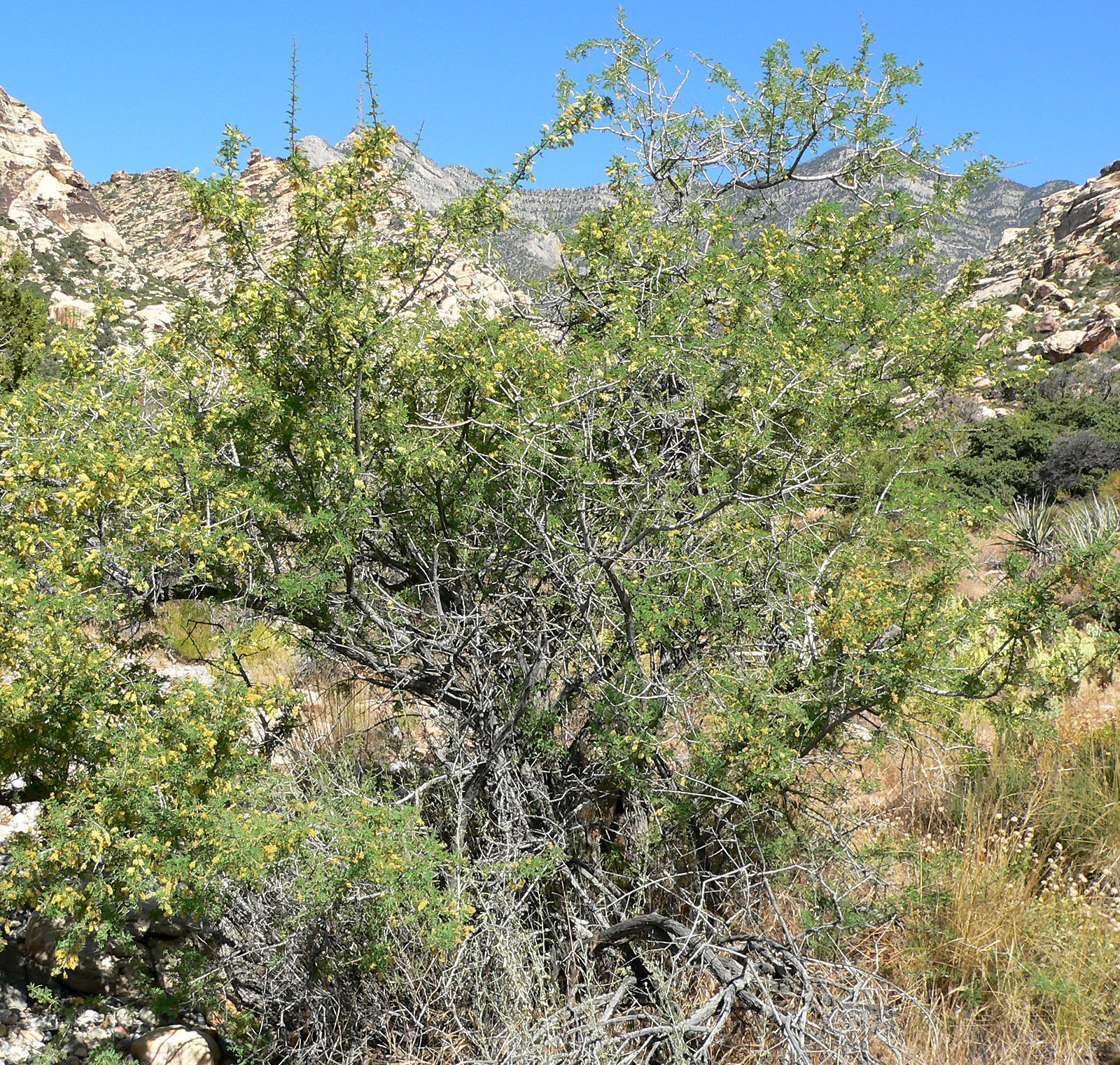
Catclaw Acacia typically grows as a multi-stemmed shrub 3 to 10 feet tall, though in favorable canyon locations it can develop into a small tree reaching 15 to 20 feet. The branching pattern is irregular and spreading, forming dense thickets with a rounded to irregular crown. The distinguishing feature that gives the plant its common names is the numerous curved, cat-claw-like prickles (technically stipular spines) scattered along the stems — these are stout, hooked, and remarkably effective at snagging passersby.
Bark & Stems
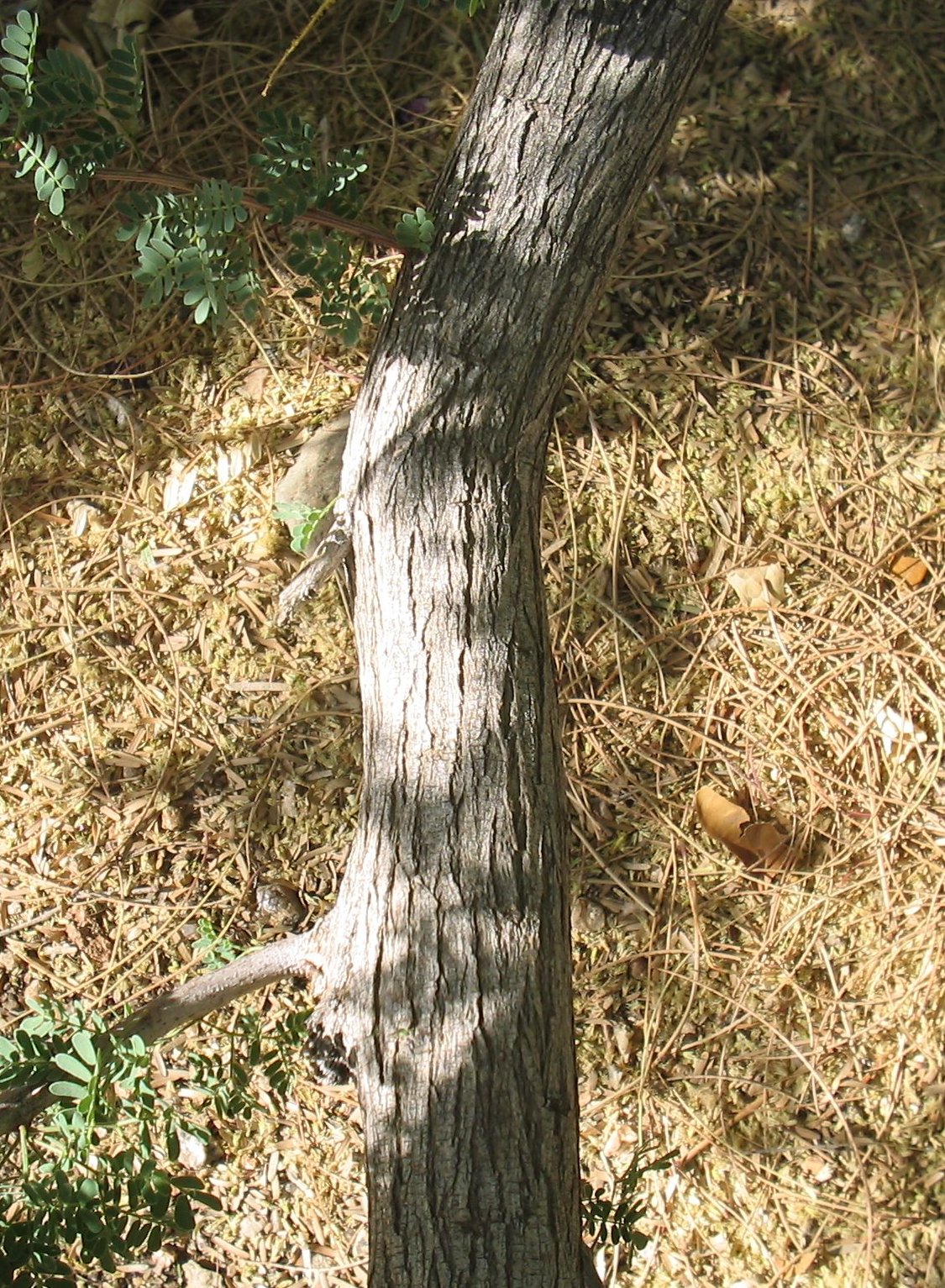
Young stems are greenish-gray, becoming grayish to reddish-brown with age. The bark on older trunks becomes rough and furrowed. The stems bear numerous sharp, recurved prickles 3–6 mm long that are brown to gray and curve backward like a cat’s claw. These prickles are actually modified stipules (outgrowths at the base of leaves), not true thorns, but they are just as effective at deterring passage. In larger specimens, the trunk can reach 8–10 inches in diameter and develops deeply furrowed, grayish bark.
Leaves
The leaves are bipinnately compound — feathery and twice-divided — typical of acacias. Each leaf is 1–3 inches long with 1–3 pairs of pinnae (primary leaflet divisions), each bearing 3–7 pairs of tiny, oblong leaflets approximately 2–6 mm long. The leaflets are blue-green to gray-green and create a delicate, airy texture that contrasts beautifully with the plant’s thorny character. Like many desert legumes, Catclaw Acacia can partially or fully drop its leaves during severe drought, reducing water loss, then releaf quickly after rains.
Flowers & Fruit
The flowers are arranged in dense, elongated, cylindrical spikes 1–3 inches long, creamy-white to pale yellow, and intensely fragrant — a sweet, honey-like scent that can be detected from a considerable distance. Blooming typically occurs from April through June, though a second flush is common after summer monsoon rains from July to August. The flowers are a major nectar source, attracting honey bees, native solitary bees, beetles, and butterflies in large numbers.
The seed pods are flat, brownish, strap-shaped legumes 2–5 inches long, often twisted or curved, ripening in late summer through fall. The pods are nutritious and consumed by Gambel’s Quail, White-winged Doves, Curve-billed Thrashers, Coyotes, Javelinas (Collared Peccary), Deer, and many rodents. The seeds inside are hard, brown, and ovoid — they require scarification or passing through an animal’s digestive system to germinate effectively.
Quick Facts
| Scientific Name | Acacia greggii |
| Family | Fabaceae (Legume/Pea) |
| Plant Type | Deciduous Shrub / Small Tree |
| Mature Height | 20 ft |
| Sun Exposure | Full Sun |
| Water Needs | Low (Drought Tolerant) |
| Bloom Time | April – June; often re-blooms July – August after monsoons |
| Flower Color | Pale yellow / creamy white (cylindrical spikes) |
| USDA Hardiness Zones | 7–11 |
Native Range
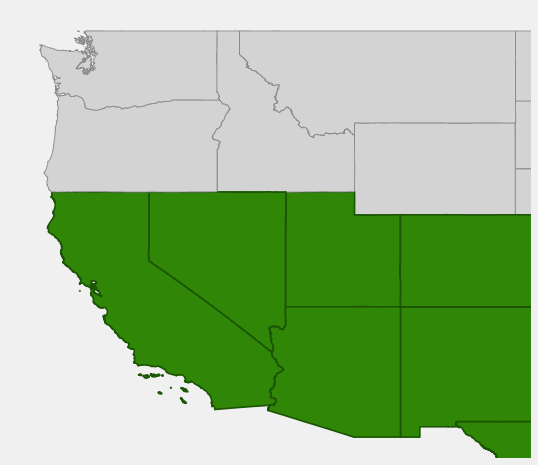
Catclaw Acacia is native to the deserts and arid regions of the American Southwest and northern Mexico. In the United States, it ranges from southern California across Nevada, Utah, and Colorado southward through Arizona, New Mexico, Texas, and Oklahoma. It reaches its greatest abundance and diversity in the Chihuahuan and Sonoran deserts, where it is a dominant shrub in desert washes and canyon bottoms from below sea level in Death Valley margins to over 5,000 feet elevation in mountain foothills.
In Utah, Catclaw Acacia is found primarily in the southern and southwestern portions of the state — in Washington County (St. George area), Kane County, and along the Virgin River corridor. It thrives in the hot, dry canyon country characteristic of the Colorado Plateau and is typically found below 4,500 feet elevation in Utah. It is commonly associated with desert washes where occasional flood flows provide extra moisture, making it more common in riparian-adjacent environments than on open desert slopes.
In Mexico, the species extends through Sonora, Chihuahua, Coahuila, Nuevo León, and into Central Mexico. Overall, Catclaw Acacia is one of the most widespread and abundant native shrubs of the Southwest desert, occurring in Chihuahuan Desert scrub, Sonoran Desert scrub, Mojave Desert wash communities, and desert grassland transition zones. Its ability to fix atmospheric nitrogen through root nodule bacteria makes it an important soil-building species in nutrient-poor desert soils.
📋 Regional plant lists featuring Catclaw Acacia: Utah
Growing & Care Guide
Catclaw Acacia is one of the toughest and most drought-tolerant native shrubs available for Southwestern gardens. Once established, it essentially takes care of itself — it evolved over millennia in some of the harshest desert conditions on Earth. However, a few key points will ensure successful establishment and landscape use.
Light
Catclaw Acacia demands full sun and thrives in the hottest, most reflective exposures. It is an ideal choice for south-facing slopes, rocky hillsides, and areas near reflective walls or pavement where many plants would fail. It does not tolerate shade and will grow spindly and poorly in low-light conditions. Maximum sun exposure produces the densest, most floriferous specimens.
Soil & Water
This plant thrives in poor, sandy, gravelly, or rocky soils with excellent drainage — the very conditions that challenge most garden plants. It is highly sensitive to root rot in heavy clay soils, so drainage is critical. Once established (typically after 1–2 growing seasons with supplemental irrigation), Catclaw Acacia requires little to no supplemental water in desert climates. During establishment, water deeply every 2–3 weeks. In Utah, it may benefit from occasional deep watering during extended summer dry periods, but overwatering is far more dangerous than underwatering for this species.
Planting Tips
Plant Catclaw Acacia in spring after the last frost, or in fall at least 6 weeks before the first frost. Container-grown plants transplant well. Amend heavy clay soils with coarse sand or gravel to improve drainage — do not add organic matter, which can hold too much moisture. Wear thick leather gloves when handling. Site plants where their thorns won’t pose a hazard to foot traffic. They are excellent planted along property boundaries as a natural, impenetrable barrier hedge, or in naturalized desert plantings well away from paths and seating areas.
Pruning & Maintenance
Catclaw Acacia needs minimal pruning. If shaping is needed, do it in late winter before new growth begins. Always use heavy gloves and long-sleeved clothing. Remove dead branches as needed. The plant naturally forms a dense, spreading shape that is part of its character. Avoid over-pruning, which can stress the plant and reduce flowering. No fertilization is needed or beneficial — desert-adapted plants evolved in nutrient-poor soils and excess nutrients produce rank, weak growth.
Landscape Uses
- Desert xeriscape — minimal water once established
- Security barrier hedge — impenetrable thorny thicket
- Wildlife garden anchor — essential pollinator and food plant
- Desert wash restoration — stabilizes arroyo banks
- Nitrogen fixer — improves desert soils
- Slope erosion control — deep roots hold soil on hillsides
Cautions
The curved thorns can cause painful puncture wounds and are difficult to remove due to their barbed shape. Keep Catclaw Acacia away from areas frequented by children or pets. The pollen can trigger allergic reactions in sensitive individuals during the heavy bloom period. Plant thoughtfully — this is a plant that fights back.
Wildlife & Ecological Value
Catclaw Acacia is a keystone ecological species in the desert Southwest, providing food, shelter, and habitat for an extraordinary diversity of wildlife across all seasons.
For Birds
The dense, thorny thickets of Catclaw Acacia provide some of the best nesting habitat available in desert environments. Gambel’s Quail use the thickets as escape cover and nesting sites. Curve-billed Thrashers, Cactus Wrens, Black-tailed Gnatcatchers, and numerous other desert birds build nests in the protective branches. The seed pods attract White-winged Doves and Mourning Doves. During bloom, hummingbirds visit for nectar, and insectivorous birds hunt the many insects attracted to the flowers.
For Mammals
Mule Deer and Whitetail Deer browse the foliage. Javelinas (Collared Peccary) consume the seed pods enthusiastically. Coyotes eat both pods and the animals that shelter in the thickets. Black Bears may visit for the nutritious pods in Arizona and New Mexico populations. Numerous rodent species — Kangaroo Rats, Ground Squirrels, Pocket Mice — cache and eat the seeds. The thorny thickets provide crucial daytime shelter and escape cover for jackrabbits, cottontails, and other small mammals.
For Pollinators
The creamy flower spikes of Catclaw Acacia are a major nectar and pollen resource for desert pollinators. Honey bees produce a distinctively flavored acacia honey from its flowers. Native bees — including several specialist bee species (oligoleges) that collect only Acacia pollen — are abundant visitors. Metallic green bees (Agapostemon, Augochlora), leafcutter bees (Megachile), and various bumble bees all frequent the blooms. Several butterfly species visit for nectar, including the Reakirt’s Blue, whose caterpillars may feed on the flowers and young seed pods.
Ecosystem Role
As a nitrogen-fixing legume, Catclaw Acacia improves desert soil fertility through its symbiotic relationship with Rhizobium bacteria in root nodules. This makes it an important facilitator species that enables other plants to establish in degraded desert soils. Its fallen leaves decompose to add organic matter to nutrient-poor desert soils. The impenetrable thickets create micro-refugia where young cacti and other desert plants can establish protected from herbivory — Catclaw Acacia is an important “nurse plant” for Saguaro cacti and other columnar cacti throughout the Sonoran Desert.
Cultural & Historical Uses
Catclaw Acacia has been used by Indigenous peoples of the Southwest for thousands of years. The Tohono O’odham (Papago) and Akimel O’odham (Pima) peoples harvested the nutritious seed pods, which were ground into a meal and used to make porridge, flatbreads, and fermented beverages. The pods can contain up to 30% protein and are comparable in nutrition to other legumes. The Chiricahua Apache valued the plant as a natural fence — planting it around camps and gardens to create impenetrable barriers. Seeds were stored for winter food use.
Medicinally, various Indigenous groups used Catclaw Acacia in different ways. The gum exuded from wounded bark was used as a glue and adhesive for repairing pottery and tools. A tea made from the bark was used by some groups to treat various ailments. The strong, durable wood was used for fuel, tool handles, and construction of small implements. The inner bark fibers were used to make cord and rough textiles in some cultures.
Spanish colonizers noted the plant’s extraordinary ability to halt human and animal movement through the landscape, and Spanish-speaking communities named it “uña de gato” (cat’s claw) — a name still used in Mexico today. During the cattle-ranching era of the 19th and 20th centuries, Catclaw Acacia was frequently cleared from ranch lands as it hindered cattle movement and could injure livestock. This clearing dramatically reduced its abundance in some areas. Today, conservation awareness has reversed this trend, and Catclaw Acacia is increasingly recognized as a cornerstone species for desert ecosystem restoration. Native plant nurseries in Arizona, New Mexico, and Utah now offer container-grown plants for landscape use.
Frequently Asked Questions
Why is it called Wait-a-Minute Bush?
The nickname “Wait-a-Minute Bush” (and the related “Wait-a-Bit Bush”) refers to what happens when you try to walk through or past it — the curved, recurved thorns catch your clothing, skin, or fur and demand that you stop and carefully free yourself rather than pushing through. The name perfectly captures the experience of anyone who has blundered into a Catclaw Acacia thicket.
Is Catclaw Acacia good for bees?
Extremely so. Catclaw Acacia is considered one of the most important honey plants in the Southwest desert. Honey bees produce a distinctive, high-quality honey from its flowers, and native bees — including several specialist species that collect only Acacia pollen — depend on it as a critical food source during the spring bloom period. Planting Catclaw Acacia in a desert garden significantly boosts pollinator activity.
How do I remove Catclaw Acacia if it’s growing where I don’t want it?
Removal is challenging due to the thorns and the plant’s resilient root system. Wear heavy leather gloves, long sleeves, and eye protection. Cut stems at the base and remove as much root as possible, as stumps can resprout vigorously. Repeated cutting of new growth will eventually exhaust the root reserves. Chemical treatment of fresh-cut stumps with appropriate herbicide can prevent resprouting. Never attempt removal without proper protective clothing.
Can Catclaw Acacia grow in clay soil?
It is not well suited to heavy clay soils. Catclaw Acacia evolved in well-drained, sandy, or gravelly desert soils and is susceptible to root rot in poorly draining clay. If you have clay soil and want to grow it, amend the planting area generously with coarse sand or gravel and ensure excellent drainage. Raised beds or mounded planting areas work well in clay-heavy landscapes.
Does Catclaw Acacia need water once established?
In desert climates receiving 6+ inches of annual rainfall, established Catclaw Acacia requires no supplemental irrigation. In drier conditions or during extended droughts, a deep watering once a month in summer is beneficial but not strictly necessary for the plant’s survival. It is one of the most drought-tolerant native shrubs in the American Southwest.

Looking for a nursery that carries Catclaw Acacia?
Browse our native plant nursery directory: Utah