Coastal Panic Grass (Panicum amarum)
Panicum amarum, known as Coastal Panic Grass or Bitter Panic Grass, is a tough, drought-tolerant native grass that has evolved specifically to thrive in the demanding conditions of coastal dunes, barrier islands, and sandy shorelines along the Atlantic and Gulf coasts of North America. Its striking blue-green to blue-gray foliage and excellent dune-binding root system make it one of the most important native grasses for coastal stabilization and erosion control.
Growing in clumps 1 to 2 feet tall with arching, ribbon-like leaves, Coastal Panic Grass is a warm-season grass that greens up in late spring and produces airy, open seed panicles in late summer and fall. The seeds are eagerly consumed by American Goldfinches, Song Sparrows, and many other coastal birds. In the landscape, its luminous blue-gray color makes it stand out dramatically — cultivars like ‘Dewey Blue’ have been selected specifically for ornamental use and are prized in coastal gardens and green infrastructure projects throughout the Mid-Atlantic region.
What makes Coastal Panic Grass extraordinary is its adaptability to conditions that defeat most other plants: full sun, deep sand, salt spray, salt-laden soil, and extreme drought. Its deep, fibrous root system penetrates far into sandy substrates, holding the soil against wind and wave-driven erosion while building new dune formations by trapping windblown sand around its stems. Coastal Panic Grass is an ecological keystone on Mid-Atlantic barrier islands and coastal beaches.
Identification
Coastal Panic Grass is a clump-forming, warm-season perennial grass that spreads slowly via short rhizomes, forming dense colonies over time. It grows 1 to 2 feet tall (and occasionally to 3 feet in favorable conditions), with stiffly arching, strap-like leaves that give each clump an attractive fountain-like form.
Leaves & Stems
The leaves are the most striking feature — flat to slightly inrolled, 6 to 18 inches long and about ½ inch wide, with a distinctive blue-green to blue-gray waxy bloom (glaucous coating) that gives the plant its ornamental value and helps reflect intense coastal sunlight. The leaf surface is smooth and hairless. Stems (culms) are stout, erect, and also glaucous. The leaf margins may be slightly rough to the touch. The overall impression is of a cool-toned, almost silvery-blue grass that stands out strongly against warm-colored sand.
Flowers & Seeds
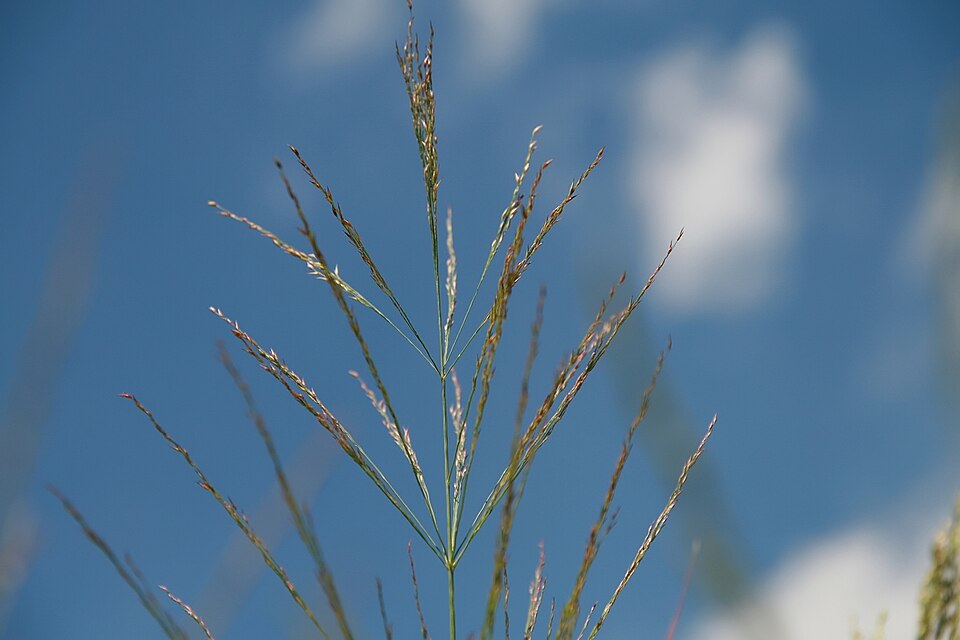
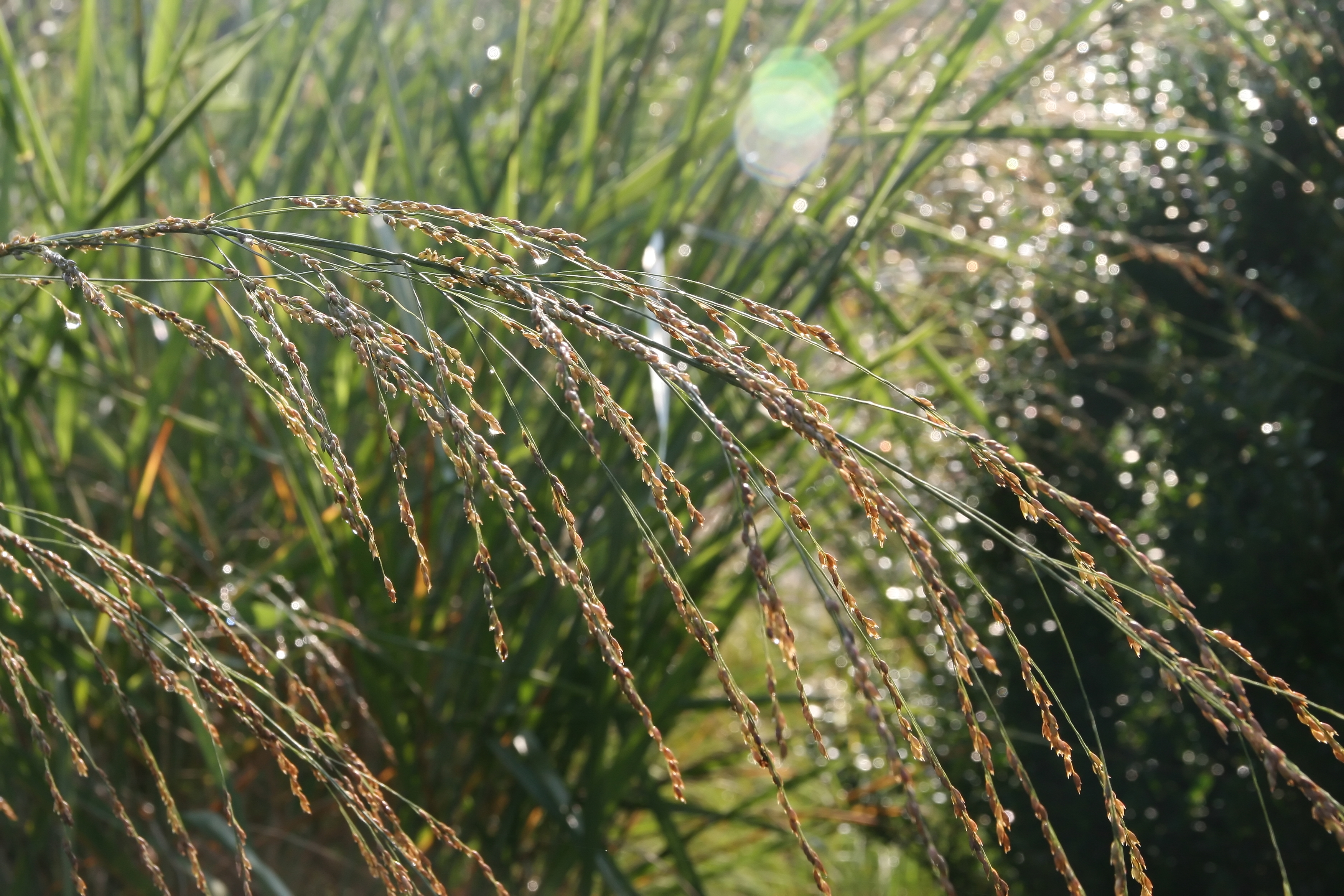
Coastal Panic Grass blooms in mid to late summer, producing an open, branching panicle 6 to 18 inches long above the foliage. The seed heads are airy and loosely branched, with small, oval spikelets containing individual seeds. The spikelets turn from green to tan as seeds mature in fall. Seeds persist on the plant through winter, providing food for birds during the lean months. The species name “amarum” means “bitter” in Latin, referring to the bitter taste of the plant that discourages grazing.
Quick Facts
| Scientific Name | Panicum amarum |
| Family | Poaceae (Grass) |
| Plant Type | Warm-season perennial grass |
| Mature Height | 1–2 ft |
| Sun Exposure | Full Sun |
| Water Needs | Low (Drought Tolerant) |
| Bloom Time | July – September |
| Flower Color | Green to tan (ornamental seed heads) |
| USDA Hardiness Zones | 5–9 |
Native Range
Coastal Panic Grass is native to the Atlantic and Gulf coasts of North America, ranging from Massachusetts south through the Mid-Atlantic states (including Maryland, Virginia, and the Delmarva Peninsula) to Florida, and west along the Gulf Coast to Texas. It also occurs inland on sandy substrates in some areas. The plant is strongly associated with primary and secondary coastal dunes, back-dune areas, and sandy flats immediately behind the beach zone.
In Maryland, Coastal Panic Grass is found primarily on Assateague Island and the barrier beaches of Worcester County, where it forms dense colonies on the foredune and back-dune areas alongside American Beachgrass (Ammophila breviligulata). In Virginia, it occurs on the barrier islands of the Eastern Shore — part of one of the most pristine coastal barrier island systems on the East Coast — and at Virginia Beach area beaches.
The plant’s range overlaps almost perfectly with sandy coastal habitats, reflecting its highly specialized ecology. It does not naturally occur inland away from sandy, well-drained soils, though garden cultivars have been successfully grown in inland settings with appropriate sandy or amended soils.
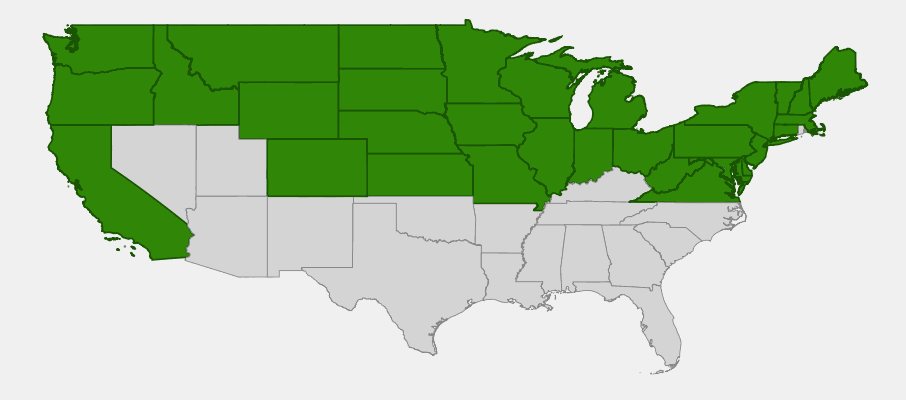
📋 Regional plant lists featuring Coastal Panic Grass: Maryland, Virginia & West Virginia
Growing & Care Guide
Coastal Panic Grass is one of the most low-maintenance native plants available for sunny, dry, and coastal landscapes. Its needs are minimal once established, and it positively thrives in conditions that would stress or kill most ornamental plants.
Light
This grass requires full sun — minimum 6 hours of direct sunlight daily. Do not attempt to grow it in shade or even significant part-shade, as it will become weak and floppy and lose its characteristic blue-gray color. Full sun on sandy soil is where it truly excels.
Soil & Water
Coastal Panic Grass is specially adapted to poor, sandy, rapidly draining soils with low fertility. It is exceptionally drought tolerant once established and does not require irrigation in coastal settings or sandy soils. Avoid rich, moist, or clay-heavy soils — in fertile conditions, the plant tends to become overly lush and floppy, losing its compact, ornamental form. It is highly salt tolerant and handles both salt spray and salty soils with ease. Do not fertilize; excess nutrients destroy its compact habit.
Planting Tips
Plant in spring after danger of frost has passed, as this is a warm-season grass that emerges late and dislikes cold, wet soils. In coastal restoration projects, space plants 18 to 24 inches apart for erosion control on foredunes; in ornamental settings, space 18 to 30 inches apart for clump definition. Do not amend coastal sandy soils with compost or fertilizer — plant directly into native sand. The cultivar ‘Dewey Blue’ is widely used in coastal landscaping and has an especially intense blue-gray color.
Pruning & Maintenance
Cut clumps back to 3 to 4 inches in late winter before new growth emerges. This removes old, tattered foliage and encourages fresh, strongly colored new growth. Other than this annual cut-back, Coastal Panic Grass requires almost no maintenance. It is naturally pest- and disease-free. It does spread slowly by rhizomes and may need occasional division if clumps become too large, but its spread rate is very slow in dry sandy soils.
Landscape Uses
- Coastal dune stabilization — primary use in restoration and erosion control
- Beach garden — one of the few ornamental grasses truly adapted to beach conditions
- Dry, sunny border with excellent textural and color contrast
- Sandy slope stabilization on well-drained banks
- Rain garden edge in sandy-soil settings
- Container planting on coastal patios and decks
Wildlife & Ecological Value
In its coastal dune habitat, Coastal Panic Grass is a foundational species that supports a specialized community of coastal wildlife.
For Birds
The seeds are consumed by American Goldfinch, Song Sparrow, Savannah Sparrow, and various other seed-eating birds that inhabit coastal areas. The clumping structure provides nesting material and ground cover that Savannah Sparrows, which often nest in coastal grassland areas, use for concealment. The dense clumps also provide shelter for small coastal birds against wind and predators.
For Insects & Pollinators
Like all native grasses, Coastal Panic Grass supports specialist grass-feeding insects and caterpillars that serve as critical links in the coastal food web. The flowers and seed heads attract various small native bees and beneficial insects. In coastal dune communities, native grass species like P. amarum are often the primary insect food source available, making their ecological role disproportionately important.
Ecosystem Role
The most significant ecological function of Coastal Panic Grass is physical: its extensive root system binds sand, resists erosion, and actually builds dune structures by trapping windblown sand particles around its stems. On recovering or restoring barrier beaches, planting P. amarum (often in combination with American Beachgrass) is a primary ecological restoration technique that protects coastal infrastructure and wildlife habitat from erosion. This dune-building function makes it one of the most ecologically critical native plants on the Atlantic Coast.
Cultural & Historical Uses
Coastal Panic Grass has long been recognized by coastal communities as a dune stabilizer. Indigenous peoples living along the Atlantic and Gulf coasts, including Algonquian-speaking nations of the Chesapeake Bay region, were intimate with the vegetation of barrier islands and coastal marshes. While specific ethnobotanical records of Panicum amarum are limited, native grasses in general were important for basket weaving, thatching, and other utilitarian purposes. Coastal communities recognized that dune grasses stabilized the beaches that protected their settlements from storm surge.
In the 19th and 20th centuries, large-scale coastal development along the Mid-Atlantic destabilized natural dune systems by removing native vegetation. This led to widespread erosion and the loss of natural coastal buffers. Beginning in the mid-20th century, Coastal Panic Grass was formally incorporated into coastal restoration programs by agencies including the U.S. Army Corps of Engineers and the National Park Service, particularly on barrier island systems like Assateague Island National Seashore.
Today, Coastal Panic Grass — particularly the cultivar ‘Dewey Blue,’ introduced by landscape architect Wolfgang Oehme and nurseryman Kurt Bluemel — has become a beloved element of contemporary ecological landscape design. Landscape architects prize its intense blue-gray color, its architectural clumping form, and its remarkable resilience. It is now widely planted in bioswales, green roofs, highway medians, and coastal landscapes throughout the Mid-Atlantic as a signature plant of the new American approach to sustainable, native-plant-based design.
Frequently Asked Questions
Can Coastal Panic Grass grow away from the coast?
Yes, with the right conditions. It needs full sun, well-drained sandy or gravelly soil, and dry conditions. It is not well suited to clay soils or consistently moist sites. In inland gardens with amended sandy soil, it performs well ornamentally, though it won’t perform the dune-stabilizing function that makes it ecologically critical on actual coastlines.
Is ‘Dewey Blue’ the same as the straight species?
‘Dewey Blue’ is a cultivar of Panicum amarum selected for particularly intense blue-gray foliage and a compact, upright form. It is functionally equivalent to the straight species for wildlife value and ecological performance, but more reliably ornamental. Both are appropriate for native gardens in the Mid-Atlantic.
How does Coastal Panic Grass compare to American Beachgrass?
American Beachgrass (Ammophila breviligulata) is often the go-to choice for primary foredune stabilization because it is especially aggressive at building dunes. Coastal Panic Grass is better suited for back-dune areas and more established sandy habitats, and it has significantly more ornamental value. In restoration projects, both are often planted together to mimic the natural dune community.
Does Coastal Panic Grass spread aggressively?
No. It spreads slowly via short rhizomes and forms expanding clumps, but it does not spread aggressively or become invasive. In dry sandy soils, its spread rate is very slow. It can be divided if a clump grows too large over many years.
When does Coastal Panic Grass emerge in spring?
As a warm-season grass, Coastal Panic Grass emerges later than cool-season grasses — typically in late April to May in Maryland and Virginia. Don’t be alarmed if your clumps look dead well into spring; they are simply waiting for warmer soil temperatures before leafing out.

Looking for a nursery that carries Coastal Panic Grass?
Browse our native plant nursery directory: Maryland · Virginia · West Virginia