
Corita (Agave missionum)
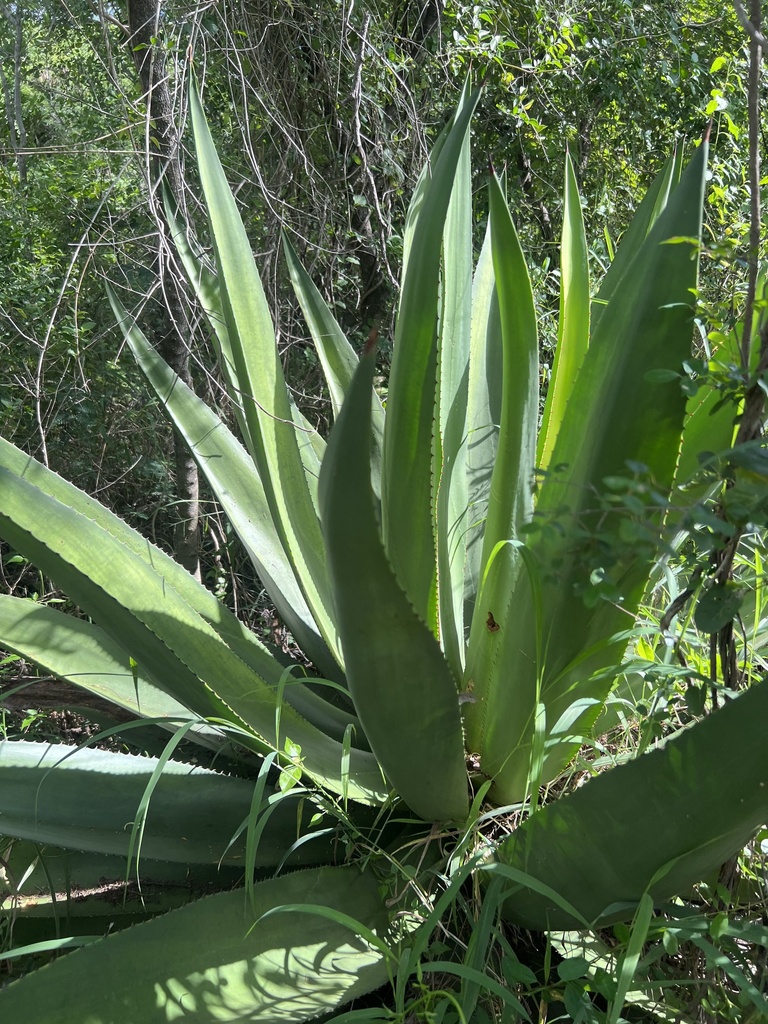
Agave missionum, known in Puerto Rico as corita (USDA PLANTS also uses corita as its common name), is the island’s native agave: a big, bold rosette of broad, deep green, sword-shaped leaves edged with small teeth and tipped with a sharp spine. It belongs to the century-plant group and, like its relatives, grows for many years before sending up a single towering flower stalk and then dying.
The species is a West Indian endemic. The Smithsonian Flora of the West Indies records it only from Puerto Rico (including Vieques) and the Virgin Islands, so corita is about as local a plant as a Puerto Rican gardener can grow. It was once described separately as Agave portoricensis, a name now treated as a synonym.
In the garden it is a dramatic accent for dry, sunny, rocky sites, and an authentic native alternative to the imported agaves and yuccas so common in Caribbean landscaping.
Identification
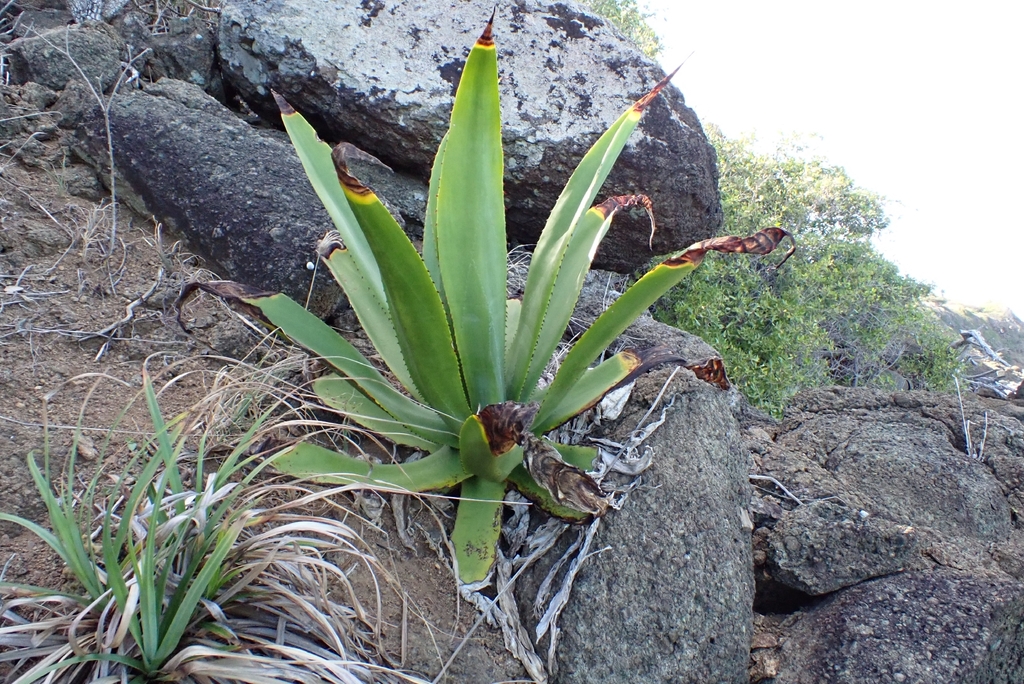
Corita is a large, stemless or short-stemmed agave with green rather than gray-blue leaves. Several cultivated agaves, including sisal (Agave sisalana) and the American century plant (Agave americana), are planted and naturalized in Puerto Rico; corita differs from sisal in its toothed leaf margins and from the century plant in its greener, less glaucous leaves.
Rosette & Leaves
The leaves are thick, fleshy and broadly sword-shaped, several feet long in mature plants, deep green to slightly yellow-green, and gathered in a dense rosette. The margins carry small, regularly spaced, dark teeth, and each leaf ends in a stiff, sharp terminal spine. Older plants develop a short trunk skirted with dead leaves.
Flower Stalk
After many years of growth, a mature rosette sends up a single tall, branched flowering stalk (a panicle), often 15 feet or more, with horizontal side branches carrying clusters of tubular yellow flowers. Flowering is a once-in-a-lifetime event: the rosette dies afterwards, though offsets or seedlings may replace it.
Fruit & Offsets
Pollinated flowers form woody, three-parted capsules filled with flat black seeds. Like many agaves, corita may also produce offsets (pups) at the base and plantlets (bulbils) on the flower stalk, both of which can be used to propagate it.
Quick Facts
| Scientific Name | Agave missionum Trel. (syn. Agave portoricensis Trel.) |
| Family | Asparagaceae (asparagus family; formerly Agavaceae) |
| Plant Type | Large succulent rosette; monocarpic (dies after flowering) |
| Mature Height | Rosette about 3–6 ft; flower stalk often 15 ft or more |
| Mature Spread | 4–8 ft |
| Growth Rate | Slow |
| Sun Exposure | Full sun |
| Water Needs | Very low; extremely drought tolerant |
| Soil Type | Rocky, sandy or limestone soils with sharp drainage |
| Soil pH | Neutral to alkaline |
| Bloom Time | Once, after many years of growth |
| Flower Color | Yellow |
| Fall Color | None; evergreen |
| Fruit | Woody three-parted capsule with flat black seeds |
| Deer Resistant | Not applicable in Puerto Rico; no native deer on the island |
| USDA Hardiness Zones | 10–12; frost-sensitive |
Native Range
Corita is endemic to a small corner of the West Indies. USDA PLANTS lists it as native in Puerto Rico and the U.S. Virgin Islands, and the Smithsonian Flora of the West Indies records it in Puerto Rico (including Vieques) and across the Virgin Islands, from St. Croix, St. Thomas and St. John to Tortola, Virgin Gorda, Guana Island and Anegada. It does not occur naturally in the U.S. mainland.
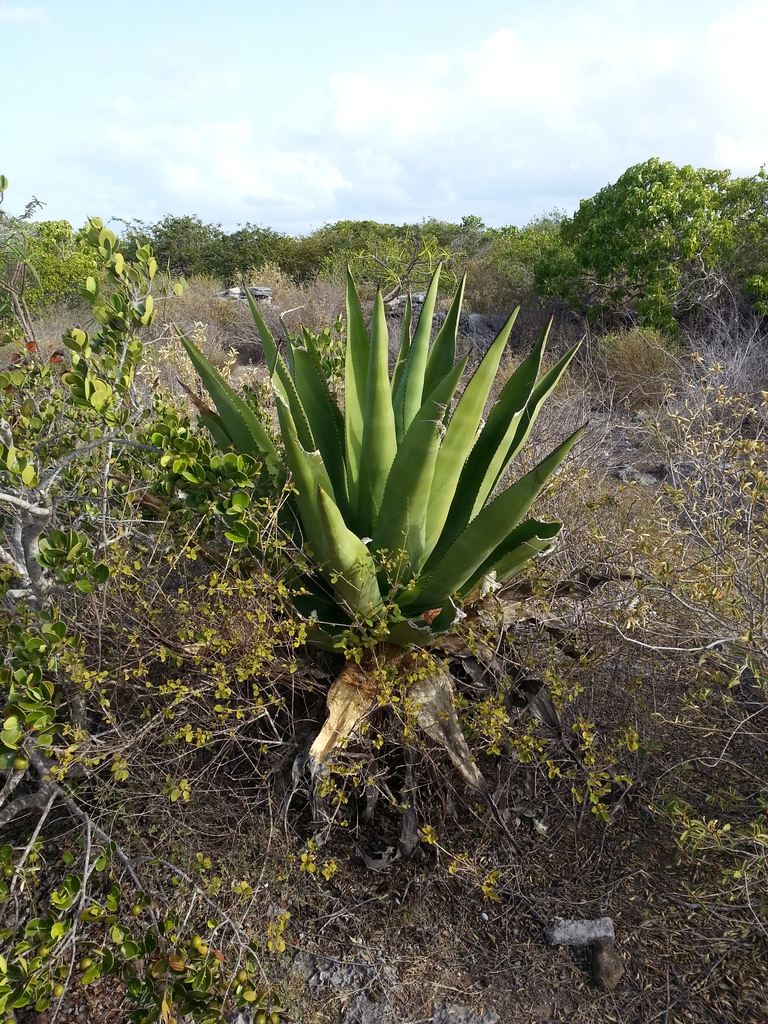
Its home is the dry side of these islands: dry coastal scrub and dry forest on limestone and rocky volcanic slopes, where rainfall is low and the dry season long. In Puerto Rico that means the south and southwest coast and the drier offshore islands rather than the wet uplands.
Because it is found nowhere else in the world, planting corita from nursery-grown stock is a small way to keep a truly Puerto Rican plant in the landscape. Never dig plants from the wild.
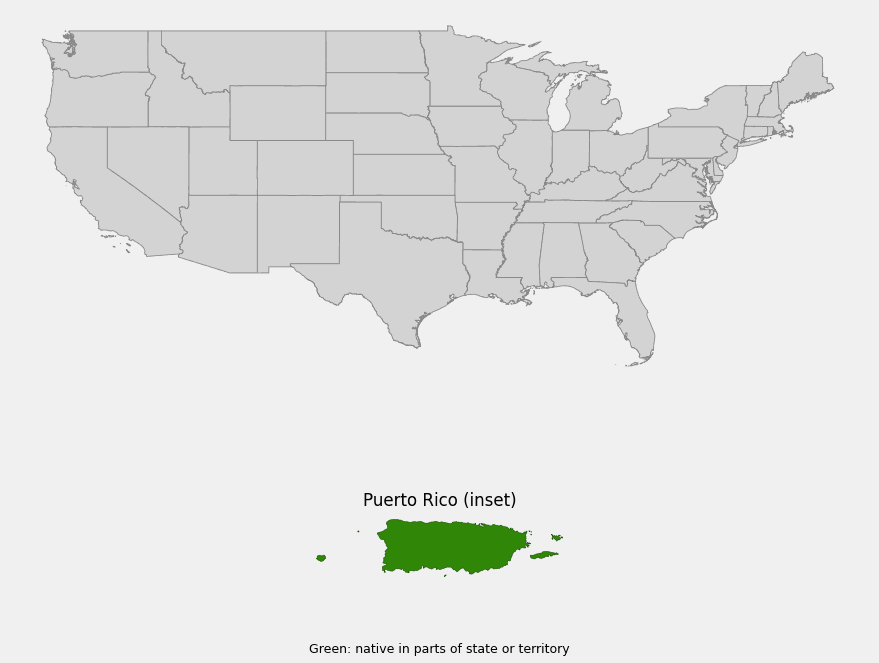
📋 Regional plant lists featuring Corita: Puerto Rico
Growing & Care Guide
Corita needs almost nothing except sun and drainage. The main mistakes are too much water, too much shade, and planting it where its spines will catch people.
Light
Full sun. In shade the rosette grows lax and the leaves stretch and flop.
Soil & Water
Plant in fast-draining rocky, sandy or limestone soil, on a slope or raised bed if your ground is heavy. Water a few times while it roots in, then leave it alone: established plants survive long droughts on stored water. Soggy soil causes rot.
Planting Tips
Give it room, 6 to 8 feet, and keep it well back from paths, play areas and driveways, because the terminal spines are sharp. It is effective as a single specimen in a dry garden, on a rocky bank, or among other dry-forest natives.
Pruning & Maintenance
Remove dead lower leaves if you want a cleaner look, wearing gloves and eye protection. After flowering the rosette dies; cut out the old plant and let a pup or bulbil take its place.
Propagation
Pot up basal offsets or the bulbils that form on the flower stalk; both root easily in a gritty mix. Seed also germinates readily when fresh. Use nursery-propagated plants, never wild-dug ones.
Landscape Uses
- Dry gardens and rock gardens: a bold native accent for hot, sunny, rocky ground
- Coastal landscapes: tolerates drought, sun and coastal conditions on the dry side of the island
- Native alternatives: replaces imported agaves and yuccas with a Puerto Rican endemic
- Pollinator plantings: its once-in-a-lifetime flower stalk is a major nectar event
Wildlife & Ecological Value
Most of the year corita is a quiet green rosette, but when one blooms it becomes a nectar and perch tower over the dry scrub.
For Pollinators
The yellow, tubular flowers produce abundant nectar and are visited by a range of nectar feeders. Agaves in the Americas are pollinated by bats, birds and insects, and corita’s open, upward-facing flower clusters are accessible to all of them.
For Birds
Nectar-feeding birds visit the flowers, and the tall dead flower stalk serves as a lookout perch long after blooming.
For Mammals
Bats, Puerto Rico’s only native land mammals, are among the night visitors that agave flowers attract.
Ecosystem Role
The rosette holds water and shades the ground beneath it, sheltering lizards and invertebrates in exposed scrub. As a regional endemic it is part of what makes the Puerto Rico–Virgin Islands dry flora distinct.
Cultural & Historical Uses
The name corita is used for this agave in Puerto Rico, and in the Virgin Islands similar large agaves are known as karata or century plant. Unlike sisal, which was brought to the Caribbean as a fiber crop, corita has always been a wild plant of the dry coast rather than a cultivated one.
The species was described by the American botanist William Trelease, the great early-20th-century monographer of agaves, who also named the Puerto Rican form Agave portoricensis; later botanists merged the two.
Like all agaves, corita gathers energy for years and spends it in a single flowering, after which the rosette dies. That habit gave the group its English name, century plant, although in reality the wait is measured in years to a few decades, not a century.
Frequently Asked Questions
Is corita native to Puerto Rico?
Yes. USDA PLANTS lists it as native in Puerto Rico and the U.S. Virgin Islands, and the Smithsonian Flora of the West Indies treats it as endemic to Puerto Rico and the Virgin Islands.
Does corita die after it flowers?
Yes. It is monocarpic: each rosette flowers once, after many years, then dies. Offsets at the base and plantlets on the flower stalk can be grown on to replace it.
How is it different from sisal?
Sisal (Agave sisalana) is an introduced fiber crop with smooth, toothless leaf margins. Corita is native and has small teeth along the leaf edges.
How much water does it need?
Very little. Water while it establishes, then let rain do the rest. Overwatering and poor drainage are the most common causes of failure.
Is it safe near paths?
Plant it well away from paths and play areas. The leaf tips end in sharp spines, and the marginal teeth can scratch.

Looking for a nursery that carries Corita?
Our nursery directory does not yet include Puerto Rico. Browse the native plant nursery directory by state: Alabama–Arkansas · California · Colorado–Hawaii · Idaho–Kansas · Kentucky–Montana · Nebraska–Oklahoma · Oregon · Pennsylvania–Virginia · Washington · West Virginia–Wyoming