Creeping Oregon Grape (Mahonia repens)
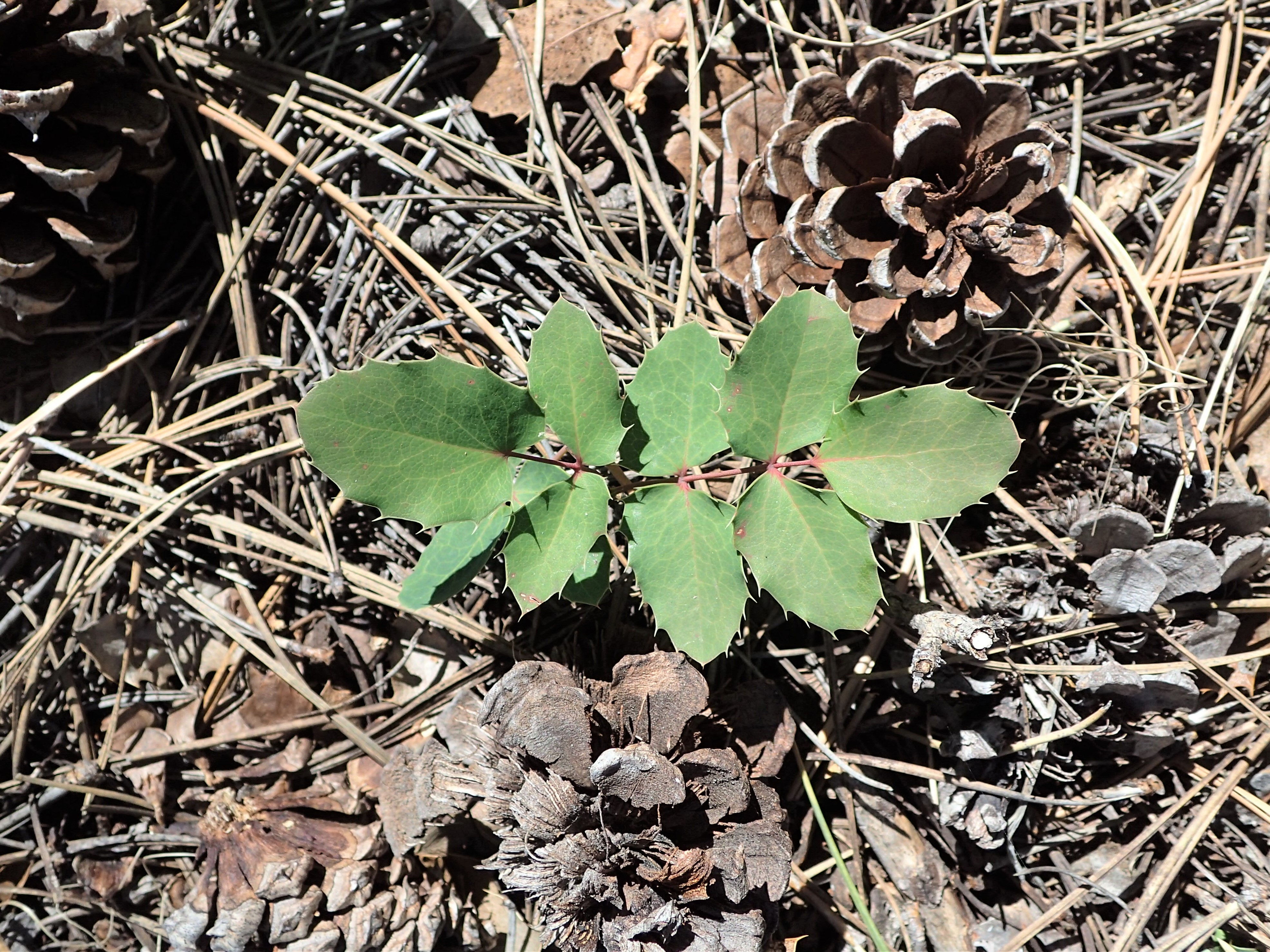
Mahonia repens (syn. Berberis repens), commonly known as Creeping Oregon Grape, Creeping Barberry, or simply Oregongrape, is one of the most versatile and ecologically valuable native groundcovers of western North America. This low-growing member of the Barberry family (Berberidaceae) forms dense, spreading mats of glossy, holly-like evergreen leaves no more than 1 foot tall — making it an outstanding choice for difficult sites where most groundcovers fail: deep shade, dry conditions, and rocky, nutrient-poor soils. Its four-season interest — bright yellow flowers in spring, clusters of blue-purple edible berries in summer, and wine-red or bronze foliage coloration in winter — makes it as decorative as it is functional.
Found throughout the Rocky Mountains and Intermountain West from British Columbia south to New Mexico and Arizona, Creeping Oregon Grape is particularly at home in the understory of ponderosa pine, Douglas-fir, and mixed conifer forests, where it carpets the ground in conditions of moderate to deep shade and periodic summer drought. Its root system is remarkably efficient at extracting water from dry soils, and established plants can survive extended drought periods that would kill most other groundcovers. The stems spread horizontally just below or at the soil surface, creating a dense, suppressive cover that is highly effective at outcompeting weeds once established.
For wildlife value, Creeping Oregon Grape ranks among the top native groundcovers of the West. The berries are eaten by numerous bird and mammal species; the dense growth provides cover for small animals; and the early spring flowers are among the first nectar sources available to native bees and hummingbirds emerging from winter. The bright yellow wood and roots contain berberine — a potent antimicrobial compound with a long history of use in traditional medicine by Indigenous peoples throughout the plant’s range.
Identification
Creeping Oregon Grape is a low, creeping evergreen shrub, typically 6–12 inches (15–30 cm) tall, spreading 3–5 feet or more via underground rhizomes. It is distinguished from the taller Tall Oregon Grape (Mahonia aquifolium) by its trailing habit, smaller stature, and tendency to produce leaves that often bronze or turn reddish-purple in winter sun. The holly-like appearance makes identification easy year-round.
Leaves
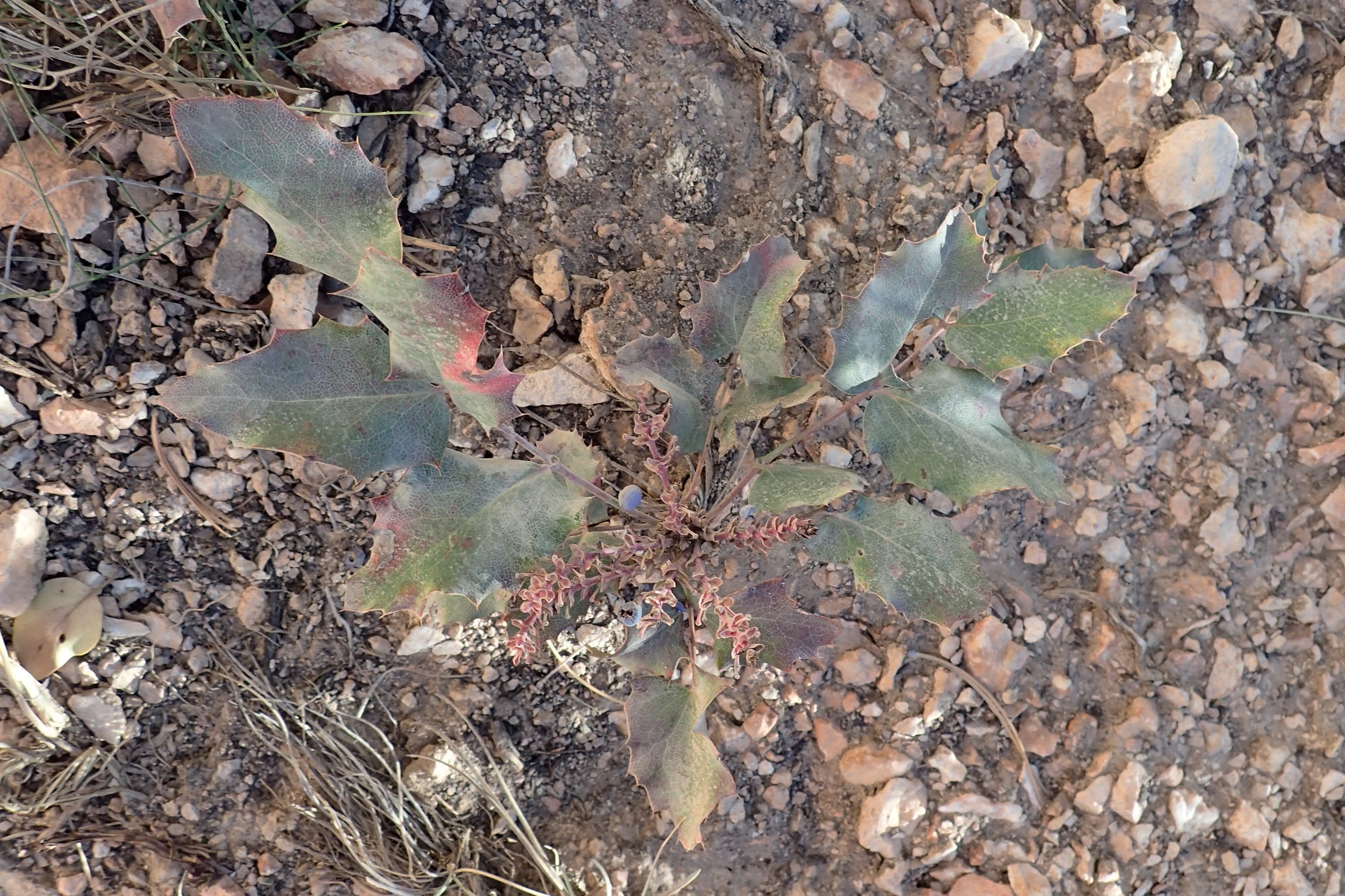
The leaves are pinnately compound, with 5–9 leaflets arranged along a central stem. Each leaflet is 1–2 inches long, oval to elliptical, leathery, and glossy dark green on the upper surface. The margins bear several sharp, holly-like teeth, making the plant unpleasant for animals to walk through. In full sun or during winter, the leaves often turn a dramatic bronze, burgundy, or deep reddish-purple — a feature that makes the plant visually striking year-round. In spring, fresh growth emerges with a bronze-to-green color that matures to glossy dark green by summer.
Flowers & Fruit
The flowers are small and bright yellow, borne in dense, upright clusters (racemes) 1–3 inches long at the tips of the branches in early to mid-spring (March–May). The flowers have a mildly sweet fragrance and are attractive to native bees, bumblebees, and early-season hummingbirds. The fruit develops through summer into clusters of small, roundish berries, each about ¼ inch in diameter, that ripen from green to blue-purple, covered with a distinctive powdery bloom. The berries are tart but edible and have been used for centuries to make jelly, juice, and wine. They ripen from July through September and are eagerly consumed by birds and small mammals.
Quick Facts
| Scientific Name | Mahonia repens (syn. Berberis repens) |
| Family | Berberidaceae (Barberry) |
| Plant Type | Evergreen groundcover shrub |
| Mature Height | 1 ft |
| Sun Exposure | Part Shade to Full Shade |
| Water Needs | Low to Moderate |
| Bloom Time | March – May |
| Flower Color | Bright yellow |
| Fruit | Blue-purple edible berries (July–September) |
| Wildlife Value | Berries (birds, mammals); flowers (pollinators) |
| USDA Hardiness Zones | 4–8 |
Native Range
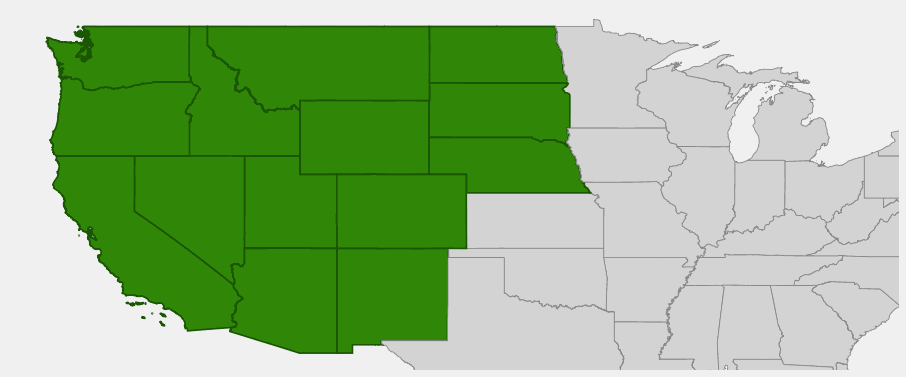
Creeping Oregon Grape is native to a broad swath of western North America, ranging from British Columbia and Alberta south through Washington, Oregon, Idaho, Montana, Wyoming, Colorado, Utah, Nevada, and California, with outlier populations in South Dakota, North Dakota, Nebraska, New Mexico, and Arizona. This wide distribution reflects the species’ remarkable ecological adaptability — it colonizes everything from dry ponderosa pine forests to moist spruce-fir subalpine zones, and from prairie margins to rocky canyon slopes.
Within the Intermountain West, Creeping Oregon Grape is a common component of the understory in mixed conifer and mountain shrub communities at elevations from 4,000 to over 9,000 feet. It frequently grows in association with ponderosa pine, Douglas-fir, Gambel Oak, and Rocky Mountain juniper. In the Pacific Northwest portion of its range, it occurs in somewhat moister conditions than in the drier interior West, but the species demonstrates consistent drought tolerance throughout its range compared to its coastal relative, Tall Oregon Grape (Mahonia aquifolium).
The species also demonstrates exceptional cold hardiness, surviving temperatures well below zero with minimal protection, making it one of the most cold-hardy broadleaf evergreen groundcovers available for mountain gardens in the West.
📋 Regional plant lists featuring Creeping Oregon Grape: Intermountain West
Growing & Care Guide
Creeping Oregon Grape is one of the most reliable native groundcovers for difficult garden situations in the West — shady, dry, and rocky sites that defeat other plants. Once established, it is virtually self-sufficient and grows more attractive with each passing year.
Light
Creeping Oregon Grape thrives in part shade to full shade, making it one of the few native groundcovers that genuinely succeeds under dense tree canopies. It can tolerate full sun in cooler mountain climates, but in hot, exposed locations, afternoon shade is essential to prevent leaf scorch. In shadier conditions, the leaves remain a deeper, glossier green; in more sun, the winter bronze coloration is more pronounced and dramatic. It is an outstanding choice for the dry shade beneath pine or fir trees where few other plants will grow.
Soil & Water
This species thrives in well-drained, rocky or sandy soil that would frustrate most plants. It handles both acidic and slightly alkaline soils well. Once established, Creeping Oregon Grape is remarkably drought tolerant — surviving on natural precipitation throughout most of its native range where annual rainfall averages just 12–20 inches. During the establishment period (first 1–2 seasons), water every 1–2 weeks; after that, occasional deep watering during prolonged drought is sufficient. Avoid heavy, wet clay soils and standing water, which promote root rot.
Planting Tips
Plant in fall or spring. Space plants 3–5 feet apart for groundcover effect; within 3–5 years they will fill in to create a continuous mat. Container-grown transplants establish best; bare root plants work well if kept from drying out during planting. Mulch lightly with wood chips or pine needles to help retain moisture during establishment. For large areas, plants can be spaced up to 6 feet apart if allowed extra establishment time.
Pruning & Maintenance
Minimal pruning is needed. After particularly harsh winters, some leaves may be winter-burned; lightly shear these off in early spring before new growth begins. If plants become leggy or sparse over time (usually after 10+ years), shear the entire planting to 4–6 inches in early spring — new growth will regenerate vigorously. Creeping Oregon Grape is essentially pest and disease free in its native range. Rust (a fungal disease) can occasionally appear but rarely causes serious damage.
Landscape Uses
- Groundcover under trees and in shady borders
- Slope stabilization on dry, rocky hillsides
- Weed suppression — dense growth outcompetes most weeds once established
- Woodland garden and naturalized forest-edge plantings
- Wildlife garden — berries attract numerous bird and mammal species
- Low-maintenance xeriscape in sun or shade
- Deer-resistant groundcover — the spiny leaves deter browsing
Wildlife & Ecological Value
Creeping Oregon Grape is one of the most ecologically productive native groundcovers of the West, providing food and cover across all seasons.
For Birds
The blue-purple berries are eaten by Robins, Cedar Waxwings, Hermit Thrushes, Varied Thrushes, Spotted Towhees, and many other fruit-eating species. The dense, spiny groundcover provides secure nesting and roosting habitat for thrushes, towhees, and other ground-nesting birds. The berries ripen in late summer and can persist into early winter, providing a reliable food source during the critical fall migration period.
For Mammals
Black Bears consume the berries enthusiastically in late summer and fall. Coyotes, foxes, and raccoons also eat the fruit. Rabbits and small rodents shelter within the dense mats and occasionally nibble the foliage. Elk and deer are deterred by the spiny leaves but may browse the plants in severe winters. The rhizomes and berries provide food for chipmunks and ground squirrels.
For Pollinators
The early spring flowers are among the most important native bee resources in the mountain West. Native bumblebees, mason bees, and mining bees actively forage the pollen-rich flowers. The bright yellow color and accessible nectar also attract early-season hummingbirds, particularly Rufous Hummingbirds during their spring migration. The early bloom time — often while snow is still on the ground — makes these flowers especially critical for early-emerging pollinators.
Ecosystem Role
Creeping Oregon Grape plays a foundational role in forest understory communities, providing the structural and biological complexity that supports insects, birds, and small mammals at the ground level. The thick mats protect soil from erosion, retain moisture during summer drought, and create favorable microhabitats for fungi and invertebrates that underpin forest nutrient cycling.
Cultural & Historical Uses
Creeping Oregon Grape has one of the richest ethnobotanical records of any plant in the Rocky Mountain region. Indigenous peoples across a vast swath of western North America used virtually every part of this plant, and many of those uses have been validated by modern pharmacology. The Blackfoot, Shoshone, Paiute, Ute, Navajo, and many other nations incorporated this species into their medicine, food, and cultural traditions.
Medicinally, the most important component is the inner bark and roots, which contain berberine — a potent antimicrobial, anti-inflammatory, and digestive compound. Traditional preparations used decoctions of the roots to treat a wide range of ailments, including infections, liver complaints, digestive disorders, and as a general tonic. The bright yellow color of the wood and roots (from berberine) was used as a dye for baskets, clothing, and leather. Modern research has confirmed berberine’s antimicrobial activity and potential benefits for blood sugar regulation and cardiovascular health.
The blue-purple berries were an important wild food resource, eaten fresh despite their tartness, or more often dried and mixed with grease or other foods to make pemmican-style preparations. The berries are also used to make jelly, jam, wine, and juice — products that have gained increasing popularity in the modern artisan food movement. The berries contain vitamins A and C along with various antioxidants, making them genuinely nutritious as well as distinctive in flavor.
Frequently Asked Questions
Is Creeping Oregon Grape the same as Tall Oregon Grape?
They are different species with similar characteristics. Creeping Oregon Grape (Mahonia repens) reaches only about 1 foot tall and spreads by underground rhizomes to form groundcover mats. Tall Oregon Grape (Mahonia aquifolium) grows 3–6 feet tall as an upright shrub. Both have holly-like leaves and yellow flowers, but Creeping Oregon Grape is more drought-tolerant and shade-tolerant, making it better suited for the drier Intermountain West.
Can you eat Creeping Oregon Grape berries?
Yes — the berries are edible but quite tart when eaten raw. They are excellent for making jelly, jam, juice, and wine. Indigenous peoples throughout the West used them as food. The berries contain significant vitamin C and antioxidants. Do not confuse with any other plant — the distinctive holly-like leaves and blue berry clusters make this one of the easier native plants to identify.
Will deer eat Creeping Oregon Grape?
Generally no — the spiny, holly-like leaflets make the plant unpalatable to deer under most conditions, making it useful as a deer-resistant groundcover. However, in severe winters when other food is scarce, deer may browse even spiny plants. Overall, this is considered one of the more deer-resistant native plants for western gardens.
How do I propagate Creeping Oregon Grape?
The easiest method is division: dig up a section of the spreading rhizomes in early spring or fall and transplant. Cuttings are also possible but require care. Seeds require stratification (cold moist treatment for 60–90 days) before they will germinate. Division is the most reliable and fastest method for home gardeners.
How quickly does Creeping Oregon Grape spread?
Once established, it spreads moderately via underground rhizomes, typically expanding 6–12 inches per year in good conditions. A single plant can cover a 3–5 foot area in 3–5 years. It is not considered invasive — it spreads slowly and remains manageable. For faster coverage, plant multiple plants spaced 3 feet apart.