
Creosotebush (Larrea tridentata)
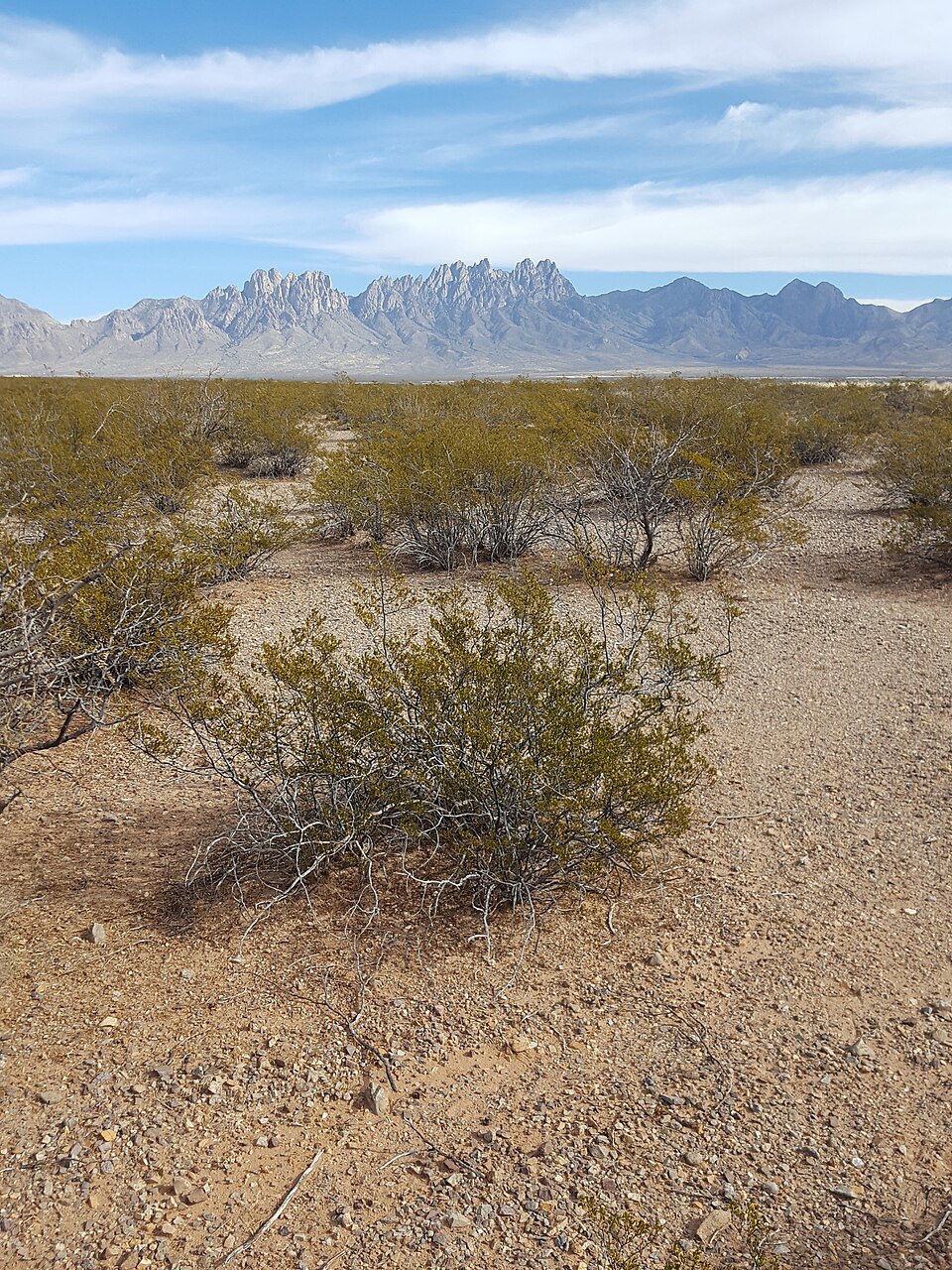
Larrea tridentata, universally known as Creosote Bush or Greasewood, is arguably the most ecologically important and iconic shrub of the American deserts. It dominates vast stretches of the Mojave, Sonoran, and Chihuahuan Deserts — the three great hot deserts of North America — forming pure stands across millions of acres of desert flats and bajadas. Its distinctive, pungent fragrance after rain is one of the most evocative scents in nature: the smell of the desert itself. When rain soaks the dry desert air, the volatile oils released from Creosote Bush leaves produce petrichor’s southwestern counterpart, a scent deeply familiar to anyone who has lived or traveled in the desert Southwest.
Creosote Bush is a slow-growing evergreen shrub reaching up to 6 feet tall, with small, distinctive bilobed yellow-green leaves that are heavily coated with a waxy, aromatic resin serving as both sunscreen and desiccation prevention. The plant’s adaptations to extreme desert conditions are extraordinary: leaves reduce to tiny scales in severe drought, the resin reflects harmful UV radiation, and the deep root system can access water sources far below the surface. Some Creosote Bush clones in the Mojave Desert are estimated to be over 11,000 years old — among the oldest living organisms on Earth.
Despite its dominance and ecological importance, Creosote Bush remains underutilized in landscape design. It is an outstanding low-maintenance desert shrub for xeriscape gardens, providing year-round green foliage, seasonal yellow flowers, fuzzy white seed balls, and extraordinary wildlife value. Its slow growth is compensated by essentially zero maintenance requirements once established — it needs no water beyond natural rainfall in most Southwest landscapes and thrives on complete neglect.
Identification
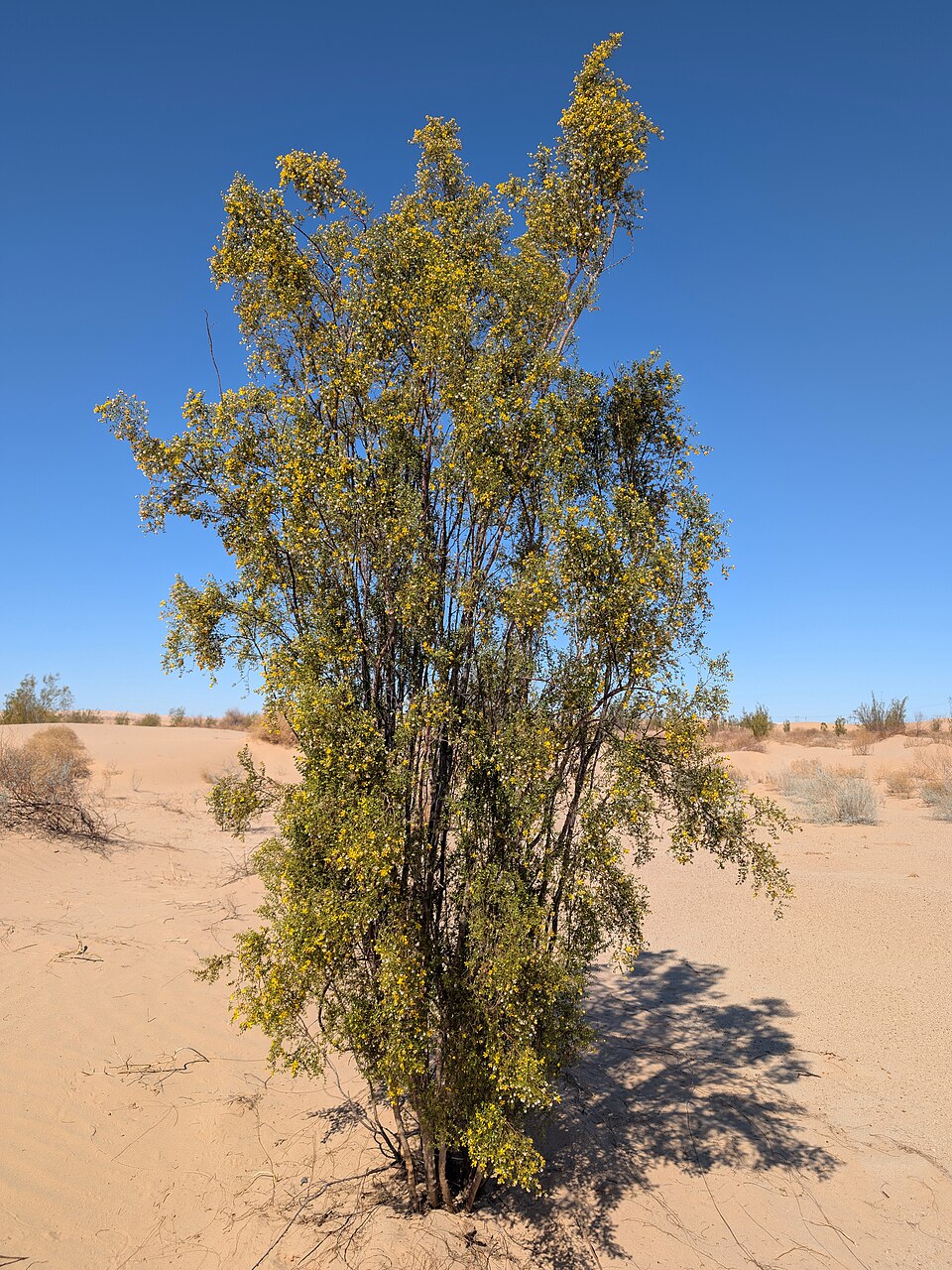
Creosote Bush is a multi-stemmed evergreen shrub typically growing 3 to 6 feet tall (occasionally to 10 feet in favorable conditions) with an open, airy crown. The stems are slender, gray to nearly black with characteristic white rings at the nodes (these rings are actually the dead base of fallen leaves). The overall silhouette is rounded to irregular, and large specimens may spread 5 to 8 feet wide.
Leaves
The leaves are Creosote Bush’s most distinctive feature: tiny, bilobed (two-parted), dark yellow-green to olive green, heavily coated with a sticky aromatic resin. Each “leaf” actually consists of two leaflets fused at the base, giving each a characteristic shape resembling two hands pressed together. The leaves are about ¼ to ½ inch long and almost always held in opposite pairs along the stems. In severe drought, leaves may be shed or reduced to protect the plant from water loss, but in any moisture the plant leafs out rapidly.
Flowers & Fruit
The flowers are small but cheerful: five bright yellow petals arranged in a pinwheel pattern, about ½ inch across, borne singly in leaf axils throughout much of the year — with peak bloom in spring and again after summer rains. The flowers have a faint sweet fragrance quite unlike the resinous scent of the foliage. They attract a variety of native bees, including specialist bees in the genera Colletes and Anthophora that are closely tied to Creosote Bush as a pollen source.
After pollination, each flower develops into a distinctive fuzzy white round fruit — a capsule covered with white or rust-colored hairs — about ¼ inch in diameter. These seed capsules persist on the plant for weeks, creating an attractive display that adds ornamental interest beyond the bloom season.
Quick Facts
| Scientific Name | Larrea tridentata |
| Family | Zygophyllaceae (Caltrop Family) |
| Plant Type | Evergreen Shrub |
| Mature Height | 6 ft |
| Sun Exposure | Full Sun |
| Water Needs | Low (Drought Tolerant) |
| Bloom Time | March – May (peak); also after summer rains |
| Flower Color | Bright yellow |
| USDA Hardiness Zones | 7–11 |
Native Range
Creosote Bush is the dominant shrub of all three North American hot deserts — the Mojave, Sonoran, and Chihuahuan — covering perhaps 40 million acres across the American Southwest and northern Mexico. In the United States it ranges from southern California, Nevada, and Utah east through Arizona and New Mexico to western Texas. It is the plant that most travelers first associate with the desert Southwest.
The species thrives from near sea level in Death Valley and the Salton Sea basin to about 4,500 feet elevation. In the Sonoran Desert it forms nearly pure stands across broad, flat desert flats (playa margins and bajadas), sharing the landscape with Saguaro Cactus at intermediate elevations and transitioning to Brittlebush and other associates at lower elevations. In the Chihuahuan Desert it often co-dominates with Tarbush (Flourensia cernua) and Whitethorn Acacia.
One of the most extraordinary aspects of Creosote Bush’s range is its clonal growth habit. Individual plants that were originally established from seed spread vegetatively by layering their branches outward — the original center eventually dies while the outer stems continue to grow as a ring. The famous “King Clone” near Lucerne Valley, California, is estimated to be 11,700 years old based on radiocarbon dating of dead wood at the center of its ring, making it one of the oldest known living organisms on Earth.
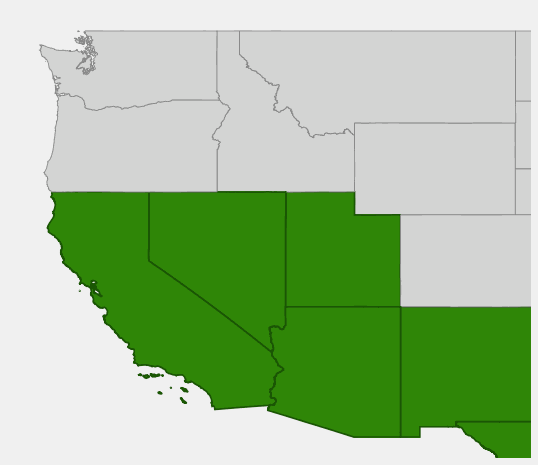
📋 Regional plant lists featuring Creosote Bush: Arizona
Growing & Care Guide
Creosote Bush is one of the most self-sufficient shrubs available for Southwestern landscapes. Once established, it requires essentially zero supplemental irrigation in most Arizona and New Mexico locations, making it the ultimate low-maintenance native plant. The challenge is only in establishment — Creosote Bush grows slowly and must be carefully maintained through its first year or two.
Light
Full sun is essential. Creosote Bush evolved in some of the most intensely sunny environments on Earth and performs poorly in shade. Plant it where it will receive unobstructed sunlight for at least 8 hours daily. In partial shade, growth slows dramatically and the plant becomes sparse and leggy.
Soil & Water
Creosote Bush requires excellent drainage. It thrives in the sandy, gravelly, and rocky soils of desert bajadas and flats — soils that are often alkaline and low in organic matter. Heavy clay soils are its nemesis; even brief waterlogging will kill it. In garden settings, plant in raised berms or amend soil with coarse gravel and sand to ensure rapid drainage. During establishment (first 1–2 years), water every 2–3 weeks in hot weather; once established, rainfall alone sustains the plant in most Southwest locations. Overwatering is the most common cause of failure in cultivated Creosote Bush.
Planting Tips
The best time to plant is in fall (September–November) when temperatures cool but the ground is still warm enough for root establishment. Spring planting also works. Choose container stock from native plant nurseries — wild transplants rarely survive due to their specialized root systems. Space plants 6 to 10 feet apart, as mature specimens spread broadly and create allelopathic zones (they release compounds that inhibit competing plants) that maintain natural spacing in wild stands.
Pruning & Maintenance
Creosote Bush requires almost no pruning. Its natural form is graceful and well-proportioned. If shaping is desired, prune selectively in late winter before new growth begins — avoid heavy cutting, which the slow-growing shrub recovers from reluctantly. Dead stems can be removed as needed. The allelopathic properties of Creosote Bush mean that few weeds will compete beneath established plants, reducing maintenance further.
Landscape Uses
- Xeriscape backbone plant — provides year-round structure and interest with zero irrigation
- Desert revegetation and restoration — essential component of authentic Southwest landscapes
- Wildlife gardens — exceptional pollinator and wildlife value
- Informal hedge or screen — planted 4–5 feet apart creates a fragrant, natural barrier
- Slope stabilization — deep roots hold desert soils on grades
- Companion planting — naturally spaces itself, creating the classic desert spacing aesthetic
Wildlife & Ecological Value
Despite its reputation as an allelopathic plant that inhibits other vegetation, Creosote Bush supports a remarkably rich community of wildlife species. Over 60 species of insects are closely associated with it, many of which are specialist species found nowhere else.
For Birds
The open structure and dense twigs of Creosote Bush provide nesting sites for Cactus Wrens, Black-throated Sparrows, Curve-billed Thrashers, and Le Conte’s Thrashers. The seeds attract Mourning Doves, White-crowned Sparrows, and various finches. The insects associated with the plant provide critical food for insectivorous birds including warblers, vireos, and flycatchers during migration.
For Mammals
The dense shrub provides thermal cover and hiding places for Jackrabbits, Cottontail Rabbits, and Desert Tortoises. Small rodents cache seeds and shelter beneath the plants. Pronghorn occasionally browse the foliage in winter when other food is scarce. The resinous stems are generally avoided by deer, making Creosote Bush effectively deer-resistant.
For Pollinators
Creosote Bush supports an exceptionally specialized bee community. At least 22 species of native bees are closely associated with Creosote Bush pollen, with several in the genera Colletes, Ashmeadiella, and Perdita being essentially dependent on it. The long bloom season — spring through fall whenever moisture is available — provides pollen and nectar across multiple seasons for a wide array of generalist pollinators as well.
Ecosystem Role
Creosote Bush is arguably the keystone plant of North American hot desert ecosystems. Its allelopathic properties create the characteristic spacing of desert shrublands — the seemingly deliberate arrangement of evenly-spaced shrubs separated by bare ground. This pattern optimizes water capture and reduces competition. The plant’s resinous stems and leaves create a unique microhabitat: the accumulated leaf litter beneath established plants hosts a diverse community of soil invertebrates, fungi, and bacteria that form the base of the desert food web.
Cultural & Historical Uses
Creosote Bush holds a central place in the ethnobotany of desert peoples throughout the Southwest and northern Mexico. The Seri, Tohono O’odham, Pima, Navajo, Apache, and many other Indigenous peoples developed extensive knowledge of its medicinal properties over thousands of years. The Seri people called it chaaso and considered it one of their most important healing plants.
The resinous leaves and stems were used medicinally for a remarkable variety of conditions: as an antiseptic and antimicrobial agent for wounds, skin infections, and insect bites; as a steam inhalant for respiratory congestion and colds; as a wash for rheumatic joints and muscle pain; and as a treatment for intestinal complaints, sexually transmitted infections, and chickenpox. The antimicrobial properties of Creosote Bush resin are scientifically validated — the compound nordihydroguaiaretic acid (NDGA) isolated from the plant was used commercially as a food preservative in the 1940s and 1950s before concerns about kidney toxicity led to its removal from the GRAS (Generally Recognized As Safe) list.
Beyond medicine, Creosote Bush resin was used as a waterproofing agent for pottery, baskets, and wooden implements. The woody stems were used for fuel. The galls — abnormal plant growths caused by insect activity — were used as a black dye. Modern herbalists continue to use Creosote Bush preparations, though caution is warranted due to potential liver and kidney toxicity with prolonged internal use. Externally, diluted Creosote Bush preparations remain in use as antiseptic and analgesic treatments in traditional desert communities.
Frequently Asked Questions
Why does Creosote Bush smell so good after rain?
The distinctive rain-after-creosote scent comes from volatile aromatic compounds — primarily nordihydroguaiaretic acid and other phenolics — released from the resin coating on the leaves when moisture activates them. This scent is so beloved in the Southwest that it has been captured in candles, soaps, and perfumes. Many people consider it the quintessential smell of the desert.
Is Creosote Bush really one of the oldest living things on Earth?
Yes, in its clonal form. Individual stems of Creosote Bush are relatively short-lived, but the plant spreads outward vegetatively while the original center dies. The “King Clone” ring colony in the Mojave Desert near Lucerne Valley, California has been radiocarbon dated to approximately 11,700 years old — making it potentially the oldest living plant on Earth, and one of the oldest known living organisms.
Can I grow Creosote Bush outside the desert Southwest?
Creosote Bush is adapted to the very specific conditions of hot deserts and does poorly outside USDA Zone 7 or in areas with humid summers or heavy clay soils. Attempts to grow it in the Pacific Northwest, Midwest, or Southeast typically fail. It is best reserved for dry-summer climates of the Southwest, including Zones 7–11 with low rainfall and excellent drainage.
Is Creosote Bush toxic to other plants?
Yes — Creosote Bush produces allelopathic compounds that leach into the soil and inhibit seed germination and root growth of competing plants. This is why you see the characteristic even spacing in natural Creosote Bush stands. In the garden, be aware that plants placed directly beneath or very near established Creosote Bush may struggle to establish.
How do I establish Creosote Bush from seed?
Creosote Bush seed has hard seed coats that benefit from scarification (light sanding or brief hot water soak). Sow in spring in very well-drained desert mix, barely cover with soil, and place in full sun. Germination may take 2–6 weeks. The plants grow very slowly for the first 1–2 years before accelerating. Container-grown plants from native nurseries are far easier and more reliable.

Looking for a nursery that carries Creosote Bush?
Browse our native plant nursery directory: Arizona