Cuyamaca Cypress (Hesperocyparis stephensonii)
Hesperocyparis stephensonii (also called Cupressus stephensonii), the Cuyamaca Cypress, has the most restricted native range of any tree in California. The entire wild population grows in a single small stand in the headwaters of King Creek, south of Cuyamaca Peak in the Cuyamaca Mountains of San Diego County — nowhere else on Earth, in the wild, does this tree naturally occur. It is a close relative of the much more widespread Arizona cypress (Cupressus arizonica), and some botanists have treated it as a variety of that species, Cupressus arizonica var. stephensonii, rather than a species in its own right.
Modern taxonomic authorities — including Plants of the World Online, World Flora Online, and the USDA PLANTS database — now generally recognize Cuyamaca cypress as a distinct accepted species rather than folding it into Arizona cypress, largely on the strength of its complete geographic isolation and consistent morphological differences, including its notably smooth, pale, patchy bark compared to the darker, more fibrous bark typical of Arizona cypress. Even so, readers researching this tree will often encounter both treatments in the literature, so it is worth knowing the alternative name if you are cross-referencing older sources.
Like other California cypresses, Cuyamaca cypress is a fire-adapted, serotinous-coned species whose entire known wild population was devastated by the 2003 Cedar Fire, which burned through virtually the whole grove. The species survived because fire is part of its natural life cycle — but the extreme rarity of its single population makes any future catastrophic fire, especially one that strikes before young trees reach cone-bearing age, a serious extinction risk.
Identification
Cuyamaca cypress is a small to medium evergreen tree, typically 20 to 40 feet tall, with a narrow to broadly conical crown and often several co-dominant trunks arising low on the tree.
Bark & Stems
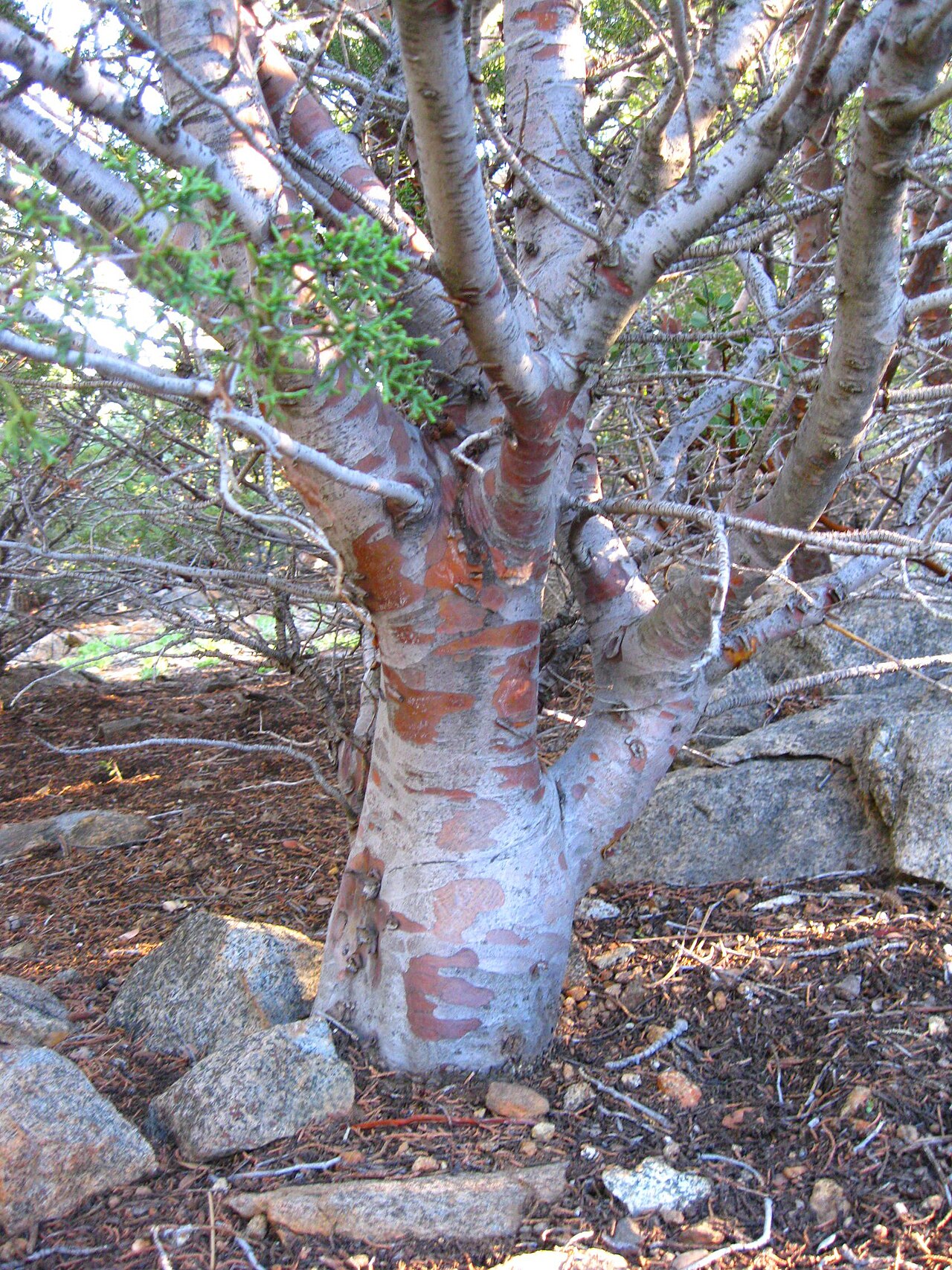
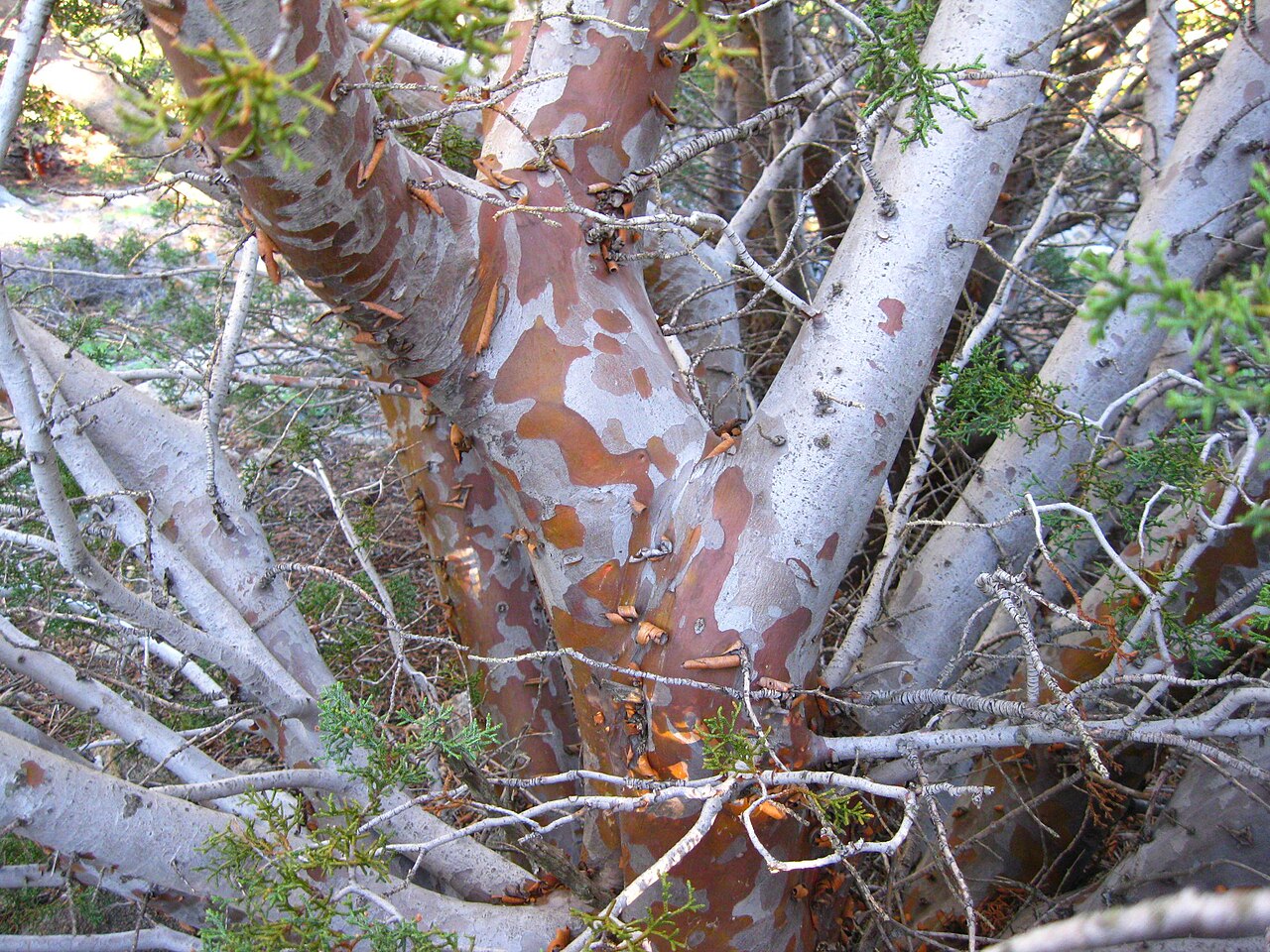
The bark is one of the tree’s most striking features: smooth, thin, and pale ashy-gray to white, peeling away in irregular patches to reveal cinnamon-red to maroon patches of fresh bark underneath, giving the trunk a mottled, almost camouflage-like appearance. This smoother, paler, more sharply patchy bark is one of the clearest field differences from Arizona cypress, whose bark is typically darker and more uniformly fibrous or furrowed.
Foliage
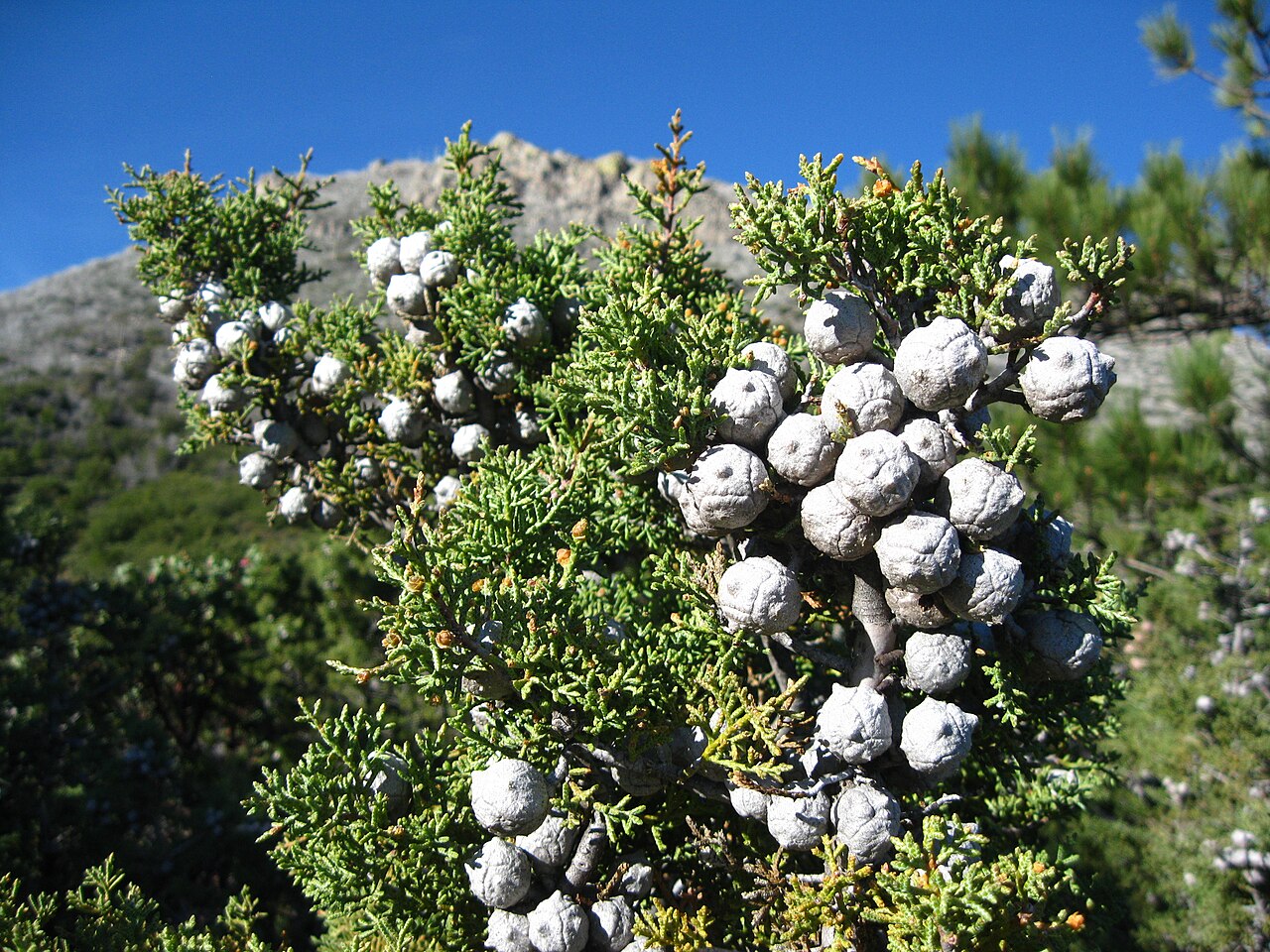
Leaves are small, scale-like, and tightly pressed against the branchlets, forming dense sprays of gray-green foliage typical of cypresses. Crushed foliage has a resinous cypress scent.
Cones & Seeds
The woody cones are rounded, roughly ¾ to 1 inch across, pale gray and often appearing almost whitish or glaucous, in contrast to the browner cones of many related cypresses. Like other California cypresses, the cones are serotinous, remaining closed and attached to the branches for years and opening mainly in response to fire heat, which triggers a mass release of seed onto the freshly burned ground.
Quick Facts
| Scientific Name | Hesperocyparis stephensonii (syn. Cupressus stephensonii; sometimes treated as Cupressus arizonica var. stephensonii) |
| Family | Cupressaceae (Cypress) |
| Plant Type | Evergreen coniferous tree |
| Mature Height | 20–40 ft |
| Mature Spread | 15–25 ft, narrow to broadly conical |
| Growth Rate | Slow to moderate |
| Sun Exposure | Full Sun |
| Water Needs | Low once established; excellent drought tolerance |
| Soil Type | Rocky, well-drained mountain soils |
| Soil pH | Neutral to slightly acidic |
| Bloom Time | Pollen cones in winter |
| Flower Color | Not applicable (conifer) |
| Fall Color | None (evergreen) |
| Fruit | Pale gray, woody serotinous cones, about ¾–1 in |
| Deer Resistant | Yes |
| USDA Hardiness Zones | 7–9 |
Native Range
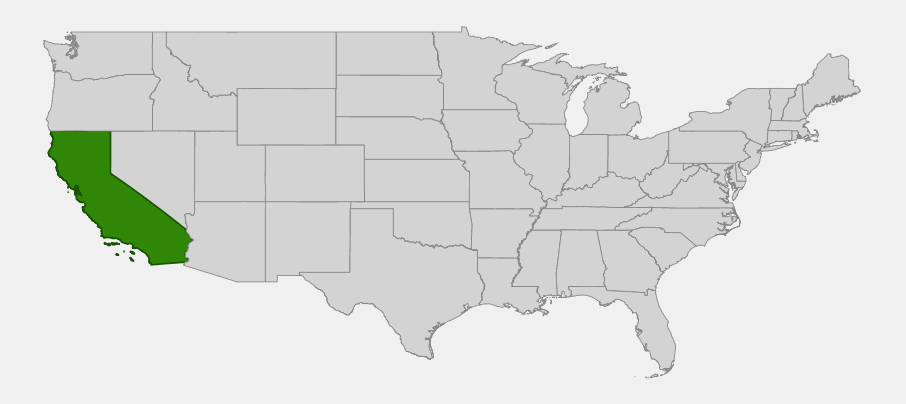
Cuyamaca cypress has by far the smallest native range of any tree species in California: a single population confined to the headwaters of King Creek, on the south-facing slopes below Cuyamaca Peak in the Cuyamaca Mountains of San Diego County, at roughly 4,500 to 5,500 feet elevation. No other wild occurrence of this species is verified anywhere else, in California or in Baja California, Mexico, despite the geographic proximity of other cypress populations in the region.
The habitat is mixed chaparral and montane woodland on rocky, granitic soils, growing alongside other fire-adapted chaparral shrubs and occasional conifers. The 2003 Cedar Fire — one of the largest wildfires in California history at the time — burned through essentially the entire known population, killing most mature trees outright; the grove has since been recovering from the resulting seed germination pulse, but the species’ single-population status means it remains acutely vulnerable to any future fire that strikes the stand too soon, before young trees reach reproductive age.
Because of the taxonomic debate over whether this tree is a full species or a variety of Arizona cypress, gardeners and researchers comparing the two should see our page on Arizona cypress, which is far more widespread across the Southwest and shares many traits with this San Diego County endemic.
📋 Regional plant lists featuring Cuyamaca Cypress: California & Nevada
Growing & Care Guide
Given its extreme rarity, Cuyamaca cypress is grown almost exclusively by native-plant specialists, botanic gardens, and conservation-minded collectors rather than as a mainstream landscape tree — but where nursery-propagated stock is available, it is not difficult to grow within an appropriate climate.
Light
Full sun is essential, matching its exposed mountain-slope habitat.
Soil & Water
Plant in lean, rocky, fast-draining soil similar to its native granitic mountain terrain. It is highly drought tolerant once established and should never be planted in heavy, poorly drained, or consistently wet soil, which encourages the root and crown diseases that affect cypresses generally.
Planting Tips
Only plant nursery-propagated stock sourced from a reputable native plant nursery or botanic garden conservation program; never collect seed or material from the single wild population, which is both ecologically sensitive and, in many cases, legally protected within its native habitat. Choose a site with a cool-summer to mild climate broadly similar to its mountain origin (roughly USDA zones 7–9) and allow room for a mature conical crown.
Pruning & Maintenance
Minimal pruning is needed beyond removing dead wood. Avoid overwatering or heavy fertilization. For a broader look at cypress growth habits and the mature sizes different species reach, see our guide on how tall cypress trees grow.
Landscape Uses
- Rare-conifer conservation collections and botanic gardens
- Specimen tree for dedicated California native plant gardens in appropriate climates
- Fire-ecology and conservation education plantings
- Research and seed-banking programs aimed at safeguarding the species’ narrow genetic base
Wildlife & Ecological Value
Within its single, tiny grove, Cuyamaca cypress plays an outsized ecological role simply by existing as a unique habitat component found nowhere else.
For Pollinators
As a wind-pollinated conifer, it offers little direct floral resource, though the surrounding chaparral it grows within supports a diverse community of native bees and other pollinators drawn to associated flowering shrubs.
For Birds
Dense cypress foliage provides cover and nesting structure for small birds within the grove, and seed-eating species may forage on cone seed after cones open.
For Mammals
Small mammals use the grove’s structure for cover as part of the broader chaparral habitat mosaic.
Ecosystem Role
Because the entire wild population exists in one location, every individual tree represents a meaningful share of the species’ total genetic diversity — a level of vulnerability shared by very few plant species anywhere in North America. The 2003 Cedar Fire demonstrated both the resilience of the species’ fire-adapted life cycle and the acute risk a single catastrophic event poses to a population with nowhere else to retreat to.
Cultural & Historical Uses
Cuyamaca cypress has essentially no history of traditional or commercial use, a direct consequence of its extremely restricted, remote mountain distribution. The species was first scientifically described in the 1940s, named for Bert Stephenson, a U.S. Forest Service ranger who, while fighting a wildfire in the area, noticed the unusual cypress trees along King Creek and brought them to the attention of botanist Carl B. Wolf.
Since its description, the tree’s significance has been almost entirely scientific and conservation-focused: it is a textbook case study in extreme habitat restriction, taxonomic debate over species boundaries in the California cypresses, and fire-dependent reproduction in a vulnerable, single-population species. It is sometimes grown in botanic gardens, such as the San Diego Botanic Garden, specifically to maintain a cultivated conservation collection outside the single wild grove.
Frequently Asked Questions
Is Cuyamaca cypress a separate species from Arizona cypress?
Most current taxonomic authorities, including USDA PLANTS and Plants of the World Online, treat it as its own accepted species, Hesperocyparis stephensonii. Some older and alternative treatments classify it as Cupressus arizonica var. stephensonii, a variety of the more widespread Arizona cypress. Both names refer to the same plant.
How rare is Cuyamaca cypress?
Extremely rare — it has the smallest native range of any tree species in California, limited to a single population in the headwaters of King Creek near Cuyamaca Peak in San Diego County.
Did the 2003 Cedar Fire destroy Cuyamaca cypress?
The fire burned through nearly the entire known population and killed most mature trees, but because the species is fire-adapted with serotinous cones, the fire also triggered a major seed release and the population has been regenerating since. A future fire before young trees mature would pose a serious risk.
Can I buy or plant Cuyamaca cypress?
Occasionally, from specialist native-plant nurseries and botanic garden programs that propagate it for conservation purposes. Never collect material from the wild population, which is ecologically sensitive given its extremely small size.
Is Cuyamaca cypress the same as Italian cypress?
No. Cuyamaca cypress is an extremely rare California native restricted to one mountain grove, while Italian cypress (Cupressus sempervirens) is a tall, narrow, non-native ornamental from the Mediterranean widely planted for privacy screening; see our Italian cypress guide for that unrelated species.

Looking for a nursery that carries Cuyamaca Cypress?
Browse our native plant nursery directory: California