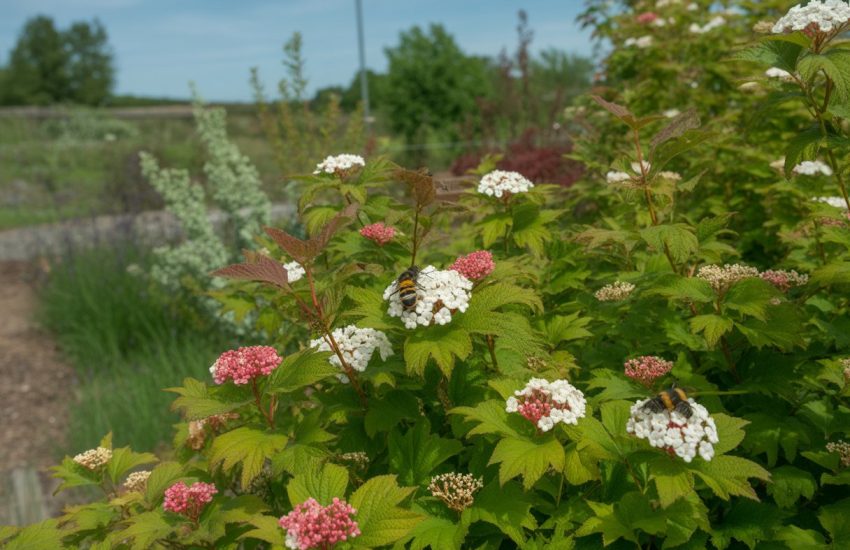
Shortleaf Fig (Ficus citrifolia)
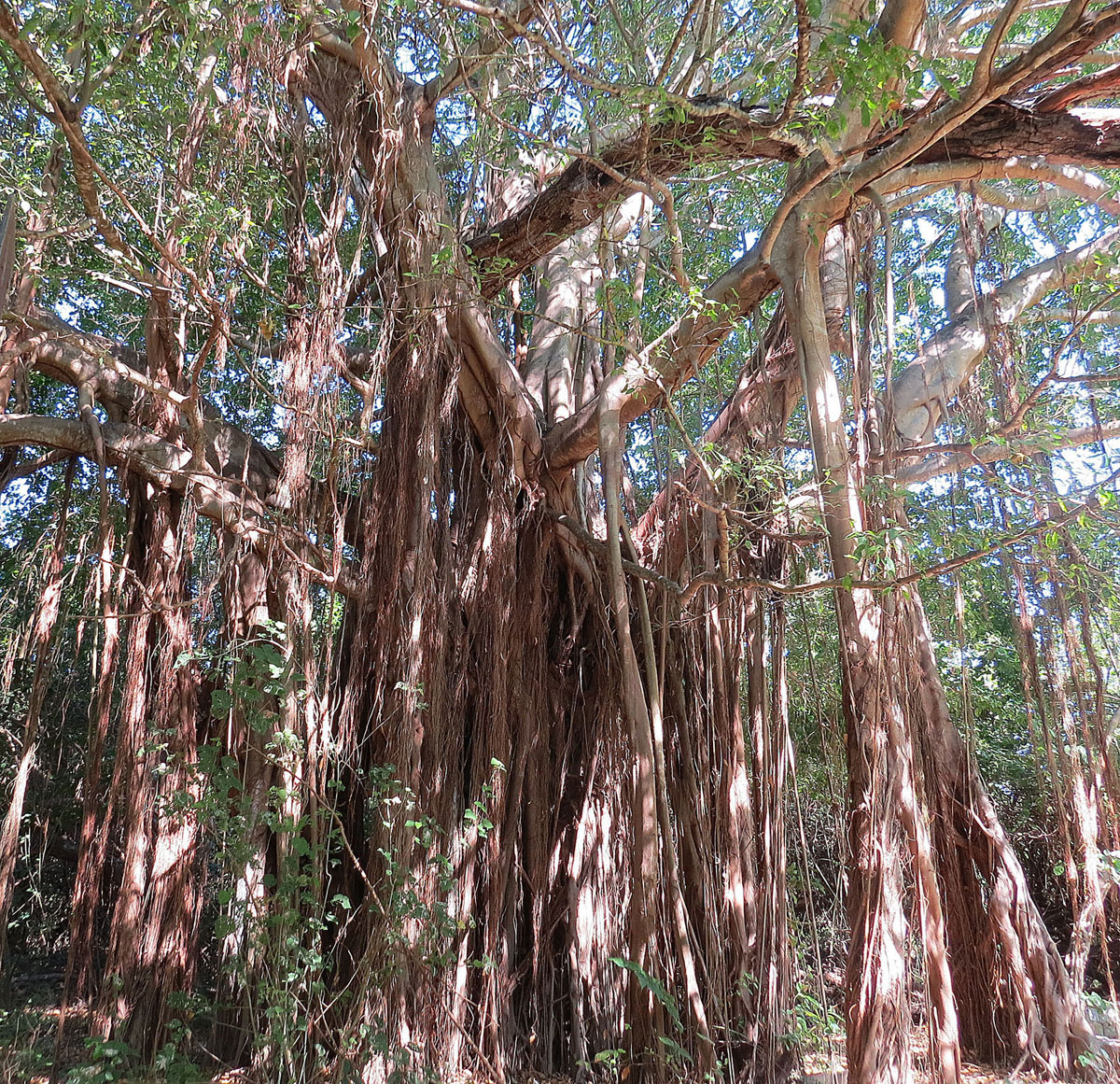
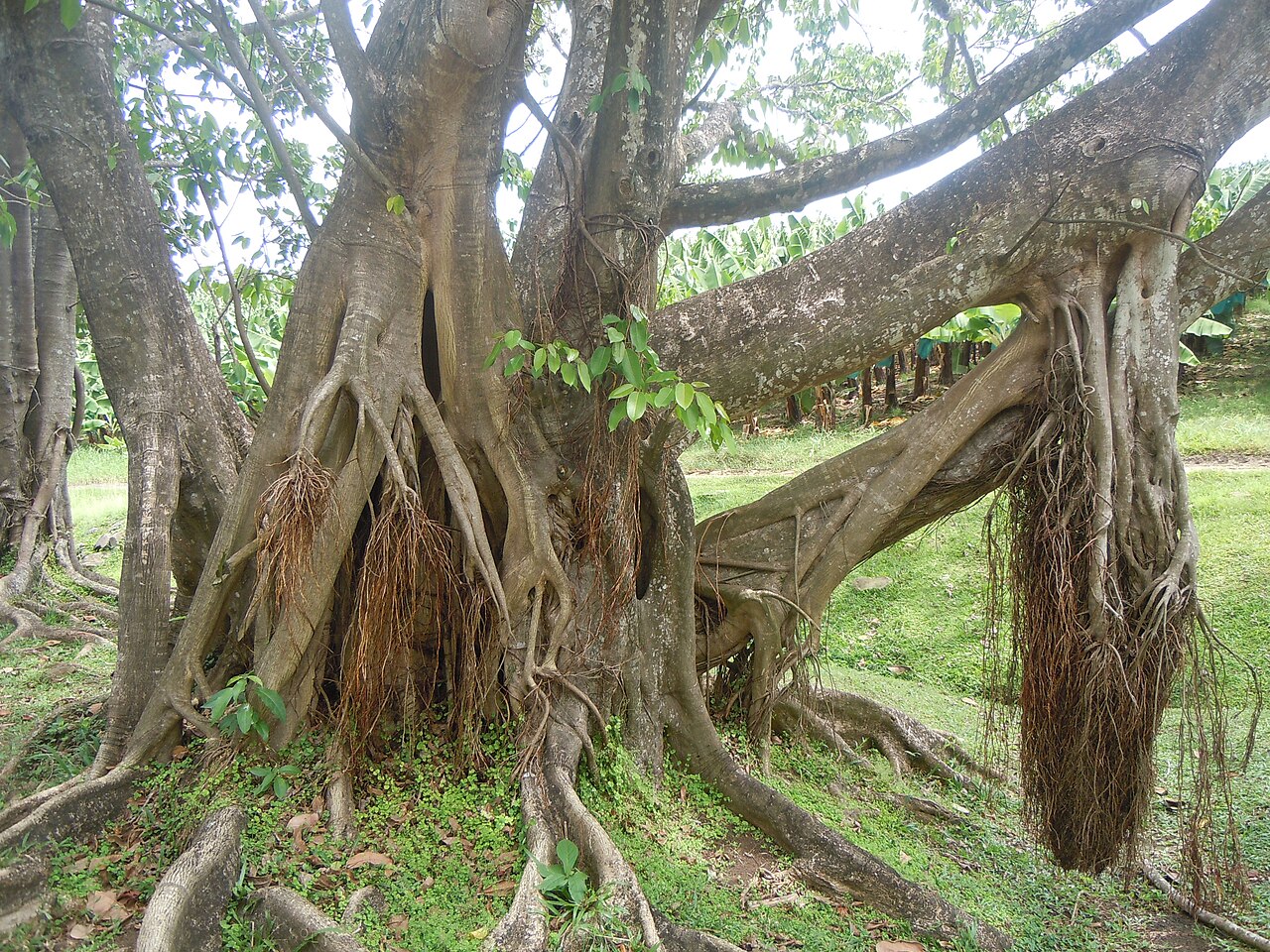
Ficus citrifolia, known as Shortleaf Fig, Wild Banyantree, or Jagüey, is a native strangler fig found in the United States only in the southern tip of Florida. It is one of only two fig species native to the continental U.S., the other being its close relative, the Florida strangler fig (Ficus aurea), with which it shares habitat, growth habit, and a long list of look-alike traits. Shortleaf fig gets its common name from the relatively short, broad leaves compared with other fig species, and its “wild banyantree” nickname from its habit of sending down curtains of aerial roots that thicken into secondary trunks, much like the famous banyan of India.
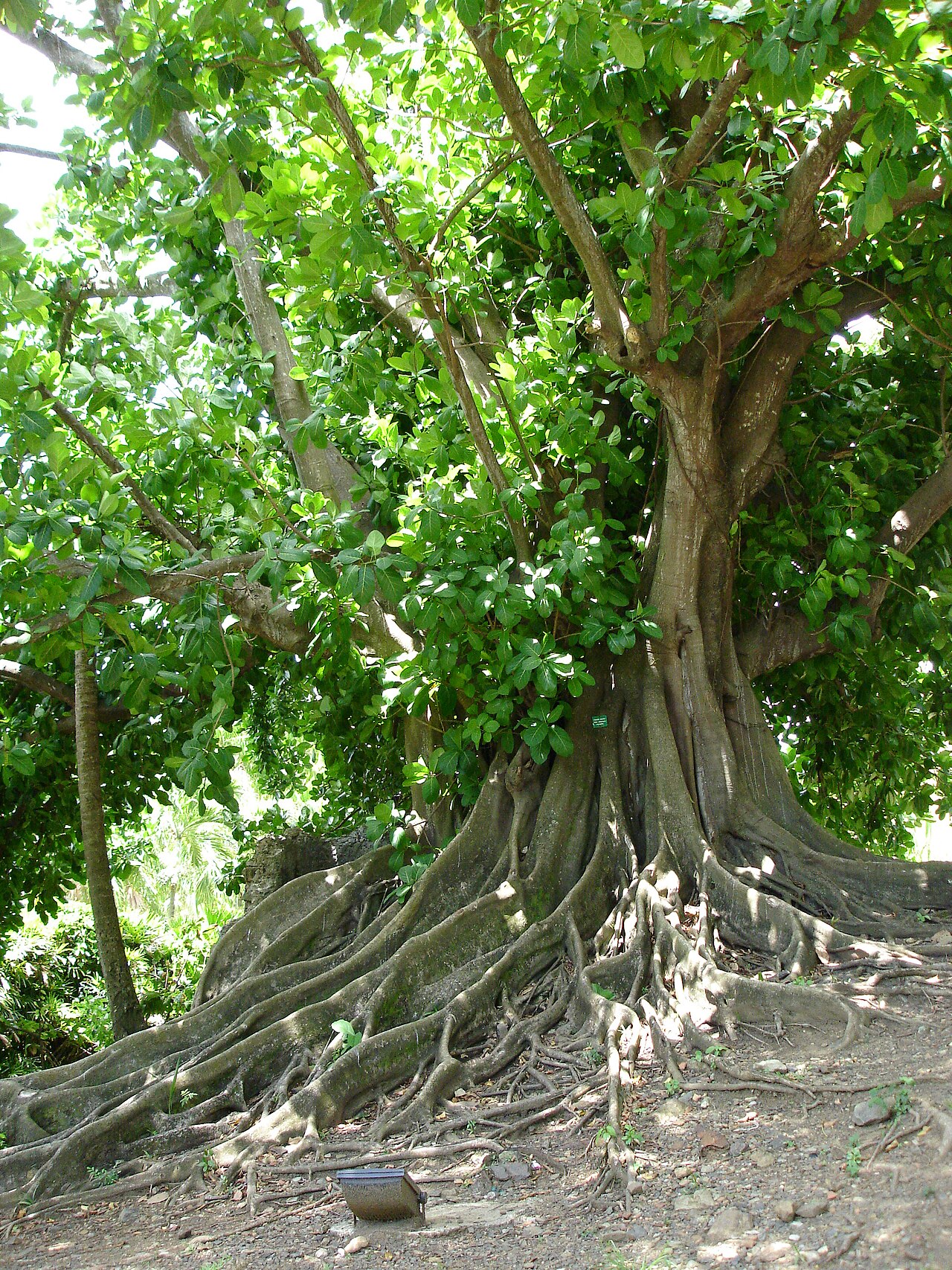
Like other strangler figs, shortleaf fig usually begins life as an epiphyte: a bird or mammal deposits a seed in the crotch of a host tree or on a rock outcrop, and the seedling sends roots downward while its crown grows upward, eventually enveloping and sometimes outliving its host. Mature trees are broad, rounded, and often wider than they are tall, with smooth gray bark, glossy oval leaves, and small fig-like fruits that ripen in flushes throughout much of the year in Florida’s frost-free climate.
In its narrow native range in Miami-Dade County and the Florida Keys, shortleaf fig is an important wildlife tree and a striking specimen for large coastal and tropical hardwood hammock landscapes. It is not a plant for small yards or cold climates, but where it fits, few native trees create as much shade, shelter, and food for wildlife in a single specimen.
Identification
Shortleaf fig is a evergreen tree that can reach 30 to 50 feet tall in favorable sites, though specimens on rocky, exposed sites often stay smaller and more rounded. Like all strangler figs, its ultimate form depends heavily on whether it grew as an epiphyte on a host tree (often producing a hollow, fused trunk once the host dies and decays) or rooted directly in the ground.
Bark & Aerial Roots
The bark is smooth and pale gray on young trunks and branches, developing some texture with age. The tree’s most distinctive feature is its aerial roots: thin, hanging roots descend from the branches, especially in humid conditions, and where they reach the ground they thicken into woody, pillar-like prop roots that help support the spreading crown and can eventually resemble secondary trunks.
Leaves
Leaves are simple, alternate, and elliptic to oval, typically 2 to 4 inches long — noticeably shorter and broader than the narrower leaves of Florida strangler fig, which is the main field mark separating the two species. They are glossy dark green above, paler beneath, with a short pointed tip and a distinct pale midrib. Like all figs, the leaves and stems exude a milky latex sap when broken.
Flowers & Fruit
As in all figs, the “flowers” are actually hidden inside the fruit itself, a structure called a syconium. Shortleaf fig produces small, round to pear-shaped figs about ⅜ to ⅝ inch across that ripen from green to yellow, orange, or purplish-red. Pollination depends entirely on a single species of tiny fig wasp that enters the immature fruit to lay eggs, one of the most specialized plant-pollinator relationships in nature. Fruiting can occur in flushes nearly year-round in South Florida’s climate.
Quick Facts
| Scientific Name | Ficus citrifolia |
| Family | Moraceae (Mulberry/Fig) |
| Plant Type | Evergreen strangler fig tree |
| Mature Height | 30–50 ft (often wider than tall) |
| Mature Spread | 40–60 ft or more at maturity |
| Growth Rate | Moderate to fast in warm, humid conditions |
| Sun Exposure | Full Sun to Part Shade |
| Water Needs | Average to moist; tolerates both flooding and brief drought |
| Soil Type | Tolerates rocky limestone, sand, and disturbed soils |
| Soil pH | Neutral to alkaline; thrives on limestone |
| Bloom Time | Figs form in flushes nearly year-round in South Florida |
| Flower Color | Not visible (enclosed inside the fig) |
| Fall Color | None (evergreen) |
| Fruit | Small round figs, green ripening to yellow-orange-purple |
| Deer Resistant | Not typically browsed where deer occur |
| USDA Hardiness Zones | 10b–11 (cold-sensitive, frost damages young growth) |
Native Range
In the continental United States, shortleaf fig is native only to the extreme southern tip of Florida: southern Miami-Dade County and the Florida Keys, with occasional naturally occurring individuals recorded as far north as Palm Beach and Collier counties. Outside the U.S., its range is much larger, extending through the Bahamas, the Greater Antilles (including Puerto Rico and the U.S. Virgin Islands), and from Mexico south through Central America into South America as far as Paraguay.
Typical Florida habitat is tropical hardwood hammock and rockland forest on limestone substrate, often growing as an epiphyte on host trees such as live oak or gumbo-limbo before developing its own ground roots. It shares this habitat closely with Florida strangler fig, and the two species are frequently found growing side by side, both relying on frost-free winters and the limestone-influenced soils of the Miami Rock Ridge and the Keys.
Because its U.S. range is so narrow, shortleaf fig has not yet been added to any of plantnative.org’s regional plant lists, which currently do not include a dedicated Florida list; it is included here for South Florida gardeners and naturalists working directly from its native range rather than from one of our multi-state lists.
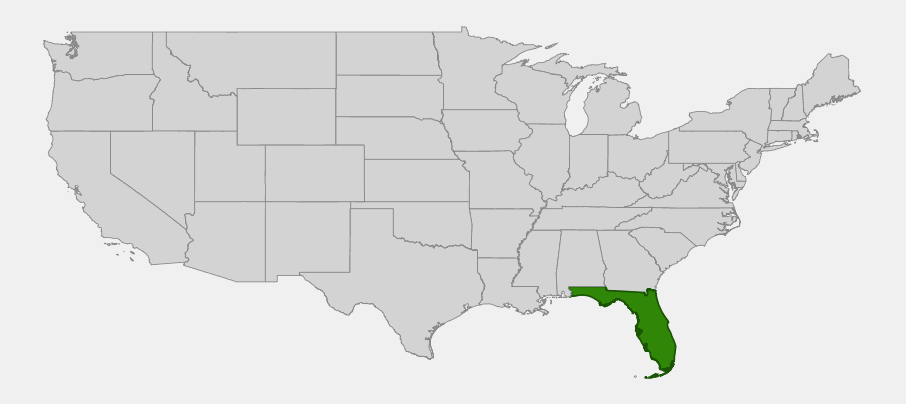
📋 Shortleaf fig’s U.S. range is limited to the southern Florida Keys and Miami-Dade County, an area not currently covered by one of plantnative.org’s regional plant lists; see the native plants directory for other South Florida natives in the meantime.
Growing & Care Guide
Shortleaf fig is easy to grow within its narrow climate comfort zone, but it is strictly a tree for frost-free South Florida landscapes and needs plenty of room to develop its full strangler-fig form.
Light
Shortleaf fig grows best in full sun to light shade. Young trees establishing as epiphytes naturally tolerate the dappled shade of a host canopy, but once rooted in the ground and growing independently, more sun produces a fuller, more vigorous crown.
Soil & Water
This species is remarkably adaptable, tolerating everything from thin, rocky limestone soil to sandy fill, and from periodic flooding to short dry spells once established. It is not particular about soil fertility. Regular watering speeds establishment in young trees, but mature specimens are quite self-sufficient given South Florida’s rainfall patterns.
Planting Tips
Give shortleaf fig a great deal of room — 40 feet or more in every direction — since mature trees spread wide and develop substantial prop and buttress roots that can disturb pavement, foundations, and underground utilities if planted too close to structures. It is best suited to large properties, parks, and naturalistic hammock restorations rather than typical residential lots. Plant container-grown nursery stock rather than attempting to transplant from the wild.
Pruning & Maintenance
Established trees need little routine care beyond occasional removal of deadwood. Because the aerial and prop roots are part of the tree’s natural architecture, avoid cutting them unless they are causing a specific structural problem, and consult an arborist before major pruning on a large specimen. The milky latex sap can irritate skin, so wear gloves when pruning.
Landscape Uses
- Specimen shade tree for large South Florida properties and parks
- Tropical hardwood hammock restoration alongside Florida strangler fig
- Wildlife tree providing near-continuous fruit for birds and mammals
- Coastal and limestone-tolerant plantings where many other trees struggle with alkaline soil
- Naturalistic screening on large acreage where its eventual size is an asset, not a liability
Wildlife & Ecological Value
Few native Florida trees rival shortleaf fig’s value to wildlife, largely because its fruiting is so prolific and so unusually well spread through the year.
For Pollinators
Shortleaf fig depends on a single specialized species of fig wasp for pollination, a relationship so tightly co-evolved that the wasp cannot reproduce without the fig and the fig cannot set viable seed without the wasp. This makes the tree an anchor species for a unique and easily overlooked insect partnership found nowhere outside the fig family.
For Birds
The small, abundant figs are a major food source for many South Florida birds, including white-crowned pigeons, which rely heavily on shortleaf and strangler fig fruit, as well as mockingbirds, thrushes, and numerous migratory songbirds passing through in fall and spring. Because fruiting is spread across much of the year, fig trees provide food during seasonal gaps when other natives are not fruiting.
For Mammals
Raccoons, opossums, and gray squirrels readily eat the figs, and bats are important nighttime consumers and seed dispersers in much of the species’ broader Caribbean and Latin American range.
Ecosystem Role
As a keystone strangler fig, shortleaf fig adds structural complexity to tropical hammocks: its wide crown, hollow trunks (once a host tree decays), and tangle of aerial roots create nesting cavities, perches, and shelter used by a wide range of hammock wildlife. Its near-continuous fruiting helps stabilize food availability for fruit-eating animals through the year.
Cultural & Historical Uses
Throughout its range in the Caribbean and Latin America, shortleaf fig and its relatives have long been known by names such as Jagüey, reflecting their deep familiarity in regional folklore, where strangler figs are sometimes associated with spirits or sacred sites because of their imposing, long-lived, and visually dramatic growth habit over host trees and ruins alike.
In South Florida, shortleaf fig has not had the commercial importance of edible fig species, since its small fruits are not grown for human consumption, but it has long been valued as a shade tree and is increasingly used in habitat restoration projects aimed at rebuilding tropical hardwood hammock in parks and natural areas. If you keep an indoor ficus of any kind rather than this outdoor native, our guides on ficus leaves turning brown, fig tree leaves turning yellow, and when to repot a fiddle-leaf fig cover common care issues across the wider fig family, though shortleaf fig itself is a landscape tree, not a houseplant.
Its wood, like that of most figs, is soft and not valued for lumber; the tree’s role has always been ecological and ornamental rather than economic.
Frequently Asked Questions
How is shortleaf fig different from Florida strangler fig?
The two are very similar and often grow together. Shortleaf fig has shorter, broader leaves, while Florida strangler fig’s leaves are narrower and more elongated. Both are strangler figs with aerial roots, but the species are distinguished mainly by leaf shape and fine details of the fruit.
Can shortleaf fig grow outside Florida?
Only in frost-free, tropical to near-tropical climates (USDA zones 10b–11). It cannot survive freezing temperatures and is not suitable for most of the continental United States outside the southern tip of Florida and similar climates.
Does shortleaf fig kill its host tree?
Often, eventually. Like other strangler figs, it frequently begins life growing on a host tree, and as its own roots reach the ground and its canopy expands, it can shade out and outcompete the host, which may die and decay, leaving the fig’s roots fused into a hollow, lattice-like trunk.
Are shortleaf figs edible?
The small figs are edible to wildlife and have been eaten by people in parts of its range, but they are seedy, often bland, and not cultivated as a food crop. The tree is grown for shade, wildlife value, and habitat restoration rather than fruit production.
How much space does shortleaf fig need?
A great deal. Mature trees can spread 40 feet or more and develop substantial prop roots, so it is best reserved for large properties, parks, and restoration sites rather than typical residential yards.

Looking for a nursery that carries Shortleaf Fig?
Browse our native plant nursery directory: Florida