Pros and Cons of Italian Cypress Trees: A Comprehensive Overview
Last updated: August 30, 2026
Italian cypress trees are a popular choice for homeowners and landscapers alike. These trees are known for their tall, slender shape and dark green foliage, which adds a touch of elegance and formality to any landscape. However, like any plant, there are both pros and cons to consider before planting Italian cypress trees.

One of the main benefits of Italian cypress trees is their fast growth rate. These trees can quickly create privacy screens or hedges, making them ideal for homeowners who want to add some privacy to their outdoor space. Additionally, Italian cypress trees are low maintenance and drought tolerant, requiring minimal pruning and watering.
However, there are also some drawbacks to consider. For example, Italian cypress trees can be susceptible to disease if they are not grown in the right climate conditions. Additionally, these trees have shallow roots, which can make them prone to wind damage. Homeowners should carefully consider these pros and cons before deciding whether Italian cypress trees are the right choice for their outdoor space.
Characteristics and Growing Conditions

Physical Attributes and Growth Patterns
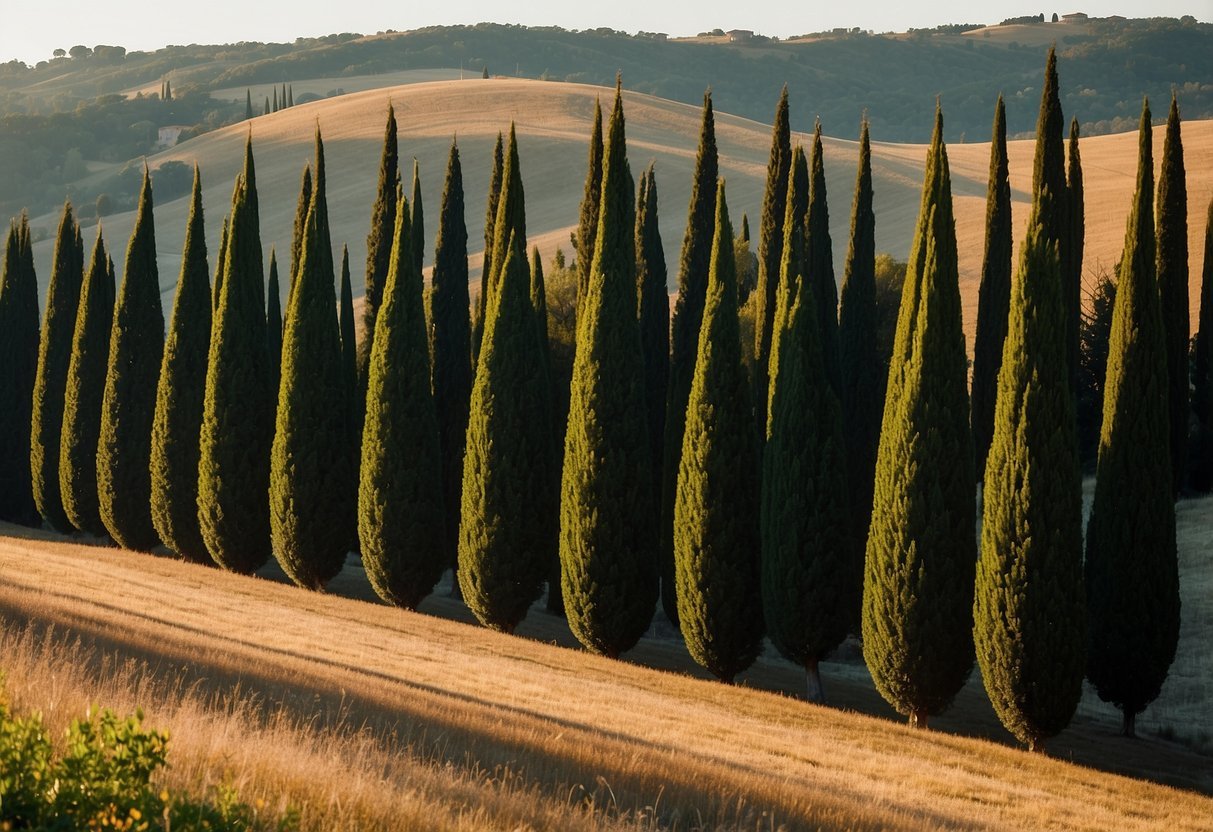
Italian cypress (Cupressus sempervirens) is a tall, slender, columnar-shaped evergreen tree that is also known as the pencil pine. It has a dark green foliage that grows densely in vertical columns and can reach heights of up to 60 feet with a growth rate of about 2 feet per year. The tree has a striking appearance and is commonly used for ornamental purposes, especially in Mediterranean-style gardens.
The species is known for its hardiness and adaptability to a variety of climates and soil types. The Italian cypress is a hardy tree that can withstand full sun and drought conditions once established. It thrives in well-drained soil and is best suited for hardiness zones 7 to 11.
Optimal Growing Conditions
When planting Italian cypress, it is important to consider the location and space available. The tree requires ample space to grow and should be planted in an area with sufficient vertical clearance. It is recommended to plant the tree in a location that receives full sun exposure for optimal growth.
The Italian cypress prefers well-drained soil and is not tolerant of waterlogged conditions. It is important to ensure that the soil is well-draining to prevent root rot. The tree should be watered regularly until established, after which it becomes drought-tolerant.
In summary, the Italian cypress is a hardy and adaptable species that can thrive in a variety of climates and soil types. It requires ample space and full sun exposure for optimal growth and should be planted in well-drained soil. Once established, the tree is drought-tolerant and requires little maintenance.
Advantages and Disadvantages
Benefits in Landscaping and Ecology
Italian cypress trees (Cupressus sempervirens) are a popular choice for landscaping and gardening due to their many benefits. These trees are members of the Cupressaceae family and are known for their tall, slender shape and dark green foliage. They are evergreen trees, meaning they provide color and form to a garden throughout the year. Italian cypress trees are also deer-resistant, making them a great choice for gardens in areas with high deer populations.
In addition to their aesthetic appeal, Italian cypress trees have ecological benefits as well. They are drought tolerant and can survive in a variety of soil conditions. Their dense foliage provides a windbreak and privacy screen for homes and gardens. The trees also attract birds and other wildlife, making them a great addition to any garden.
Maintenance and Potential Issues
While Italian cypress trees have many benefits, they also come with some potential issues. These trees are hardy and can survive winter conditions, but they may need winter protection in areas with harsh winters. They have a shallow root ball and root system, which makes them susceptible to root rot if they are planted in poorly drained soil. Mulching around the base of the tree can help prevent root rot and retain moisture.
Italian cypress trees require proper spacing to allow for air circulation and prevent diseases. They should be planted at least 8-10 feet apart in small spaces and gardens. Pruning is also necessary to maintain the tree’s shape and prevent diseases. The trees are susceptible to pests such as spider mites, aphids, and bagworms, and diseases such as cypress canker and yellowing. Proper fertilizer and soil conditions can help prevent these issues.
Overall, Italian cypress trees are a great choice for gardens and landscaping due to their elegance, low maintenance, and ecological benefits. However, proper care and attention must be given to prevent potential issues and maintain the tree’s health.