Desert Broom (Baccharis sarothroides)
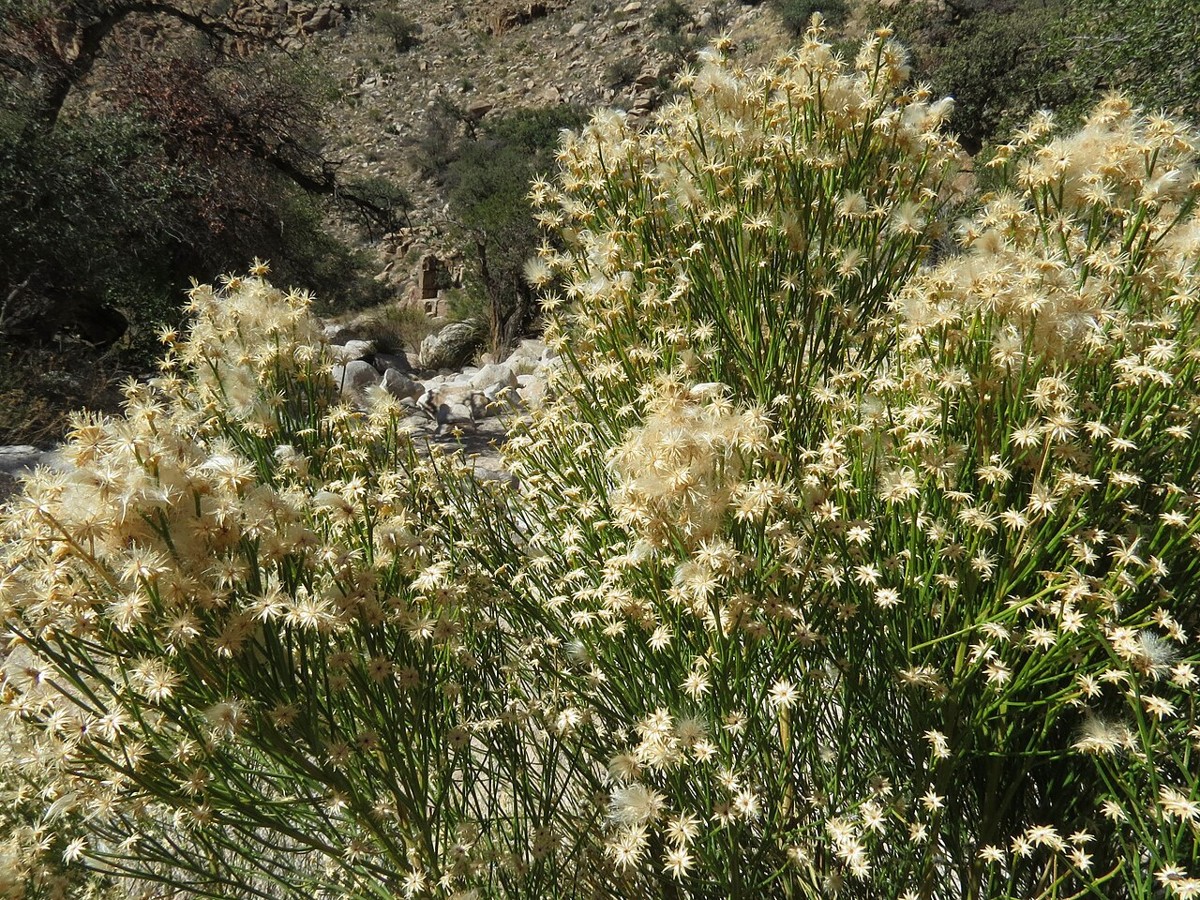
Baccharis sarothroides, commonly called desert broom (also broom baccharis, greasewood, or rosin-bush), is an evergreen shrub of the Sonoran Desert that looks, for most of the year, like a dense cluster of stiff green broomstraws — then transforms each fall into something close to a desert snowfall, as female plants release clouds of fluffy, white-plumed seeds that drift across washes and roadsides. It belongs to the sunflower family (Asteraceae) and the large genus Baccharis, whose members are known for separate male and female plants and wind-dispersed, cottony seed.
Desert broom is a tough, fast-growing, upright shrub with bright green, broom-like stems and only sparse, small leaves present for part of the year — the stems themselves do most of the plant’s photosynthesizing. It is dioecious, meaning individual plants are either male or female; only female plants produce the conspicuous white seed fluff that gives the species its striking fall appearance and its reputation as a vigorous colonizer of disturbed desert ground.
In the landscape, desert broom is valued less as a delicate ornamental and more as a rugged, fast-establishing workhorse: a low-water privacy screen, bank stabilizer, and erosion-control shrub for hot, dry sites across the Southwest. Its fast growth and tolerance of poor, disturbed, even saline soils make it genuinely useful, though its vigorous self-seeding (from female plants) means it often shows up uninvited along roadsides, ditches, and vacant lots throughout its native range.
Identification
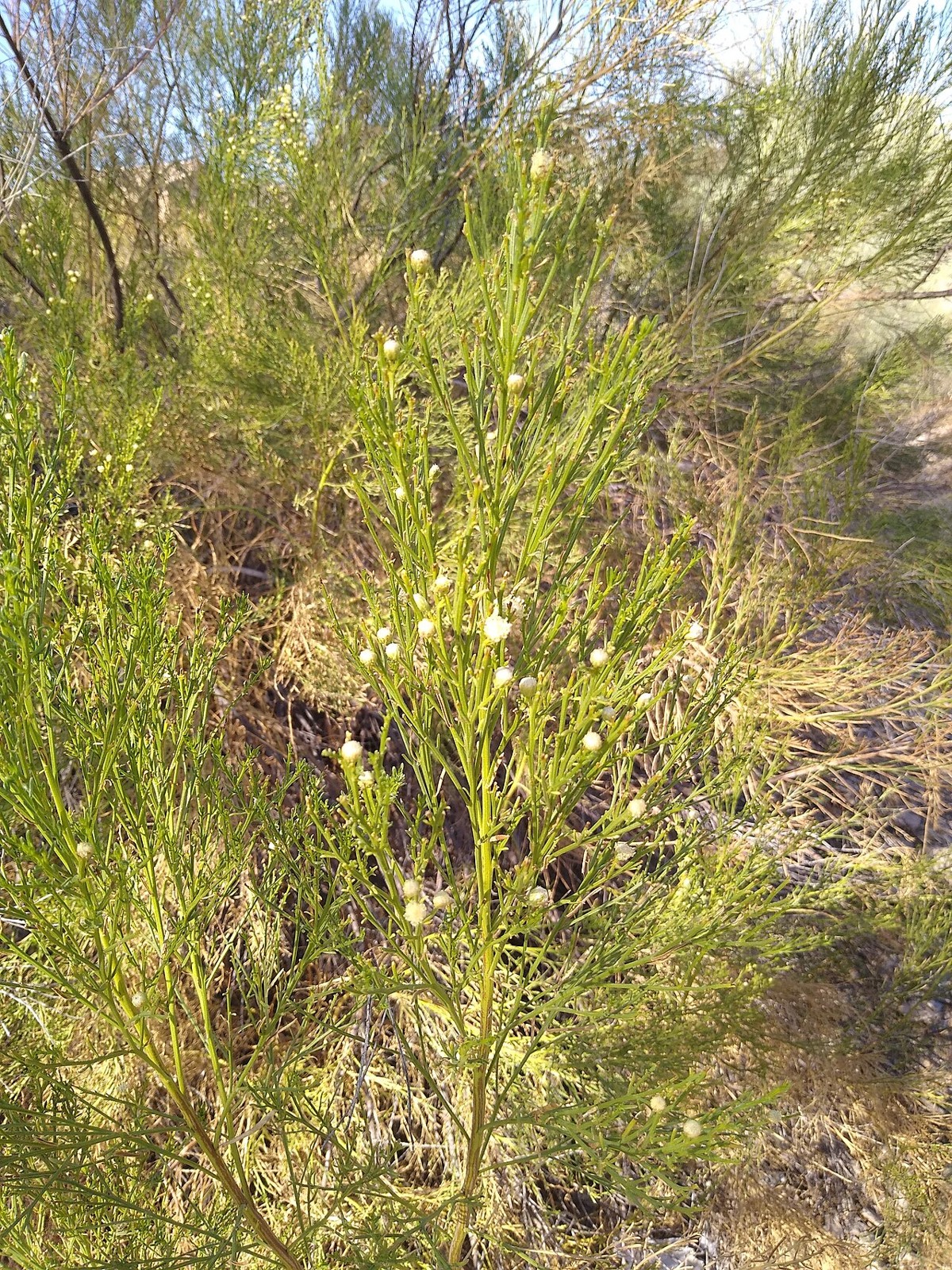
Desert broom is an upright, rounded, many-branched shrub typically reaching 4 to 8 feet tall (occasionally to about 10–12 feet in cultivation), with smooth, bright green, resinous stems that carry on photosynthesis through most of the year. The overall look is broom-like and spindly, especially when the plant has shed its leaves.
Leaves
Leaves are small, thick, and linear to lance-shaped, only a few centimeters long, and are present on the plant for only part of the year — they are sparse to absent much of the time, leaving the green stems to carry the bulk of the plant’s photosynthesis. The stems and foliage are often sticky to the touch from resinous glandular secretions.
Flowers
Desert broom is dioecious, with separate male and female plants bearing small, inconspicuous greenish-white flower heads typically from late summer into fall (roughly September through November, variable with local climate). The tiny flowers lack showy petals and are easy to overlook until the female plants set seed.
Fruit & Seeds
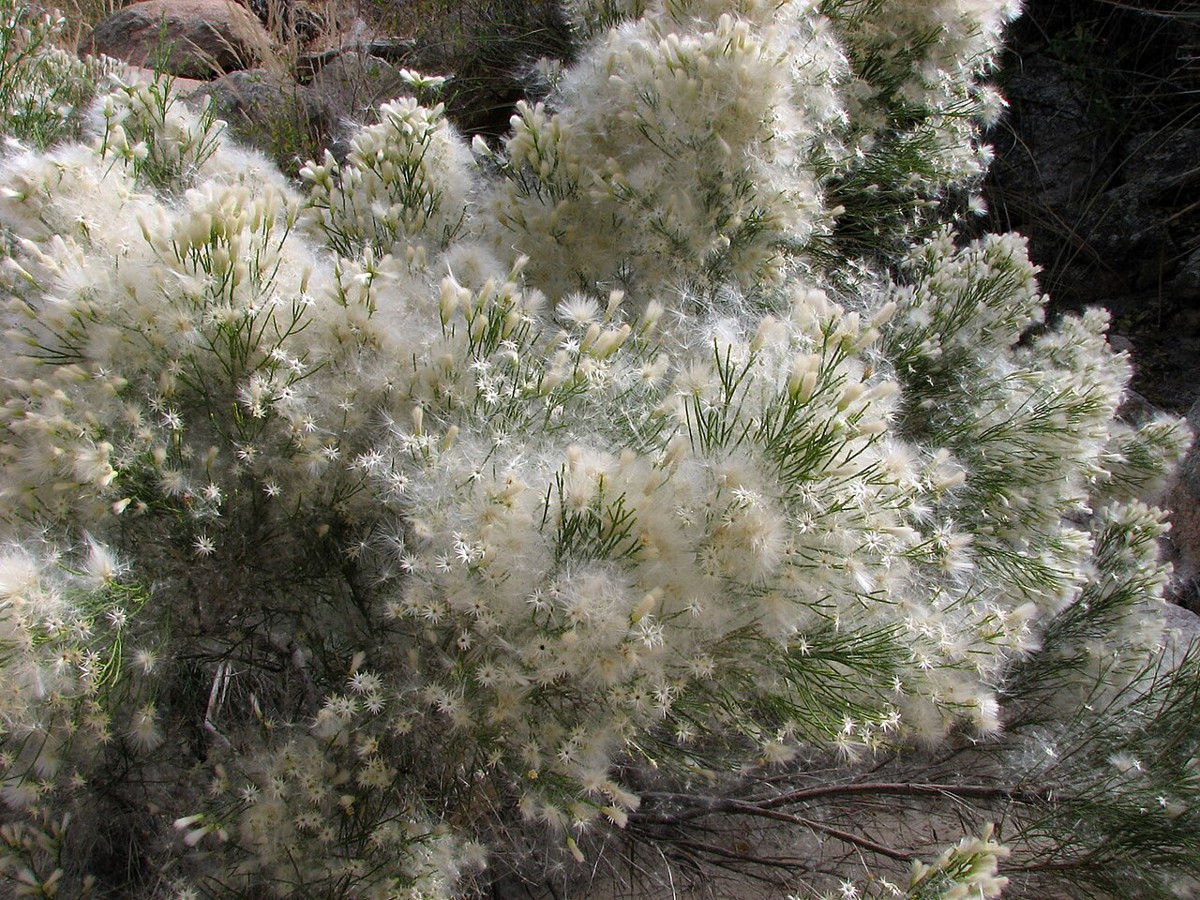
After pollination, female plants produce tiny achenes, each tipped with a soft white pappus (hair tuft) about ⅓ inch (roughly 1 cm) long. In late fall these ripen into the plant’s signature display: dense masses of fluffy white seed heads that blanket entire shrubs and drift on the wind like snow, carrying seed into disturbed soil along washes, roadsides, and construction sites — a major reason the species spreads so readily in developed desert areas.
Quick Facts
| Scientific Name | Baccharis sarothroides |
| Family | Asteraceae |
| Plant Type | Evergreen/Semi-Deciduous Desert Shrub |
| Mature Height | 4–8 ft (to 10–12 ft in cultivation) |
| Mature Spread | 4–7 ft |
| Growth Rate | Fast |
| Sun Exposure | Full Sun |
| Water Needs | Very Low once established |
| Soil Type | Adaptable; gravelly, clay, or saline soils tolerated |
| Soil pH | 6.5–8.5 (wide tolerance) |
| Bloom Time | September – November |
| Flower Color | Greenish-white; female plants show white seed fluff |
| Fall Color | None (evergreen stems; white seed fluff in late fall) |
| Fruit | Tiny achene with white pappus (fluff) |
| Deer Resistant | Yes (resinous, unpalatable foliage) |
| USDA Hardiness Zones | 8–11 |
Native Range
Desert broom is native to the Sonoran Desert region, with county-level records confirming it across southern California, Arizona, and southern New Mexico. Its broader range extends south into northwestern Mexico (Sonora and both Baja California states), and it is also reported in western Texas, though confirmed county-level native records within the United States are concentrated in the three states above.
Within its range, desert broom is extremely common in gravelly washes, disturbed soils, roadside ditches, and other open, sun-baked ground, often appearing as one of the first shrubs to colonize bulldozed or graded desert land. It tolerates both drought and occasional flooding in wash habitats, and its deep taproot allows it to access groundwater unavailable to shallower-rooted plants.
Because of its fast growth and prolific wind-dispersed seed, desert broom spreads readily into disturbed sites well beyond where it may have grown historically, which is why many desert residents regard it as an aggressive volunteer rather than a plant they deliberately introduced — even though it is a true native species within its confirmed range.
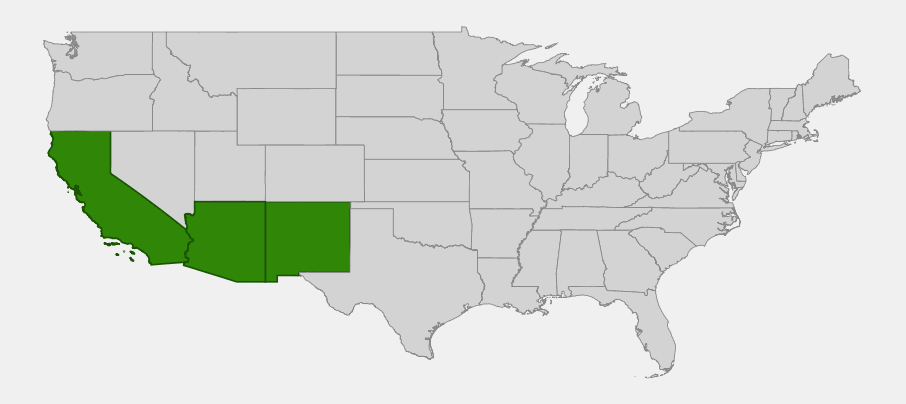
📋 Regional plant lists featuring Desert broom: California & Nevada · Arizona & New Mexico
Growing & Care Guide
Desert broom is one of the easiest native shrubs to grow in hot, dry Southwestern landscapes, tolerating a wide range of soils and needing little attention once established — the main challenge is managing its vigorous growth and self-seeding rather than keeping it alive.
Light
Give it full sun. Desert broom grows naturally in some of the most exposed, sun-baked ground in the Sonoran Desert and performs best with maximum light.
Soil & Water
Desert broom is remarkably adaptable, tolerating gravelly desert soil, heavy clay, and even saline conditions that stress many other plants. Once established it needs very little supplemental water, though it also tolerates occasional flooding in wash settings. In heavy clay soils, avoid overwatering — the plant can drown in soggy, poorly drained ground.
Planting Tips
Set out nursery stock in fall or spring. Because of its fast growth, desert broom is often used as a quick-establishing screen or windbreak while slower, longer-lived native shrubs mature alongside it. If you want to avoid volunteer seedlings from wind-blown seed, choose or request a male plant, since only females produce the fluffy, wind-dispersed seed.
Pruning & Maintenance
Desert broom tolerates shearing well and can be trained into a tidy, short-lived hedge or screen, though it is typically shorter-lived than many larger native shrubs and may need replacing after a decade or so in a formal hedge setting. Periodic pruning helps control its naturally rangy, broom-like growth habit and can reduce self-seeding by removing spent flower heads before seed disperses.
Propagation
Desert broom is easily grown from seed, which germinates readily in disturbed, open soil — part of why it spreads so effectively on its own. Nursery plants are also commonly available and can be planted directly, which allows gardeners to select for sex (male plants if seed dispersal is unwanted).
Landscape Uses
- Fast-growing privacy screen or informal hedge in hot, dry climates
- Erosion control and bank stabilization along washes and slopes
- Reclamation of disturbed desert soils, including graded or construction-disturbed sites
- Low-water xeriscaping where a tough, fast-establishing shrub is needed
Wildlife & Ecological Value
Desert broom plays an outsized ecological role for a plant often dismissed as a weedy colonizer, offering food and structural habitat across the Sonoran Desert.
For Pollinators
The small fall flowers attract a range of native bees, wasps, and other insects at a time of year when few other desert plants are blooming, making desert broom a valuable late-season nectar and pollen source. Paper wasps and flower scarabs are among the many insects regularly observed visiting its blossoms.
For Birds
The dense, twiggy growth provides nesting sites and cover for small desert birds, and the insects drawn to its flowers in turn attract insect-eating birds through the fall months.
For Mammals
Because of its resinous, aromatic foliage, desert broom is largely avoided by deer and other large herbivores, which helps it persist and spread in grazed landscapes. Small mammals use its dense branching for cover from predators and weather.
Ecosystem Role
As one of the first shrubs to establish on disturbed desert soils, desert broom plays an important pioneering role in stabilizing bare ground after construction, flooding, or fire, reducing erosion and creating conditions that allow other native plants to follow. Its deep taproot also helps it tap groundwater during drought, supporting it as reliable structural habitat even in dry years.
Cultural & Historical Uses
The Seri people of the Sonoran coast, who call desert broom cascol caaco, traditionally prepared a decoction by cooking the twigs, used as a drink for colds, sinus headaches, and general aches, and as a topical rub for sore muscles. This traditional use reflects a long history of the plant’s role in regional folk medicine among Indigenous communities of the Sonoran Desert.
Modern phytochemical studies have found that desert broom contains flavonoid compounds such as luteolin, quercetin, and apigenin, which have been studied in other contexts for antioxidant and anti-inflammatory properties. However, these findings come from preliminary plant-chemistry research rather than clinical studies of the plant itself, and desert broom is not a recommended home remedy; some members of the sunflower family are known to cause skin or respiratory irritation, so any traditional use should be understood as historical ethnobotany rather than a model for self-treatment today.
In modern landscaping, desert broom’s main legacy is practical rather than medicinal: a fast, tough, low-water shrub used for screening and erosion control across the Southwest, even as many landowners consider it a nuisance volunteer where its wind-blown seed colonizes unwanted ground.
Frequently Asked Questions
Why does desert broom look like it’s covered in snow or cotton in the fall?
That’s the plant’s ripe seed stage. Desert broom is dioecious, and in late fall only the female plants produce masses of tiny seeds, each carried by a soft white pappus (hair tuft) that lets the wind disperse them — creating the fluffy, cotton-like appearance the species is known for.
Is desert broom invasive?
It is a true native species within its confirmed range in California, Arizona, and New Mexico, but its fast growth and prolific wind-dispersed seed make it an aggressive colonizer of disturbed soil, roadsides, and vacant lots — which is why it is often treated as an unwanted volunteer even though it is not a non-native invasive plant.
Can I prevent desert broom from spreading seed in my yard?
Since only female plants produce the fluffy wind-dispersed seed, planting or selecting a male specimen avoids the self-seeding issue entirely. Regular pruning to remove spent flower heads before they release seed can also help on female plants.
Does desert broom cause allergies?
As a member of the sunflower family related to ragweeds, desert broom can contribute to seasonal allergy symptoms for sensitive individuals, particularly during its fall bloom period, though it is generally considered a less significant allergen than true ragweeds.
Is desert broom safe to use as a home remedy?
While it has a history of traditional use among the Seri people for colds and sore muscles, desert broom is not established as a safe or effective modern herbal remedy, and some related sunflower-family plants can cause skin or respiratory irritation. It should be appreciated as a landscape and wildlife plant rather than used medicinally.

Looking for a nursery that carries Desert broom?
Browse our native plant nursery directory: California · Arizona · New Mexico