Desert Hackberry (Celtis pallida)
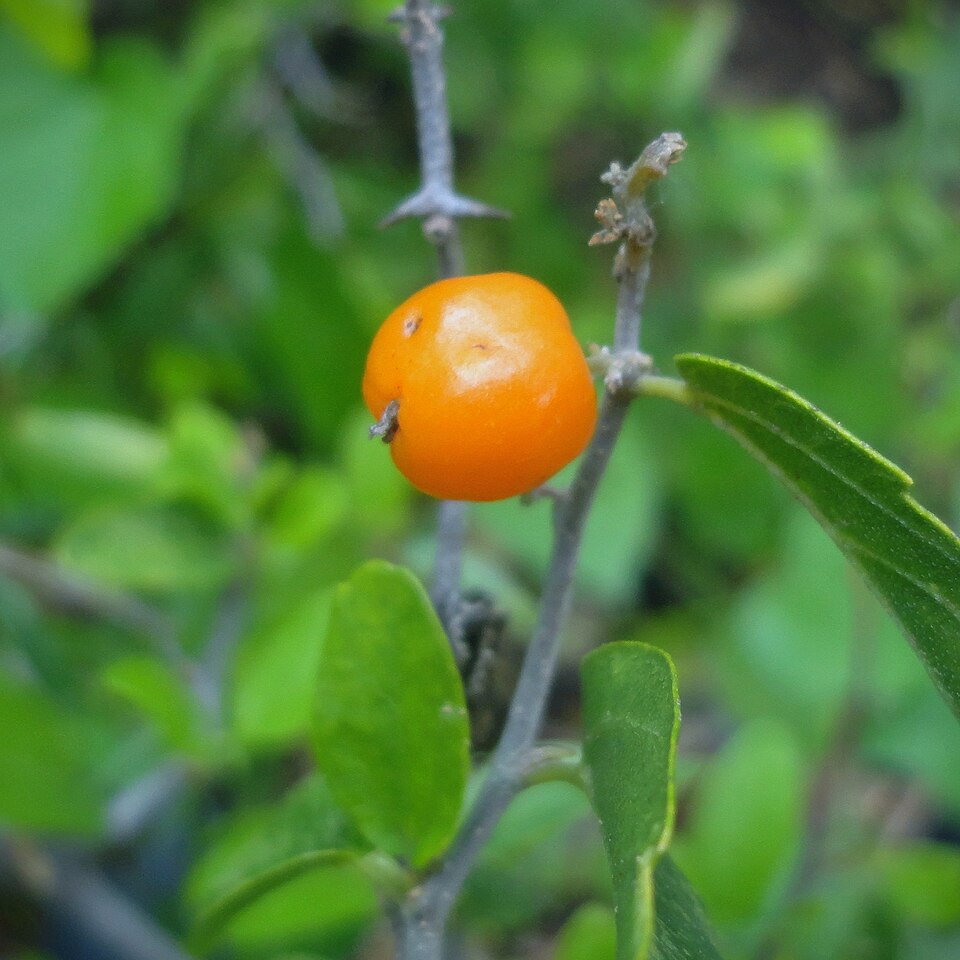
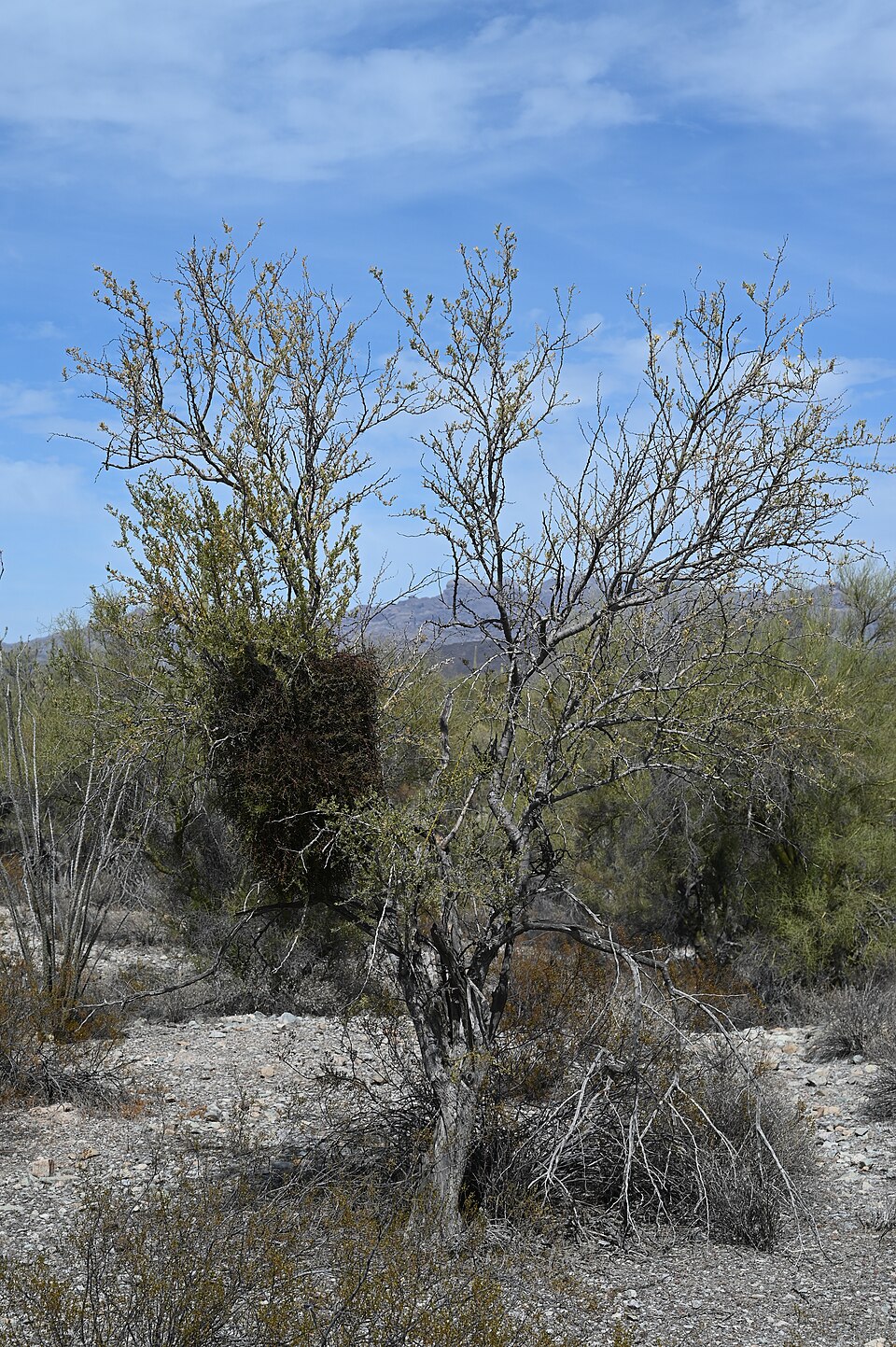
Celtis pallida, the Desert Hackberry, is a tough, spiny native shrub of the Sonoran and Chihuahuan deserts that punches far above its weight in ecological value. Growing 6 to 10 feet tall as a dense, thorny, multi-stemmed thicket, Desert Hackberry is one of the most important wildlife shrubs in the arid Southwest — a species that provides food, cover, and nesting habitat for a remarkable diversity of birds, mammals, and invertebrates. Its small, orange-red to dark red berries ripen through the summer and fall, creating a dependable food source in the harsh desert environment when many other fruiting plants are dormant.
Native to rocky desert washes, arroyos, bajadas, and lower canyon slopes from southern Arizona and New Mexico through western Texas and south into Mexico, Desert Hackberry is adapted to some of the hottest, driest conditions that the Sonoran Desert dishes out. Its tough, slightly grayish-green leaves — which give the species its Latin name pallida (pale) — are small and slightly drought-deciduous, dropping during extended dry periods to conserve moisture and regrowing quickly when rain returns. The plant’s deep, extensive root system and tolerance for alkaline, rocky soils make it an excellent choice for slopes, washes, and other challenging sites in the landscape.
From a wildlife perspective, Desert Hackberry’s importance is difficult to overstate. The berries are consumed by at least 30 species of birds including Gambel’s Quail, Crissal Thrashers, Northern Mockingbirds, and various migrating warblers and flycatchers. Its thorny thicket provides exceptional nesting cover for birds seeking protection from predators. Desert Hackberry also serves as a larval host plant for several native butterfly species including the American Snout butterfly — making it valuable for butterfly gardeners as well as bird enthusiasts.
Identification
Desert Hackberry is a dense, intricately branched, spiny shrub that grows in multi-stemmed clumps. Its thorns are paired, straight, and sharp, emerging from the nodes of zigzag branches. The overall texture of the plant is somewhat coarse but attractive, with the small leaves and abundant thorns giving it a distinctive character unlike most other native desert shrubs.
Stems & Thorns
The stems are gray-brown to whitish-gray, slightly zigzagging, and armed with stout paired thorns (actually stipular spines) at each node — typically ¼ to ½ inch long. These thorns are sharp and effective at deterring browsing animals, which makes Desert Hackberry thickets excellent nesting cover for birds. Young stems are slightly hairy; older bark becomes rougher and more furrowed. The branching is dense and interlocking, creating an impenetrable thicket in mature specimens.
Leaves
The leaves are small, 1 to 2 inches long and ½ to 1 inch wide, ovate to elliptic in shape, with a somewhat asymmetric base (typical of the hackberry genus), 3-veined from the base, and with coarsely toothed margins on the upper half. The upper surface is rough (scabrous) to the touch due to short, stiff hairs, while the underside is pale and slightly hairy — providing the “pallida” (pale) name. Leaves are drought-deciduous in the driest conditions, dropping and regrowing as moisture availability changes, making the plant semi-evergreen in warm, moister areas and more deciduous in the hottest desert conditions.
Flowers & Fruit
Flowers are small, inconspicuous, and yellow-green to whitish, appearing in spring (March–April) in the leaf axils. Though individually tiny, they provide a modest nectar and pollen resource for early-season native bees. The fruit is a small drupe (berry-like), ¼ to ⅓ inch across, ripening from yellowish-orange to orange-red to dark reddish-purple in late summer and fall. The thin, sweet flesh surrounds a hard, smooth seed. Fruits are eagerly consumed by birds and may persist on the plant for extended periods if bird activity is lower than normal. Plants may produce fruit throughout the year in warmer, wetter years, making Desert Hackberry a particularly reliable year-round food source for wildlife.
Quick Facts
| Scientific Name | Celtis pallida |
| Family | Cannabaceae (Hemp / Hackberry) |
| Plant Type | Deciduous to Semi-evergreen Shrub |
| Mature Height | 8 ft |
| Sun Exposure | Full Sun |
| Water Needs | Low (Drought Tolerant) |
| Bloom Time | March – April |
| Flower Color | Pale greenish-yellow (inconspicuous) |
| USDA Hardiness Zones | 8–11 |
Native Range
Desert Hackberry (Celtis pallida) is native to the Sonoran and Chihuahuan desert scrub of the American Southwest and northern Mexico. In the United States, it occurs primarily in southern Arizona, southern New Mexico, and the Trans-Pecos region of western Texas. The species extends south through Sonora, Chihuahua, Sinaloa, and other Mexican states, reaching into Central America. Its US distribution is concentrated in the lower, hotter, drier desert zones below 4,500 feet elevation.
Within the arid Southwest, Desert Hackberry is most commonly found in desert washes, rocky canyon bottoms, bajadas (alluvial fans at the base of mountain ranges), and rocky hillsides where it receives some additional runoff from upslope. It grows in thin, rocky, alkaline soils of limestone, granite, or volcanic origin. The plant is well adapted to the extreme heat, drought, and low-nutrient conditions of the Sonoran Desert floor, and it commonly associates with Palo Verde trees (Parkinsonia spp.), Saguaro Cactus, Creosote Bush, Triangle-leaf Bursage, Jumping Cholla, and various other Sonoran Desert species.
Desert Hackberry is considered a foundational shrub species in desert wash and arroyo ecosystems, where its thorny thickets provide the structural complexity and year-round food resources that support high densities of wildlife in these otherwise harsh environments. Washes with well-developed Desert Hackberry thickets consistently support significantly higher bird species richness and density than adjacent open desert habitats.
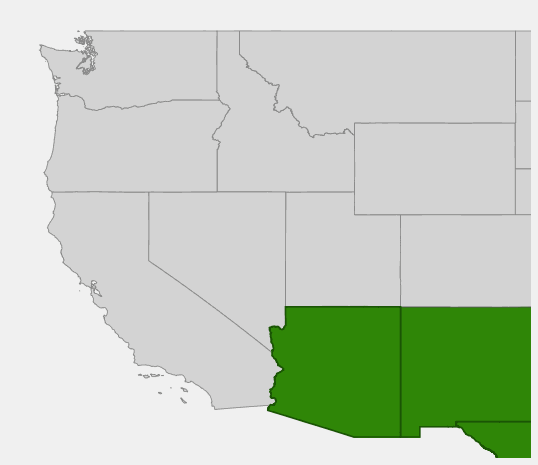
📋 Regional plant lists featuring Desert Hackberry: Arizona
Growing & Care Guide
Desert Hackberry is an outstanding choice for wildlife-focused native gardens in the hot desert Southwest. Its tough constitution, low water requirements, and extraordinary value for birds make it one of the most ecologically important native shrubs available for Arizona landscapes. The thorns require some planning for placement (away from high-traffic areas), but the wildlife benefits are exceptional.
Light
Desert Hackberry requires full sun for best growth and fruiting. It is adapted to the intense solar radiation of the Sonoran Desert floor and will not thrive in shade. Choose an open, south- or west-facing location with maximum sun exposure. The plant handles the reflected heat of walls and paving exceptionally well — making it a good choice for heat-island conditions where other plants struggle.
Soil & Water
Desert Hackberry thrives in rocky, well-drained, alkaline soils and is one of the most drought-tolerant native shrubs available. Established plants need minimal supplemental irrigation — in areas with 8 to 12 inches of annual rainfall distributed through summer monsoons, Desert Hackberry typically thrives without any additional watering. During the first growing season, water every 2 to 3 weeks to support root establishment. After the first season, monthly deep watering in summer is sufficient; many established plants do fine with no supplemental irrigation at all. The plant is extremely heat tolerant and handles alkaline soils better than most other native shrubs.
Planting Tips
Plant in fall (October–November) for best establishment before summer heat arrives. Wear heavy gloves and long sleeves when handling — the thorns are sharp and persistent. Plant at grade in well-drained soil. Space plants 6 to 10 feet apart for a wildlife hedge or screening thicket. Desert Hackberry grows slowly in its first year as it focuses on root development, then accelerates significantly in subsequent years. Avoid placing near walkways, play areas, or other high-traffic zones due to the sharp thorns.
Pruning & Maintenance
Desert Hackberry requires minimal pruning. Remove dead or damaged branches in late spring after the threat of frost has passed. You can shape the plant somewhat by selectively removing branches, but the natural, informal thicket form is the most ecologically valuable and visually appropriate for wildlife gardens. Avoid heavy shearing — the plant’s value comes from its dense, thorny structure. The thorns make pruning somewhat hazardous; use heavy leather gloves and long-handled loppers for safety.
Landscape Uses
Desert Hackberry excels in wildlife-focused native landscapes:
- Wildlife hedge or thicket — dense, thorny growth provides excellent bird nesting cover
- Erosion control on slopes and disturbed desert soils
- Wash or arroyo restoration — a natural companion plant for desert waterways
- Barrier planting — the thorns create an effective living fence
- Quail habitat — outstanding shelter and food source for Gambel’s Quail
- Bird garden centerpiece for desert regions
- Revegetation of disturbed desert sites
Wildlife & Ecological Value
Desert Hackberry is one of the most ecologically valuable native shrubs in the Sonoran Desert ecosystem. Its combination of thorny protective cover, abundant fruit, and year-round shelter makes it an anchor species for wildlife in desert wash communities.
For Birds
Desert Hackberry supports an exceptional diversity of bird species. The berries are eaten by Gambel’s Quail, Cactus Wrens, Crissal Thrashers, Curve-billed Thrashers, Northern Mockingbirds, American Robins (in winter), Cedar Waxwings (during migration), various flycatchers, and numerous warblers during spring and fall migration. The dense, thorny thicket provides outstanding nesting cover — Cactus Wrens, House Finches, Verdin, Black-tailed Gnatcatchers, and many other desert birds build nests within the protective thorny branches. The plant is often described by birders as one of the most reliably bird-rich native plants in Arizona desert gardens.
For Mammals
Coyotes, Desert Foxes, and Ringtail Cats consume the fruits. Jackrabbits and Cottontail Rabbits browse the leaves. White-tailed Deer nibble the foliage where ranges overlap at higher elevations. The dense thicket provides shelter and security cover for small desert mammals including Kangaroo Rats, Pocket Mice, and various lizards. Coatimundi and Javelina may visit Desert Hackberry in canyon settings.
For Butterflies & Insects
Desert Hackberry is an important larval host plant for the American Snout butterfly (Libytheana carinenta), whose caterpillars feed on Hackberry leaves. Hackberry Emperor and Tawny Emperor butterflies also use various Celtis species as larval hosts. Spring flowers provide modest early-season nectar resources for native bees. The dense growth harbors diverse beneficial insects including predatory beetles and wasps that help control pest insect populations.
Ecosystem Role
In desert wash ecosystems, Desert Hackberry serves as a keystone structural plant — its thorny thickets create the complex, multi-layered habitat that supports high wildlife diversity in an otherwise relatively open desert landscape. By providing abundant, dependable fruit through summer and fall, it serves as a critical food resource during the period between monsoon plant growth and winter food availability. Its dense root system helps stabilize wash banks and arroyo margins against erosion during flash flood events.
Cultural & Historical Uses
Desert Hackberry has been an important food source for Indigenous peoples throughout the Sonoran and Chihuahuan desert regions for thousands of years. The Tohono O’odham, Pima (Akimel O’odham), and various groups in northern Mexico have traditionally eaten the berries fresh or dried them for later use. The small, sweet fruits — though thin-fleshed — were valued as a food source during the summer season when they ripen in abundance. Archaeological evidence of hackberry fruit processing has been found at prehistoric sites across the Sonoran Desert region, indicating the plant’s long history as a human food source.
The Seri people of coastal Sonora, Mexico, used various parts of Desert Hackberry in their material culture. Branches were used as fuel, and the thorny wood was incorporated into fish traps and other structures. Various desert peoples used infusions of hackberry leaves and bark in folk medicine for treating skin conditions, sore throats, and intestinal problems — applications that appear across multiple Indigenous groups throughout the plant’s range in Mexico and the US Southwest.
In the modern landscape context, Desert Hackberry has gained recognition as one of the most valuable native shrubs for Arizona wildlife gardens. Ornithologists and wildlife biologists working in Sonoran Desert ecosystems consistently identify it as a priority species for wildlife-focused restoration and landscaping projects. The Sonoran Desert Conservation Plan and similar regional conservation frameworks in Arizona recognize Desert Hackberry thickets as important microhabitat elements in desert wash and riparian corridor systems.
Frequently Asked Questions
Are Desert Hackberry berries edible?
Yes — Desert Hackberry berries are edible for humans, though the thin flesh over the hard seed doesn’t leave much to work with. The berries have a mildly sweet flavor and have historically been eaten by Indigenous peoples of the region. However, the fruits are far more valuable left on the plant for the dozens of bird and mammal species that depend on them as a food source.
Does Desert Hackberry have thorns?
Yes — Desert Hackberry has sharp, paired thorns at each node, making it an effective barrier plant but requiring careful placement in the landscape. Use heavy gloves when pruning. The thorns are one of its most valuable features for wildlife — they protect nesting birds from predators and make the interior of the thicket a safe refuge for small animals.
How big does Desert Hackberry get?
Desert Hackberry typically grows 6 to 10 feet tall and about as wide, forming a dense, multi-stemmed thicket. In favorable locations with good soil moisture, plants can occasionally reach 12 feet. Growth rate is moderate — expect 1 to 2 feet of new growth per year once established.
Does Desert Hackberry lose its leaves?
Desert Hackberry is drought-deciduous — it drops its leaves during extended dry periods to conserve moisture, then refoliates quickly when rain returns. In wetter years with good monsoon rainfall, it may remain semi-evergreen. In consistently dry conditions, it may cycle through leafing out and dropping several times per year. This behavior is completely normal and healthy.
Is Desert Hackberry a good butterfly plant?
Yes — Desert Hackberry is the larval host plant for the American Snout butterfly, whose caterpillars feed exclusively on hackberry leaves. It also supports Hackberry Emperor and Tawny Emperor butterflies. The flowers provide spring nectar for native bees, and the dense growth shelters many beneficial insects. It is an outstanding multi-functional wildlife plant.

Looking for a nursery that carries Desert Hackberry?
Browse our native plant nursery directory: Arizona