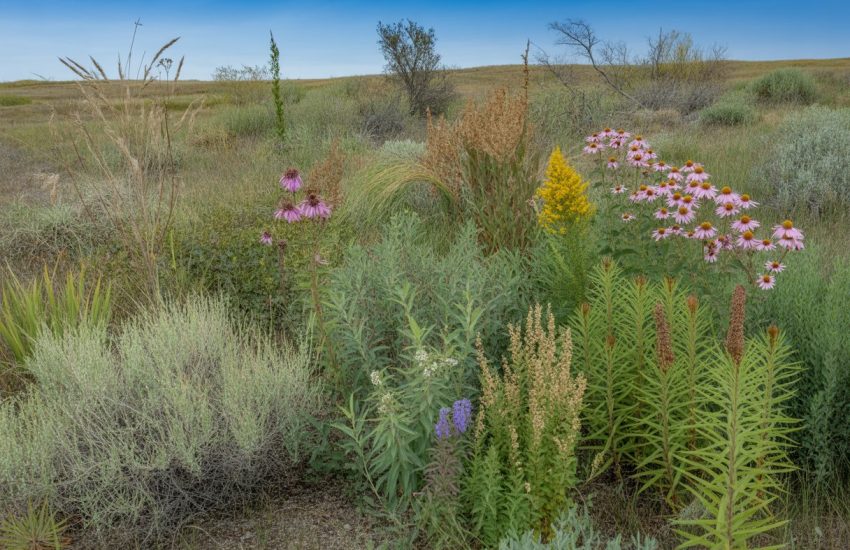
Littleleaf Sumac (Rhus microphylla)
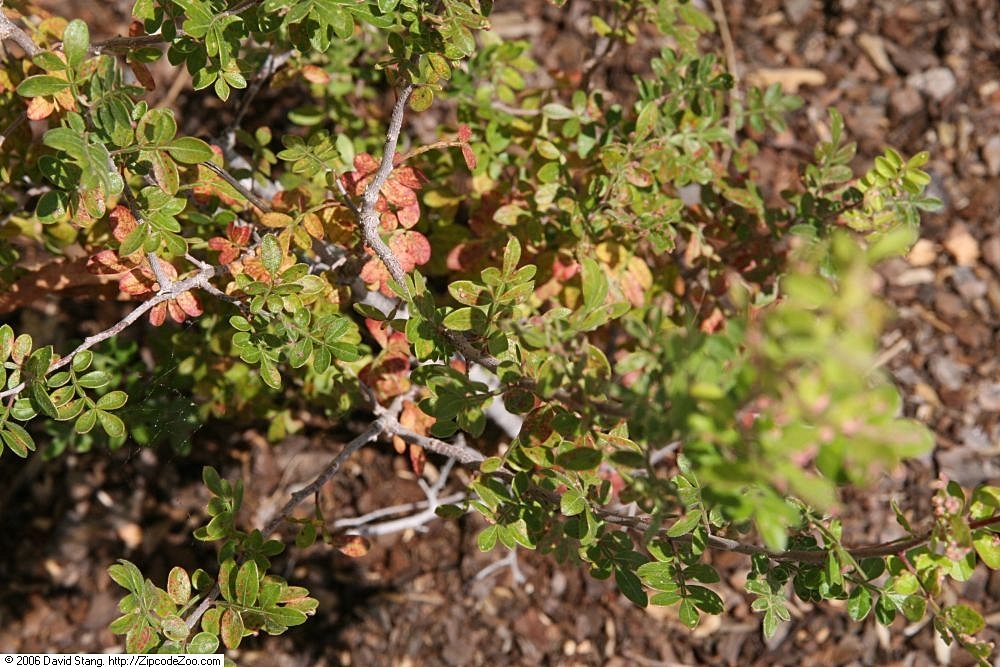
Rhus microphylla, known as Littleleaf Sumac or Desertnest Sumac, is a rugged and wildlife-rich native shrub of the Chihuahuan Desert and surrounding arid grasslands, well adapted to the hot, dry conditions of the American Southwest. Its common name reflects its most distinctive feature: the exceptionally small, pinnately compound leaves — composed of up to nine tiny leaflets — that allow the plant to minimize water loss while maintaining photosynthetic capacity even during the most intense desert droughts. Reaching up to 8 feet in height and capable of spreading even wider, Littleleaf Sumac is a sprawling, dense shrub whose tangle of branches provides exceptional wildlife cover, while its abundant orange-red berries are consumed by dozens of bird and mammal species in fall and winter. The Arizona regional plant list highlights its fruit as “great for wildlife” and notes it “can be hedge” — two of its most valuable landscape attributes.
Flowering in late winter through early spring (February–March) before the leaves fully expand, Littleleaf Sumac produces small white flower clusters that buzz with native bees collecting early-season nectar. The flowers develop rapidly into the characteristic orange-red to brick-red berry clusters that persist on the plant through fall and winter, long after the deciduous leaves have dropped. This long fruiting season, combined with the plant’s tolerance of drought, cold, and alkaline soils, makes it one of the most reliable wildlife plants for the desert Southwest. For gardeners, it offers the rare combination of being both a productive wildlife shrub and a practical hedging plant that responds well to shearing.
The sumac family is famous throughout the northern hemisphere for its wildlife-friendly berries, and Littleleaf Sumac upholds this reputation with its abundant, persistent, tart-flavored orange-red berries. Unlike the introduced sumacs that can become invasive in some landscapes, Littleleaf Sumac is a well-behaved native that integrates perfectly into desert plant communities, filling the important niche of a dense, fruiting shrub in the middle layers of the desert landscape structure. Its ability to grow on limestone, caliche, and alkaline soils makes it one of the few options for these challenging substrates.
Identification
Littleleaf Sumac is a multi-stemmed deciduous shrub, typically 4–8 feet (1.2–2.4 m) tall and often wider than tall, with many stiff, upright to spreading branches. Older stems have gray to brownish bark; younger stems are reddish-brown. The overall texture is fine due to the small leaf size. The branch structure becomes dense and somewhat thorny-looking with age.
Leaves
The leaves are pinnately compound with 5–9 leaflets, each leaflet only ½–¾ inch (1.2–2 cm) long and ¼–⅜ inch (0.6–1 cm) wide — among the smallest leaflets of any North American sumac. The leaflets are oval, dark green, and smooth above with slightly paler undersides. The leaf rachis (central stem) is winged between the leaflets — a characteristic feature of many sumac species. The leaves are deciduous, turning attractive shades of orange to red in fall before dropping, providing a brief but colorful autumn display in the desert garden.
Flowers & Fruit
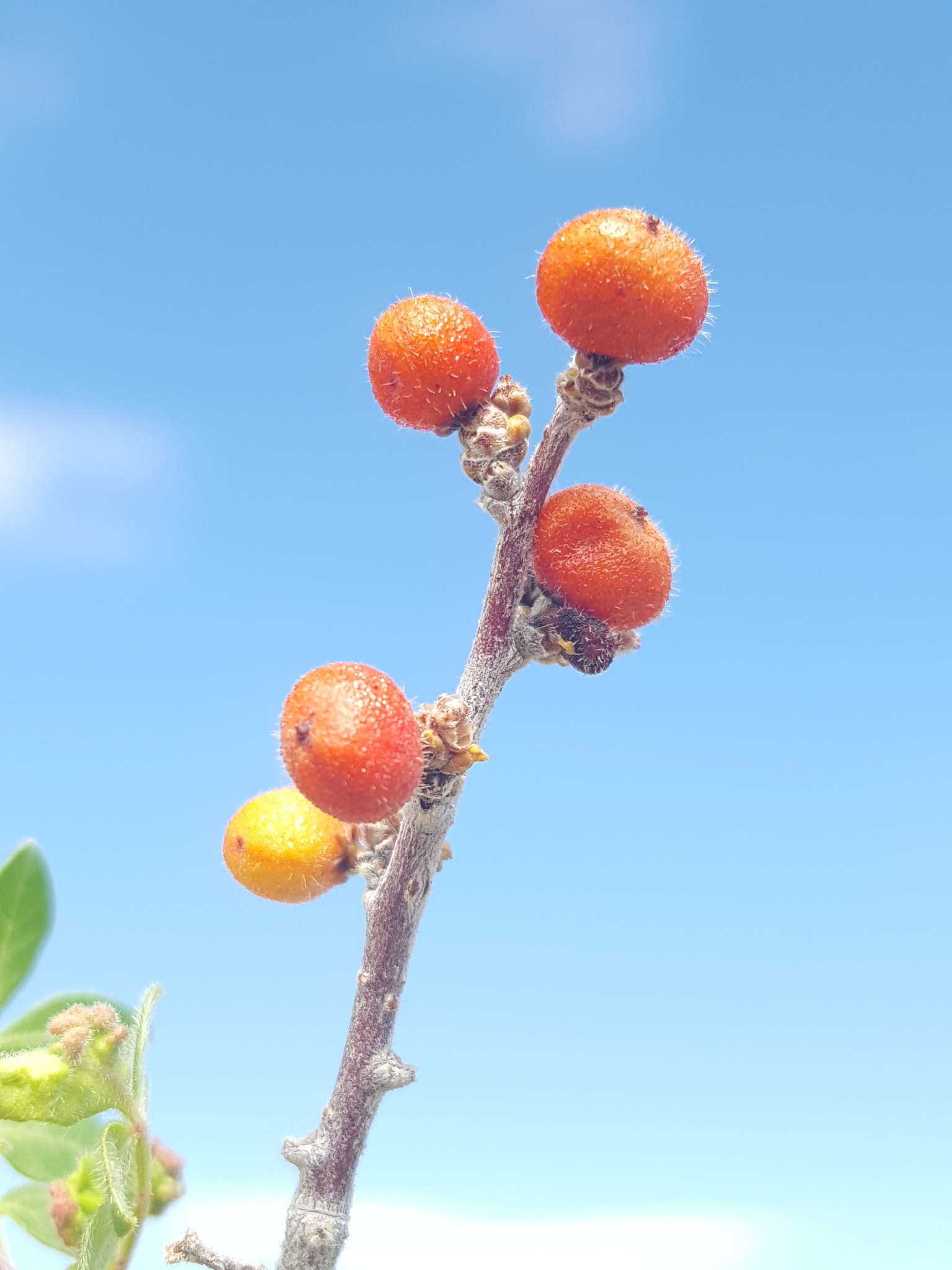
Flowers appear in dense, cylindrical clusters in late February through April, emerging before or with the leaves. Individual flowers are tiny — only 2–3 mm — with five white petals, appearing in compact panicles 1–2 inches long at the branch tips. The fruit is a small, round to oval drupe about ¼ inch (6 mm) in diameter, covered with short sticky hairs that give it a slightly fuzzy appearance. Fruits develop in clusters, turning from green through orange to orange-red or brick-red by late summer. The thin layer of tart pulp over a hard seed resembles a miniature sumac berry. The fruits persist through fall and winter — long after the leaves drop — providing an important food source for wildlife during the lean winter months.
Quick Facts
| Scientific Name | Rhus microphylla |
| Family | Anacardiaceae (Cashew / Sumac Family) |
| Plant Type | Deciduous Shrub |
| Mature Height | 8 ft |
| Sun Exposure | Full Sun to Part Shade |
| Water Needs | Low (Drought Tolerant) |
| Bloom Time | February – April |
| Flower Color | White |
| USDA Hardiness Zones | 6–9 |
Native Range
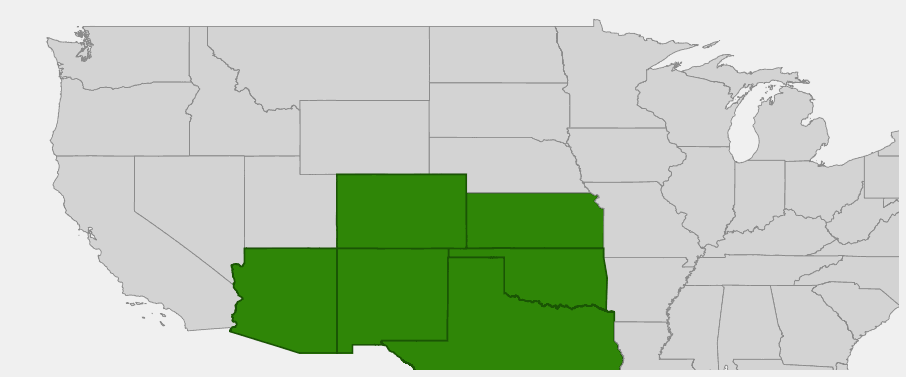
Littleleaf Sumac is native to the Chihuahuan Desert and adjacent arid grasslands and shrublands of the southwestern United States and northern Mexico. In the US, its range encompasses central and western Texas (including the Hill Country, Trans-Pecos, and Panhandle), southern and eastern New Mexico, and southeastern Arizona. It extends south into the Mexican states of Chihuahua, Coahuila, Durango, and Nuevo León.
Throughout its range, Littleleaf Sumac shows a strong preference for rocky, limestone-derived soils on slopes, canyon rims, mesas, and upland grasslands. It is particularly abundant on the limestone escarpments and caliche flats of the Texas Hill Country and Trans-Pecos, where it often forms dense thickets on exposed, south-facing rocky slopes. In Arizona, it reaches the western edge of its range in the southeastern corner of the state, in the foothills and mountain ranges of Cochise, Santa Cruz, and Pima counties.
Within its range, Littleleaf Sumac commonly grows alongside Desert Willow, Sotol, Desert Marigold, various cacti, and Chihuahuan Desert grassland species. Its association with limestone substrates and its presence in the most arid portions of its range reflect its exceptional adaptation to low-precipitation, high-temperature conditions — it is among the most drought-hardy members of the sumac family and a reliable component of desert restoration seed mixes for limestone-derived soils.
📋 Regional plant lists featuring Littleleaf Sumac: Arizona
Growing & Care Guide
Littleleaf Sumac is one of the toughest and most drought-tolerant native shrubs for desert gardens. Once established, it requires essentially no supplemental irrigation and thrives in the rocky, alkaline soils that challenge many other plants.
Light
Littleleaf Sumac grows best in full sun but tolerates partial shade — particularly afternoon shade at lower, hotter elevations. In full sun, it develops its densest growth and most prolific fruit production. In part shade, it grows somewhat more open but still produces fruit and provides good wildlife habitat. This flexibility makes it useful in a variety of garden settings, from fully exposed hot slopes to partially shaded positions alongside taller trees.
Soil & Water
Littleleaf Sumac prefers rocky, well-drained, alkaline soils — replicating the limestone substrates of its native Chihuahuan Desert habitat. It is remarkably tolerant of calcareous soils and thrives in the high-pH, caliche-heavy soils common throughout the Chihuahuan Desert. Good drainage is essential. Once established, it is among the most drought-hardy plants available, surviving on 8–12 inches of annual rainfall with no supplemental irrigation. During establishment (first 1–2 years), water deeply every 2 weeks in summer.
Planting Tips
Plant in fall or early spring. It transplants well from container stock but resents root disturbance, so choose the planting location carefully before disturbing the root system. For hedging purposes, space plants 4–6 feet apart. For a naturalistic wildlife planting, space 6–8 feet apart. Avoid amending the planting hole with rich organic material — lean native soil produces better-adapted plants.
Pruning & Maintenance
For a natural form, little pruning is needed beyond removing dead wood in late winter. For a formal hedge, shear in spring after flowering to maintain the desired shape. Littleleaf Sumac spreads slowly by root suckers, which can be removed or allowed to expand the planting. Leave the fruit on the plant as long as possible to maximize its value for wildlife — the berries often persist into late winter when bird food is scarce.
Landscape Uses
- Wildlife habitat hedge — dense, thorny-looking structure is ideal for bird nesting and cover
- Formal hedge — responds well to shearing
- Rocky slope planting — excellent on limestone or caliche hillsides
- Xeriscape foundation shrub
- Desert restoration on disturbed limestone sites
- Wildlife food garden — berries attract many bird species
Wildlife & Ecological Value
For Birds
Littleleaf Sumac is among the most important native berry-producing shrubs for desert birds. The orange-red fruits are consumed by American Robins, Cedar Waxwings, Northern Mockingbirds, Curve-billed Thrashers, Pyrrhuloxias, Phainopeplas, and many other species. Because the berries persist through winter — often long after most other fruiting plants have been stripped — Littleleaf Sumac provides critical late-winter food at a time when alternatives are scarce. The dense thickets are also prime nesting habitat for Cactus Wrens, Curve-billed Thrashers, and Mockingbirds.
For Mammals
Coyotes, ringtail cats, coatis, and various rodents eat the Littleleaf Sumac berries. White-tailed deer browse the foliage in the mountain foothills of southeastern Arizona. The dense, impenetrable thickets provide essential escape cover for cottontail rabbits, black-tailed jackrabbits, and numerous rodent species throughout the year.
For Pollinators
The early spring flowers attract a wide variety of native bees — one of the first and most important spring nectar and pollen sources in the Chihuahuan Desert. Many bee species emerge from winter dormancy synchronized with the Littleleaf Sumac bloom, and the timing of the flowers before leaves fully expand ensures that the small flower clusters are highly accessible to pollinators seeking food after winter dormancy.
Ecosystem Role
In the rocky limestone landscapes of the Chihuahuan Desert, Littleleaf Sumac is a keystone shrub that provides the dense cover and food resources that support high bird diversity. Its deep root system stabilizes limestone slopes and contributes organic matter as leaves decompose. The thickets it forms are important thermal refuges for wildlife during both summer heat and winter cold.
Cultural & Historical Uses
Littleleaf Sumac has a long history of human use throughout the Chihuahuan Desert region. The tart, acidic berries were gathered by many Indigenous peoples of the region — including Apache, Comanche, and various Pueblo groups — and used as a flavoring agent, much like lemon juice, to add tartness to foods. They were also consumed directly as a tart trail food, and made into a refreshing acidic beverage similar to sumac-ade made from other sumac species. The sumac family’s characteristic tartness comes from the malic and gallic acids in the berry pulp, the same compounds that give lemonade its flavor.
Medicinally, various tribes used Littleleaf Sumac preparations for treating mouth sores, sore throats, and as an astringent for skin conditions — properties consistent with the high tannin content characteristic of the genus Rhus. The leaves and bark contain significant quantities of tannins that have strong astringent and antibacterial properties. In northern Mexico, folk medicine traditions used leaf and bark decoctions as a treatment for diarrhea and dysentery, utilizing the same tannin-rich chemistry.
The wood of Littleleaf Sumac, while not large enough for structural use, is dense and hard and was used for small implements, fuel, and charcoal production throughout its range. The plant was also used as a dye source — the tannin-rich bark and leaves produce yellow and brown dyes that were used in traditional textile production by Indigenous peoples of the region. In contemporary horticulture, Littleleaf Sumac is gaining recognition as a drought-proof wildlife garden plant and is increasingly available at native plant nurseries in Arizona, New Mexico, and Texas.
Frequently Asked Questions
Are Littleleaf Sumac berries edible for humans?
Yes, they are edible — the tart, acidic pulp has been used for centuries by Indigenous peoples of the region. The raw berries are intensely tart (similar to lemon) and can be eaten directly, used as a food flavoring, or made into a beverage by soaking the berry clusters in cold water. They contain high levels of vitamin C. Note that Rhus microphylla is not related to Poison Sumac (Toxicodendron vernix), which is in a different genus and does not occur in the desert Southwest.
Can Littleleaf Sumac grow as a hedge?
Yes — this is one of its best landscape uses. It responds well to shearing and can be maintained as a formal hedge 3–6 feet tall. Its dense branch structure and small leaves produce a fine-textured hedge that provides both privacy screening and wildlife habitat. Space plants 4 feet apart for a continuous hedge that fills in within 3–4 years.
When do the berries ripen?
The berries typically ripen from July through September, turning from green through orange to orange-red or brick-red. Unlike many fruiting plants, the berries of Littleleaf Sumac are slow to be consumed by birds and often persist on the plant through December and January — providing food when few other berry-producing plants are still fruiting in the desert landscape.
Does Littleleaf Sumac spread or become invasive?
Littleleaf Sumac spreads slowly by root suckers but is not considered invasive. The suckering growth can be controlled by removing suckers as they appear, or allowed to expand the planting area gradually. It does not spread aggressively into undisturbed native plant communities and is a well-behaved native shrub in garden settings.
How cold-hardy is Littleleaf Sumac?
Littleleaf Sumac is hardy to approximately -10°F (-23°C), making it suitable for USDA Hardiness Zones 6–9. It is completely deciduous in cold winters, dropping its leaves after the first hard freeze. The root system is very cold-hardy and the plant resprouts reliably even after unusually cold winters. In areas with warmer winters (Zone 8–9), it may retain some leaves through the winter.

Looking for a nursery that carries Littleleaf Sumac?
Browse our native plant nursery directory: Arizona