Douglas Hawthorn (Crataegus douglasii)
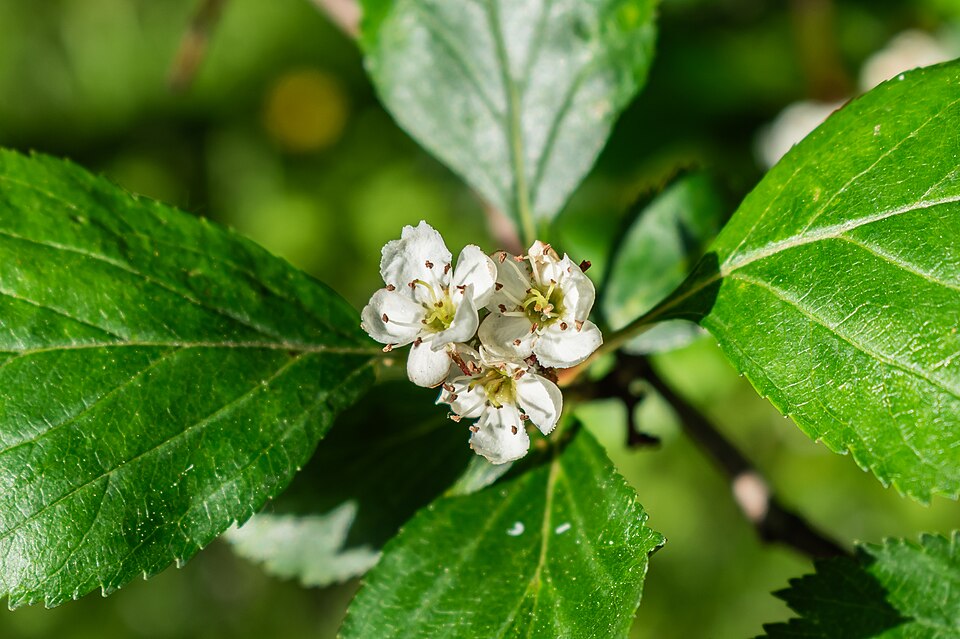
Crataegus douglasii, commonly known as Douglas Hawthorn, Black Hawthorn, or Western Black Hawthorn, is a native deciduous shrub or small tree of western North America belonging to the Rosaceae (rose) family. Named after the celebrated Scottish botanist David Douglas, who collected specimens in the Pacific Northwest in the early 1800s, this versatile plant is one of the most widespread native hawthorns in the region. Its showy clusters of fragrant white flowers in mid-spring, followed by clusters of small black fruits in late summer, make it both ecologically important and visually attractive throughout the year.
Douglas Hawthorn typically grows 8 to 20 feet tall as a large, thorny shrub or small multi-stemmed tree, though larger specimens occasionally reach 30 feet. The branches are armed with stout, sharp thorns 1–2 inches long, making the plant an excellent defensive thicket for wildlife. In spring, the plant produces dense clusters of white flowers that attract a wide array of pollinators; by late summer, small dark fruits ripen and attract dozens of bird species. The dense, thorny growth structure provides exceptional nesting habitat and protective cover for small birds and mammals throughout the year.
In the landscape, Douglas Hawthorn excels as a wildlife hedge, riparian buffer, windbreak, or naturalistic specimen tree. Its adaptability to a wide range of soils (though it prefers moderately moist conditions), tolerance of partial shade, and four-season interest — flowers in spring, fruit in summer, colorful foliage in fall, and persistent fruit in winter — make it one of the most ecologically valuable and garden-worthy native shrubs in the Pacific Northwest and Intermountain West.
Identification
Douglas Hawthorn is a densely branched, thorny large shrub or small tree growing 8–20 feet tall (occasionally to 30 feet) with a rounded to spreading crown. The bark is gray-brown and scaly on older stems. The branches bear numerous stout, straight or slightly curved thorns, typically 1–2 inches long, which are a key identification feature. Young twigs are reddish-brown and smooth.
Bark & Thorns
The bark of young stems is reddish-brown and smooth, aging to gray with scaly furrows on older trunks. The thorns are stout, sharp, and unbranched, arising from the stem and typically 0.4–1.5 inches (1–4 cm) long — shorter and stouter than those of some other hawthorn species. The thorny branching creates a nearly impenetrable thicket that provides excellent defensive nesting sites for birds.
Leaves
The leaves are alternate, simple, and deciduous, typically 1–3 inches long with a distinctly variable shape — often oval to obovate (wider toward the tip), with shallow to moderately deep lobes on the upper portion. The leaf surface is dark green above and paler below, with serrate (toothed) margins especially prominent toward the leaf tip. Fall color is generally yellow to orange-red. The leaf shape is highly variable within the species and among populations, which can make identification challenging.
Flowers & Fruit
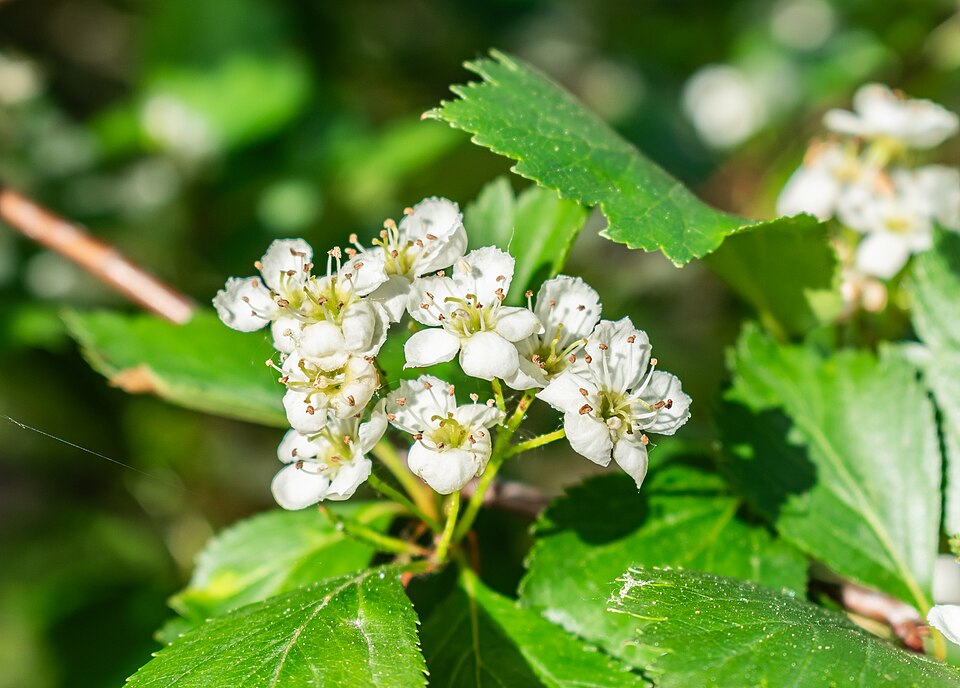
The flowers are produced in dense corymbs (flat-topped clusters) of 6–20 flowers in mid-spring (April–May). Individual flowers are about ½ inch across, with five white petals and numerous pink-tipped stamens with dark anthers, giving the flower clusters a slightly pink-tinged appearance. The flowers have a distinctive sweet, slightly almond-like fragrance that attracts pollinators from a distance.
The fruit (pomes, or “haws”) are small — about ¼ to ⅜ inch in diameter — and ripen to deep purple-black in late summer (July–September). Each fruit contains 2–5 bony nutlets (seeds). Unlike many other hawthorns, Douglas Hawthorn fruits are quite palatable and sweet, and were eaten raw, cooked, or dried by Indigenous peoples. The dark fruits persist into winter, providing food for birds and small mammals.
Quick Facts
| Scientific Name | Crataegus douglasii |
| Family | Rosaceae (Rose) |
| Plant Type | Deciduous Shrub / Small Tree |
| Mature Height | 8–20 ft |
| Sun Exposure | Full Sun to Part Shade |
| Water Needs | Moderate |
| Bloom Time | April – May |
| Flower Color | White (with pink-tipped stamens) |
| Fruit | Deep purple-black pomes (haws), late summer–fall |
| Deer Resistant | Yes (thorny branches deter browsing) |
| USDA Hardiness Zones | 4–8 |
Native Range
Douglas Hawthorn is native to a broad swath of western and north-central North America, ranging from southern British Columbia and Alberta south through Washington, Oregon, Idaho, and Montana, and extending east across the northern Great Plains into the Great Lakes region (Minnesota, Wisconsin, Michigan, and Illinois). In the west, it occurs along stream corridors, forest edges, and valley bottoms from sea level to moderate mountain elevations. In the east, it is found in woodland edges, thickets, and stream margins.
Within the Intermountain West, Douglas Hawthorn is most common in moist valley bottoms, along streams and rivers, and in the transition zone between open grasslands and montane forests. It often grows in dense thickets along riparian corridors where its thorny branches and abundant fruit production make it an ecological keystone. It is frequently associated with willows, alders, and cottonwoods along waterways, and with serviceberry and chokecherry on drier slopes and canyon walls.
The species shows considerable morphological variation across its range — leaf shape, thorn density, and fruit size vary substantially between populations — which has led some taxonomists to recognize regional varieties. The high variability also means Douglas Hawthorn hybridizes with other hawthorn species where ranges overlap, further complicating identification. Despite this variation, the ecological role of the species as a thorny fruiting shrub remains consistent across its range.
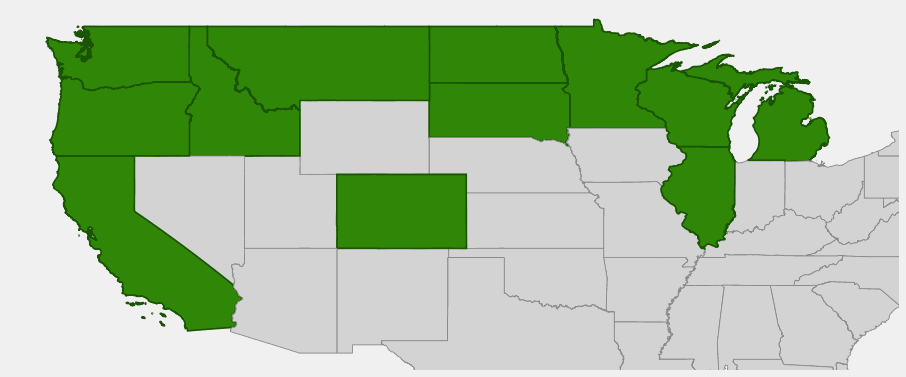
📋 Regional plant lists featuring Douglas Hawthorn: Intermountain West
Growing & Care Guide
Douglas Hawthorn is a tough, adaptable native shrub that thrives with minimal care once established. Its natural habitat along streambanks and forest edges demonstrates its adaptability to a range of moisture conditions, and it is one of the more forgiving native shrubs to establish in the garden or restoration project.
Light
Douglas Hawthorn grows best in full sun to part shade. In full sun, it produces the most abundant flowers and fruit, and develops the densest, most compact habit. In partial shade (2–4 hours of direct sun per day), it still flowers and fruits well but tends to grow more openly. Deep shade significantly reduces flowering and fruiting. For wildlife plantings, full sun exposure maximizes fruit production and therefore bird foraging value.
Soil & Water
This hawthorn is adaptable to a wide range of soil types, performing well in loamy, sandy, or clay soils as long as drainage is reasonable. It prefers moderately moist conditions and is well-suited to stream margins, rain gardens, and areas with supplemental irrigation. Established plants show moderate drought tolerance once their root systems are developed, but perform best with consistent moisture during the growing season. Avoid planting in waterlogged areas where standing water persists year-round.
Planting Tips
Plant Douglas Hawthorn in fall or early spring. Container-grown plants transplant easily; bare-root stock is also available from native plant nurseries. Space shrubs 8–12 feet apart for hedgerow or screen plantings. In wildlife gardens, planting in irregular clusters of 3–5 specimens creates the most ecologically valuable thickets. The thorny branches require long sleeves and gloves when handling — plan your access routes when siting plantings near paths.
Pruning & Maintenance
Douglas Hawthorn requires little maintenance in naturalistic settings. If a more controlled form is desired, prune in late winter before bud break, removing crossing, dead, or damaged branches. The thorns make pruning challenging — use long-handled loppers and heavy gloves. Heavy pruning is generally unnecessary and reduces fruit production for the season. The plant responds well to rejuvenation pruning of very old stems to encourage vigorous new growth.
Landscape Uses
Douglas Hawthorn is an excellent multi-purpose native shrub:
- Wildlife hedge or screen — dense, thorny branches create impenetrable cover and nesting sites
- Riparian buffer planting — stabilizes streambanks and provides critical riparian wildlife habitat
- Windbreak or barrier hedge — thorny growth deters intruders and large mammals
- Specimen tree — trained to a single trunk, displays attractive bark and four-season interest
- Wildlife garden centerpiece — fruit production makes it a magnet for birds
- Restoration plantings — pioneers disturbed areas in moist sites
Wildlife & Ecological Value
Douglas Hawthorn is one of the most wildlife-valuable native shrubs in the Pacific Northwest and Intermountain West, providing food, cover, and nesting habitat across multiple seasons.
For Birds
The dark purple-black fruits are consumed by numerous bird species including American Robins, Cedar Waxwings, Pine Grosbeaks, Evening Grosbeaks, Varied Thrushes, Townsend’s Solitaires, Steller’s Jays, and many sparrow and finch species. The persistent fruits provide critical winter food when other resources are scarce. The dense, thorny branching structure is one of the best nesting sites available for small songbirds — the thorns deter predators and the dense interior provides excellent concealment. Hawthorn thickets are often the highest-density songbird nesting areas in any riparian landscape.
For Mammals
Black Bears eat the fruits eagerly in late summer, as do Raccoons, Coyotes, and foxes. The sweet, mild flavor of Douglas Hawthorn haws makes them more palatable to mammals than many other hawthorn species. White-tailed and Mule Deer browse the foliage and twigs, though the thorns limit their access. Beavers use hawthorn branches for food and dam construction in some areas. The dense thickets provide thermal cover and hiding habitat for rabbits, squirrels, and small mammals.
For Pollinators
The spring flower clusters are rich in both nectar and pollen, attracting native bees, bumble bees, hoverflies, beetles, and butterflies. Douglas Hawthorn is a larval host plant for several moth and butterfly species, including the Striped Hairstreak (Satyrium liparops) and the Two-tailed Swallowtail (Papilio multicaudata). The early blooming period (April–May) makes it especially important for early-emerging pollinators that need carbohydrate sources before summer wildflowers open.
Ecosystem Role
Douglas Hawthorn plays a critical structural role in riparian and edge ecosystems. Its thorny thickets create refugia — patches of impenetrable protective cover — that shelter small birds and mammals from predators. As a fruiting shrub, it functions as a “keystone resource” in autumn bird migration, providing the high-calorie food that fuels the long journeys of migratory species. Its deep root system also stabilizes streambanks, reducing erosion in riparian corridors.
Cultural & Historical Uses
Douglas Hawthorn fruits were an important food source for Indigenous peoples across its range. The Nlaka’pamux (Thompson), Okanagan-Colville, Secwépemc (Shuswap), and many other Interior Plateau nations gathered the sweet, mild fruits fresh, dried them for winter use, or cooked them in stews and soups. Unlike the larger, meatier fruits of some hawthorn species, Douglas Hawthorn haws were valued for their mild sweetness and were often mixed with other berries in dried fruit cakes. The fruits were sometimes dried and ground into a powder used to thicken soups and as a sweetener.
The wood of Douglas Hawthorn, while small in dimension, is extremely hard and dense — among the hardest of any native Pacific Northwest wood — and was used for making small tools, handles, digging sticks, and gambling sticks. The thorny branches were used as pins, awls, and in some cases as protective barriers around camps and food caches. Various Interior Salish peoples used the bark medicinally in decoctions for treating heart conditions and digestive ailments.
In the early 1800s, David Douglas — the Scottish botanist after whom the plant (and Douglas Fir) is named — collected hawthorn specimens in the Pacific Northwest during his famous botanical expeditions sponsored by the Royal Horticultural Society. His collections brought many Pacific Northwest plants to European attention and began the Western scientific documentation of this species. Today, Douglas Hawthorn is increasingly recognized as a native alternative to invasive hawthorn species (Crataegus monogyna, C. laevigata) that have become problematic in Pacific Northwest natural areas.
Frequently Asked Questions
Is Douglas Hawthorn native to Idaho?
Yes. Douglas Hawthorn is native throughout much of Idaho, particularly in the northern and central parts of the state. It grows along streams, in riparian zones, and in moist valleys throughout the Snake River Plain and into the mountains of northern Idaho.
Are Douglas Hawthorn berries edible?
Yes — the dark purple-black fruits are edible and have a mild, slightly sweet flavor, making them among the more palatable hawthorn fruits. They can be eaten fresh, though the flavor is best after light frost. They are also used in jams, jellies, and fruit leathers. The seeds contain cyanogenic glycosides and should not be consumed in large quantities.
How do I tell Douglas Hawthorn apart from other hawthorns?
Douglas Hawthorn is distinguished by its dark purple-to-black fruits (most other western hawthorns have red fruits), its relatively short thorns (1–2 inches), and its Pacific Northwest and northern Great Plains distribution. The leaf shape is variable but often oval to obovate with shallow lobes on the upper half. Consulting a regional flora with a hawthorn key is the most reliable approach for definitive identification.
How fast does Douglas Hawthorn grow?
Douglas Hawthorn grows at a moderate rate — typically 1–2 feet per year under good conditions. Growth is fastest in moist, sunny sites. It begins fruiting within 3–5 years of planting, and mature shrubs can live for many decades, slowly expanding in girth through root sprouting.
Can Douglas Hawthorn be used as a barrier hedge?
Yes, its dense branching and sharp thorns make it an excellent defensive hedge. When planted in a row and allowed to grow naturally, Douglas Hawthorn creates a nearly impassable barrier that also provides outstanding wildlife habitat. It is a better ecological choice than non-native hawthorn species often used for the same purpose.