
False Sisal (Agave decipiens)
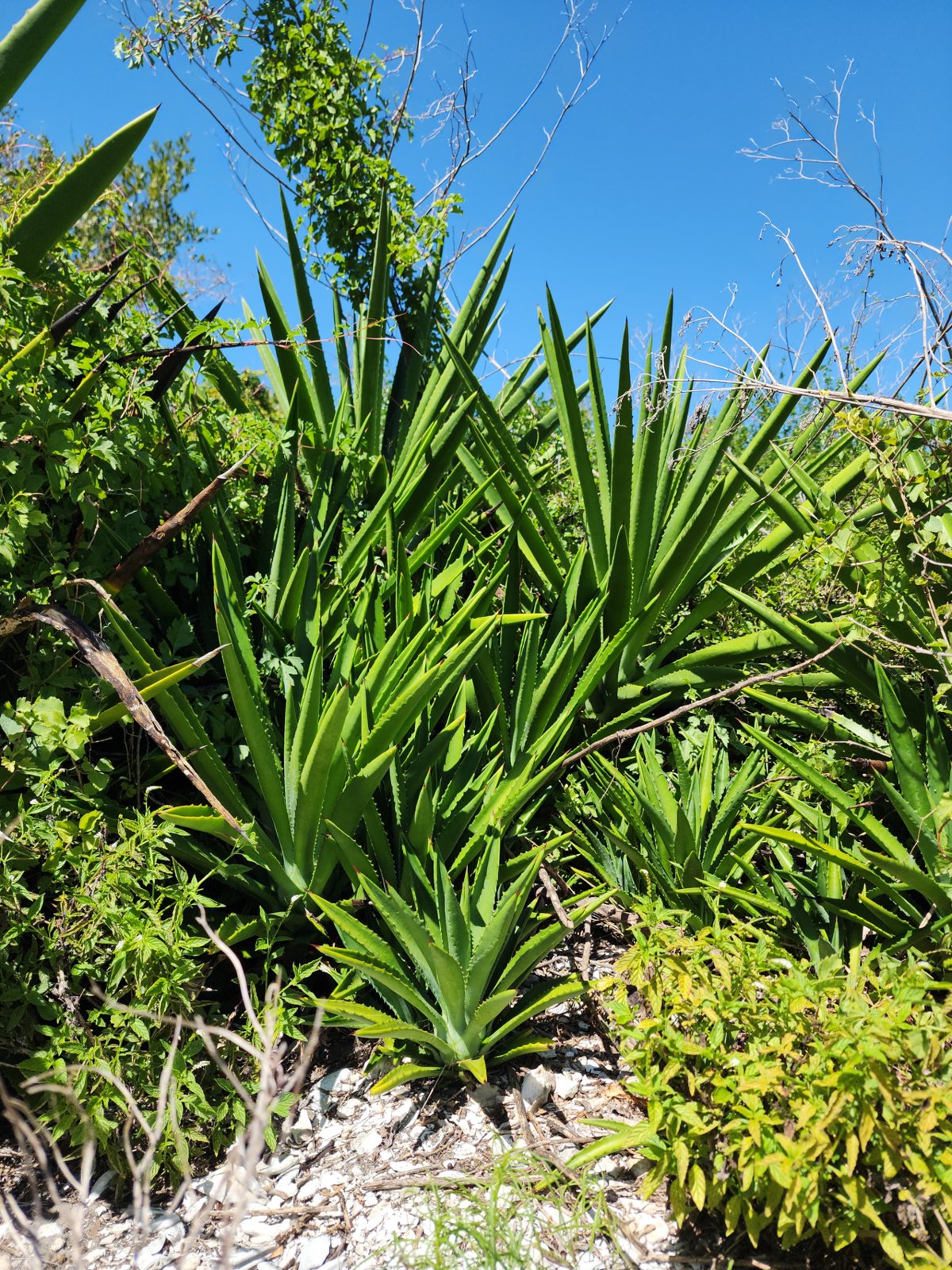
Agave decipiens, known as False Sisal or Florida agave, is the only agave native to Florida and is found naturally nowhere else in the world. It is a bold, evergreen succulent in the agave family (Agavaceae, now often placed in Asparagaceae) that forms large rosettes of long, sword-shaped, toothed leaves. Unlike most agaves, older plants lift their rosettes on a short, bare trunk, and they spread by suckers into dense, spiny colonies. After many years a rosette sends up a towering flowering stalk, blooms once and dies, while its offsets carry the colony on.
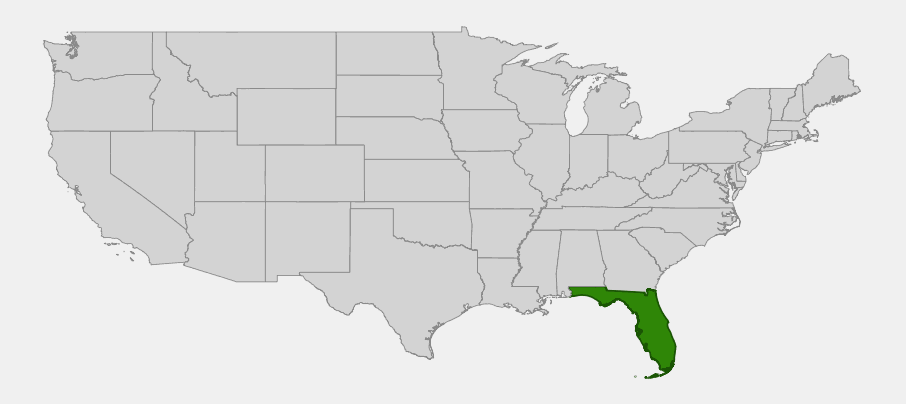
False sisal is endemic to southern peninsular Florida. The Florida Native Plant Society describes its natural range as running from the Florida Keys in Monroe County north along both coasts to Martin County on the Atlantic side and Manatee County on the Gulf side. It grows on shell middens, in coastal and rockland hammocks, on coastal rock barrens and on slightly raised ground close to sea level. Because it is a Florida endemic with a narrow coastal range, gardeners should buy only nursery-propagated plants and never dig plants or collect offsets from the wild.
The species name decipiens means “deceiving”, a nod to how easily it is confused with the introduced fiber agave Agave sisalana (sisal), which has escaped from cultivation in Florida. This guide explains how to tell them apart, where false sisal grows, how to use it safely in a coastal landscape, and the wildlife that depends on it.
Identification
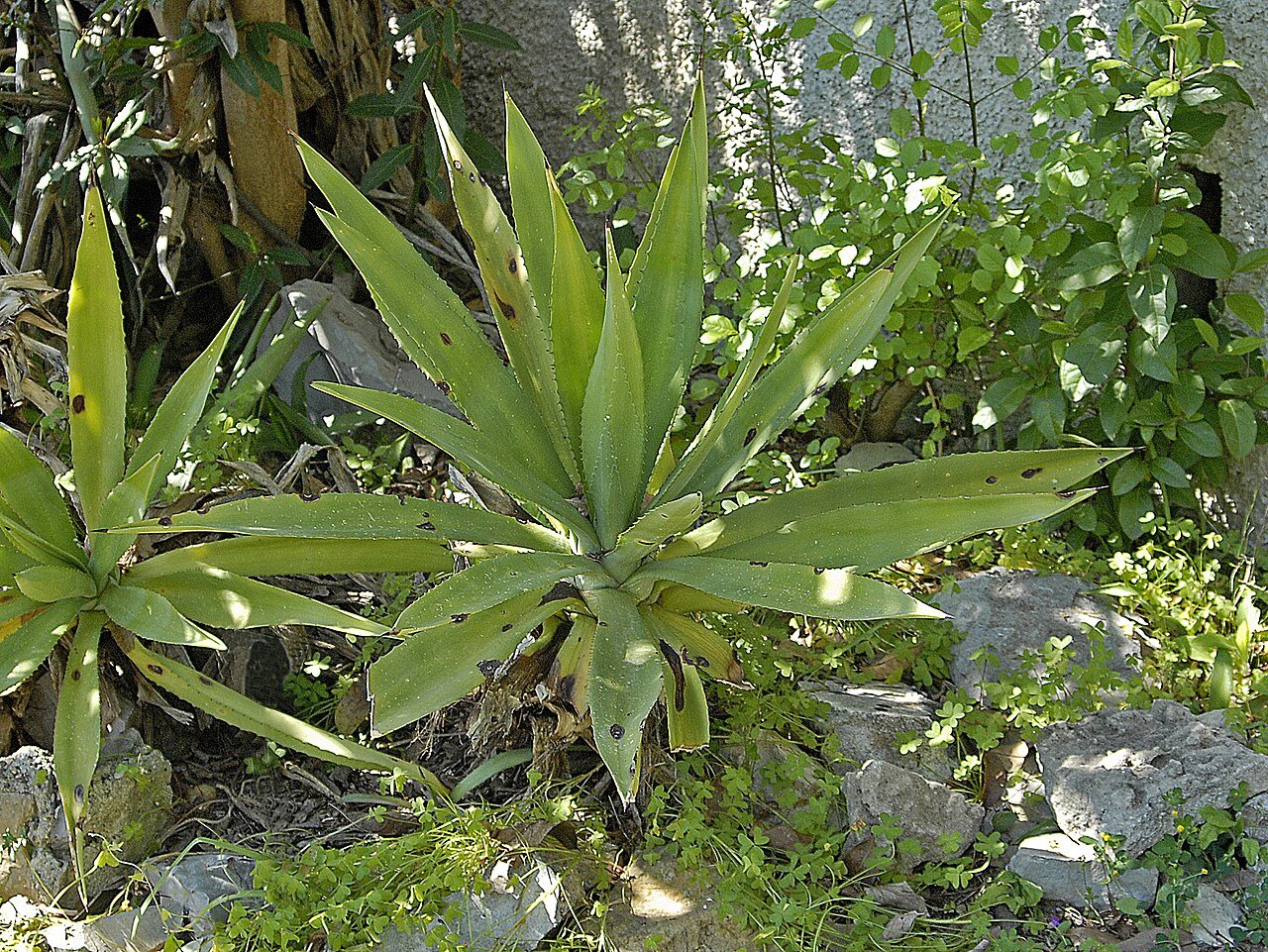
False sisal is a large plant and not easy to mistake for anything but an agave. The real identification challenge is separating it from the several non-native agaves that have naturalized in coastal Florida. The bare basal trunk of mature plants, the toothed leaf margins and the colony-forming habit are the most useful features.
Trunk & Habit
Young plants are stemless rosettes, but with age false sisal develops a short, upright trunk clothed in old leaf bases below the living rosette. In cultivation and in sheltered hammocks this trunk can become surprisingly tall, though most wild plants stay in the range of 4 to 8 feet overall. The plant freely produces suckers from its base and roots, so a single specimen gradually becomes a clump several feet across. The Florida Native Plant Society notes that the bare basal trunk is one of the easiest ways to tell it from non-native agaves.
Leaves
The leaves are long, narrow and sword-shaped, typically 2 to 3 feet long and occasionally longer, green to slightly gray-green, thick and somewhat channeled. The margins are lined with small, regularly spaced, hooked teeth, and each leaf ends in a stiff, sharp terminal spine. Leaves of rosettes growing in shade tend to be thinner, longer and more spreading; those in full sun are stiffer and more upright. The sap can irritate skin, so handle leaves with gloves.
Flowers
Each rosette flowers only once, usually after many years of growth. It sends up a stout stalk that can reach roughly 10 to 15 feet, branching near the top into a broad panicle of tubular, greenish-yellow flowers. The Lady Bird Johnson Wildflower Center records flowering mainly from October to December. Once the flowers and fruit mature, the parent rosette dies, but its suckers continue growing.
Fruit & Seeds
Pollinated flowers form dry, oblong capsules up to about 2 inches long that split to release flat black seeds. Seed set is often sparse, and false sisal spreads mostly by suckers. Seed and basal offsets are both used to propagate it.
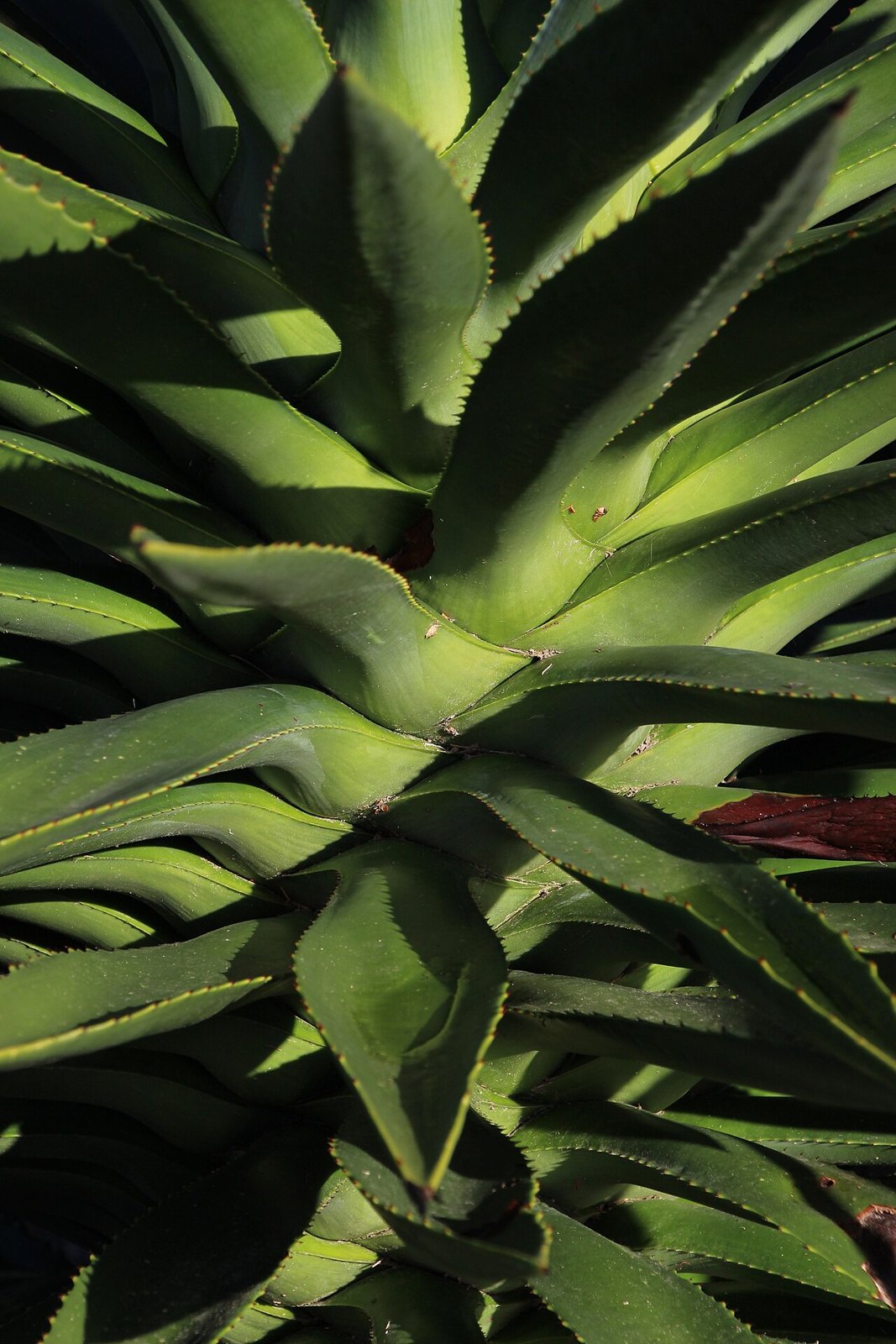
Quick Facts
| Scientific Name | Agave decipiens |
| Family | Agavaceae (agave family; now often included in Asparagaceae) |
| Plant Type | Evergreen succulent shrub; clumping, monocarpic rosettes |
| Mature Height | 4–8 ft (foliage); flowering stalk 10–15 ft |
| Mature Spread | 5–8 ft; clumps widen slowly by suckers |
| Growth Rate | Slow to moderate |
| Sun Exposure | Full sun to partial shade |
| Water Needs | Low; very drought tolerant once established |
| Soil Type | Well-drained sand, shell or limestone rock |
| Soil pH | Neutral to alkaline (calcareous shell and limestone soils) |
| Bloom Time | Mainly fall and early winter (October–December); each rosette blooms once |
| Flower Color | Greenish yellow |
| Fall Color | None; evergreen |
| Fruit | Dry oblong capsule with flat black seeds |
| Deer Resistant | Yes; the spiny leaves are rarely browsed |
| USDA Hardiness Zones | 9A–10B |
Native Range
False sisal is native only to Florida. USDA PLANTS lists it as native to the lower 48 states with Florida as its only state, and the Atlas of Florida Plants and Florida Native Plant Society treat it as a Florida endemic. Its natural range covers the southern half of the peninsula: the Florida Keys, the southern tip of the mainland, and the coasts north to Manatee County in the west and Martin County in the east.
Within that range it is a plant of slightly elevated, well-drained ground near the sea. It is most often found on shell middens, the mounds of shell built up over centuries by Florida’s Indigenous peoples, which create pockets of alkaline, fast-draining soil. It also grows in coastal and rockland hammocks, on coastal rock barrens in the Keys, and on hammock islands and other raised spots in the Everglades and coastal marshes. Development of coastal uplands is its main threat, followed by sea-level rise, storm surge and competition from invasive plants.
Outside Florida it is grown as an ornamental and has been reported as naturalized in parts of Spain, South Africa, India and Pakistan. Some authors once suggested that similar plants in the Yucatán Peninsula and Central America belong to the same species, but agave specialists Howard Scott Gentry and Scott Zona treated that material as Agave angustifolia, leaving false sisal as a Florida endemic.
📋 Regional plant lists featuring False Sisal: North & South Florida
Growing & Care Guide
False sisal is an easy, nearly indestructible plant for frost-free and nearly frost-free coastal gardens in South Florida. It thrives on neglect, tolerates salt spray and drought, and makes a dramatic focal point. Its only real drawbacks are its sharp leaves, its irritating sap and the fact that each rosette dies after flowering. Look for it at native plant nurseries and Florida Native Plant Society plant sales; never take plants or offsets from shell middens or hammocks.
Light
Full sun gives the most compact, upright rosettes. False sisal also grows in partial shade, as it does at the edges of hammocks, where its leaves become longer and more relaxed.
Soil & Water
Plant it in sharply drained sand, shell or limestone-based soil; it is at home on alkaline, calcareous substrates. Water regularly only for the first few months while roots establish. After that it tolerates long dry periods and needs no irrigation in most South Florida landscapes. It handles heavy salt spray well, but not flooding with salt or brackish water, so keep it above storm-tide lines where possible. Never plant it where water stands after rain.
Planting Tips
Give it plenty of room and site it well away from paths, doors, pool decks and play areas, where the terminal spines could injure people or pets. It is hardy in zones 9A through 10B; in the northern part of that range, a sheltered spot near the coast reduces frost damage. Because it is a Florida endemic, buy nursery-propagated plants only. Plants offered at native nurseries are grown from seed or from offsets of cultivated plants.
Pruning & Maintenance
Remove dead lower leaves with long-handled loppers and wear thick gloves, long sleeves and eye protection, since both the spines and the sap can injure skin. After a rosette flowers and dies, cut out the spent trunk and let the surrounding suckers fill the gap. If a clump spreads farther than you want, dig and remove suckers while they are small.
Propagation
False sisal is propagated by seed and by basal offsets. Separate rooted suckers with a sharp spade, let the cut surface dry for several days, then pot them in a gritty, fast-draining mix. Seed germinates readily in warm conditions on a sandy mix kept barely moist.
Landscape Uses
- Coastal landscapes: a salt-tolerant, drought-proof accent for beachside and bayside gardens in South Florida
- Specimen and focal plant: its architectural rosettes and tall flower spikes make a strong statement
- Barrier planting: the spiny leaves discourage foot traffic along property lines
- Xeriscapes and rock gardens: combine with other native drought-tolerant plants on shell or limestone soils
- Habitat restoration: on shell mounds and coastal uplands within its natural range, using nursery-propagated stock
Wildlife & Ecological Value
Although it is a spiny, slow-growing succulent, false sisal supports specialized wildlife in Florida’s coastal uplands, especially giant skipper butterflies.
For Pollinators
The tall flower stalks attract nectar-feeding insects, and the Florida Native Plant Society notes that the flowers are pollinated by moths. False sisal is a larval host for two giant skippers, the yucca giant skipper (Megathymus yuccae) and the Cofaqui giant skipper (Megathymus cofaqui), whose caterpillars bore into the thick leaves and root crowns of agaves and yuccas.
For Birds
Songbirds use the dense, spiny clumps as protected perches and cover, and the tall flower stalks serve as lookout posts. Nectar-feeding birds such as warblers and orioles may visit the flowers, but false sisal is not a major bird food plant.
For Mammals
Mammals rarely browse it because of its spines and irritating sap. The thickets do provide shelter for small animals in coastal hammocks and on shell mounds.
Ecosystem Role
False sisal is a characteristic plant of Florida’s shell middens and coastal rock barrens, where it helps stabilize loose shell and sand. Its colonies form part of the distinctive coastal upland plant community of southern Florida, which has been greatly reduced by development. Protecting and replanting native false sisal also helps keep out invasive agaves and other aggressive non-native succulents that compete for the same open, well-drained sites.
Cultural & Historical Uses
English botanist John Gilbert Baker described Agave decipiens in the late nineteenth century. The common name “false sisal” reflects its resemblance to true sisal, Agave sisalana, a Mexican fiber plant. The physician and botanist Henry Perrine brought fiber agaves to the Florida Keys in the 1830s, hoping to establish a plantation industry, and introduced sisal still survives in parts of coastal Florida, where it competes with native vegetation.
Many of the shell middens where false sisal grows today were built by Florida’s Indigenous peoples, including the ancestors of the Calusa, over thousands of years. These mounds of oyster, clam and conch shell create raised, alkaline, well-drained islands in otherwise low coastal landscapes, and they now shelter a distinctive group of plants, false sisal among them.
Today false sisal is valued by Florida native plant gardeners as a homegrown alternative to exotic agaves. It is sold by native nurseries and plant sales, and it is a fitting choice for coastal gardens that aim to recreate South Florida’s natural plant communities.
Frequently Asked Questions
How do I tell false sisal from non-native agaves?
Mature false sisal forms a bare trunk below its rosette and spreads into clumps by suckers. Its leaves are green with small, regularly spaced marginal teeth. Introduced sisal (Agave sisalana) usually has smooth or nearly smooth leaf margins and no distinct trunk, and the century plant (Agave americana) has much broader, blue-gray leaves.
Is false sisal really native to Florida?
Yes. It is the only agave native to Florida, and it is endemic to the state, meaning it grows naturally nowhere else in the world. Buy nursery-propagated plants and never collect plants or offsets from the wild.
Does false sisal die after it flowers?
Each rosette blooms once and then dies, which is typical of agaves. The plant almost always leaves behind a ring of suckers, so the clump survives and continues to grow.
Is false sisal dangerous?
The terminal leaf spines are sharp and the sap can irritate skin. Plant it away from walkways and play areas, and wear gloves, long sleeves and eye protection when trimming it.
Can false sisal grow outside South Florida?
It is reliable only in USDA zones 9A to 10B. Farther north it can be grown in containers that are moved indoors or under cover during frost, but it is not cold hardy enough for the ground in most of the Southeast.

Looking for a nursery that carries False Sisal?
Browse our native plant nursery directory: Florida