
Limber Caper (Capparis flexuosa)
Capparis flexuosa, the Limber Caper, is an evergreen shrub of coastal hammocks and thickets in south and central Florida, the Florida Keys and the American tropics. USDA PLANTS lists it under Capparis flexuosa with the common names falseteeth and bayleaf capertree. The Atlas of Florida Plants and many recent floras call it Cynophalla flexuosa, and some authors now place it in Morisonia. All of these names refer to the same plant. It belongs to the caper family (Capparaceae), the family of the Mediterranean caper bush.
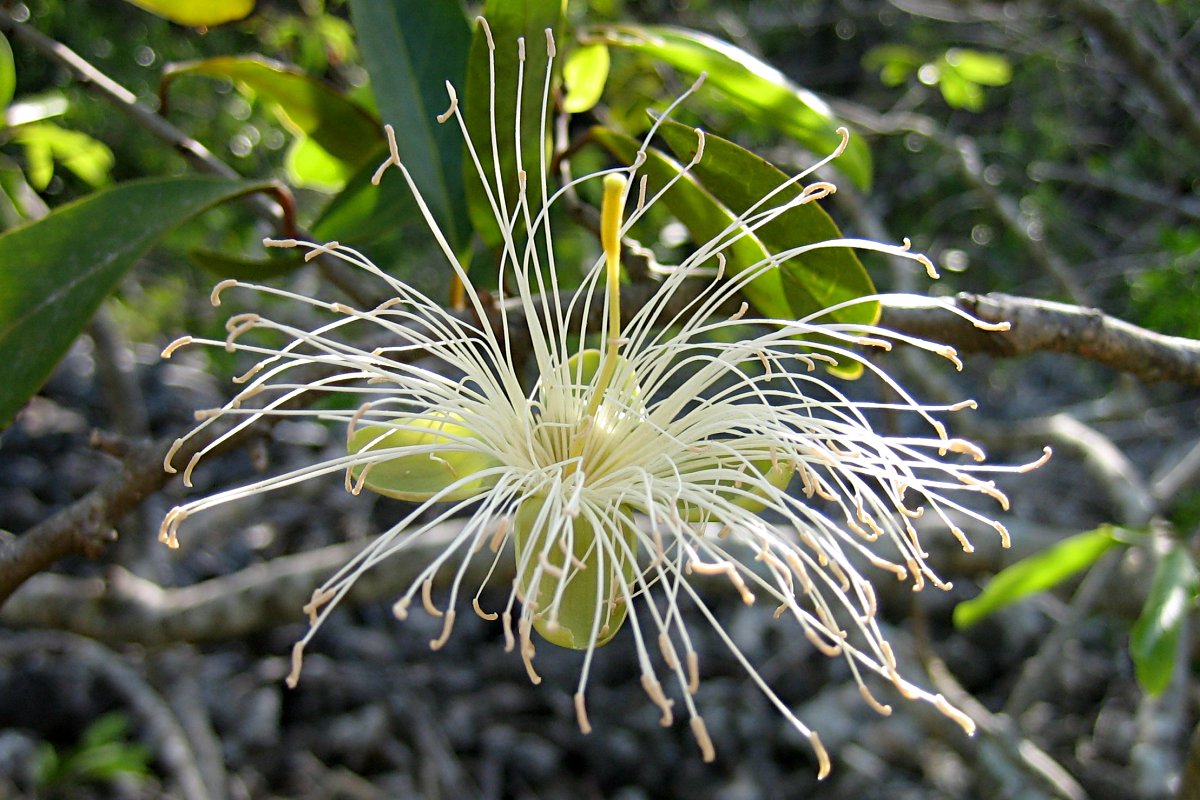
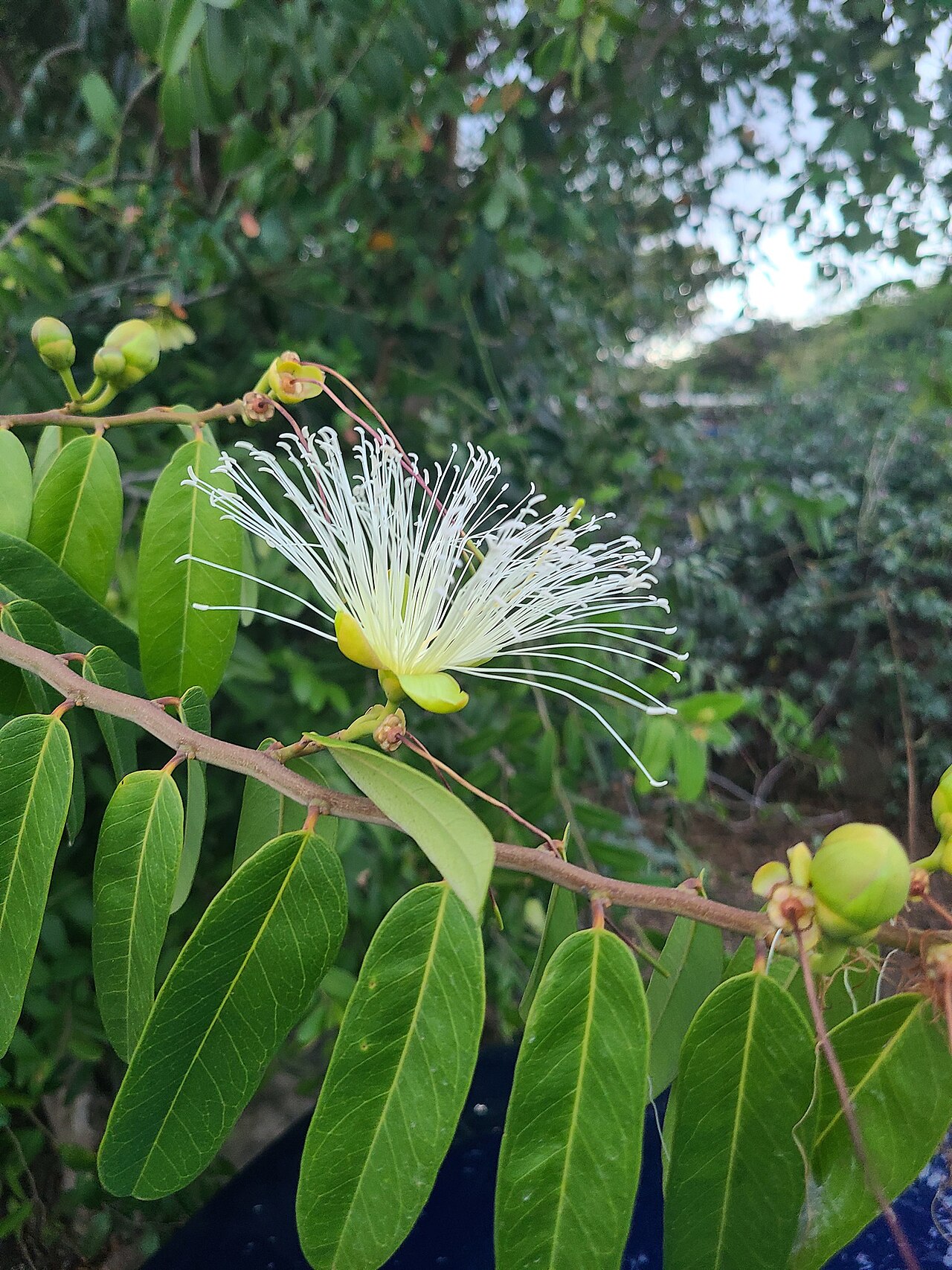
The common name comes from its long, flexible branches. Depending on its surroundings it can be an upright shrub, a small tree, or a sprawling, half-climbing plant that leans into neighboring shrubs. Its leaves are thick, oblong and glossy, and its flowers are spectacular but short-lived. They open at dusk as a burst of long white stamens, often 2 inches long, around a slender stalked ovary, and they are usually spent by the following morning. The fruit is a long, knobby, cylindrical pod that splits open to show seeds set in bright red pulp.
Limber caper is native in the United States only in Florida, and it also grows in Puerto Rico and the U.S. Virgin Islands. It is extremely tolerant of salt, wind and drought, which makes it a useful screening shrub for seaside gardens in south Florida. It is also a larval host plant for the Florida white butterfly. This guide covers identification, range, growing conditions and its value to wildlife.
Identification
Out of flower, limber caper can pass for one of many leathery-leaved coastal shrubs. Its flexible, often arching or leaning stems, alternate oblong leaves with blunt or notched tips, and long, beaded pods are the most useful field marks.
Form & Stems
It is an evergreen shrub usually 5 to 12 feet tall, occasionally a small tree. Older stems are smooth and gray-brown, and young branches are long, slender and pliable. In thickets they often arch, lean or scramble through other shrubs, which is why USDA lists the species as a shrub, tree and vine. In open sun, plants are denser and more upright.
Leaves
The leaves are alternate, simple, thick and leathery, about 2 to 4 inches long, oblong to elliptic with a rounded, blunt or slightly notched tip and a smooth edge. They are dark glossy green above and paler below, without the scaly coating of the related Jamaica caper. The leaf shape, reminiscent of bay leaves, explains the name bayleaf capertree.
Flowers
Flowers appear mainly in spring and summer (the Lady Bird Johnson Wildflower Center gives March to August). They open in the evening and last a single night. Each has four green to white sepals, four white petals, and a dense brush of many long white stamens about 2 inches long. The flowers turn yellowish or pinkish as they fade and are mildly fragrant. A long stalk (the gynophore) holds the ovary out beyond the stamens.
Fruit & Seeds
The fruit is a slender, cylindrical, berry-like pod, often 3 to 8 inches long and somewhat constricted between the seeds. When ripe it splits along its length to reveal several white or pale seeds embedded in a vivid scarlet pulp, a display that attracts birds.
Quick Facts
| Scientific Name | Capparis flexuosa (syn. Cynophalla flexuosa; also Morisonia flexuosa) |
| Family | Capparaceae (caper family) |
| Plant Type | Evergreen shrub, small tree or scrambling shrub |
| Mature Height | 5–12 ft (occasionally taller when leaning on other trees) |
| Mature Spread | 5–10 ft |
| Growth Rate | Moderate |
| Sun Exposure | Full sun to part shade |
| Water Needs | Low once established; very drought tolerant |
| Soil Type | Well-drained sand, shell, marl or limestone rock |
| Soil pH | Neutral to alkaline (about 6.5–8.5) |
| Bloom Time | March–August (flowers open at night) |
| Flower Color | White, aging yellowish or pink |
| Fall Color | None; evergreen |
| Fruit | Long cylindrical pod splitting to show seeds in red pulp |
| Deer Resistant | Moderately; rarely browsed heavily |
| USDA Hardiness Zones | 10–11 |
Native Range
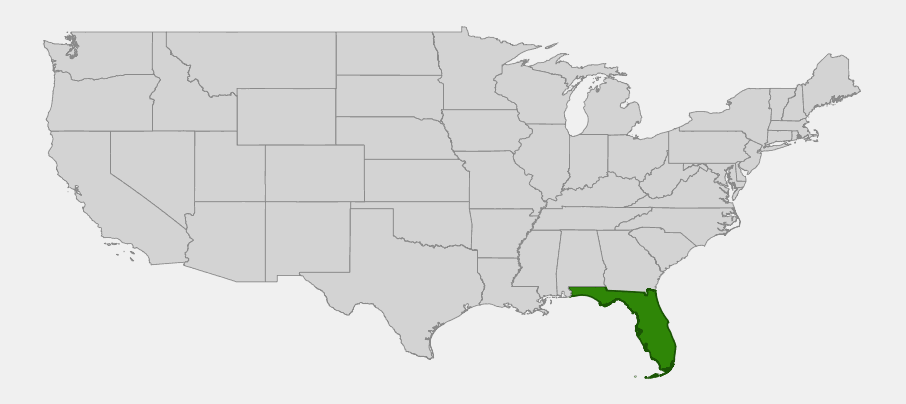
In the United States, limber caper is native only in Florida, according to USDA PLANTS and the Lady Bird Johnson Wildflower Center. USDA also lists it as native in Puerto Rico and the U.S. Virgin Islands, which are not shown on the map. Beyond U.S. territory it is widespread in the American tropics, through the Bahamas and the Greater and Lesser Antilles and from Mexico through Central America to South America, including Brazil and Peru.
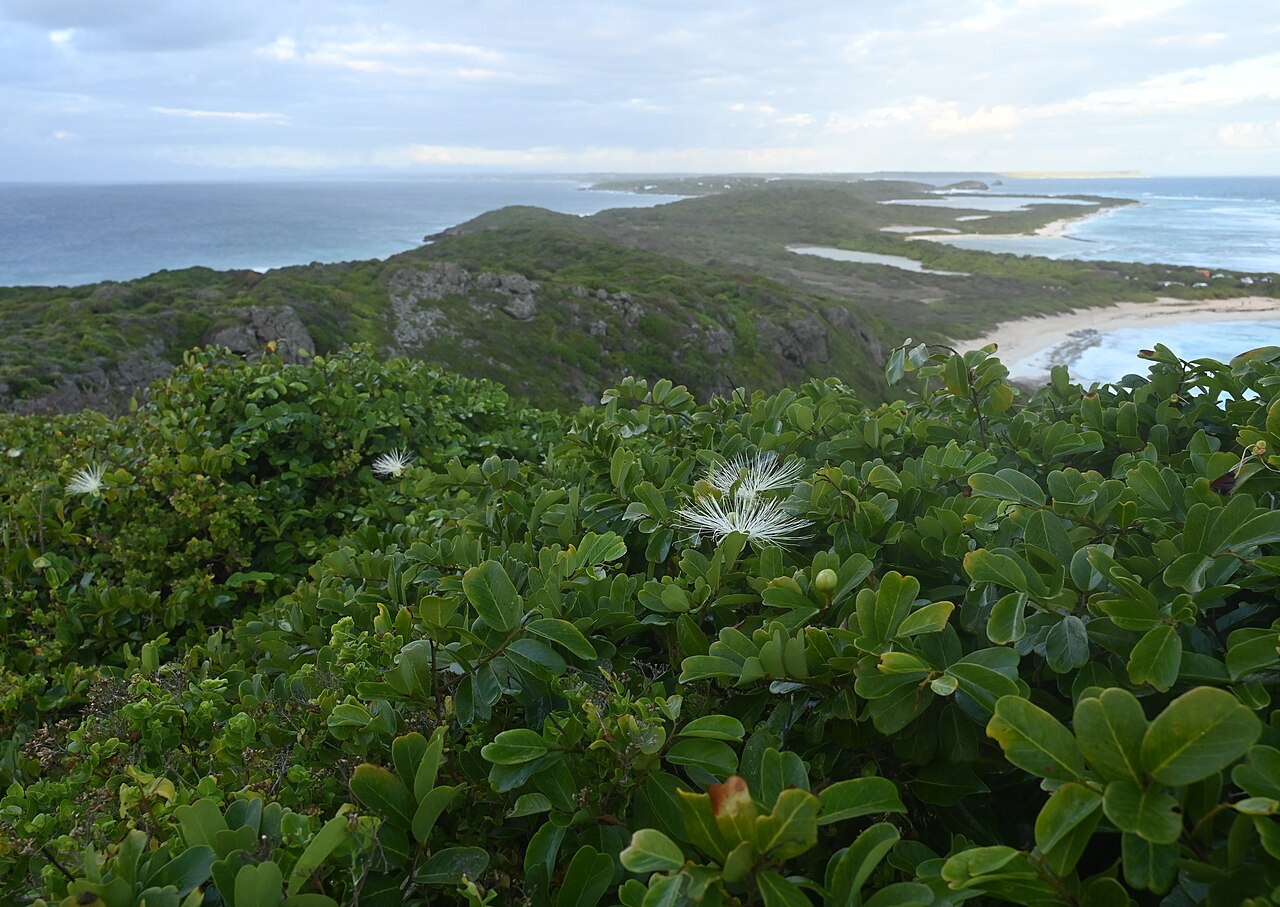
In Florida, the Atlas of Florida Plants records it from coastal counties of the central and southern peninsula and the Florida Keys. It is a plant of tropical and subtropical coastal habitats: maritime and rockland hammocks, coastal thickets and berms, shell mounds, and the edges of marl flats and mangroves.
Limber caper is frost-sensitive, which keeps it near the coast where the sea moderates winter temperatures. Hard freezes can kill it back to the ground in the northern part of its Florida range, though established plants usually resprout.
📋 Regional plant lists featuring Limber Caper: North & South Florida
Growing & Care Guide
Limber caper is a low-maintenance native shrub for frost-free or nearly frost-free coastal gardens. Native plant nurseries in south Florida grow it from seed, sometimes under the name Cynophalla flexuosa. It thrives in the conditions that challenge many other plants: salt spray, wind, poor sandy or rocky soil and long dry spells.
Light
Plant it in full sun for the densest growth and best flowering. It also grows in part shade at the edge of a hammock, where it becomes looser and more vine-like as it reaches for light.
Soil & Water
Any well-drained soil works, including sand, crushed shell, marl and oolitic limestone. It tolerates alkaline soils and salt spray and is rated highly salt tolerant by Florida native plant growers. Water regularly until established, usually through the first warm season. After that, rainfall is normally enough. Avoid low spots that stay wet.
Planting Tips
Plant container-grown shrubs in the warm, rainy season so they establish quickly. Give it space to arch and spread, or plant it among other native shrubs where it can lean naturally. It works well on the windward side of a mixed coastal hedge. Never collect plants or seed from parks and preserves; buy nursery-grown stock.
Pruning & Maintenance
Prune after flowering to keep it compact or to shape it into a hedge. It responds well to trimming, but heavy shearing reduces flowering and fruiting. Remove cold-damaged wood in spring after the danger of frost has passed. Expect Florida white caterpillars to chew some leaves; the damage is temporary and is a sign the plant is doing its job in the garden.
Propagation
Grow it from fresh seed, cleaned from the red pulp and sown promptly in a well-drained mix. Seeds lose viability if they dry out. Germination usually takes a few weeks in warm weather. Semi-hardwood cuttings can also be rooted, though less reliably.
Landscape Uses
- Coastal and seaside landscapes: tolerates salt spray, wind and poor sandy or rocky soils
- Informal hedges and screens: dense when grown in sun and trimmed lightly
- Butterfly gardens: a larval host for the Florida white butterfly
- Hammock edge and restoration plantings: within its native range in south Florida and the Keys
- Night gardens: fragrant white flowers open at dusk and attract moths
Wildlife & Ecological Value
Limber caper is a small but useful part of south Florida’s coastal plant communities, supporting butterflies, night-flying pollinators and fruit-eating birds.
For Pollinators
The flowers open at dusk and are adapted to night pollinators. Their long, exposed stamens and evening fragrance suit hawk moths (sphinx moths) and other night visitors, which brush against the pollen while feeding. Bees and other insects visit flowers that are still open in the early morning.
For Birds
When the pods split, the seeds in their red pulp are eaten by northern mockingbirds and other fruit-eating birds, which disperse the seeds. Dense, arching stems give cover and nest sites to small birds.
For Mammals
Raccoons and other small mammals may take the fallen fruit, and the dense coastal thickets it helps form give cover to small mammals.
Ecosystem Role
Limber caper is one of the main larval host plants for the Florida white (Appias drusilla), a tropical butterfly whose Florida populations depend on members of the caper family in coastal hammocks. It is also used by the great southern white (Ascia monuste). As a salt-tolerant shrub it helps hold coastal berms and dunes together and forms part of the protective outer layer of hammock vegetation.
Cultural & Historical Uses
Linnaeus first described the plant in 1759 as Morisonia flexuosa and later moved it to Capparis, the genus of the culinary caper. In 1825 the Czech botanist Jan Svatopluk Presl placed it in a separate genus, Cynophalla. That name was little used until DNA studies showed that the American “capers” are not closely related to the Old World Capparis, and floras such as the Atlas of Florida Plants adopted it.
In the Caribbean and Latin America the plant has a long history of local use, including as a medicinal plant and a source of hardwood for small tools. These uses vary from place to place and are not well documented. The fruits and seeds are not a recognized food, and like many members of the caper family the plant contains pungent mustard-oil compounds, so it should not be eaten.
In south Florida, limber caper has become a favorite of native plant gardeners and butterfly enthusiasts because it is one of the few plants that supports the Florida white. Planting it in coastal neighborhoods helps reconnect butterfly habitat between hammocks that have been fragmented by development.
Frequently Asked Questions
Is limber caper the same as Cynophalla flexuosa?
Yes. USDA PLANTS uses Capparis flexuosa, while the Atlas of Florida Plants and many recent floras use Cynophalla flexuosa. Some authors have also moved it to Morisonia. All three names apply to the same native shrub.
Can I eat limber caper buds like capers?
No. Culinary capers come from the Mediterranean Capparis spinosa. Limber caper is not a recognized food plant, and its parts contain pungent compounds. Grow it for wildlife and beauty, not for the kitchen.
Why do I never see the flowers open?
They open at dusk and last only one night, so they are often already wilting by mid-morning. Check the plant in the evening during spring and summer to see the full display of stamens.
Is limber caper cold hardy?
It is a tropical plant suited to USDA zones 10 and 11. A light frost damages leaves and a hard freeze can kill stems to the ground, although established plants often resprout. North of its native range it is best grown in a large container brought indoors in winter.
Will limber caper attract butterflies?
Yes. It is a larval host plant for the Florida white and is also used by the great southern white. Expect caterpillars to eat some leaves, which the plant replaces quickly.

Looking for a nursery that carries Limber Caper?
Browse our native plant nursery directory: Florida