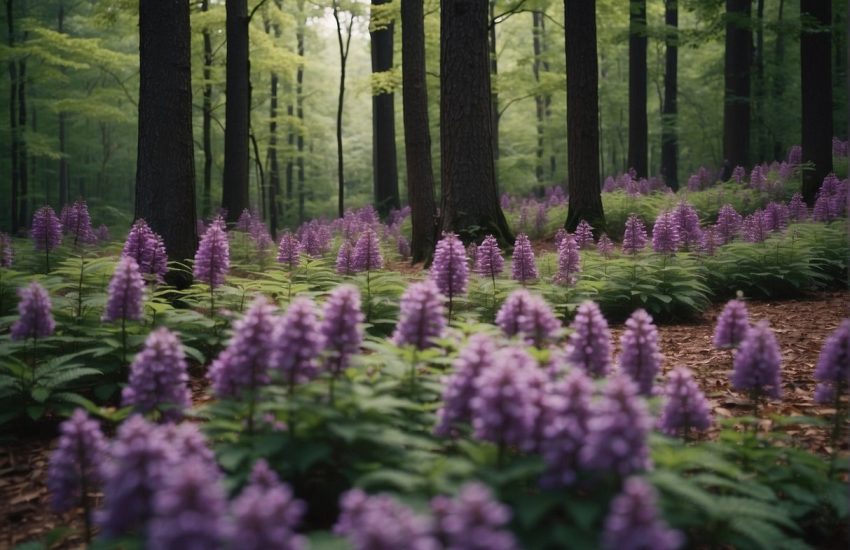
Flat-topped Buckwheat (Eriogonum fasciculatum v. poliofolium)
Eriogonum fasciculatum var. poliofolium, commonly called Flat-topped Buckwheat or Arizona Buckwheat, is one of the most important and widespread native subshrubs in the desert Southwest — a compact, mounding plant that produces an extraordinary abundance of small white to cream-colored flowers arranged in characteristic flat-topped or dome-shaped clusters from spring through fall. This variety of the highly variable California Buckwheat complex is native to the rocky desert slopes, mesas, and canyon margins of Arizona and surrounding states, where it is a cornerstone plant for native pollinators and a critical late-summer and fall food source for wildlife.
Growing just 1 to 1.5 feet tall but spreading 2 to 3 feet wide, Flat-topped Buckwheat forms a low, spreading, woody-based mound of small, gray-green to white-woolly leaves. From this modest base, it produces an astonishing quantity of flowers — the flat-topped flower clusters are typically 2 to 4 inches across and held well above the foliage on slender stems, creating a frothy, cloud-like effect when many plants bloom simultaneously. The flowers age from white through pink to deep rust-red as they mature, giving a plant in full bloom a rainbow of color from fresh white flowers through pink to deep burgundy seed clusters — a feature that extends the plant’s ornamental season from early spring through winter.
The ecological importance of Flat-topped Buckwheat for native pollinators is extraordinary. Studies in California and Arizona have documented over 100 insect species visiting the flowers, including over 30 native bee species. The plant is also noted as an outstanding butterfly nectar source and a larval host plant for several hairstreak butterfly species. Combined with its minimal water needs, excellent heat and drought tolerance, and year-round visual interest, Flat-topped Buckwheat is one of the highest-value native plants available for water-wise Arizona landscapes.
Identification
Flat-topped Buckwheat (E. fasciculatum var. poliofolium) is distinguished from the main California Buckwheat species by its gray-woolly to white-tomentose leaf undersides (the name poliofolium means “gray-leaved”) and its occurrence in the Arizona desert upland region rather than California coastal sage scrub. The overall form, flower cluster structure, and flower color progression are similar across the fasciculatum complex, but the Arizona variety shows adaptations to the more arid, continental climate of the interior Southwest.
Habit & Stems
The plant forms a low, spreading, somewhat mounded subshrub with a woody base and many upright or spreading branches. Stems are reddish-brown to grayish, with older stems becoming more woody and bark-covered while younger stems remain somewhat herbaceous. The plant spreads primarily by root expansion and sometimes self-seeds in open, disturbed ground nearby. Individual plants can persist for many decades at a single location.
Leaves
Leaves are small — just 0.3 to 0.8 inches long and 0.1 to 0.3 inches wide — narrow, elliptic to oblong, and distinctively white-woolly or gray-tomentose on the underside (the var. poliofolium characteristic), with a green to gray-green upper surface. The leaf margins often roll under (revolute), exposing the white-hairy underside and giving the leaves a somewhat tubular appearance from above. Leaves are evergreen, persisting year-round and maintaining photosynthetic capacity through the desert winter. The foliage has a pleasant, slightly spicy aroma when crushed.
Flowers & Seeds
Flowers are produced from spring through fall in flat-topped to dome-shaped clusters (cymes) held on slender, leafless stalks 4 to 12 inches above the foliage. Each flower cluster is composed of many smaller clusters of tiny, 6-lobed flowers, each about 1/8 inch across. Flowers open white to cream, age to pink as they mature, then deepen to rust-red or brick-red as seeds develop — giving a single plant in full bloom a striking multicolor display of white, pink, and russet all at once. Seeds are small achenes enclosed in the dried, papery perianth segments; they are an important food source for many seed-eating birds and insects. The dried flower/seed clusters persist on the plant through winter, providing winter food and visual interest simultaneously.
Quick Facts
| Scientific Name | Eriogonum fasciculatum v. poliofolium |
| Family | Polygonaceae (Buckwheat) |
| Plant Type | Evergreen Subshrub / Perennial |
| Mature Height | 1.5 ft |
| Sun Exposure | Full Sun |
| Water Needs | Low (Drought Tolerant) |
| Bloom Time | March – October (peak April – July) |
| Flower Color | White to cream, aging to pink or rust-red |
| USDA Hardiness Zones | 7–11 |
Native Range
Eriogonum fasciculatum as a species complex is one of the most widespread and variable native plants in the western United States, occurring throughout California, the Great Basin, and the Sonoran/Mojave desert borders. Variety poliofolium is the inland, desert-adapted form found primarily in Arizona and adjacent areas of New Mexico, Nevada, and Utah. Within Arizona, it occurs on rocky desert slopes, mesa tops, canyon margins, and desert grassland transitions between approximately 2,000 and 6,000 feet elevation.
In its natural Arizona habitat, Flat-topped Buckwheat grows on thin, rocky, well-drained soils of granite, limestone, or volcanic origin, often in open desert scrub or chaparral communities alongside Desert Marigold (Baileya multiradiata), Creosote Bush, various cacti, and desert grasses. It is especially common on south- and west-facing slopes where solar radiation and heat are most intense — conditions it handles with exceptional ease. The plant is an early colonizer of disturbed desert soils, naturally appearing on roadsides, cleared areas, and other disturbed sites within or near its natural range.
Throughout the western United States, various forms of Eriogonum fasciculatum are recognized as among the most important native plants for pollinator conservation. The extraordinary diversity of native bee species that visit the flowers — often dozens of species on a single plant in a single day — has made it a priority species for native pollinator habitat restoration across California, Arizona, and Nevada.
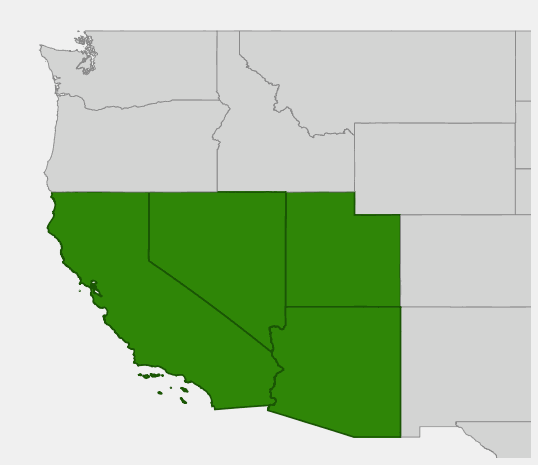
📋 Regional plant lists featuring Flat-topped Buckwheat: Arizona
Growing & Care Guide
Flat-topped Buckwheat is one of the easiest and most rewarding native plants for Arizona rock gardens, dry slopes, and pollinator gardens. It requires essentially no care once established, thrives in the poorest, rockiest soils, and rewards the gardener with months of colorful blooms and exceptional pollinator activity from spring through fall.
Light
Full sun is essential for best growth and flowering. Flat-topped Buckwheat evolved on sun-drenched desert slopes and is not shade-tolerant. Give it a minimum of 8 hours of direct sunlight daily. It handles the full intensity of the Arizona sun, including south-facing slopes with intense reflected heat, without difficulty. In partial shade, growth becomes sparse and flowering is greatly reduced.
Soil & Water
Well-drained, rocky, or sandy soil is critical — Flat-topped Buckwheat will not survive in clay or wet conditions. It thrives in the most challenging desert soils, including decomposed granite, rocky limestone, and sandy desert substrates. The plant is extremely drought tolerant once established; many plants in natural rainfall areas (10–16 inches annually) need no supplemental irrigation after the first growing season. During establishment (first season), water every 2 to 3 weeks in summer. After that, water only during extended droughts of more than 6 to 8 weeks. Overwatering is the most common cause of death in cultivation.
Planting Tips
Plant in fall or spring in well-drained, open soil. Do not amend the soil — Flat-topped Buckwheat prefers lean, unamended native soil and may decline in over-enriched conditions. A top-dressing of decomposed granite or gravel mulch is ideal. Space plants 3 to 4 feet apart to allow for mature spread. The plant does not transplant well from the wild — always use nursery-grown container stock. Flat-topped Buckwheat is also easily grown from seed sown directly in fall.
Pruning & Maintenance
Minimal pruning is needed. Many gardeners prefer to leave the attractive rust-red dried flower heads on the plant through winter for visual interest and wildlife food value. If you prefer a tidier appearance or want to encourage more compact growth, cut back the flower stems to the foliage level in late winter before new growth begins. Do not cut back into the old wood beyond the green foliage. The plant can be lightly shaped in early spring, but avoid heavy pruning. After 5 to 10 years, plants may become somewhat woody and sparse in the center; replace with new container plants or propagate from cuttings.
Landscape Uses
Flat-topped Buckwheat excels in many roles:
- Pollinator garden centerpiece — unmatched for native bee diversity
- Rock garden and desert slope planting
- Low-water border or groundcover
- Butterfly garden — larval host for several hairstreak species
- Slope erosion control
- Mass planting for naturalistic desert aesthetic
- Container gardening in large, well-drained pots
Wildlife & Ecological Value
Flat-topped Buckwheat is one of the most ecologically important native plants in the desert Southwest for native pollinators, supporting an extraordinary diversity of bee, butterfly, and other beneficial insect species throughout its extended bloom season.
For Native Bees
Flat-topped Buckwheat is considered one of the most important native bee plants in the western United States. Over 100 insect species have been documented visiting the flowers, including more than 30 native bee species in a single site study. Specialist bees in the genus Perdita (tiny sand bees) are oligoleges — collecting pollen exclusively from Eriogonum flowers. Various Halictus, Lasioglossum, and Melissodes bees are frequent visitors. Bumblebees, Mason Bees, and Leafcutter Bees also visit regularly. The abundance and diversity of bee activity on a blooming Flat-topped Buckwheat in spring or summer is a remarkable sight.
For Butterflies
Flat-topped Buckwheat is a key larval host plant for several hairstreak butterfly species including the Bramble Hairstreak and Desert Elfin. As a nectar plant, it attracts an impressive diversity of butterfly visitors including Painted Ladies, Western Tiger Swallowtails, Skippers, Blues, and Hairstreaks. The long bloom season (spring through fall) provides nectar continuously through the most important butterfly flight periods.
For Birds
The small, oil-rich seeds produced in abundance from spring through fall are eagerly consumed by seed-eating birds including Lesser Goldfinches, House Finches, various sparrows, and Mourning Doves. The dried seed clusters persist through winter, providing a valuable food resource when other seeds are scarce. The dense, low mounding growth provides ground-level cover for sparrows and other small birds foraging for seeds.
Ecosystem Role
Eriogonum species are considered foundational plants in the ecology of the western US because of the extraordinary number of specialized insects — particularly native bees — that depend exclusively or primarily on them. By supporting diverse native bee populations, Flat-topped Buckwheat indirectly supports the pollination of numerous other native plant species in the surrounding landscape. Its low, spreading growth stabilizes rocky desert slopes against erosion, and the plant’s root system supports mycorrhizal fungi important in nutrient-poor desert soils.
Cultural & Historical Uses
Buckwheats (Eriogonum spp.) have been used by Indigenous peoples of the American West for thousands of years, with dozens of documented applications across different cultural groups. The Cahuilla and Kumeyaay peoples of southern California used California Buckwheat (the parent species complex of Flat-topped Buckwheat) seeds as a food source, grinding the small seeds into flour for flatbreads and mush. Various Paiute and Shoshone groups used Eriogonum leaves and stems medicinally to treat headaches, stomach problems, and colds. These widespread uses reflect the plant’s abundance and availability across the desert West.
The Tohono O’odham and Akimel O’odham peoples of the Arizona Sonoran Desert region have used local Eriogonum species including Flat-topped Buckwheat for medicinal purposes. Tea made from the stems and leaves was used to treat various stomach ailments, and poultices were applied to skin conditions. The flowers, being among the most abundant and long-lasting nectar sources in the Sonoran Desert uplands, are culturally recognized across many groups as an important resource for bees and the production of high-quality desert honey.
In the modern native plant gardening and conservation world, Flat-topped Buckwheat and its close relatives have become some of the most celebrated and widely planted native species for pollinator conservation. The California Native Plant Society and similar organizations in Arizona regularly recommend native buckwheats as essential components of pollinator-supportive landscapes. The plant is a staple of native plant nurseries across the Southwest, and research on its extraordinary value for specialist native bees has made it a model species in native plant pollinator studies. Conservation practitioners use it widely in restoration seedings and plantings in disturbed desert sites.
Frequently Asked Questions
How long does Flat-topped Buckwheat bloom?
Flat-topped Buckwheat has one of the longest bloom seasons of any native desert plant — from March or April through October, sometimes persisting until November in warm years. Even after the white flowers age to rust-red, the dried seed clusters provide visual interest and food for birds through winter. This extended bloom season makes it an outstanding plant for supporting pollinators throughout the entire growing season.
Does Flat-topped Buckwheat need to be watered?
Once established (after the first growing season), Flat-topped Buckwheat is one of the most drought-tolerant native plants available. In areas with 10 to 16 inches of annual rainfall distributed through summer monsoons, established plants typically need no supplemental irrigation at all. During the establishment year, water every 2 to 3 weeks in summer. Overwatering is a much greater risk than under-watering for this species.
Why are the flower clusters turning red?
This is completely normal and one of the plant’s most attractive features! The flowers of Flat-topped Buckwheat open white or cream, age to pink as they mature, then deepen to rust-red or brick-red as the seeds develop within the dried perianth. A plant in full bloom shows all three colors simultaneously — fresh white flowers, aging pink flowers, and rust-red mature seed clusters. The dried russet clusters persist through winter, providing food for birds.
Is Flat-topped Buckwheat a larval host for butterflies?
Yes — several hairstreak butterfly species use Eriogonum species as larval host plants, including the Bramble Hairstreak (Callophrys dumetorum) and Desert Elfin. The caterpillars feed on the flowers and leaves. By including Flat-topped Buckwheat in your garden, you support not just adult butterflies seeking nectar but also the complete butterfly life cycle including larval development.
Can I grow Flat-topped Buckwheat from seed?
Yes — Flat-topped Buckwheat grows readily from seed sown directly in fall on well-drained, open soil. Sow on the surface and press lightly — seeds need some light to germinate. Fall-sown seeds germinate in winter or early spring. Plants from seed typically bloom in their second year. Container-grown nursery plants establish quickly and bloom in the first year after planting.

Looking for a nursery that carries Flat-topped Buckwheat?
Browse our native plant nursery directory: Arizona