
Fragrant Sumac (Rhus aromatica)
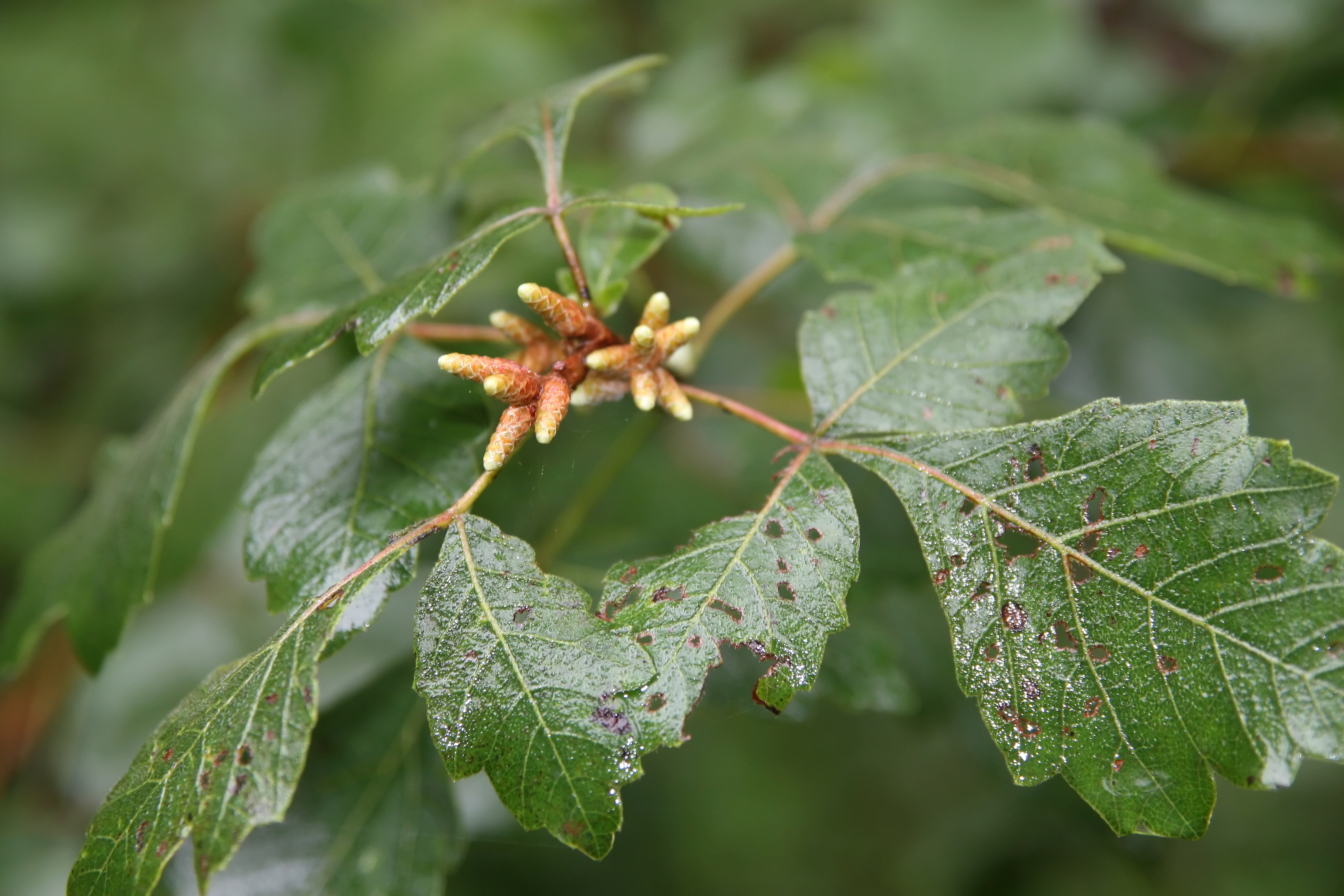
Rhus aromatica, commonly known as Fragrant Sumac or Lemon Sumac, is a tough, adaptable native shrub prized for its exceptional fall color, fragrant foliage, and remarkable drought tolerance. A member of the Anacardiaceae (Cashew) family, Fragrant Sumac earns its name twice over: the leaves, when crushed, release a pleasingly aromatic, citrusy-lemony scent, while the small red drupes that follow its early spring flowers have a distinctly tart, citrus-like flavor. This low-growing, spreading shrub is one of the unsung heroes of native plant landscaping — reliable, tough as nails, and spectacular in autumn.
Unlike many of its showier relatives in the sumac family, Fragrant Sumac stays compact — typically just 2 to 6 feet tall — with a broad, spreading, mounding habit that makes it superb for mass plantings, slopes, and bank stabilization. It is one of the most drought-tolerant native shrubs in eastern North America, thriving on rocky hillsides, dry limestone outcrops, sandy bluffs, and thin upland soils where other plants struggle. This exceptional adaptability makes it an ideal choice for difficult sites: dry slopes, highway medians, and low-maintenance landscapes where summer irrigation is impractical.
Fragrant Sumac is also a critical early season resource for wildlife. Its small yellow flowers emerge in early spring — sometimes before the leaves unfurl — providing one of the first nectar and pollen sources for native bees waking from winter. The red berries that follow persist into winter, providing food for dozens of bird species. Combined with its spectacular fall foliage — which transitions through vivid shades of orange, scarlet, and wine-purple — Fragrant Sumac delivers multi-season ornamental value while demanding almost nothing in return. It is one of the best native plants for a problem slope that receives full sun and little moisture.
Identification
Fragrant Sumac is a low, spreading to mounding deciduous shrub, typically 2 to 6 feet (0.6–1.8 m) tall and up to 6 to 10 feet (1.8–3 m) wide. It spreads slowly by root suckers, creating dense colonies over time. Young twigs are hairy or downy; older stems are smooth and gray-brown. The plant is aromatic throughout — crush any leaf, twig, or berry and you’ll immediately detect the characteristic lemony-spicy scent that gives the plant its common name.
Leaves
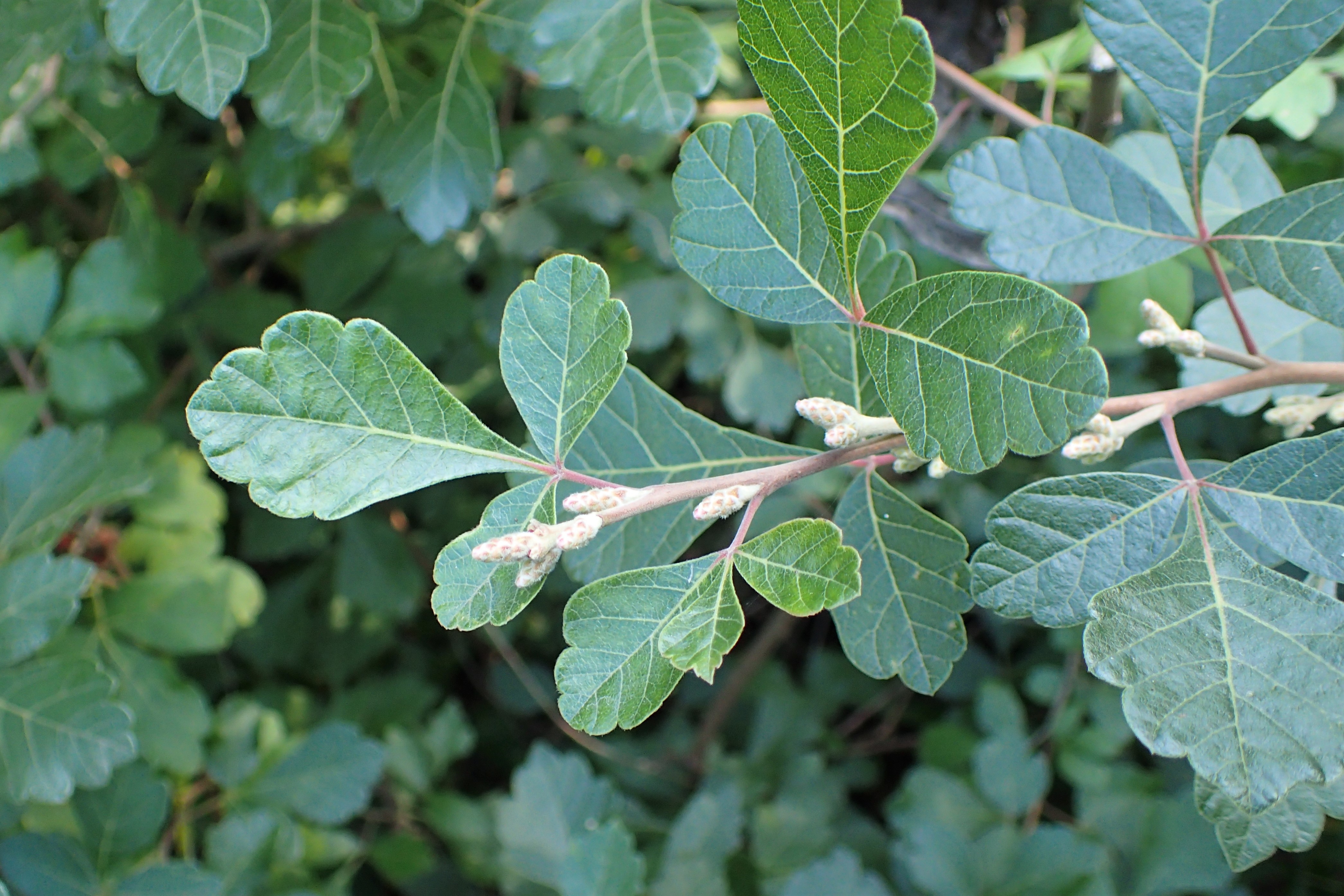
The leaves are trifoliate — divided into three leaflets — resembling poison ivy (Toxicodendron radicans) in general arrangement, but Fragrant Sumac is entirely harmless. The terminal leaflet is larger than the two lateral leaflets and is wedge-shaped at its base. Leaflets are 1 to 3 inches (2.5–7.5 cm) long, with toothed margins and a slightly rough, hairy surface. The entire leaf releases a fragrant, citrusy-lemony scent when crushed — a key identification feature that distinguishes it from poison ivy, which has no scent. Fall color is spectacular: vivid orange, red, and wine-purple, often all present simultaneously on one plant.
Flowers
The flowers are tiny and yellow-green, appearing in dense catkin-like clusters at the tips of branches in early spring — March through May, depending on location. A key identification feature is that the flowers often emerge before or simultaneously with the leaves, when the shrub is still mostly bare — giving it the appearance of a fuzzy yellow haze in the early spring landscape. Despite their small size, the flowers are an important early-season pollen and nectar source for native bees and early-emerging insects.
Fruit
The fruit is a small, hairy, red drupe approximately ¼ inch (6 mm) in diameter, produced in dense clusters at branch tips. The berries ripen from green through red, maturing to a deep red-purple by late summer and persisting into winter. They are edible — tart and citrusy — and were used by Indigenous peoples to make beverages. They are consumed by numerous bird species throughout fall and winter, providing critical late-season nutrition. The persistent clusters of red berries add ornamental interest to the winter landscape.
Quick Facts
| Scientific Name | Rhus aromatica |
| Family | Anacardiaceae (Cashew) |
| Plant Type | Deciduous Shrub |
| Mature Height | 2–6 ft |
| Sun Exposure | Full Sun to Part Shade |
| Water Needs | Low (Drought Tolerant) |
| Bloom Time | March – May (before leaves emerge) |
| Flower Color | Yellow-green |
| Fall Color | Outstanding — orange, scarlet, wine-purple |
| USDA Hardiness Zones | 3–9 |
Native Range
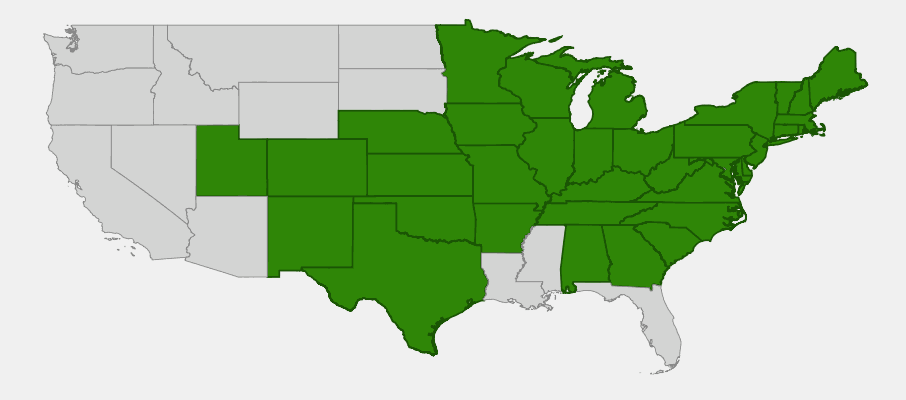
Fragrant Sumac has one of the broadest ranges of any native shrub in North America, occurring naturally from southern New England south through the Appalachians to Florida and west across the Midwest and Great Plains to the Rocky Mountain foothills, extending into the Southwest and even Mexico. It is native to the eastern and central United States, present in nearly every state east of the Rockies except for parts of the Gulf Coast lowlands. This enormous range reflects the plant’s remarkable adaptability to a wide variety of soils, climates, and habitat conditions.
Throughout this range, Fragrant Sumac is most characteristically a plant of dry, open, rocky uplands. It grows naturally on limestone glades, dry rocky slopes, sandy bluffs, cedar barrens, open woodlands, and rocky prairie margins. It is commonly found on exposed ridgetops, road cuts, and on the thin, rocky soils of the Ozark Plateau, the Cumberland Plateau, and the Appalachian ridges. In the northeastern states — New York, Pennsylvania, New Jersey — it typically occurs on rocky hillsides, dry open forests, and calcareous (limestone) slopes.
Fragrant Sumac’s tolerance of a wide pH range (5.0–8.0) and its ability to grow in nutrient-poor, droughty soils allow it to occupy ecological niches that exclude most other native shrubs. It is an important component of dry woodland edge communities and open rocky habitats, where it colonizes disturbed areas and provides early successional cover. Its spreading habit and ability to sucker freely make it an important erosion control plant on dry, steep slopes.
📋 Regional plant lists featuring Fragrant Sumac: New York, Pennsylvania & New Jersey
Growing & Care Guide
Fragrant Sumac is one of the most forgiving and low-maintenance native shrubs available. Once established, it requires virtually no care — no watering, no fertilizing, no pest management. Its primary requirement is excellent drainage and a sunny to partially sunny location. It is an ideal plant for difficult, dry sites where other shrubs struggle.
Light
Fragrant Sumac performs best in full sun, where it produces the best fall color and most compact form. It tolerates part shade well but may become somewhat open and leggy with significantly reduced fall color intensity under heavy shade. For the spectacular orange-to-scarlet autumn display the plant is known for, choose a site with at least 4–6 hours of direct sun daily.
Soil & Water
This shrub is extraordinarily drought-tolerant once established and actually prefers lean, well-drained to dry soils. Rich, moist soils can cause it to grow too vigorously and become floppy. It thrives in rocky, sandy, or gravelly soils — the kind of difficult, dry conditions that challenge most other plants. Soil pH can range from acidic to alkaline (5.0–8.0). Excellent drainage is essential; Fragrant Sumac will not tolerate waterlogged conditions. Once established (typically by year 2–3), it requires no supplemental irrigation even during summer droughts.
Planting Tips
Plant in spring or fall. Choose a well-drained site with full sun to part shade. Fragrant Sumac is excellent for slopes, dry banks, highway rights-of-way, and rocky or sandy uplands. Space plants 4–5 feet apart for ground cover, or 6–8 feet apart for individual specimens. Plants spread slowly by root suckers and will eventually form colonies — a feature that is useful for erosion control but may require monitoring in smaller gardens. To establish a mass planting quickly, space plants 3 feet apart. Mulch lightly around new plantings, but avoid heavy mulch that retains excessive moisture.
Pruning & Maintenance
Fragrant Sumac is essentially maintenance-free once established. Prune lightly in late winter or early spring to maintain shape and encourage dense, bushy growth. If plants become overgrown or woody, cut them back hard in late winter — they resprout vigorously from the base. The low-growing cultivar ‘Gro-Low’ (selected from the wild for a compact, ground-hugging form) is widely available and stays under 2 feet tall, making it especially useful as a large-scale ground cover. Fragrant Sumac has no serious pest or disease problems.
Landscape Uses
Fragrant Sumac is an outstanding choice for challenging landscape situations:
- Dry slope stabilization and erosion control — the root system is extensive and tenacious
- Mass plantings and ground cover — especially the compact ‘Gro-Low’ cultivar
- Highway and right-of-way plantings — exceptionally durable and drought-tolerant
- Rock gardens — thrives among rocks and gravelly soils
- Native mixed borders — spectacular fall color contrasts beautifully with ornamental grasses
- Deer-resistant plantings — the aromatic foliage is unappealing to deer
- Ecological restoration on dry upland sites
Wildlife & Ecological Value
Despite its compact size, Fragrant Sumac punches well above its weight in wildlife value, providing food and habitat across multiple seasons for a remarkable diversity of animals.
For Birds
The persistent red berries are consumed by dozens of bird species throughout fall and winter, providing critical nutrition when other food sources are scarce. Eastern Bluebirds, Hermit Thrushes, American Robins, Yellow-rumped Warblers, White-throated Sparrows, Dark-eyed Juncos, and many other species rely on Fragrant Sumac fruit in late fall and winter. The dense, multi-stemmed structure provides cover and nesting habitat for small songbirds, including Yellow Warblers and Song Sparrows.
For Mammals
White-tailed Deer typically avoid Fragrant Sumac due to its strong aromatic oils — making it one of the more reliable deer-resistant native shrubs available. However, wild turkey, ruffed grouse, and rabbits occasionally browse the plant. Small mammals use the dense thickets for cover and shelter from predators and harsh weather.
For Pollinators
The early spring flowers are a critical resource for pollinators emerging before most other flowering plants are available. Native bees — especially specialist bees in the Colletidae and Andrenidae families that emerge early in the season — depend on Fragrant Sumac pollen and nectar for their first foraging opportunities of the year. The plant supports numerous Andrena (mining bee) species as well as early-emerging bumble bees. Its early bloom time makes it especially valuable in landscapes where spring pollinator forage is limited.
Ecosystem Role
In dry, rocky upland communities, Fragrant Sumac plays a critical role as a pioneer and stabilizer species. Its extensive, fibrous root system holds soil on steep slopes, preventing erosion during heavy rain events. As one of the first woody plants to colonize disturbed dry uplands, it initiates the process of ecological succession from bare ground to shrubland to woodland. The leaf litter it produces decomposes slowly, enriching the soil beneath it. Over decades, Fragrant Sumac colonies create habitat structure that supports a diverse community of insects, birds, and small mammals on otherwise barren rocky slopes.
Cultural & Historical Uses
Fragrant Sumac has a rich history of use by Indigenous peoples across its extensive range. The tart, citrusy berries were — and still are — used to make a refreshing beverage sometimes called “sumac lemonade” or “Indian lemonade.” The berries are soaked in cold water, then the liquid is strained and sweetened, producing a pink drink with a pleasantly tart, fruity flavor rich in vitamin C. This same preparation technique was used by many eastern and midwestern tribes, including the Ojibwe, Cherokee, Potawatomi, and numerous others who knew the plant well.
The leaves and bark were used medicinally by Indigenous peoples for a variety of conditions. The Cherokee used the leaves and berries as an astringent, and the bark as a treatment for diarrhea. The Ojibwe used a decoction of the roots to treat venereal disease. Various tribes used the aromatic leaves in smoking mixtures, sometimes mixed with tobacco or other herbs. The strong-scented leaves were also used as a natural insect repellent.
The aromatic wood and leaves were used practically by many groups — the dried leaves were smoked as a mild tobacco substitute, and the bark was used for tanning hides. Early European settlers adopted the berry tea tradition and also used the plant as a tanbark source. Today, Fragrant Sumac is primarily valued as a landscape plant — one of the finest native ground-covering shrubs for dry, sunny, difficult sites. Its cultivar ‘Gro-Low’ has become one of the most widely planted native shrubs for dry slope stabilization and low-maintenance mass plantings in public and commercial landscapes throughout the eastern United States.
Frequently Asked Questions
Is Fragrant Sumac the same as poison sumac or poison ivy?
No — Fragrant Sumac (Rhus aromatica) is completely harmless and not related to poison ivy or poison sumac. While its trifoliate leaves superficially resemble poison ivy, the pleasant citrusy scent released when leaves are crushed is an immediate giveaway — poison ivy has no scent. Fragrant Sumac causes no skin irritation and is safe to handle. Poison sumac (Toxicodendron vernix) grows in very wet, swampy habitats, while Fragrant Sumac prefers dry uplands.
Can I eat Fragrant Sumac berries?
Yes — the red berries are edible and pleasantly tart. They are most commonly prepared as a cold infusion: soak the berry clusters in cold water for 20–30 minutes, then strain through a cloth to remove the tiny hairs. The resulting pink liquid can be sweetened to taste — it resembles lemonade in flavor. Do not boil the berries, as this releases bitter tannins. The berries are also used to make spice rubs and seasoning blends similar to Middle Eastern sumac spice.
How do I control Fragrant Sumac spreading?
Fragrant Sumac spreads by root suckers and can form extensive colonies over time. In smaller gardens, contain spread by mowing around the colony margin in early summer, which cuts new sucker growth. For large areas, root pruning with a sharp spade along the desired boundary in early spring is effective. The compact cultivar ‘Gro-Low’ suckers less aggressively than the straight species and is a better choice for restrained plantings.
Why isn’t my Fragrant Sumac turning good fall colors?
Fall color intensity in Fragrant Sumac is primarily influenced by sunlight and soil conditions. Plants in full sun with lean, well-drained soil typically produce the best orange-to-scarlet colors. Plants in rich, moist soils or significant shade may produce disappointing yellow fall color. Cool nights and warm days in early fall also enhance color development. If your plant is in partial shade, consider whether nearby trees have increased shade as they’ve matured.
Does Fragrant Sumac work as a ground cover?
Yes — and it is one of the best native ground covers for dry, sunny slopes. The cultivar ‘Gro-Low’ was specifically selected for its low, spreading habit (under 2 feet tall, 6–8 feet wide) and is widely used in commercial and residential landscapes for large-scale ground cover on dry slopes. The straight species is taller (2–6 ft) and works well for mass plantings where some height is acceptable. Both are excellent at suppressing weeds and stabilizing slopes.

Looking for a nursery that carries Fragrant Sumac?
Browse our native plant nursery directory: New York · Pennsylvania