
Fremont Silktassel (Garrya fremontii)
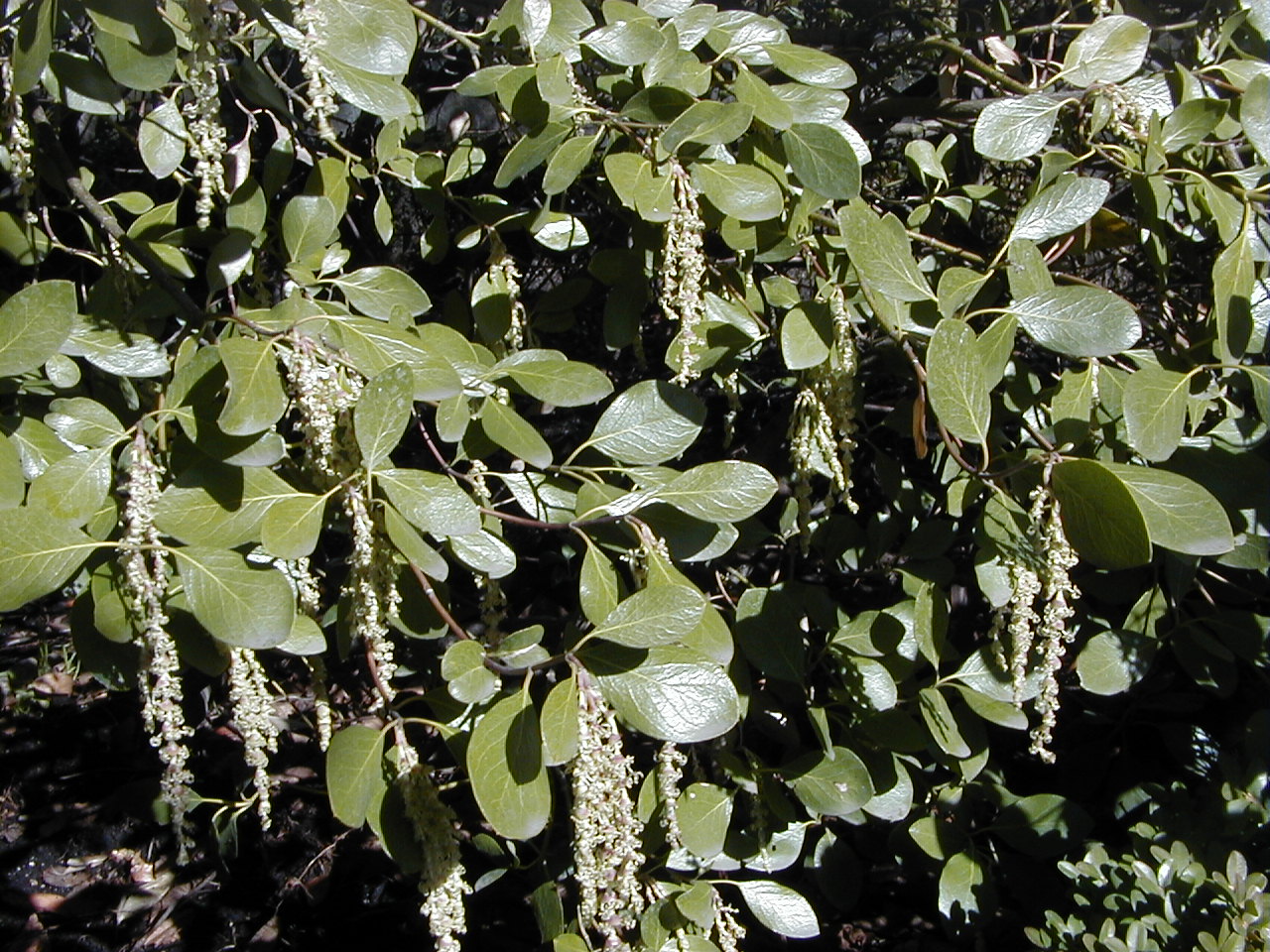
Garrya fremontii, known as Fremont Silktassel, Bearbrush, or California Fever Bush, is a broadleaf evergreen shrub native to the mountains, foothills, and chaparral of California, Oregon, and southern Washington. It belongs to Garryaceae, a small family of shrubs and trees distinguished by their long, drooping, tassel-like flower clusters — a feature so distinctive that it gives both this species and its more coastal relative, coast silktassel, their common names.
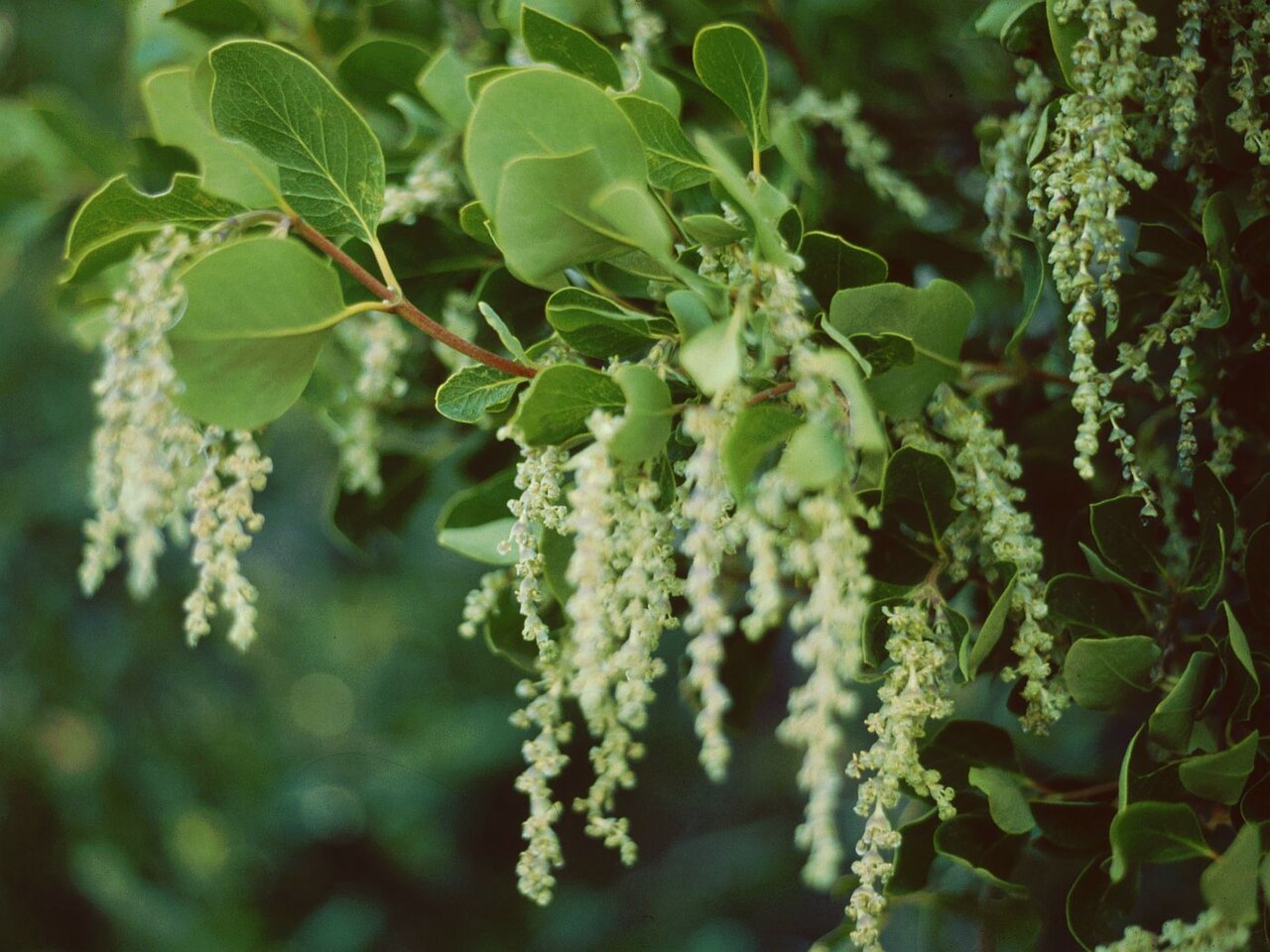
Fremont Silktassel is a true western survivor: it is quick to resprout from the root crown after wildfire, shrugs off summer drought once established, and asks for almost nothing in the way of soil fertility. Its smooth, leathery, gray-green leaves and open, rounded form give it year-round structure in chaparral, mixed-evergreen forest, and woodland plant communities, while its unusual winter-and-spring catkins — pale yellow-green dangling clusters on male plants, shorter and less showy on female plants — add a texture to the landscape found in few other native shrubs.
For gardeners working in California, Oregon, or southern Washington who want a tough, drought-tolerant, wildlife-friendly shrub for dry shade or part sun, Fremont Silktassel is an underused native worth a closer look.
Identification
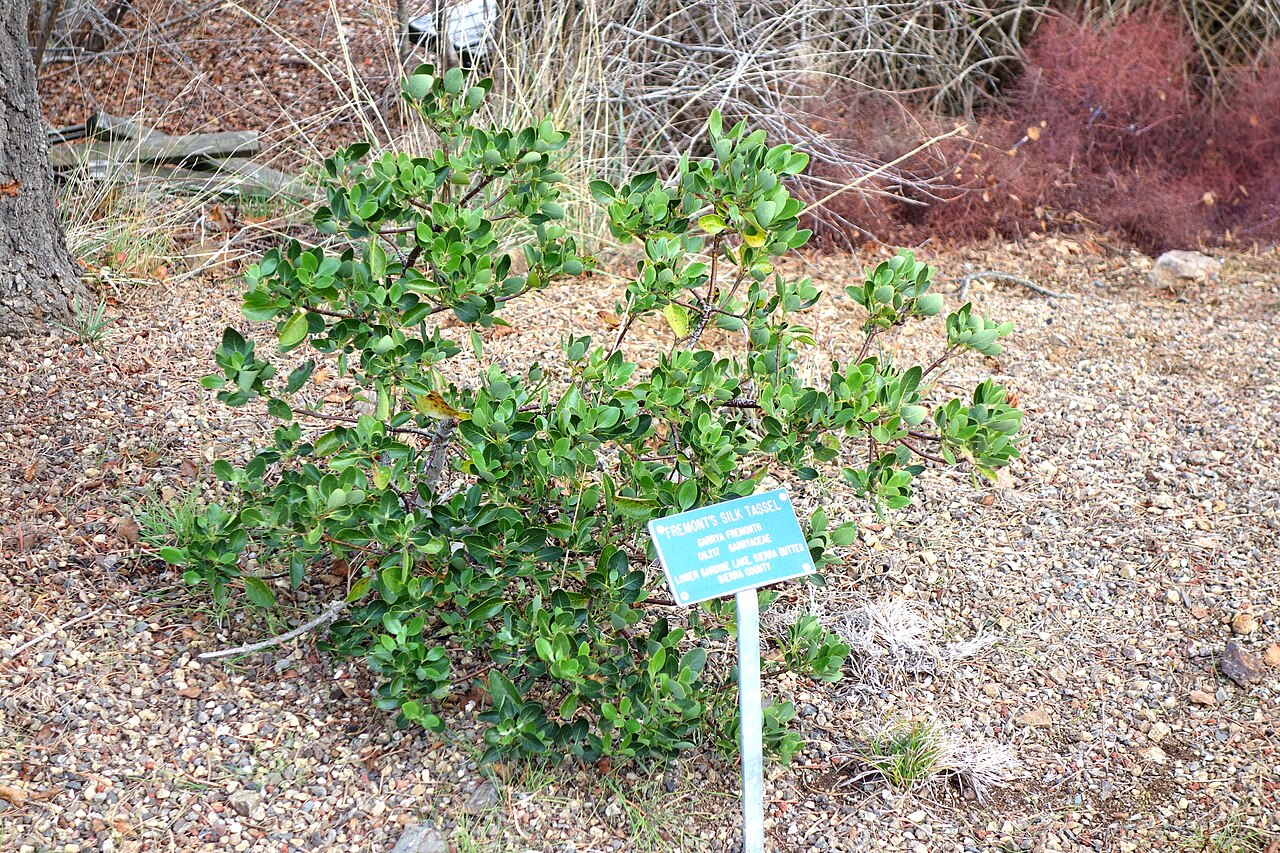
Fremont Silktassel is a rounded, multi-stemmed evergreen shrub, typically 3 to 10 feet tall and sometimes reaching up to 13 feet in favorable sites, with an open, somewhat airy branching structure.
Bark & Stems
Young twigs are slender, smooth, and often grayish-green, maturing to gray-brown bark on older stems. The overall branching habit is loosely upright to rounded, less dense than many chaparral shrubs, which lets light filter through the canopy.
Leaves
Leaves are opposite, simple, oval to elliptical, 1 to 5 inches long and roughly half as wide, with smooth (entire) margins. They are leathery and smooth, deep green above, and pale or grayish-green below, usually glabrous (hairless) on both surfaces — a trait that helps distinguish it from some other chaparral shrubs with felted or hairy foliage. The evergreen leaves persist year-round, giving the plant structure through the dry season and winter.
Flowers & Fruit
Fremont Silktassel is dioecious, meaning individual plants are either male or female. Both sexes produce the long, hanging, tassel-like catkins that give the plant its name, blooming from winter into spring; male catkins are typically longer and showier, with yellowish-green flowers, while female catkins are shorter. After pollination, female plants produce small, round berries that ripen from green through pink to a dark purple, eaten and dispersed by birds and mammals through fall and winter.
Quick Facts
| Scientific Name | Garrya fremontii |
| Family | Garryaceae (Silktassel) |
| Plant Type | Broadleaf evergreen shrub |
| Mature Height | 3–10 ft, occasionally to 13 ft |
| Mature Spread | 4–8 ft, rounded form |
| Growth Rate | Slow to moderate |
| Sun Exposure | Part shade to full shade; tolerates more sun near the coast |
| Water Needs | Very low to low once established |
| Soil Type | Rocky, well-drained mountain and foothill soils |
| Soil pH | Slightly acidic to neutral |
| Bloom Time | Winter – spring |
| Flower Color | Yellowish-green to pinkish, in hanging catkins |
| Fall Color | Evergreen; no fall color change |
| Fruit | Round berries, green ripening to purple (female plants only) |
| Deer Resistant | Yes, generally avoided by deer |
| USDA Hardiness Zones | 7–9 |
Native Range
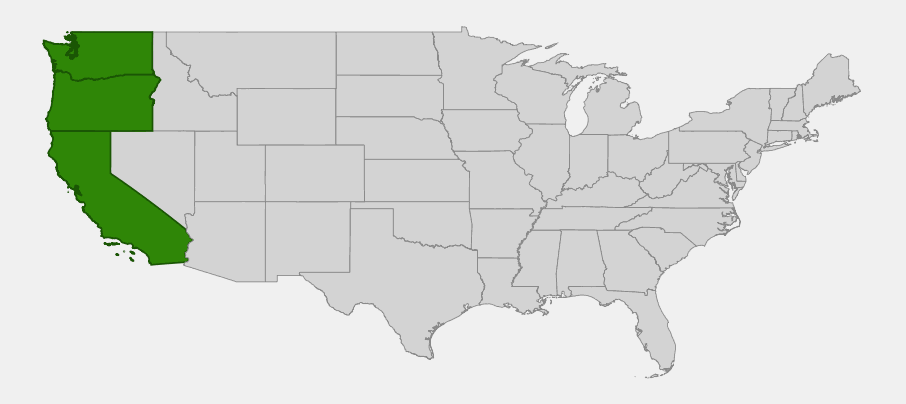
Fremont Silktassel is native along the Pacific Coast ranges from southern Washington through Oregon and through most of California, with its range extending from the Cascades and Coast Range south through the Sierra Nevada foothills into southern California. It is most common in the Klamath Mountains, Coast Range, Cascade foothills, and Sierra Nevada, where it occupies a broad elevation band from low foothill chaparral to mixed-conifer montane forest.
Across this range, Fremont Silktassel grows in mixed-evergreen and conifer forest understory, oak woodland, and chaparral, typically on rocky or well-drained slopes. It frequently grows alongside Pacific madrone, canyon live oak, and whiteleaf manzanita, forming part of the shrub layer beneath or alongside open conifer and oak canopies.
Fremont Silktassel is distinct from its showier relative, coast silktassel (Garrya elliptica), which hugs the immediate California and southern Oregon coastline with longer, more ornamental catkins and wavy-edged leaves. Fremont Silktassel instead occupies the drier interior mountains and foothills further from the ocean’s moderating influence, and is not native to the humid coastal fog belt.
📋 Regional plant lists featuring Fremont Silktassel: California & Nevada, Western Oregon & Western Washington
Growing & Care Guide
Fremont Silktassel is a low-input native shrub for gardeners in California, Oregon, and southern Washington who want year-round structure without the water demands of non-native evergreen shrubs.
Light
This species naturally grows in the dappled shade of forest understory and woodland edges, so it does best in partial to full shade; in cooler, coastal-influenced gardens it can also tolerate more sun. In hot interior valleys, afternoon shade will keep foliage looking its best.
Soil & Water
Fremont Silktassel is adapted to rocky, well-drained mountain and foothill soils with a slightly acidic to neutral pH, and it has very low to low water needs once established — a good match for the summer-dry Mediterranean climate across its range, similar to the growing philosophy behind our guide to California native flowering shrubs. Avoid heavy clay or poorly drained soils, and once plants are established, supplemental summer water should be minimal to avoid root rot.
Planting Tips
Plant container-grown stock in fall, giving roots the cool, wet season to establish before summer drought arrives. Because male and female flowers occur on separate plants, gardeners hoping for the ornamental winter berries will need at least one of each sex nearby, though male plants alone are perfectly attractive for their showier catkins. Space plants 4 to 8 feet apart for a natural shrub border, or use as an informal hedge.
Pruning & Maintenance
Fremont Silktassel needs very little pruning. Remove dead or damaged wood as needed, and lightly shape after flowering if a tidier form is desired. The species tolerates occasional hard pruning and will resprout readily from the base if cut back or top-killed by fire or frost.
Landscape Uses
Fremont Silktassel fills several useful landscape roles:
- Dry shade shrub for woodland gardens beneath oaks and conifers
- Informal hedge or screen in low-water native plantings
- Winter interest from its unusual hanging catkins when little else is in bloom
- Fire-resilient landscaping thanks to its ability to resprout from the root crown
- Wildlife shrub pairing well with madrone, oaks, and manzanita in naturalistic plantings — see our tips on woodland garden design with natives
Fire Ecology
Like many chaparral and mixed-evergreen forest shrubs, Fremont Silktassel is well adapted to a fire-prone landscape. It is quick to recover after wildfire, resprouting vigorously from the root crown even when top growth is killed. This resilience makes it a useful component of fire-adapted native plantings, though as with any woody plant, it should still be sited with defensible-space guidelines in mind near structures.
Wildlife & Ecological Value
Fremont Silktassel supports wildlife across several seasons in the mixed-evergreen and chaparral communities where it grows.
For Birds
The ripening berries — which pass from green through pink to deep purple — are eaten by a range of birds through fall and winter, when the berries often remain one of the more reliable fruit sources in dry chaparral and woodland habitats. The dense evergreen foliage also provides year-round cover and nesting sites.
For Mammals
Various mammals feed on the berries and help disperse the seeds. The common name “bearbrush” reflects its occurrence in the same mixed-forest and chaparral habitat used by black bears across its range, among other wildlife that move through these shrub communities for cover and forage.
For Pollinators
Though wind plays a role in pollination for many Garryaceae, the long, dangling winter and spring catkins — blooming when few other natives are in flower — provide an early-season resource that can draw in flies and other pollinating insects active during the mild Pacific winter.
Ecosystem Role
As a mid-story shrub in mixed-evergreen forest, oak woodland, and chaparral, Fremont Silktassel adds structural diversity that benefits birds and small mammals, while its drought tolerance and fire resprouting ability help it persist as a stabilizing presence through California and the Pacific Northwest’s natural disturbance cycles of fire and summer drought.
Cultural & Historical Uses
The common name “California fever bush” points to a documented history of use: early California settlers and some Indigenous communities used preparations from the bitter bark and leaves of Garrya species as a folk remedy for fevers, in a manner historically compared to quinine bark. Garrya species are known to contain bitter diterpene alkaloids, and while historical accounts describe this fever-bark use, the plant is not considered food-safe — the foliage and bark are bitter and potentially toxic in quantity, particularly to livestock that browse it, so no part of the plant should be ingested.
The genus name honors Nicholas Garry, an early official of the Hudson’s Bay Company, while the species name fremontii commemorates explorer and California pathfinder John C. Frémont, who collected plant specimens during his 19th-century expeditions through the American West.
Today, Fremont Silktassel has little commercial use beyond native plant horticulture, where it is valued by restoration projects and native plant gardeners for its toughness, winter interest, and modest water needs — qualities increasingly sought after as California and Oregon gardeners move toward lower-water, fire-resilient landscaping, a shift also reflected in resources like our guide to Oregon native pollinator plants.
Frequently Asked Questions
Is Fremont Silktassel the same as coast silktassel?
No. They are closely related but distinct species. Coast silktassel (Garrya elliptica) hugs the California and southern Oregon coastline and has longer, showier catkins and wavy leaf margins; Fremont Silktassel grows further inland in drier mountains and foothills and has smooth-edged leaves.
Are Fremont Silktassel berries edible?
No. The berries, leaves, and bark of Garrya species contain bitter alkaloids and are not considered safe to eat. They should be left for the birds and mammals that naturally consume them.
How much water does Fremont Silktassel need?
Very little once established. It is adapted to the Mediterranean, summer-dry climate of its native range and needs only occasional deep watering during its first one to two years in the ground.
Why does my Fremont Silktassel only have small catkins and no berries?
Fremont Silktassel is dioecious, meaning individual plants are either male or female. Only female plants produce berries, and they need a nearby male plant for pollination. Male plants typically have longer, showier catkins but never produce fruit.
Does Fremont Silktassel recover after wildfire?
Yes. It is one of many chaparral and mixed-evergreen forest shrubs that resprout readily from the root crown after fire top-kills the above-ground growth, helping it persist through the frequent fire cycles typical of its native range.

Looking for a nursery that carries Fremont Silktassel?
Browse our native plant nursery directory: California · Oregon · Washington

