
Glade Mallow (Napaea dioica)
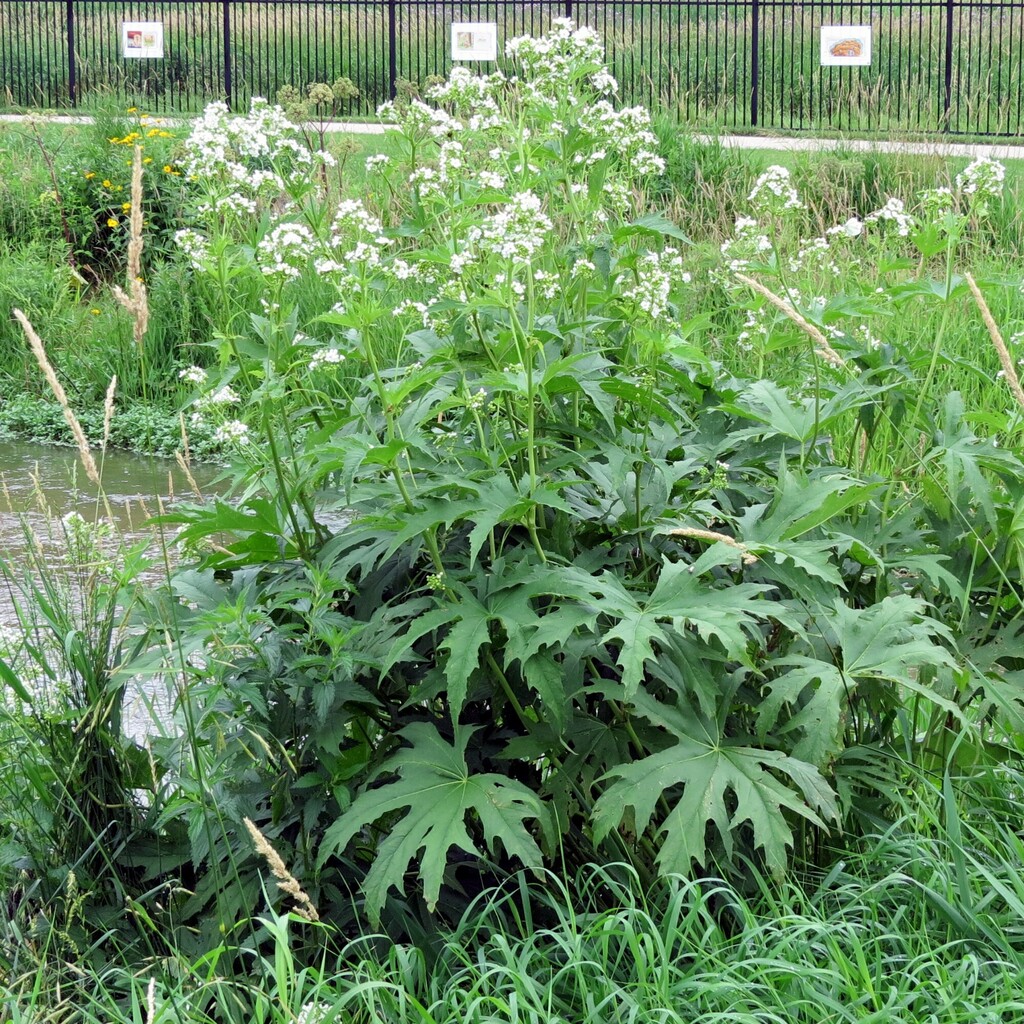
Napaea dioica, Glade Mallow, is a tall, bold native perennial of moist floodplains and stream banks in the upper Midwest and Ohio Valley. It is the only species in its genus, and it is unusual among mallows because individual plants are either male or female, which is what dioica (“two households”) means.
Mature clumps reach 4 to 9 feet tall, with huge, deeply cut, hand-shaped leaves that can be a foot or more across, topped in early to midsummer by airy, branched clusters of small white flowers. The overall effect is tropical-looking, more like a giant ornamental than a typical prairie wildflower.
Glade mallow is uncommon in much of its range and is listed as rare, threatened or endangered in several states at the edges of its range. This guide covers how to identify it, where it grows, and how to grow it from nursery stock in a moist, sunny garden.
Identification
Glade mallow is easy to recognize by its sheer size, its very large, deeply lobed, palm-like leaves and its many small white flowers in summer.
Leaves & Stems
The stout, upright stems grow 4 to 9 feet tall from a thick, fleshy root crown. The basal and lower leaves are very large, often 8 to 18 inches or more across, and are palmately divided into 5 to 11 long, narrow, coarsely toothed lobes. Upper leaves are smaller, with fewer lobes. Stems and leaves are rough with scattered hairs, especially near the base.
Flowers
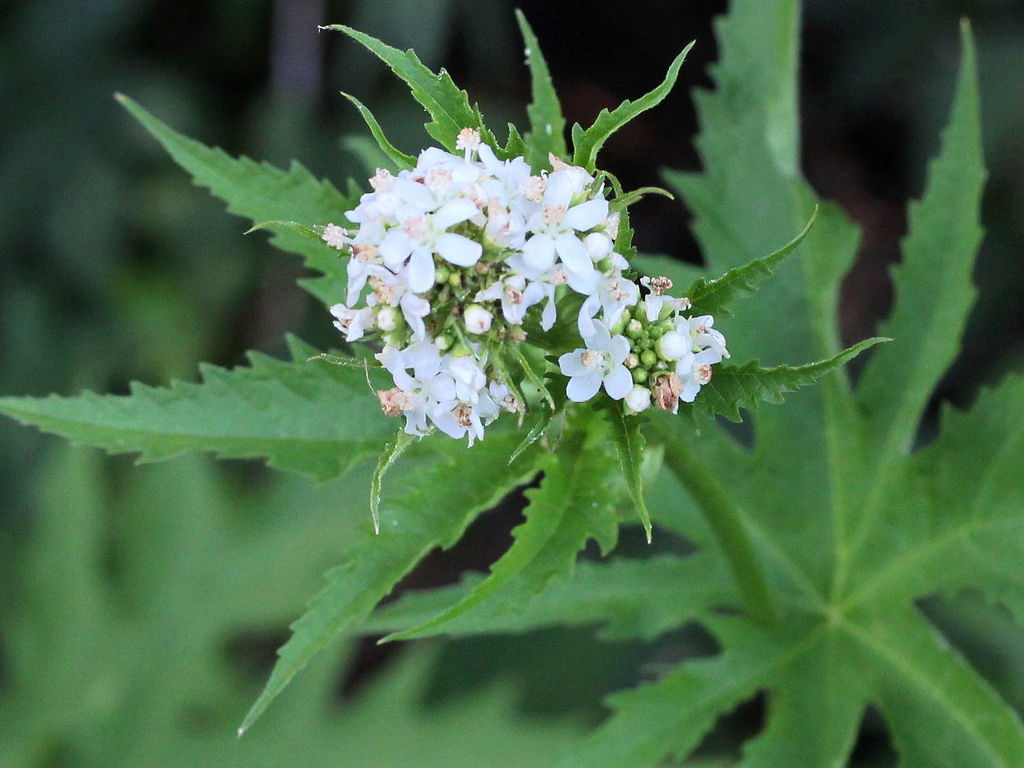
From June to August, the upper stems branch into broad, loose clusters of small white flowers. Each flower has five petals and is about ¼ to ½ inch across on female plants and somewhat larger on male plants. Male flowers have a central column of many stamens with pale anthers; female flowers have a cluster of thread-like styles.
Fruit
Only female plants produce fruit: a flat, round, wheel-like cluster of about 10 wedge-shaped segments, typical of mallows. Each segment holds one seed.
Look-alikes
The leaves resemble those of Purple-stemmed Angelica only at a glance; angelica has compound leaves and umbrella-shaped flower clusters. Non-native hogweeds and cow parsnips (Heracleum) have umbels of flowers and divided leaves, and some can burn skin; glade mallow has mallow flowers and wheel-shaped fruits. Native rose-mallows (Hibiscus) have much larger pink or white flowers.
Quick Facts
| Scientific Name | Napaea dioica L. |
| Family | Malvaceae (mallow family) |
| Plant Type | Tall herbaceous perennial (dioecious) |
| Mature Height | 4–9 ft |
| Mature Spread | 2–4 ft |
| Growth Rate | Moderate; slow to establish |
| Sun Exposure | Full sun to partial shade |
| Water Needs | Moist to wet |
| Soil Type | Rich, moist alluvial loam or silt |
| Soil pH | Neutral to slightly alkaline (about 6.5–7.8) |
| Bloom Time | June–August |
| Flower Color | White |
| Fall Color | None notable; dies back to the ground |
| Fruit | Flat, wheel-shaped cluster of seed segments (female plants) |
| Deer Resistant | Low to moderate |
| USDA Hardiness Zones | 4–7 |
Native Range
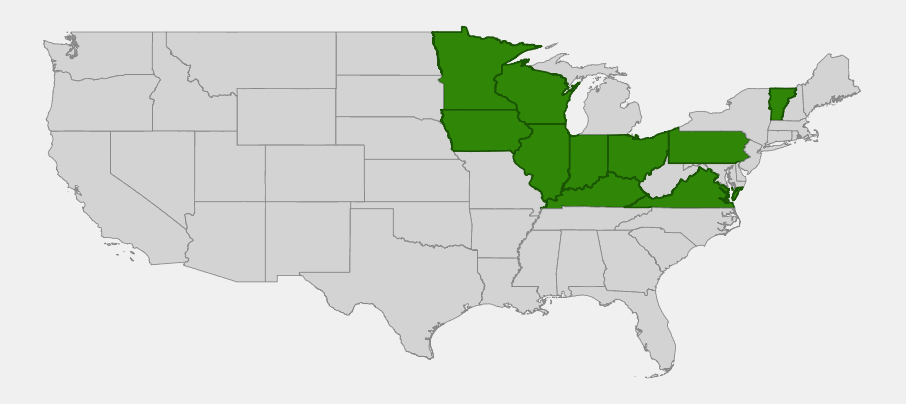
Glade mallow is native mainly to the upper Midwest and Ohio Valley. Its core range runs from southeastern Minnesota, Wisconsin and Iowa east through Illinois, Indiana and Ohio, with records in Kentucky. It is most common in the unglaciated Driftless Area of southwestern Wisconsin, southeastern Minnesota, northeastern Iowa and northwestern Illinois.
USDA PLANTS also lists it in Pennsylvania and Virginia, where it grows in a few scattered, rare river-valley populations, and in Vermont, an isolated outlying record far from the rest of the range that may come from garden plantings.
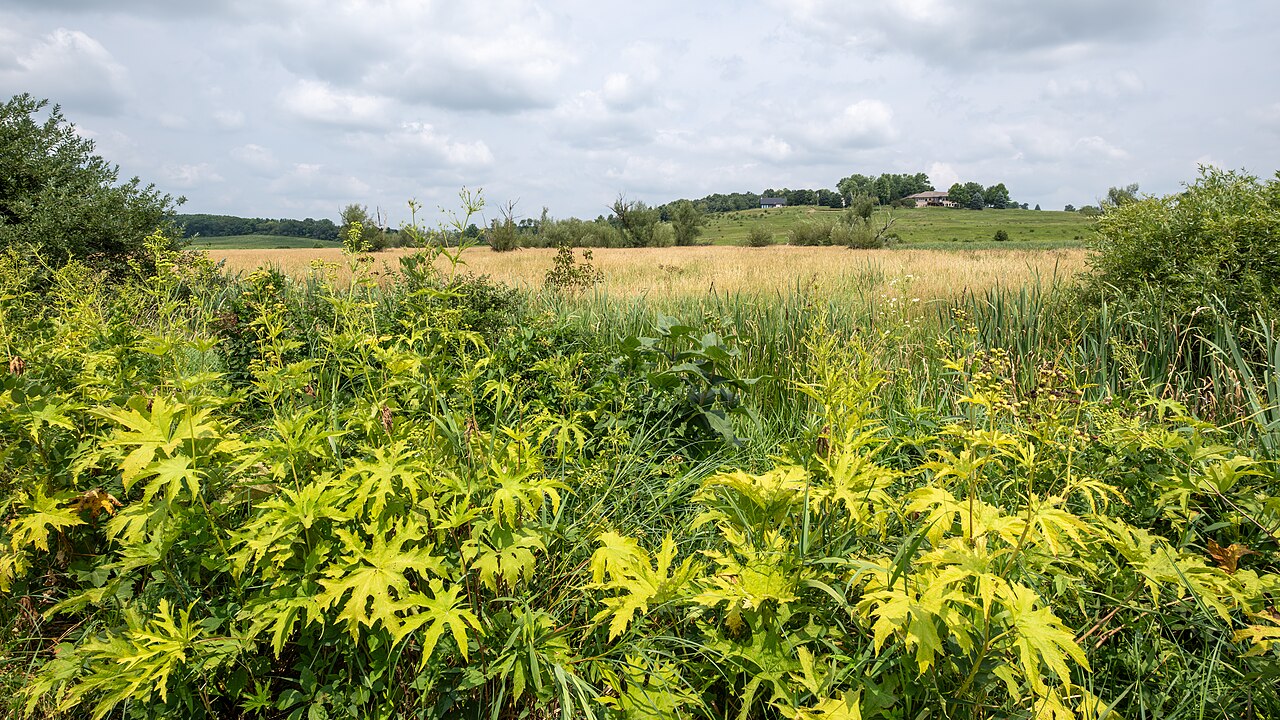
It grows in moist, rich, open or lightly shaded places: river and stream floodplains, alluvial meadows, wet prairies, stream banks, ditches, moist thickets and the edges of floodplain woods. Many of its old habitats were converted to farmland or invaded by reed canarygrass, and it is now listed as rare, threatened or endangered in several states.
📋 Regional plant lists featuring Glade Mallow: Illinois, Iowa & Missouri · Ohio & Indiana · Michigan, Wisconsin & Eastern Minnesota · Kentucky & Tennessee · New York, Pennsylvania & Northern New Jersey · Maryland, Virginia & West Virginia
Growing & Care Guide
Glade mallow is a striking, long-lived plant for large rain gardens, pond edges and moist prairie plantings in the Midwest. Several Midwest native nurseries sell plants and seed. Because it is rare in several states, buy nursery-propagated plants or seed and never dig plants from the wild.
Light
Full sun to partial shade. It flowers best with at least half a day of sun.
Soil & Water
It needs deep, rich, consistently moist soil, such as floodplain loam or silt. It tolerates brief flooding but not long droughts. In dry spells, water deeply.
Planting Tips
Give it plenty of room, at least 3 feet in every direction, because the leaves are enormous. Plant in spring. For seed, plant both male and female plants (a group of seedlings usually includes both) if you want fruit.
Pruning & Maintenance
Little care is needed once established. Cut stems back in late winter. Keep aggressive grasses such as reed canarygrass from crowding it out.
Propagation
From seed sown outdoors in fall, or after 60 days of cold, moist stratification in spring. Seedlings grow slowly at first and may take two to three years to bloom. Older clumps can be divided carefully in early spring.
Landscape Uses
- Rain gardens and pond edges: bold foliage for wet, sunny spots
- Floodplain and wet prairie restoration: a characteristic Driftless Area plant
- Back of the border: tall, tropical-looking foliage and summer flowers
- Pollinator gardens: summer flowers for bees and flies
Wildlife & Ecological Value
Glade mallow supports pollinators and other insects in floodplain meadows of the Midwest.
For Pollinators
Bees, including bumble bees and small native bees, and flies visit the many small white flowers for nectar and pollen. Because plants are either male or female, insects must carry pollen between separate plants for seed to set.
For Birds
The tall stems and big leaves give cover for birds in floodplain meadows, and small birds may eat seeds from the fruit wheels.
For Mammals
Deer and rabbits sometimes browse the young leaves. Small mammals shelter under the large leaves.
Ecosystem Role
Mallow foliage feeds the caterpillars of several moths and butterflies, and the dense clumps shade the ground and help hold floodplain soils. Its presence is a sign of a relatively intact, moist floodplain meadow.
Cultural & Historical Uses
Carl Linnaeus named Napaea dioica in 1753. Napaea comes from the Greek napaios, “of wooded valleys,” after the Napaeae, nymphs of glens and wooded valleys in Greek mythology. Dioica refers to its separate male and female plants, rare among mallows.
As the only member of its genus, glade mallow has no close relatives anywhere else, which gives it special interest for botanists and conservationists.
In Wisconsin and Minnesota, where it is most common, it is a familiar summer plant along streams and trails in the Driftless Area, and restoration projects use it to rebuild floodplain meadows.
Frequently Asked Questions
Why is it called Napaea dioica?
Napaea refers to the nymphs of wooded valleys in Greek mythology, and dioica means the plants are either male or female. It is the only species in the genus.
How tall does glade mallow get?
Usually 4 to 9 feet tall, with very large, deeply lobed leaves that can be more than a foot across.
Where does glade mallow grow?
Mainly in moist floodplains and stream banks of the upper Midwest and Ohio Valley, especially the Driftless Area of Wisconsin, Minnesota, Iowa and Illinois, with a few rare populations in Pennsylvania and Virginia.
Is glade mallow rare?
It is uncommon in much of its range and is listed as rare, threatened or endangered in several states. Buy nursery-propagated plants and never dig wild plants.
Do I need male and female plants?
Only if you want seed. Both sexes flower, but only female plants make fruit, and they need pollen from a male plant.

Looking for a nursery that carries Glade Mallow?
Browse our native plant nursery directory: Illinois, Indiana & Iowa · Kentucky & Minnesota · Ohio · Pennsylvania, Vermont & Virginia · Wisconsin

