Hao (Rauvolfia sandwicensis)
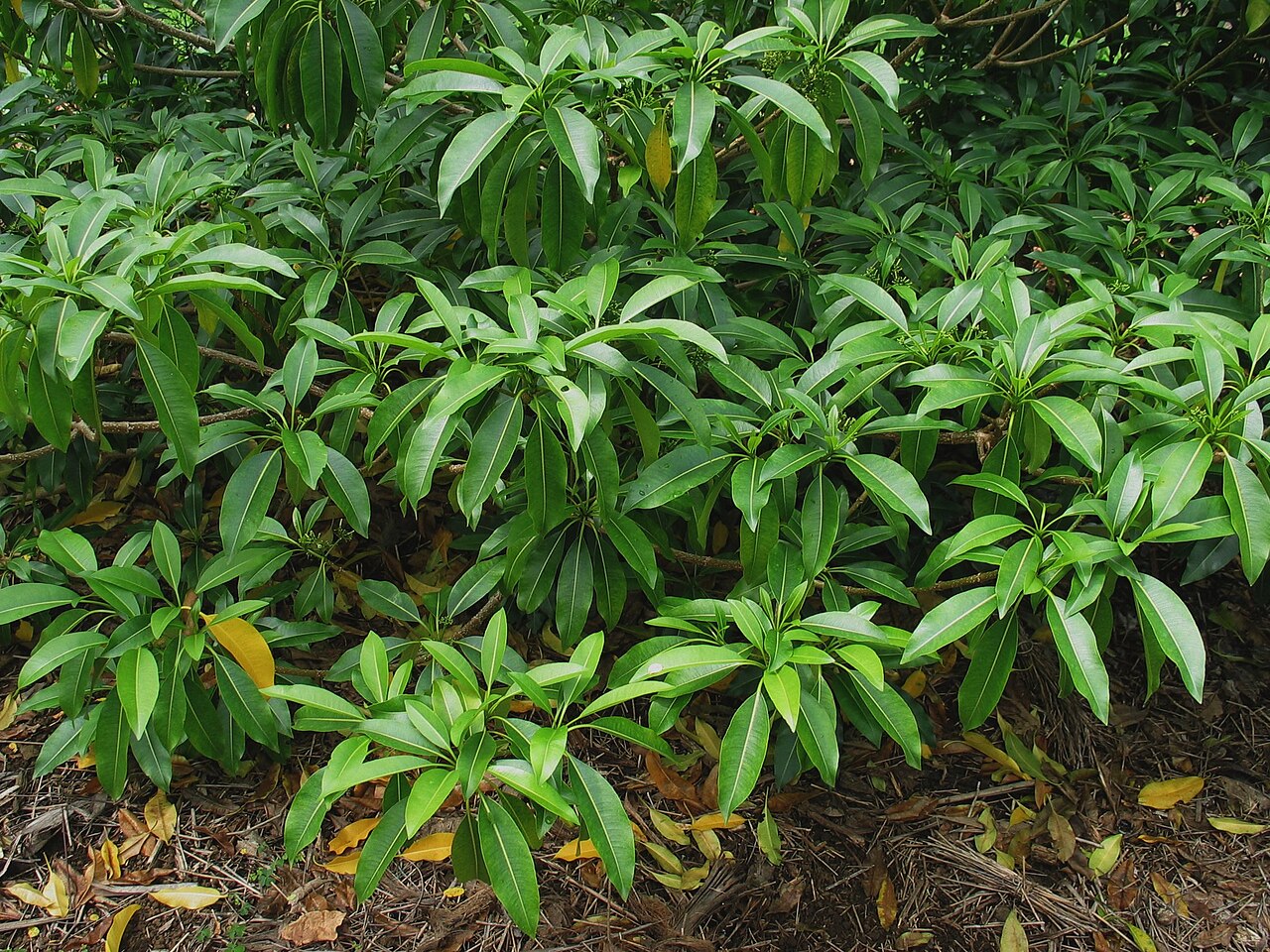
Rauvolfia sandwicensis, known to Hawaiian gardeners simply as Hao (and sometimes “devil’s-pepper” in English), is one of Hawaiʻi’s quieter native trees — easy to overlook until you learn to spot its distinctive whorled leaves and clusters of small white flowers. It belongs to the dogbane family (Apocynaceae), the same family that includes plumeria, though Hao looks nothing like its showy ornamental relative.
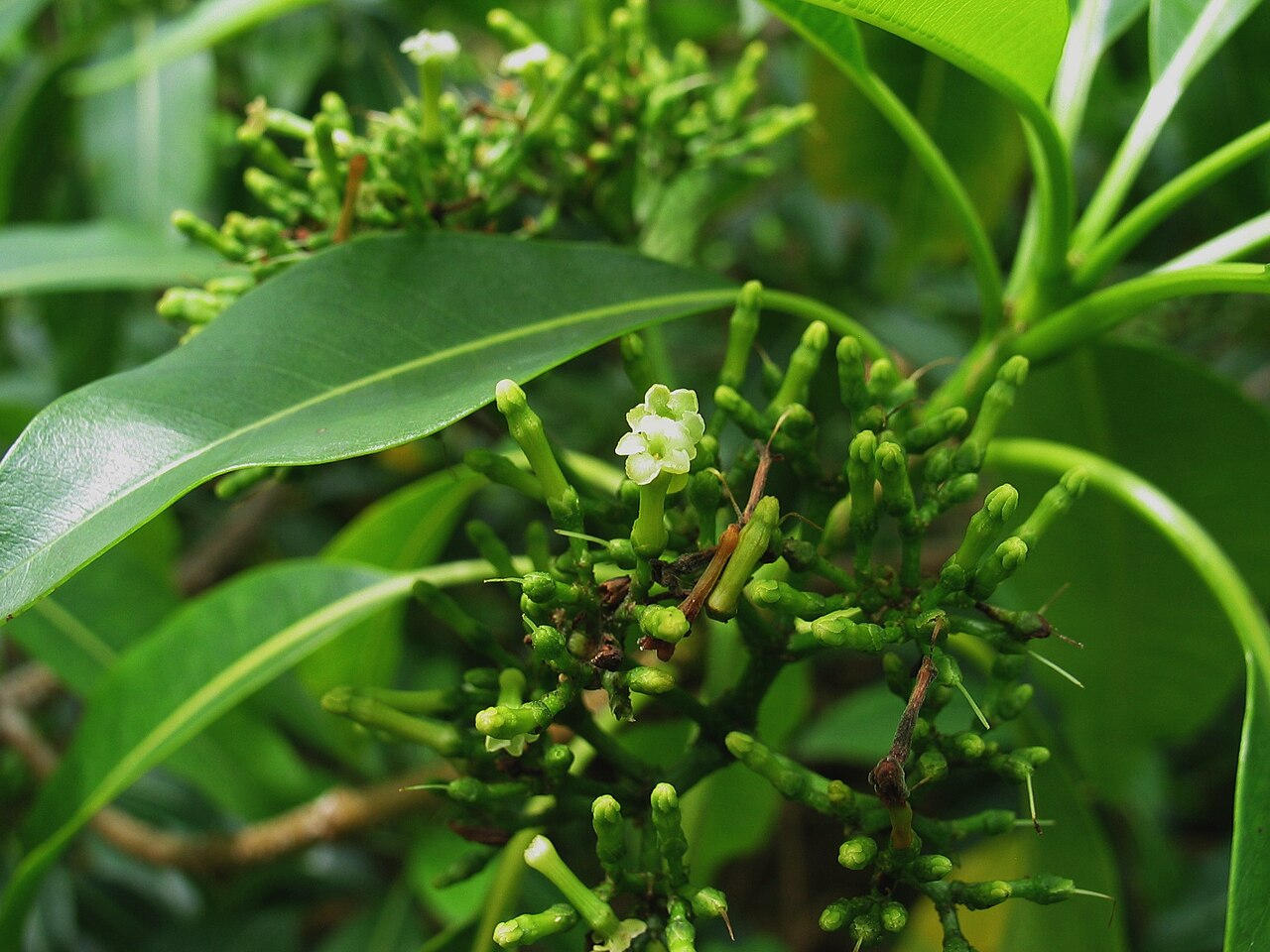
Hao typically grows as a tall shrub or small tree, usually 10 to 20 feet tall but occasionally reaching 30 feet or more with a trunk up to a foot across in favorable sites. Its leaves are glossy, elliptical, and arranged in whorls of up to seven around each node, giving the plant a layered, almost architectural look. Clusters of small, star-shaped white flowers appear at the branch tips through much of the year, followed by shiny black fruit.
Once a familiar understory tree across most of the main Hawaiian Islands, Hao has become increasingly uncommon in the wild, though it is still grown in native-plant gardens and restoration plantings. For Hawaiʻi gardeners interested in low-maintenance, drought-tolerant natives with real ecological history, Hao is an excellent and underused choice — tough enough to grow in old lava fields, yet handsome enough to anchor a native landscape planting.
Identification
Hao grows as a long-lived shrub or small to medium tree, most commonly 10 to 20 feet tall but capable of reaching 30 feet, rarely more, with a trunk diameter up to about a foot. The growth habit varies by site: on exposed lava and dry shrubland it tends to be low and bushy, while in sheltered mesic forest it takes on a more upright, tree-like form.
Bark & Wood
The bark is grayish and relatively smooth on young stems, roughening with age. The wood itself is notably hard and pale yellowish in color — hard enough, according to Hawaiian tradition, to dull the edge of a stone adze, which is part of the origin of the name “Hao” (the same word used in Hawaiian for iron). Burning the wood is best avoided, as it can produce irritating or harmful smoke.
Leaves
Leaves are glossy, elliptical, and arranged in whorls of three to seven around each node, a distinctive feature that helps separate Hao from most of its neighbors at a glance. They are medium to dark green and moderately thin in texture.
Flowers
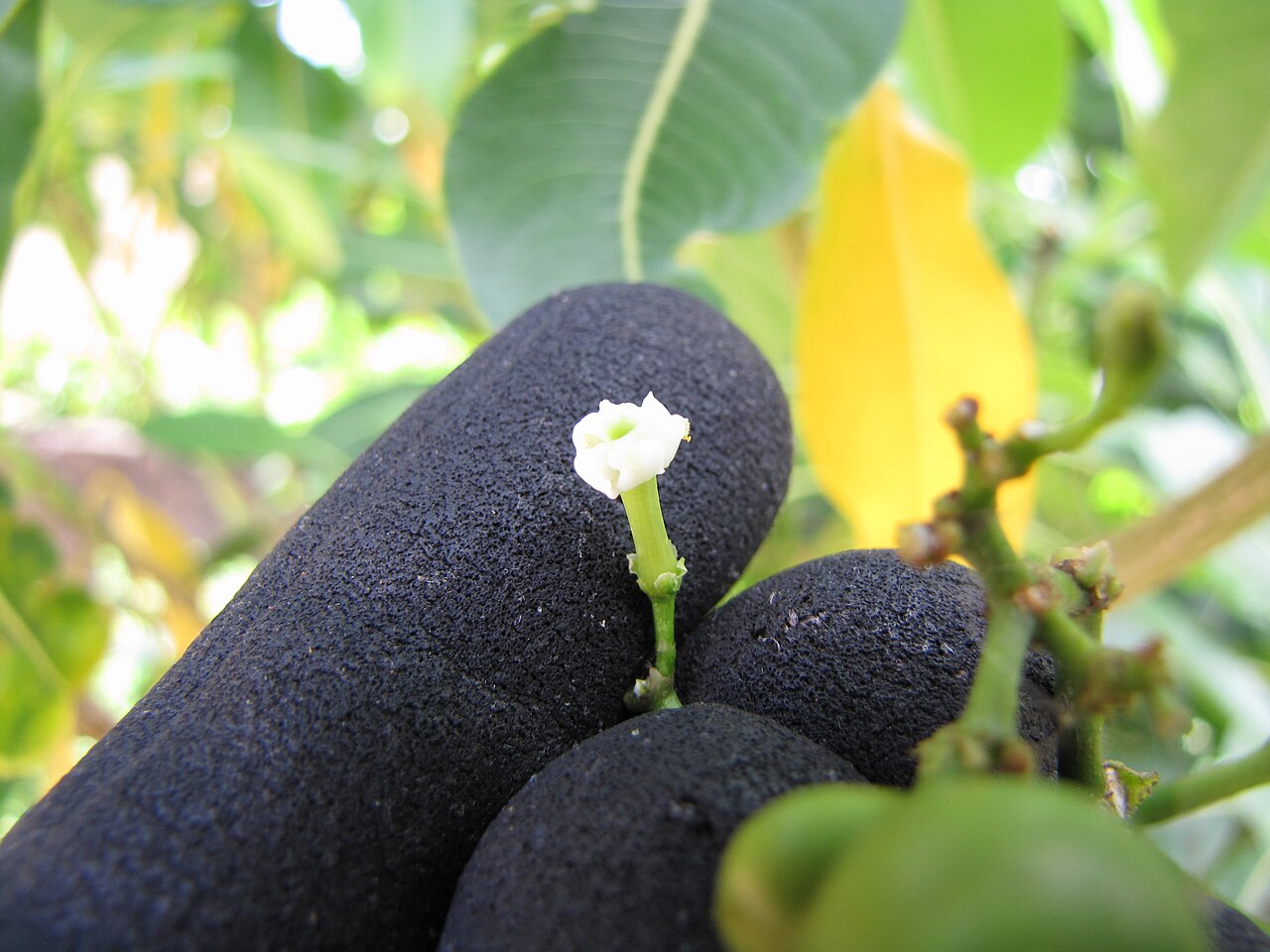
Small, white, star-shaped flowers are borne in compact clusters at the branch tips, each flower only a fraction of an inch across. Flowering is not strongly seasonal, and plants may show flowers and developing fruit at the same time.
Fruit
The fruit is a small, shiny, rounded drupe that ripens to black. Hao can be confused with Ochrosia compta (holei), a similar-looking native tree with comparable flowers and fruit size, but holei has darker, thicker-textured leaves compared to Hao’s lighter green, thinner foliage.
Quick Facts
| Scientific Name | Rauvolfia sandwicensis |
| Family | Apocynaceae (Dogbane) |
| Plant Type | Shrub / Small to Medium Tree |
| Mature Height | 10–30 ft (rarely more) |
| Growth Rate | Slow to Moderate |
| Sun Exposure | Full Sun to Part Shade |
| Water Needs | Low to Moderate |
| Soil Type | Well-drained, including rocky lava substrates |
| Flower Color | White, small and star-shaped |
| Fruit | Small black drupe |
| USDA Hardiness Zones | 10b–12 |
Native Range
Hao is endemic to the Hawaiian Islands, native to every main island except Kahoʻolawe. It grows most commonly in coastal mesic and mixed mesic forest between about 330 and 1,640 feet in elevation, though it also turns up in drier shrubland at lower elevations, including on ‘a’ā lava flows on Maui and Hawaiʻi Island where little else can establish.
Though still present across its historic range, Hao has become an increasingly uncommon sight in intact wild forest as lowland and mesic habitats have been cleared or altered. It remains more frequently encountered in native-plant restoration areas, botanical gardens, and protected natural area reserves than in undisturbed wild stands.
In mesic forest, Hao grows alongside other native Hawaiian trees including Hame (Antidesma pulvinatum), Naio (Myoporum sandwicense), ‘Ohe (Reynoldsia sandwicensis), and ‘Iliahi (Santalum paniculatum), as well as its dry-forest neighbor Maua (Xylosma hawaiiense). For a broader look at the islands’ native canopy, see our guide to canopy trees of Hawaiʻi.
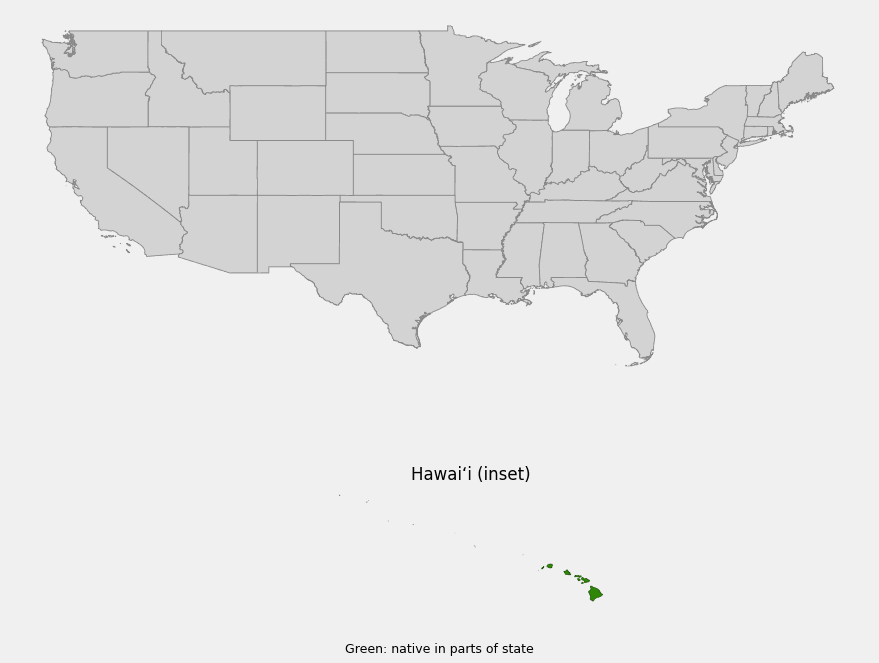
📋 Regional plant lists featuring Hao: Hawaii
Growing & Care Guide
Hao is a forgiving, low-fuss native tree once it is established, tolerant of both dry lava-field conditions and the richer soils of mesic gardens. It is a good choice for gardeners who want a true Hawaiian native without the fussiness of some of the islands’ rarer endemics.
Light
Grow Hao in full sun to light part shade. Young plants establish well under the light shade of taller trees, but mature Hao flowers and fruits best with good sun exposure.
Soil & Water
Hao tolerates a wide range of well-drained soils, including rocky, mineral-poor lava substrates where few other trees can grow. Water regularly while plants are young and establishing; mature Hao is drought tolerant and needs only occasional supplemental water outside of very dry spells.
Planting Tips
Choose a site with good drainage, since Hao does not tolerate standing water or waterlogged soil. Because it grows naturally from coastal mesic forest down into dry shrubland and old lava flows, it adapts well to a range of garden microclimates across lower-elevation Hawaiʻi landscapes.
Pruning & Maintenance
Minimal pruning is needed. Remove dead or damaged wood as it appears, and shape lightly if a more tree-like form is desired, since Hao can be grown either as a multi-stemmed shrub or trained to a single leader over time.
Landscape Uses
- Dry and mesic native gardens, especially in lava-rock or rocky landscaping
- Screening and hedging, thanks to its dense, whorled foliage
- Restoration plantings in coastal mesic and dry forest habitat
- Low-water landscapes once established
Wildlife & Ecological Value
Hao’s small white flowers attract a range of native and introduced insect pollinators, and its black fruit provides food for native and non-native birds that help disperse its seeds through the forest. As a mid-story tree in mesic and dry forest communities, Hao contributes structural diversity that benefits the insects and birds sharing its habitat.
Ecosystem Role
In mixed mesic forest, Hao is part of a layered native plant community alongside trees like Naio, ‘Ohe, and ‘Iliahi, each contributing to the canopy structure that increasingly rare native forest birds and invertebrates depend on. Restoring Hao to degraded dry and mesic forest sites is a modest but meaningful piece of broader Hawaiian lowland forest recovery efforts, work discussed in our wider article on planting native trees for wildlife.
Cultural & Historical Uses
Hao holds a quiet but documented place in Hawaiian ethnobotanical history. Early Hawaiians scraped the hard, pale yellow bark and combined it with the plant’s flowers in water to make a medicinal preparation historically used in treating pā’ao’ao, a childhood condition marked by physical weakening, and ʻea, or thrush. These uses are recorded in historical Hawaiian medicine sources and are presented here as ethnobotanical history, not a current health recommendation — modern gardeners should not attempt to use Hao medicinally.
The name Hao itself references the wood’s remarkable hardness: in Hawaiian, hao is also the word for iron, and one historical account notes the wood was “like” iron in that it could dull the edge of a stone adze. That same hardness made Hao wood less practical for everyday tool-making compared to softer native woods, so it saw relatively limited use in traditional woodworking despite its durability. Today, Hao is valued mainly as a resilient, attractive native tree for restoration and landscape plantings across lower-elevation Hawaiʻi.
Frequently Asked Questions
Is Hao the same plant used to make traditional Hawaiian medicine?
Hao’s bark and flowers were historically used by Native Hawaiians in a water-based remedy for pā’ao’ao and ʻea (thrush), according to historical ethnobotanical records. This is a documented historical use, not a safe or recommended home remedy today.
Why is it called Hao?
The name references the exceptional hardness of the wood — “hao” is also the Hawaiian word for iron, and the wood was said to be hard enough to dull a stone adze blade.
Can Hao grow in solid lava rock?
Yes. Hao is documented growing directly in ‘a’ā lava flows on Maui and Hawaiʻi Island, making it one of the tougher native trees for rocky, mineral-poor sites once established.
Is Hao related to plumeria?
Yes, loosely. Both belong to the dogbane family, Apocynaceae, though Hao’s small white flowers and overall form look quite different from ornamental plumeria.
Is Hao hard to find for sale?
It can be uncommon at general nurseries but is often available through native Hawaiian plant specialty growers, since it is a relatively easy, drought-tolerant species once established.

Looking for a nursery that carries Hao?
Browse our native plant nursery directory: Hawaii